Downloaded 56 times


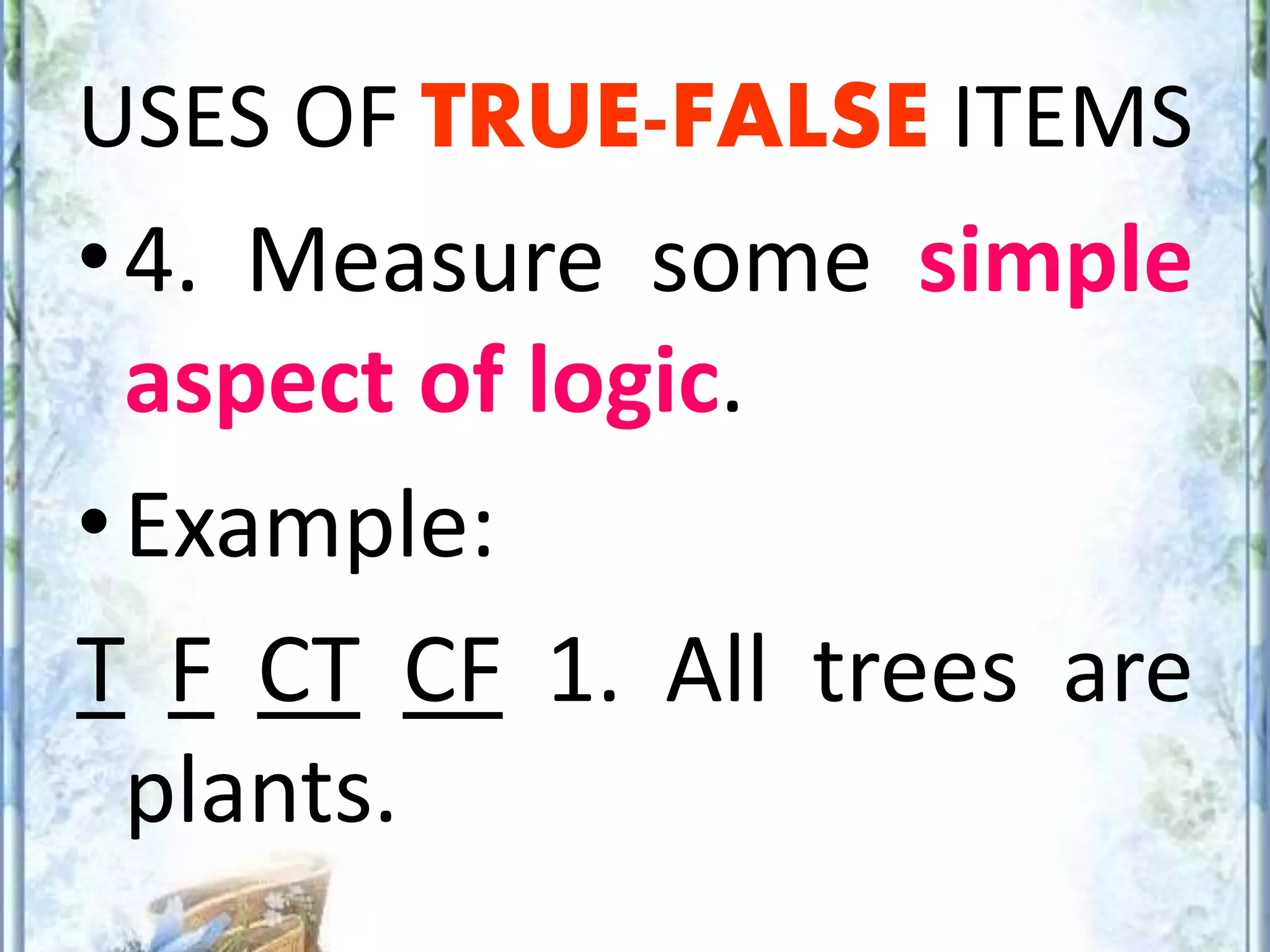
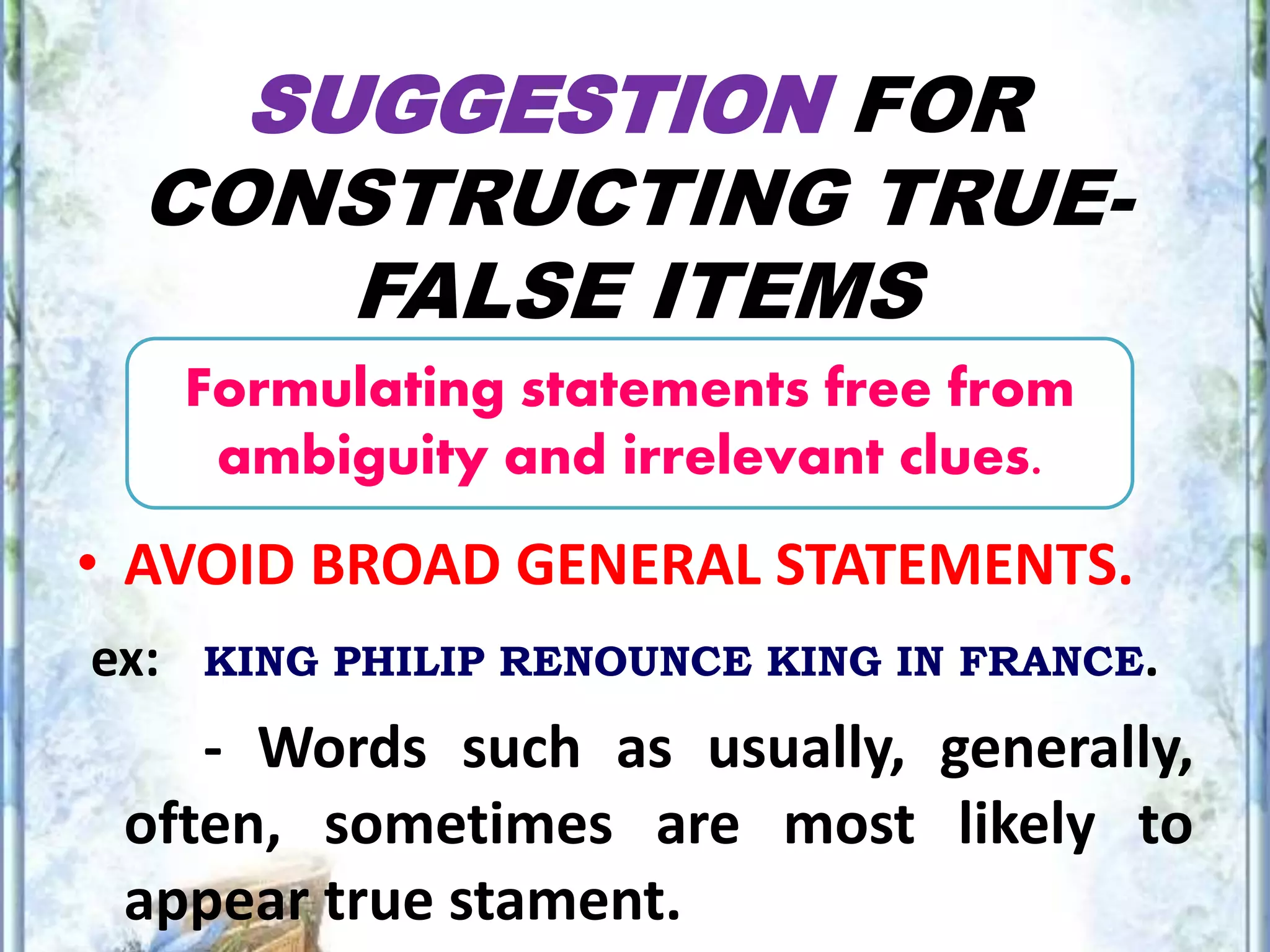


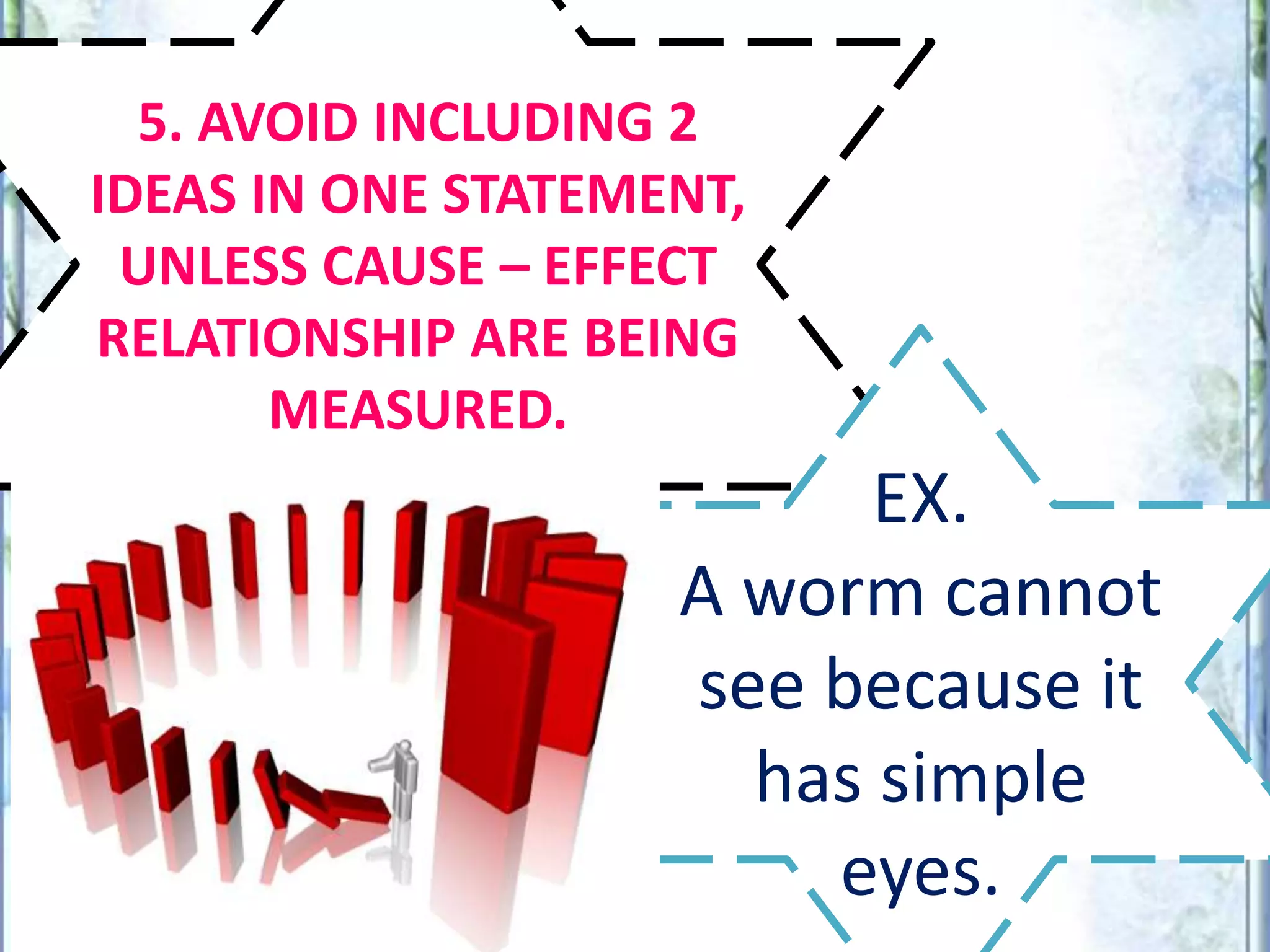


This document provides guidance on creating alternative-response tests, also known as true-false tests, including their definition, uses, and suggestions for constructing effective true-false items. An alternative-response test consists of declarative statements that students mark as true or false. There should be an underlined word or phrase that needs correcting for the statement to be considered true. True-false items can measure a student's ability to identify factual statements, distinguish facts from opinions, and recognize cause-and-effect relationships. When constructing items, statements should be specific and avoid negatives, long sentences, multiple ideas in one statement, and trivial content. True and false statements should be about equal in length.


