Advanced Cardiovascular Life
Support (ACLS)
Presenter:
Dr. Rebil Heiru IM R3
Moderators:
Dr Endashaw Abebe (Internist, Assistant Professor)
&
Dr Dejene (Anestheologist, Assistant professor)
Outline
• Introduction
• BLS
• ACLS
• Pulseless Arrest
• Bradycardia
• Tachycardia
• Post cardiac arrest care
• Take Home message
Introduction
• BLS: providing care to a choking victim or to someone who needs
cardiopulmonary resuscitation (CPR).
• ACLS (advanced cardiac life support): an orderly approach to
providing advanced emergency care to a patient who is experiencing a
cardiac-related problem
Cardiac monitoring
Intravenous fluids and medications
Advanced airway adjuncts
Introduction…
Cardiac arrest -Abrupt cessation of cardiac function resulting in loss
of effective circulation.
Cardiovascular collapse-is Sudden loss of effective circulation due to
cardiac and/or peripheral vascular factors
Sudden cardiac death-is Sudden unexpected death attributed to cardiac
arrest.
Adult chain of survival
• 2015 : Separate Chains of Survival have been recommended that
identify the different pathways of care for patients who experience
cardiac arrest in the hospital as distinct from out-of-hospital settings
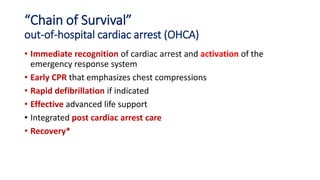
“Chain of Survival”
out-of-hospital cardiac arrest (OHCA)
• Immediate recognition of cardiac arrest and activation of the
emergency response system
• Early CPR that emphasizes chest compressions
• Rapid defibrillation if indicated
• Effective advanced life support
• Integrated post cardiac arrest care
• Recovery*
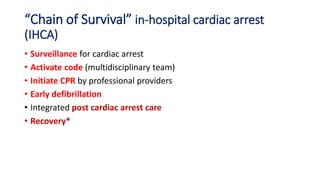
“Chain of Survival” in-hospital cardiac arrest
(IHCA)
• Surveillance for cardiac arrest
• Activate code (multidisciplinary team)
• Initiate CPR by professional providers
• Early defibrillation
• Integrated post cardiac arrest care
• Recovery*
Adult Basic Life Support
(BLS)
Basic Life Support
• Used for patients with life-threatening illness or injury
before the patient can be given full medical care
• Generally used in the pre-hospital setting, and can be
provided without medical equipment
• Generally does not include the use of drugs or invasive
skills
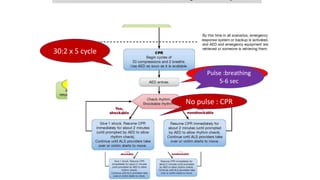
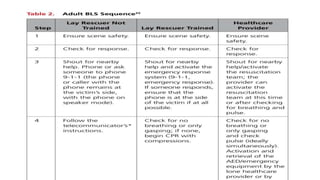
unresponsesive
Breathing
and pulse
30:2 x 5 cycle
Call for help and AED
Pulse :breathing
5-6 sec
No pulse : CPR
5/14/2023 ACLS-2021 G.C. 14
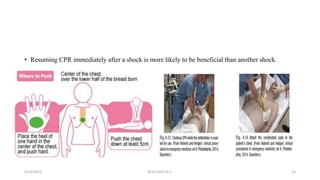
• Resuming CPR immediately after a shock is more likely to be beneficial than another shock.
5/14/2023 ACLS-2021 G.C. 15
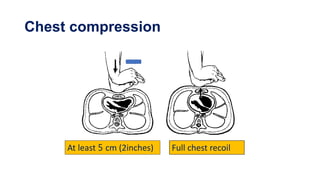
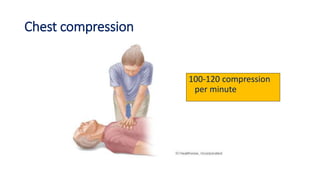
Chest compression
Chest compression
At least 5 cm (2inches) Full chest recoil
Chest compression
100-120 compression
per minute
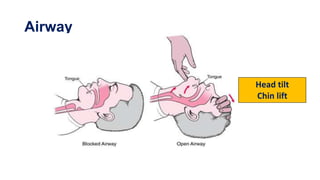
Airway
Head tilt
Chin lift
Jaw thrust for suspected C-spine injury
Breathing
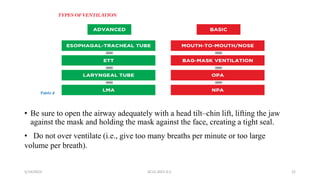
• Be sure to open the airway adequately with a head tilt–chin lift, lifting the jaw
against the mask and holding the mask against the face, creating a tight seal.
5/14/2023 ACLS-2021 G.C. 22
• Do not over ventilate (i.e., give too many breaths per minute or too large
volume per breath).
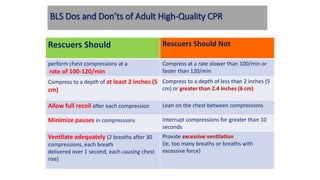
BLS Dos and Don’ts of Adult High-Quality CPR
Rescuers Should Rescuers Should Not
perform chest compressions at a
rate of 100-120/min
Compress at a rate slower than 100/min or
faster than 120/min
Compress to a depth of at least 2 inches (5
cm)
Compress to a depth of less than 2 inches (5
cm) or greater than 2.4 inches (6 cm)
Allow full recoil after each compression Lean on the chest between compressions
Minimize pauses in compressions Interrupt compressions for greater than 10
seconds
Ventilate adequately (2 breaths after 30
compressions, each breath
delivered over 1 second, each causing chest
rise)
Provide excessive ventilation
(ie, too many breaths or breaths with
excessive force)
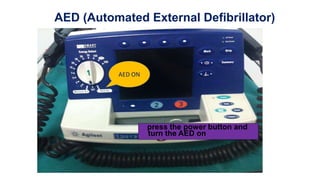
AED (Automated External Defibrillator)
1. Power on, AED
2. Stick paddle according
to the picture
3. The machine will
analyze whether to
shock or not.
4. If the device can give
shock press the shock
button
AED (Automated External Defibrillator)
press the power button and
turn the AED on
AED ON
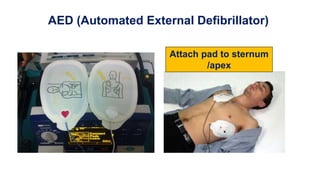
AED (Automated External Defibrillator)
Attach pad to sternum
/apex
AED (Automated External Defibrillator)
Connect the electrode pad
cable to the electrode cable
of the machine.
AED (Automated External Defibrillator)
• The analyzer will report on the monitor what kind of ECG it is and
recommend it.
• Defibrillation If the ECG is of type VF or VT
• Do not touch the patient as the machine will misread the EKG.
• If the EKG is VF or VT type, it will provide a power charge.
• If the EKG is an asystole, the machine will continue CPR for 2 minutes
and then analyze the EKG again.
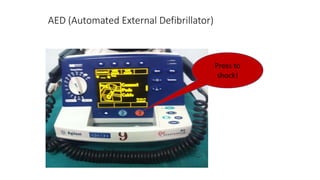
AED (Automated External Defibrillator)
Press to
shock!
Advanced Cardiovascular Life
Support: ACLS
Advanced Cardiovascular Life Support:
ACLS
•Pulseless Arrest
•Bradycardia with Pulse
•Tachycardia with Pulse
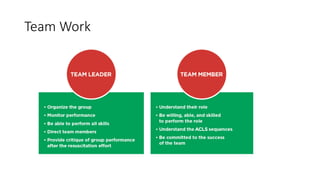
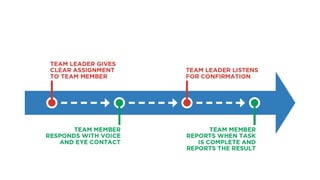
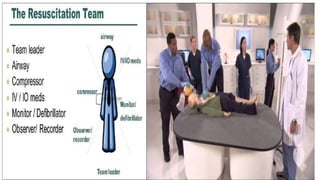
Team Work
Defibrillation
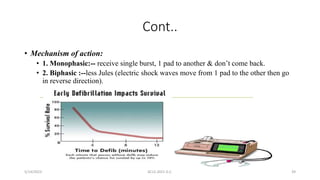
• Defibrillation is the non-synchronized delivery of a shock randomly during the
cardiac cycle in arrhythmias.
• A defibrillator is a device that is used to deliver a shock to eliminate an abnormal
heart rhythm.
5/14/2023 ACLS-2021 G.C. 37
Defibrillation
• We paralyze the heart, to let S. A. Node to start working again
• The delay in DC >>>the sever the arrhythmia >>> less favorable prognosis & less
responsive to treatment.
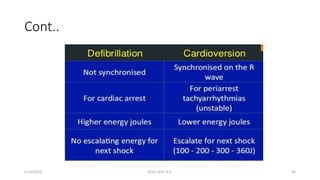
1. Synchronized Cardio-version:
1. used to convert Atrial or ventricular tach.,
2. shock synchronized to occur with the R wave of the ECG rather than with
the T wave.
2. Asynchronized Cardio-version: at any ECG phase & it can cause ventricular
fibrillation.
5/14/2023 ACLS-2021 G.C. 38
Cont..
• Mechanism of action:
• 1. Monophasic:-- receive single burst, 1 pad to another & don’t come back.
• 2. Biphasic :--less Jules (electric shock waves move from 1 pad to the other then go
in reverse direction).
5/14/2023 ACLS-2021 G.C. 39
Defibrillation
Types of Biphasic Defibrillator:--
1. Manual (which we are using).
2. Shock Advisor (for non-expert people),with big electrodes they can read the
rhythm then talk or write the order to be done.
3. Automated External (you just connect it to the patient & it will work & calculate
the electric wave by it self & when to give it).
5/14/2023 ACLS-2021 G.C. 40
5/14/2023 ACLS-2021 G.C. 41
CPR should be resumed immediately after shock delivery.
Shock Energy
Biphasic:
• Biphasic delivery of energy during defibrillation is more effective than older
monophasic waveforms.
• Initial dose of 120 to 200 J; if unknown, use maximum available.
• Second and subsequent doses should be equivalent, and higher doses should be
considered.
 Monophasic: 360 J
5/14/2023 ACLS-2021 G.C. 42
Cont..
5/14/2023 ACLS-2021 G.C. 43
Defibrillator
Defibrillator
1. Right of the upper sternum below the clavicle
2. left 5th IC space ant. Axillary's line.
• Technique:
1. Apply pressure to the paddle [10kg] to decrease thoracic
impedance (the distance by pr. The fat).
2. keep the defibrillator paddles at least 12.5 cm from the
pace maker if there is.
3. Keep oxygen flow away from paddle and area of the
patient’s bed ; and place them at least 3.5 to 4 feet away from
the patient’s chest.
4. Don’t remove the paddle until 3 DC shock performed.
Drug therapy for VF/VT
5/14/2023 ACLS-2021 G.C. 46
Vasopressin combined with epinephrine may be considered in cardiac arrest, but it
offers no advantage as a substitute for epinephrine alone.
Epinephrine : 1 mg IV q 3-5 min while CPR is performed continuously
Management of specific arrythmias
• VF/PVT-Ventricular fibrillation (VF) and pulseless ventricular
tachycardia (VT) are life-threatening cardiac rhythms that result in
ineffective ventricular contractions.
• VF is a rapid quivering of the ventricular walls that prevents them
from pumping not synchronized with atrial contractions.
• VT is a condition in which the ventricles contract more than 100 times
per minute.
5/14/2023 ACLS-2021 G.C. 47
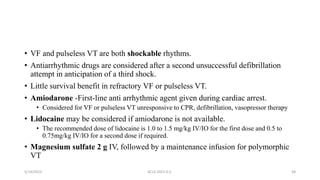
• VF and pulseless VT are both shockable rhythms.
• Antiarrhythmic drugs are considered after a second unsuccessful defibrillation
attempt in anticipation of a third shock.
• Little survival benefit in refractory VF or pulseless VT.
• Amiodarone -First-line anti arrhythmic agent given during cardiac arrest.
• Considered for VF or pulseless VT unresponsive to CPR, defibrillation, vasopressor therapy
• Lidocaine may be considered if amiodarone is not available.
• The recommended dose of lidocaine is 1.0 to 1.5 mg/kg IV/IO for the first dose and 0.5 to
0.75mg/kg IV/IO for a second dose if required.
• Magnesium sulfate 2 g IV, followed by a maintenance infusion for polymorphic
VT
5/14/2023 ACLS-2021 G.C. 48
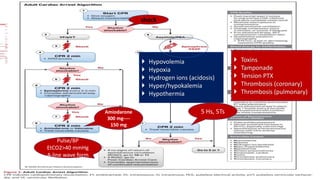
Pulseless Arrest
shock
Amiodarone
300 mg----
150 mg
5 Hs, 5Ts
 Hypovolemia
 Hypoxia
 Hydrogen ions (acidosis)
 Hyper/hypokalemia
 Hypothermia
 Toxins
 Tamponade
 Tension PTX
 Thrombosis (coronary)
 Thrombosis (pulmonary)
Pulse/BP
EtCO2>40 mmHg
A-line wave form
BRADYCARDIA WITH PULSE
Unstable
bradycardia
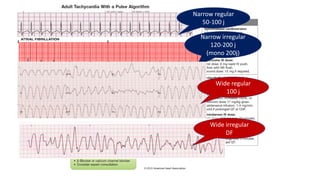
TACHYCARDIA WITH PULSE
Unstable
Tachycardia
Narrow regular
50-100 j
Narrow irregular
120-200 j
(mono 200j)
Wide regular
100 j
Wide irregular
DF
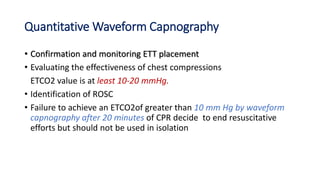
Quantitative Waveform Capnography
• Confirmation and monitoring ETT placement
• Evaluating the effectiveness of chest compressions
ETCO2 value is at least 10-20 mmHg.
• Identification of ROSC
• Failure to achieve an ETCO2of greater than 10 mm Hg by waveform
capnography after 20 minutes of CPR decide to end resuscitative
efforts but should not be used in isolation
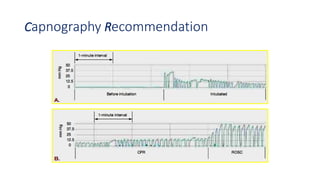
Capnography Recommendation
CPR Quality
• Quantitative waveform capnography
• If Petco2<10 mm Hg, attempt to improve CPR quality
• Intra-arterial pressure
• If relaxation phase (diastolic) pressure <20 mm Hg,
attempt to improve CPR quality
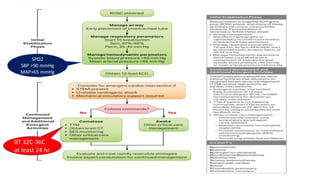
SPO2
SBP >90 mmHg
MAP>65 mmHg
BT 32C-36C
at least 24 hr
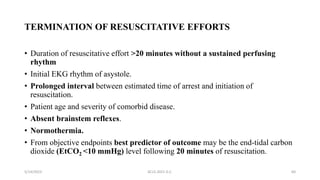
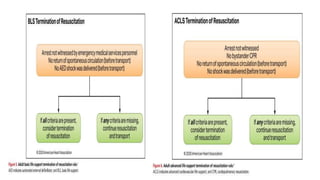
TERMINATION OF RESUSCITATIVE EFFORTS
• Duration of resuscitative effort >20 minutes without a sustained perfusing
rhythm
• Initial EKG rhythm of asystole.
• Prolonged interval between estimated time of arrest and initiation of
resuscitation.
• Patient age and severity of comorbid disease.
• Absent brainstem reflexes.
• Normothermia.
• From objective endpoints best predictor of outcome may be the end-tidal carbon
dioxide (EtCO2 <10 mmHg) level following 20 minutes of resuscitation.
5/14/2023 ACLS-2021 G.C. 60
5/14/2023 ACLS-2021 G.C. 61
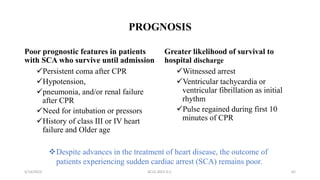
PROGNOSIS
Poor prognostic features in patients
with SCA who survive until admission
Persistent coma after CPR
Hypotension,
pneumonia, and/or renal failure
after CPR
Need for intubation or pressors
History of class III or IV heart
failure and Older age
Greater likelihood of survival to
hospital discharge
Witnessed arrest
Ventricular tachycardia or
ventricular fibrillation as initial
rhythm
Pulse regained during first 10
minutes of CPR
5/14/2023 ACLS-2021 G.C. 62
Despite advances in the treatment of heart disease, the outcome of
patients experiencing sudden cardiac arrest (SCA) remains poor.
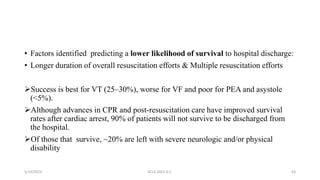
• Factors identified predicting a lower likelihood of survival to hospital discharge:
• Longer duration of overall resuscitation efforts & Multiple resuscitation efforts
Success is best for VT (25–30%), worse for VF and poor for PEA and asystole
(<5%).
Although advances in CPR and post-resuscitation care have improved survival
rates after cardiac arrest, 90% of patients will not survive to be discharged from
the hospital.
Of those that survive, ~20% are left with severe neurologic and/or physical
disability
5/14/2023 ACLS-2021 G.C. 63
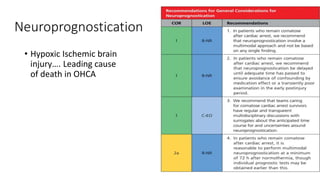
Neuroprognostication
• Hypoxic Ischemic brain
injury…. Leading cause
of death in OHCA
The score for all variables in a patient should be
summed interpreted using the following categories:
Good Outcome Following Attempted
Resuscitation;
Very low
likelihood of
survival (<1%)
Score of 24 or
greater.
Low likelihood of
survival (1 to 3%)
Score 14 to 23.
Average
likelihood of
survival (>3 to
15%)
Score –5 to 13.
Higher than
average likelihood
of survival
(>15%) –
Score –15 to –6.
GO-FAR score to predict neurologically
intact survival-following IHCA
Variable GO-FAR score
Neurologically intact or with minimal
deficits at admission
_15
Major trauma 10
Acute stroke 8
Metastatic or hematologic cancer 7
Septicemia 7
Medical non-cardiac diagnosis 7
Hepatic insufficiency 6
Admit from skilled nursing facility 6
Hypotension or hypoperfusion 5
Renal insufficiency or dialysis 4
Respiratory insufficiency 4
Pneumonia 1
Age, yr (70-74),(75-79),(80-
84),(>85).
(2,5,6,11)
5/14/2023 ACLS-2021 G.C. 65
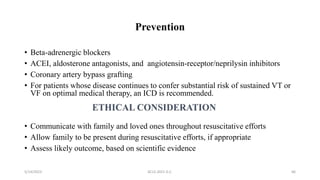
Prevention
• Beta-adrenergic blockers
• ACEI, aldosterone antagonists, and angiotensin-receptor/neprilysin inhibitors
• Coronary artery bypass grafting
• For patients whose disease continues to confer substantial risk of sustained VT or
VF on optimal medical therapy, an ICD is recommended.
• Communicate with family and loved ones throughout resuscitative efforts
• Allow family to be present during resuscitative efforts, if appropriate
• Assess likely outcome, based on scientific evidence
5/14/2023 ACLS-2021 G.C. 66
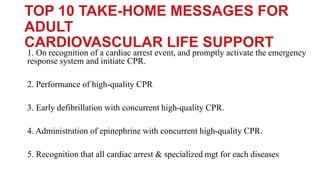
TOP 10 TAKE-HOME MESSAGES FOR
ADULT
CARDIOVASCULAR LIFE SUPPORT
1. On recognition of a cardiac arrest event, and promptly activate the emergency
response system and initiate CPR.
2. Performance of high-quality CPR
3. Early defibrillation with concurrent high-quality CPR.
4. Administration of epinephrine with concurrent high-quality CPR.
5. Recognition that all cardiac arrest & specialized mgt for each diseases
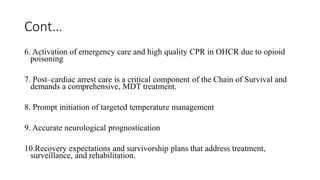
Cont…
6. Activation of emergency care and high quality CPR in OHCR due to opioid
poisoning
7. Post–cardiac arrest care is a critical component of the Chain of Survival and
demands a comprehensive, MDT treatment.
8. Prompt initiation of targeted temperature management
9. Accurate neurological prognostication
10.Recovery expectations and survivorship plans that address treatment,
surveillance, and rehabilitation.
Thank you!
References
• Harrison Principles of Internal Medicine, 20th ed
• Up to date 2018
• 2019 and 2020 AHA Guidelines Update for CPR and ECC
• 2015 ECC Guidelines
• Journals
• ACLS provider hand book
5/14/2023 ACLS-2021 G.C. 70

Advanced Cardiovascular Life Support (ACLS).pptx

  • 1.
    Advanced Cardiovascular Life Support(ACLS) Presenter: Dr. Rebil Heiru IM R3 Moderators: Dr Endashaw Abebe (Internist, Assistant Professor) & Dr Dejene (Anestheologist, Assistant professor)
  • 2.
    Outline • Introduction • BLS •ACLS • Pulseless Arrest • Bradycardia • Tachycardia • Post cardiac arrest care • Take Home message
  • 3.
    Introduction • BLS: providingcare to a choking victim or to someone who needs cardiopulmonary resuscitation (CPR). • ACLS (advanced cardiac life support): an orderly approach to providing advanced emergency care to a patient who is experiencing a cardiac-related problem Cardiac monitoring Intravenous fluids and medications Advanced airway adjuncts
  • 4.
    Introduction… Cardiac arrest -Abruptcessation of cardiac function resulting in loss of effective circulation. Cardiovascular collapse-is Sudden loss of effective circulation due to cardiac and/or peripheral vascular factors Sudden cardiac death-is Sudden unexpected death attributed to cardiac arrest.
  • 6.
    Adult chain ofsurvival • 2015 : Separate Chains of Survival have been recommended that identify the different pathways of care for patients who experience cardiac arrest in the hospital as distinct from out-of-hospital settings
  • 9.
    “Chain of Survival” out-of-hospitalcardiac arrest (OHCA) • Immediate recognition of cardiac arrest and activation of the emergency response system • Early CPR that emphasizes chest compressions • Rapid defibrillation if indicated • Effective advanced life support • Integrated post cardiac arrest care • Recovery*
  • 10.
    “Chain of Survival”in-hospital cardiac arrest (IHCA) • Surveillance for cardiac arrest • Activate code (multidisciplinary team) • Initiate CPR by professional providers • Early defibrillation • Integrated post cardiac arrest care • Recovery*
  • 11.
    Adult Basic LifeSupport (BLS)
  • 12.
    Basic Life Support •Used for patients with life-threatening illness or injury before the patient can be given full medical care • Generally used in the pre-hospital setting, and can be provided without medical equipment • Generally does not include the use of drugs or invasive skills
  • 13.
    unresponsesive Breathing and pulse 30:2 x5 cycle Call for help and AED Pulse :breathing 5-6 sec No pulse : CPR
  • 14.
  • 15.
    • Resuming CPRimmediately after a shock is more likely to be beneficial than another shock. 5/14/2023 ACLS-2021 G.C. 15
  • 16.
  • 17.
    Chest compression At least5 cm (2inches) Full chest recoil
  • 18.
  • 19.
  • 20.
    Jaw thrust forsuspected C-spine injury
  • 21.
  • 22.
    • Be sureto open the airway adequately with a head tilt–chin lift, lifting the jaw against the mask and holding the mask against the face, creating a tight seal. 5/14/2023 ACLS-2021 G.C. 22 • Do not over ventilate (i.e., give too many breaths per minute or too large volume per breath).
  • 24.
    BLS Dos andDon’ts of Adult High-Quality CPR Rescuers Should Rescuers Should Not perform chest compressions at a rate of 100-120/min Compress at a rate slower than 100/min or faster than 120/min Compress to a depth of at least 2 inches (5 cm) Compress to a depth of less than 2 inches (5 cm) or greater than 2.4 inches (6 cm) Allow full recoil after each compression Lean on the chest between compressions Minimize pauses in compressions Interrupt compressions for greater than 10 seconds Ventilate adequately (2 breaths after 30 compressions, each breath delivered over 1 second, each causing chest rise) Provide excessive ventilation (ie, too many breaths or breaths with excessive force)
  • 25.
    AED (Automated ExternalDefibrillator) 1. Power on, AED 2. Stick paddle according to the picture 3. The machine will analyze whether to shock or not. 4. If the device can give shock press the shock button
  • 26.
    AED (Automated ExternalDefibrillator) press the power button and turn the AED on AED ON
  • 27.
    AED (Automated ExternalDefibrillator) Attach pad to sternum /apex
  • 28.
    AED (Automated ExternalDefibrillator) Connect the electrode pad cable to the electrode cable of the machine.
  • 29.
    AED (Automated ExternalDefibrillator) • The analyzer will report on the monitor what kind of ECG it is and recommend it. • Defibrillation If the ECG is of type VF or VT • Do not touch the patient as the machine will misread the EKG. • If the EKG is VF or VT type, it will provide a power charge. • If the EKG is an asystole, the machine will continue CPR for 2 minutes and then analyze the EKG again.
  • 30.
    AED (Automated ExternalDefibrillator) Press to shock!
  • 31.
  • 32.
    Advanced Cardiovascular LifeSupport: ACLS •Pulseless Arrest •Bradycardia with Pulse •Tachycardia with Pulse
  • 33.
  • 37.
    Defibrillation • Defibrillation isthe non-synchronized delivery of a shock randomly during the cardiac cycle in arrhythmias. • A defibrillator is a device that is used to deliver a shock to eliminate an abnormal heart rhythm. 5/14/2023 ACLS-2021 G.C. 37
  • 38.
    Defibrillation • We paralyzethe heart, to let S. A. Node to start working again • The delay in DC >>>the sever the arrhythmia >>> less favorable prognosis & less responsive to treatment. 1. Synchronized Cardio-version: 1. used to convert Atrial or ventricular tach., 2. shock synchronized to occur with the R wave of the ECG rather than with the T wave. 2. Asynchronized Cardio-version: at any ECG phase & it can cause ventricular fibrillation. 5/14/2023 ACLS-2021 G.C. 38
  • 39.
    Cont.. • Mechanism ofaction: • 1. Monophasic:-- receive single burst, 1 pad to another & don’t come back. • 2. Biphasic :--less Jules (electric shock waves move from 1 pad to the other then go in reverse direction). 5/14/2023 ACLS-2021 G.C. 39
  • 40.
    Defibrillation Types of BiphasicDefibrillator:-- 1. Manual (which we are using). 2. Shock Advisor (for non-expert people),with big electrodes they can read the rhythm then talk or write the order to be done. 3. Automated External (you just connect it to the patient & it will work & calculate the electric wave by it self & when to give it). 5/14/2023 ACLS-2021 G.C. 40
  • 41.
    5/14/2023 ACLS-2021 G.C.41 CPR should be resumed immediately after shock delivery.
  • 42.
    Shock Energy Biphasic: • Biphasicdelivery of energy during defibrillation is more effective than older monophasic waveforms. • Initial dose of 120 to 200 J; if unknown, use maximum available. • Second and subsequent doses should be equivalent, and higher doses should be considered.  Monophasic: 360 J 5/14/2023 ACLS-2021 G.C. 42
  • 43.
  • 44.
  • 45.
    Defibrillator 1. Right ofthe upper sternum below the clavicle 2. left 5th IC space ant. Axillary's line. • Technique: 1. Apply pressure to the paddle [10kg] to decrease thoracic impedance (the distance by pr. The fat). 2. keep the defibrillator paddles at least 12.5 cm from the pace maker if there is. 3. Keep oxygen flow away from paddle and area of the patient’s bed ; and place them at least 3.5 to 4 feet away from the patient’s chest. 4. Don’t remove the paddle until 3 DC shock performed.
  • 46.
    Drug therapy forVF/VT 5/14/2023 ACLS-2021 G.C. 46 Vasopressin combined with epinephrine may be considered in cardiac arrest, but it offers no advantage as a substitute for epinephrine alone. Epinephrine : 1 mg IV q 3-5 min while CPR is performed continuously
  • 47.
    Management of specificarrythmias • VF/PVT-Ventricular fibrillation (VF) and pulseless ventricular tachycardia (VT) are life-threatening cardiac rhythms that result in ineffective ventricular contractions. • VF is a rapid quivering of the ventricular walls that prevents them from pumping not synchronized with atrial contractions. • VT is a condition in which the ventricles contract more than 100 times per minute. 5/14/2023 ACLS-2021 G.C. 47
  • 48.
    • VF andpulseless VT are both shockable rhythms. • Antiarrhythmic drugs are considered after a second unsuccessful defibrillation attempt in anticipation of a third shock. • Little survival benefit in refractory VF or pulseless VT. • Amiodarone -First-line anti arrhythmic agent given during cardiac arrest. • Considered for VF or pulseless VT unresponsive to CPR, defibrillation, vasopressor therapy • Lidocaine may be considered if amiodarone is not available. • The recommended dose of lidocaine is 1.0 to 1.5 mg/kg IV/IO for the first dose and 0.5 to 0.75mg/kg IV/IO for a second dose if required. • Magnesium sulfate 2 g IV, followed by a maintenance infusion for polymorphic VT 5/14/2023 ACLS-2021 G.C. 48
  • 49.
  • 50.
    shock Amiodarone 300 mg---- 150 mg 5Hs, 5Ts  Hypovolemia  Hypoxia  Hydrogen ions (acidosis)  Hyper/hypokalemia  Hypothermia  Toxins  Tamponade  Tension PTX  Thrombosis (coronary)  Thrombosis (pulmonary) Pulse/BP EtCO2>40 mmHg A-line wave form
  • 51.
  • 52.
  • 53.
  • 54.
    Unstable Tachycardia Narrow regular 50-100 j Narrowirregular 120-200 j (mono 200j) Wide regular 100 j Wide irregular DF
  • 55.
    Quantitative Waveform Capnography •Confirmation and monitoring ETT placement • Evaluating the effectiveness of chest compressions ETCO2 value is at least 10-20 mmHg. • Identification of ROSC • Failure to achieve an ETCO2of greater than 10 mm Hg by waveform capnography after 20 minutes of CPR decide to end resuscitative efforts but should not be used in isolation
  • 56.
  • 57.
    CPR Quality • Quantitativewaveform capnography • If Petco2<10 mm Hg, attempt to improve CPR quality • Intra-arterial pressure • If relaxation phase (diastolic) pressure <20 mm Hg, attempt to improve CPR quality
  • 59.
    SPO2 SBP >90 mmHg MAP>65mmHg BT 32C-36C at least 24 hr
  • 60.
    TERMINATION OF RESUSCITATIVEEFFORTS • Duration of resuscitative effort >20 minutes without a sustained perfusing rhythm • Initial EKG rhythm of asystole. • Prolonged interval between estimated time of arrest and initiation of resuscitation. • Patient age and severity of comorbid disease. • Absent brainstem reflexes. • Normothermia. • From objective endpoints best predictor of outcome may be the end-tidal carbon dioxide (EtCO2 <10 mmHg) level following 20 minutes of resuscitation. 5/14/2023 ACLS-2021 G.C. 60
  • 61.
  • 62.
    PROGNOSIS Poor prognostic featuresin patients with SCA who survive until admission Persistent coma after CPR Hypotension, pneumonia, and/or renal failure after CPR Need for intubation or pressors History of class III or IV heart failure and Older age Greater likelihood of survival to hospital discharge Witnessed arrest Ventricular tachycardia or ventricular fibrillation as initial rhythm Pulse regained during first 10 minutes of CPR 5/14/2023 ACLS-2021 G.C. 62 Despite advances in the treatment of heart disease, the outcome of patients experiencing sudden cardiac arrest (SCA) remains poor.
  • 63.
    • Factors identifiedpredicting a lower likelihood of survival to hospital discharge: • Longer duration of overall resuscitation efforts & Multiple resuscitation efforts Success is best for VT (25–30%), worse for VF and poor for PEA and asystole (<5%). Although advances in CPR and post-resuscitation care have improved survival rates after cardiac arrest, 90% of patients will not survive to be discharged from the hospital. Of those that survive, ~20% are left with severe neurologic and/or physical disability 5/14/2023 ACLS-2021 G.C. 63
  • 64.
    Neuroprognostication • Hypoxic Ischemicbrain injury…. Leading cause of death in OHCA
  • 65.
    The score forall variables in a patient should be summed interpreted using the following categories: Good Outcome Following Attempted Resuscitation; Very low likelihood of survival (<1%) Score of 24 or greater. Low likelihood of survival (1 to 3%) Score 14 to 23. Average likelihood of survival (>3 to 15%) Score –5 to 13. Higher than average likelihood of survival (>15%) – Score –15 to –6. GO-FAR score to predict neurologically intact survival-following IHCA Variable GO-FAR score Neurologically intact or with minimal deficits at admission _15 Major trauma 10 Acute stroke 8 Metastatic or hematologic cancer 7 Septicemia 7 Medical non-cardiac diagnosis 7 Hepatic insufficiency 6 Admit from skilled nursing facility 6 Hypotension or hypoperfusion 5 Renal insufficiency or dialysis 4 Respiratory insufficiency 4 Pneumonia 1 Age, yr (70-74),(75-79),(80- 84),(>85). (2,5,6,11) 5/14/2023 ACLS-2021 G.C. 65
  • 66.
    Prevention • Beta-adrenergic blockers •ACEI, aldosterone antagonists, and angiotensin-receptor/neprilysin inhibitors • Coronary artery bypass grafting • For patients whose disease continues to confer substantial risk of sustained VT or VF on optimal medical therapy, an ICD is recommended. • Communicate with family and loved ones throughout resuscitative efforts • Allow family to be present during resuscitative efforts, if appropriate • Assess likely outcome, based on scientific evidence 5/14/2023 ACLS-2021 G.C. 66
  • 67.
    TOP 10 TAKE-HOMEMESSAGES FOR ADULT CARDIOVASCULAR LIFE SUPPORT 1. On recognition of a cardiac arrest event, and promptly activate the emergency response system and initiate CPR. 2. Performance of high-quality CPR 3. Early defibrillation with concurrent high-quality CPR. 4. Administration of epinephrine with concurrent high-quality CPR. 5. Recognition that all cardiac arrest & specialized mgt for each diseases
  • 68.
    Cont… 6. Activation ofemergency care and high quality CPR in OHCR due to opioid poisoning 7. Post–cardiac arrest care is a critical component of the Chain of Survival and demands a comprehensive, MDT treatment. 8. Prompt initiation of targeted temperature management 9. Accurate neurological prognostication 10.Recovery expectations and survivorship plans that address treatment, surveillance, and rehabilitation.
  • 69.
  • 70.
    References • Harrison Principlesof Internal Medicine, 20th ed • Up to date 2018 • 2019 and 2020 AHA Guidelines Update for CPR and ECC • 2015 ECC Guidelines • Journals • ACLS provider hand book 5/14/2023 ACLS-2021 G.C. 70

Editor's Notes

  • #66 GO-FAR score to predict neurologically intact survival following in-hospital cardiac arrest Each variable in the left-hand column is associated with the score in the right-hand column. CPC: cerebral performance category; * Points for GO-FAR scores were assigned based on beta coefficients. Δ CPC score of 1 at admission.-----©2018 UpToDate
  • #68 On recognition of a cardiac arrest event, a layperson should simultaneously and promptly activate the emergency response system and initiate CPR. 2. Performance of high-quality CPR includes adequate compression depth and rate while minimizing pauses in compressions, 3. Early defibrillation with concurrent high-quality CPR is critical to survival when SCA is caused by VF/pVT