ADVANCED CARDIAC LIFE
SUPPORT(ACLS)
- Prakash Khanal
INTERN,MBBS
CMC-TH
1
Advanced cardiac life support
 Advanced cardiac life support or Advanced Cardiovascular Life
Support refers to a set of clinical interventions for urgent
treatment of cardiac arrest and other life threatening medical
emergencies as well as knowledge and skills to deploy those
interventions.
2
Advanced cardiac life support
 ACLS is a series of evidence based responses simple enough
to be committed to memory and recall at the time of stress.
 AMERICAN HEART ASSOCIATION’s Protocols are considered
as Gold Standard ACLS Protocols. It gets reviewed every 5
years.
3
IMPORTANCE OF BLS IN ACLS
 ACLS is built heavily upon the foundation of BLS
4
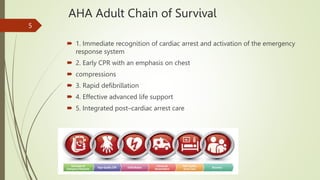
AHA Adult Chain of Survival
 1. Immediate recognition of cardiac arrest and activation of the emergency
response system
 2. Early CPR with an emphasis on chest
 compressions
 3. Rapid defibrillation
 4. Effective advanced life support
 5. Integrated post–cardiac arrest care
5
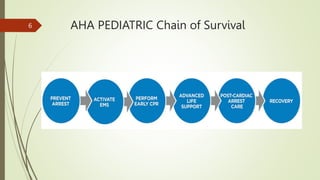
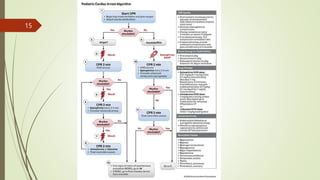
AHA PEDIATRIC Chain of Survival
6
7
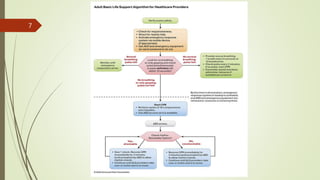
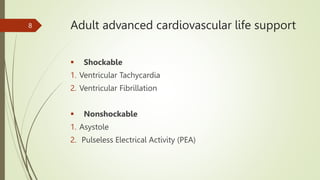
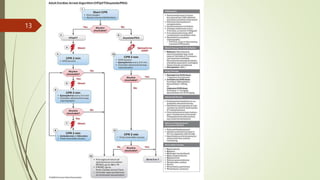
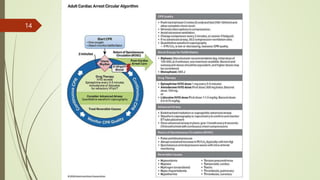
Adult advanced cardiovascular life support
 Shockable
1. Ventricular Tachycardia
2. Ventricular Fibrillation
 Nonshockable
1. Asystole
2. Pulseless Electrical Activity (PEA)
8
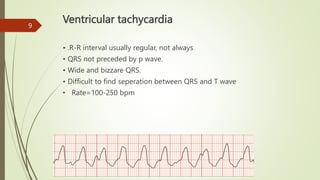
Ventricular tachycardia
• .R-R interval usually regular, not always
• QRS not preceded by p wave.
• Wide and bizzare QRS.
• Difficult to find seperation between QRS and T wave
• Rate=100-250 bpm
9
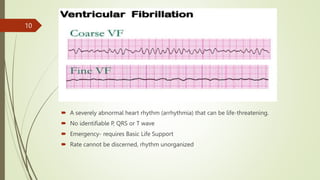
 A severely abnormal heart rhythm (arrhythmia) that can be life-threatening.
 No identifiable P, QRS or T wave
 Emergency- requires Basic Life Support
 Rate cannot be discerned, rhythm unorganized
10
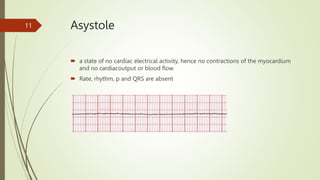
Asystole
 a state of no cardiac electrical activity, hence no contractions of the myocardium
and no cardiacoutput or blood flow.
 Rate, rhythm, p and QRS are absent
11
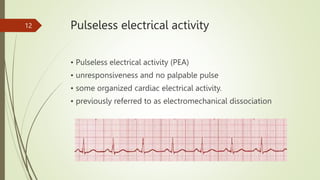
Pulseless electrical activity
• Pulseless electrical activity (PEA)
• unresponsiveness and no palpable pulse
• some organized cardiac electrical activity.
• previously referred to as electromechanical dissociation
12
13
14
15
16
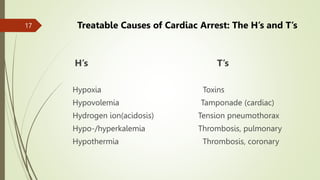
H’s T’s
Hypoxia Toxins
Hypovolemia Tamponade (cardiac)
Hydrogen ion(acidosis) Tension pneumothorax
Hypo-/hyperkalemia Thrombosis, pulmonary
Hypothermia Thrombosis, coronary
17 Treatable Causes of Cardiac Arrest: The H’s and T’s
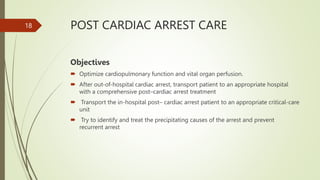
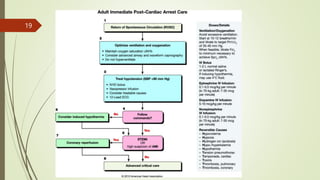
POST CARDIAC ARREST CARE
Objectives
 Optimize cardiopulmonary function and vital organ perfusion.
 After out-of-hospital cardiac arrest, transport patient to an appropriate hospital
with a comprehensive post–cardiac arrest treatment
 Transport the in-hospital post– cardiac arrest patient to an appropriate critical-care
unit
 Try to identify and treat the precipitating causes of the arrest and prevent
recurrent arrest
18
19
THANK YOU
20

ADVANCED CARDIAC LIFE SUPPORT(ACLS).pptx

  • 1.
    ADVANCED CARDIAC LIFE SUPPORT(ACLS) -Prakash Khanal INTERN,MBBS CMC-TH 1
  • 2.
    Advanced cardiac lifesupport  Advanced cardiac life support or Advanced Cardiovascular Life Support refers to a set of clinical interventions for urgent treatment of cardiac arrest and other life threatening medical emergencies as well as knowledge and skills to deploy those interventions. 2
  • 3.
    Advanced cardiac lifesupport  ACLS is a series of evidence based responses simple enough to be committed to memory and recall at the time of stress.  AMERICAN HEART ASSOCIATION’s Protocols are considered as Gold Standard ACLS Protocols. It gets reviewed every 5 years. 3
  • 4.
    IMPORTANCE OF BLSIN ACLS  ACLS is built heavily upon the foundation of BLS 4
  • 5.
    AHA Adult Chainof Survival  1. Immediate recognition of cardiac arrest and activation of the emergency response system  2. Early CPR with an emphasis on chest  compressions  3. Rapid defibrillation  4. Effective advanced life support  5. Integrated post–cardiac arrest care 5
  • 6.
    AHA PEDIATRIC Chainof Survival 6
  • 7.
  • 8.
    Adult advanced cardiovascularlife support  Shockable 1. Ventricular Tachycardia 2. Ventricular Fibrillation  Nonshockable 1. Asystole 2. Pulseless Electrical Activity (PEA) 8
  • 9.
    Ventricular tachycardia • .R-Rinterval usually regular, not always • QRS not preceded by p wave. • Wide and bizzare QRS. • Difficult to find seperation between QRS and T wave • Rate=100-250 bpm 9
  • 10.
     A severelyabnormal heart rhythm (arrhythmia) that can be life-threatening.  No identifiable P, QRS or T wave  Emergency- requires Basic Life Support  Rate cannot be discerned, rhythm unorganized 10
  • 11.
    Asystole  a stateof no cardiac electrical activity, hence no contractions of the myocardium and no cardiacoutput or blood flow.  Rate, rhythm, p and QRS are absent 11
  • 12.
    Pulseless electrical activity •Pulseless electrical activity (PEA) • unresponsiveness and no palpable pulse • some organized cardiac electrical activity. • previously referred to as electromechanical dissociation 12
  • 13.
  • 14.
  • 15.
  • 16.
  • 17.
    H’s T’s Hypoxia Toxins HypovolemiaTamponade (cardiac) Hydrogen ion(acidosis) Tension pneumothorax Hypo-/hyperkalemia Thrombosis, pulmonary Hypothermia Thrombosis, coronary 17 Treatable Causes of Cardiac Arrest: The H’s and T’s
  • 18.
    POST CARDIAC ARRESTCARE Objectives  Optimize cardiopulmonary function and vital organ perfusion.  After out-of-hospital cardiac arrest, transport patient to an appropriate hospital with a comprehensive post–cardiac arrest treatment  Transport the in-hospital post– cardiac arrest patient to an appropriate critical-care unit  Try to identify and treat the precipitating causes of the arrest and prevent recurrent arrest 18
  • 19.
  • 20.