Cardiac arrest &
Cardiopulmonary
resuscitation (CPR)
Dr. Muhammad Nahidul Islam
Mbbs,MD (phase A)
Dept of Anaesthesiology
INTRODUCTION
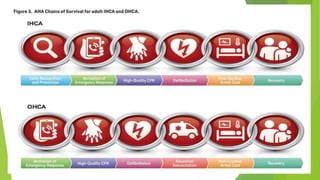
 Cardiac arrest is the most time-critical medical
emergency an anaesthetist may face. Effective
basic and advanced life support measures must be
applied as early as possible to maximise the
chance of survival and minimise hypoxic
neurological damage.
 Cardiopulmonary resuscitation (CPR) and
emergency cardiovascular care (ECC) should be
considered any time an individual cannot
adequately oxygenate or perfuse vital organs—not
only following cardiac or respiratory arrest. This
presentation is an overview of the 2020 American
Heart Association (AHA) Guidelines Update for
Cardiopulmonary Resuscitation and Emergency
Cardiovascular Care, which provides revised
recommendations for establishing and maintaining
the CABDs of cardiopulmonary resuscitation:
Circulation, Airway, Breathing, and Defibrillation.
Diagnosis of Cardiac Arrest
 Many trained healthcare staff may not be able to
assess a patient’s breathing and pulse sufficiently
reliably to confirm cardiac arrest. Agonal
breathing is common in the early stages of cardiac
arrest; it is a sign of cardiac arrest and should not
be confused as being a sign of life or circulation.
Agonal breathing can also occur during chest
compressions as cerebral perfusion improves but
is not indicative of a return of spontaneous
circulation (ROSC). Delivering chest compressions
to a patient with a beating heart is unlikely to
cause harm.
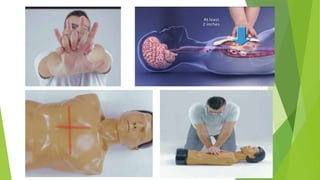
High-quality CPR
 The quality of chest compressions is often poor, and in
particular, frequent and unnecessary interruptions often occur.
Even short interruptions to chest compressions may compromise
outcome. The correct hand position for chest compression is the
middle of the lower half of the sternum. The recommended
depth of compression is 5–6cm and rate 100–120 compressions
per minute. The chest should be allowed to recoil completely in
between each compression. If available, a prompt or a feedback
device should be used to help ensure high-quality chest
compressions. The person providing chest compressions should
change about every 2min or earlier if unable to continue high-
quality chest compressions. This change should be done with
minimal interruption to compressions.
Basic life support
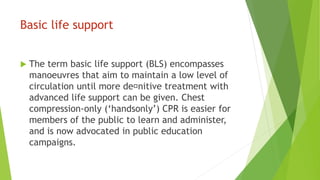
 The term basic life support (BLS) encompasses
manoeuvres that aim to maintain a low level of
circulation until more de nitive treatment with
advanced life support can be given. Chest
compression-only (‘handsonly’) CPR is easier for
members of the public to learn and administer,
and is now advocated in public education
campaigns.
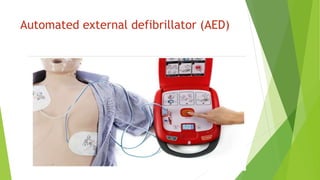
Automated external defibrillator (AED)
Advanced life support
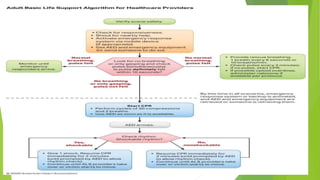
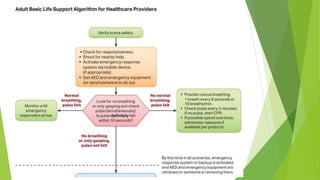
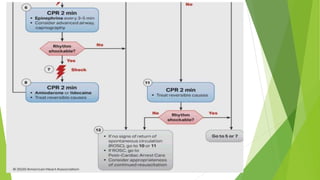
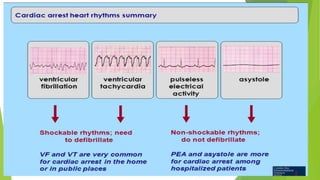
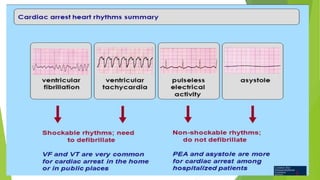
 Arrhythmias associated with cardiac arrest are
divided into two groups: shockable rhythms
(VF/pulseless VT); and non-shockable rhythms
(asystole and PEA). The principle difference in
management is the need for attempted defibrillation
in patients with VF/pulseless VT. Subsequent actions,
including chest compression, airway management,
ventilation, vascular access, injection of adrenaline
and the identification and correction of reversible
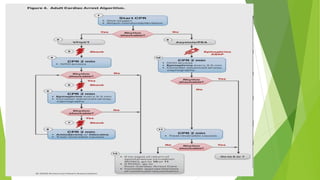
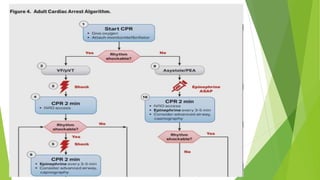
factors, are common to both groups. The ALS
algorithm provides a standardised approach to the
management of adult patients in cardiac arrest
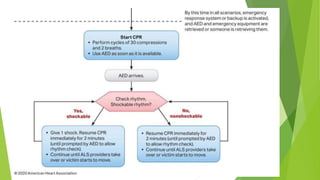
Shockable rhythms (VF/pulseless VT)
 The first monitored rhythm is VF/pulseless VT in approximately
25% of cardiac arrests, both in or out of hospital. Ventricular
fibrillation/pulseless VT will also occur at some stage during
resuscitation in about 25% of cardiac arrests with an initial
documented rhythm of asystole or PEA. Having confirmed cardiac
arrest, help (including a defibrillator) is summoned and CPR
initiated, beginning chest compressions with a
compression/ventilation (CV) ratio of 30 : 2. When the
defibrillator arrives, chest compressions are continued while
applying self-adhesive pads. The rhythm is identified and treated
according to the ALS algorithm.
Sequence of actions
 • If VF/pulseless VT is confirmed, charge the defibrillator while
another rescuer continues chest compressions. Choose an energy
setting of at least 150 J for the first shock and the same or a higher
energy for subsequent shocks, or follow the manufacturer’s
guidance for the particular defibrillator.
 • Once the defibrillator is charged, pause the chest compressions,
quickly ensure that all rescuers are clear of the patient, and then
give one shock. The person doing compressions or another rescuer
may deliver the shock. This sequence should be planned before
stopping compressions. This pause in chest compressions should be
brief and no longer than 5 s.
Cont...
 • Resume chest compressions immediately (CV ratio 30 : 2)
without reassessing the rhythm or feeling for a pulse.
 • Continue CPR for 2 min, then pause briefly to check the
monitor.
 • If VF/pulseless VT persists:
 • Give a further (second) shock and, without reassessing the
rhythm or feeling for a pulse, resume CPR (CV ratio 30 : 2)
immediately after the shock, starting with chest compressions.
 • On completion of CPR for 2 min, pause briefly to check the
monitor.
Cont...
 • If VF/pulseless VT persists:
 • Give a further (third) shock and, without reassessing the rhythm
or feeling for a pulse, resume CPR (CV ratio 30 : 2) immediately
after the shock, starting with chest compressions.
 • If i.v./intraosseous access has been obtained, give adrenaline
1 mg and amiodarone 300 mg once compressions have resumed. On
completion of CPR for 2 min, pause briefly to check the monitor.
 • If VF/pulseless VT persists:
 • Give a further (fourth) shock; resume CPR immediately and
continue for 2 min.
 • Give adrenaline 1 mg with alternate cycles of CPR (i.e.
Approximately every 3–5 min).
Cont ...
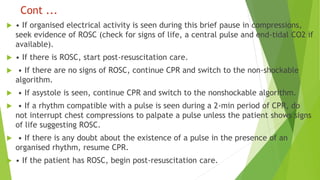
 • If organised electrical activity is seen during this brief pause in compressions,
seek evidence of ROSC (check for signs of life, a central pulse and end-tidal CO2 if
available).
 • If there is ROSC, start post-resuscitation care.
 • If there are no signs of ROSC, continue CPR and switch to the non-shockable
algorithm.
 • If asystole is seen, continue CPR and switch to the nonshockable algorithm.
 • If a rhythm compatible with a pulse is seen during a 2-min period of CPR, do
not interrupt chest compressions to palpate a pulse unless the patient shows signs
of life suggesting ROSC.
 • If there is any doubt about the existence of a pulse in the presence of an
organised rhythm, resume CPR.
 • If the patient has ROSC, begin post-resuscitation care.
Precordial thump
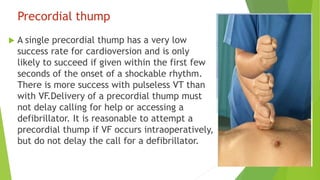
 A single precordial thump has a very low
success rate for cardioversion and is only
likely to succeed if given within the first few
seconds of the onset of a shockable rhythm.
There is more success with pulseless VT than
with VF.Delivery of a precordial thump must
not delay calling for help or accessing a
defibrillator. It is reasonable to attempt a
precordial thump if VF occurs intraoperatively,
but do not delay the call for a defibrillator.
Non-shockable rhythms (PEA and asystole)
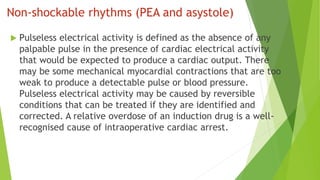
 Pulseless electrical activity is defined as the absence of any
palpable pulse in the presence of cardiac electrical activity
that would be expected to produce a cardiac output. There
may be some mechanical myocardial contractions that are too
weak to produce a detectable pulse or blood pressure.
Pulseless electrical activity may be caused by reversible
conditions that can be treated if they are identified and
corrected. A relative overdose of an induction drug is a well-
recognised cause of intraoperative cardiac arrest.
Sequence of actions for PEA and asystole
 • Start CPR (CV ratio 30 : 2) and inject adrenaline 1 mg as soon as
i.v./intraosseous access is achieved.
 • Continue CPR (CV ratio 30 : 2) until the airway is secured, then continue chest
compressions without pausing during ventilation.
 • Recheck the patient after 2 min.
 • If electrical activity compatible with a pulse is seen, check for a pulse and signs
of life:
 • If a pulse or signs of life are present, start postresuscitation care.
 • If no pulse or no signs of life are present (PEA or asystole):
 • Continue CPR & Recheck the rhythm after 2 min and proceed accordingly.
 • Give further adrenaline 1 mg every 3–5 min (during alternate 2-min loops of
CPR).
 • If VF/pulseless VT at rhythm check, change to the shockable rhythm algorithm.
CPR Quality
 Push hard (at least 2 inches [5 cm]) and fast (100-120/min)
and allow complete chest recoil.
 Minimize interruptions in compressions.
 Avoid excessive ventilation.
 Change compressor every 2 minutes, or sooner if fatigued.
 If no advanced airway, 30:2 compression-ventilation ratio.
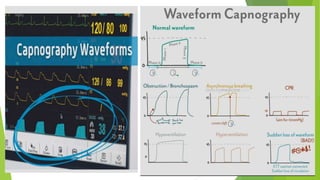
 Quantitative waveform capnography
-If PETCO₂ is low or decreasing, reassess CPR quality.
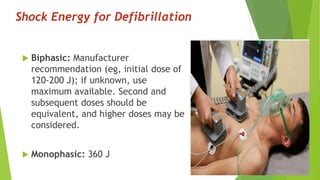
Shock Energy for Defibrillation
 Biphasic: Manufacturer
recommendation (eg, initial dose of
120-200 J); if unknown, use
maximum available. Second and
subsequent doses should be
equivalent, and higher doses may be
considered.
 Monophasic: 360 J
Drug Therapy
 Epinephrine IV/IO dose:
1 mg every 3-5 minutes
 Amiodarone IV/IO dose:
First dose: 300 mg bolus.
Second dose: 150 mg.
Or
 Lidocaine IV/IO dose:
First dose: 1-1.5 mg/kg.
Second dose: 0.5-0.75 mg/kg.
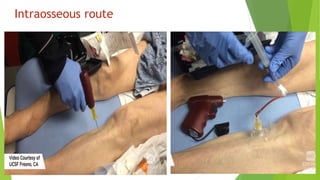
Intraosseous route
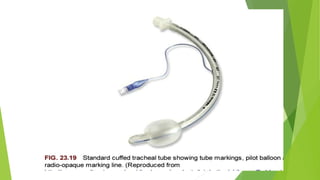
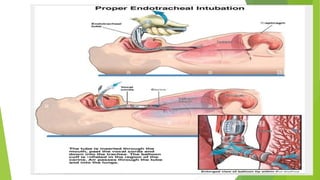
Advanced Airway
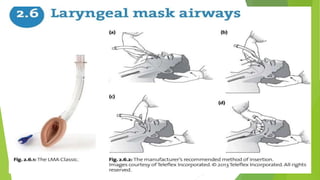
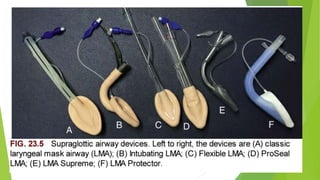
 Endotracheal intubation or supraglottic advanced
airway
 Waveform capnography or capnometry to confirm and
monitor ET tube placement
 Once advanced airway in place, give 1 breath every 6
seconds (10 breaths/min) with continuous chest
compressions
Return of Spontaneous Circulation
(ROSC)
 Pulse and blood pressure
 Abrupt sustained increase in PETCO₂ (typically ≥40 mm
Hg).
 Spontaneous arterial pressure waves with intra-arterial
monitoring
Reversible Causes
 Hypovolemia
 Hypoxia
 Hydrogen ion (acidosis)
 Hypo-/hyperkalemia
 Hypothermia
 Tension pneumothorax
 Tamponade, cardiac
 Toxins
 Thrombosis, pulmonary
 Thrombosis, coronary
Potentially reversible causes
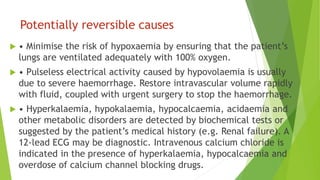
 • Minimise the risk of hypoxaemia by ensuring that the patient’s
lungs are ventilated adequately with 100% oxygen.
 • Pulseless electrical activity caused by hypovolaemia is usually
due to severe haemorrhage. Restore intravascular volume rapidly
with fluid, coupled with urgent surgery to stop the haemorrhage.
 • Hyperkalaemia, hypokalaemia, hypocalcaemia, acidaemia and
other metabolic disorders are detected by biochemical tests or
suggested by the patient’s medical history (e.g. Renal failure). A
12-lead ECG may be diagnostic. Intravenous calcium chloride is
indicated in the presence of hyperkalaemia, hypocalcaemia and
overdose of calcium channel blocking drugs.
Cont ...
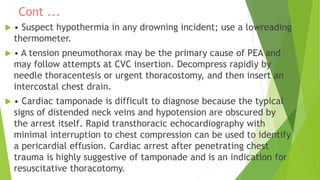
 • Suspect hypothermia in any drowning incident; use a lowreading
thermometer.
 • A tension pneumothorax may be the primary cause of PEA and
may follow attempts at CVC insertion. Decompress rapidly by
needle thoracentesis or urgent thoracostomy, and then insert an
intercostal chest drain.
 • Cardiac tamponade is difficult to diagnose because the typical
signs of distended neck veins and hypotension are obscured by
the arrest itself. Rapid transthoracic echocardiography with
minimal interruption to chest compression can be used to identify
a pericardial effusion. Cardiac arrest after penetrating chest
trauma is highly suggestive of tamponade and is an indication for
resuscitative thoracotomy.
Cont...
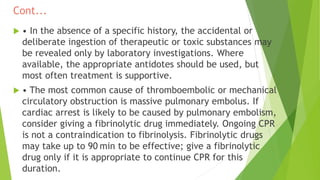
 • In the absence of a specific history, the accidental or
deliberate ingestion of therapeutic or toxic substances may
be revealed only by laboratory investigations. Where
available, the appropriate antidotes should be used, but
most often treatment is supportive.
 • The most common cause of thromboembolic or mechanical
circulatory obstruction is massive pulmonary embolus. If
cardiac arrest is likely to be caused by pulmonary embolism,
consider giving a fibrinolytic drug immediately. Ongoing CPR
is not a contraindication to fibrinolysis. Fibrinolytic drugs
may take up to 90 min to be effective; give a fibrinolytic
drug only if it is appropriate to continue CPR for this
duration.
Use of ultrasound imaging during ALS
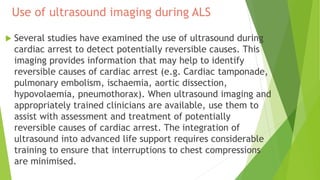
 Several studies have examined the use of ultrasound during
cardiac arrest to detect potentially reversible causes. This
imaging provides information that may help to identify
reversible causes of cardiac arrest (e.g. Cardiac tamponade,
pulmonary embolism, ischaemia, aortic dissection,
hypovolaemia, pneumothorax). When ultrasound imaging and
appropriately trained clinicians are available, use them to
assist with assessment and treatment of potentially
reversible causes of cardiac arrest. The integration of
ultrasound into advanced life support requires considerable
training to ensure that interruptions to chest compressions
are minimised.
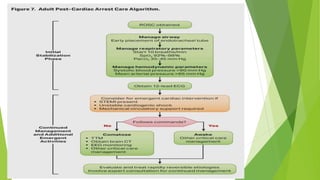
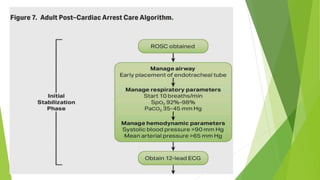
Initial Stabilization Phase
 Resuscitation is ongoing during the post-ROSC phase, and
many of these activities can occur concurrently. However,
if prioritization is necessary, follow these steps:
 Airway management: Waveform capnography or
capnometry to confirm and monitor endotracheal tube
placement
 Manage respiratory parameters: Titrate FIO2, for SpO2,
92%-98%; start at 10 breaths/min; titrate to PaCO2 of 35-
45 mm Hg
 Manage hemodynamic parameters: Administer crystalloid
and/or vasopressor or inotrope for goal systolic blood
pressure >90 mm Hg or mean arterial pressure >65 mm Hg
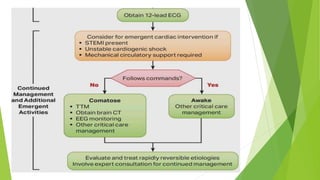
Continued Management and Additional
Emergent Activities
 Emergent cardiac intervention: Early evaluation of 12-
lead electrocardiogram (ECG); consider hemodynamics
for decision on cardiac intervention
 TTM: If patient is not following commands, start TTM as
soon as possible; begin at 32-36°C for 24 hours by using a
cooling device with feedback loop
 Other critical care management:
- Continuously monitor core temperature.
- Maintain normoxia, normocapnia, euglycemia
- Provide continuous or intermittent
electroencephalogram (EEG) monitoring
- Provide lung-protective ventilation
Take home massage
 Cardiopulmonary resuscitation (CPR) and emergency cardiovascular
care (ECC) should be considered any time an individual cannot
adequately oxygenate or perfuse vital organs—not only following
cardiac or respiratory arrest.
 Chest compressions should not be delayed; intubation may take place
during CPR or during the pulse check. Attempts at intubation should
not interrupt ventilation for more than 10 s.
 Circulation takes precedence over airway interventions and breathing
in the cardiac arrest patient. Whether adult resuscitation is performed
by a single rescuer or by two rescuers, two breaths are administered
every 30 compressions (30:2), allowing 3 to 4 s for every two breaths.
 The cardiac compression rate should be 100 to 120/min regardless of
the number of rescuers.
 Health care personnel working in hospitals and ambulatory
care facilities must be able to provide early defibrillation to
patients with ventricular fibrillation as soon as possible. The
time from collapse to defibrillation is the most important
determinant of survival. The chances for survival decline 7%
to 10% for every minute without defibrillation.
 If intravenous cannulation is difficult, an intraosseous
infusion can provide emergency vascular access in children
and adults. Lidocaine, epinephrine, atropine, naloxone, and
vasopressin can be delivered via a catheter whose tip
extends past the endotracheal tube. Dosages 2 to 2½ times
higher than recommended for intravenous use, diluted in 5
to 10 mL of normal saline or distilled water, are
recommended for adult patients.
 The provision of uninterrupted, high-quality chest
compressions after SCA is associated with better
survival and neurologic outcomes than delaying
chest compressions for airway intervention in
both adult and pediatric patients. Circulation,
airway, breathing has replaced airway, breathing,
circulation
Thank you

CPR introduction and mechanisms to do.pptx

  • 1.
    Cardiac arrest & Cardiopulmonary resuscitation(CPR) Dr. Muhammad Nahidul Islam Mbbs,MD (phase A) Dept of Anaesthesiology
  • 2.
    INTRODUCTION  Cardiac arrestis the most time-critical medical emergency an anaesthetist may face. Effective basic and advanced life support measures must be applied as early as possible to maximise the chance of survival and minimise hypoxic neurological damage.
  • 3.
     Cardiopulmonary resuscitation(CPR) and emergency cardiovascular care (ECC) should be considered any time an individual cannot adequately oxygenate or perfuse vital organs—not only following cardiac or respiratory arrest. This presentation is an overview of the 2020 American Heart Association (AHA) Guidelines Update for Cardiopulmonary Resuscitation and Emergency Cardiovascular Care, which provides revised recommendations for establishing and maintaining the CABDs of cardiopulmonary resuscitation: Circulation, Airway, Breathing, and Defibrillation.
  • 4.
    Diagnosis of CardiacArrest  Many trained healthcare staff may not be able to assess a patient’s breathing and pulse sufficiently reliably to confirm cardiac arrest. Agonal breathing is common in the early stages of cardiac arrest; it is a sign of cardiac arrest and should not be confused as being a sign of life or circulation. Agonal breathing can also occur during chest compressions as cerebral perfusion improves but is not indicative of a return of spontaneous circulation (ROSC). Delivering chest compressions to a patient with a beating heart is unlikely to cause harm.
  • 5.
    High-quality CPR  Thequality of chest compressions is often poor, and in particular, frequent and unnecessary interruptions often occur. Even short interruptions to chest compressions may compromise outcome. The correct hand position for chest compression is the middle of the lower half of the sternum. The recommended depth of compression is 5–6cm and rate 100–120 compressions per minute. The chest should be allowed to recoil completely in between each compression. If available, a prompt or a feedback device should be used to help ensure high-quality chest compressions. The person providing chest compressions should change about every 2min or earlier if unable to continue high- quality chest compressions. This change should be done with minimal interruption to compressions.
  • 8.
    Basic life support The term basic life support (BLS) encompasses manoeuvres that aim to maintain a low level of circulation until more de nitive treatment with advanced life support can be given. Chest compression-only (‘handsonly’) CPR is easier for members of the public to learn and administer, and is now advocated in public education campaigns.
  • 12.
  • 13.
    Advanced life support Arrhythmias associated with cardiac arrest are divided into two groups: shockable rhythms (VF/pulseless VT); and non-shockable rhythms (asystole and PEA). The principle difference in management is the need for attempted defibrillation in patients with VF/pulseless VT. Subsequent actions, including chest compression, airway management, ventilation, vascular access, injection of adrenaline and the identification and correction of reversible factors, are common to both groups. The ALS algorithm provides a standardised approach to the management of adult patients in cardiac arrest
  • 17.
    Shockable rhythms (VF/pulselessVT)  The first monitored rhythm is VF/pulseless VT in approximately 25% of cardiac arrests, both in or out of hospital. Ventricular fibrillation/pulseless VT will also occur at some stage during resuscitation in about 25% of cardiac arrests with an initial documented rhythm of asystole or PEA. Having confirmed cardiac arrest, help (including a defibrillator) is summoned and CPR initiated, beginning chest compressions with a compression/ventilation (CV) ratio of 30 : 2. When the defibrillator arrives, chest compressions are continued while applying self-adhesive pads. The rhythm is identified and treated according to the ALS algorithm.
  • 19.
    Sequence of actions • If VF/pulseless VT is confirmed, charge the defibrillator while another rescuer continues chest compressions. Choose an energy setting of at least 150 J for the first shock and the same or a higher energy for subsequent shocks, or follow the manufacturer’s guidance for the particular defibrillator.  • Once the defibrillator is charged, pause the chest compressions, quickly ensure that all rescuers are clear of the patient, and then give one shock. The person doing compressions or another rescuer may deliver the shock. This sequence should be planned before stopping compressions. This pause in chest compressions should be brief and no longer than 5 s.
  • 20.
    Cont...  • Resumechest compressions immediately (CV ratio 30 : 2) without reassessing the rhythm or feeling for a pulse.  • Continue CPR for 2 min, then pause briefly to check the monitor.  • If VF/pulseless VT persists:  • Give a further (second) shock and, without reassessing the rhythm or feeling for a pulse, resume CPR (CV ratio 30 : 2) immediately after the shock, starting with chest compressions.  • On completion of CPR for 2 min, pause briefly to check the monitor.
  • 21.
    Cont...  • IfVF/pulseless VT persists:  • Give a further (third) shock and, without reassessing the rhythm or feeling for a pulse, resume CPR (CV ratio 30 : 2) immediately after the shock, starting with chest compressions.  • If i.v./intraosseous access has been obtained, give adrenaline 1 mg and amiodarone 300 mg once compressions have resumed. On completion of CPR for 2 min, pause briefly to check the monitor.  • If VF/pulseless VT persists:  • Give a further (fourth) shock; resume CPR immediately and continue for 2 min.  • Give adrenaline 1 mg with alternate cycles of CPR (i.e. Approximately every 3–5 min).
  • 22.
    Cont ...  •If organised electrical activity is seen during this brief pause in compressions, seek evidence of ROSC (check for signs of life, a central pulse and end-tidal CO2 if available).  • If there is ROSC, start post-resuscitation care.  • If there are no signs of ROSC, continue CPR and switch to the non-shockable algorithm.  • If asystole is seen, continue CPR and switch to the nonshockable algorithm.  • If a rhythm compatible with a pulse is seen during a 2-min period of CPR, do not interrupt chest compressions to palpate a pulse unless the patient shows signs of life suggesting ROSC.  • If there is any doubt about the existence of a pulse in the presence of an organised rhythm, resume CPR.  • If the patient has ROSC, begin post-resuscitation care.
  • 23.
    Precordial thump  Asingle precordial thump has a very low success rate for cardioversion and is only likely to succeed if given within the first few seconds of the onset of a shockable rhythm. There is more success with pulseless VT than with VF.Delivery of a precordial thump must not delay calling for help or accessing a defibrillator. It is reasonable to attempt a precordial thump if VF occurs intraoperatively, but do not delay the call for a defibrillator.
  • 24.
    Non-shockable rhythms (PEAand asystole)  Pulseless electrical activity is defined as the absence of any palpable pulse in the presence of cardiac electrical activity that would be expected to produce a cardiac output. There may be some mechanical myocardial contractions that are too weak to produce a detectable pulse or blood pressure. Pulseless electrical activity may be caused by reversible conditions that can be treated if they are identified and corrected. A relative overdose of an induction drug is a well- recognised cause of intraoperative cardiac arrest.
  • 26.
    Sequence of actionsfor PEA and asystole  • Start CPR (CV ratio 30 : 2) and inject adrenaline 1 mg as soon as i.v./intraosseous access is achieved.  • Continue CPR (CV ratio 30 : 2) until the airway is secured, then continue chest compressions without pausing during ventilation.  • Recheck the patient after 2 min.  • If electrical activity compatible with a pulse is seen, check for a pulse and signs of life:  • If a pulse or signs of life are present, start postresuscitation care.  • If no pulse or no signs of life are present (PEA or asystole):  • Continue CPR & Recheck the rhythm after 2 min and proceed accordingly.  • Give further adrenaline 1 mg every 3–5 min (during alternate 2-min loops of CPR).  • If VF/pulseless VT at rhythm check, change to the shockable rhythm algorithm.
  • 27.
    CPR Quality  Pushhard (at least 2 inches [5 cm]) and fast (100-120/min) and allow complete chest recoil.  Minimize interruptions in compressions.  Avoid excessive ventilation.  Change compressor every 2 minutes, or sooner if fatigued.  If no advanced airway, 30:2 compression-ventilation ratio.  Quantitative waveform capnography -If PETCO₂ is low or decreasing, reassess CPR quality.
  • 29.
    Shock Energy forDefibrillation  Biphasic: Manufacturer recommendation (eg, initial dose of 120-200 J); if unknown, use maximum available. Second and subsequent doses should be equivalent, and higher doses may be considered.  Monophasic: 360 J
  • 30.
    Drug Therapy  EpinephrineIV/IO dose: 1 mg every 3-5 minutes  Amiodarone IV/IO dose: First dose: 300 mg bolus. Second dose: 150 mg. Or  Lidocaine IV/IO dose: First dose: 1-1.5 mg/kg. Second dose: 0.5-0.75 mg/kg.
  • 31.
  • 32.
    Advanced Airway  Endotrachealintubation or supraglottic advanced airway  Waveform capnography or capnometry to confirm and monitor ET tube placement  Once advanced airway in place, give 1 breath every 6 seconds (10 breaths/min) with continuous chest compressions
  • 37.
    Return of SpontaneousCirculation (ROSC)  Pulse and blood pressure  Abrupt sustained increase in PETCO₂ (typically ≥40 mm Hg).  Spontaneous arterial pressure waves with intra-arterial monitoring
  • 38.
    Reversible Causes  Hypovolemia Hypoxia  Hydrogen ion (acidosis)  Hypo-/hyperkalemia  Hypothermia  Tension pneumothorax  Tamponade, cardiac  Toxins  Thrombosis, pulmonary  Thrombosis, coronary
  • 39.
    Potentially reversible causes • Minimise the risk of hypoxaemia by ensuring that the patient’s lungs are ventilated adequately with 100% oxygen.  • Pulseless electrical activity caused by hypovolaemia is usually due to severe haemorrhage. Restore intravascular volume rapidly with fluid, coupled with urgent surgery to stop the haemorrhage.  • Hyperkalaemia, hypokalaemia, hypocalcaemia, acidaemia and other metabolic disorders are detected by biochemical tests or suggested by the patient’s medical history (e.g. Renal failure). A 12-lead ECG may be diagnostic. Intravenous calcium chloride is indicated in the presence of hyperkalaemia, hypocalcaemia and overdose of calcium channel blocking drugs.
  • 40.
    Cont ...  •Suspect hypothermia in any drowning incident; use a lowreading thermometer.  • A tension pneumothorax may be the primary cause of PEA and may follow attempts at CVC insertion. Decompress rapidly by needle thoracentesis or urgent thoracostomy, and then insert an intercostal chest drain.  • Cardiac tamponade is difficult to diagnose because the typical signs of distended neck veins and hypotension are obscured by the arrest itself. Rapid transthoracic echocardiography with minimal interruption to chest compression can be used to identify a pericardial effusion. Cardiac arrest after penetrating chest trauma is highly suggestive of tamponade and is an indication for resuscitative thoracotomy.
  • 41.
    Cont...  • Inthe absence of a specific history, the accidental or deliberate ingestion of therapeutic or toxic substances may be revealed only by laboratory investigations. Where available, the appropriate antidotes should be used, but most often treatment is supportive.  • The most common cause of thromboembolic or mechanical circulatory obstruction is massive pulmonary embolus. If cardiac arrest is likely to be caused by pulmonary embolism, consider giving a fibrinolytic drug immediately. Ongoing CPR is not a contraindication to fibrinolysis. Fibrinolytic drugs may take up to 90 min to be effective; give a fibrinolytic drug only if it is appropriate to continue CPR for this duration.
  • 42.
    Use of ultrasoundimaging during ALS  Several studies have examined the use of ultrasound during cardiac arrest to detect potentially reversible causes. This imaging provides information that may help to identify reversible causes of cardiac arrest (e.g. Cardiac tamponade, pulmonary embolism, ischaemia, aortic dissection, hypovolaemia, pneumothorax). When ultrasound imaging and appropriately trained clinicians are available, use them to assist with assessment and treatment of potentially reversible causes of cardiac arrest. The integration of ultrasound into advanced life support requires considerable training to ensure that interruptions to chest compressions are minimised.
  • 46.
    Initial Stabilization Phase Resuscitation is ongoing during the post-ROSC phase, and many of these activities can occur concurrently. However, if prioritization is necessary, follow these steps:  Airway management: Waveform capnography or capnometry to confirm and monitor endotracheal tube placement  Manage respiratory parameters: Titrate FIO2, for SpO2, 92%-98%; start at 10 breaths/min; titrate to PaCO2 of 35- 45 mm Hg  Manage hemodynamic parameters: Administer crystalloid and/or vasopressor or inotrope for goal systolic blood pressure >90 mm Hg or mean arterial pressure >65 mm Hg
  • 47.
    Continued Management andAdditional Emergent Activities  Emergent cardiac intervention: Early evaluation of 12- lead electrocardiogram (ECG); consider hemodynamics for decision on cardiac intervention  TTM: If patient is not following commands, start TTM as soon as possible; begin at 32-36°C for 24 hours by using a cooling device with feedback loop  Other critical care management: - Continuously monitor core temperature. - Maintain normoxia, normocapnia, euglycemia - Provide continuous or intermittent electroencephalogram (EEG) monitoring - Provide lung-protective ventilation
  • 48.
    Take home massage Cardiopulmonary resuscitation (CPR) and emergency cardiovascular care (ECC) should be considered any time an individual cannot adequately oxygenate or perfuse vital organs—not only following cardiac or respiratory arrest.  Chest compressions should not be delayed; intubation may take place during CPR or during the pulse check. Attempts at intubation should not interrupt ventilation for more than 10 s.  Circulation takes precedence over airway interventions and breathing in the cardiac arrest patient. Whether adult resuscitation is performed by a single rescuer or by two rescuers, two breaths are administered every 30 compressions (30:2), allowing 3 to 4 s for every two breaths.  The cardiac compression rate should be 100 to 120/min regardless of the number of rescuers.
  • 49.
     Health carepersonnel working in hospitals and ambulatory care facilities must be able to provide early defibrillation to patients with ventricular fibrillation as soon as possible. The time from collapse to defibrillation is the most important determinant of survival. The chances for survival decline 7% to 10% for every minute without defibrillation.  If intravenous cannulation is difficult, an intraosseous infusion can provide emergency vascular access in children and adults. Lidocaine, epinephrine, atropine, naloxone, and vasopressin can be delivered via a catheter whose tip extends past the endotracheal tube. Dosages 2 to 2½ times higher than recommended for intravenous use, diluted in 5 to 10 mL of normal saline or distilled water, are recommended for adult patients.
  • 50.
     The provisionof uninterrupted, high-quality chest compressions after SCA is associated with better survival and neurologic outcomes than delaying chest compressions for airway intervention in both adult and pediatric patients. Circulation, airway, breathing has replaced airway, breathing, circulation
  • 51.