JOHNY WILBERT, M.SC[N]
LECTURER,
APOLLO INSTITUTE OF HOSPITAL
MANAGEMENT AND ALLIED SCIENCE
 INTRODUCTION
 An inotrope is an agent, which increases or decreases
the force or energy of muscular contractions. & By
enhancing myocardial contractility, cardiac output, the
amount of blood ejected by the heart with each beat,
will also increase.
 All inotropes are successful because they increase the
myocardial contractility of the heart.
 As science advanced, other inotropes were developed
which were more potent and have different chemical
properties and physiological effects.used for CCF.
 The result of these direct and indirect effects are: -
 An increase in force and velocity of myocardial
contractility (positive inotrope effect).
 Slowing of heart rate (negative chronographic effect).
 Decreased conduction velocity through the AV node.
 CLINICALLY APPROVED INOTROPES
 Cardiac Glycosides: -Digitalis Derivatives Digoxin
 Sympathomimetics: - Epinephrine Dopamine (Intropin)
Dobutamine (dobutrex) Norepinephrine (levophed)
Isoproenol (isuprel)
 Phosphodiesterase Inhibitors: - Amrinone (Inocor)
Milirinone (Primacor)
 CARDIAC GLYCOSIDES
 An indirect effect on the cardiovascular system
regulated by the autonomic nervous system which is
responsible for the effect on the sino-atrial (SA) and
atrioventricular (AV) nodes.
 A direct effect on cardiac muscle and the conduction
system.
 Digitalis Glycosides have
 The first line of inotropes include all digitalis
derivatives
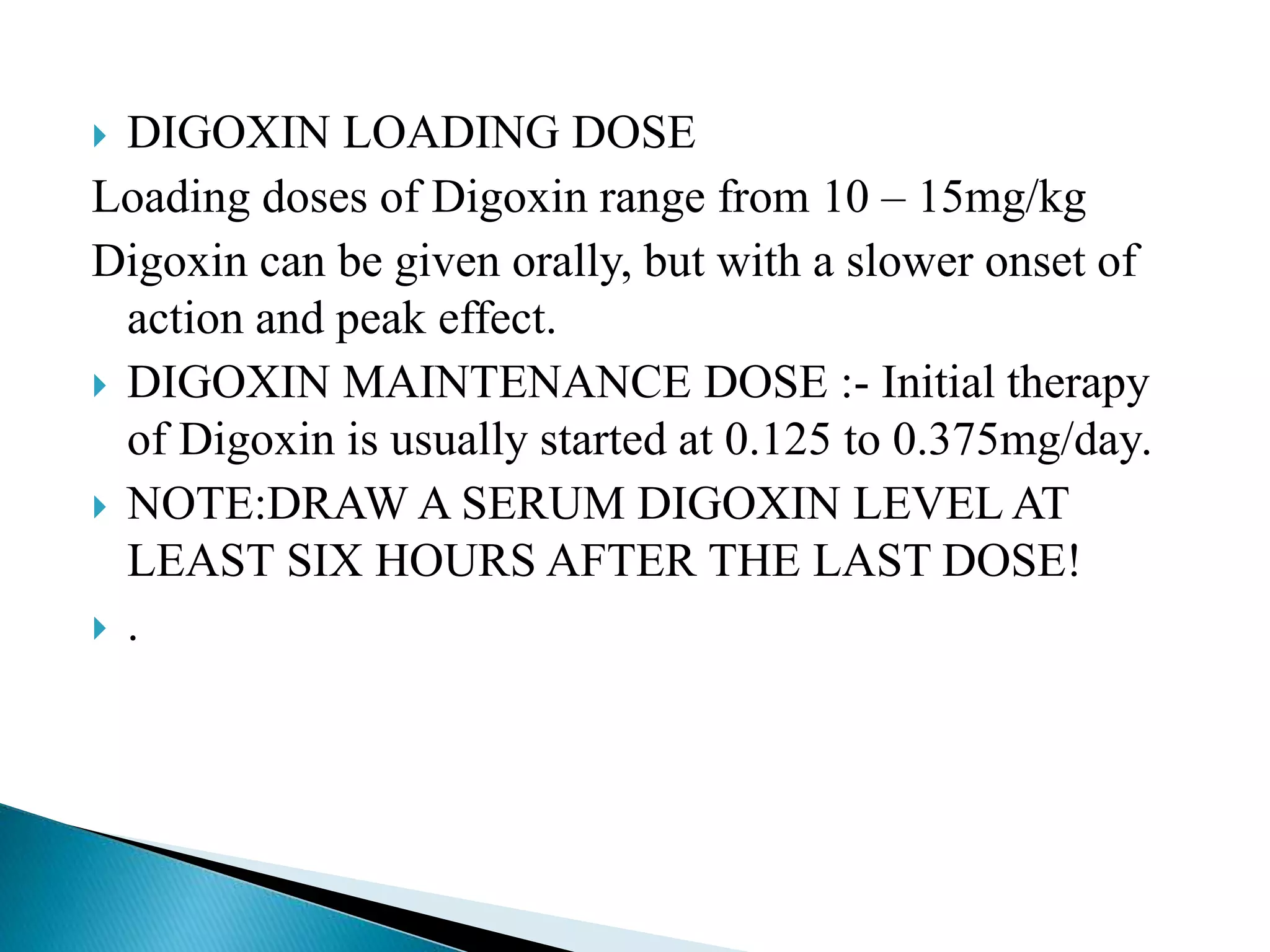
 DIGOXIN LOADING DOSE
Loading doses of Digoxin range from 10 – 15mg/kg
Digoxin can be given orally, but with a slower onset of
action and peak effect.
 DIGOXIN MAINTENANCE DOSE :- Initial therapy
of Digoxin is usually started at 0.125 to 0.375mg/day.
 NOTE:DRAW A SERUM DIGOXIN LEVEL AT
LEAST SIX HOURS AFTER THE LAST DOSE!
 .
 SIDE EFFECTS ASSOCIATED WITH TOXICITY
 GASTROINTESTINAL: Anorexia, nausea, vomiting,
diarrhea Rare: abdominal pain, hemorrhagic necrosis of
the intestines
 CNS: visual disturbances, (blurred or yellow vision),
headache, weakness, dizziness, apathy and psychosis.
 OTHER: Skin rash, gynecomastia
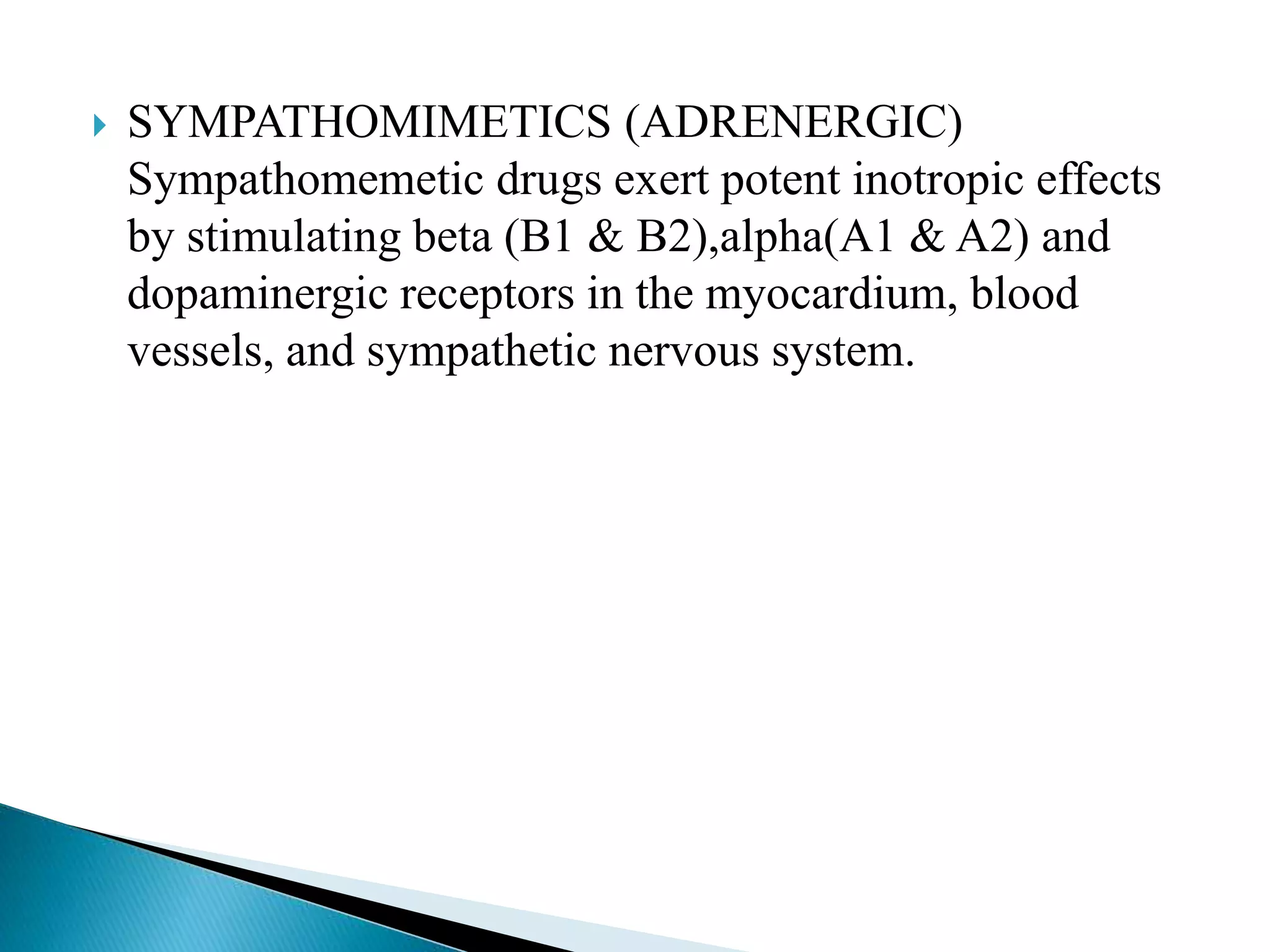
 SYMPATHOMIMETICS (ADRENERGIC)
Sympathomemetic drugs exert potent inotropic effects
by stimulating beta (B1 & B2),alpha(A1 & A2) and
dopaminergic receptors in the myocardium, blood
vessels, and sympathetic nervous system.
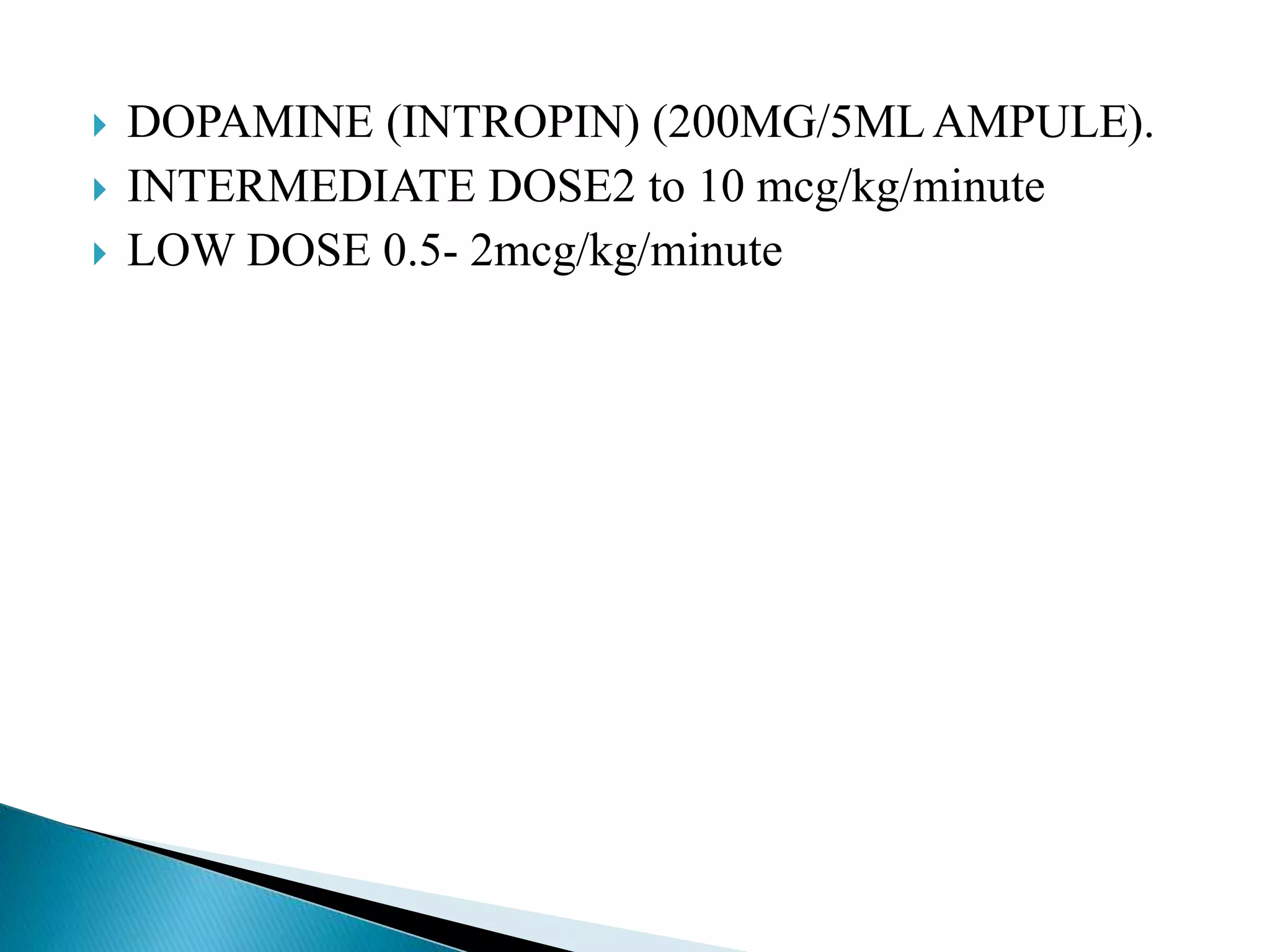
 DOPAMINE (INTROPIN) (200MG/5ML AMPULE).
 INTERMEDIATE DOSE2 to 10 mcg/kg/minute
 LOW DOSE 0.5- 2mcg/kg/minute
 Indication:-
 Occlusive vascular disease.
 Tachyarrhythmias.
 Phaeochromocytoma.
 Pregnancy. Increases mesenteric flow in mesenteric
ischaemia.
 Contraindication:
 Hypotention/haemodynamic compromise due to MI,
trauma, sepsis, CCF.  Renal protection. 
 ADVERSE EFFECTS
 Hypotension when used concomitantly with dilantin
 Increased myocardial oxygen demand.
 Headache.
 Vomiting
 Nausea
 Pulmonary congestion
 Ventricular arrhythmias
 Supraventricular tachycardia
 Tachycardia
 Nursing implication
 Monitor cardiac output, pulmonary artery pressure
ECG
 Monitor for hypertension, tachycardia, chest pain, and
premature ventricular contractions
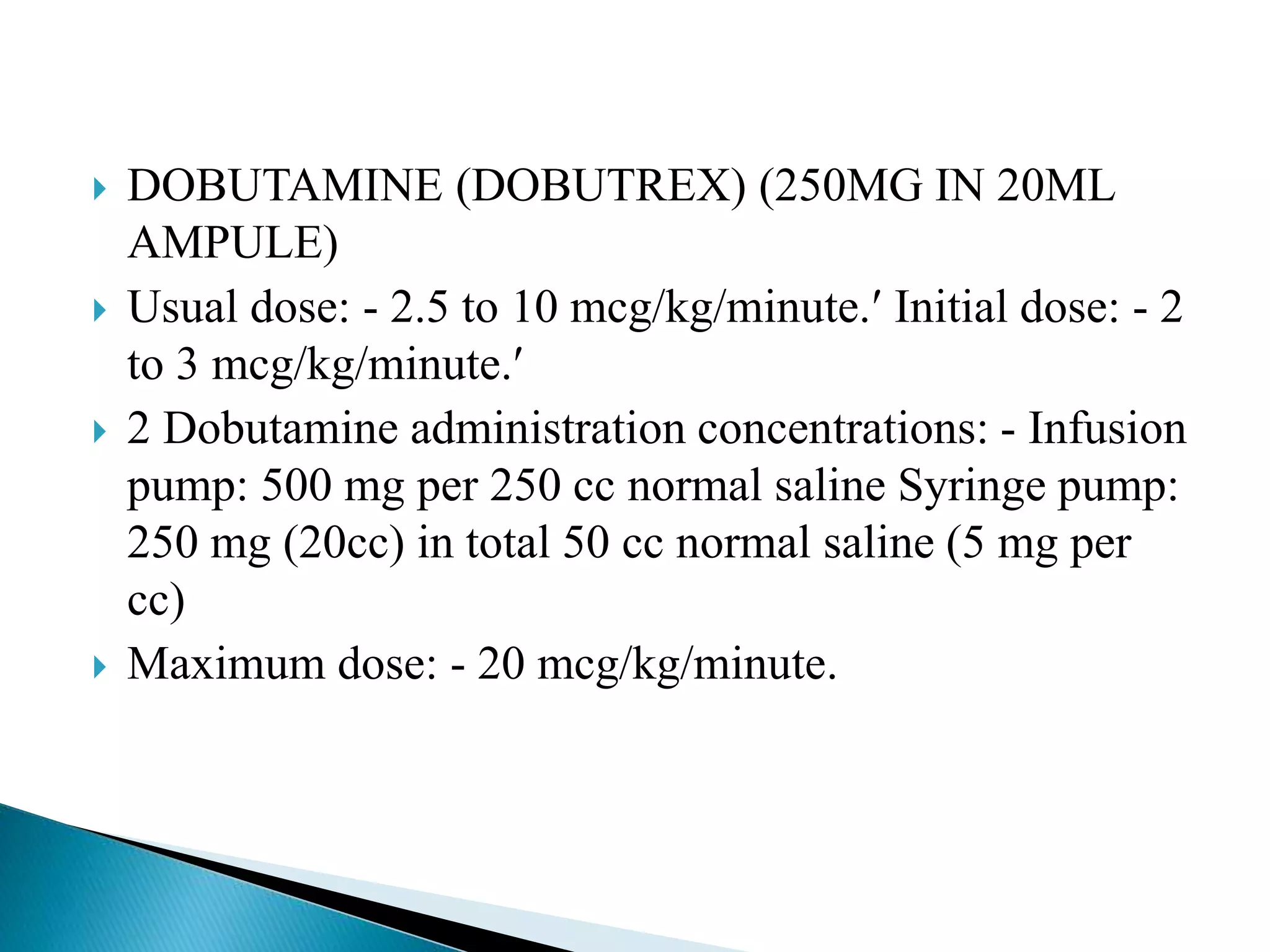
 DOBUTAMINE (DOBUTREX) (250MG IN 20ML
AMPULE)
 Usual dose: - 2.5 to 10 mcg/kg/minute. Initial dose: - 2
to 3 mcg/kg/minute.
 2 Dobutamine administration concentrations: - Infusion
pump: 500 mg per 250 cc normal saline Syringe pump:
250 mg (20cc) in total 50 cc normal saline (5 mg per
cc)
 Maximum dose: - 20 mcg/kg/minute.
 Indication
 Patient with aterial fibrillation should be digitalized
before giving this drug to prevent ventricular
tachycardia.
 Correct hypovolemia before treating with this drug.
Contraindication:-
 Idiopathic hypertrophic subaortic stenosis.
 Contraindication:- Idiopathic hypertrophic subaortic
stenosis
 Adverse effects
 Hypokalemia
 Tremors
 Nausea
 Headache
 Myocardial ischemia
 Blood pressure fluctuation
 Arrhythmias
 Tachycardia
 Nursing implication
 Monitor cardiac output, pulmonary artery pressure
ECG
 Monitor for hypertension, tachycardia, chest pain, and
premature ventricular contractions.
Adrenalin
Mechanism of action
 The action of adrenalin may vary by the type of tissue
it act,
 It causes smooth muscle relaxation in the airway
 It causes smooth muscle contraction in the arterioles
 In cardiac muscles increase contractability
INDICATION:
 Anaphylaxis reaction
 Hypotension
 Bronchospasm
 Cardiac arrest
 Asystole
 DOSE:
For Infusion : 0.05 – 0.1 microgram/kg/minute
maximum dose: 1 – 1.5 microgram/kg/minute
For In arrest : 1 ml every 2 minutes
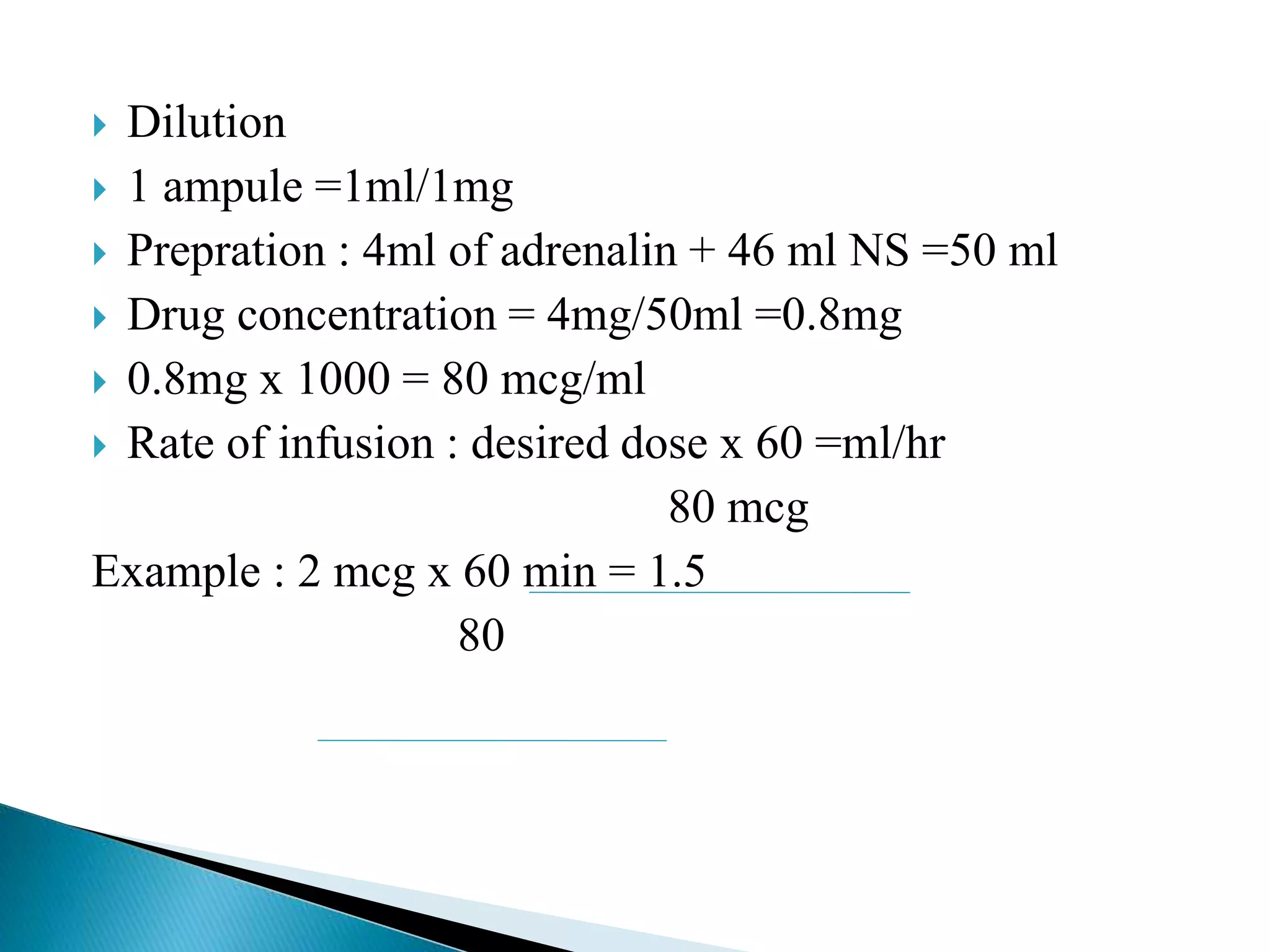
 Dilution
 1 ampule =1ml/1mg
 Prepration : 4ml of adrenalin + 46 ml NS =50 ml
 Drug concentration = 4mg/50ml =0.8mg
 0.8mg x 1000 = 80 mcg/ml
 Rate of infusion : desired dose x 60 =ml/hr
80 mcg
Example : 2 mcg x 60 min = 1.5
80
Drug interaction
 Interacts with β-blocking agents, digitalis glycosides,
antidepressants,
ADVERSE EFFECTS:
 Hypertension
 tachycardia
 Extravasations
 Anxiety, dysrhythmias
 dizziness
 pallor
 tremor,
 insomnia
 Headache, nausea
 palpitations
Nursing consideration:
 Inotropes must be adminstered in central line
 Do not cease infusion abruptly,
 Should be used with caution in patients with
atherosclerosis, mesentric and peripheral vascular
thrombosis or other occlusive vascular diseases,
metabolic acidosis, hypoxia or hyperthyroidism.
 It should be avoided in patients who are hypersensitive to
the drug.
 discard diluted solutions after 24 hours Protect ampoules
from light during storage and discard if discoloured
 Follow ten rights
 Monitor for adverse effect
 Continuous BP using invasive arterial BP monitor
 connect the patient with cardiac monitor and monitor
ECG rythym
 Inotropes must be administered using infusion or
syringe
 Should follow standard dilution
 The lable on loaded drug should contain drug
concentration and dilution
 Monitor urine output
Nor adrenalin
Mechanism of action
 The action of Inotropes may vary by the type of tissue
it act,
 It causes smooth muscle relaxation in the airway
 It causes smooth muscle contraction in the arterioles
 In cardiac muscles increase contractability
INDICATION:
 Anaphylaxis reaction
 Hypotension
 Bronchospasm
 Cardiac arrest
 Asystole
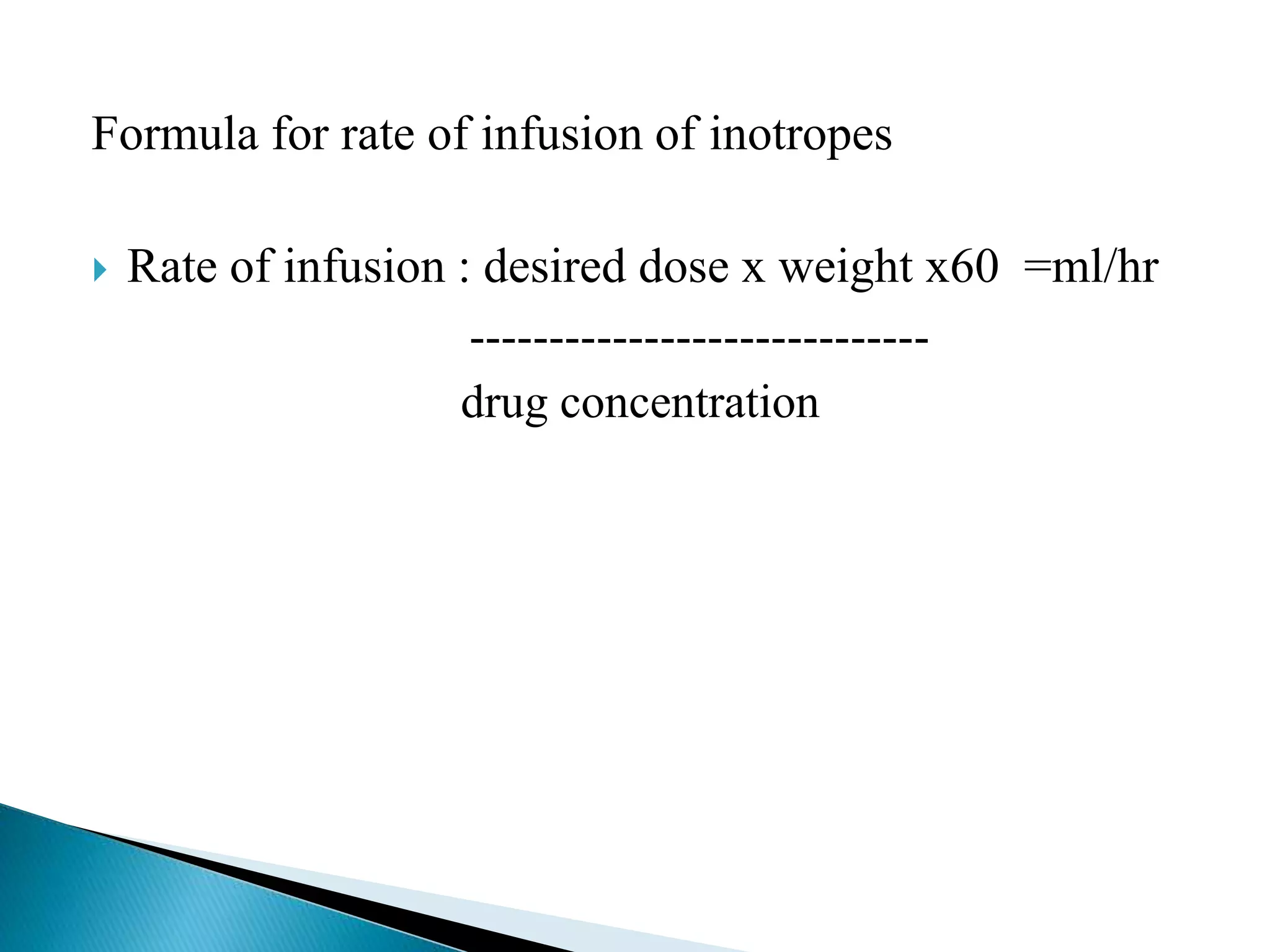
Formula for rate of infusion of inotropes
 Rate of infusion : desired dose x weight x60 =ml/hr
-----------------------------
drug concentration
 Dilution for adrenalin/nor-adrenalin
 1 ampoule adrenalin =1ml/1mg
 1 ampoule nor-adrenalin =2ml/2mg
 Preparation : 4ml of adrenalin + 46 ml NS =50 ml
 Drug concentration = 4mg/50ml =0.8mg
 0.8mg x 1000 = 80 mcg/ml
 Rate of infusion : desired dose x 60 =ml/hr
---------------
drug concentration
Example : 2 mcg x 60 min
----------------- = 1.5
80 mcg
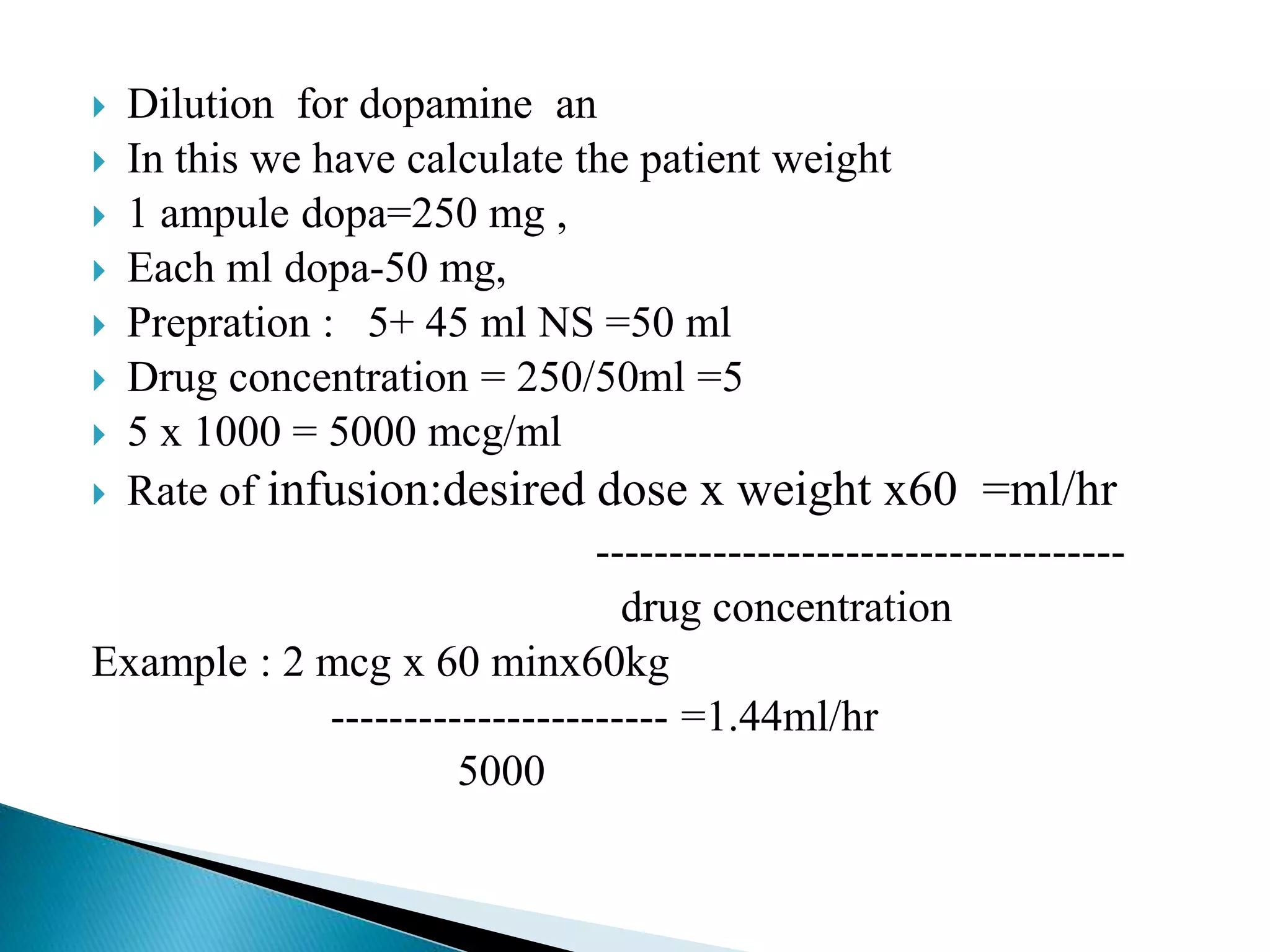
 Dilution for dopamine an
 In this we have calculate the patient weight
 1 ampule dopa=250 mg ,
 Each ml dopa-50 mg,
 Prepration : 5+ 45 ml NS =50 ml
 Drug concentration = 250/50ml =5
 5 x 1000 = 5000 mcg/ml
 Rate of infusion:desired dose x weight x60 =ml/hr
------------------------------------
drug concentration
Example : 2 mcg x 60 minx60kg
----------------------- =1.44ml/hr
5000
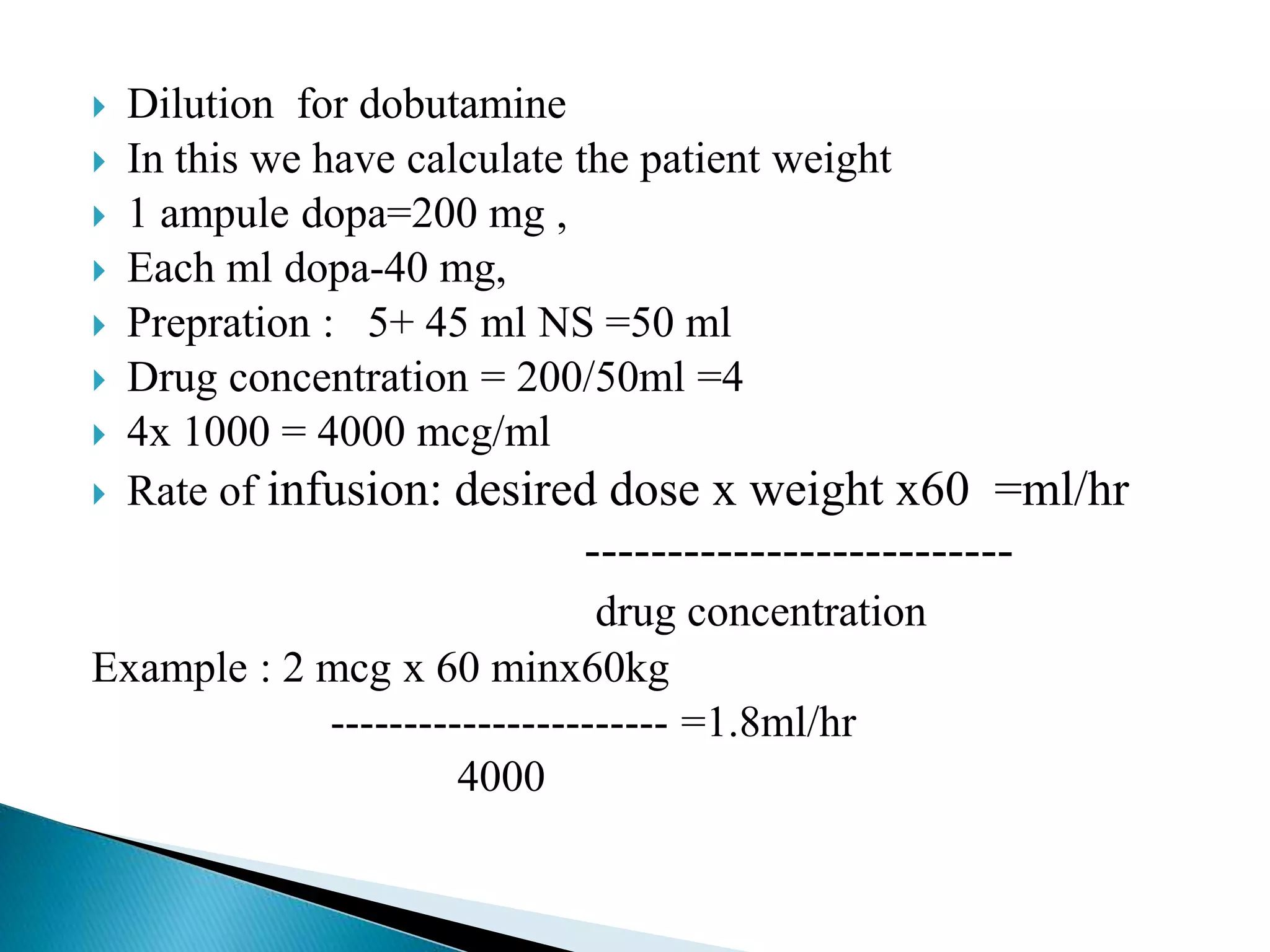
 Dilution for dobutamine
 In this we have calculate the patient weight
 1 ampule dopa=200 mg ,
 Each ml dopa-40 mg,
 Prepration : 5+ 45 ml NS =50 ml
 Drug concentration = 200/50ml =4
 4x 1000 = 4000 mcg/ml
 Rate of infusion: desired dose x weight x60 =ml/hr
--------------------------
drug concentration
Example : 2 mcg x 60 minx60kg
----------------------- =1.8ml/hr
4000
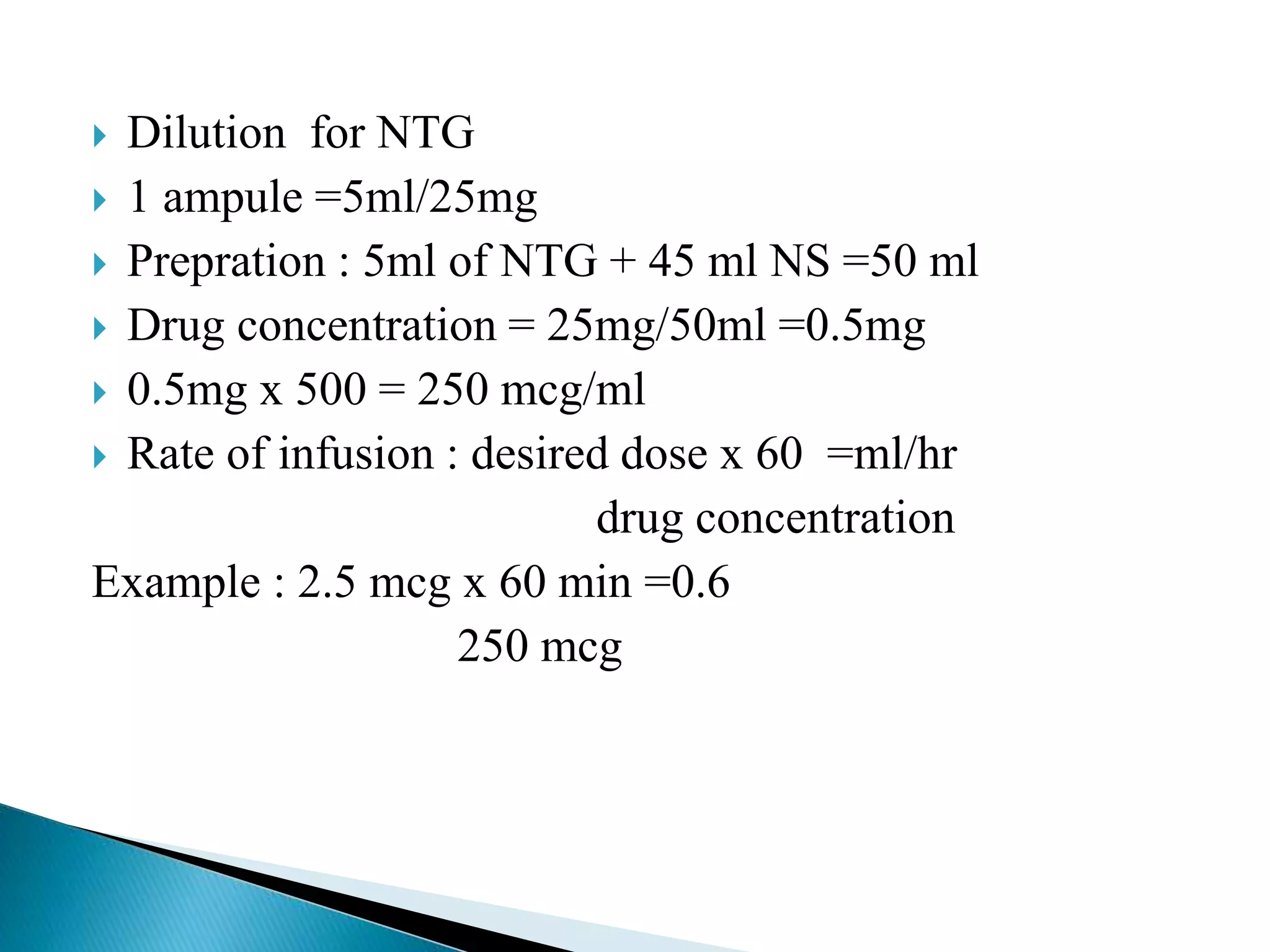
 Dilution for NTG
 1 ampule =5ml/25mg
 Prepration : 5ml of NTG + 45 ml NS =50 ml
 Drug concentration = 25mg/50ml =0.5mg
 0.5mg x 500 = 250 mcg/ml
 Rate of infusion : desired dose x 60 =ml/hr
drug concentration
Example : 2.5 mcg x 60 min =0.6
250 mcg
Drug interaction
 Interacts with β-blocking agents, digitalis glycosides,
tricyclic antidepressants, mono-amine oxidase
inhibitors, cocaine .
ADVERSE EFFECTS:
 Hypertension
 bradycardia
 Extravasations
 Anxiety,dysrhythmias
 dizziness
 pallor
 tremor
 insomnia
 Headache, nausea
 palpitations
Nursing consideration:
 Inotropes must be adminstered in central line
 Do not cease infusion abruptly,
 Should be used with caution in patients with
atherosclerosis, mesentric and peripheral vascular
thrombosis or other occlusive vascular diseases,
metabolic acidosis, hypoxia or hyperthyroidism.
 It should be avoided in patients who are hypersensitive to
sodium metabisulfite (which is the preservative in the
solution).
 discard diluted solutions after 24 hours Protect ampoules
from light during storage and discard if discoloured
 Follow ten rights
 Monitor for adverse effect
 Continuous BP using invasive arterial BP monitor
 connect the patient with cardiac monitor and monitor
ECG rythym
 Inotropes must be administered using infusion or
syringe
 Should follow standard dilution
 The lable on loaded drug should contain drug
concentration and dilution
 Monitor urine output
 ISOPROTERENOL (ISUPREL)
 Has nearly pure beta-adrenergic receptor activity.
 Increase heart rate and contractility and cause peripheral
vasodilation.
 Used for temporary control of symptomatic bradycardia.
 Initial drug of choice for heart transplant.
 Increases myocardial oxygen requirements and the
possibility of inducing or exacerbating myocardial ischemia
is present.
 The risk of arrhythmias is also increased.
 It is not the first treatment of choice for bradycardias.
 Atropine, epinephrine or pacing should be initiated first.
DOSE: - Initial dose of 2 mcg/minute Titrate dose
to a maximum of 10 mcg/min. or heart rate is 60 or
greater. Decrease the rate if blood pressure is
>120/60 Decrease rate if PVC’s or Ventricular
tachycardia is noted.Isoporterenol administration
concentration: - 1 mg in 250 cc crystalloid (4
mcg/cc).
 Adverse effects: -
 Arrhythmias.
 Ventricular tachycardia.
 Ventricular fibrillation.Warning:-
 May exacerbate tachyarrhythmias due to digitalis
toxicity.
 May precipitate hypokalemia.
 PHOSPHODIESTERASE INHIBITORS Powerful positive
inotropic agents. The action is not fully understood.
 Inhibits phosphodiesterase, an enzyme that degrades
(CAMP)
 Cyclic Adenosine Monophosphate.
 There is no effect on alpha or beta-receptors.
 Increase contractile force and velocity of relaxation of
cardiac muscle.
 Increasing cardiac output without increasing myocardial
 oxygen consumption.
 They cause vasodilation and a decrease in SVR (systemic
 vascular resistance) and PVR (Pulmonary vascular
 resistance & in afterload (resistance to ventricular ejection)
 AMRINONE (INOCOR)
 Has a hemodynamic effect similar to Dobutamine.
 Increase cardiac output and decrease pulmonary
vascular resistance.
 It should be used with caution in patients with
ischemic heart disease because it can exacerbate
ischemia.
 It should be considered for use in patients with severe
congestive heart disease, which is no longer responsive
to other inotropes, diuretics, and vasodilators.
 It is also used after aorto-coronary bypass surgery.
 It is recommended that the lowest dose that produce
the desired hemodynamic effect to be used.
 LOADING DOSE:
 0.5 TO 0.75 mg/kg given over 2-3 min.
 IV DO NOT EXCEED 1 mg/kg.
 Maintenance dose: 5 to 10 mcg/kg/min Maximum dose:
10mg/kg/24hours.
 Doses higher than 15 mcg/kg/minute can produce
tachycardia
 NEVER DILUTE WITH DEXTROSE!
 (Chemical reaction occurs)Syringe pump: Use Straight
Solution Concentration 5 mg/ccAdverse reaction: -
Thrombocytopenia occurs in 10% of all patients seen 48 –
72 hours after infusion and resolves when drug is
discontinued. Gastrointestinal upset Myalgia Fever
Hepatic dysfunction Ventricular irritability
 Nursing implication: -
 Monitor for arrhythmias, hypotension, thrombocytopenia &
hepatotoxicity.
 Monitor cardiac output, pulmonary artery pressure and
heart rate.
 Effects last for 2 hours after drip is discontinued.
 The loading dose may be given over 2 to 5 minutes, but to
prevent Hypotension it is recommended the loading dose be
given over 10 to 15 minutes.
 MILRINONE (Primacor)
 Milrinone is about 10 fold more potent than Amrinone.
 A positive inotropic agent that increases cardiac output and
decreases systemic vascular resistance.
 Because of its vasodilating effect, Milrinone is not
generally associated with an increase in myocardial oxygen
demand.
 Milrinone can be diluted in dextrose or saline solution.
 LOADING DOSE:- 50 mcg/kg given IV over 10 minutes
 MAINTENANCE DOSE:- 0.375 to 0.75
mcg/kg/minuteWarning; -
 DOSES TO HIGH CAN CAUSE HYPOTENSION AND
TACHYCARDIA.
 MILRINONE IS INCOMPATIBLE WITH L
ASIX!ADVERSE EFFECTS:
 Supraventricular tachycardia
 Ventricular arrhythmias
 Ventricular ectopy
 Increased ventricular rate in atrial fibrillation/flutter
 Headache
 Hypokalemia
 Tremors
 Thrombocytopenia
 EASY FORMULAS FOR DRUG CALCULATIONS
FOR INFUSION PUMPSTO DETERMINE DESIRED
RATE:- (Remember 1 mg = 1000 mcg) (Desired mcg)
X kg. X 60 ÷ mcg/cc (in solution)
 Example:- Give Dopamine 5 mcg/kg/min to a patient
who weights 65 kg. 5 X 65 X 60 ÷ (800 mg in 500
cc) (5 mcg) X (65 kg) X 60 ÷ (800 mg ÷ 500 cc = 1.6
mg. X 1000) = 1600 mcg 19500 ÷ 1600 = 12.18 cc
 Example: Give Dopamine 2.5 mcg/kg/min to a patient
who weight 55 KG. 2.5 X 55 X 60 ÷ 1600 (2.5 mcg)
X (55 kg) X 60 ÷ 1600 = 5.15 cc
 TO DETERMINE MCG/KG/CC INFUSING:
 Example: You have a patient that weighs 85 kg who has a
dopamine drip infusion at 8cc per hour and you want to
determine how many mcg/kg/min the patient is receiving.
 The dopamine is mixed at 1600 mcg per cc. MCG/CC X
RATE ÷ 60 ÷ KG 1600 X 8 ÷ 60 ÷ 85 = 2.5
mcg/kg/minute
 Example: You have a patient that weighs 102 kg who has a
Dobutamine drip infusing at 12 cc per hour and you want to
determine how many mcg/kg/min the patient is receiving.
 The Dobutamine is mixed at 500 mg in 250 cc = 2000 mcg
per cc. (500 mg ÷ 250 = 2 X 1000 = 2000) 2000 X 12 ÷ 60
÷ 102 = 3.92 mcg/kg/min.
 CONCLUSION
 Inotropes are very effective drugs when administered
properly.
 Patients receiving inotropes should be monitored closely
including blood pressure, cardiac monitoring, intake and
output, and laboratory tests that have been ordered by the
physician.
 Knowledge of desired effects and side effects is critical to
the administration of inotropes.
 CONCLUSION CONT…
 A thorough grasp of the pharmacology of inotropes is
crucial to understand the rationale for drug therapy of heart
failure.
 Inotropes continue to improve through scientific research.
 Oral forms of inotropes are now being investigated to
manage congestive heart failure at home.

Inotropes

  • 1.
    JOHNY WILBERT, M.SC[N] LECTURER, APOLLOINSTITUTE OF HOSPITAL MANAGEMENT AND ALLIED SCIENCE
  • 2.
     INTRODUCTION  Aninotrope is an agent, which increases or decreases the force or energy of muscular contractions. & By enhancing myocardial contractility, cardiac output, the amount of blood ejected by the heart with each beat, will also increase.  All inotropes are successful because they increase the myocardial contractility of the heart.  As science advanced, other inotropes were developed which were more potent and have different chemical properties and physiological effects.used for CCF.
  • 3.
     The resultof these direct and indirect effects are: -  An increase in force and velocity of myocardial contractility (positive inotrope effect).  Slowing of heart rate (negative chronographic effect).  Decreased conduction velocity through the AV node.
  • 4.
     CLINICALLY APPROVEDINOTROPES  Cardiac Glycosides: -Digitalis Derivatives Digoxin  Sympathomimetics: - Epinephrine Dopamine (Intropin) Dobutamine (dobutrex) Norepinephrine (levophed) Isoproenol (isuprel)  Phosphodiesterase Inhibitors: - Amrinone (Inocor) Milirinone (Primacor)
  • 5.
     CARDIAC GLYCOSIDES An indirect effect on the cardiovascular system regulated by the autonomic nervous system which is responsible for the effect on the sino-atrial (SA) and atrioventricular (AV) nodes.  A direct effect on cardiac muscle and the conduction system.  Digitalis Glycosides have  The first line of inotropes include all digitalis derivatives
  • 6.
     DIGOXIN LOADINGDOSE Loading doses of Digoxin range from 10 – 15mg/kg Digoxin can be given orally, but with a slower onset of action and peak effect.  DIGOXIN MAINTENANCE DOSE :- Initial therapy of Digoxin is usually started at 0.125 to 0.375mg/day.  NOTE:DRAW A SERUM DIGOXIN LEVEL AT LEAST SIX HOURS AFTER THE LAST DOSE!  .
  • 7.
     SIDE EFFECTSASSOCIATED WITH TOXICITY  GASTROINTESTINAL: Anorexia, nausea, vomiting, diarrhea Rare: abdominal pain, hemorrhagic necrosis of the intestines  CNS: visual disturbances, (blurred or yellow vision), headache, weakness, dizziness, apathy and psychosis.  OTHER: Skin rash, gynecomastia
  • 8.
     SYMPATHOMIMETICS (ADRENERGIC) Sympathomemeticdrugs exert potent inotropic effects by stimulating beta (B1 & B2),alpha(A1 & A2) and dopaminergic receptors in the myocardium, blood vessels, and sympathetic nervous system.
  • 9.
     DOPAMINE (INTROPIN)(200MG/5ML AMPULE).  INTERMEDIATE DOSE2 to 10 mcg/kg/minute  LOW DOSE 0.5- 2mcg/kg/minute
  • 10.
     Indication:-  Occlusivevascular disease.  Tachyarrhythmias.  Phaeochromocytoma.  Pregnancy. Increases mesenteric flow in mesenteric ischaemia.  Contraindication:  Hypotention/haemodynamic compromise due to MI, trauma, sepsis, CCF.  Renal protection. 
  • 11.
     ADVERSE EFFECTS Hypotension when used concomitantly with dilantin  Increased myocardial oxygen demand.  Headache.  Vomiting  Nausea  Pulmonary congestion  Ventricular arrhythmias  Supraventricular tachycardia  Tachycardia
  • 12.
     Nursing implication Monitor cardiac output, pulmonary artery pressure ECG  Monitor for hypertension, tachycardia, chest pain, and premature ventricular contractions
  • 13.
     DOBUTAMINE (DOBUTREX)(250MG IN 20ML AMPULE)  Usual dose: - 2.5 to 10 mcg/kg/minute. Initial dose: - 2 to 3 mcg/kg/minute.  2 Dobutamine administration concentrations: - Infusion pump: 500 mg per 250 cc normal saline Syringe pump: 250 mg (20cc) in total 50 cc normal saline (5 mg per cc)  Maximum dose: - 20 mcg/kg/minute.
  • 14.
     Indication  Patientwith aterial fibrillation should be digitalized before giving this drug to prevent ventricular tachycardia.  Correct hypovolemia before treating with this drug. Contraindication:-  Idiopathic hypertrophic subaortic stenosis.  Contraindication:- Idiopathic hypertrophic subaortic stenosis
  • 15.
     Adverse effects Hypokalemia  Tremors  Nausea  Headache  Myocardial ischemia  Blood pressure fluctuation  Arrhythmias  Tachycardia
  • 16.
     Nursing implication Monitor cardiac output, pulmonary artery pressure ECG  Monitor for hypertension, tachycardia, chest pain, and premature ventricular contractions.
  • 17.
    Adrenalin Mechanism of action The action of adrenalin may vary by the type of tissue it act,  It causes smooth muscle relaxation in the airway  It causes smooth muscle contraction in the arterioles  In cardiac muscles increase contractability
  • 18.
    INDICATION:  Anaphylaxis reaction Hypotension  Bronchospasm  Cardiac arrest  Asystole
  • 19.
     DOSE: For Infusion: 0.05 – 0.1 microgram/kg/minute maximum dose: 1 – 1.5 microgram/kg/minute For In arrest : 1 ml every 2 minutes
  • 20.
     Dilution  1ampule =1ml/1mg  Prepration : 4ml of adrenalin + 46 ml NS =50 ml  Drug concentration = 4mg/50ml =0.8mg  0.8mg x 1000 = 80 mcg/ml  Rate of infusion : desired dose x 60 =ml/hr 80 mcg Example : 2 mcg x 60 min = 1.5 80
  • 21.
    Drug interaction  Interactswith β-blocking agents, digitalis glycosides, antidepressants,
  • 22.
    ADVERSE EFFECTS:  Hypertension tachycardia  Extravasations  Anxiety, dysrhythmias  dizziness  pallor  tremor,  insomnia  Headache, nausea  palpitations
  • 23.
    Nursing consideration:  Inotropesmust be adminstered in central line  Do not cease infusion abruptly,  Should be used with caution in patients with atherosclerosis, mesentric and peripheral vascular thrombosis or other occlusive vascular diseases, metabolic acidosis, hypoxia or hyperthyroidism.  It should be avoided in patients who are hypersensitive to the drug.  discard diluted solutions after 24 hours Protect ampoules from light during storage and discard if discoloured
  • 24.
     Follow tenrights  Monitor for adverse effect  Continuous BP using invasive arterial BP monitor  connect the patient with cardiac monitor and monitor ECG rythym  Inotropes must be administered using infusion or syringe  Should follow standard dilution  The lable on loaded drug should contain drug concentration and dilution  Monitor urine output
  • 25.
    Nor adrenalin Mechanism ofaction  The action of Inotropes may vary by the type of tissue it act,  It causes smooth muscle relaxation in the airway  It causes smooth muscle contraction in the arterioles  In cardiac muscles increase contractability
  • 26.
    INDICATION:  Anaphylaxis reaction Hypotension  Bronchospasm  Cardiac arrest  Asystole
  • 27.
    Formula for rateof infusion of inotropes  Rate of infusion : desired dose x weight x60 =ml/hr ----------------------------- drug concentration
  • 28.
     Dilution foradrenalin/nor-adrenalin  1 ampoule adrenalin =1ml/1mg  1 ampoule nor-adrenalin =2ml/2mg  Preparation : 4ml of adrenalin + 46 ml NS =50 ml  Drug concentration = 4mg/50ml =0.8mg  0.8mg x 1000 = 80 mcg/ml  Rate of infusion : desired dose x 60 =ml/hr --------------- drug concentration Example : 2 mcg x 60 min ----------------- = 1.5 80 mcg
  • 29.
     Dilution fordopamine an  In this we have calculate the patient weight  1 ampule dopa=250 mg ,  Each ml dopa-50 mg,  Prepration : 5+ 45 ml NS =50 ml  Drug concentration = 250/50ml =5  5 x 1000 = 5000 mcg/ml  Rate of infusion:desired dose x weight x60 =ml/hr ------------------------------------ drug concentration Example : 2 mcg x 60 minx60kg ----------------------- =1.44ml/hr 5000
  • 30.
     Dilution fordobutamine  In this we have calculate the patient weight  1 ampule dopa=200 mg ,  Each ml dopa-40 mg,  Prepration : 5+ 45 ml NS =50 ml  Drug concentration = 200/50ml =4  4x 1000 = 4000 mcg/ml  Rate of infusion: desired dose x weight x60 =ml/hr -------------------------- drug concentration Example : 2 mcg x 60 minx60kg ----------------------- =1.8ml/hr 4000
  • 31.
     Dilution forNTG  1 ampule =5ml/25mg  Prepration : 5ml of NTG + 45 ml NS =50 ml  Drug concentration = 25mg/50ml =0.5mg  0.5mg x 500 = 250 mcg/ml  Rate of infusion : desired dose x 60 =ml/hr drug concentration Example : 2.5 mcg x 60 min =0.6 250 mcg
  • 32.
    Drug interaction  Interactswith β-blocking agents, digitalis glycosides, tricyclic antidepressants, mono-amine oxidase inhibitors, cocaine .
  • 33.
    ADVERSE EFFECTS:  Hypertension bradycardia  Extravasations  Anxiety,dysrhythmias  dizziness  pallor  tremor  insomnia  Headache, nausea  palpitations
  • 34.
    Nursing consideration:  Inotropesmust be adminstered in central line  Do not cease infusion abruptly,  Should be used with caution in patients with atherosclerosis, mesentric and peripheral vascular thrombosis or other occlusive vascular diseases, metabolic acidosis, hypoxia or hyperthyroidism.  It should be avoided in patients who are hypersensitive to sodium metabisulfite (which is the preservative in the solution).  discard diluted solutions after 24 hours Protect ampoules from light during storage and discard if discoloured
  • 35.
     Follow tenrights  Monitor for adverse effect  Continuous BP using invasive arterial BP monitor  connect the patient with cardiac monitor and monitor ECG rythym  Inotropes must be administered using infusion or syringe  Should follow standard dilution  The lable on loaded drug should contain drug concentration and dilution  Monitor urine output
  • 36.
     ISOPROTERENOL (ISUPREL) Has nearly pure beta-adrenergic receptor activity.  Increase heart rate and contractility and cause peripheral vasodilation.  Used for temporary control of symptomatic bradycardia.  Initial drug of choice for heart transplant.  Increases myocardial oxygen requirements and the possibility of inducing or exacerbating myocardial ischemia is present.  The risk of arrhythmias is also increased.  It is not the first treatment of choice for bradycardias.  Atropine, epinephrine or pacing should be initiated first.
  • 37.
    DOSE: - Initialdose of 2 mcg/minute Titrate dose to a maximum of 10 mcg/min. or heart rate is 60 or greater. Decrease the rate if blood pressure is >120/60 Decrease rate if PVC’s or Ventricular tachycardia is noted.Isoporterenol administration concentration: - 1 mg in 250 cc crystalloid (4 mcg/cc).
  • 38.
     Adverse effects:-  Arrhythmias.  Ventricular tachycardia.  Ventricular fibrillation.Warning:-  May exacerbate tachyarrhythmias due to digitalis toxicity.  May precipitate hypokalemia.
  • 39.
     PHOSPHODIESTERASE INHIBITORSPowerful positive inotropic agents. The action is not fully understood.  Inhibits phosphodiesterase, an enzyme that degrades (CAMP)  Cyclic Adenosine Monophosphate.  There is no effect on alpha or beta-receptors.  Increase contractile force and velocity of relaxation of cardiac muscle.  Increasing cardiac output without increasing myocardial  oxygen consumption.  They cause vasodilation and a decrease in SVR (systemic  vascular resistance) and PVR (Pulmonary vascular  resistance & in afterload (resistance to ventricular ejection)
  • 40.
     AMRINONE (INOCOR) Has a hemodynamic effect similar to Dobutamine.  Increase cardiac output and decrease pulmonary vascular resistance.  It should be used with caution in patients with ischemic heart disease because it can exacerbate ischemia.  It should be considered for use in patients with severe congestive heart disease, which is no longer responsive to other inotropes, diuretics, and vasodilators.  It is also used after aorto-coronary bypass surgery.  It is recommended that the lowest dose that produce the desired hemodynamic effect to be used.
  • 41.
     LOADING DOSE: 0.5 TO 0.75 mg/kg given over 2-3 min.  IV DO NOT EXCEED 1 mg/kg.  Maintenance dose: 5 to 10 mcg/kg/min Maximum dose: 10mg/kg/24hours.  Doses higher than 15 mcg/kg/minute can produce tachycardia  NEVER DILUTE WITH DEXTROSE!  (Chemical reaction occurs)Syringe pump: Use Straight Solution Concentration 5 mg/ccAdverse reaction: - Thrombocytopenia occurs in 10% of all patients seen 48 – 72 hours after infusion and resolves when drug is discontinued. Gastrointestinal upset Myalgia Fever Hepatic dysfunction Ventricular irritability
  • 42.
     Nursing implication:-  Monitor for arrhythmias, hypotension, thrombocytopenia & hepatotoxicity.  Monitor cardiac output, pulmonary artery pressure and heart rate.  Effects last for 2 hours after drip is discontinued.  The loading dose may be given over 2 to 5 minutes, but to prevent Hypotension it is recommended the loading dose be given over 10 to 15 minutes.  MILRINONE (Primacor)  Milrinone is about 10 fold more potent than Amrinone.  A positive inotropic agent that increases cardiac output and decreases systemic vascular resistance.  Because of its vasodilating effect, Milrinone is not generally associated with an increase in myocardial oxygen demand.  Milrinone can be diluted in dextrose or saline solution.
  • 43.
     LOADING DOSE:-50 mcg/kg given IV over 10 minutes  MAINTENANCE DOSE:- 0.375 to 0.75 mcg/kg/minuteWarning; -  DOSES TO HIGH CAN CAUSE HYPOTENSION AND TACHYCARDIA.  MILRINONE IS INCOMPATIBLE WITH L ASIX!ADVERSE EFFECTS:  Supraventricular tachycardia  Ventricular arrhythmias  Ventricular ectopy  Increased ventricular rate in atrial fibrillation/flutter  Headache  Hypokalemia  Tremors  Thrombocytopenia
  • 44.
     EASY FORMULASFOR DRUG CALCULATIONS FOR INFUSION PUMPSTO DETERMINE DESIRED RATE:- (Remember 1 mg = 1000 mcg) (Desired mcg) X kg. X 60 ÷ mcg/cc (in solution)  Example:- Give Dopamine 5 mcg/kg/min to a patient who weights 65 kg. 5 X 65 X 60 ÷ (800 mg in 500 cc) (5 mcg) X (65 kg) X 60 ÷ (800 mg ÷ 500 cc = 1.6 mg. X 1000) = 1600 mcg 19500 ÷ 1600 = 12.18 cc  Example: Give Dopamine 2.5 mcg/kg/min to a patient who weight 55 KG. 2.5 X 55 X 60 ÷ 1600 (2.5 mcg) X (55 kg) X 60 ÷ 1600 = 5.15 cc
  • 45.
     TO DETERMINEMCG/KG/CC INFUSING:  Example: You have a patient that weighs 85 kg who has a dopamine drip infusion at 8cc per hour and you want to determine how many mcg/kg/min the patient is receiving.  The dopamine is mixed at 1600 mcg per cc. MCG/CC X RATE ÷ 60 ÷ KG 1600 X 8 ÷ 60 ÷ 85 = 2.5 mcg/kg/minute  Example: You have a patient that weighs 102 kg who has a Dobutamine drip infusing at 12 cc per hour and you want to determine how many mcg/kg/min the patient is receiving.  The Dobutamine is mixed at 500 mg in 250 cc = 2000 mcg per cc. (500 mg ÷ 250 = 2 X 1000 = 2000) 2000 X 12 ÷ 60 ÷ 102 = 3.92 mcg/kg/min.
  • 46.
     CONCLUSION  Inotropesare very effective drugs when administered properly.  Patients receiving inotropes should be monitored closely including blood pressure, cardiac monitoring, intake and output, and laboratory tests that have been ordered by the physician.  Knowledge of desired effects and side effects is critical to the administration of inotropes.  CONCLUSION CONT…  A thorough grasp of the pharmacology of inotropes is crucial to understand the rationale for drug therapy of heart failure.  Inotropes continue to improve through scientific research.  Oral forms of inotropes are now being investigated to manage congestive heart failure at home.