
Selected
Physiological Processes
Guided by,
Dr. Zinnat Ara Yesmin
Assistant professor
Dept. of Anatomy, BSMMU
Presented by,
Dr. Md. Mohiuddin Masum
Objectives
At the end of the session audience will be able
to:
Explain the mechanism of different
physiological processes-
 Breathing
 Coughing
 Sneezing
 Phonation
 Temperature regulation
 Blinking
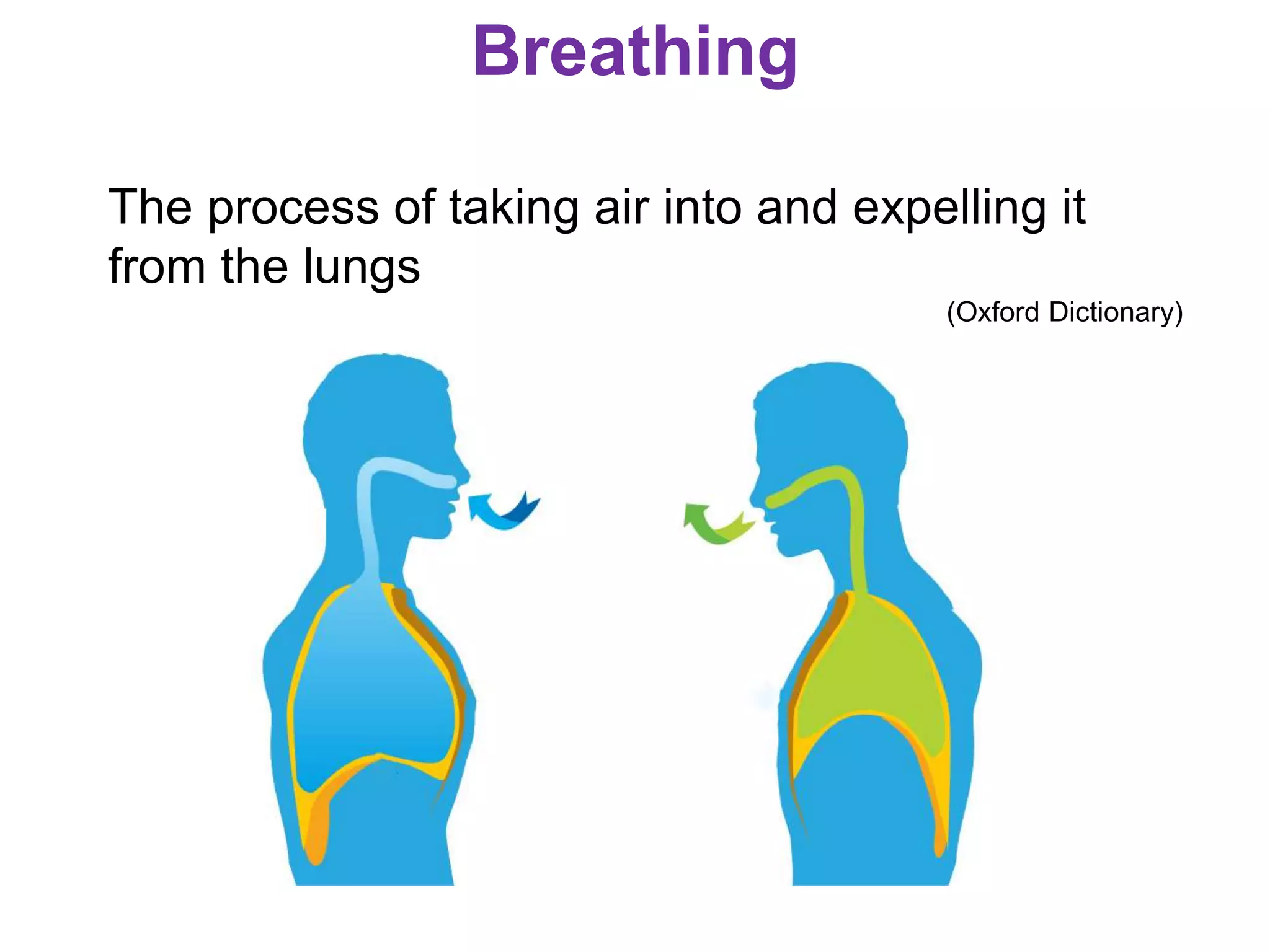
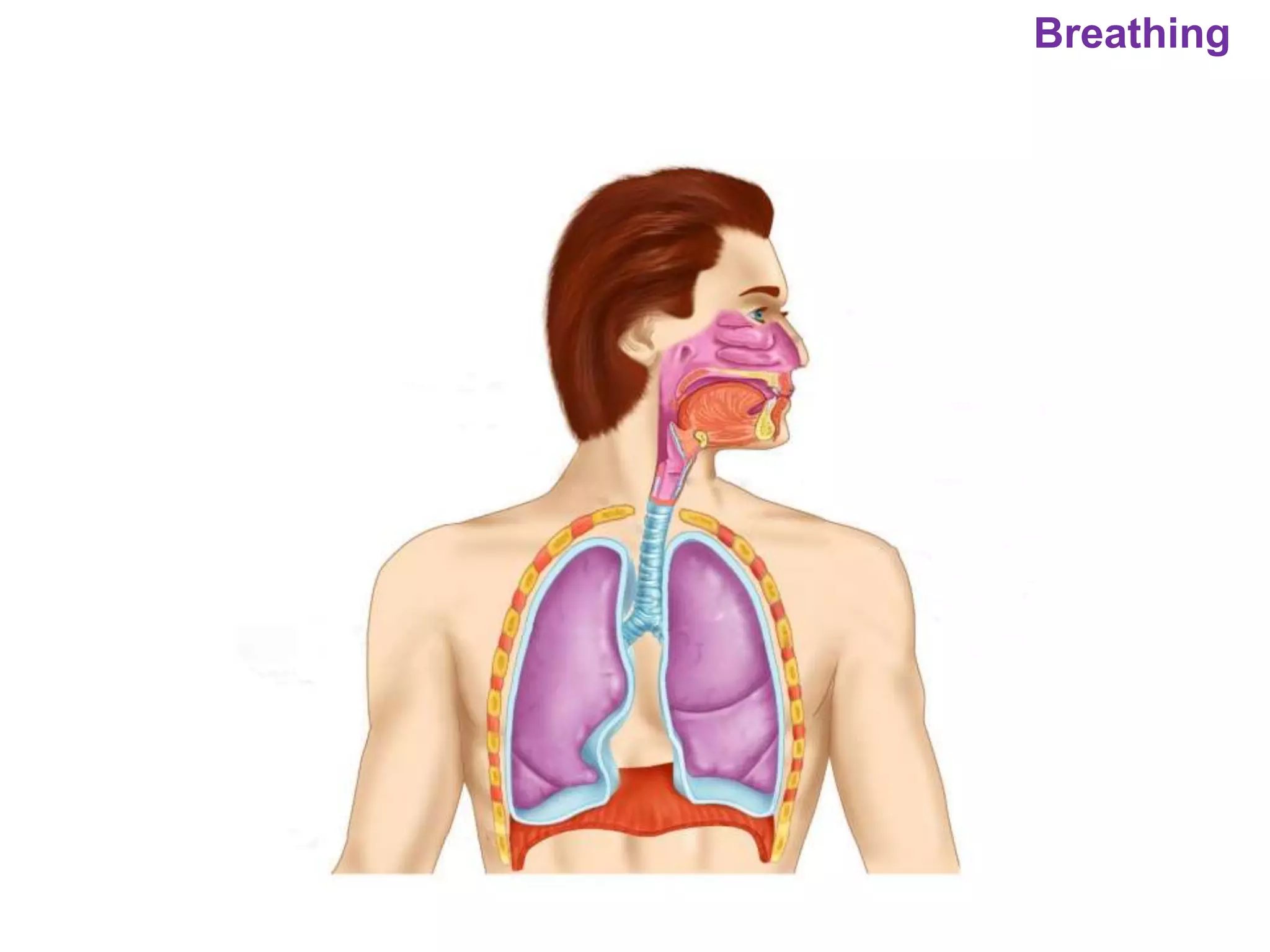
Breathing
The process of taking air into and expelling it
from the lungs
(Oxford Dictionary)
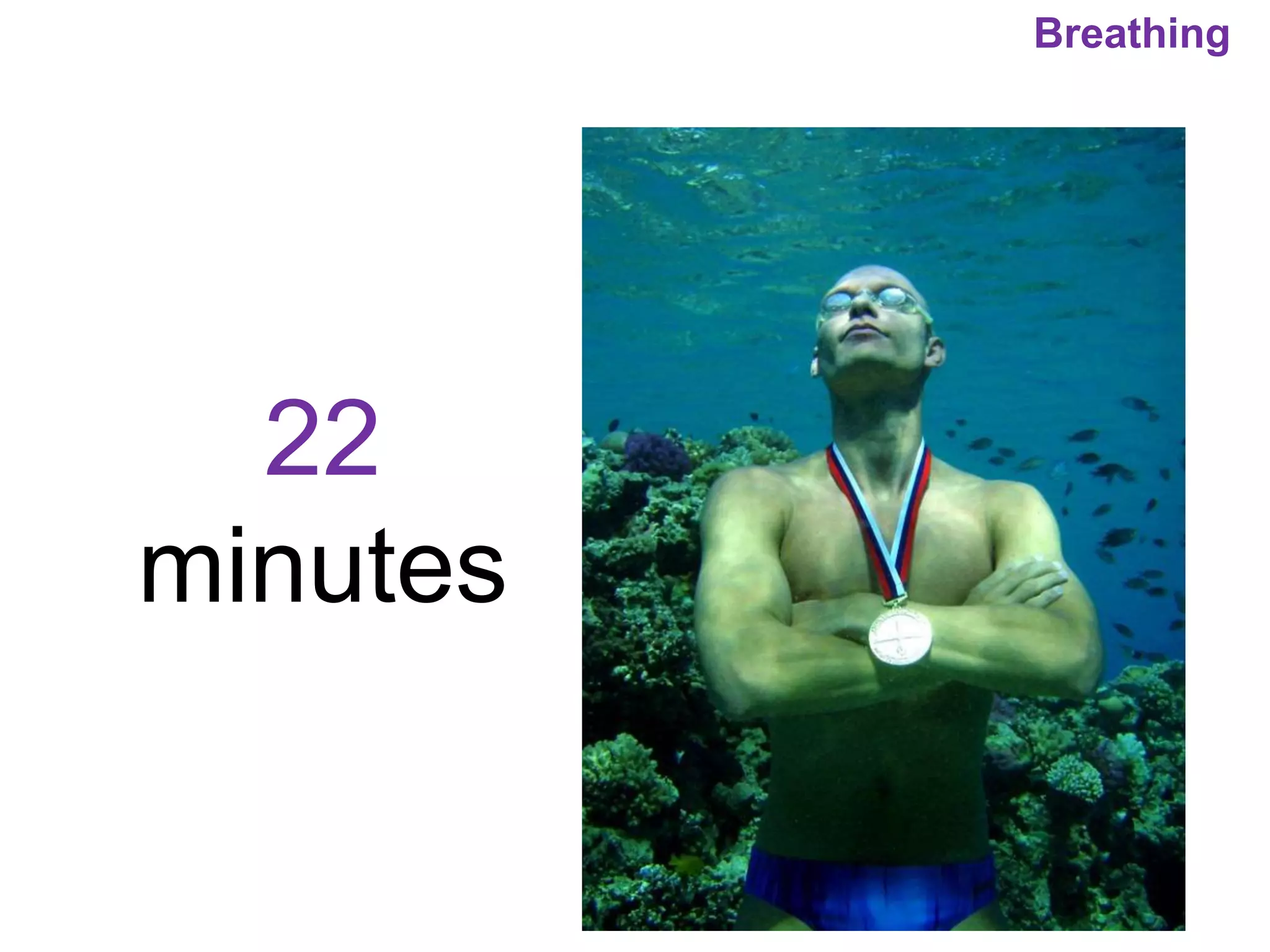
22
minutes
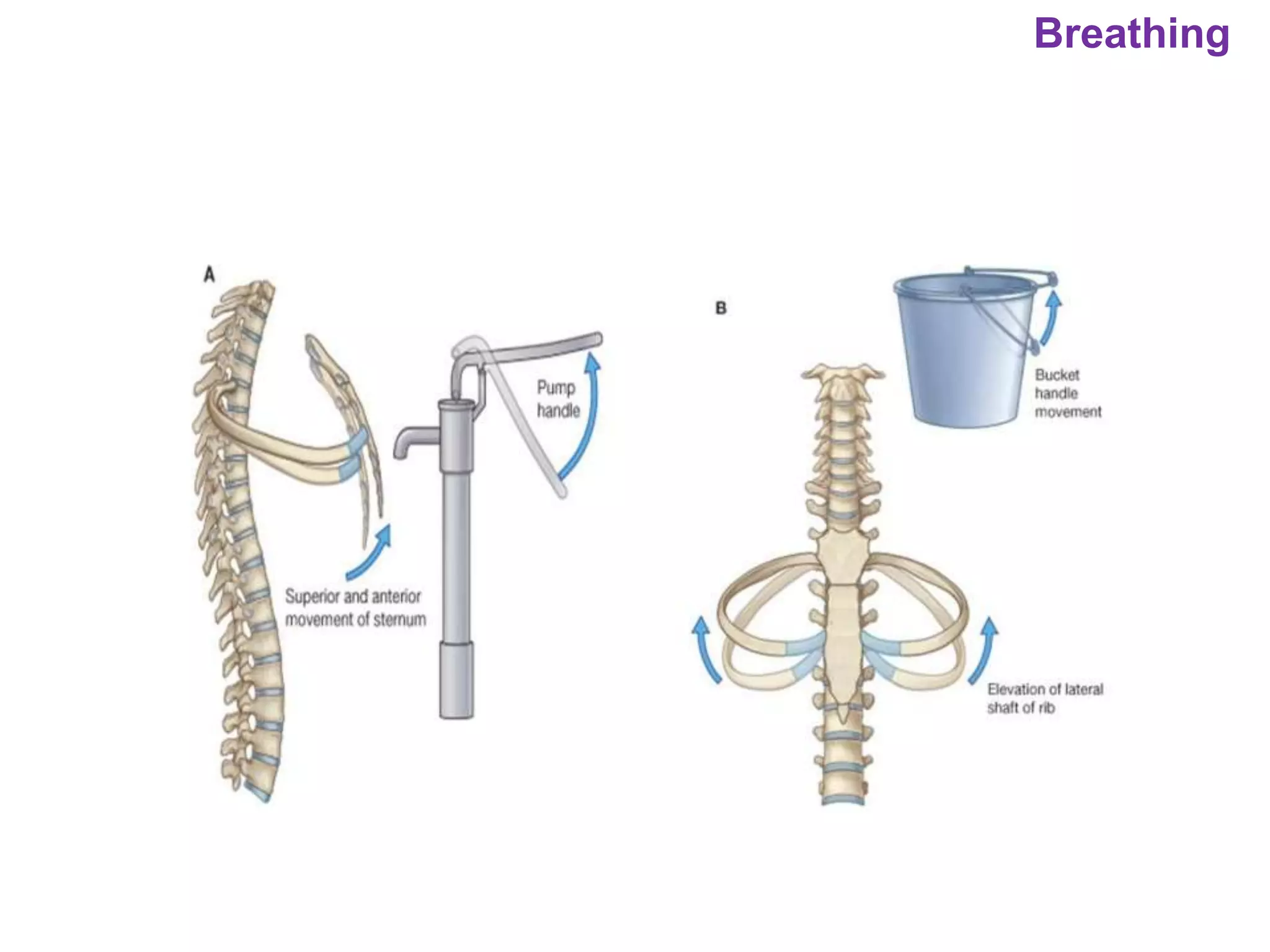
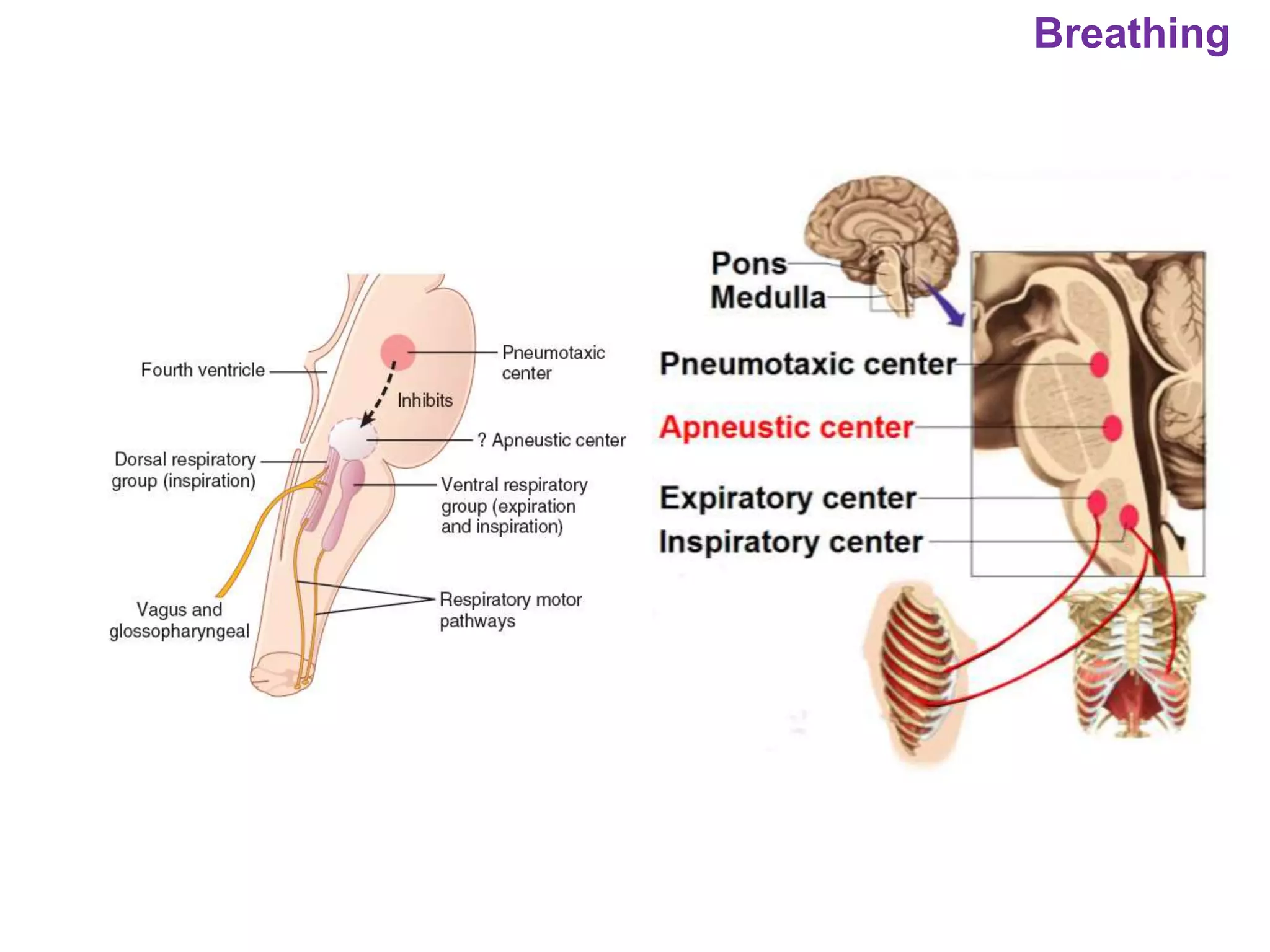
Breathing
Breathing
Breathing
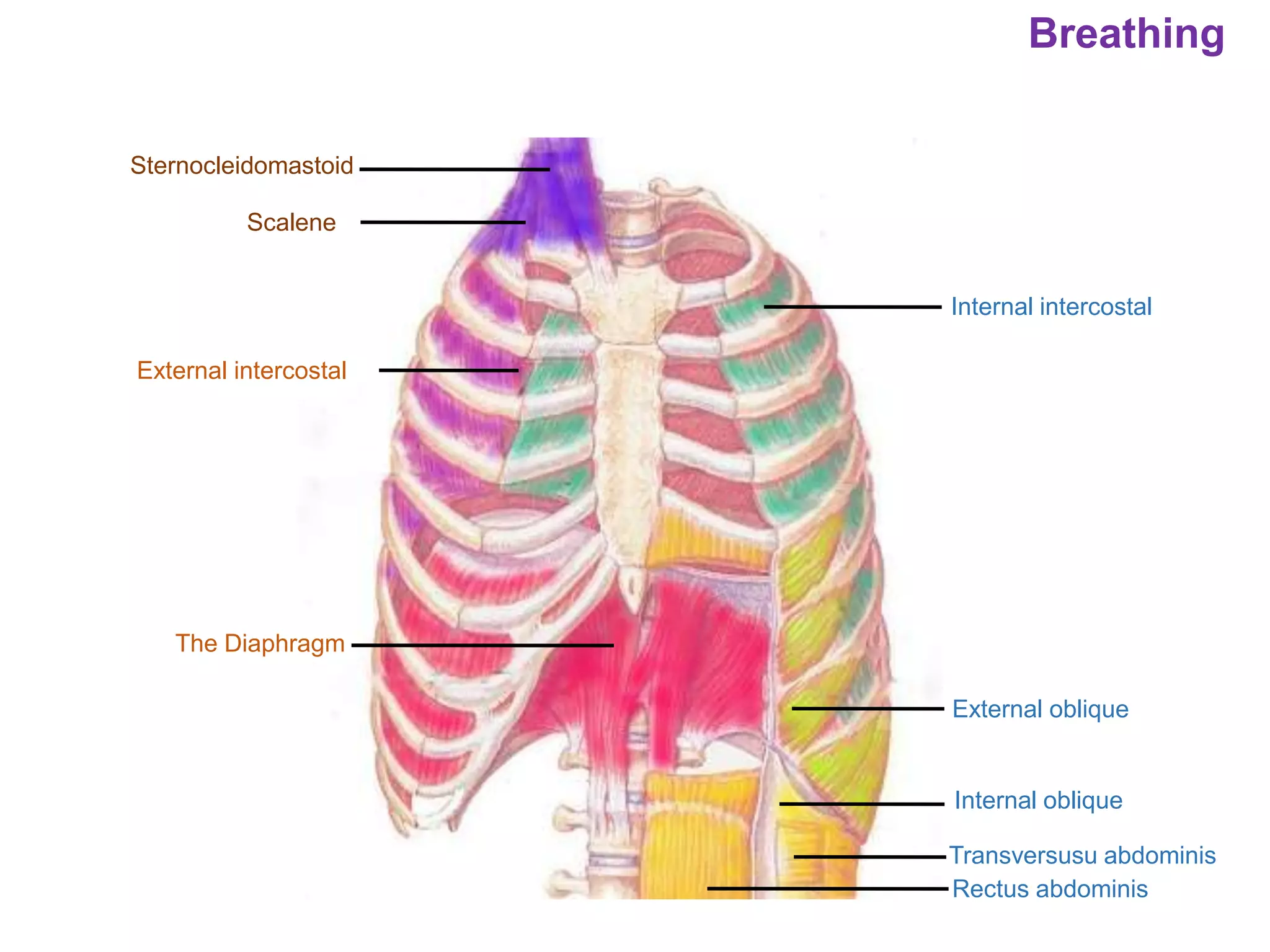
Internal intercostal
External intercostal
External oblique
Internal oblique
Transversusu abdominis
Rectus abdominis
The Diaphragm
Scalene
Sternocleidomastoid
Breathing
Breathing
Breathing
Breathing
Breathing
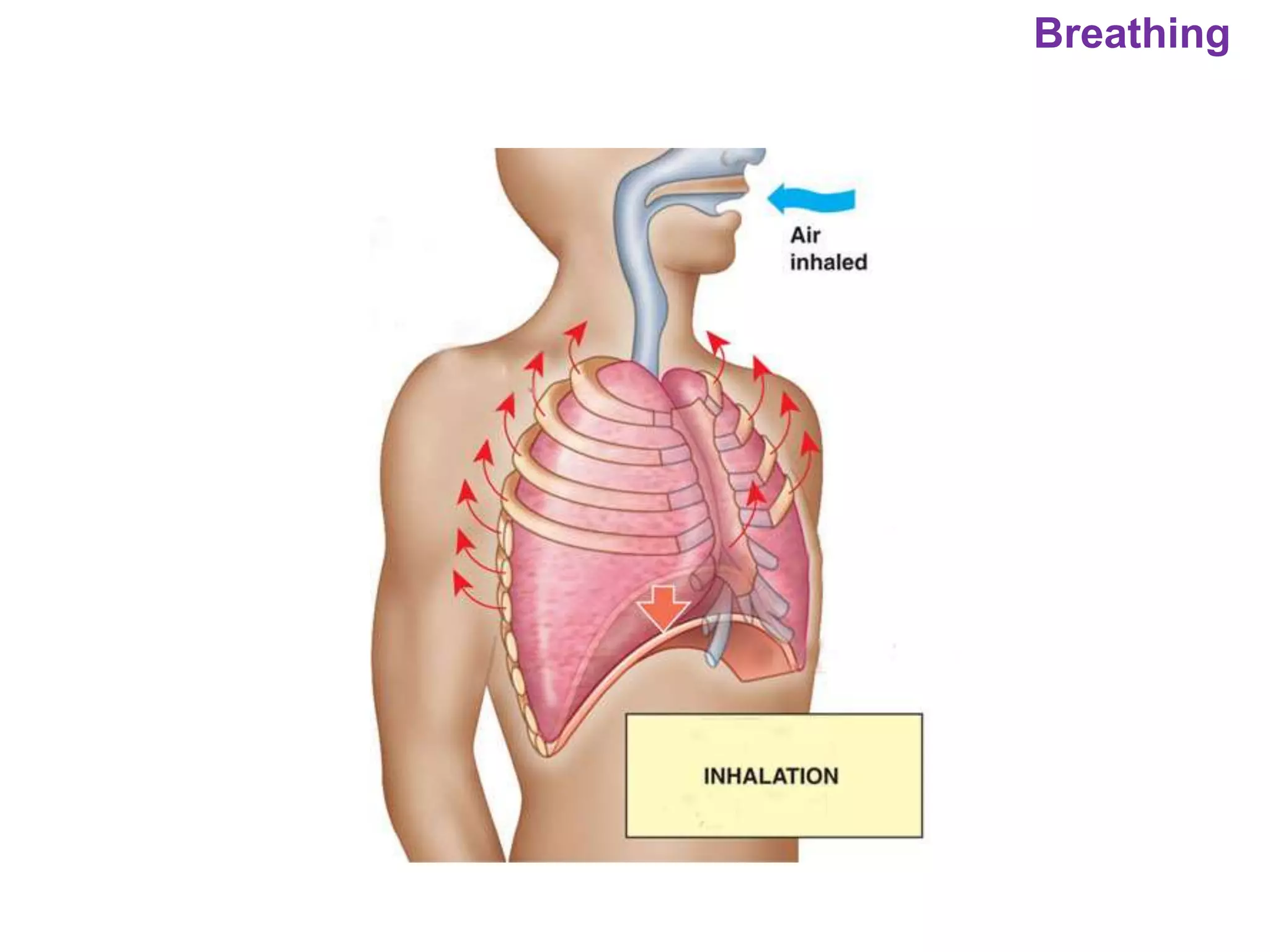
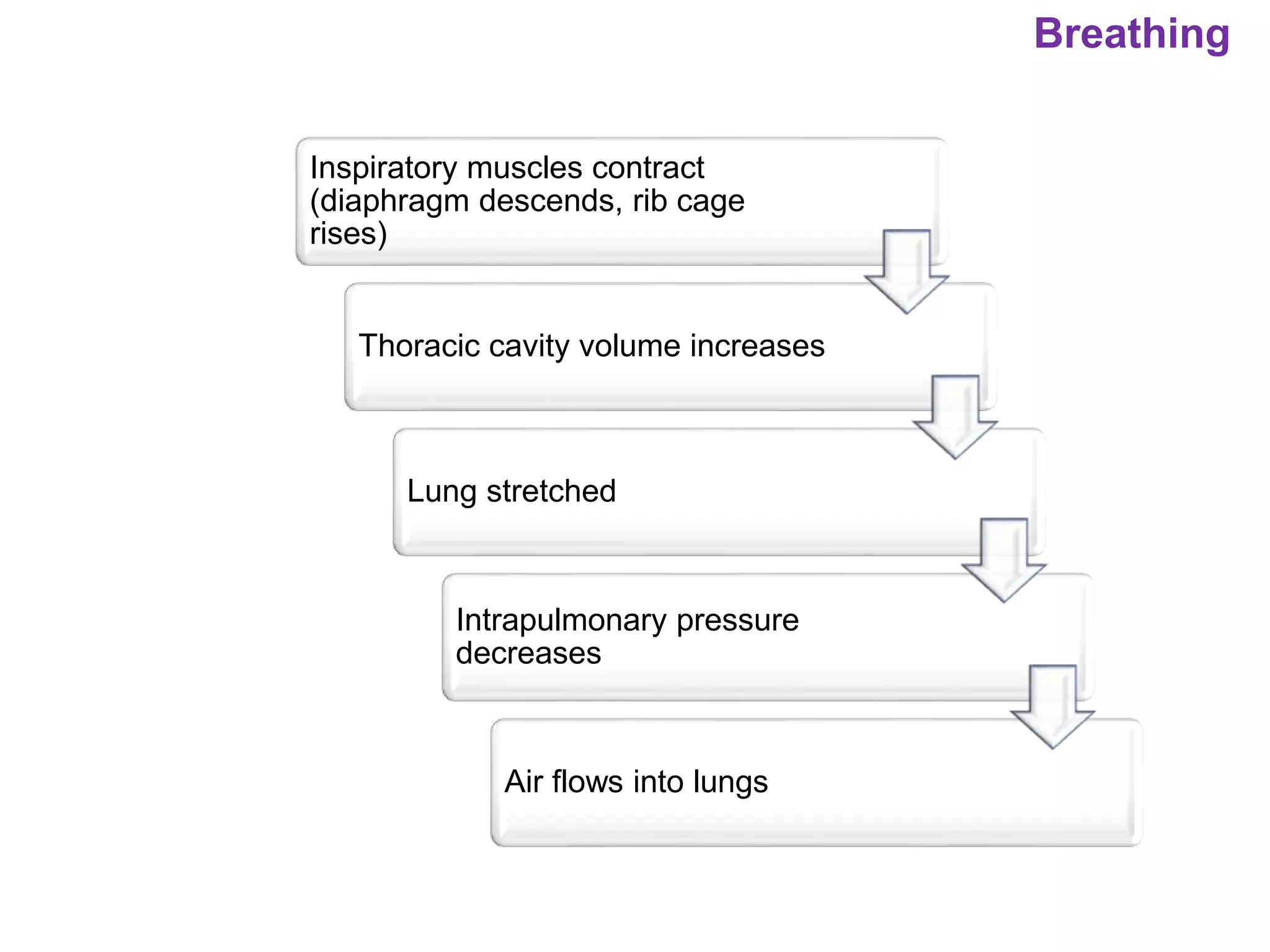
Inspiratory muscles contract
(diaphragm descends, rib cage
rises)
Thoracic cavity volume increases
Lung stretched
Intrapulmonary pressure
decreases
Air flows into lungs
Breathing
Breathing
Breathing
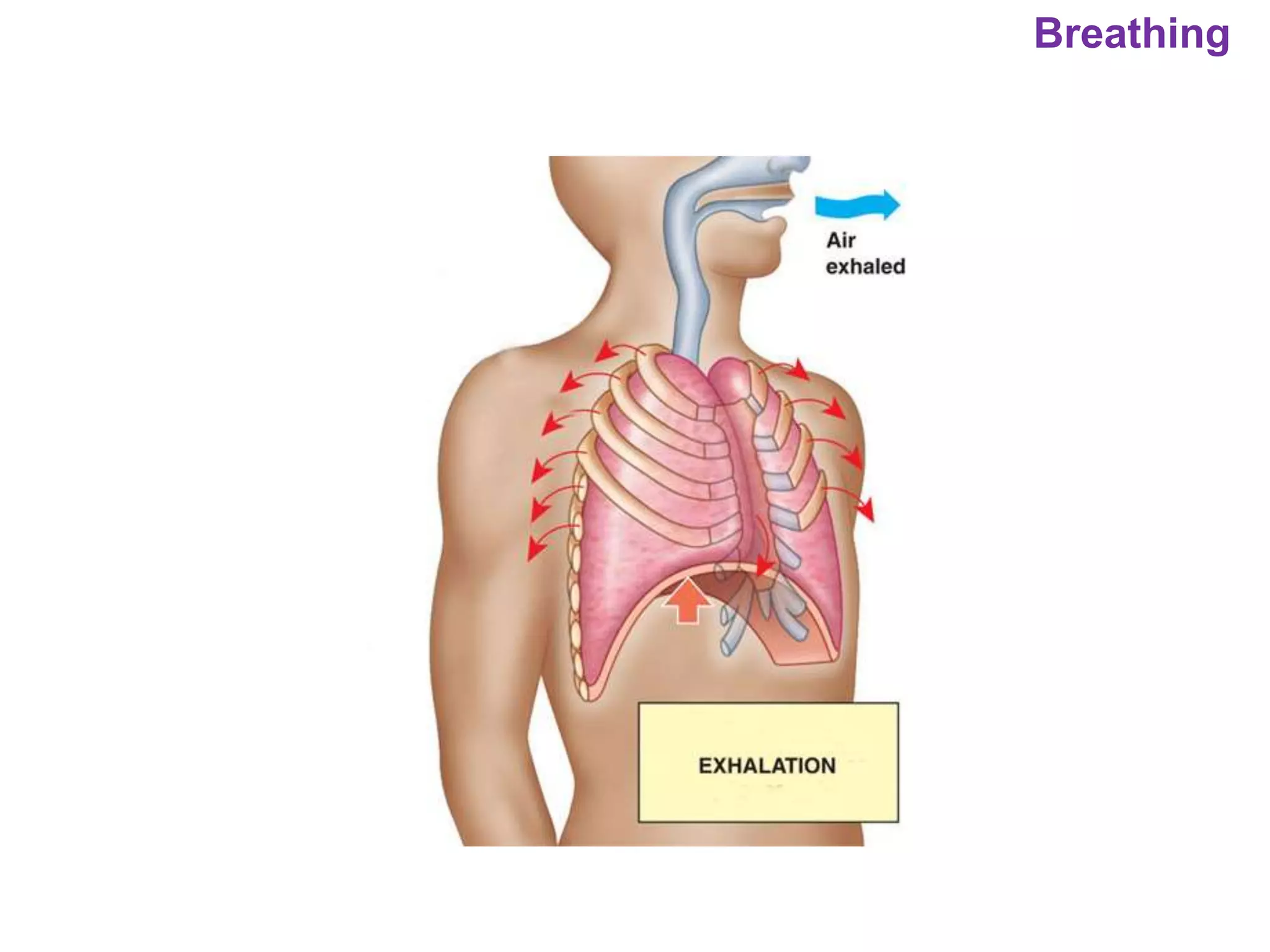
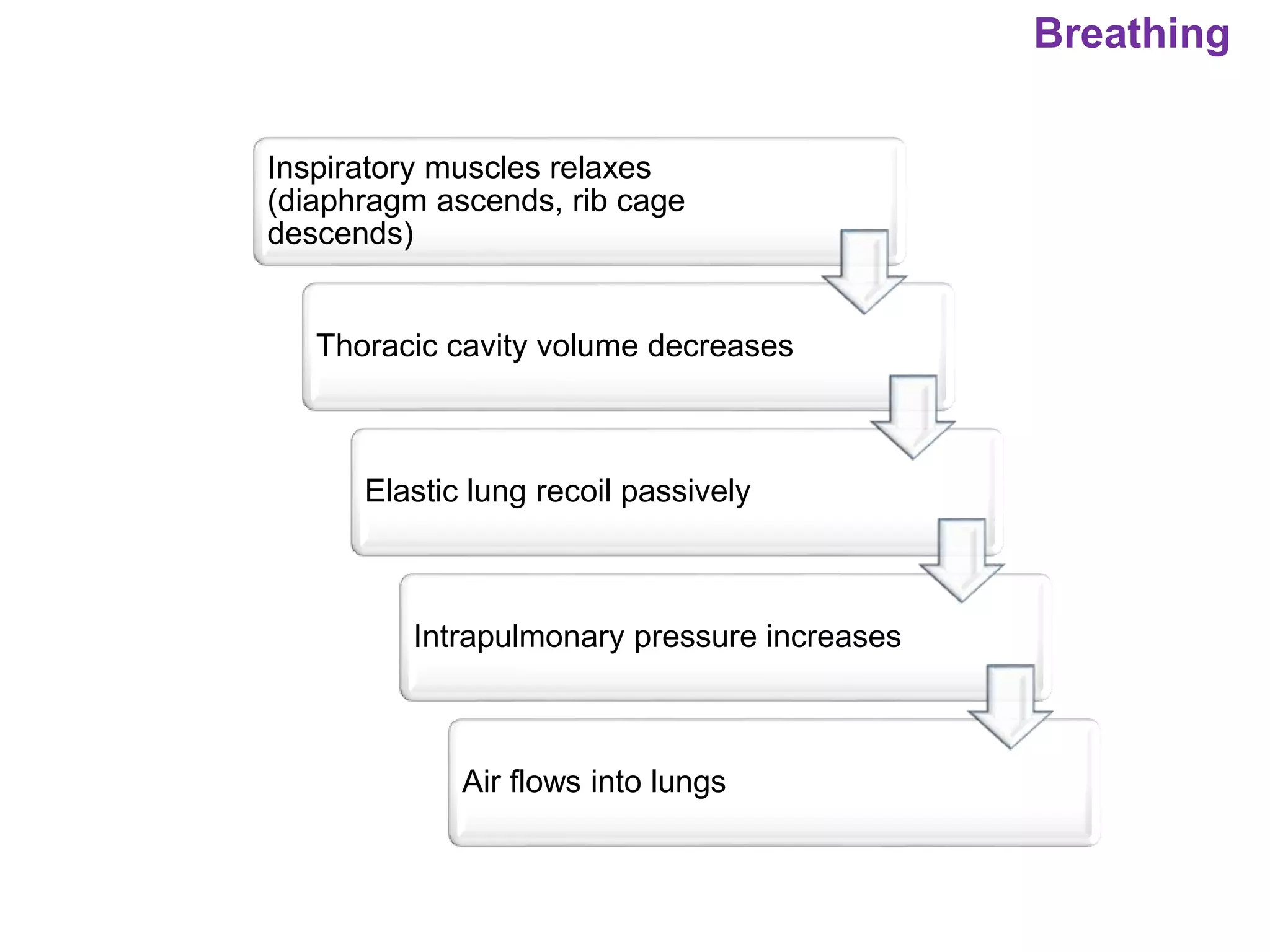
Inspiratory muscles relaxes
(diaphragm ascends, rib cage
descends)
Thoracic cavity volume decreases
Elastic lung recoil passively
Intrapulmonary pressure increases
Air flows into lungs
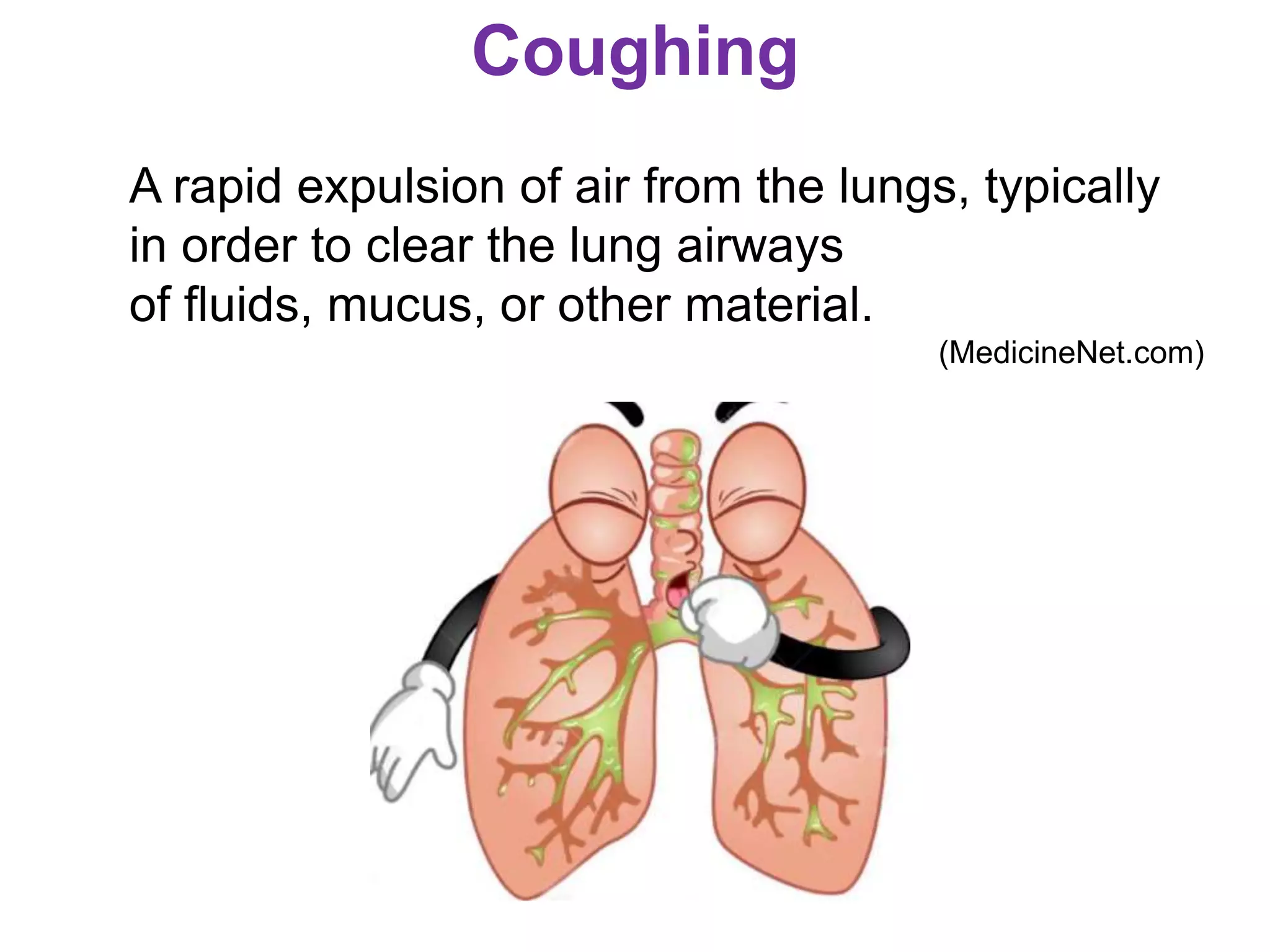
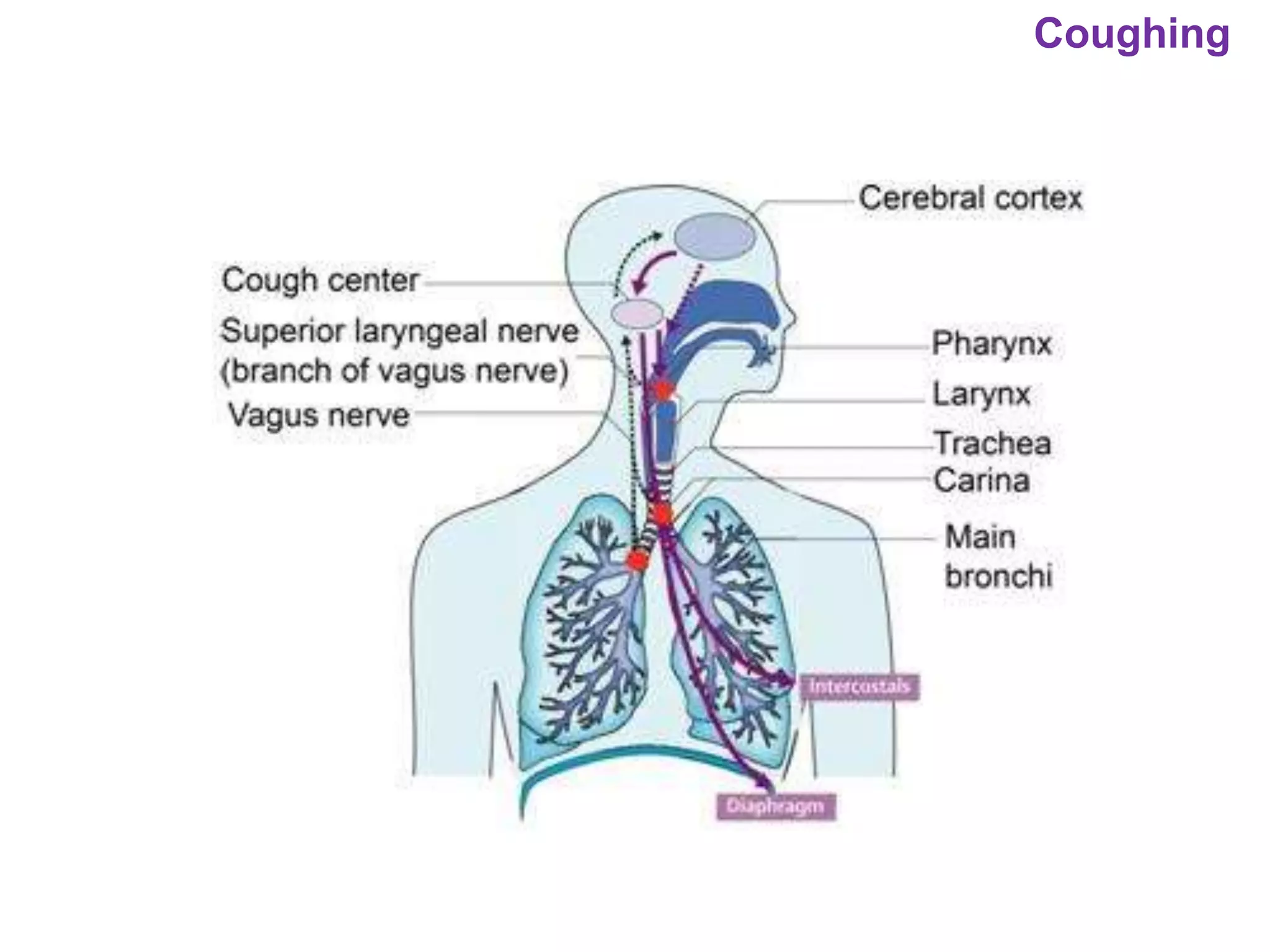
Coughing
A rapid expulsion of air from the lungs, typically
in order to clear the lung airways
of fluids, mucus, or other material.
(MedicineNet.com)
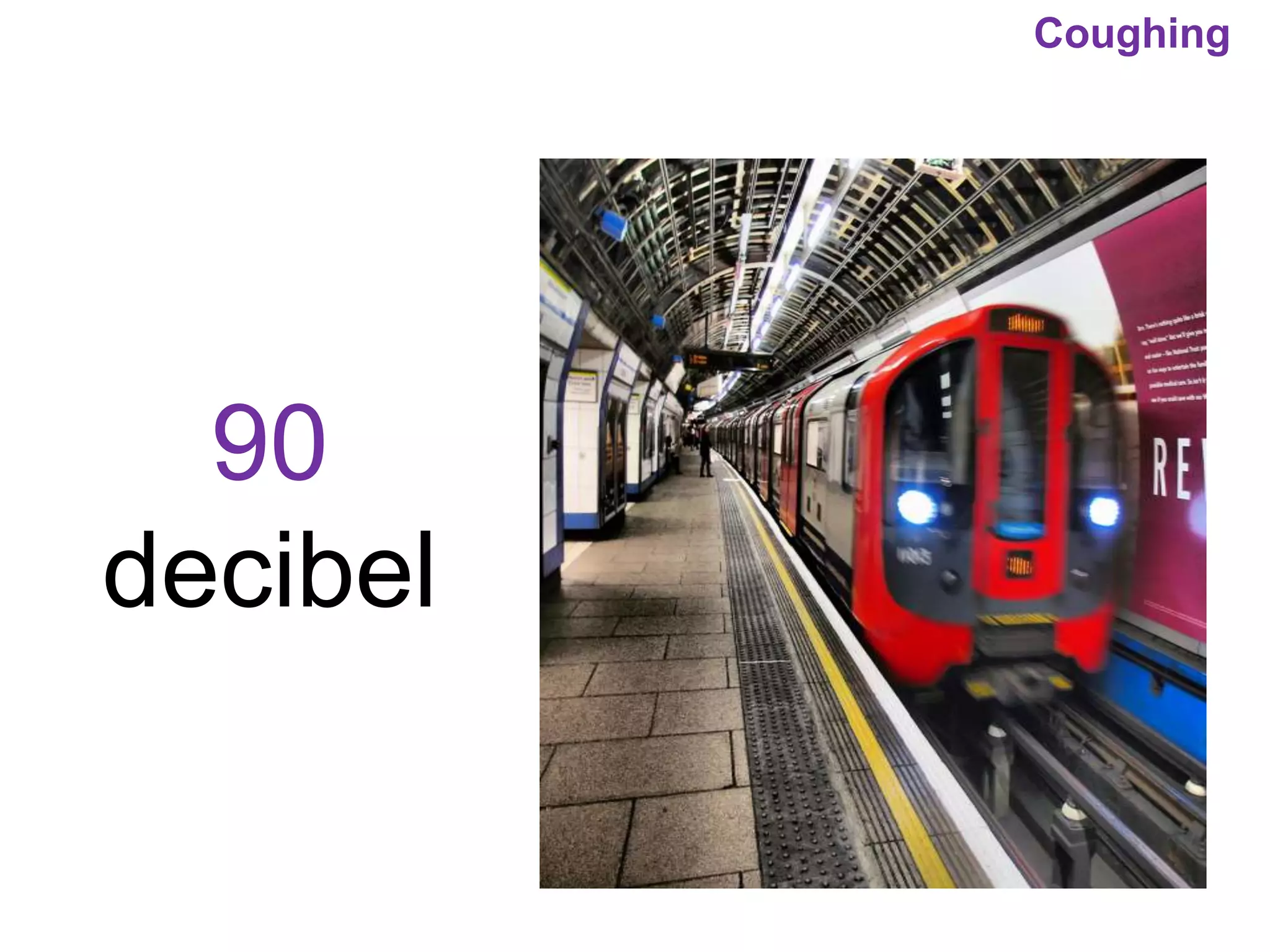
90
decibel
Coughing
Coughing
Coughing
Coughing
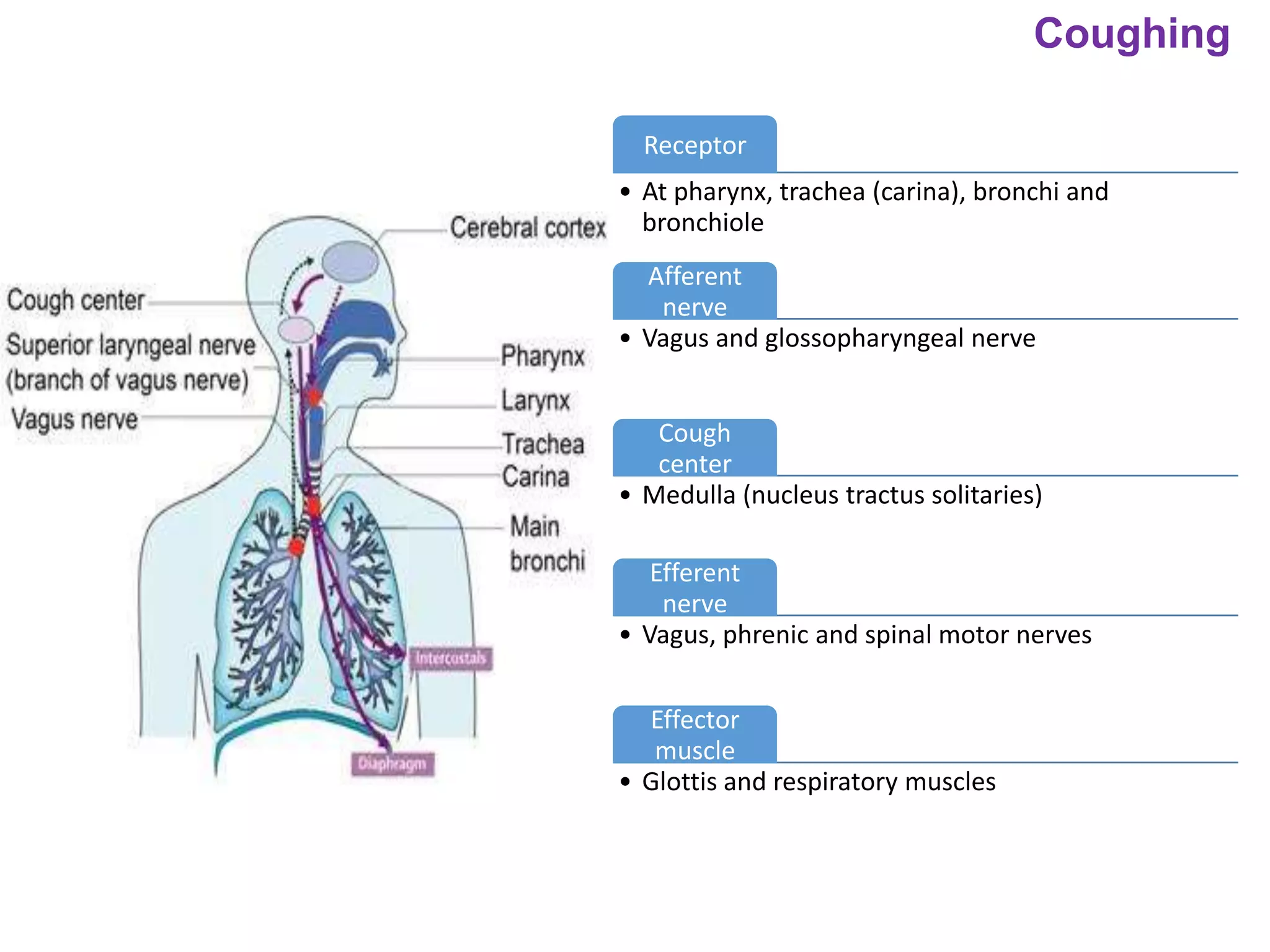
Receptor
• At pharynx, trachea (carina), bronchi and
bronchiole
Afferent
nerve
• Vagus and glossopharyngeal nerve
Cough
center
• Medulla (nucleus tractus solitaries)
Efferent
nerve
• Vagus, phrenic and spinal motor nerves
Effector
muscle
• Glottis and respiratory muscles
Coughing
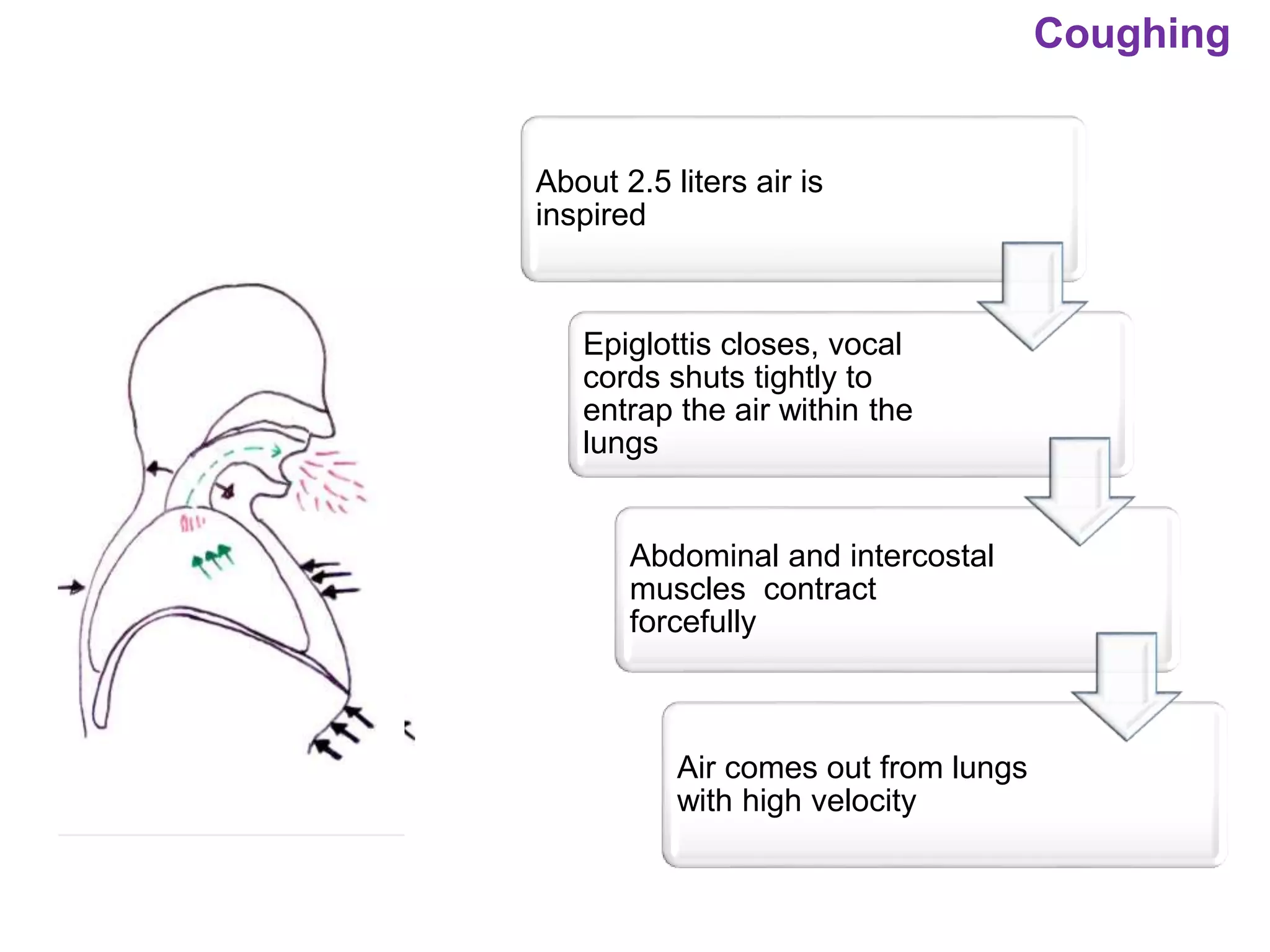
About 2.5 liters air is
inspired
Epiglottis closes, vocal
cords shuts tightly to
entrap the air within the
lungs
Abdominal and intercostal
muscles contract
forcefully
Air comes out from lungs
with high velocity
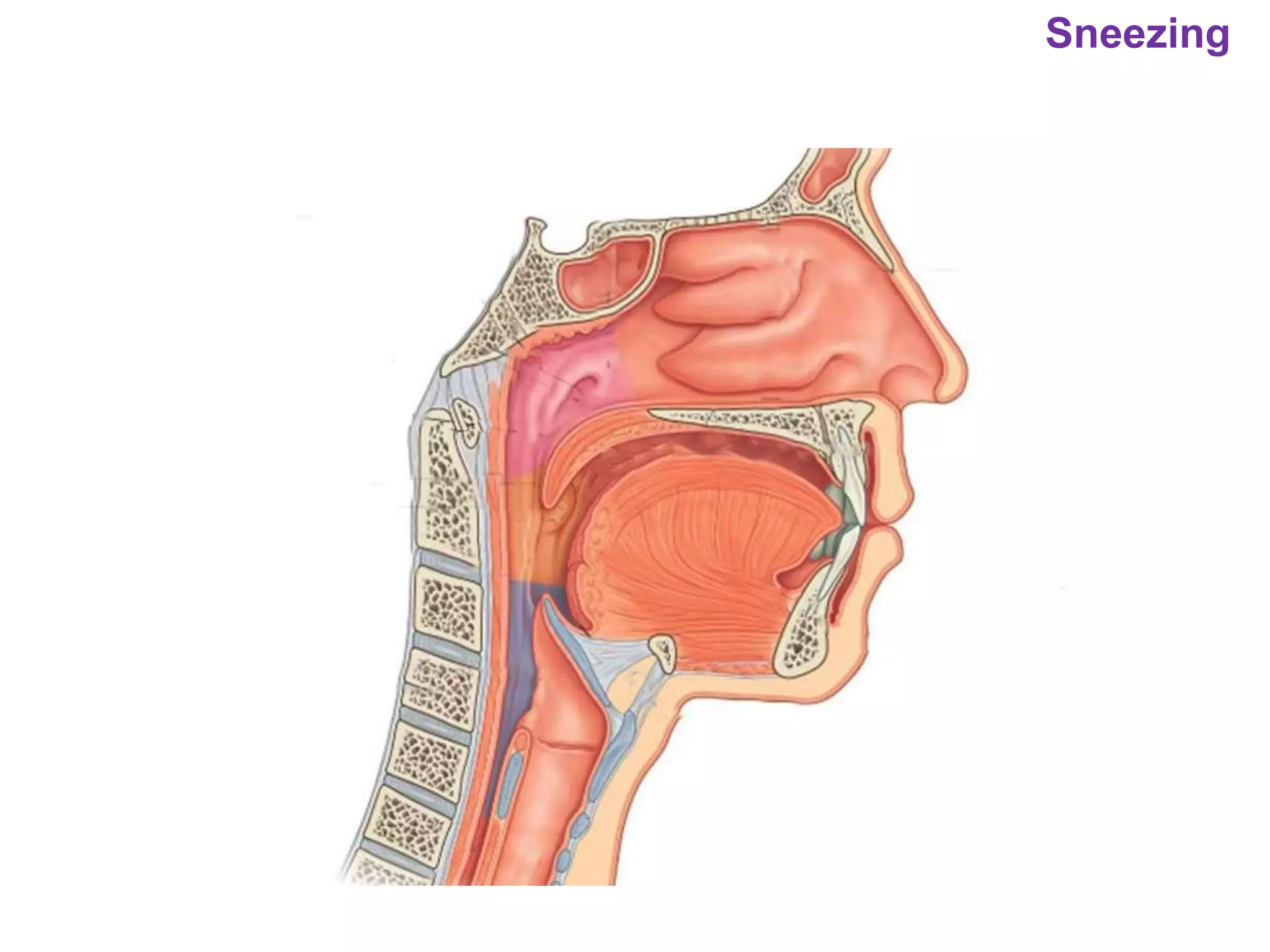
Sneezing
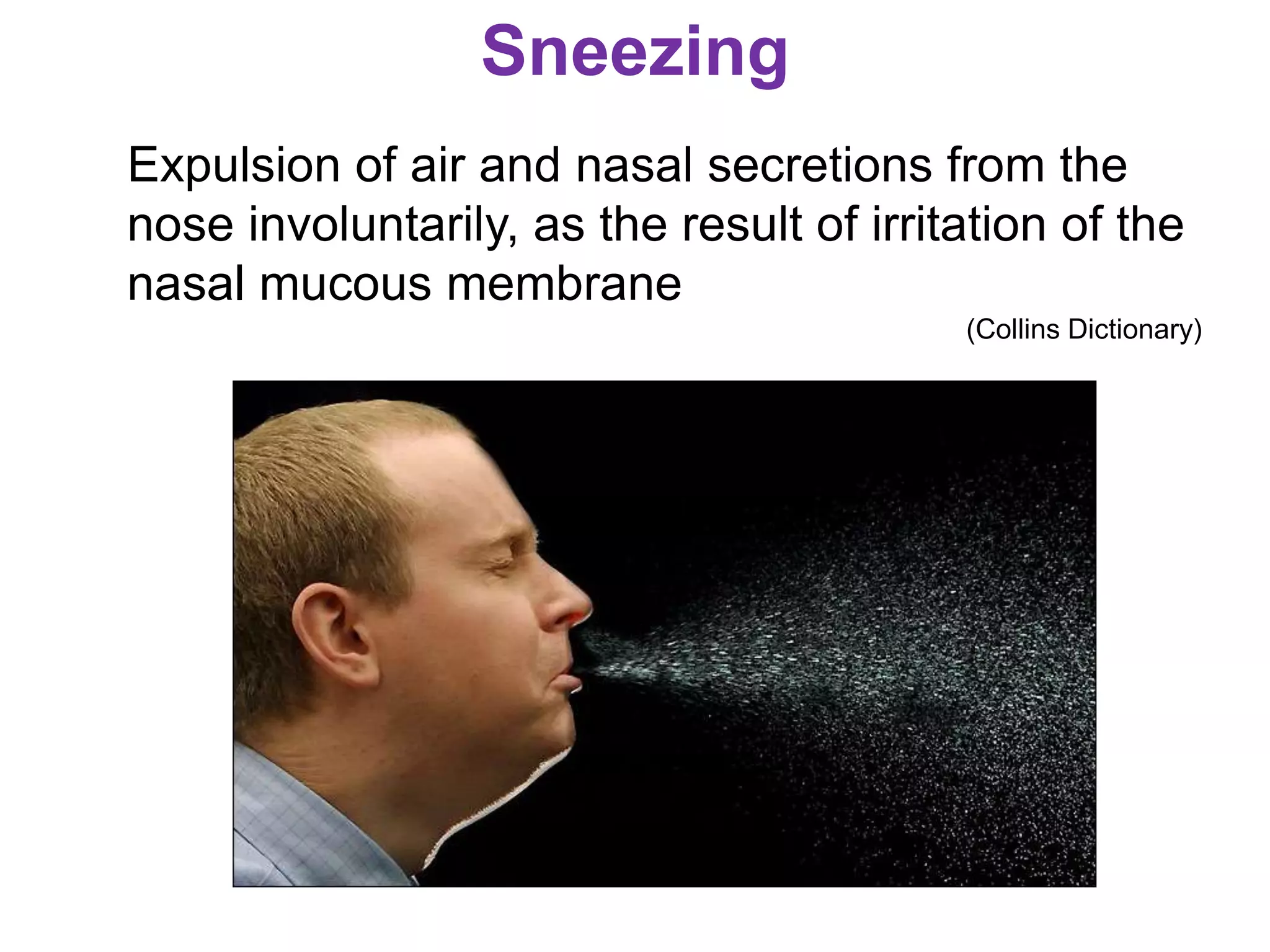
Expulsion of air and nasal secretions from the
nose involuntarily, as the result of irritation of the
nasal mucous membrane
(Collins Dictionary)
Sneezing
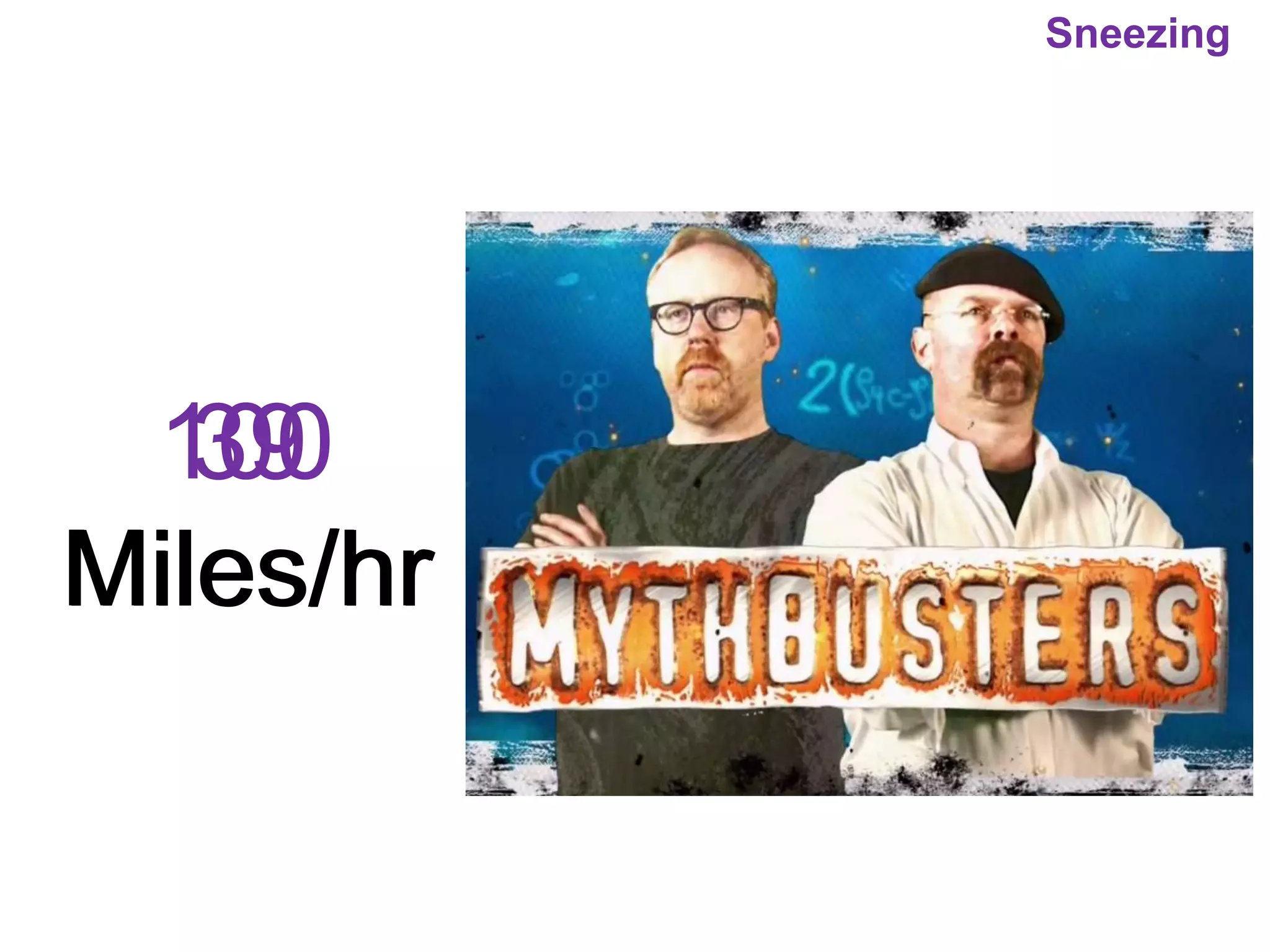
100
Miles/hr
39
Miles/hr
Sneezing
Sneezing
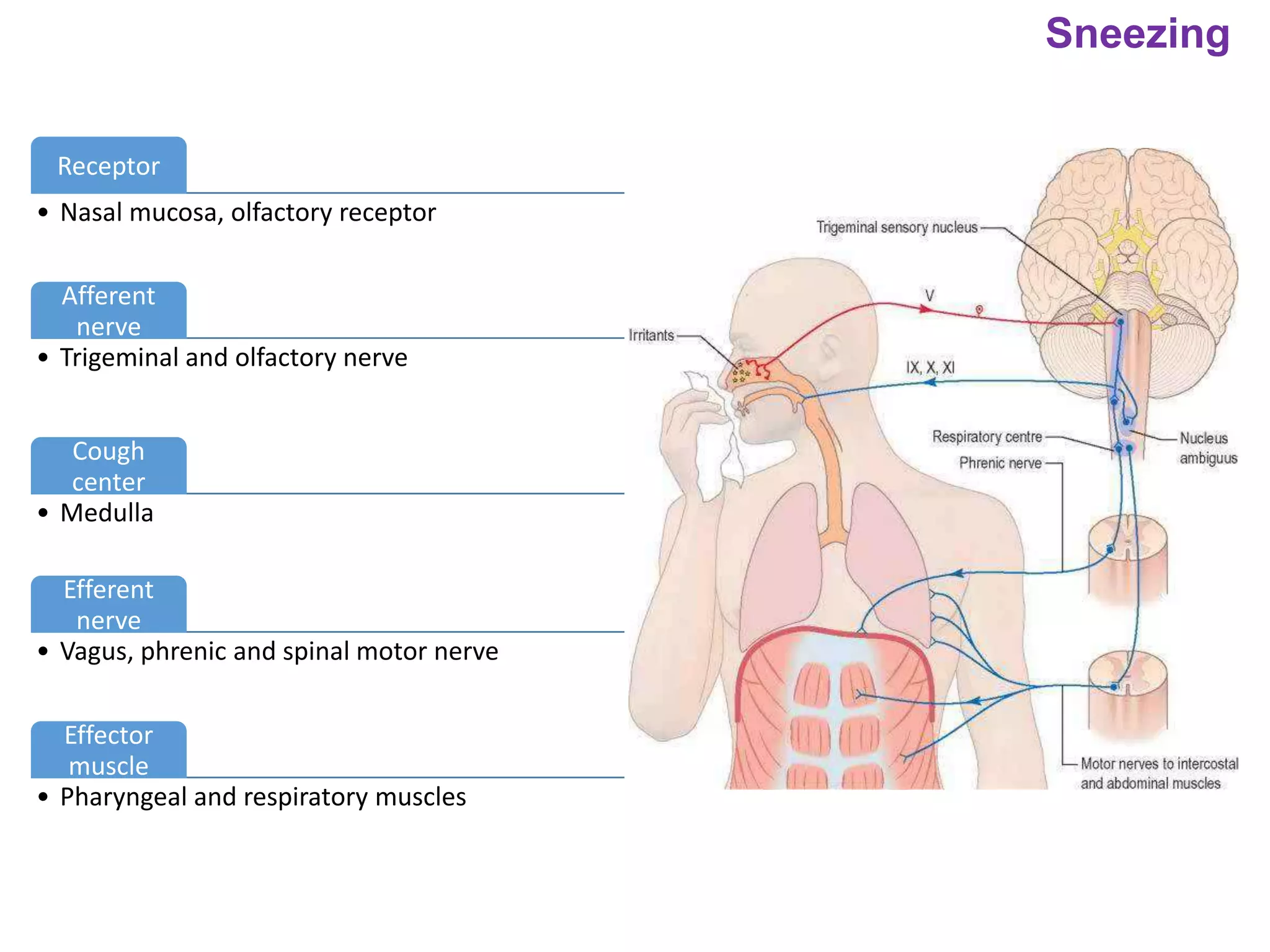
Receptor
• Nasal mucosa, olfactory receptor
Afferent
nerve
• Trigeminal and olfactory nerve
Cough
center
• Medulla
Efferent
nerve
• Vagus, phrenic and spinal motor nerve
Effector
muscle
• Pharyngeal and respiratory muscles
Sneezing
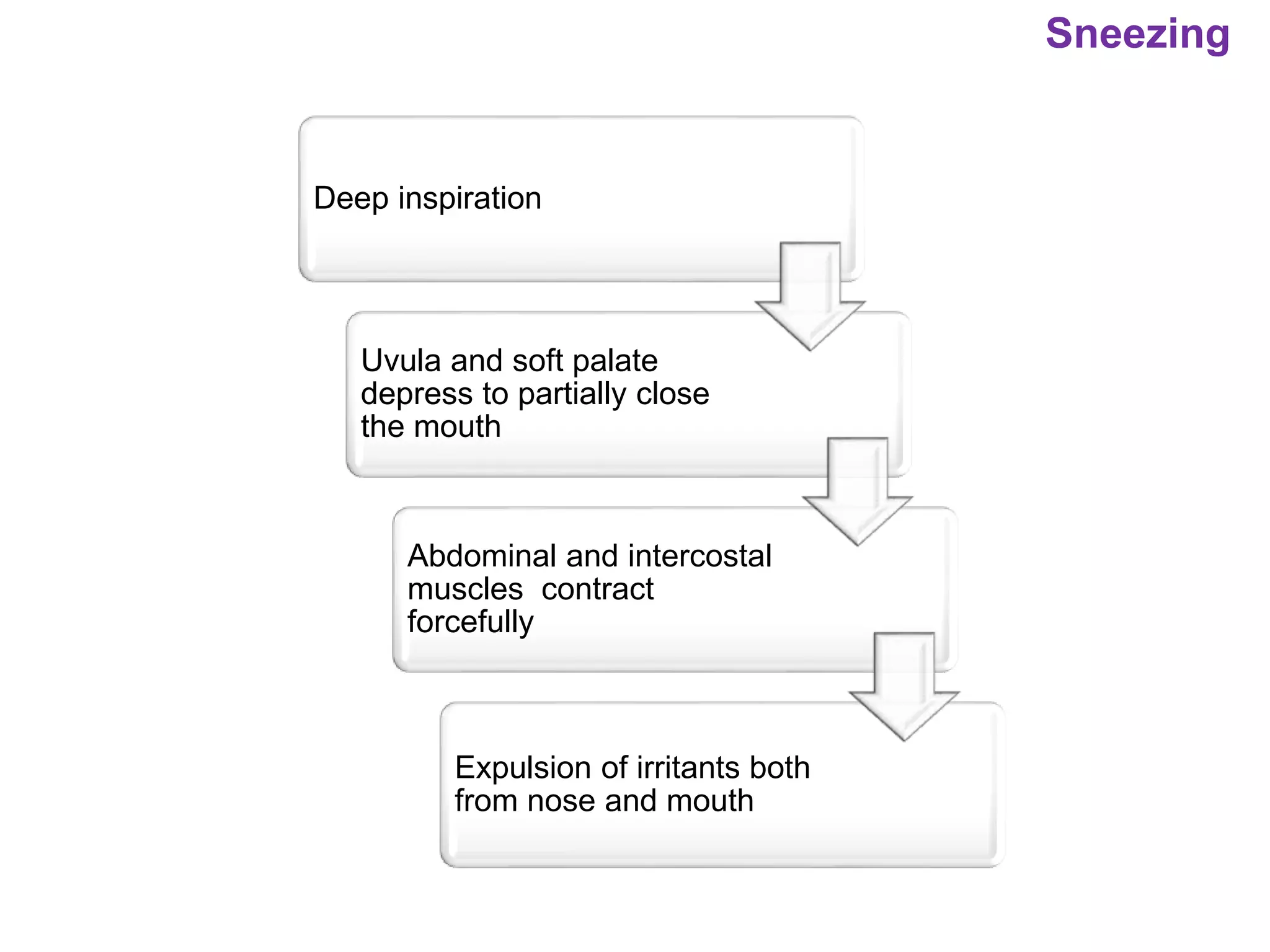
Deep inspiration
Uvula and soft palate
depress to partially close
the mouth
Abdominal and intercostal
muscles contract
forcefully
Expulsion of irritants both
from nose and mouth
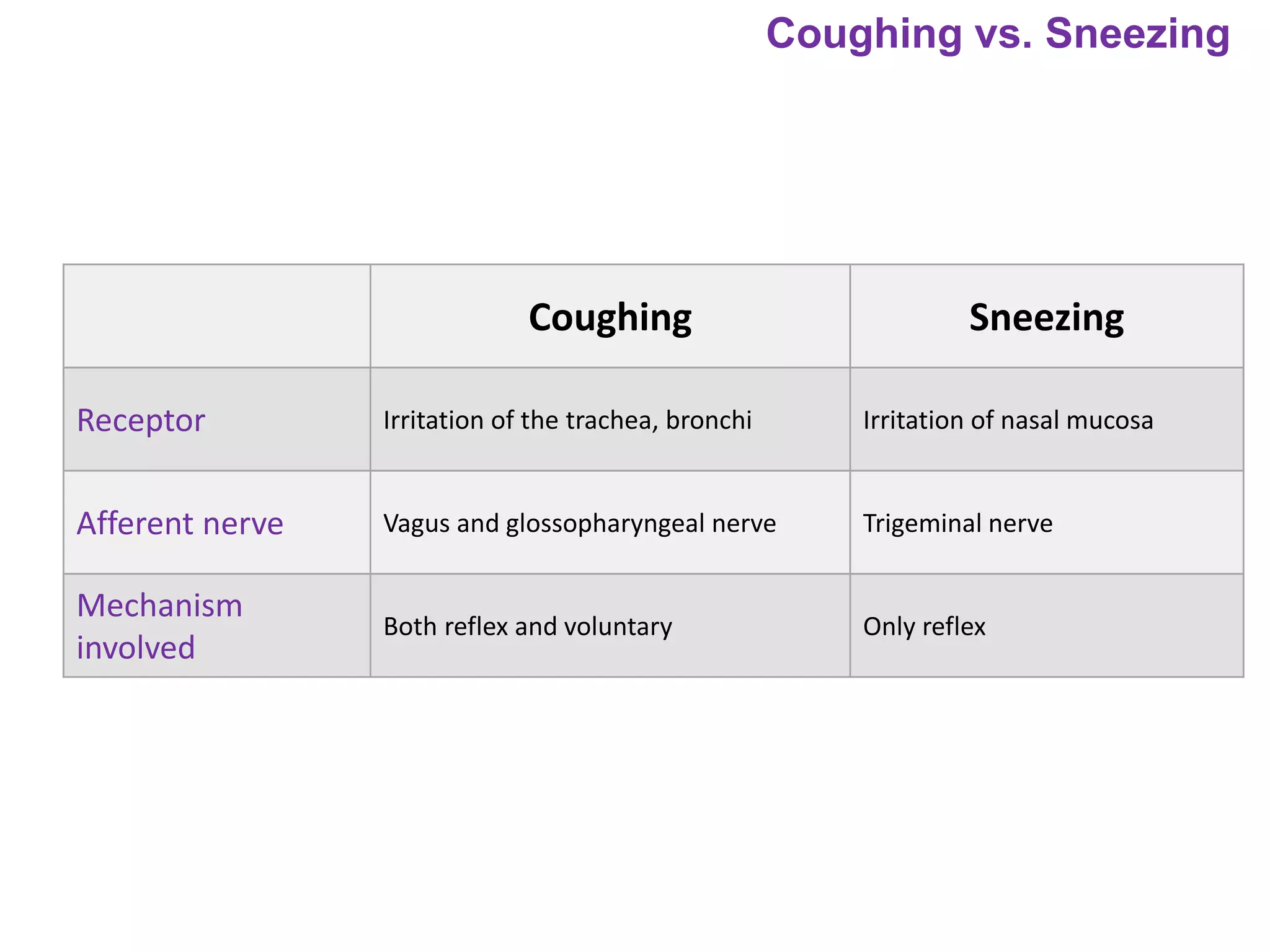
Coughing vs. Sneezing
Coughing Sneezing
Receptor Irritation of the trachea, bronchi Irritation of nasal mucosa
Afferent nerve Vagus and glossopharyngeal nerve Trigeminal nerve
Mechanism
involved
Both reflex and voluntary Only reflex
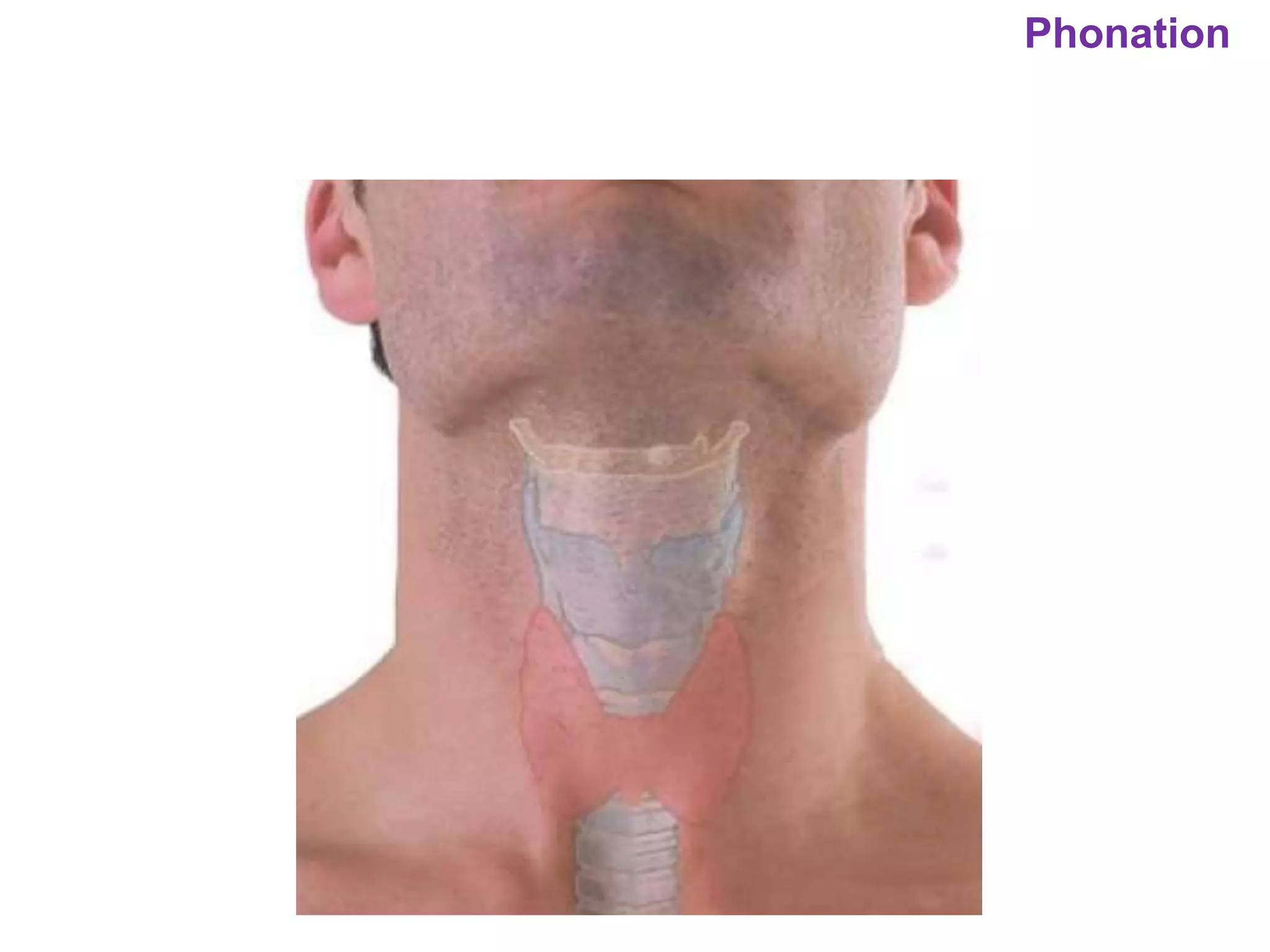
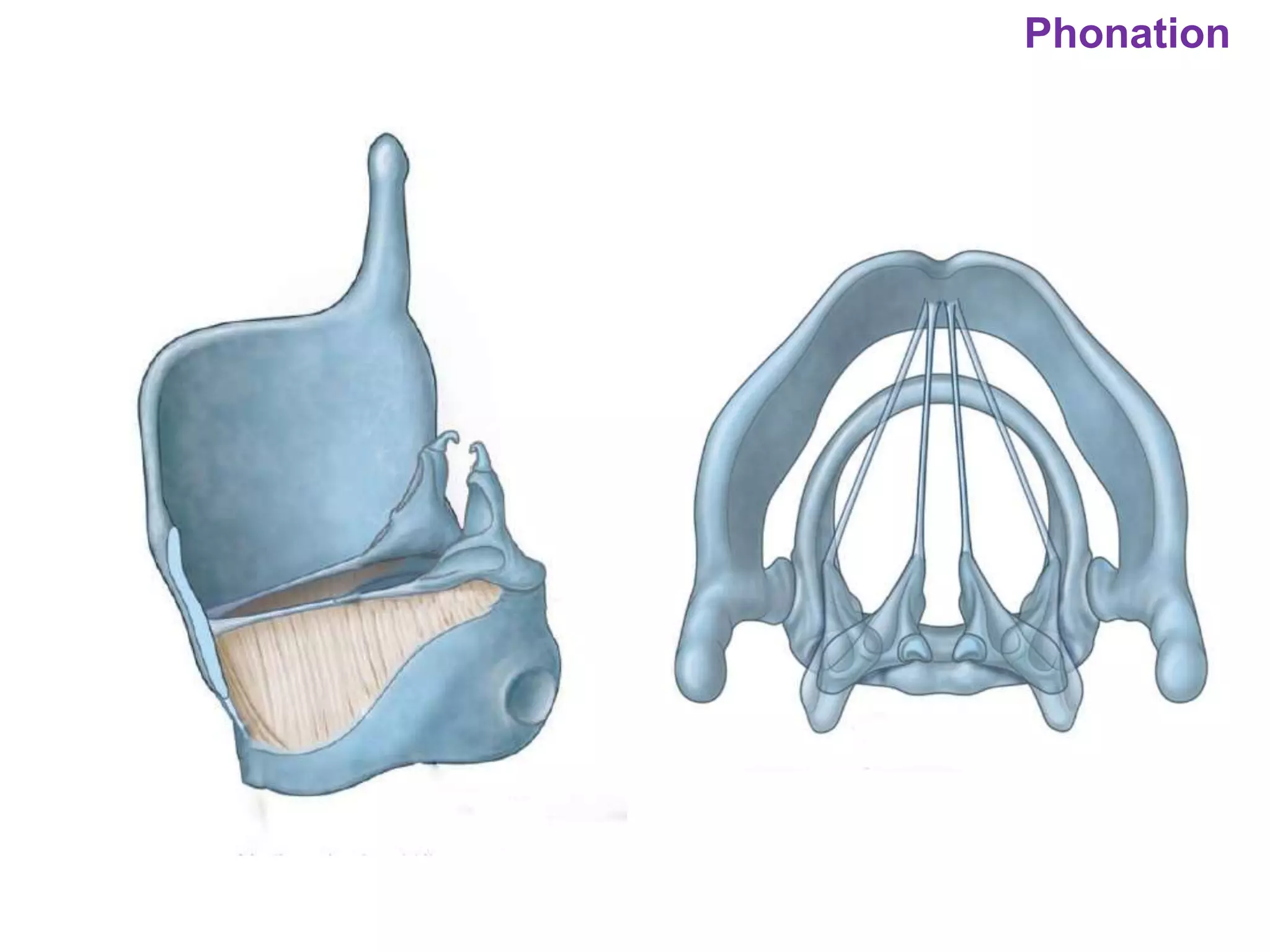
Phonation
The process of producing vocal sounds and
especially speech
(Merriam-Webster Dictionary)
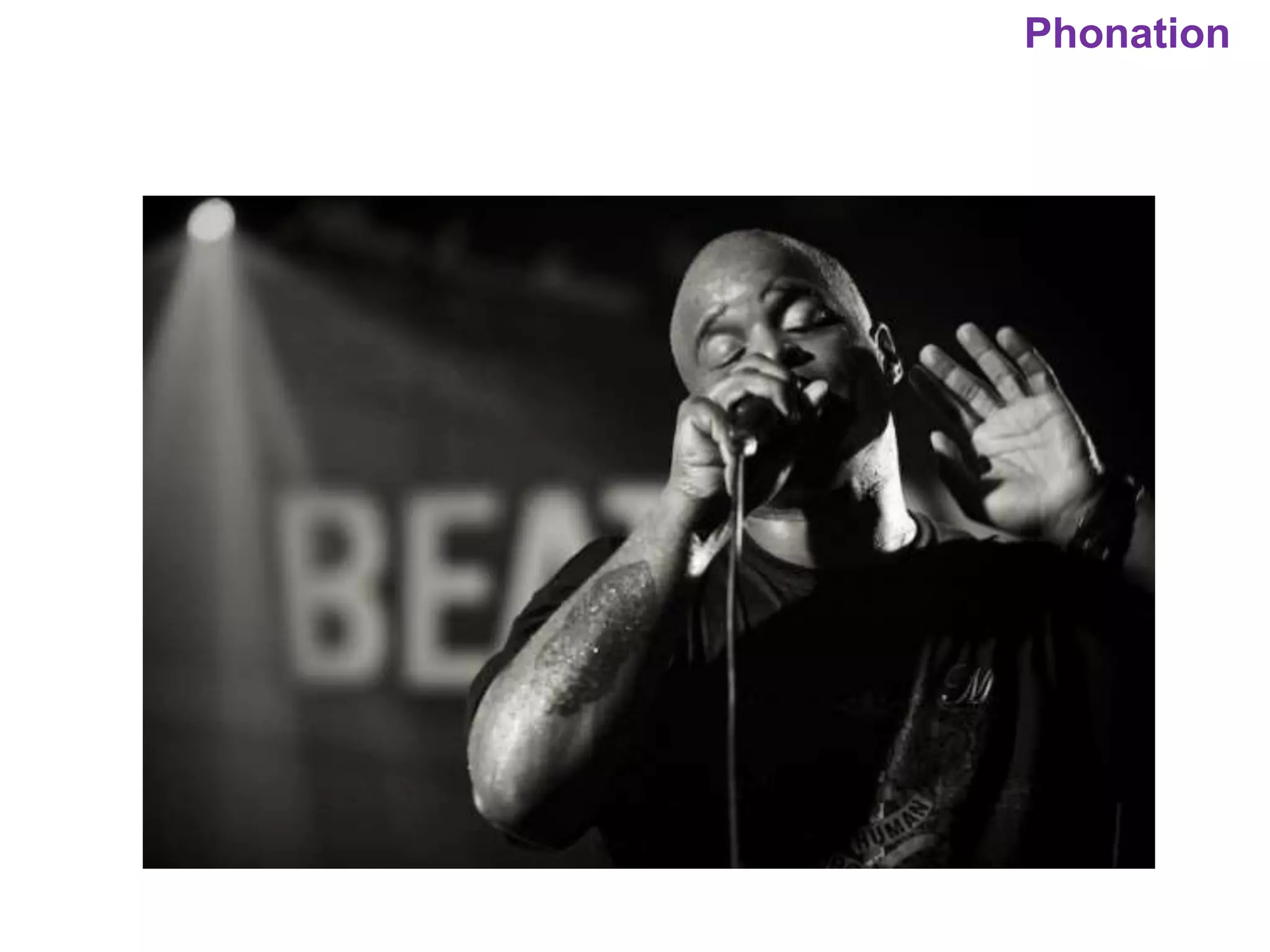
Phonation
Phonation
Phonation
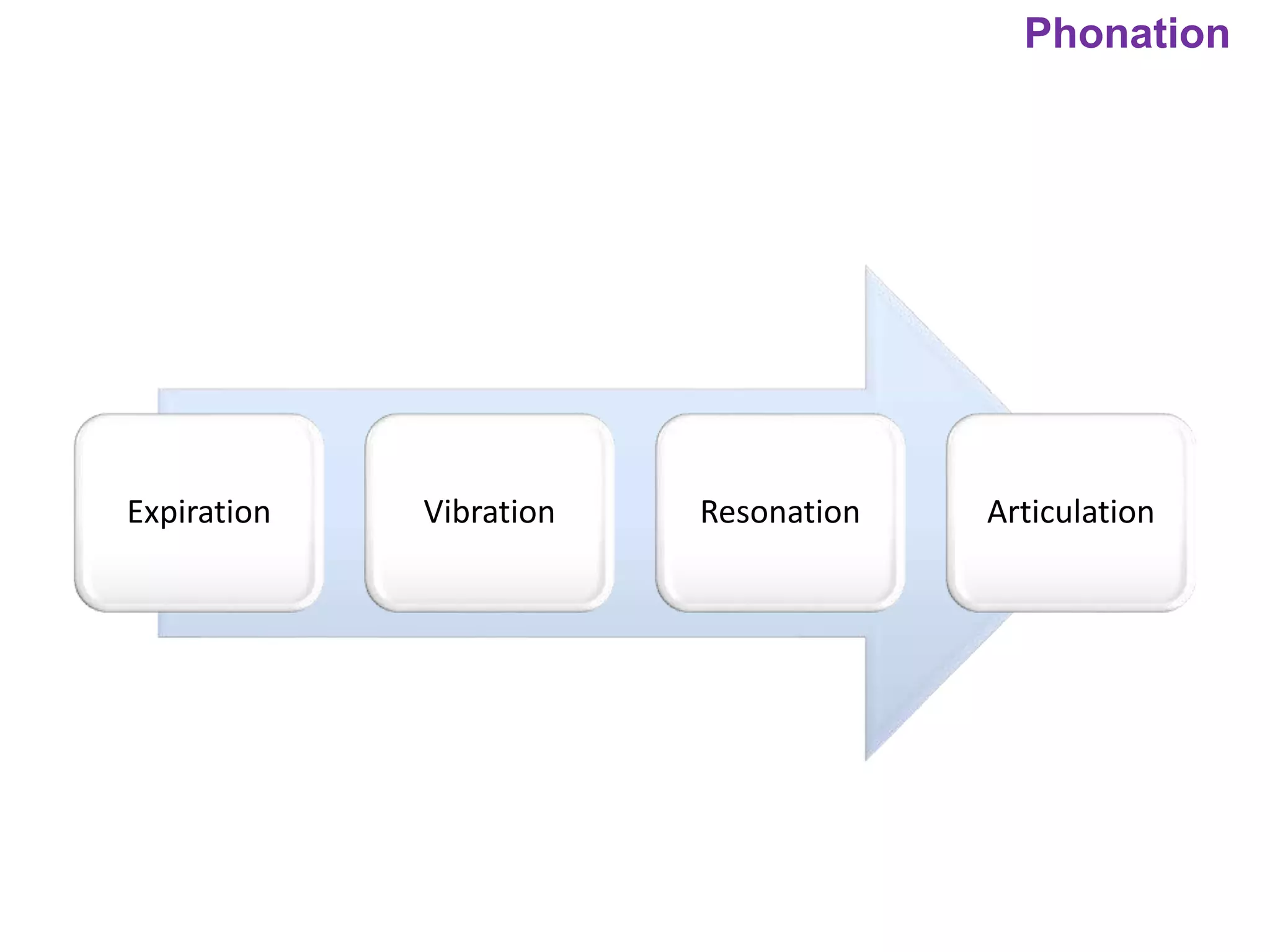
Expiration Vibration Resonation Articulation
Phonation
Phonation
Phonation
Phonation
Quiet
Breathing
Full
Inspiration
Whispering
Voice
High-pitched
Voice
Open
Rotate Laterally
Close
Rotate Medially
Close
Slide Medially
Phonation
Phonation
Nasal cavity
Oral cavity
Upper larynx
Pharynx
Phonation
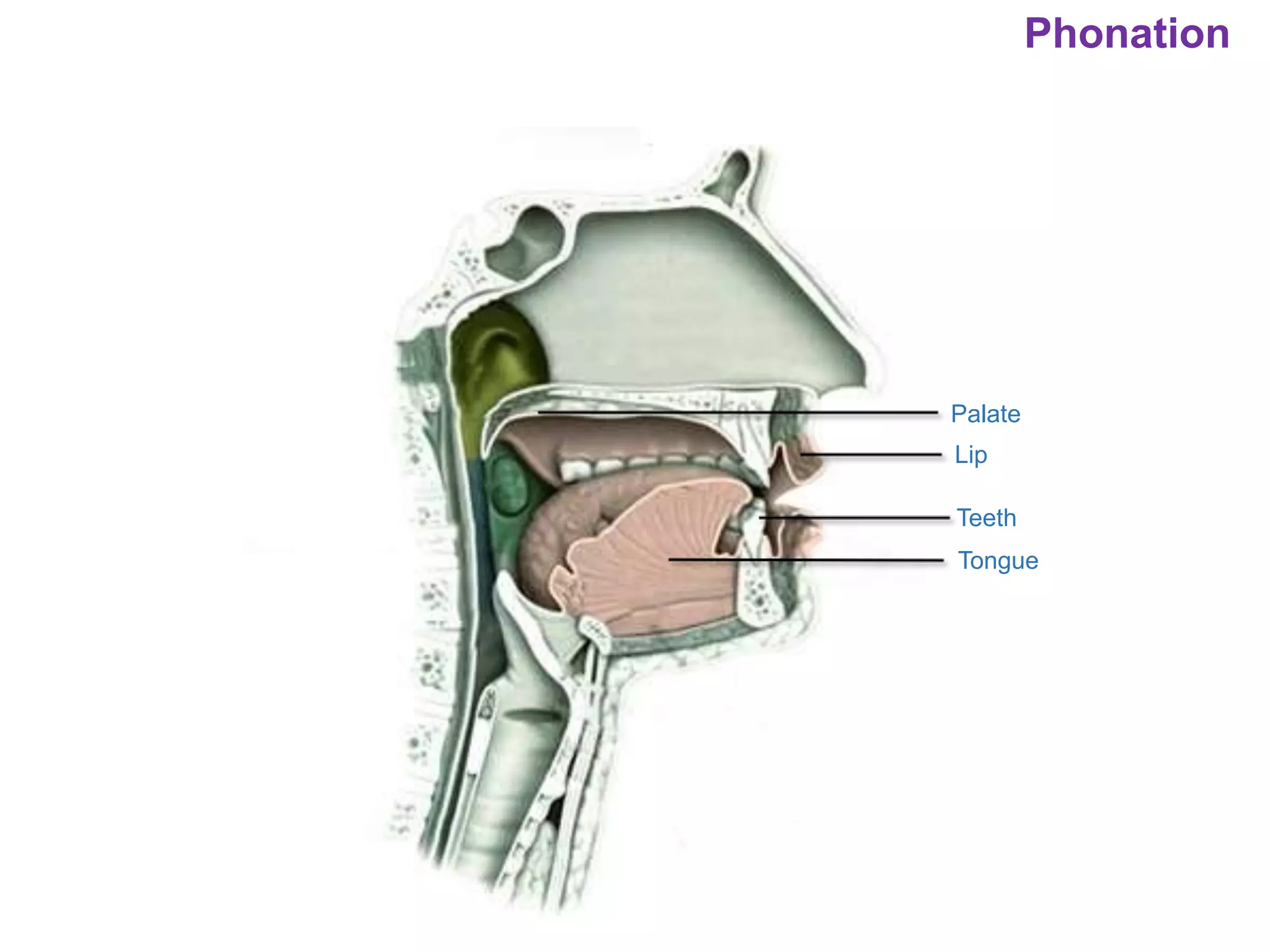
Palate
Lip
Teeth
Tongue
Phonation
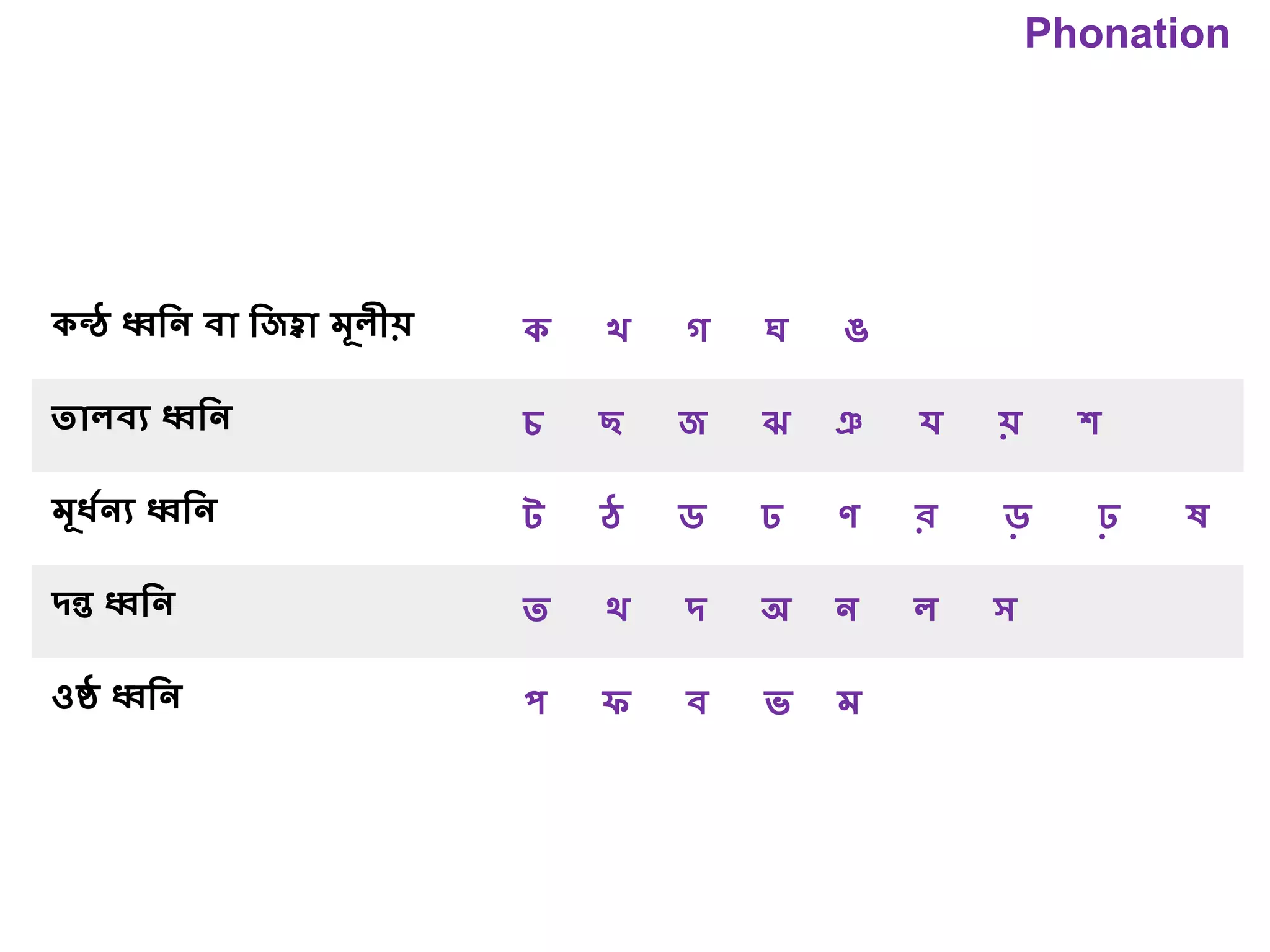
কন্ঠ ধ্বনি বা নিহ্বা মূলীয় ক খ গ ঘ ঙ
তালবয ধ্বনি চ ছ ি ঝ ঞ য য় শ
মূর্ধিয ধ্বনি ট ঠ ড ঢ ণ র ড় ঢ় ষ
দন্ত ধ্বনি ত থ দ অ ি ল স
ওষ্ঠ ধ্বনি প ফ ব ভ ম
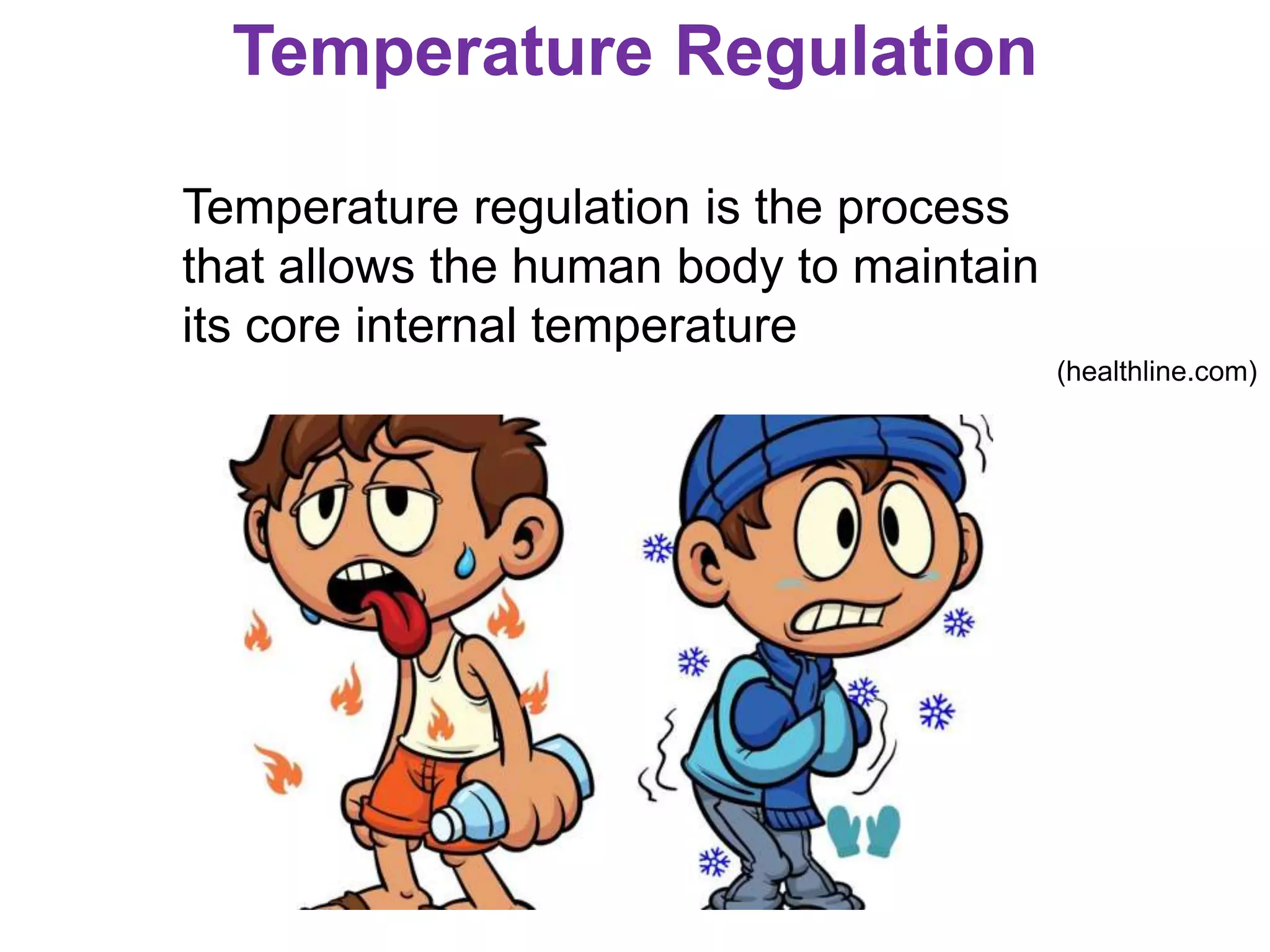
Temperature Regulation
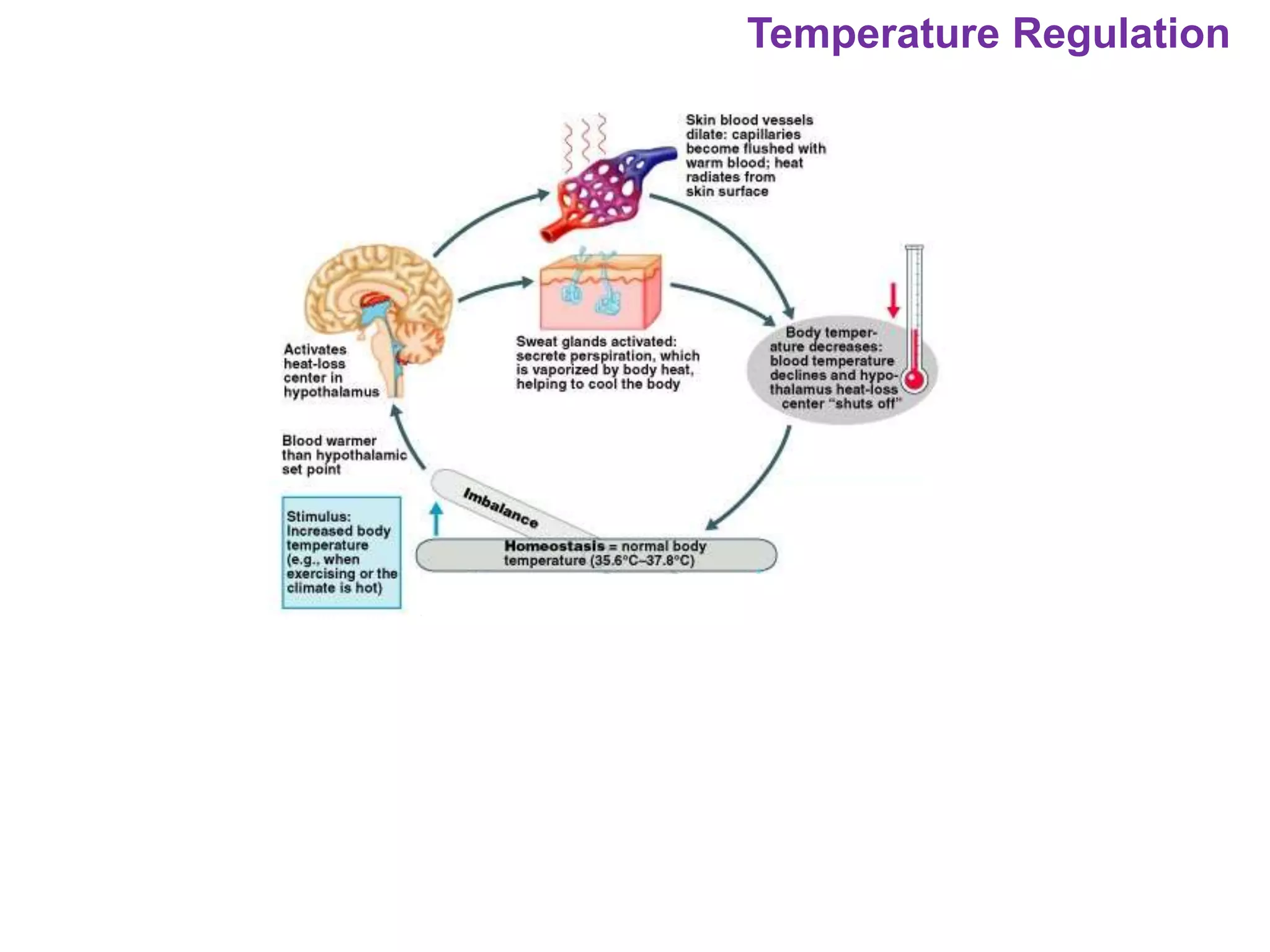
Temperature regulation is the process
that allows the human body to maintain
its core internal temperature
(healthline.com)
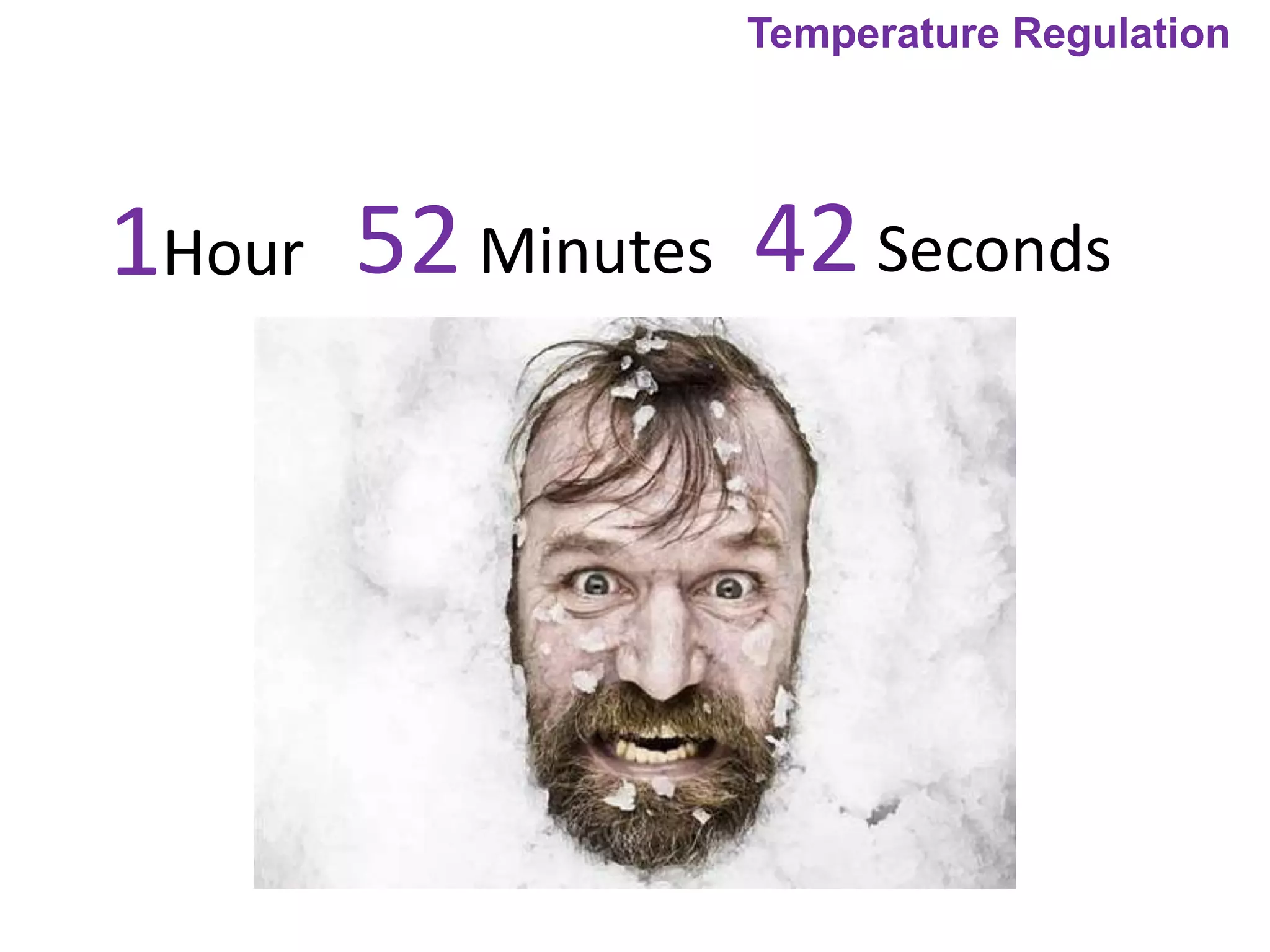
Temperature Regulation
1Hour 42Seconds52Minutes
Temperature Regulation
Why?
To provide the optimum conditions for enzyme-
catalysed reactions
to be carried out
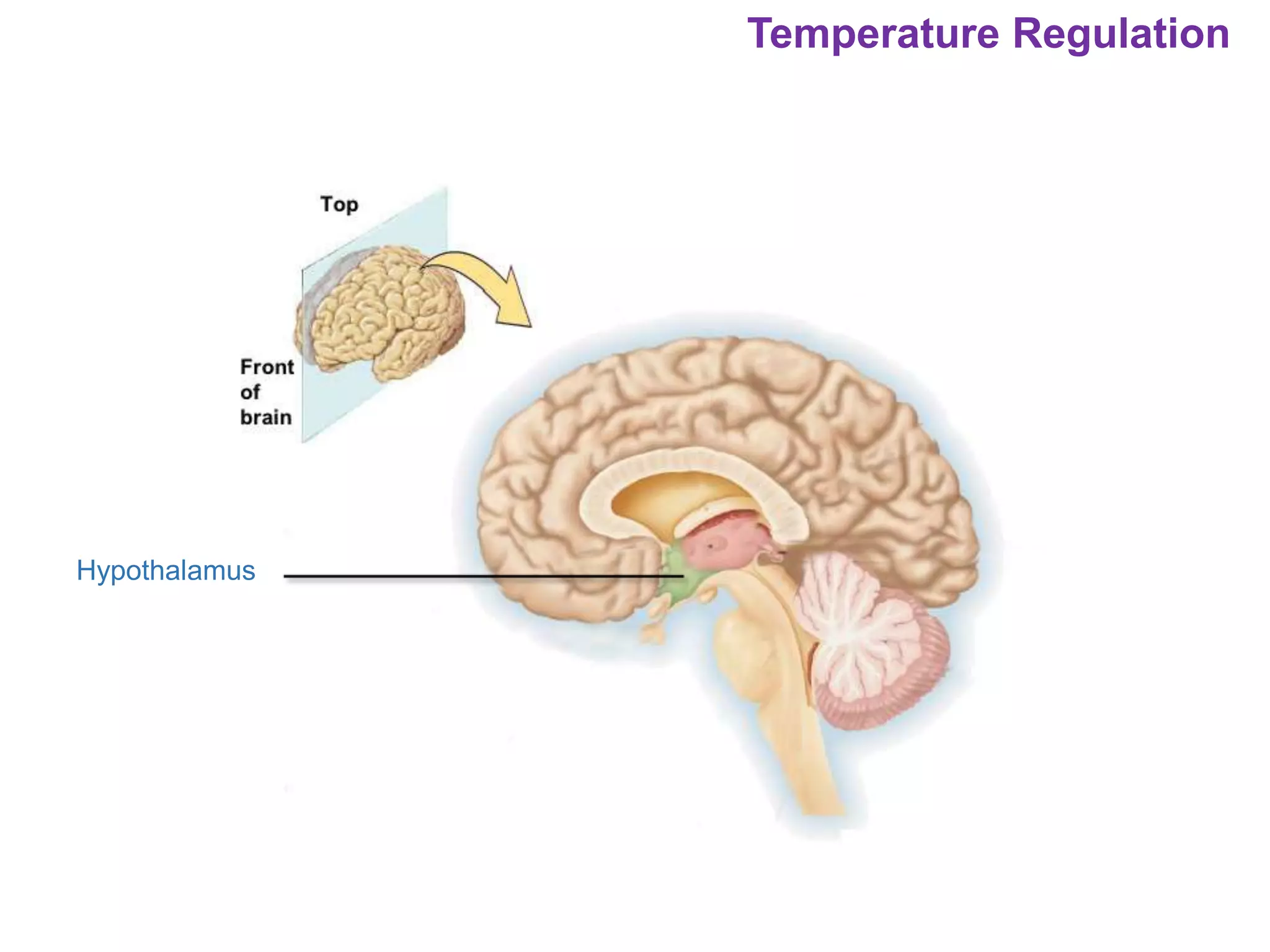
Temperature Regulation
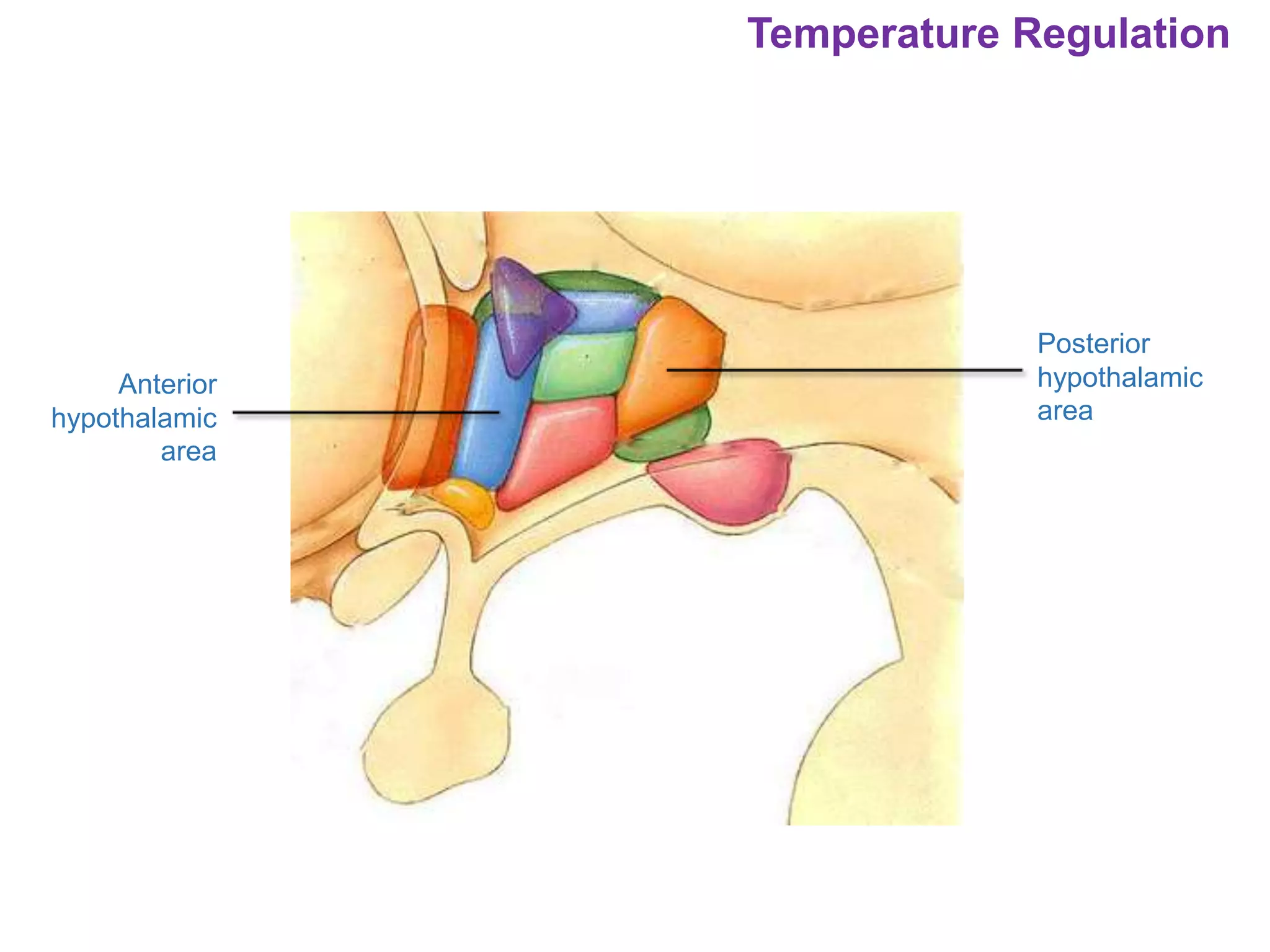
Hypothalamus
Temperature Regulation
Posterior
hypothalamic
area
Anterior
hypothalamic
area
Temperature Regulation
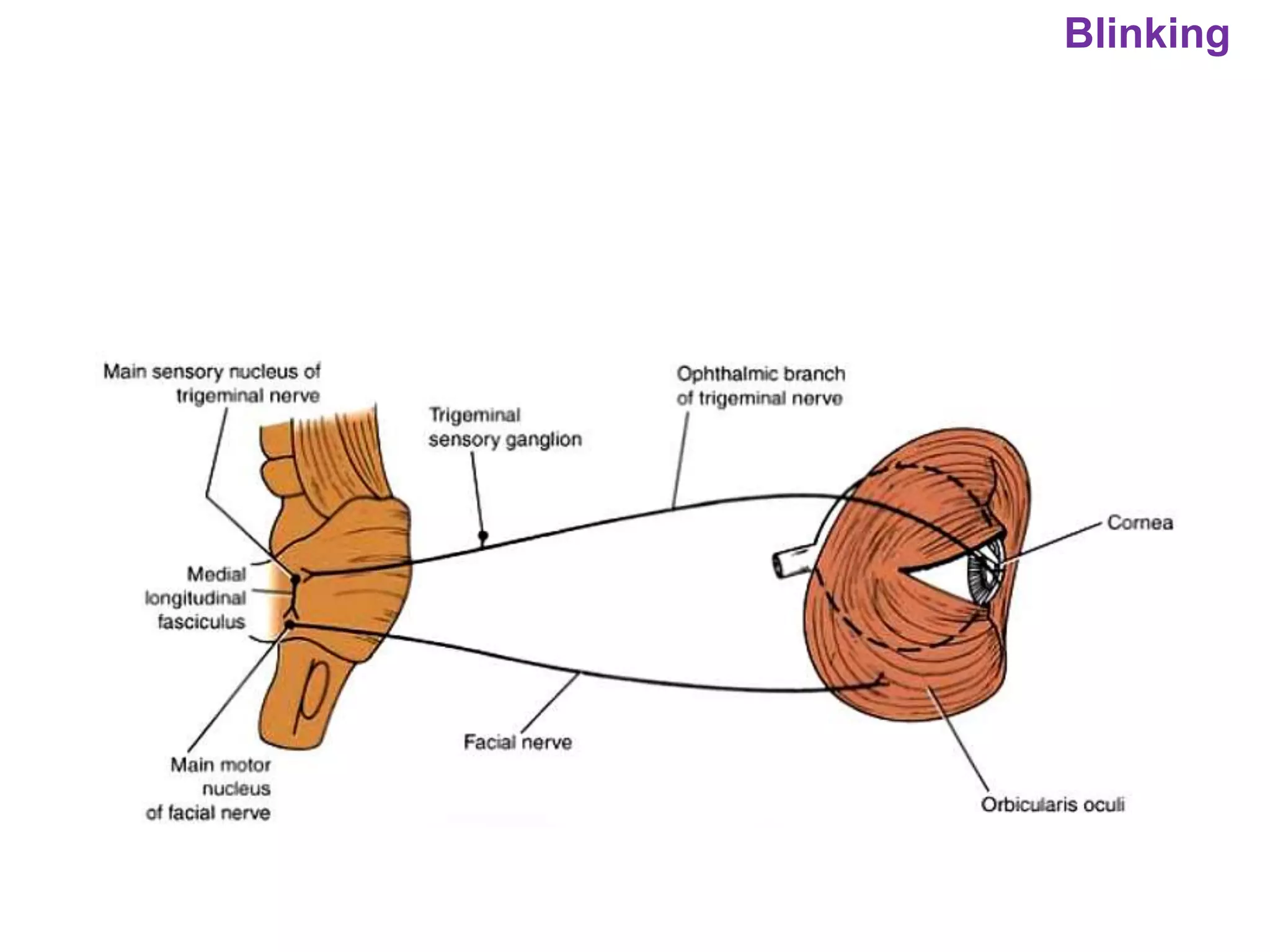
Blinking
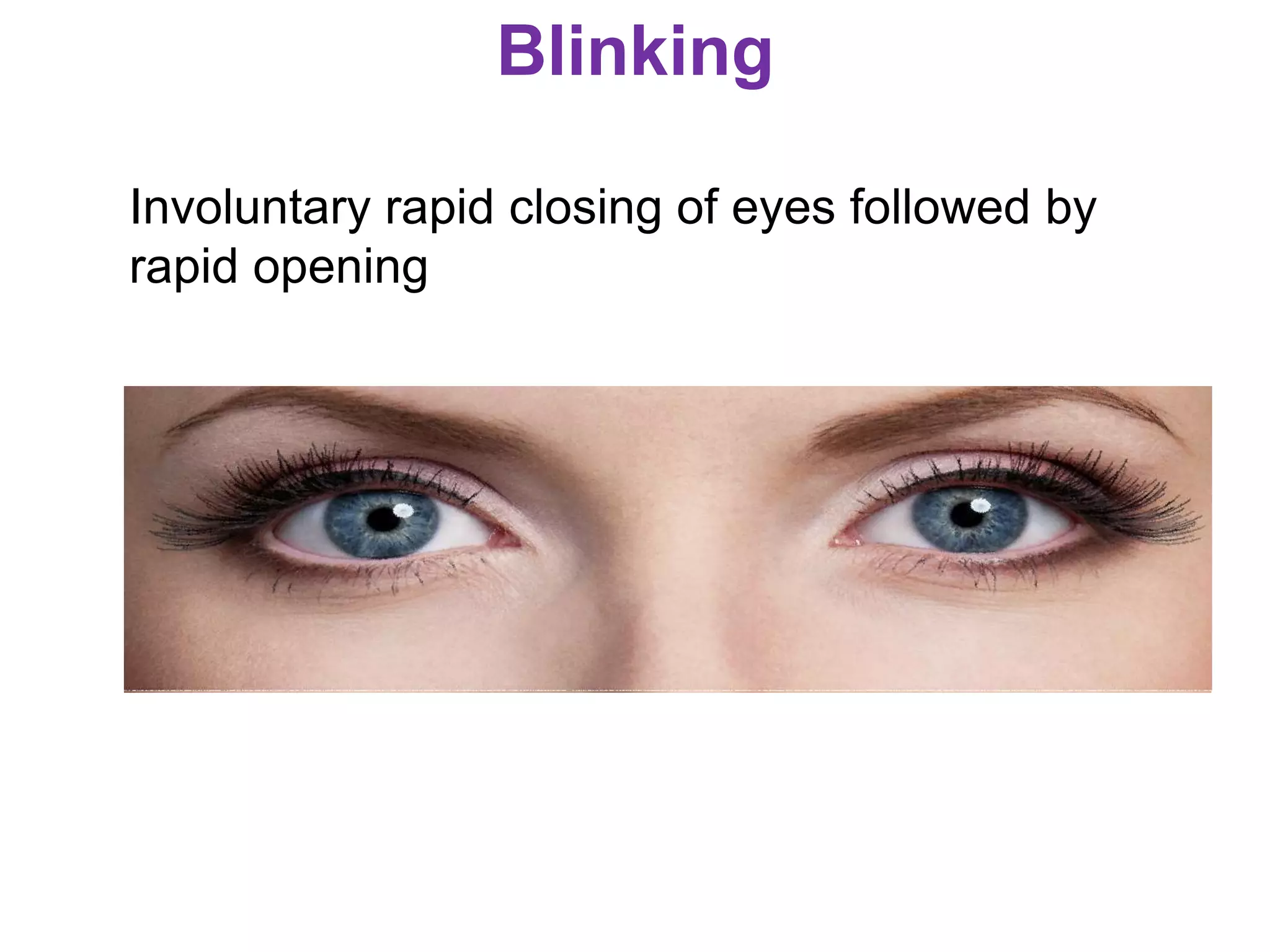
Involuntary rapid closing of eyes followed by
rapid opening
Blinking
16/minute
9days/year
100-150 milliseconds
Blinking
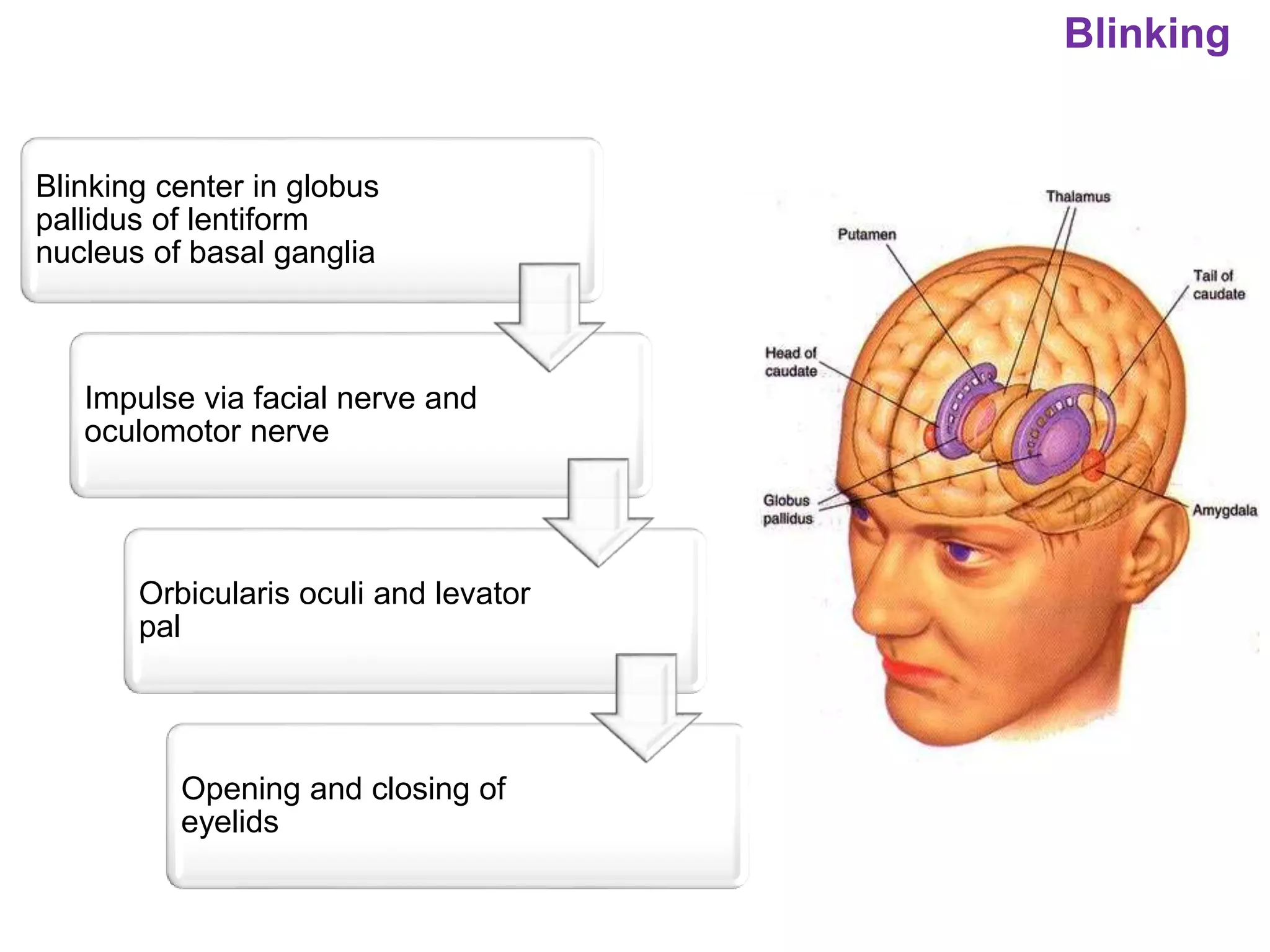
Blinking center in globus
pallidus of lentiform
nucleus of basal ganglia
Impulse via facial nerve and
oculomotor nerve
Orbicularis oculi and levator
pal
Opening and closing of
eyelids
Blinking
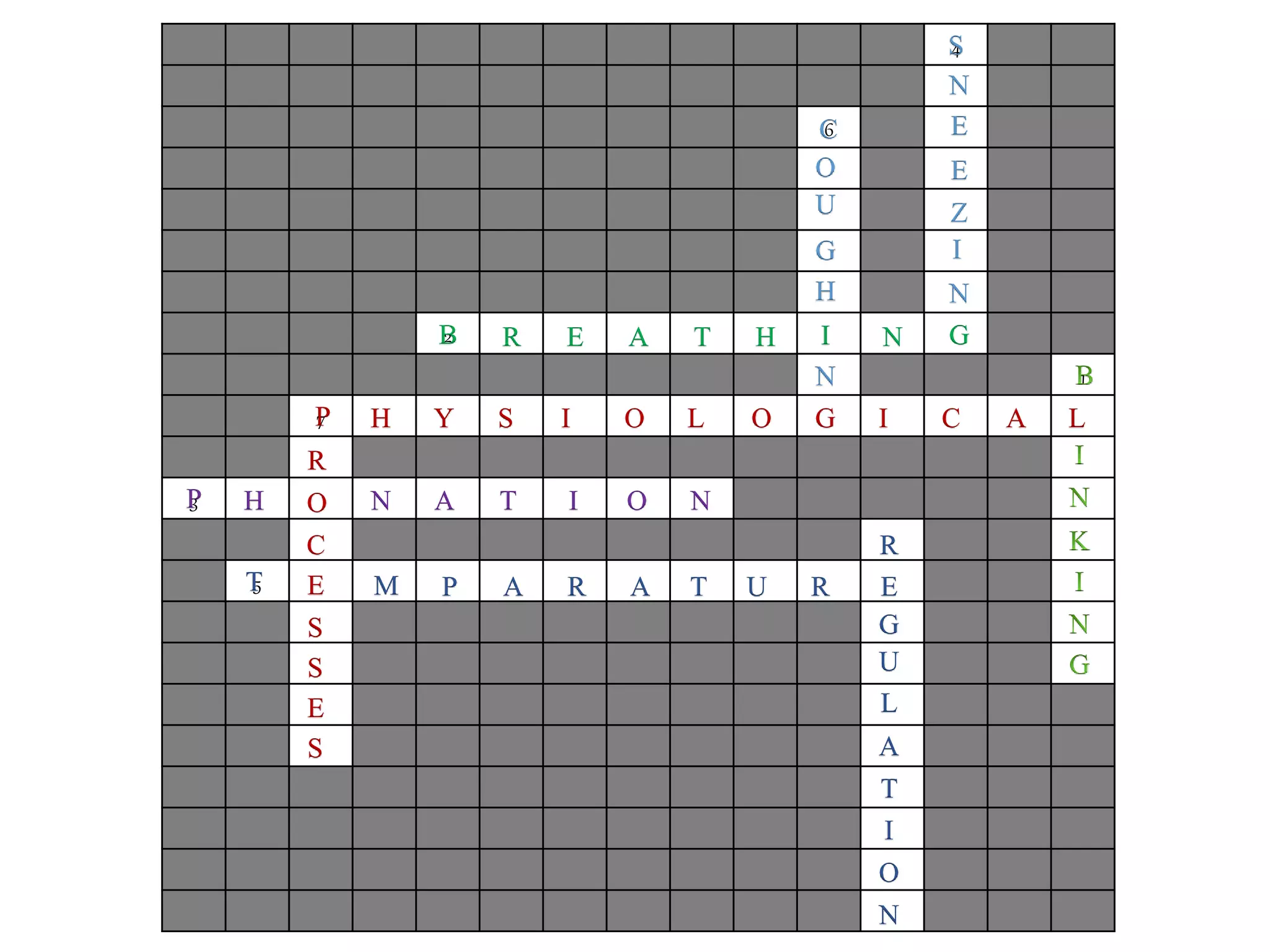
4
6
2
1
7
3
5
G
N
Z
E
E
N
S
I
H
G
U
O
C
N
I NHTAERB
P H Y S I O L O G I C A
R
O
C
E
S
S
E
S
L
P H N A T I O N
T M P A R A T U R E
R
G
U
L
A
T
I
O
N
Selected Physiological Processes

Selected Physiological Processes

Editor's Notes

  • #5 Stig Severinsen Denish free diver, 22 minute breath hold
  • #17 90 db, normal conversation 60db
  • #23 39 mile/ hour, 19 feet
  • #29 Kenny Mohammad
  • #41 Wim Hof (born 20 April 1959) is a Dutch, commonly nicknamed "The Iceman“. The Guinness World Record is now set for 1 hour and 52 minutes and 42 seconds by Hof. 2011