SUBJECT- MEDICAL SURGICAL NURSING
TOPIC- SHOCK
-MR. MIGRON RUBIN
INTRODUCTION
Cells need two things to function: oxygen and glucose. This allows the
cells to generate energy and do their specific jobs. When cells don’t
receive either of them or both, they stop functioning.
DEFINITION
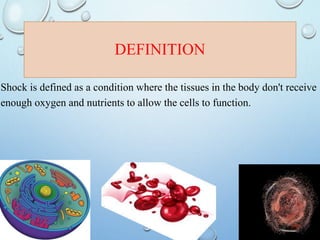
Shock is defined as a condition where the tissues in the body don't receive
enough oxygen and nutrients to allow the cells to function.
CLASSIFICATION
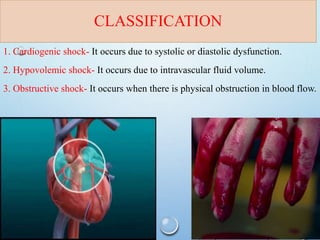
1. Cardiogenic shock- It occurs due to systolic or diastolic dysfunction.
2. Hypovolemic shock- It occurs due to intravascular fluid volume.
3. Obstructive shock- It occurs when there is physical obstruction in blood flow.
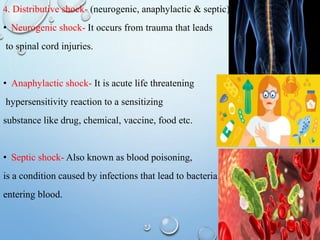
4. Distributive shock- (neurogenic, anaphylactic & septic)
• Neurogenic shock- It occurs from trauma that leads
to spinal cord injuries.
• Anaphylactic shock- It is acute life threatening
hypersensitivity reaction to a sensitizing
substance like drug, chemical, vaccine, food etc.
• Septic shock- Also known as blood poisoning,
is a condition caused by infections that lead to bacteria
entering blood.
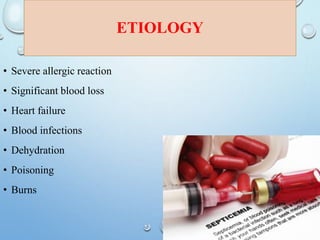
ETIOLOGY
• Severe allergic reaction
• Significant blood loss
• Heart failure
• Blood infections
• Dehydration
• Poisoning
• Burns
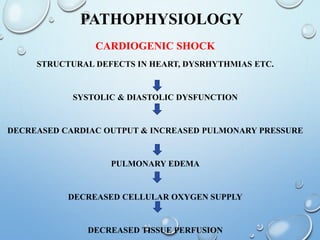
PATHOPHYSIOLOGY
CARDIOGENIC SHOCK
STRUCTURAL DEFECTS IN HEART, DYSRHYTHMIAS ETC.
SYSTOLIC & DIASTOLIC DYSFUNCTION
DECREASED CARDIAC OUTPUT & INCREASED PULMONARY PRESSURE
PULMONARY EDEMA
DECREASED CELLULAR OXYGEN SUPPLY
DECREASED TISSUE PERFUSION
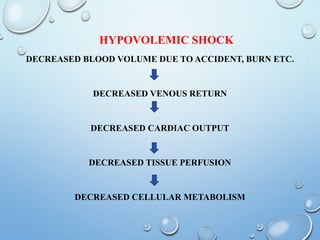
HYPOVOLEMIC SHOCK
DECREASED BLOOD VOLUME DUE TO ACCIDENT, BURN ETC.
DECREASED VENOUS RETURN
DECREASED CARDIAC OUTPUT
DECREASED TISSUE PERFUSION
DECREASED CELLULAR METABOLISM
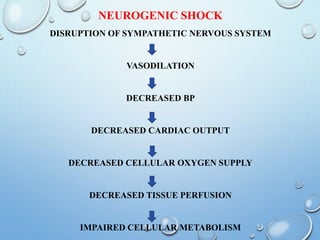
NEUROGENIC SHOCK
DISRUPTION OF SYMPATHETIC NERVOUS SYSTEM
VASODILATION
DECREASED BP
DECREASED CARDIAC OUTPUT
DECREASED CELLULAR OXYGEN SUPPLY
DECREASED TISSUE PERFUSION
IMPAIRED CELLULAR METABOLISM
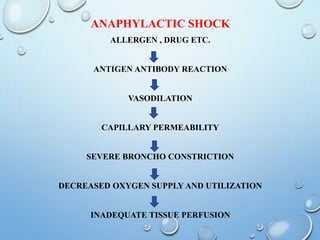
ANAPHYLACTIC SHOCK
ALLERGEN , DRUG ETC.
ANTIGEN ANTIBODY REACTION
VASODILATION
CAPILLARY PERMEABILITY
SEVERE BRONCHO CONSTRICTION
DECREASED OXYGEN SUPPLY AND UTILIZATION
INADEQUATE TISSUE PERFUSION
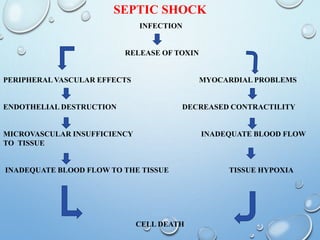
SEPTIC SHOCK
INFECTION
RELEASE OF TOXIN
PERIPHERAL VASCULAR EFFECTS MYOCARDIAL PROBLEMS
ENDOTHELIAL DESTRUCTION DECREASED CONTRACTILITY
MICROVASCULAR INSUFFICIENCY INADEQUATE BLOOD FLOW
TO TISSUE
INADEQUATE BLOOD FLOW TO THE TISSUE TISSUE HYPOXIA
CELL DEATH
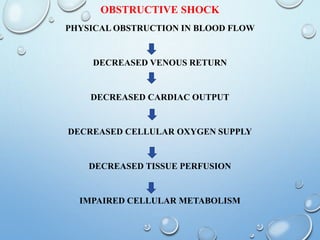
OBSTRUCTIVE SHOCK
PHYSICAL OBSTRUCTION IN BLOOD FLOW
DECREASED VENOUS RETURN
DECREASED CARDIAC OUTPUT
DECREASED CELLULAR OXYGEN SUPPLY
DECREASED TISSUE PERFUSION
IMPAIRED CELLULAR METABOLISM
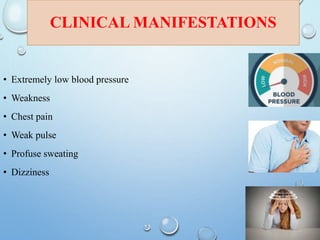
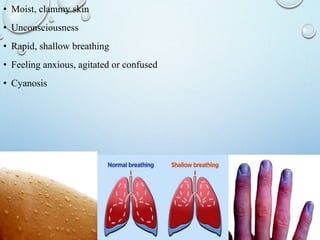
CLINICAL MANIFESTATIONS
• Extremely low blood pressure
• Weakness
• Chest pain
• Weak pulse
• Profuse sweating
• Dizziness
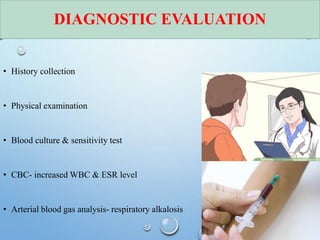
• Moist, clammy skin
• Unconsciousness
• Rapid, shallow breathing
• Feeling anxious, agitated or confused
• Cyanosis
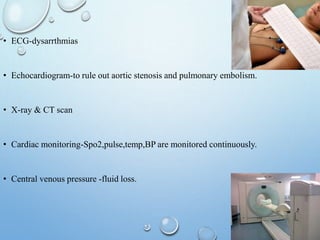
DIAGNOSTIC EVALUATION
• History collection
• Physical examination
• Blood culture & sensitivity test
• CBC- increased WBC & ESR level
• Arterial blood gas analysis- respiratory alkalosis
• ECG-dysarrthmias
• Echocardiogram-to rule out aortic stenosis and pulmonary embolism.
• X-ray & CT scan
• Cardiac monitoring-Spo2,pulse,temp,BP are monitored continuously.
• Central venous pressure -fluid loss.
COMPLICATIONS
• Loss of consciousness
• Respiratory failure
• Coagulation disorder
• Multi organ damage
• Coma
• Death
MANAGEMENT
I. MEDICAL MANAGEMENT
A. PHARMACOLOGICAL MANAGEMENT
• Crystalloids: ringer’s solution and normal saline
• Inotropic agents: like dopamine , dobutamine and epinephrine
• Vasodilators : nitroglycerine
• Diuretics : lasilactone, furosemide
• Antibiotics : ciprofloxacin, amoxicillin and clavulanic acid
• Antihistamines : epinephrine used in anaphylactic shock.
• Corticosteroids : dexamethasone
• Sodium bicarbonate :used to treat metabolic acidosis
• Broncodilators : like atropine , aminophylline etc.
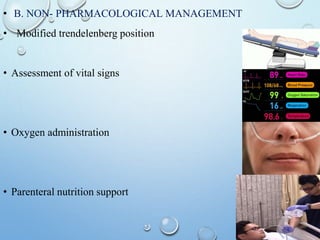
• B. NON- PHARMACOLOGICAL MANAGEMENT
• Modified trendelenberg position
• Assessment of vital signs
• Oxygen administration
• Parenteral nutrition support
II. SURGICAL MANAGEMENT
• Wound debridement- in case of chronic infected wound, burns wound
debridement to be done for fast healing
• Angioplasty-in case of myocardial infarction angioplasty can be
performed
• Tracheostomy
III. NURSING MANAGEMENT
ASSESSMENT
• Continuous monitoring of vital signs should be done.
• Assess Airway, breathing & circulation of the patient.
• Monitor for ABG value
• Check for urine output of the client.
•
• NURSING DIAGNOSIS
• Impaired tissue perfusion related to decrease cardiac output, decreased
venous return
• In effective breathing pattern related to hypoxia, bronchospasm
• Fluid volume deficit related to vomiting hemorrhage
• Acute pain related to myocardial infarction
• Imbalanced nutrition less then body requirement related to vomiting,
low intake of food
Shock

Shock

  • 1.
    SUBJECT- MEDICAL SURGICALNURSING TOPIC- SHOCK -MR. MIGRON RUBIN
  • 2.
    INTRODUCTION Cells need twothings to function: oxygen and glucose. This allows the cells to generate energy and do their specific jobs. When cells don’t receive either of them or both, they stop functioning.
  • 3.
    DEFINITION Shock is definedas a condition where the tissues in the body don't receive enough oxygen and nutrients to allow the cells to function.
  • 4.
    CLASSIFICATION 1. Cardiogenic shock-It occurs due to systolic or diastolic dysfunction. 2. Hypovolemic shock- It occurs due to intravascular fluid volume. 3. Obstructive shock- It occurs when there is physical obstruction in blood flow.
  • 5.
    4. Distributive shock-(neurogenic, anaphylactic & septic) • Neurogenic shock- It occurs from trauma that leads to spinal cord injuries. • Anaphylactic shock- It is acute life threatening hypersensitivity reaction to a sensitizing substance like drug, chemical, vaccine, food etc. • Septic shock- Also known as blood poisoning, is a condition caused by infections that lead to bacteria entering blood.
  • 6.
    ETIOLOGY • Severe allergicreaction • Significant blood loss • Heart failure • Blood infections • Dehydration • Poisoning • Burns
  • 7.
    PATHOPHYSIOLOGY CARDIOGENIC SHOCK STRUCTURAL DEFECTSIN HEART, DYSRHYTHMIAS ETC. SYSTOLIC & DIASTOLIC DYSFUNCTION DECREASED CARDIAC OUTPUT & INCREASED PULMONARY PRESSURE PULMONARY EDEMA DECREASED CELLULAR OXYGEN SUPPLY DECREASED TISSUE PERFUSION
  • 8.
    HYPOVOLEMIC SHOCK DECREASED BLOODVOLUME DUE TO ACCIDENT, BURN ETC. DECREASED VENOUS RETURN DECREASED CARDIAC OUTPUT DECREASED TISSUE PERFUSION DECREASED CELLULAR METABOLISM
  • 9.
    NEUROGENIC SHOCK DISRUPTION OFSYMPATHETIC NERVOUS SYSTEM VASODILATION DECREASED BP DECREASED CARDIAC OUTPUT DECREASED CELLULAR OXYGEN SUPPLY DECREASED TISSUE PERFUSION IMPAIRED CELLULAR METABOLISM
  • 10.
    ANAPHYLACTIC SHOCK ALLERGEN ,DRUG ETC. ANTIGEN ANTIBODY REACTION VASODILATION CAPILLARY PERMEABILITY SEVERE BRONCHO CONSTRICTION DECREASED OXYGEN SUPPLY AND UTILIZATION INADEQUATE TISSUE PERFUSION
  • 11.
    SEPTIC SHOCK INFECTION RELEASE OFTOXIN PERIPHERAL VASCULAR EFFECTS MYOCARDIAL PROBLEMS ENDOTHELIAL DESTRUCTION DECREASED CONTRACTILITY MICROVASCULAR INSUFFICIENCY INADEQUATE BLOOD FLOW TO TISSUE INADEQUATE BLOOD FLOW TO THE TISSUE TISSUE HYPOXIA CELL DEATH
  • 12.
    OBSTRUCTIVE SHOCK PHYSICAL OBSTRUCTIONIN BLOOD FLOW DECREASED VENOUS RETURN DECREASED CARDIAC OUTPUT DECREASED CELLULAR OXYGEN SUPPLY DECREASED TISSUE PERFUSION IMPAIRED CELLULAR METABOLISM
  • 13.
    CLINICAL MANIFESTATIONS • Extremelylow blood pressure • Weakness • Chest pain • Weak pulse • Profuse sweating • Dizziness
  • 14.
    • Moist, clammyskin • Unconsciousness • Rapid, shallow breathing • Feeling anxious, agitated or confused • Cyanosis
  • 15.
    DIAGNOSTIC EVALUATION • Historycollection • Physical examination • Blood culture & sensitivity test • CBC- increased WBC & ESR level • Arterial blood gas analysis- respiratory alkalosis
  • 16.
    • ECG-dysarrthmias • Echocardiogram-torule out aortic stenosis and pulmonary embolism. • X-ray & CT scan • Cardiac monitoring-Spo2,pulse,temp,BP are monitored continuously. • Central venous pressure -fluid loss.
  • 17.
    COMPLICATIONS • Loss ofconsciousness • Respiratory failure • Coagulation disorder • Multi organ damage • Coma • Death
  • 18.
    MANAGEMENT I. MEDICAL MANAGEMENT A.PHARMACOLOGICAL MANAGEMENT • Crystalloids: ringer’s solution and normal saline • Inotropic agents: like dopamine , dobutamine and epinephrine • Vasodilators : nitroglycerine • Diuretics : lasilactone, furosemide • Antibiotics : ciprofloxacin, amoxicillin and clavulanic acid • Antihistamines : epinephrine used in anaphylactic shock. • Corticosteroids : dexamethasone • Sodium bicarbonate :used to treat metabolic acidosis • Broncodilators : like atropine , aminophylline etc.
  • 19.
    • B. NON-PHARMACOLOGICAL MANAGEMENT • Modified trendelenberg position • Assessment of vital signs • Oxygen administration • Parenteral nutrition support
  • 20.
    II. SURGICAL MANAGEMENT •Wound debridement- in case of chronic infected wound, burns wound debridement to be done for fast healing • Angioplasty-in case of myocardial infarction angioplasty can be performed • Tracheostomy
  • 21.
    III. NURSING MANAGEMENT ASSESSMENT •Continuous monitoring of vital signs should be done. • Assess Airway, breathing & circulation of the patient. • Monitor for ABG value • Check for urine output of the client. •
  • 22.
    • NURSING DIAGNOSIS •Impaired tissue perfusion related to decrease cardiac output, decreased venous return • In effective breathing pattern related to hypoxia, bronchospasm • Fluid volume deficit related to vomiting hemorrhage • Acute pain related to myocardial infarction • Imbalanced nutrition less then body requirement related to vomiting, low intake of food