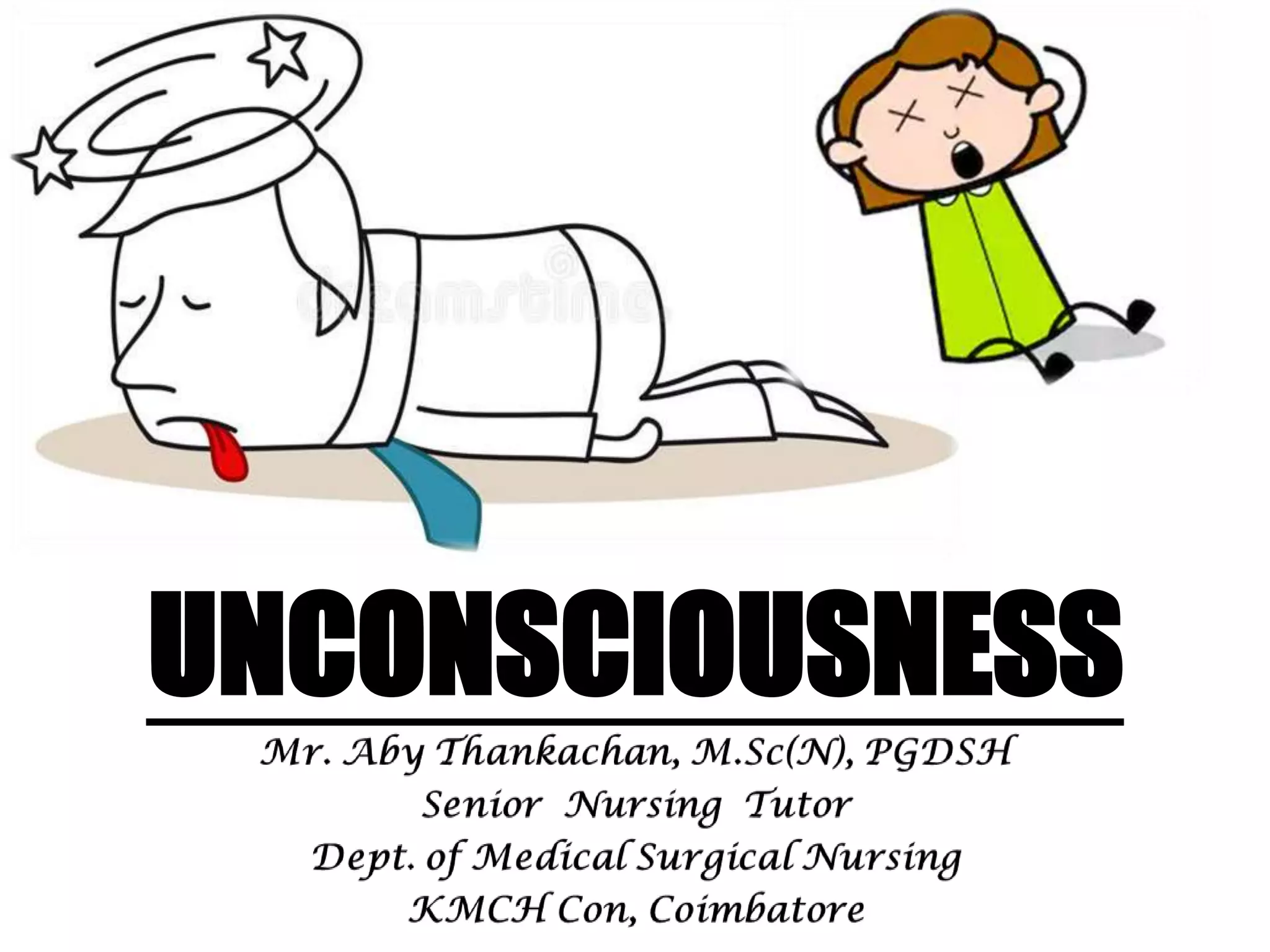
UNCONSCIOUSNESS
UNCONSCIOUSNESS
IT IS AN ABNORMAL STATE RESULTING
FROM DISTURBANCE OF SENSORY
PERCEPTION TO THE EXTENT THAT
THE PATIENT IS NOT AWARE OF WHAT
IS HAPPENING AROUND HIM.
PERIOD MAY BE MOMENTARY OR MAY
LAST FOR MONTH.
LEVELS OF UNCONSCIOUNESS
• EXCITATORY UNCONSCIOUSNESS:
PATIENT DOES NOT RESPOND
COHERENTLY BUT IS EASILY
DISTURBED BY SENSORY STIMULI.
COMMONLY SEEN IN PATIENTS
WHO ARE GOING UNDER
ANESTHESIA.
• SOMNOLENT:
PATIENT IS EXTREMELY
DROWSY AND WILL RESPOND
ONLY OF SPOKEN TO
DIRECTLY AND PERHAPS
TOUCHED.
• STUPOROUS
PATIENT RESPONDS ONLY TO
PAINFUL STIMULI SUCHAS
PRICKING OR PINCHING OF THE
SKIN.
IN DEEP STUPOR PATIENT MAY
RESPOND ONLY TO SUPRAORBITAL
OR SUBSTERNAL PRESSURE.
ETIOLOGY
• STRUCTURAL LESIONS IN BRAIN.
eg; Brain tumor,Cerebral haemorrage.
• METABOLIC DISORDERS.
eg;Infections,Hypoglycemia,Nutritional
deficency.
• PSYCHOGENIC CAUSES.
eg;Hysteria, Catatonia.
• a car accident
• severe blood loss
• a blow to the chest or head
• a drug overdose
• alcohol poisoning
low blood sugar
low blood pressure
syncope, or the loss of consciousness due to lack of blood
flow to the brain
neurologic syncope, or the loss of consciousness caused by
a seizure, stroke, or transient ischemic attack (TIA)
dehydration
problems with the heart’s rhythm
straining
hyperventilating
COMMON CAUSES OF TEMPORARY UNCONSCIOUSNESS INCLUDE:
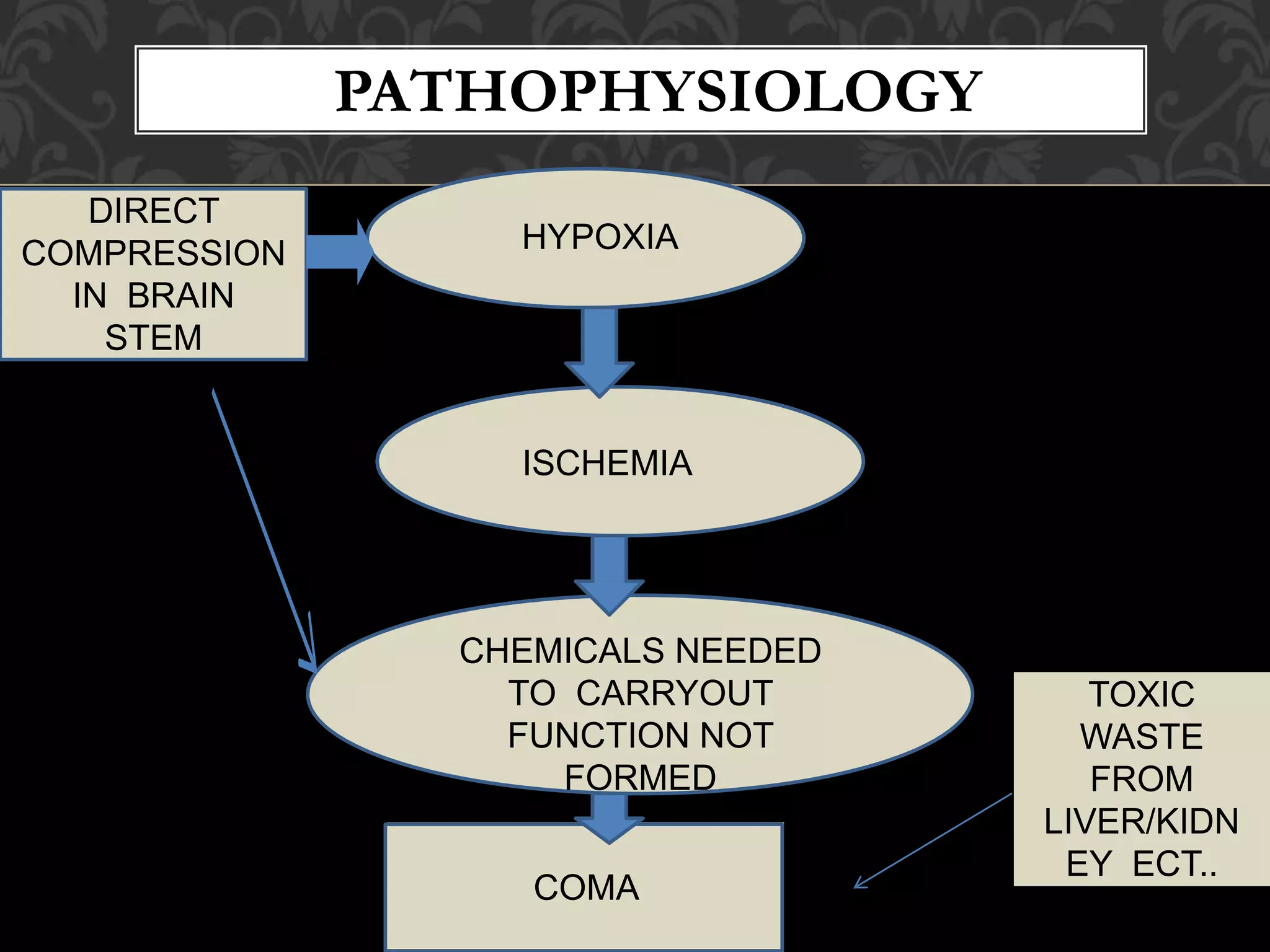
PATHOPHYSIOLOGY
HYPOXIA
ISCHEMIA
CHEMICALS NEEDED
TO CARRYOUT
FUNCTION NOT
FORMED
COMA
DIRECT
COMPRESSION
IN BRAIN
STEM
TOXIC
WASTE
FROM
LIVER/KIDN
EY ECT..
CLINICALMANIFESTATIONS
Symptoms that may indicate that
unconsciousness is about to occur include:
 sudden inability to respond
 slurred speech
 a rapid heartbeat
 confusion
 dizziness or lightheadedness
DIAGNOSTIC ASSESSMENT
• GLASGOW COMA SCALE.
• COMPUTED TOMOGRAPHY.
• MAGNETIC RESONANCE IMAGING.
• LUMBAR PUNCTURE.
• EEG.
• VENTRICULOGRAPHY.
• ANGIOGRAPHY.
• DRUG LEVEL.
• LFT/RFT
• BLOOD GASES & PH
• SERUM GLUCOSE,CALCIUM,SODIUM ect.
MANAGEMENT
• ABC
• Immediate management
• Examination
• History
• Investigations
ABC
C-CIRCULATION
B-
A-AIRWAY BREATHING
IMMEDIATE
MANAGEMENT
• Maintain i.v line, oxygen inhalation
• Blood sample for RBS
• Control seizures
• Consider i.v glucose, thiamine,
naloxone, flumazenil
NURSINGMANAGEMENT
• Maintenance of an adequateairway.
• Maintenance of circulatoin.
• Moving and position.
• Mouth care.
• Eyecare.
• Foodand fluids.
• Prevention of accidents.
SUMMARY
ABC of lifesupport
Oxygen and I.Vaccess
Stabilize cervicalspine
BLOODGLUCOSE
Control seizures
Consider I.V glucose, thiamine,naloxone,
flumazenil
BRIEFEXAMINATIONAND OBTAIN
HISTORY
Investigate
Reassess the situation and planfurther
 Potential complications of being unconscious for
a long period of time include coma and brain
damage.
 A person who received CPR while unconscious
may have broken or fractured ribs from the chest
compressions. The doctor will X-ray the chest and
treat any fractures or broken ribs before the
person leaves the hospital.
 Choking can also occur during unconsciousness.
Food or liquid may have blocked the airway.
COMPLICATIONS OF
UNCONSCIOUSNESS
Unconsciousness

Unconsciousness

  • 1.
  • 2.
    UNCONSCIOUSNESS IT IS ANABNORMAL STATE RESULTING FROM DISTURBANCE OF SENSORY PERCEPTION TO THE EXTENT THAT THE PATIENT IS NOT AWARE OF WHAT IS HAPPENING AROUND HIM. PERIOD MAY BE MOMENTARY OR MAY LAST FOR MONTH.
  • 3.
    LEVELS OF UNCONSCIOUNESS •EXCITATORY UNCONSCIOUSNESS: PATIENT DOES NOT RESPOND COHERENTLY BUT IS EASILY DISTURBED BY SENSORY STIMULI. COMMONLY SEEN IN PATIENTS WHO ARE GOING UNDER ANESTHESIA.
  • 4.
    • SOMNOLENT: PATIENT ISEXTREMELY DROWSY AND WILL RESPOND ONLY OF SPOKEN TO DIRECTLY AND PERHAPS TOUCHED.
  • 5.
    • STUPOROUS PATIENT RESPONDSONLY TO PAINFUL STIMULI SUCHAS PRICKING OR PINCHING OF THE SKIN. IN DEEP STUPOR PATIENT MAY RESPOND ONLY TO SUPRAORBITAL OR SUBSTERNAL PRESSURE.
  • 6.
    ETIOLOGY • STRUCTURAL LESIONSIN BRAIN. eg; Brain tumor,Cerebral haemorrage. • METABOLIC DISORDERS. eg;Infections,Hypoglycemia,Nutritional deficency. • PSYCHOGENIC CAUSES. eg;Hysteria, Catatonia.
  • 7.
    • a caraccident • severe blood loss • a blow to the chest or head • a drug overdose • alcohol poisoning
  • 8.
    low blood sugar lowblood pressure syncope, or the loss of consciousness due to lack of blood flow to the brain neurologic syncope, or the loss of consciousness caused by a seizure, stroke, or transient ischemic attack (TIA) dehydration problems with the heart’s rhythm straining hyperventilating COMMON CAUSES OF TEMPORARY UNCONSCIOUSNESS INCLUDE:
  • 9.
    PATHOPHYSIOLOGY HYPOXIA ISCHEMIA CHEMICALS NEEDED TO CARRYOUT FUNCTIONNOT FORMED COMA DIRECT COMPRESSION IN BRAIN STEM TOXIC WASTE FROM LIVER/KIDN EY ECT..
  • 10.
    CLINICALMANIFESTATIONS Symptoms that mayindicate that unconsciousness is about to occur include:  sudden inability to respond  slurred speech  a rapid heartbeat  confusion  dizziness or lightheadedness
  • 11.
    DIAGNOSTIC ASSESSMENT • GLASGOWCOMA SCALE. • COMPUTED TOMOGRAPHY. • MAGNETIC RESONANCE IMAGING. • LUMBAR PUNCTURE. • EEG. • VENTRICULOGRAPHY. • ANGIOGRAPHY. • DRUG LEVEL. • LFT/RFT • BLOOD GASES & PH • SERUM GLUCOSE,CALCIUM,SODIUM ect.
  • 12.
    MANAGEMENT • ABC • Immediatemanagement • Examination • History • Investigations
  • 13.
  • 14.
    IMMEDIATE MANAGEMENT • Maintain i.vline, oxygen inhalation • Blood sample for RBS • Control seizures • Consider i.v glucose, thiamine, naloxone, flumazenil
  • 15.
    NURSINGMANAGEMENT • Maintenance ofan adequateairway. • Maintenance of circulatoin. • Moving and position. • Mouth care. • Eyecare. • Foodand fluids. • Prevention of accidents.
  • 16.
    SUMMARY ABC of lifesupport Oxygenand I.Vaccess Stabilize cervicalspine
  • 17.
    BLOODGLUCOSE Control seizures Consider I.Vglucose, thiamine,naloxone, flumazenil
  • 18.
  • 19.
     Potential complicationsof being unconscious for a long period of time include coma and brain damage.  A person who received CPR while unconscious may have broken or fractured ribs from the chest compressions. The doctor will X-ray the chest and treat any fractures or broken ribs before the person leaves the hospital.  Choking can also occur during unconsciousness. Food or liquid may have blocked the airway. COMPLICATIONS OF UNCONSCIOUSNESS