Circuit Breaking
Unit-IV
Md Irshad Ahmad
Irshad.ahmad@jit.edu.in
Electrical Engineering Department
Subject: NEE –602: SWITCHGEAR AND
PROTECTION
 Circuit Breaking:
 Properties of arc
 Arc extinction theories
 Re-striking voltage transient
 Current chopping
 Resistance switching
 Capacitive current interruption
 Short line interruption
 Circuit breaker ratings.
 Testing Of Circuit Breaker: Classification
 Testing station and equipment's
 Testing procedure
 Direct and indirect testing
CONTENTS
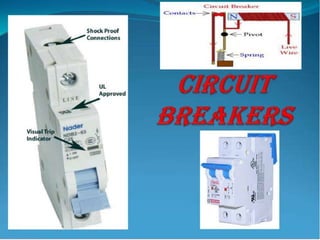
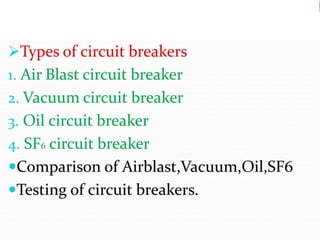
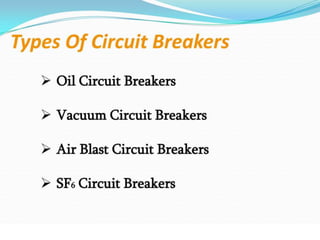
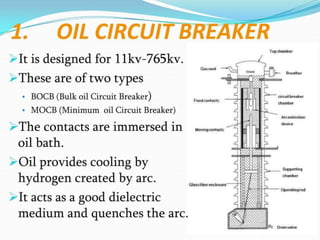
 Definition: A CB is a device capable of making and
breaking an electric circuit under normal and
abnormal conditions such as short circuit.
 Functions: A CB is a switching and current
interrupting device
The CB serves two basic purposes:
 (i) Switching during normal operating conditions for
the purpose of operation and maintenance.
 (ii) Switching during abnormal conditions such as
short circuits and interrupting the fault current.
CIRCUIT BREAKERS
CBS ARE CLASSIFIED ACCORDING TO THE FOLLOWING
CATEGORIES:
 (a) RATED VOLTAGE:
 (b) MEDIUM OF ARC EXTINCTION
 (c) TYPE OF OPERATING MECHANISM
 (d) TYPE OF CONSTRUCTION
 (e) STRUCTURAL FORM.
CLASSIFICATION OF CBs
 (a) Atmospheric Air
 (b) Compressed Air
 (b) Dielectric Oil (Transformer Oil).
 (c) Sulphur Hexafluoride (SF6) Gas.
 (d) Vacuum.
ARC-EXTINCTION MEDIA EMPLOYED
IN CBs
The CB serves two basic
purposes:
(i) Switching during normal operating
conditions for the purpose of operation
and maintenance.
(ii) Switching during abnormal conditions such as
short circuits and interrupting the fault
current.
6. CLASSIFICATION OF
CBs
 CBs are classified according to the following
categories:
 (a) RATED VOLTAGE:
 (b) MEDIUM OF ARC EXTINCTION;
 (c) TYPE OF OPERATING
MECHANISM;
 (d) TYPE OF CONSTRUCTION;
 (e) STRUCTURAL FORM.
7. ARC-EXTINCTION MEDIA
EMPLOYED IN CBs
 (a) Atmospheric Air
 (b) Compressed Air
 (b) Dielectric Oil (Transformer Oil).
 (c) Sulphur Hexafluoride (SF6) Gas.
 (d) Vacuum.
8. CURRENT INTERRUPTION
MODES
 (a) High Resistance Current Interruption
Mode is employed in all HVDC CBs and in
ABCBs by the automatic insertion of high
resistance in the CB
circuit, milli-seconds, prior to current-
interruption, to divert and extinquished
arcing.
 (b) Zero-Point Current Interruption mode is
employed in all ac cbs by extinguishing
the arcing by the timing of the zero-
value position of the current wave form
with the rapid operation of the operating
mechanism to achieve rapid build-up of
dielectric strength of the contact space.
FAULT CLEARING PROCEDURE OF A CB
PRESENTED BY
EWETUMO, A. A.
0803-360-8772
0805-840-9866
0808-608-8822
ewesta707@yahoo.com
FAULT-CLEARING PROCESS
OF A CIRCUIT BREAKERS
 If we consider a fault occurrence and clearing
process of a circuit breaker, the following
order or sequence of operation is observed.
 FAULT OCCURS: As the fault occurs, the fault
impedance being low, the currents increases
and the relay gets actuated. The moving parts
of the relay move because of the increase in
the operating torque. The relay takes some
time to close its contacts.
 RELAY CONTACT CLOSES: The relay contacts
closes the trip – circuit of the circuit breaker
and the trip-coil is energised from the control
voltage supply from a battery bank of tripping
unit.
 OPERATING MECHANISM OPERATES:
As the trip – coil is energised, appropriate
plunger, toggles, latches or valves are
operated, which enables the actuation of the
operating mechanism for the opening
operation to separate the circuit breaker
contacts.
 ARCING: Arc is drawn between the separating
contacts, because the charged electrons
surrounding the separating contacts tries to re-
establish potential between the contacts.
 CLEARANCE: ISOLATION:
 The arc is extinguished in the circuit breaker by appropriate
suitable techniques at some natural currents zero of a.c.
wave. The process of current interruption is completed
when the arc is extinguished, current reaches final zero
value and the arc does not restrike again. The fault is said
to be cleared.
Switchgear and protection 4

Switchgear and protection 4

  • 1.
    Circuit Breaking Unit-IV Md IrshadAhmad Irshad.ahmad@jit.edu.in Electrical Engineering Department Subject: NEE –602: SWITCHGEAR AND PROTECTION
  • 2.
     Circuit Breaking: Properties of arc  Arc extinction theories  Re-striking voltage transient  Current chopping  Resistance switching  Capacitive current interruption  Short line interruption  Circuit breaker ratings.  Testing Of Circuit Breaker: Classification  Testing station and equipment's  Testing procedure  Direct and indirect testing CONTENTS
  • 3.
     Definition: ACB is a device capable of making and breaking an electric circuit under normal and abnormal conditions such as short circuit.  Functions: A CB is a switching and current interrupting device The CB serves two basic purposes:  (i) Switching during normal operating conditions for the purpose of operation and maintenance.  (ii) Switching during abnormal conditions such as short circuits and interrupting the fault current. CIRCUIT BREAKERS
  • 4.
    CBS ARE CLASSIFIEDACCORDING TO THE FOLLOWING CATEGORIES:  (a) RATED VOLTAGE:  (b) MEDIUM OF ARC EXTINCTION  (c) TYPE OF OPERATING MECHANISM  (d) TYPE OF CONSTRUCTION  (e) STRUCTURAL FORM. CLASSIFICATION OF CBs
  • 5.
     (a) AtmosphericAir  (b) Compressed Air  (b) Dielectric Oil (Transformer Oil).  (c) Sulphur Hexafluoride (SF6) Gas.  (d) Vacuum. ARC-EXTINCTION MEDIA EMPLOYED IN CBs
  • 35.
    The CB servestwo basic purposes: (i) Switching during normal operating conditions for the purpose of operation and maintenance. (ii) Switching during abnormal conditions such as short circuits and interrupting the fault current.
  • 36.
    6. CLASSIFICATION OF CBs CBs are classified according to the following categories:  (a) RATED VOLTAGE:  (b) MEDIUM OF ARC EXTINCTION;  (c) TYPE OF OPERATING MECHANISM;  (d) TYPE OF CONSTRUCTION;  (e) STRUCTURAL FORM.
  • 37.
    7. ARC-EXTINCTION MEDIA EMPLOYEDIN CBs  (a) Atmospheric Air  (b) Compressed Air  (b) Dielectric Oil (Transformer Oil).  (c) Sulphur Hexafluoride (SF6) Gas.  (d) Vacuum.
  • 38.
    8. CURRENT INTERRUPTION MODES (a) High Resistance Current Interruption Mode is employed in all HVDC CBs and in ABCBs by the automatic insertion of high resistance in the CB circuit, milli-seconds, prior to current- interruption, to divert and extinquished arcing.
  • 39.
     (b) Zero-PointCurrent Interruption mode is employed in all ac cbs by extinguishing the arcing by the timing of the zero- value position of the current wave form with the rapid operation of the operating mechanism to achieve rapid build-up of dielectric strength of the contact space.
  • 40.
    FAULT CLEARING PROCEDUREOF A CB PRESENTED BY EWETUMO, A. A. 0803-360-8772 0805-840-9866 0808-608-8822 ewesta707@yahoo.com
  • 41.
    FAULT-CLEARING PROCESS OF ACIRCUIT BREAKERS  If we consider a fault occurrence and clearing process of a circuit breaker, the following order or sequence of operation is observed.
  • 42.
     FAULT OCCURS:As the fault occurs, the fault impedance being low, the currents increases and the relay gets actuated. The moving parts of the relay move because of the increase in the operating torque. The relay takes some time to close its contacts.
  • 43.
     RELAY CONTACTCLOSES: The relay contacts closes the trip – circuit of the circuit breaker and the trip-coil is energised from the control voltage supply from a battery bank of tripping unit.
  • 44.
     OPERATING MECHANISMOPERATES: As the trip – coil is energised, appropriate plunger, toggles, latches or valves are operated, which enables the actuation of the operating mechanism for the opening operation to separate the circuit breaker contacts.
  • 45.
     ARCING: Arcis drawn between the separating contacts, because the charged electrons surrounding the separating contacts tries to re- establish potential between the contacts.
  • 46.
     CLEARANCE: ISOLATION: The arc is extinguished in the circuit breaker by appropriate suitable techniques at some natural currents zero of a.c. wave. The process of current interruption is completed when the arc is extinguished, current reaches final zero value and the arc does not restrike again. The fault is said to be cleared.