Switchgear And
Protection
Electrical Switchgear
Definition of Switchgear
A switchgear or electrical switchgear is a generic term
which includes all the switching devices associated
with mainly power system protection. It also includes
all devices associated with control, metering and
regulating of electrical power system. Assembly of such
devices in a logical manner forms a switchgear. This is
very basic definition of switchgear.
SWITCHGEAR AND PROTECTION
Switchgear protection plays a vital role in modern power
system network, right from generation through
transmission to distribution end. The current interruption
device or switching device is called circuit breaker in
Switchgear protection system.
Type of faults
 Single line to ground fault
 Line to line fault
 Double line to ground fault
 Open circuit fault
 Three phase fault
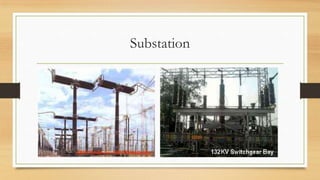
Substation
Arc in Circuit Breaker
What is arc ?
 During opening of current carrying contacts
in a circuit breaker the medium in between
opening contacts become highly ionized
through which the interrupting current gets
low resistive path and continues to flow
through this path even the contacts are
physically separated. During the flowing of
current from one contact to other the path
becomes so heated that it glows. This is
called arc.
Electrical Circuit Breaker
 Definition of Circuit Breaker : -
Electrical Circuit Breaker is a switching device which can be
operated manually as well as automatically for controlling and
protection of electrical power system respectively. As the modern power
system deals with huge currents, the spacial attention should be given
during designing of circuit breaker to safe interruption of arc produced
during the operation of circuit breaker. This was the basic definition of
circuit breaker.
 Types of Circuit Breaker
1) Oil Circuit Breaker
2) Air Circuit Breaker
3) SF6 Circuit Breaker
4) Vacuum Circuit Breaker
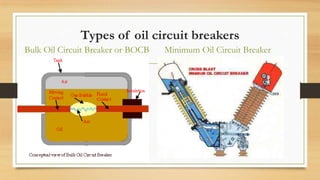
Types of oil circuit breakers
Bulk Oil Circuit Breaker or BOCB Minimum Oil Circuit Breaker
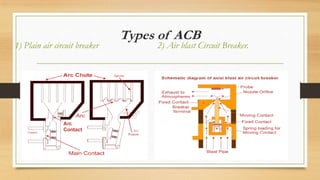
Types of ACB
1) Plain air circuit breaker 2) Air blast Circuit Breaker.
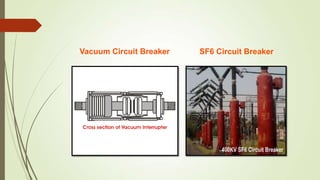
Vacuum Circuit Breaker SF6 Circuit Breaker
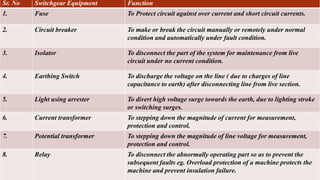
Sr. No Switchgear Equipment Function
1. Fuse To Protect circuit against over current and short circuit currents.
2. Circuit breaker To make or break the circuit manually or remotely under normal
condition and automatically under fault condition.
3. Isolator To disconnect the part of the system for maintenance from live
circuit under no current condition.
4. Earthing Switch To discharge the voltage on the line ( due to charges of line
capacitance to earth) after disconnecting line from live section.
5. Light using arrester To divert high voltage surge towards the earth, due to lighting stroke
or switching surges.
6. Current transformer To stepping down the magnitude of current for measurement,
protection and control.
7. Potential transformer To stepping down the magnitude of line voltage for measurement,
protection and control.
8. Relay To disconnect the abnormally operating part so as to prevent the
subsequent faults eg. Overload protection of a machine protects the
machine and prevent insulation failure.
Created By
Vala Kamlesh

switchgear and protection by vala kamlesh

  • 1.
  • 2.
    Electrical Switchgear Definition ofSwitchgear A switchgear or electrical switchgear is a generic term which includes all the switching devices associated with mainly power system protection. It also includes all devices associated with control, metering and regulating of electrical power system. Assembly of such devices in a logical manner forms a switchgear. This is very basic definition of switchgear.
  • 3.
    SWITCHGEAR AND PROTECTION Switchgearprotection plays a vital role in modern power system network, right from generation through transmission to distribution end. The current interruption device or switching device is called circuit breaker in Switchgear protection system.
  • 4.
    Type of faults Single line to ground fault  Line to line fault  Double line to ground fault  Open circuit fault  Three phase fault
  • 5.
  • 6.
    Arc in CircuitBreaker What is arc ?  During opening of current carrying contacts in a circuit breaker the medium in between opening contacts become highly ionized through which the interrupting current gets low resistive path and continues to flow through this path even the contacts are physically separated. During the flowing of current from one contact to other the path becomes so heated that it glows. This is called arc.
  • 7.
    Electrical Circuit Breaker Definition of Circuit Breaker : - Electrical Circuit Breaker is a switching device which can be operated manually as well as automatically for controlling and protection of electrical power system respectively. As the modern power system deals with huge currents, the spacial attention should be given during designing of circuit breaker to safe interruption of arc produced during the operation of circuit breaker. This was the basic definition of circuit breaker.  Types of Circuit Breaker 1) Oil Circuit Breaker 2) Air Circuit Breaker 3) SF6 Circuit Breaker 4) Vacuum Circuit Breaker
  • 8.
    Types of oilcircuit breakers Bulk Oil Circuit Breaker or BOCB Minimum Oil Circuit Breaker
  • 9.
    Types of ACB 1)Plain air circuit breaker 2) Air blast Circuit Breaker.
  • 10.
    Vacuum Circuit BreakerSF6 Circuit Breaker
  • 11.
    Sr. No SwitchgearEquipment Function 1. Fuse To Protect circuit against over current and short circuit currents. 2. Circuit breaker To make or break the circuit manually or remotely under normal condition and automatically under fault condition. 3. Isolator To disconnect the part of the system for maintenance from live circuit under no current condition. 4. Earthing Switch To discharge the voltage on the line ( due to charges of line capacitance to earth) after disconnecting line from live section. 5. Light using arrester To divert high voltage surge towards the earth, due to lighting stroke or switching surges. 6. Current transformer To stepping down the magnitude of current for measurement, protection and control. 7. Potential transformer To stepping down the magnitude of line voltage for measurement, protection and control. 8. Relay To disconnect the abnormally operating part so as to prevent the subsequent faults eg. Overload protection of a machine protects the machine and prevent insulation failure.
  • 12.