Atomic - Molecular
Theory of Matter
          The Atomic - Molecular
           Theory of Matter states
                that all matter is
           composed of small, fast
           moving particles called
          atoms. These atoms can
             join together to form
                   molecules.
             This theory is really
           thousands of individual
             theories that provide
            evidence for the whole
                     theory.
History of Atom
 All atoms share the same basic structure
 During past 200 years, scientists have
  proposed different models
Where did it all begin?
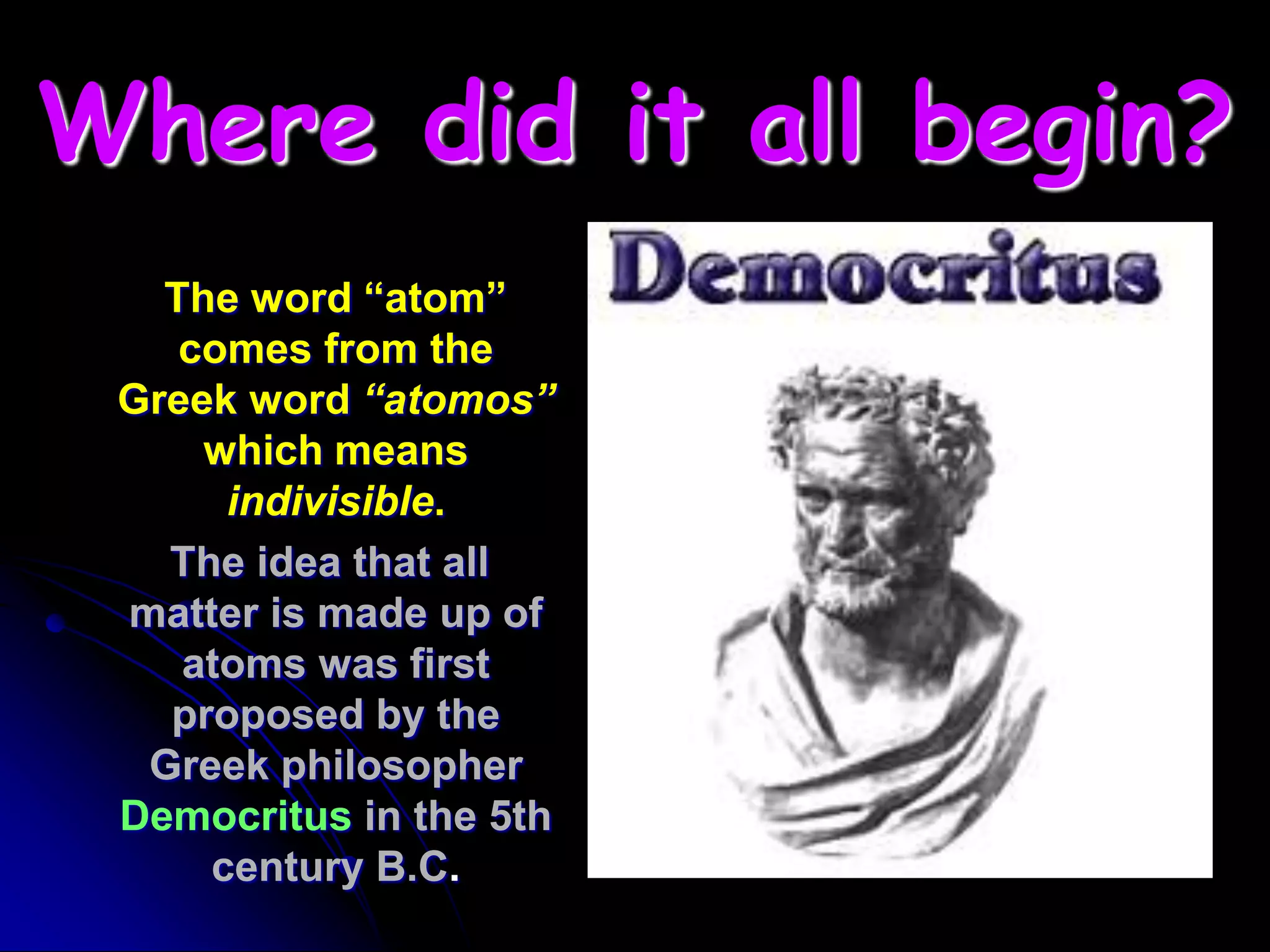
   The word “atom”
    comes from the
 Greek word “atomos”
     which means
      indivisible.
   The idea that all
 matter is made up of
    atoms was first
   proposed by the
  Greek philosopher
 Democritus in the 5th
     century B.C.
Dalton’s Model
 Based on experiments, Dalton developed
  a theory of structure of matter
 4 main concepts:
     All matter is composed of tiny, indivisible
      particles called atoms
     Atoms of each element are exactly alike and
      have the same mass
     An atom of one element cannot be changed
      into an atom of a different element.
     Atoms of different elements can join to form
      compounds.
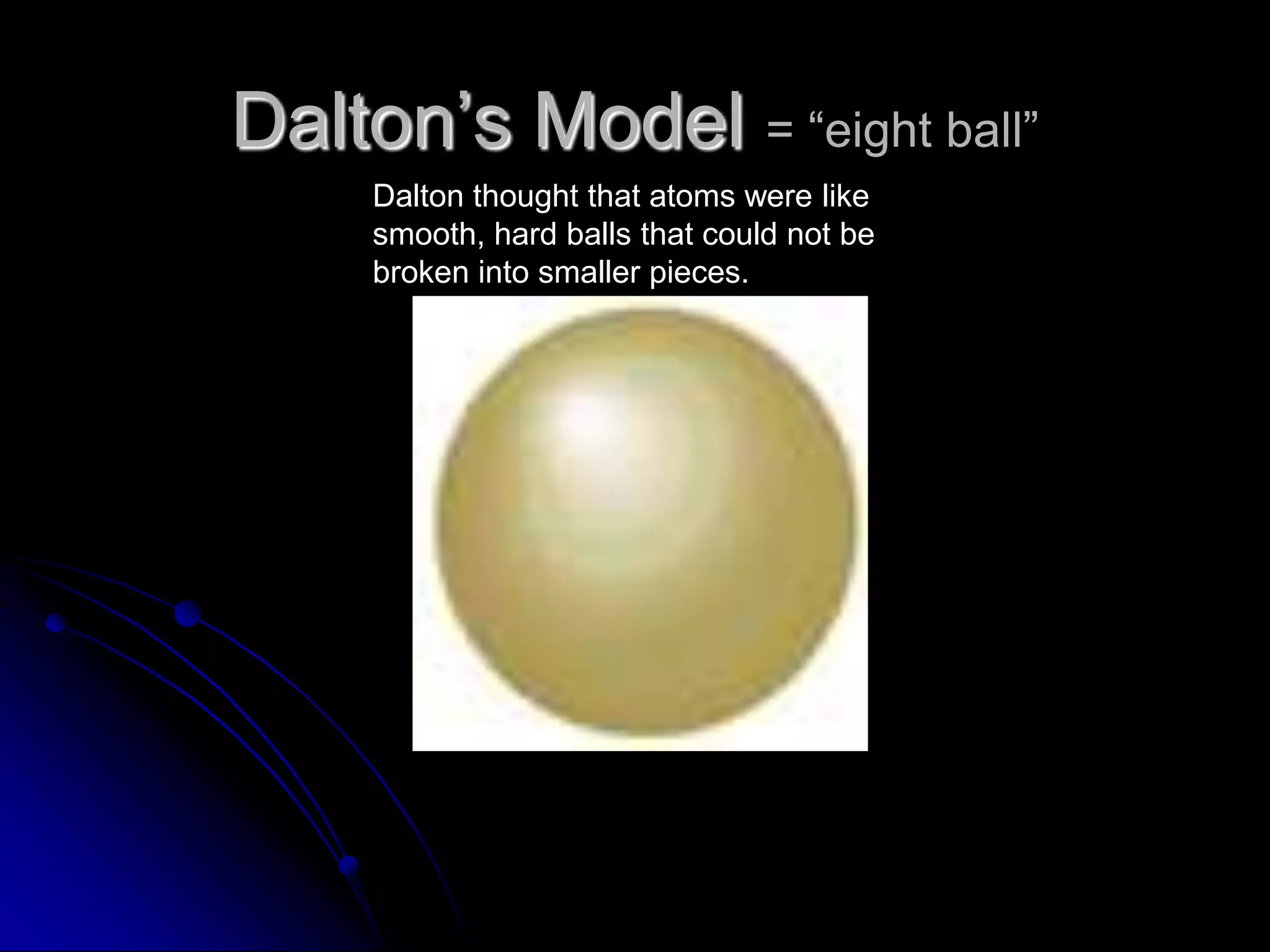
Dalton’s Model = “eight ball”
     Dalton thought that atoms were like
     smooth, hard balls that could not be
     broken into smaller pieces.
Thomson’s Model
 End of 1800s
 Thomson discovered that atoms were not
  simple, solid spheres
 Atoms contained subatomic particles
     Very small, negatively charged
     Called them electrons
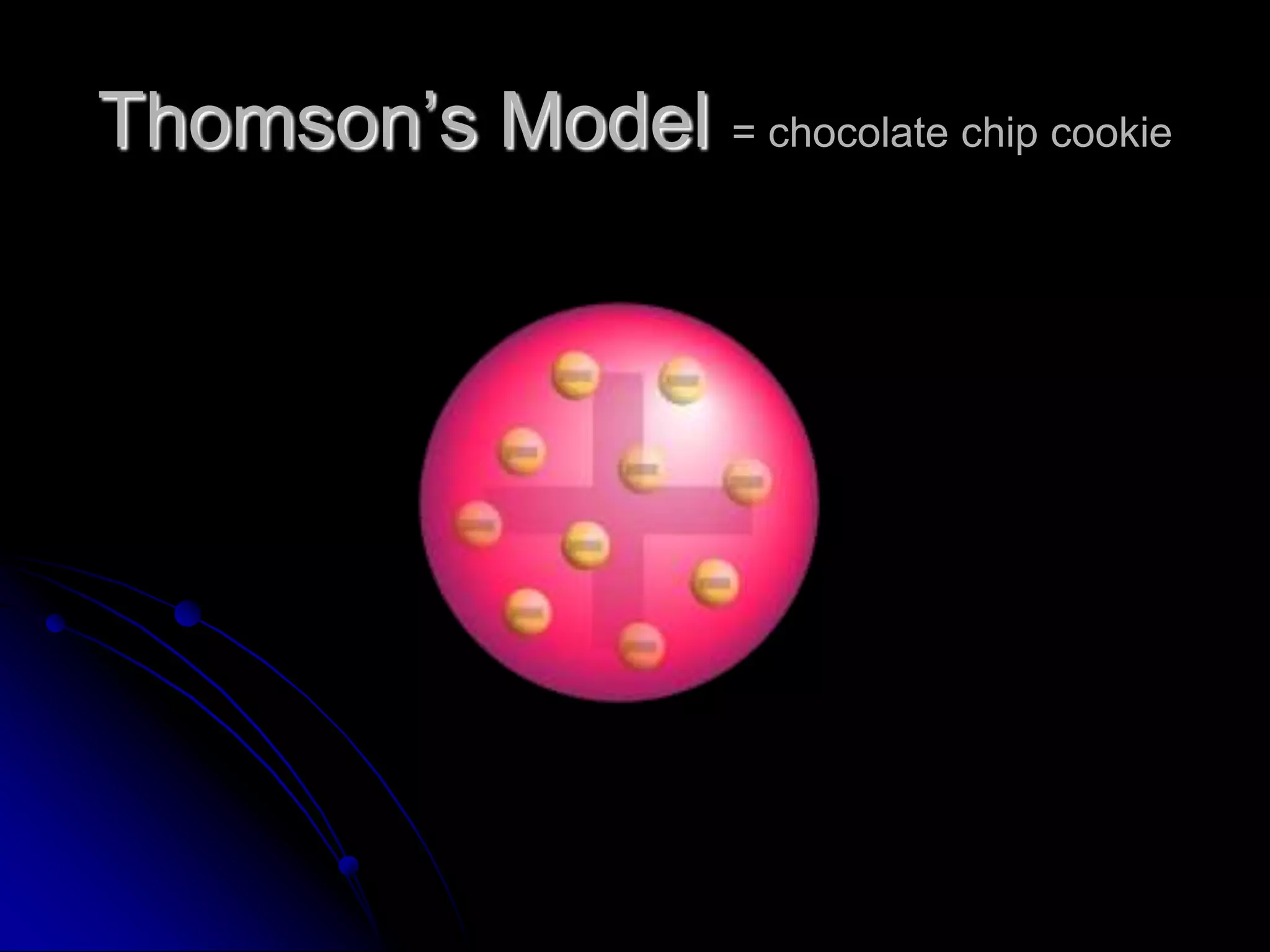
Thomson’s Model
   Also knew that atoms were electrically
    neutral
       Must contain enough positive charge to
        balance negative charge of electrons
   Thompson proposed a model where
    electrons were stuck into a positively
    charged sphere
       Like chocolate chips in cookie dough
Thomson’s Model = chocolate chip cookie
Rutherford’s Model
 By early 1900s, scientists knew that
  positive charge of atom comes from
  subatomic particles called protons
 1911—Rutherford begins to test theory
 His experiments led him to believe that
  protons are concentrated in a small area
  at center of atom
       Called this area the nucleus
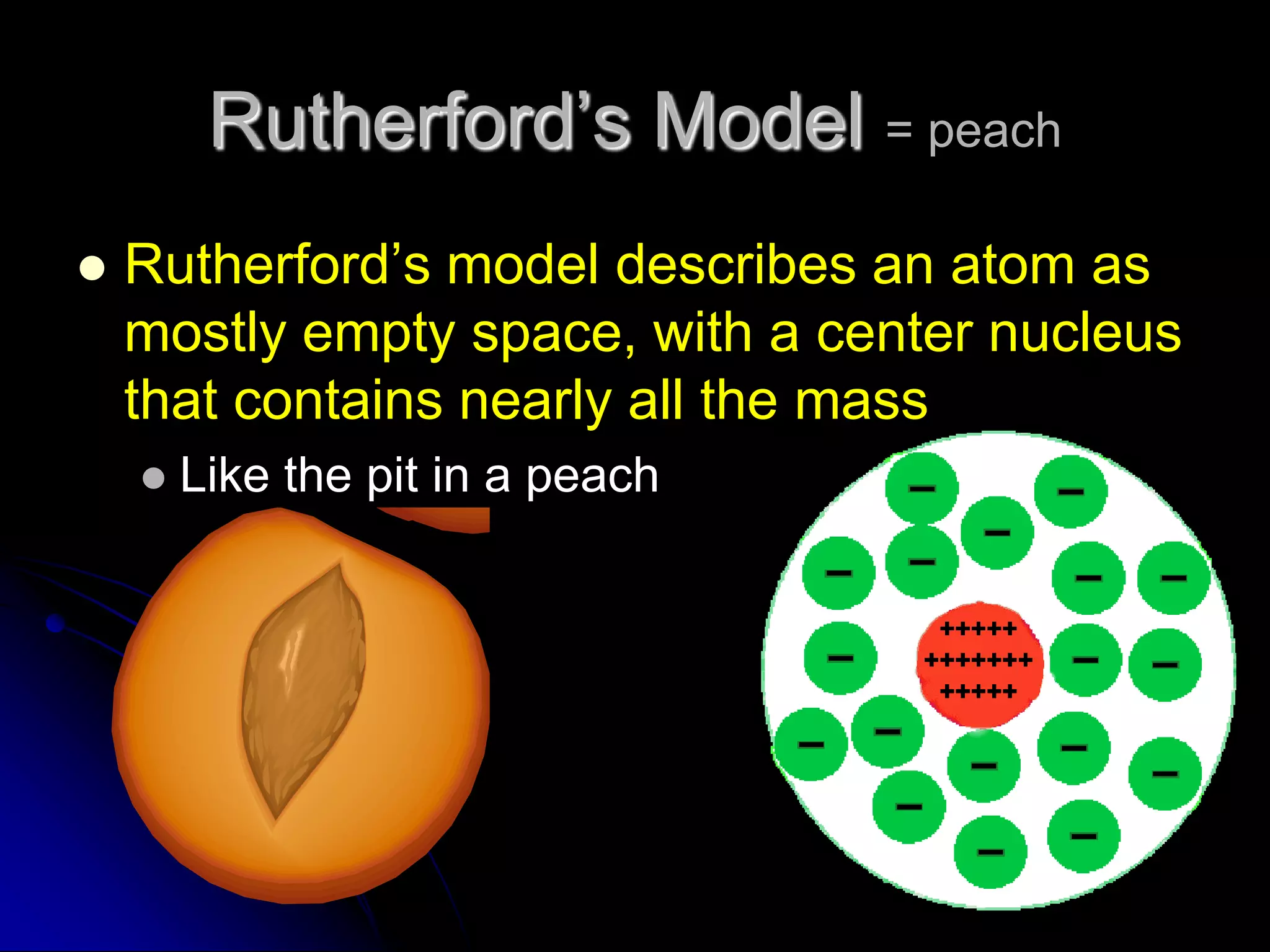
Rutherford’s Model = peach
   Rutherford’s model describes an atom as
    mostly empty space, with a center nucleus
    that contains nearly all the mass
       Like the pit in a peach
Bohr’s Model
 Modified Rutherford’s model in 1913
 Proposed that each electron has a certain
  amount of energy
       Helped electron move around nucleus
 Electrons move around nucleus in region
  called energy levels
 Energy levels surround nucleus in rings,
  like layers of onion
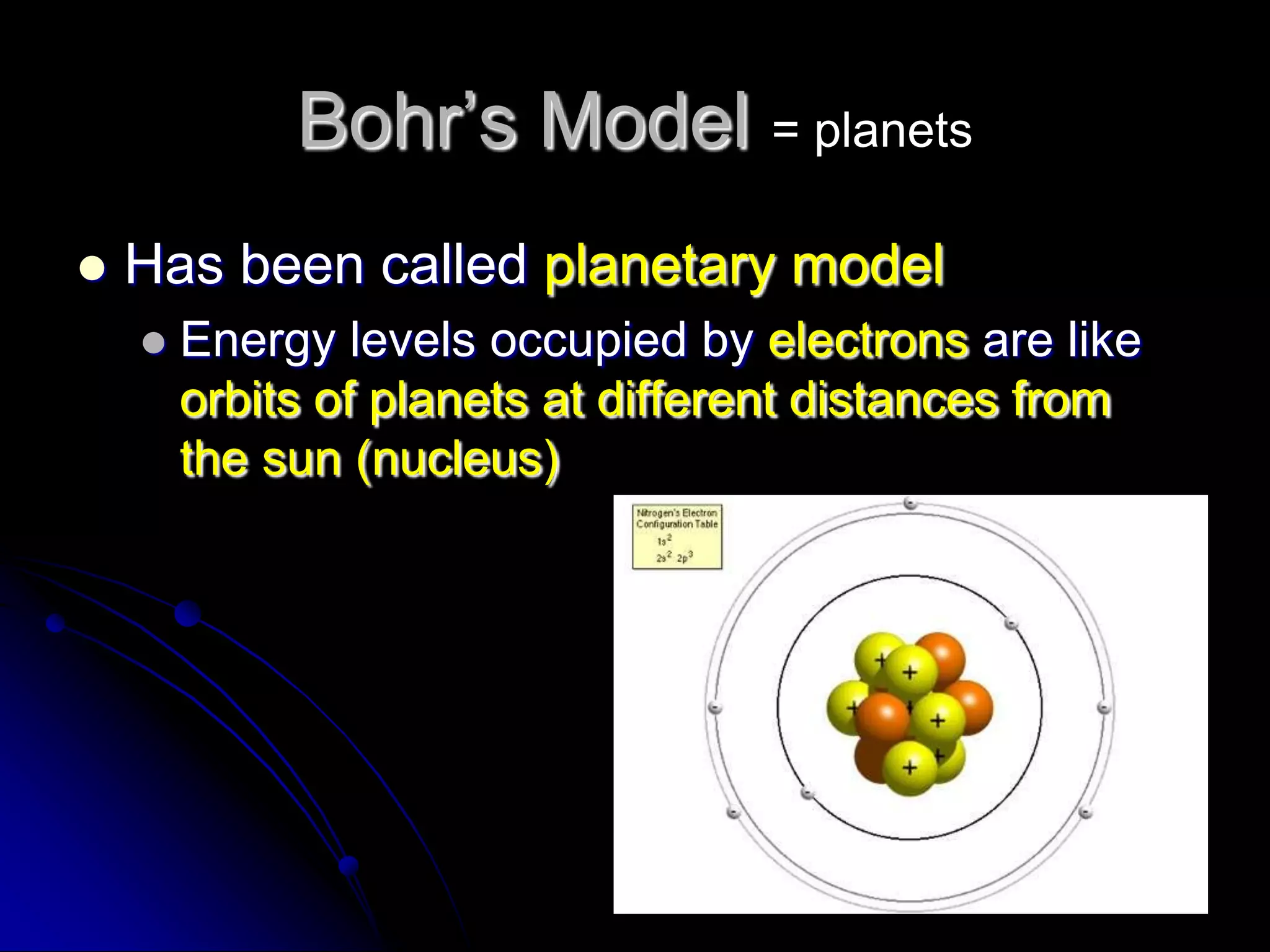
Bohr’s Model = planets
   Has been called planetary model
       Energy levels occupied by electrons are like
        orbits of planets at different distances from
        the sun (nucleus)
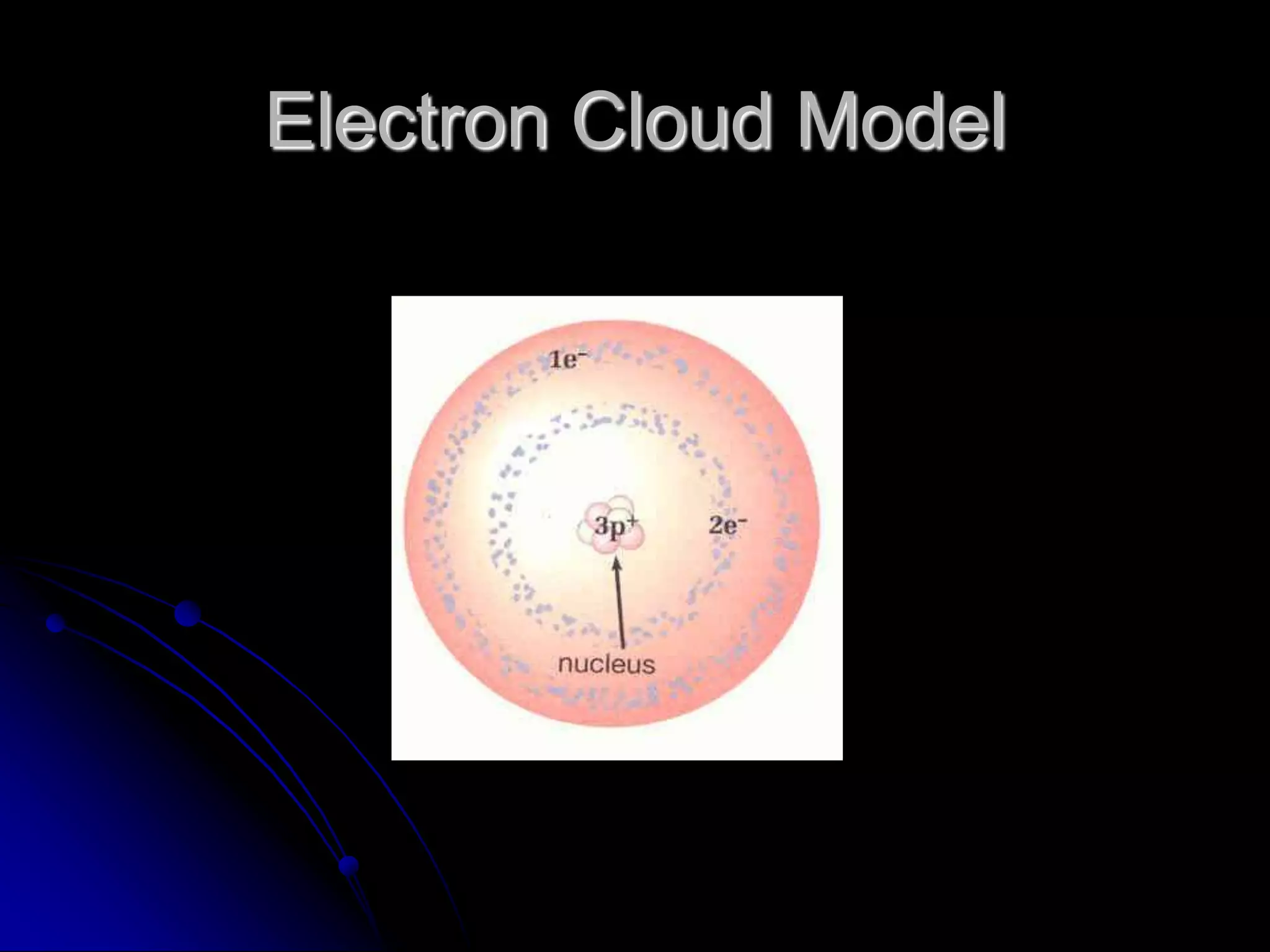
Electron Cloud Model
 Model accepted today
 Electrons dart around in an energy level
 Rapid, random motion creates a “cloud” of
  negative charge around nucleus
 Electron cloud gives atom its size and
  shape
Electron Cloud Model
Modern Atomic Model
 In 1932, Chadwick discovered another
  particle in the nucleus of an atom. This
  new particle is called a neutron.
 Neutrons have no electrical charge.
 According to this theory,
  “At the center of the atom is a tiny,
  massive nucleus containing protons and
  neutrons. Surrounding the nucleus is a
  cloudlike region of moving electrons.”

Introduction to atomic theory ppt

  • 2.
    Atomic - Molecular Theoryof Matter The Atomic - Molecular Theory of Matter states that all matter is composed of small, fast moving particles called atoms. These atoms can join together to form molecules. This theory is really thousands of individual theories that provide evidence for the whole theory.
  • 3.
    History of Atom All atoms share the same basic structure  During past 200 years, scientists have proposed different models
  • 4.
    Where did itall begin? The word “atom” comes from the Greek word “atomos” which means indivisible. The idea that all matter is made up of atoms was first proposed by the Greek philosopher Democritus in the 5th century B.C.
  • 5.
    Dalton’s Model  Basedon experiments, Dalton developed a theory of structure of matter  4 main concepts:  All matter is composed of tiny, indivisible particles called atoms  Atoms of each element are exactly alike and have the same mass  An atom of one element cannot be changed into an atom of a different element.  Atoms of different elements can join to form compounds.
  • 6.
    Dalton’s Model =“eight ball” Dalton thought that atoms were like smooth, hard balls that could not be broken into smaller pieces.
  • 7.
    Thomson’s Model  Endof 1800s  Thomson discovered that atoms were not simple, solid spheres  Atoms contained subatomic particles  Very small, negatively charged  Called them electrons
  • 8.
    Thomson’s Model  Also knew that atoms were electrically neutral  Must contain enough positive charge to balance negative charge of electrons  Thompson proposed a model where electrons were stuck into a positively charged sphere  Like chocolate chips in cookie dough
  • 9.
    Thomson’s Model =chocolate chip cookie
  • 10.
    Rutherford’s Model  Byearly 1900s, scientists knew that positive charge of atom comes from subatomic particles called protons  1911—Rutherford begins to test theory  His experiments led him to believe that protons are concentrated in a small area at center of atom  Called this area the nucleus
  • 11.
    Rutherford’s Model =peach  Rutherford’s model describes an atom as mostly empty space, with a center nucleus that contains nearly all the mass  Like the pit in a peach
  • 12.
    Bohr’s Model  ModifiedRutherford’s model in 1913  Proposed that each electron has a certain amount of energy  Helped electron move around nucleus  Electrons move around nucleus in region called energy levels  Energy levels surround nucleus in rings, like layers of onion
  • 13.
    Bohr’s Model =planets  Has been called planetary model  Energy levels occupied by electrons are like orbits of planets at different distances from the sun (nucleus)
  • 14.
    Electron Cloud Model Model accepted today  Electrons dart around in an energy level  Rapid, random motion creates a “cloud” of negative charge around nucleus  Electron cloud gives atom its size and shape
  • 15.
  • 16.
    Modern Atomic Model In 1932, Chadwick discovered another particle in the nucleus of an atom. This new particle is called a neutron.  Neutrons have no electrical charge.  According to this theory, “At the center of the atom is a tiny, massive nucleus containing protons and neutrons. Surrounding the nucleus is a cloudlike region of moving electrons.”