

WHAT
IS
KANBAN?
Overview of Just in
Time Delivery
WHAT IS KANBAN?
Kanban is an Agile approach that uses a
continuous workflow with incremental
releases rather than the typical iterations
seen in Agile
2
3
Kanban is not intended to be used exclusively
for project or product management. Kanban has
uses in everyday operations.
Kanban can be used on its own or within other
operating frameworks such as Scrum or DSDM.
Kanban has no defined job titles or roles
Kanban does not define how the work gets
done, it provides a way to structure and
organize that work
4
JUST IN TIME DELIVERY
Kanban in Agile originated from a
concept in Lean known as “Just in
Time”
Just in Time Manufacturing is heavily
utilized within Lean Manufacturing
5
6
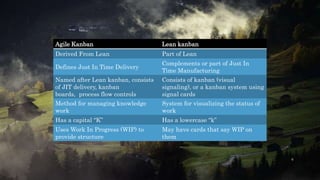
Agile Kanban Lean kanban
Derived From Lean Part of Lean
Defines Just In Time Delivery
Complements or part of Just In
Time Manufacturing
Named after Lean kanban, consists
of JIT delivery, kanban
boards, process flow controls
Consists of kanban (visual
signaling), or a kanban system using
signal cards
Method for managing knowledge
work
System for visualizing the status of
work
Has a capital “K” Has a lowercase “k”
Uses Work In Progress (WIP) to
provide structure
May have cards that say WIP on
them
7
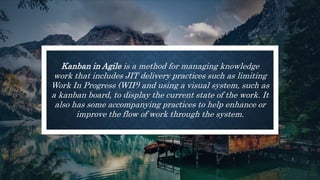
Kanban in Agile is a method for managing knowledge
work that includes JIT delivery practices such as limiting
Work In Progress (WIP) and using a visual system, such as
a kanban board, to display the current state of the work. It
also has some accompanying practices to help enhance or
improve the flow of work through the system.
8
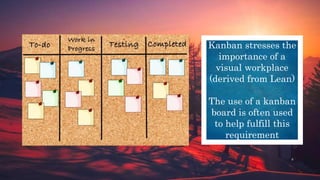
Kanban stresses the
importance of a
visual workplace
(derived from Lean)
The use of a kanban
board is often used
to help fulfill this
requirement
Kanban is known as a “Pull” system; this means
the rate of demand determines the rate of flow
When there is no demand from a process, the
preceding processes must halt production
9
Kanban works by limiting the Work in
Progress (WIP).
This allows some control over the flow
of work.
10
ADVANTAGES OF WIP
Reduced task switching
Greater visible work status
Improve any handoff of items
Reduce work overlap
11
Eliminate excessive meetings about the work
Streamline the overall process
Provide metrics and a structure of tracking the work getting done –
which can provide the means to improve the overall flow of the work
being performed
Reduce inventory and obsolescence
12
ADVANTAGES OF WIP
WHAT
IS
KANBAN?
Overview of Just in
Time Delivery
Joshua Render
https://agile-mercurial.com
https://twentyfirstcenturyworkforce.com/
What is Kanban? https://agile-mercurial.com/2019/02/15/what-is-kanban/

What is Kanban?

  • 1.
  • 2.
    WHAT IS KANBAN? Kanbanis an Agile approach that uses a continuous workflow with incremental releases rather than the typical iterations seen in Agile 2
  • 3.
    3 Kanban is notintended to be used exclusively for project or product management. Kanban has uses in everyday operations. Kanban can be used on its own or within other operating frameworks such as Scrum or DSDM.
  • 4.
    Kanban has nodefined job titles or roles Kanban does not define how the work gets done, it provides a way to structure and organize that work 4
  • 5.
    JUST IN TIMEDELIVERY Kanban in Agile originated from a concept in Lean known as “Just in Time” Just in Time Manufacturing is heavily utilized within Lean Manufacturing 5
  • 6.
    6 Agile Kanban Leankanban Derived From Lean Part of Lean Defines Just In Time Delivery Complements or part of Just In Time Manufacturing Named after Lean kanban, consists of JIT delivery, kanban boards, process flow controls Consists of kanban (visual signaling), or a kanban system using signal cards Method for managing knowledge work System for visualizing the status of work Has a capital “K” Has a lowercase “k” Uses Work In Progress (WIP) to provide structure May have cards that say WIP on them
  • 7.
    7 Kanban in Agileis a method for managing knowledge work that includes JIT delivery practices such as limiting Work In Progress (WIP) and using a visual system, such as a kanban board, to display the current state of the work. It also has some accompanying practices to help enhance or improve the flow of work through the system.
  • 8.
    8 Kanban stresses the importanceof a visual workplace (derived from Lean) The use of a kanban board is often used to help fulfill this requirement
  • 9.
    Kanban is knownas a “Pull” system; this means the rate of demand determines the rate of flow When there is no demand from a process, the preceding processes must halt production 9
  • 10.
    Kanban works bylimiting the Work in Progress (WIP). This allows some control over the flow of work. 10
  • 11.
    ADVANTAGES OF WIP Reducedtask switching Greater visible work status Improve any handoff of items Reduce work overlap 11
  • 12.
    Eliminate excessive meetingsabout the work Streamline the overall process Provide metrics and a structure of tracking the work getting done – which can provide the means to improve the overall flow of the work being performed Reduce inventory and obsolescence 12 ADVANTAGES OF WIP
  • 13.
    WHAT IS KANBAN? Overview of Justin Time Delivery Joshua Render https://agile-mercurial.com https://twentyfirstcenturyworkforce.com/ What is Kanban? https://agile-mercurial.com/2019/02/15/what-is-kanban/