Project Management
Processes
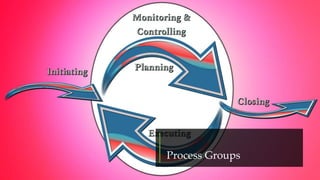
Process Groups
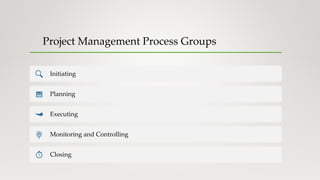
Project Management Process Groups
Initiating
Planning
Executing
Monitoring and Controlling
Closing
Process Groups
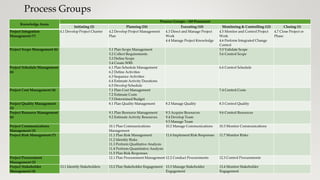
Knowledge Areas
Process Groups – (49 Processes)
Initiating (2) Planning (24) Executing (10) Monitoring & Controlling (12) Closing (1)
Project Integration
Management (7)
4.1 Develop Project Charter 4.2 Develop Project Management
Plan
4.3 Direct and Manage Project
Work
4.4 Manage Project Knowledge
4.5 Monitor and Control Project
Work
4.6 Perform Integrated Change
Control
4.7 Close Project or
Phase
Project Scope Management (6) 5.1 Plan Scope Management
5.2 Collect Requirements
5.3 Define Scope
5.4 Create WBS
5.5 Validate Scope
5.6 Control Scope
Project Schedule Management
(6)
6.1 Plan Schedule Management
6.2 Define Activities
6.3 Sequence Activities
6.4 Estimate Activity Durations
6.5 Develop Schedule
6.6 Control Schedule
Project Cost Management (4) 7.1 Plan Cost Management
7.2 Estimate Costs
7.3 Determined Budget
7.4 Control Costs
Project Quality Management
(3)
8.1 Plan Quality Management 8.2 Manage Quality 8.3 Control Quality
Project Resource Management
(6)
9.1 Plan Resource Management
9.2 Estimate Activity Resources
9.3 Acquire Resources
9.4 Develop Team
9.5 Manage Team
9.6 Control Resources
Project Communications
Management (3)
10.1 Plan Communications
Management
10.2 Manage Communications 10.3 Monitor Communications
Project Risk Management (7) 11.1 Plan Risk Management
11.2 Identify Risks
11.3 Perform Qualitative Analysis
11.4 Perform Quantitative Analysis
11.5 Plan Risk Responses
11.6 Implement Risk Responses 11.7 Monitor Risks
Project Procurement
Management (3)
12.1 Plan Procurement Management 12.2 Conduct Procurements 12.3 Control Procurements
Project Stakeholder
Management (4)
13.1 Identify Stakeholders 13.2 Plan Stakeholder Engagement 13.3 Manage Stakeholder
Engagement
13.4 Monitor Stakeholder
Engagement
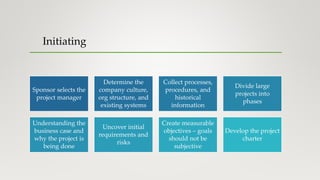
Initiating
Sponsor selects the
project manager
Determine the
company culture,
org structure, and
existing systems
Collect processes,
procedures, and
historical
information
Divide large
projects into
phases
Understanding the
business case and
why the project is
being done
Uncover initial
requirements and
risks
Create measurable
objectives – goals
should not be
subjective
Develop the project
charter
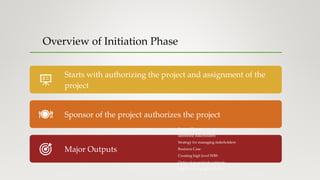
Overview of Initiation Phase
Starts with authorizing the project and assignment of the
project
Sponsor of the project authorizes the project
Major Outputs
Project Charter
Identified stakeholders
Strategy for managing stakeholders
Business Case
Creating high level WBS
Order of magnitude estimate
High level risk identification
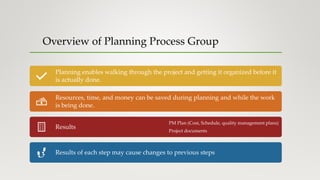
Overview of Planning Process Group
Planning enables walking through the project and getting it organized before it
is actually done.
Resources, time, and money can be saved during planning and while the work
is being done.
Results
PM Plan (Cost, Schedule, quality management plans)
Project documents
Results of each step may cause changes to previous steps
Overview of
Planning
Process Group
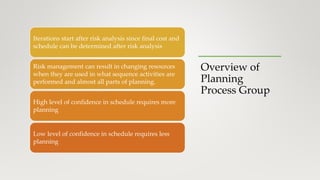
Iterations start after risk analysis since final cost and
schedule can be determined after risk analysis
Risk management can result in changing resources
when they are used in what sequence activities are
performed and almost all parts of planning.
High level of confidence in schedule requires more
planning
Low level of confidence in schedule requires less
planning
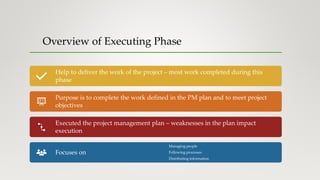
Overview of Executing Phase
Help to deliver the work of the project – most work completed during this
phase
Purpose is to complete the work defined in the PM plan and to meet project
objectives
Executed the project management plan – weaknesses in the plan impact
execution
Focuses on
Managing people
Following processes
Distributing information
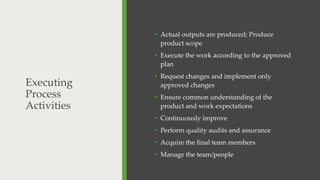
Executing
Process
Activities
• Actual outputs are produced; Produce
product scope
• Execute the work according to the approved
plan
• Request changes and implement only
approved changes
• Ensure common understanding of the
product and work expectations
• Continuously improve
• Perform quality audits and assurance
• Acquire the final team members
• Manage the team/people
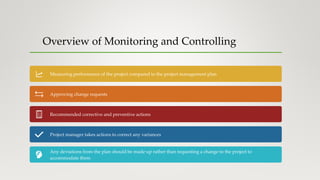
Overview of Monitoring and Controlling
Measuring performance of the project compared to the project management plan
Approving change requests
Recommended corrective and preventive actions
Project manager takes actions to correct any variances
Any deviations from the plan should be made up rather than requesting a change to the project to
accommodate them
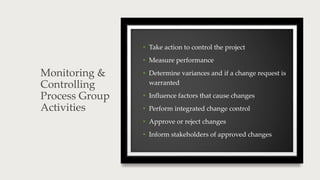
Monitoring &
Controlling
Process Group
Activities
• Take action to control the project
• Measure performance
• Determine variances and if a change request is
warranted
• Influence factors that cause changes
• Perform integrated change control
• Approve or reject changes
• Inform stakeholders of approved changes
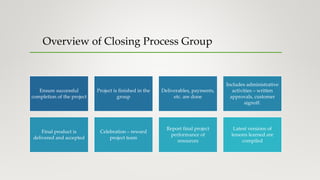
Overview of Closing Process Group
Ensure successful
completion of the project
Project is finished in the
group
Deliverables, payments,
etc. are done
Includes administrative
activities – written
approvals, customer
signoff.
Final product is
delivered and accepted
Celebration – reward
project team
Report final project
performance of
resources
Latest versions of
lessons learned are
compiled
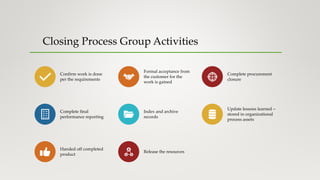
Closing Process Group Activities
Confirm work is done
per the requirements
Formal acceptance from
the customer for the
work is gained
Complete procurement
closure
Complete final
performance reporting
Index and archive
records
Update lessons learned –
stored in organizational
process assets
Handed off completed
product
Release the resources
Sources
• A Guide to the Project Management Body of
Knowledge – PMBOK 6th Edition
• https://www.pmi.org/
Joshua Render
https://agile-mercurial.com

Project Management Processes

  • 1.
  • 2.
  • 3.
    Project Management ProcessGroups Initiating Planning Executing Monitoring and Controlling Closing
  • 4.
    Process Groups Knowledge Areas ProcessGroups – (49 Processes) Initiating (2) Planning (24) Executing (10) Monitoring & Controlling (12) Closing (1) Project Integration Management (7) 4.1 Develop Project Charter 4.2 Develop Project Management Plan 4.3 Direct and Manage Project Work 4.4 Manage Project Knowledge 4.5 Monitor and Control Project Work 4.6 Perform Integrated Change Control 4.7 Close Project or Phase Project Scope Management (6) 5.1 Plan Scope Management 5.2 Collect Requirements 5.3 Define Scope 5.4 Create WBS 5.5 Validate Scope 5.6 Control Scope Project Schedule Management (6) 6.1 Plan Schedule Management 6.2 Define Activities 6.3 Sequence Activities 6.4 Estimate Activity Durations 6.5 Develop Schedule 6.6 Control Schedule Project Cost Management (4) 7.1 Plan Cost Management 7.2 Estimate Costs 7.3 Determined Budget 7.4 Control Costs Project Quality Management (3) 8.1 Plan Quality Management 8.2 Manage Quality 8.3 Control Quality Project Resource Management (6) 9.1 Plan Resource Management 9.2 Estimate Activity Resources 9.3 Acquire Resources 9.4 Develop Team 9.5 Manage Team 9.6 Control Resources Project Communications Management (3) 10.1 Plan Communications Management 10.2 Manage Communications 10.3 Monitor Communications Project Risk Management (7) 11.1 Plan Risk Management 11.2 Identify Risks 11.3 Perform Qualitative Analysis 11.4 Perform Quantitative Analysis 11.5 Plan Risk Responses 11.6 Implement Risk Responses 11.7 Monitor Risks Project Procurement Management (3) 12.1 Plan Procurement Management 12.2 Conduct Procurements 12.3 Control Procurements Project Stakeholder Management (4) 13.1 Identify Stakeholders 13.2 Plan Stakeholder Engagement 13.3 Manage Stakeholder Engagement 13.4 Monitor Stakeholder Engagement
  • 5.
    Initiating Sponsor selects the projectmanager Determine the company culture, org structure, and existing systems Collect processes, procedures, and historical information Divide large projects into phases Understanding the business case and why the project is being done Uncover initial requirements and risks Create measurable objectives – goals should not be subjective Develop the project charter
  • 6.
    Overview of InitiationPhase Starts with authorizing the project and assignment of the project Sponsor of the project authorizes the project Major Outputs Project Charter Identified stakeholders Strategy for managing stakeholders Business Case Creating high level WBS Order of magnitude estimate High level risk identification
  • 7.
    Overview of PlanningProcess Group Planning enables walking through the project and getting it organized before it is actually done. Resources, time, and money can be saved during planning and while the work is being done. Results PM Plan (Cost, Schedule, quality management plans) Project documents Results of each step may cause changes to previous steps
  • 8.
    Overview of Planning Process Group Iterationsstart after risk analysis since final cost and schedule can be determined after risk analysis Risk management can result in changing resources when they are used in what sequence activities are performed and almost all parts of planning. High level of confidence in schedule requires more planning Low level of confidence in schedule requires less planning
  • 9.
    Overview of ExecutingPhase Help to deliver the work of the project – most work completed during this phase Purpose is to complete the work defined in the PM plan and to meet project objectives Executed the project management plan – weaknesses in the plan impact execution Focuses on Managing people Following processes Distributing information
  • 10.
    Executing Process Activities • Actual outputsare produced; Produce product scope • Execute the work according to the approved plan • Request changes and implement only approved changes • Ensure common understanding of the product and work expectations • Continuously improve • Perform quality audits and assurance • Acquire the final team members • Manage the team/people
  • 11.
    Overview of Monitoringand Controlling Measuring performance of the project compared to the project management plan Approving change requests Recommended corrective and preventive actions Project manager takes actions to correct any variances Any deviations from the plan should be made up rather than requesting a change to the project to accommodate them
  • 12.
    Monitoring & Controlling Process Group Activities •Take action to control the project • Measure performance • Determine variances and if a change request is warranted • Influence factors that cause changes • Perform integrated change control • Approve or reject changes • Inform stakeholders of approved changes
  • 13.
    Overview of ClosingProcess Group Ensure successful completion of the project Project is finished in the group Deliverables, payments, etc. are done Includes administrative activities – written approvals, customer signoff. Final product is delivered and accepted Celebration – reward project team Report final project performance of resources Latest versions of lessons learned are compiled
  • 14.
    Closing Process GroupActivities Confirm work is done per the requirements Formal acceptance from the customer for the work is gained Complete procurement closure Complete final performance reporting Index and archive records Update lessons learned – stored in organizational process assets Handed off completed product Release the resources
  • 15.
    Sources • A Guideto the Project Management Body of Knowledge – PMBOK 6th Edition • https://www.pmi.org/ Joshua Render https://agile-mercurial.com