Project Communications
Management Knowledge Area
Overview of
Communications
Management
The required processes that work to utilize the most
effective and efficient communication methods at each
stage or process in the project
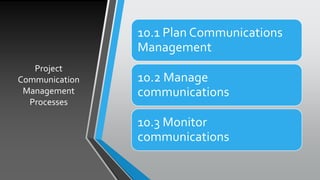
Project
Communication
Management
Processes
10.1 Plan Communications
Management
10.2 Manage
communications
10.3 Monitor
communications
Communication
• Communication that occurs among the project team
Internal
Communication
• Communication that occurs as part of the project with those
outside of the project team
External
Communication
• Communication of progress reports, meeting notes, formal
meetings
Formal
Communication
• Ad-hoc communication, emailing, or non-scheduled
communication or discussion
Informal
Communication
• Communication that occurs within the organization between
people on different levels of the organization’s hierarchy
Vertical
Communication
• Communication that occurs among peers within the
organization
Horizontal
Communication
Communication
• Authority to communicate, company sponsored or endorsed
communication
Official
Communication
• Off the record communication, communication not
sanctioned by the company
Unofficial
Communication
• Communication that is written rather than spoken – emails,
instant messaging, company blogs, etc. Communication you
see or read rather than hear
Written
Communication
• Spoken communication, Communication you hear rather than
see.
Oral
Communication
• The tone of voice or infections of the oral communicator
Verbal
Communication
• Communication that involves body language, typically only
displays emotion about a subject
Nonverbal
Communication
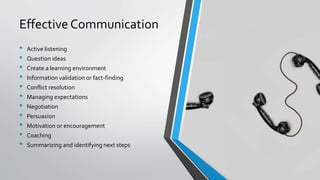
Effective Communication
• Active listening
• Question ideas
• Create a learning environment
• Information validation or fact-finding
• Conflict resolution
• Managing expectations
• Negotiation
• Persuasion
• Motivation or encouragement
• Coaching
• Summarizing and identifying next steps
10.1 Plan Communications
Management
Part of the planning process group
10.1 Plan Communications
Management
Performed in the Planning Process Group
Developing the plan for project communication based on
the needs of the stakeholders
Documents the communication approach deemed most
effective during planning
Communication
Technology
Defines how communication will occur
Low technology communication such as in
person or face-to-face
Higher technology communication such as
Internet, desktop conferencing,VR systems
Communication choice
can depend on:
The urgency of the information
The sensitivity of the information
(confidentiality)
Technology availability
Project environment
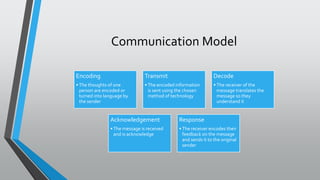
Communication Model
Encoding
• The thoughts of one
person are encoded or
turned into language by
the sender
Transmit
• The encoded information
is sent using the chosen
method of technology
Decode
• The receiver of the
message translates the
message so they
understand it
Acknowledgement
• The message is received
and is acknowledge
Response
• The receiver encodes their
feedback on the message
and sends it to the original
sender
Methods of
Communication
Interactive
Communication
Multidirectional communication
that allows for the back and forth
communication between
engaged individuals
Back and forth conversation
Push Communication
Communication that is sent, but
no assurance is received that the
communication was decoded
An email, reports, etc directed at
someone who does not need to
acknowledge the communication
Pull Communication
Communication that is stored
and allows for receivers to collect
on-demand
Typically a centralized
communication method that can
include a knowledge base,
repository, blog, or other method
of storing communication that is
not immediately needed and can
be consumed as-needed
Communications
Management Plan
The primary output of the
Plan Communications
Process
Provides which
stakeholder will receive
communication and which
type of communication
The frequency of
communication
Part of the Project
Management Plan
10.2 Manage
Communications
Part of the executing process group
10.2 Manage
Communications
• Performed in the Executing Process
Group
• The process of creating, distributing,
and consuming communication
within the project
• The execution of the Communications
Management Plan
10.3 Monitor
communications
Part of the monitoring & controlling process group
10.3 Monitor communications
• Performed in the Monitoring & Controlling
Process Group
• The monitoring and controlling of
communication in the project to ensure that the
communication plan is being followed or the
communication is adequate for the stakeholders
Sources
A Guide to the Project
Management Body of
Knowledge – PMBOK 6th Edition
https://www.pmi.org/
Joshua Render
https://agile-mercurial.com

Communication Management Knowledge Area

  • 1.
  • 2.
    Overview of Communications Management The requiredprocesses that work to utilize the most effective and efficient communication methods at each stage or process in the project
  • 3.
  • 4.
    Communication • Communication thatoccurs among the project team Internal Communication • Communication that occurs as part of the project with those outside of the project team External Communication • Communication of progress reports, meeting notes, formal meetings Formal Communication • Ad-hoc communication, emailing, or non-scheduled communication or discussion Informal Communication • Communication that occurs within the organization between people on different levels of the organization’s hierarchy Vertical Communication • Communication that occurs among peers within the organization Horizontal Communication
  • 5.
    Communication • Authority tocommunicate, company sponsored or endorsed communication Official Communication • Off the record communication, communication not sanctioned by the company Unofficial Communication • Communication that is written rather than spoken – emails, instant messaging, company blogs, etc. Communication you see or read rather than hear Written Communication • Spoken communication, Communication you hear rather than see. Oral Communication • The tone of voice or infections of the oral communicator Verbal Communication • Communication that involves body language, typically only displays emotion about a subject Nonverbal Communication
  • 6.
    Effective Communication • Activelistening • Question ideas • Create a learning environment • Information validation or fact-finding • Conflict resolution • Managing expectations • Negotiation • Persuasion • Motivation or encouragement • Coaching • Summarizing and identifying next steps
  • 7.
    10.1 Plan Communications Management Partof the planning process group
  • 8.
    10.1 Plan Communications Management Performedin the Planning Process Group Developing the plan for project communication based on the needs of the stakeholders Documents the communication approach deemed most effective during planning
  • 9.
    Communication Technology Defines how communicationwill occur Low technology communication such as in person or face-to-face Higher technology communication such as Internet, desktop conferencing,VR systems Communication choice can depend on: The urgency of the information The sensitivity of the information (confidentiality) Technology availability Project environment
  • 10.
    Communication Model Encoding • Thethoughts of one person are encoded or turned into language by the sender Transmit • The encoded information is sent using the chosen method of technology Decode • The receiver of the message translates the message so they understand it Acknowledgement • The message is received and is acknowledge Response • The receiver encodes their feedback on the message and sends it to the original sender
  • 11.
    Methods of Communication Interactive Communication Multidirectional communication thatallows for the back and forth communication between engaged individuals Back and forth conversation Push Communication Communication that is sent, but no assurance is received that the communication was decoded An email, reports, etc directed at someone who does not need to acknowledge the communication Pull Communication Communication that is stored and allows for receivers to collect on-demand Typically a centralized communication method that can include a knowledge base, repository, blog, or other method of storing communication that is not immediately needed and can be consumed as-needed
  • 12.
    Communications Management Plan The primaryoutput of the Plan Communications Process Provides which stakeholder will receive communication and which type of communication The frequency of communication Part of the Project Management Plan
  • 13.
    10.2 Manage Communications Part ofthe executing process group
  • 14.
    10.2 Manage Communications • Performedin the Executing Process Group • The process of creating, distributing, and consuming communication within the project • The execution of the Communications Management Plan
  • 15.
    10.3 Monitor communications Part ofthe monitoring & controlling process group
  • 16.
    10.3 Monitor communications •Performed in the Monitoring & Controlling Process Group • The monitoring and controlling of communication in the project to ensure that the communication plan is being followed or the communication is adequate for the stakeholders
  • 17.
    Sources A Guide tothe Project Management Body of Knowledge – PMBOK 6th Edition https://www.pmi.org/ Joshua Render https://agile-mercurial.com