Avda. Camino de lo Cortao, 21 Nave 6,
San Sebastián de los Reyes (28703)
E-mail: equilab@equilab.es
www.equilab.es
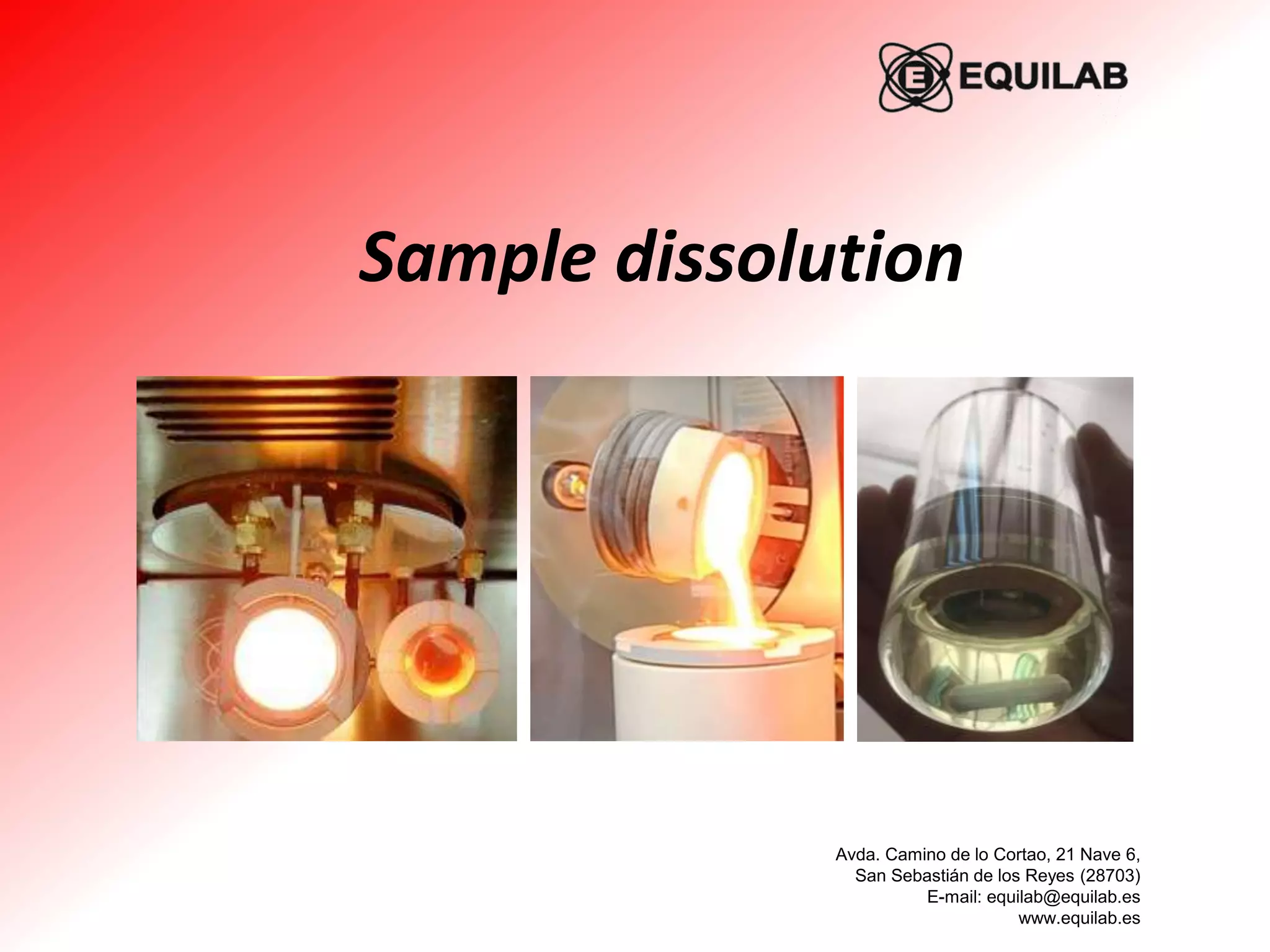
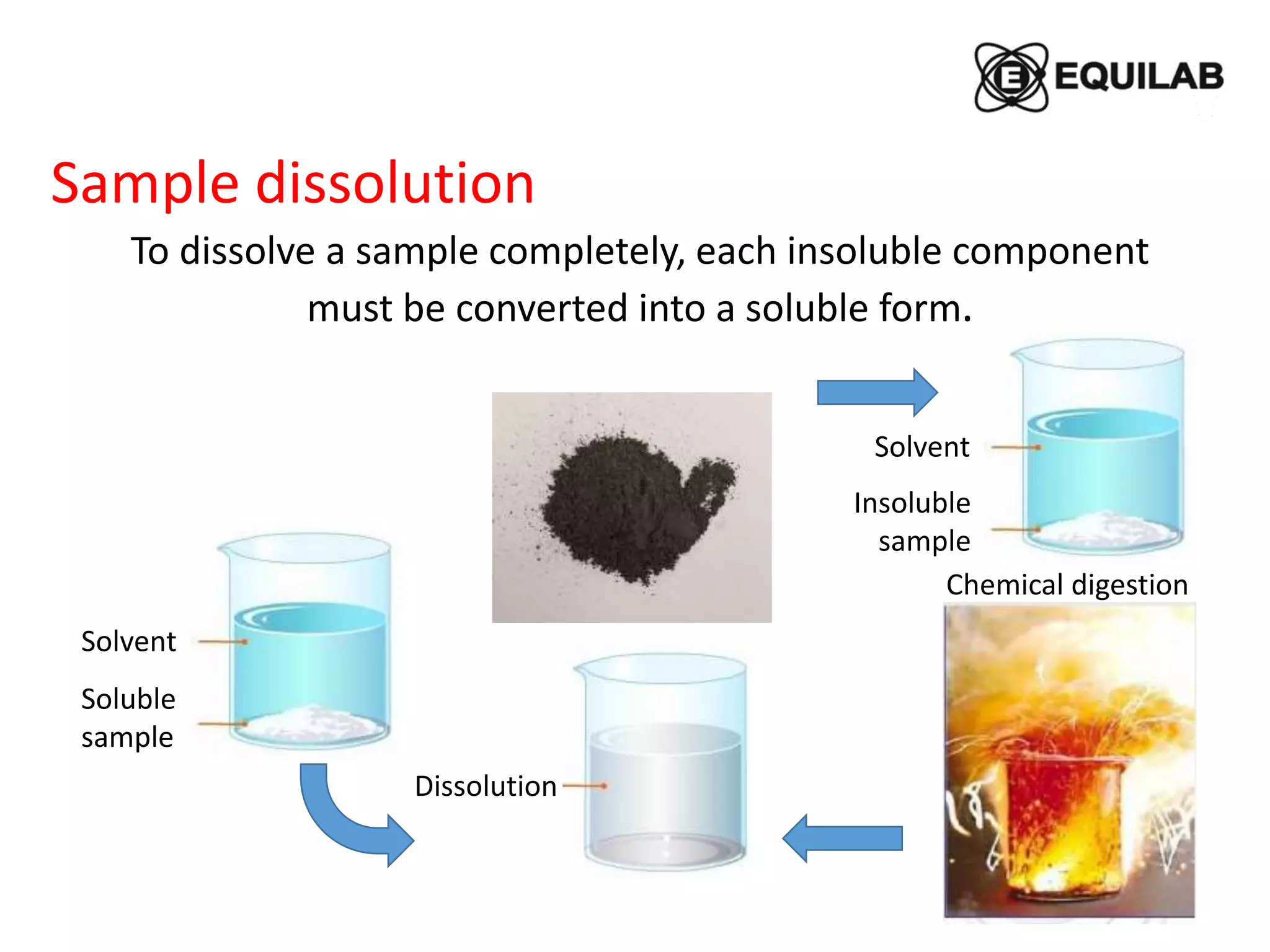
Sample dissolution
One of the most important steps when
carrying out any type of analysis is the
Sample Preparation
Introduction
• Time consuming • Complexity
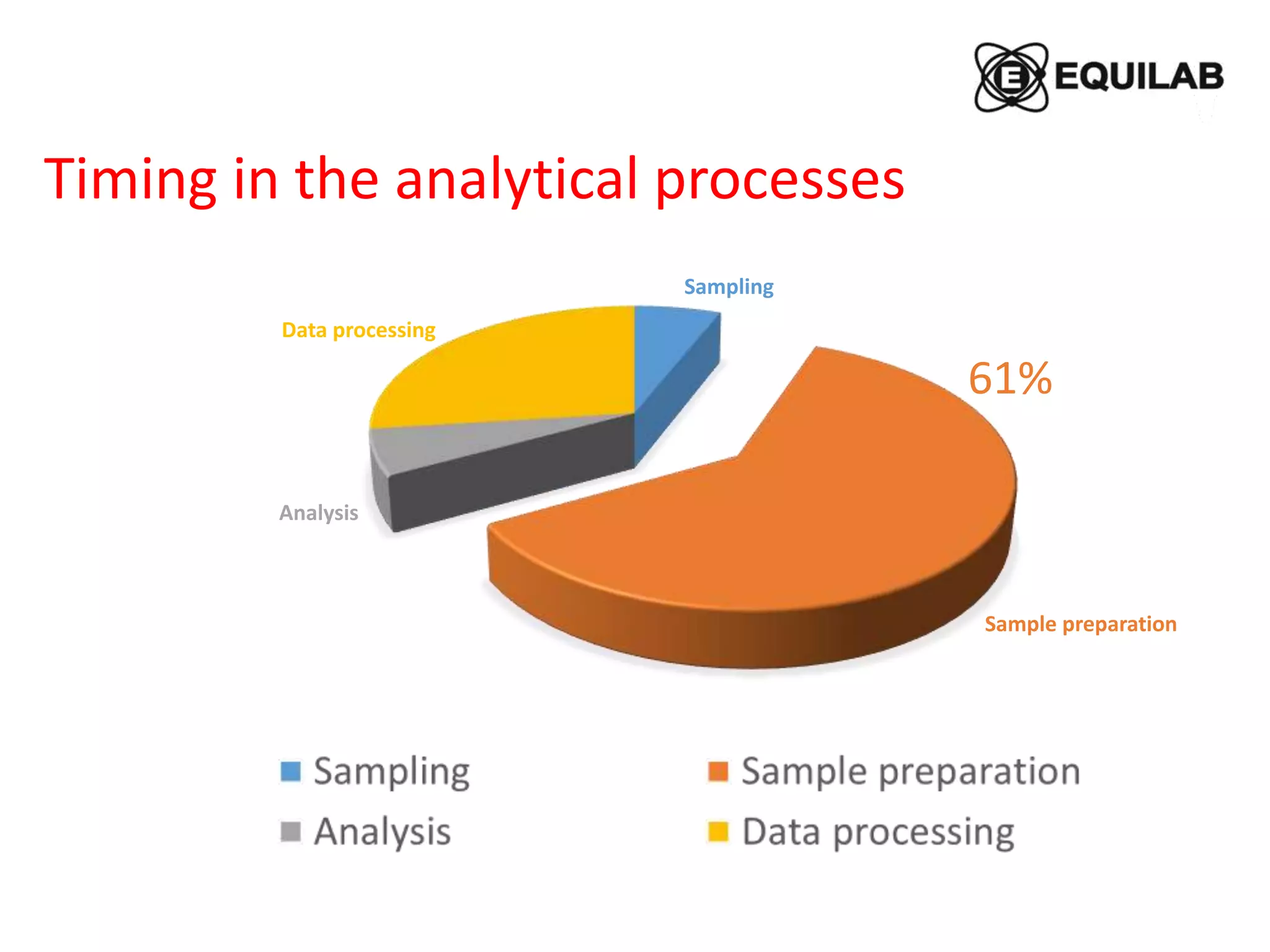
Timing in the analytical processes
Sampling
Sample preparation
Analysis
Data processing
61%
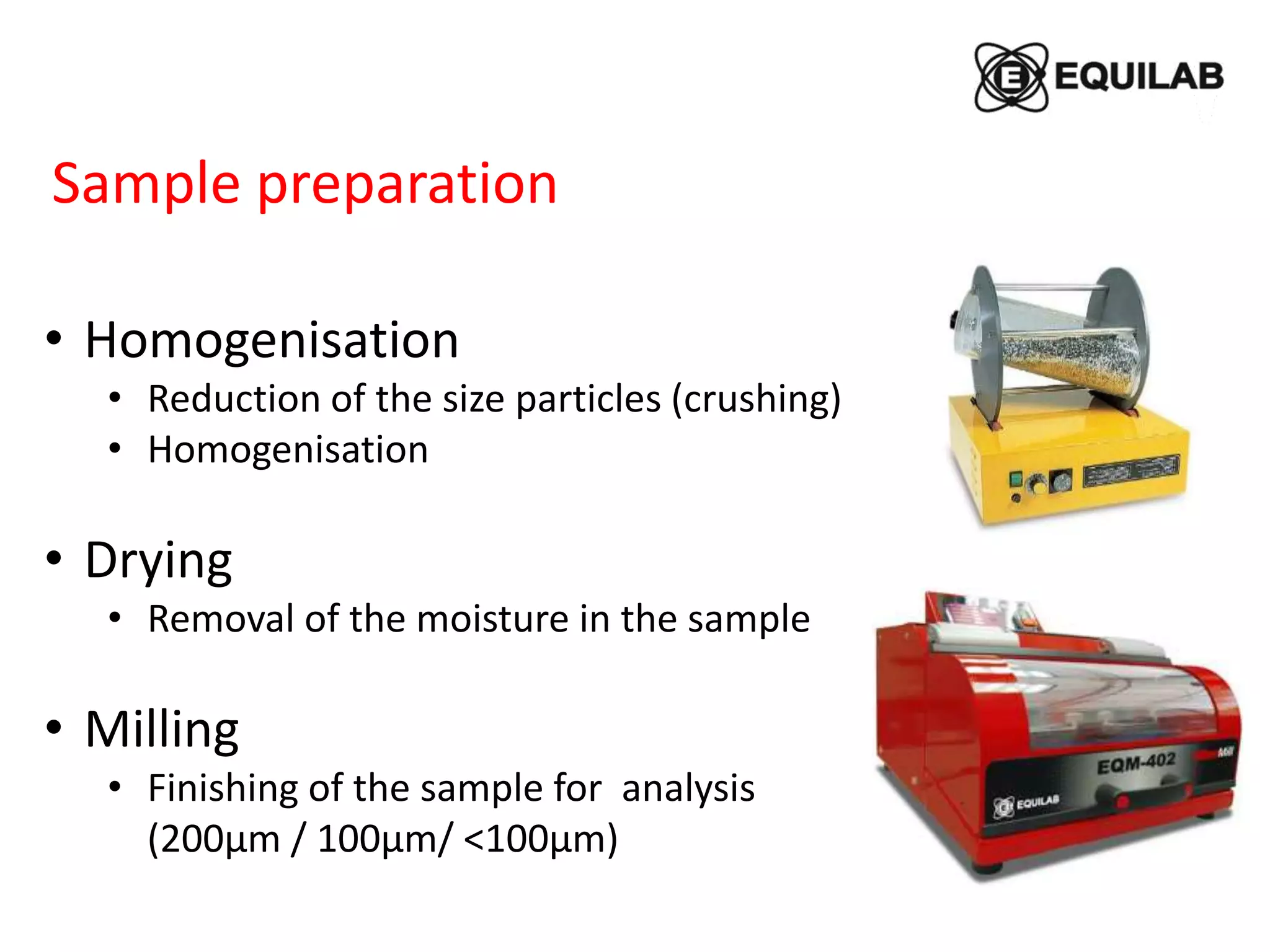
• Homogenisation
• Reduction of the size particles (crushing)
• Homogenisation
• Drying
• Removal of the moisture in the sample
• Milling
• Finishing of the sample for analysis
(200μm / 100μm/ <100μm)
Sample preparation
Sample dissolution
To dissolve a sample completely, each insoluble component
must be converted into a soluble form.
Dissolution
Insoluble
sample
Soluble
sample
Solvent
Solvent
Chemical digestion
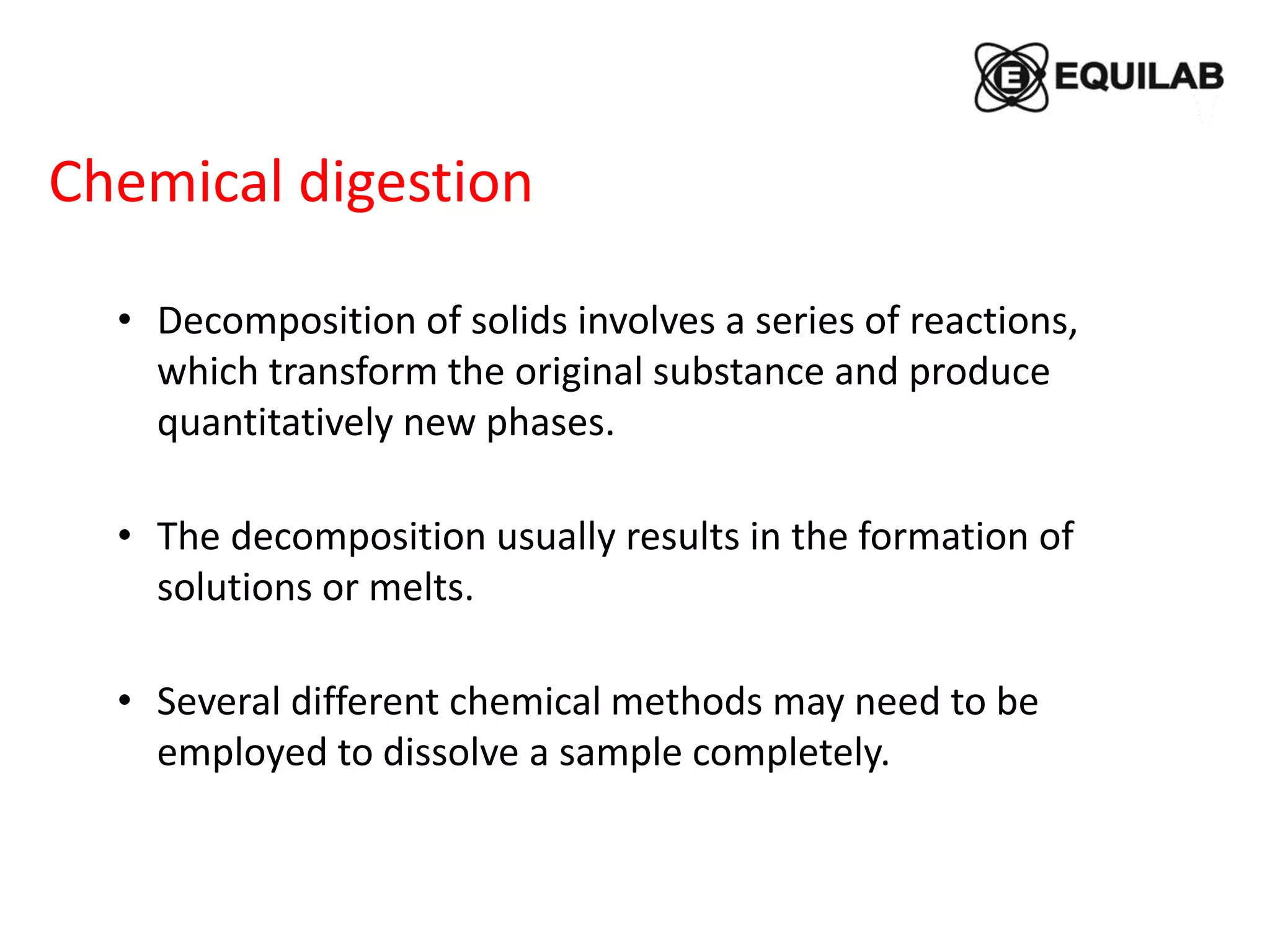
• Decomposition of solids involves a series of reactions,
which transform the original substance and produce
quantitatively new phases.
• The decomposition usually results in the formation of
solutions or melts.
• Several different chemical methods may need to be
employed to dissolve a sample completely.
Chemical digestion
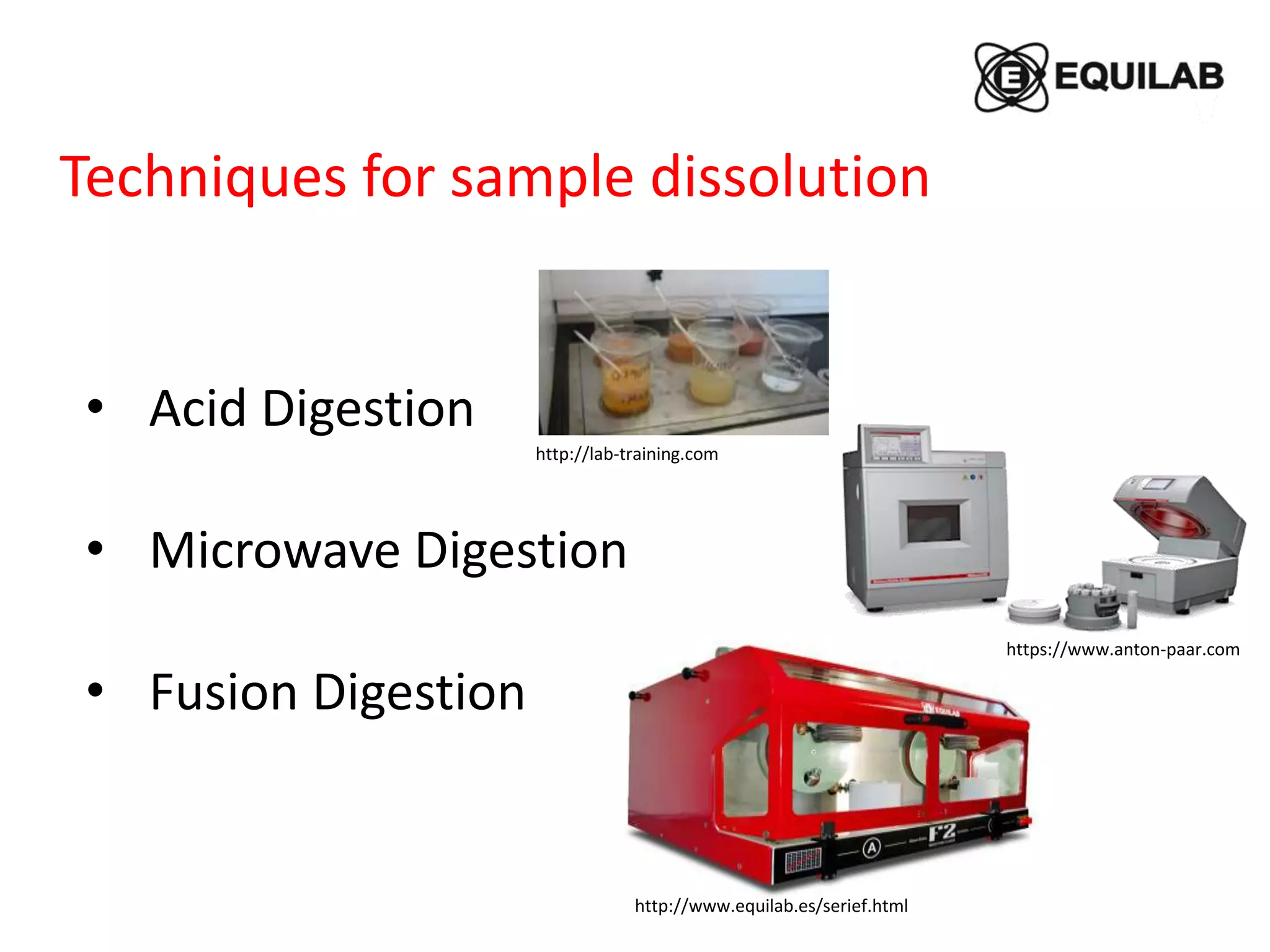
Techniques for sample dissolution
• Acid Digestion
• Microwave Digestion
• Fusion Digestion
http://lab-training.com
https://www.anton-paar.com
http://www.equilab.es/serief.html
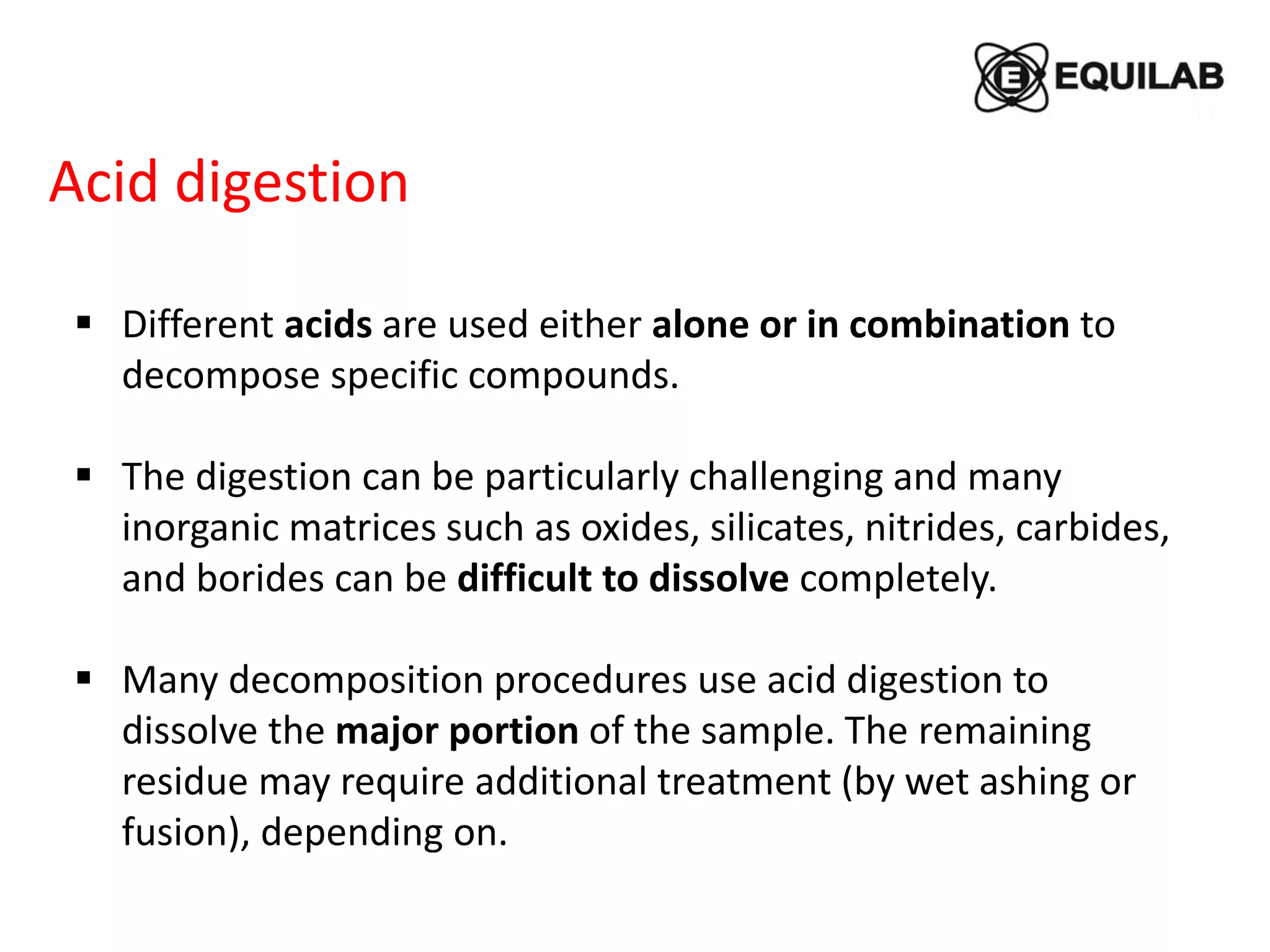
Acid digestion
 Different acids are used either alone or in combination to
decompose specific compounds.
 The digestion can be particularly challenging and many
inorganic matrices such as oxides, silicates, nitrides, carbides,
and borides can be difficult to dissolve completely.
 Many decomposition procedures use acid digestion to
dissolve the major portion of the sample. The remaining
residue may require additional treatment (by wet ashing or
fusion), depending on.
Microwave digestion
 It is considered faster, cleaner, more reproducible, and more
accurate than hot-plate digestion
 High pressures on the order of 10 MPa can be needed.
 However, microwave dissolution requires the aqueous acid
media to get the sample digestion.
Fusion digestion
Fusionis a general name for all kinds of chemical attacks on
solid samples to transform them into compounds that are
easily transformed into a solution.
These compounds are an intermediate step between the
original sample and the solution that is used later in an
analytical process.
J. P. Willis, Glass beads by borate fusion in: XRF Sample preparation, 2010, PANalytical B.V., The Netherlands.
Fusion digestion
 Acid digestion requires numerous manipulations of
concentrated acids (HClO4 is explosive and HF is extremely
dangerous for human health).
 The traditional methods or the sample digestion are tedious
and time-demanding.
 A fusion with an alkali flux (lithium borate, hydroxide, sodium
peroxide and carbonate mixture) is well known to be effective
for the decomposition of the refractory minerals and alloys.
 Sodium peroxide is undoubtedly the most effective alkaline
fusion agent.
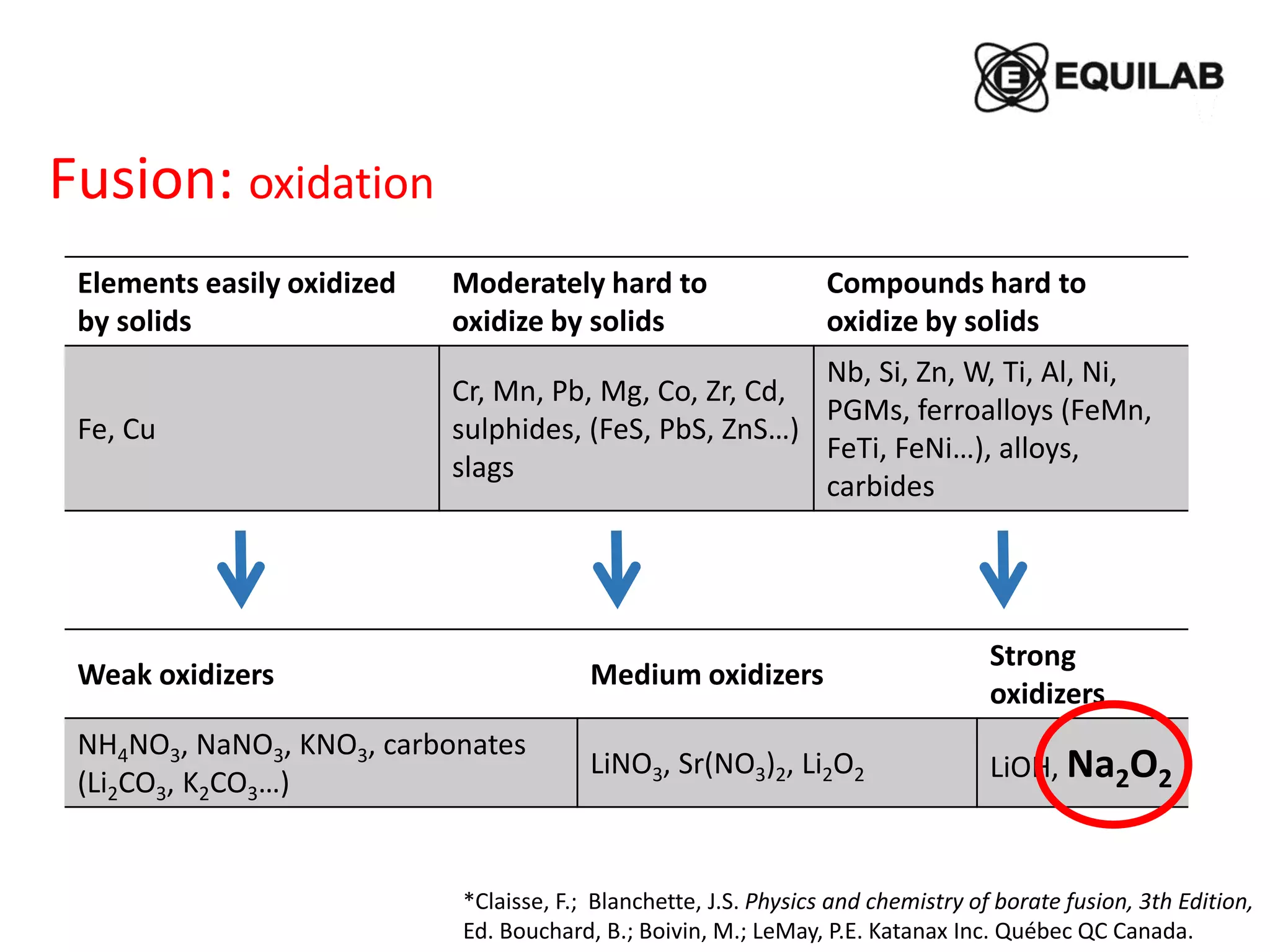
Fusion: oxidation
Elements easily oxidized
by solids
Moderately hard to
oxidize by solids
Compounds hard to
oxidize by solids
Fe, Cu
Cr, Mn, Pb, Mg, Co, Zr, Cd,
sulphides, (FeS, PbS, ZnS…)
slags
Nb, Si, Zn, W, Ti, Al, Ni,
PGMs, ferroalloys (FeMn,
FeTi, FeNi…), alloys,
carbides
Weak oxidizers Medium oxidizers
Strong
oxidizers
NH4NO3, NaNO3, KNO3, carbonates
(Li2CO3, K2CO3…)
LiNO3, Sr(NO3)2, Li2O2 LiOH, Na2O2
*Claisse, F.; Blanchette, J.S. Physics and chemistry of borate fusion, 3th Edition,
Ed. Bouchard, B.; Boivin, M.; LeMay, P.E. Katanax Inc. Québec QC Canada.
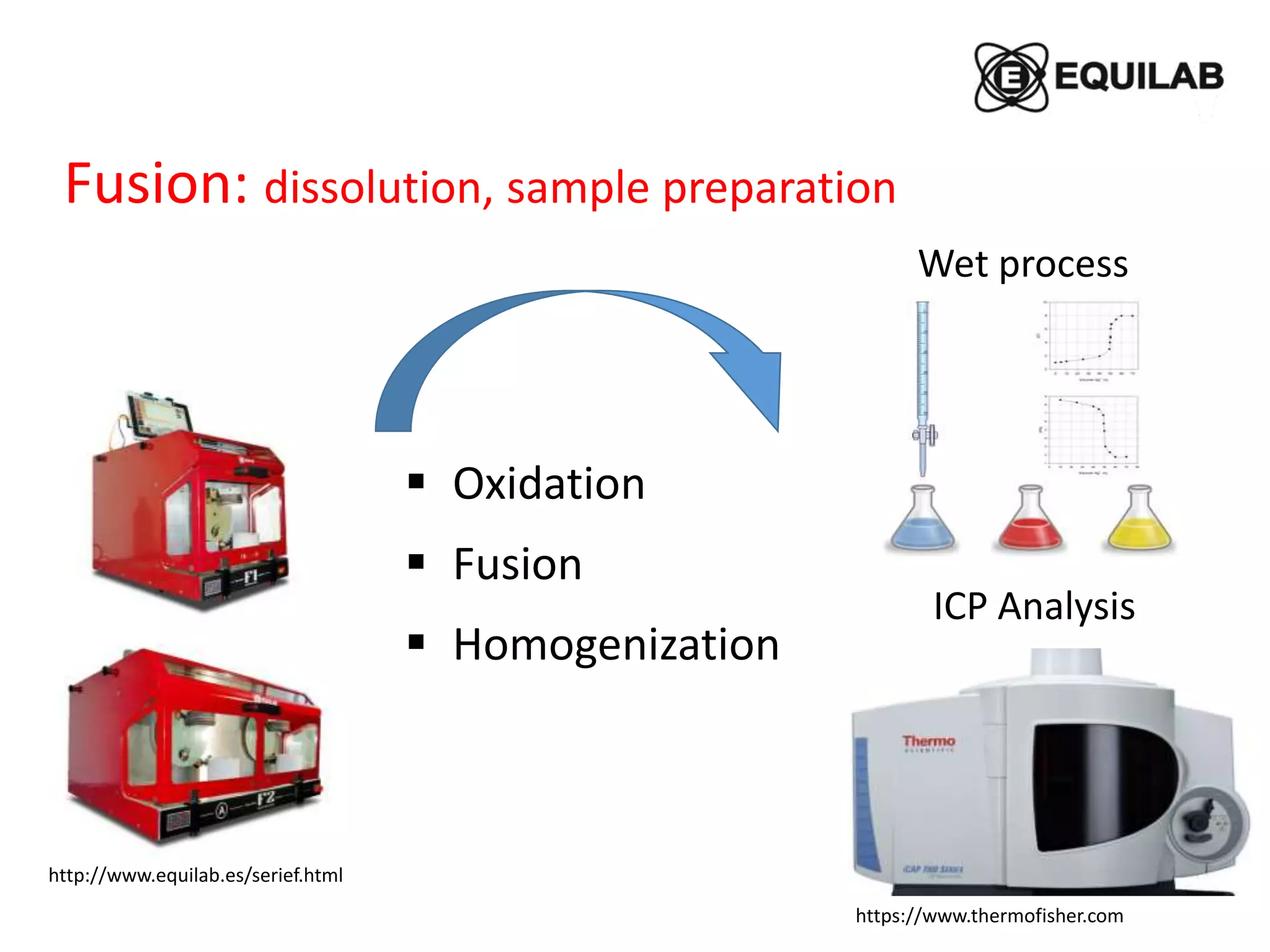
ICP Analysis
Fusion: dissolution, sample preparation
https://www.thermofisher.com
http://www.equilab.es/serief.html
 Oxidation
 Fusion
 Homogenization
Wet process
Fusion procedure
 The mixture is heated to a temperature above the melting
point of the salt and sample is then allowed to react in the
molten mixture.
 For a fusion to be successful, the sample must contain
chemically bound oxygen as in oxides, carbonates, and
silicates.
 Samples that contain no chemically bound oxygen, such as
sulfides, metals, and organics, must be oxidized before the
fusion process.
 When the reaction is completed, the fused sample is then
dissolved, and the analysis is continued.
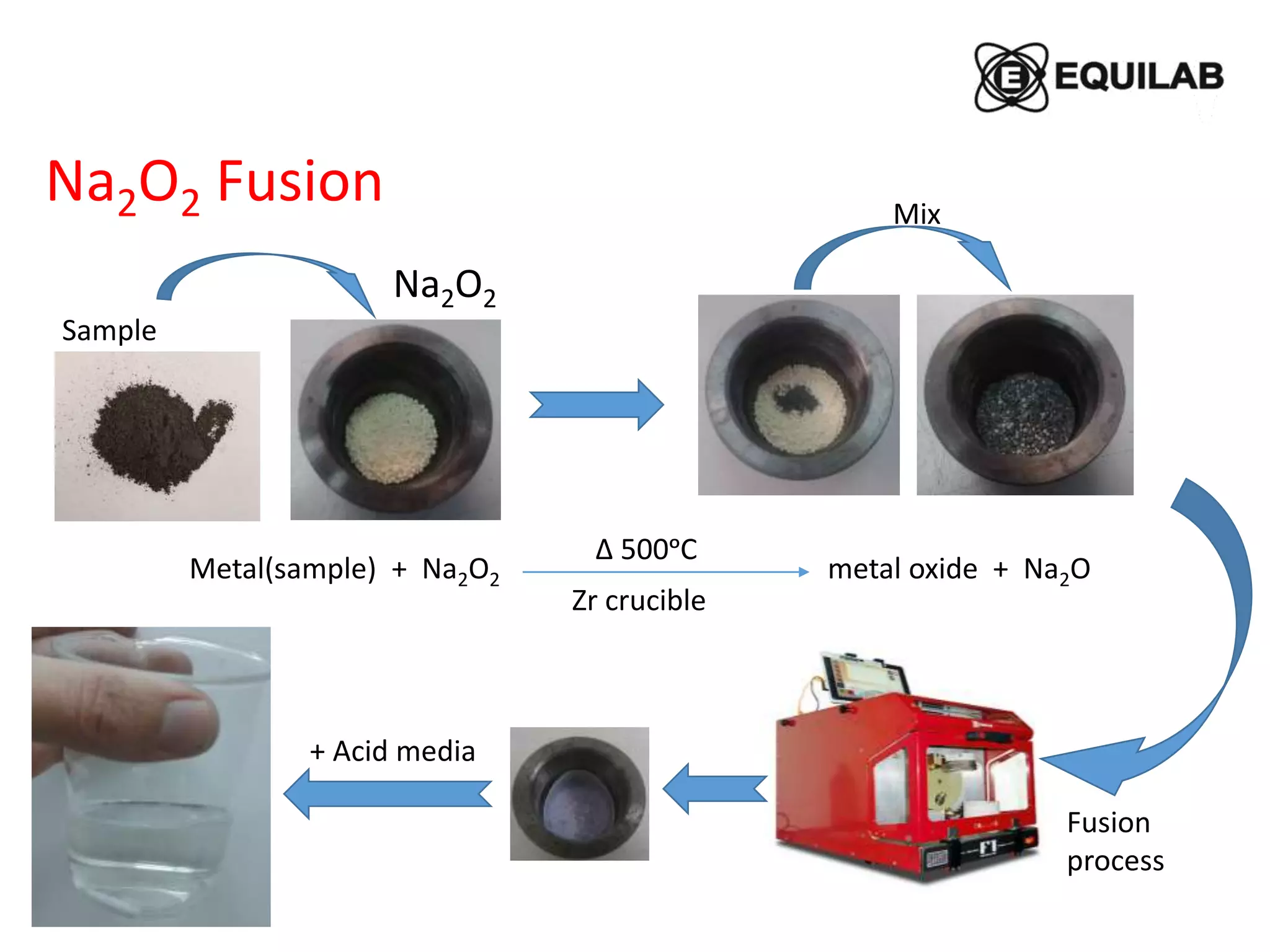
Metal(sample) + Na2O2 metal oxide + Na2O
Mix
Sample
+ Acid media
Na2O2
Δ 500ᵒC
Zr crucible
Fusion
process
Na2O2 Fusion
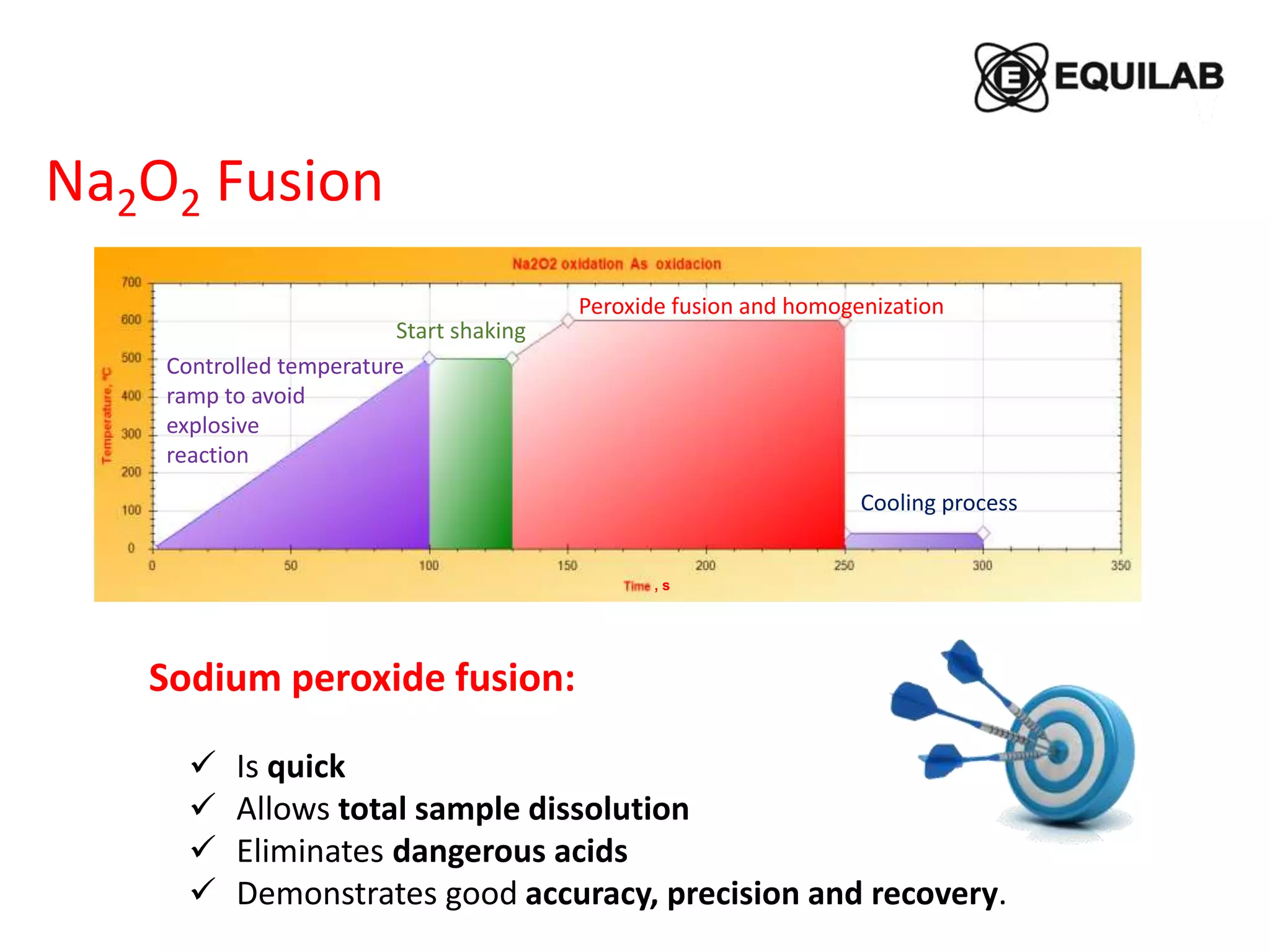
Sodium peroxide fusion:
 Is quick
 Allows total sample dissolution
 Eliminates dangerous acids
 Demonstrates good accuracy, precision and recovery.
, s
Controlled temperature
ramp to avoid
explosive
reaction
Start shaking
Peroxide fusion and homogenization
Cooling process
Na2O2 Fusion
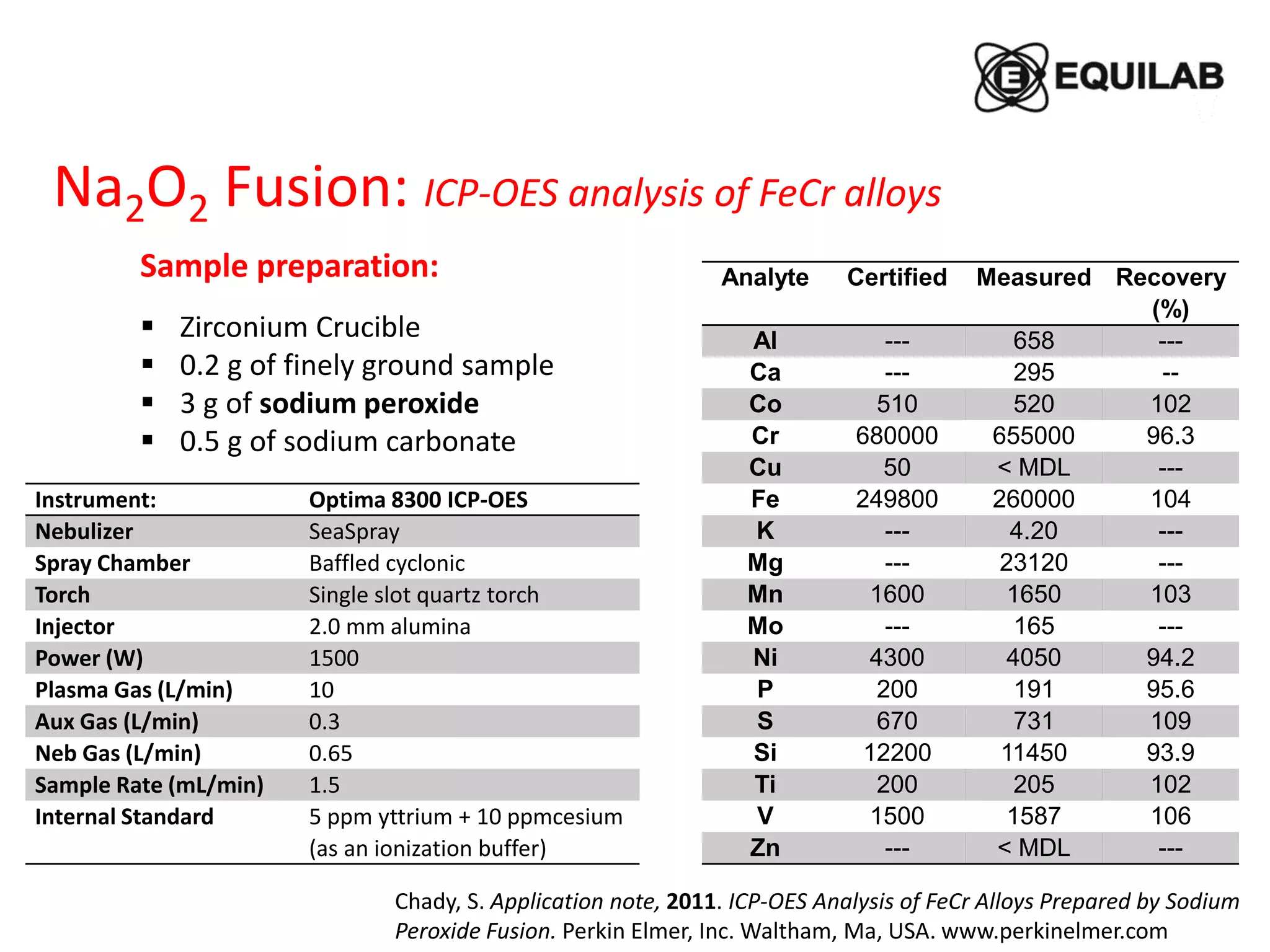
Na2O2 Fusion: ICP-OES analysis of FeCr alloys
Chady, S. Application note, 2011. ICP-OES Analysis of FeCr Alloys Prepared by Sodium
Peroxide Fusion. Perkin Elmer, Inc. Waltham, Ma, USA. www.perkinelmer.com
Instrument: Optima 8300 ICP-OES
Nebulizer SeaSpray
Spray Chamber Baffled cyclonic
Torch Single slot quartz torch
Injector 2.0 mm alumina
Power (W) 1500
Plasma Gas (L/min) 10
Aux Gas (L/min) 0.3
Neb Gas (L/min) 0.65
Sample Rate (mL/min) 1.5
Internal Standard 5 ppm yttrium + 10 ppmcesium
(as an ionization buffer)
Analyte Certified Measured Recovery
(%)
Al --- 658 ---
Ca --- 295 --
Co 510 520 102
Cr 680000 655000 96.3
Cu 50 < MDL ---
Fe 249800 260000 104
K --- 4.20 ---
Mg --- 23120 ---
Mn 1600 1650 103
Mo --- 165 ---
Ni 4300 4050 94.2
P 200 191 95.6
S 670 731 109
Si 12200 11450 93.9
Ti 200 205 102
V 1500 1587 106
Zn --- < MDL ---
Sample preparation:
 Zirconium Crucible
 0.2 g of finely ground sample
 3 g of sodium peroxide
 0.5 g of sodium carbonate
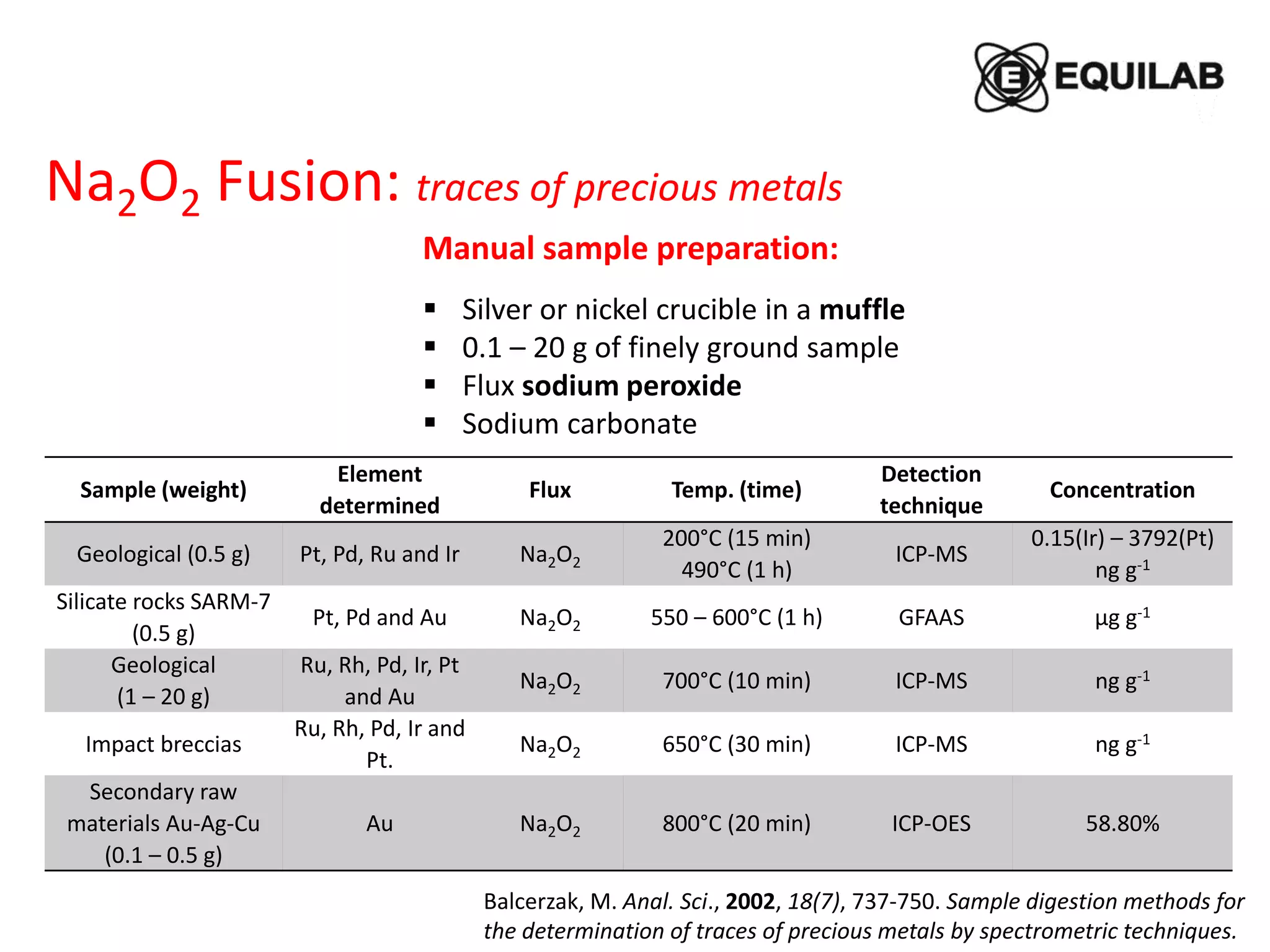
Na2O2 Fusion: traces of precious metals
Balcerzak, M. Anal. Sci., 2002, 18(7), 737-750. Sample digestion methods for
the determination of traces of precious metals by spectrometric techniques.
Sample (weight)
Element
determined
Flux Temp. (time)
Detection
technique
Concentration
Geological (0.5 g) Pt, Pd, Ru and Ir Na2O2
200°C (15 min)
490°C (1 h)
ICP-MS
0.15(Ir) – 3792(Pt)
ng g-1
Silicate rocks SARM-7
(0.5 g)
Pt, Pd and Au Na2O2 550 – 600°C (1 h) GFAAS µg g-1
Geological
(1 – 20 g)
Ru, Rh, Pd, Ir, Pt
and Au
Na2O2 700°C (10 min) ICP-MS ng g-1
Impact breccias
Ru, Rh, Pd, Ir and
Pt.
Na2O2 650°C (30 min) ICP-MS ng g-1
Secondary raw
materials Au-Ag-Cu
(0.1 – 0.5 g)
Au Na2O2 800°C (20 min) ICP-OES 58.80%
Manual sample preparation:
 Silver or nickel crucible in a muffle
 0.1 – 20 g of finely ground sample
 Flux sodium peroxide
 Sodium carbonate
Na2O2 Fusion: Rare earth elements by ICP-OES and ICP-MS
Application note, 2018. Analysis of Rare Earth Elements by ICP-OES and ICP-MS Potentials and Limitations.
Analytik Jena AG, an Endress+Hauser Company. Jena Germany. www.analytik-jena.com
Sample preparation:
 Porcelain crucible (30 x 30 mm) in a muffle
 100 mg of ground sample 200- mesh
 600 mg sodium peroxide
 480 ± 10ᵒC, 30 min
 Dissolved in a aqueous HCl + HNO3
Element
CRM GBW 7103
(GSR-1) Granite
powder [mg/kg]
Measured
[mg/kg]
Recovery
[%]
MDL
[mg/kg]
La 54 ± 4 53.4 99 0.14
Ce 108 ± 7 112 112 0.85
Pr 12.7 ± 0.8 12.2 96 1.55
Nd 47 ± 4 48.6 106 0.34
Sm 9.7 ± 0.8 9.23 95 0.65
Eu 0.85 ± 0.07 0.71 84 0.04
Gd 9.3 ± 0.7 10.3 111 0.36
Dy 10.2 ± 0.4 10.6 104 0.32
Er 6.5 ± 0.3 7.0 108 0.15
Ho 2.05 ± 0.17 2.22 108 0.11
Yb 7.4 ± 0.5 7.67 104 0.34
Lu 1.15 ± 0.09 1.11 97 0.19
Instrument: HR ICP-OES PlasmaQuant®
PQ 9000 Elite
Nebulizer Parallel path, PFA
Spray Chamber PTFE cyclonic, 50 mL
Torch Single slot quartz torch
Injector 2.0 mm alumina
Plasma Gas (L/min) 15
Aux Gas (L/min) 1.0
Neb Gas (L/min) 0. 5
Sample Rate (mL/min) 1.5
Plasma view axial
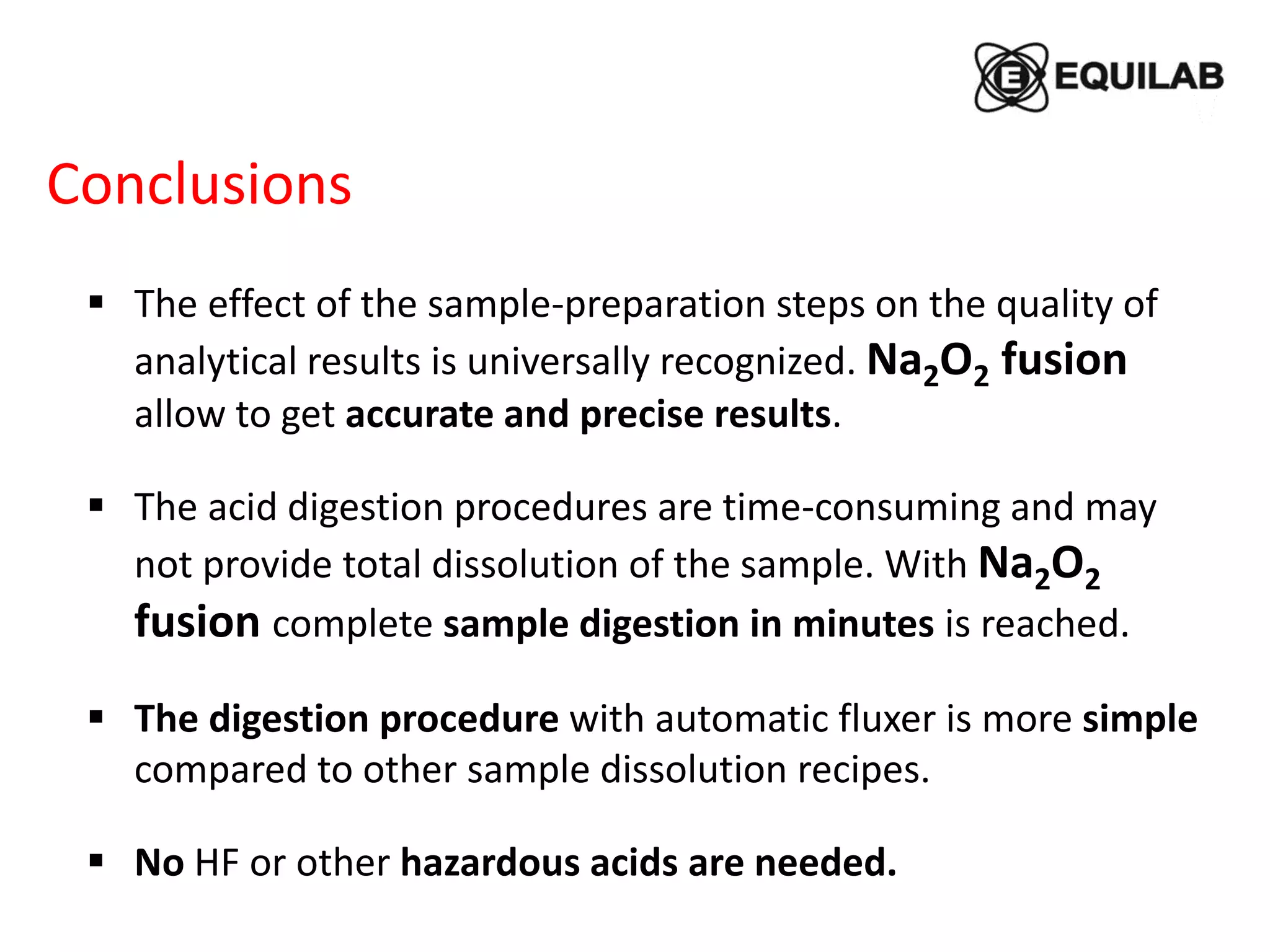
Conclusions
 The effect of the sample-preparation steps on the quality of
analytical results is universally recognized. Na2O2 fusion
allow to get accurate and precise results.
 The acid digestion procedures are time-consuming and may
not provide total dissolution of the sample. With Na2O2
fusion complete sample digestion in minutes is reached.
 The digestion procedure with automatic fluxer is more simple
compared to other sample dissolution recipes.
 No HF or other hazardous acids are needed.

Sample Dissolution

  • 1.
    Avda. Camino delo Cortao, 21 Nave 6, San Sebastián de los Reyes (28703) E-mail: equilab@equilab.es www.equilab.es Sample dissolution
  • 2.
    One of themost important steps when carrying out any type of analysis is the Sample Preparation Introduction • Time consuming • Complexity
  • 3.
    Timing in theanalytical processes Sampling Sample preparation Analysis Data processing 61%
  • 4.
    • Homogenisation • Reductionof the size particles (crushing) • Homogenisation • Drying • Removal of the moisture in the sample • Milling • Finishing of the sample for analysis (200μm / 100μm/ <100μm) Sample preparation
  • 5.
    Sample dissolution To dissolvea sample completely, each insoluble component must be converted into a soluble form. Dissolution Insoluble sample Soluble sample Solvent Solvent Chemical digestion
  • 6.
    • Decomposition ofsolids involves a series of reactions, which transform the original substance and produce quantitatively new phases. • The decomposition usually results in the formation of solutions or melts. • Several different chemical methods may need to be employed to dissolve a sample completely. Chemical digestion
  • 7.
    Techniques for sampledissolution • Acid Digestion • Microwave Digestion • Fusion Digestion http://lab-training.com https://www.anton-paar.com http://www.equilab.es/serief.html
  • 8.
    Acid digestion  Differentacids are used either alone or in combination to decompose specific compounds.  The digestion can be particularly challenging and many inorganic matrices such as oxides, silicates, nitrides, carbides, and borides can be difficult to dissolve completely.  Many decomposition procedures use acid digestion to dissolve the major portion of the sample. The remaining residue may require additional treatment (by wet ashing or fusion), depending on.
  • 9.
    Microwave digestion  Itis considered faster, cleaner, more reproducible, and more accurate than hot-plate digestion  High pressures on the order of 10 MPa can be needed.  However, microwave dissolution requires the aqueous acid media to get the sample digestion.
  • 10.
    Fusion digestion Fusionis ageneral name for all kinds of chemical attacks on solid samples to transform them into compounds that are easily transformed into a solution. These compounds are an intermediate step between the original sample and the solution that is used later in an analytical process. J. P. Willis, Glass beads by borate fusion in: XRF Sample preparation, 2010, PANalytical B.V., The Netherlands.
  • 11.
    Fusion digestion  Aciddigestion requires numerous manipulations of concentrated acids (HClO4 is explosive and HF is extremely dangerous for human health).  The traditional methods or the sample digestion are tedious and time-demanding.  A fusion with an alkali flux (lithium borate, hydroxide, sodium peroxide and carbonate mixture) is well known to be effective for the decomposition of the refractory minerals and alloys.  Sodium peroxide is undoubtedly the most effective alkaline fusion agent.
  • 12.
    Fusion: oxidation Elements easilyoxidized by solids Moderately hard to oxidize by solids Compounds hard to oxidize by solids Fe, Cu Cr, Mn, Pb, Mg, Co, Zr, Cd, sulphides, (FeS, PbS, ZnS…) slags Nb, Si, Zn, W, Ti, Al, Ni, PGMs, ferroalloys (FeMn, FeTi, FeNi…), alloys, carbides Weak oxidizers Medium oxidizers Strong oxidizers NH4NO3, NaNO3, KNO3, carbonates (Li2CO3, K2CO3…) LiNO3, Sr(NO3)2, Li2O2 LiOH, Na2O2 *Claisse, F.; Blanchette, J.S. Physics and chemistry of borate fusion, 3th Edition, Ed. Bouchard, B.; Boivin, M.; LeMay, P.E. Katanax Inc. Québec QC Canada.
  • 13.
    ICP Analysis Fusion: dissolution,sample preparation https://www.thermofisher.com http://www.equilab.es/serief.html  Oxidation  Fusion  Homogenization Wet process
  • 14.
    Fusion procedure  Themixture is heated to a temperature above the melting point of the salt and sample is then allowed to react in the molten mixture.  For a fusion to be successful, the sample must contain chemically bound oxygen as in oxides, carbonates, and silicates.  Samples that contain no chemically bound oxygen, such as sulfides, metals, and organics, must be oxidized before the fusion process.  When the reaction is completed, the fused sample is then dissolved, and the analysis is continued.
  • 15.
    Metal(sample) + Na2O2metal oxide + Na2O Mix Sample + Acid media Na2O2 Δ 500ᵒC Zr crucible Fusion process Na2O2 Fusion
  • 16.
    Sodium peroxide fusion: Is quick  Allows total sample dissolution  Eliminates dangerous acids  Demonstrates good accuracy, precision and recovery. , s Controlled temperature ramp to avoid explosive reaction Start shaking Peroxide fusion and homogenization Cooling process Na2O2 Fusion
  • 17.
    Na2O2 Fusion: ICP-OESanalysis of FeCr alloys Chady, S. Application note, 2011. ICP-OES Analysis of FeCr Alloys Prepared by Sodium Peroxide Fusion. Perkin Elmer, Inc. Waltham, Ma, USA. www.perkinelmer.com Instrument: Optima 8300 ICP-OES Nebulizer SeaSpray Spray Chamber Baffled cyclonic Torch Single slot quartz torch Injector 2.0 mm alumina Power (W) 1500 Plasma Gas (L/min) 10 Aux Gas (L/min) 0.3 Neb Gas (L/min) 0.65 Sample Rate (mL/min) 1.5 Internal Standard 5 ppm yttrium + 10 ppmcesium (as an ionization buffer) Analyte Certified Measured Recovery (%) Al --- 658 --- Ca --- 295 -- Co 510 520 102 Cr 680000 655000 96.3 Cu 50 < MDL --- Fe 249800 260000 104 K --- 4.20 --- Mg --- 23120 --- Mn 1600 1650 103 Mo --- 165 --- Ni 4300 4050 94.2 P 200 191 95.6 S 670 731 109 Si 12200 11450 93.9 Ti 200 205 102 V 1500 1587 106 Zn --- < MDL --- Sample preparation:  Zirconium Crucible  0.2 g of finely ground sample  3 g of sodium peroxide  0.5 g of sodium carbonate
  • 18.
    Na2O2 Fusion: tracesof precious metals Balcerzak, M. Anal. Sci., 2002, 18(7), 737-750. Sample digestion methods for the determination of traces of precious metals by spectrometric techniques. Sample (weight) Element determined Flux Temp. (time) Detection technique Concentration Geological (0.5 g) Pt, Pd, Ru and Ir Na2O2 200°C (15 min) 490°C (1 h) ICP-MS 0.15(Ir) – 3792(Pt) ng g-1 Silicate rocks SARM-7 (0.5 g) Pt, Pd and Au Na2O2 550 – 600°C (1 h) GFAAS µg g-1 Geological (1 – 20 g) Ru, Rh, Pd, Ir, Pt and Au Na2O2 700°C (10 min) ICP-MS ng g-1 Impact breccias Ru, Rh, Pd, Ir and Pt. Na2O2 650°C (30 min) ICP-MS ng g-1 Secondary raw materials Au-Ag-Cu (0.1 – 0.5 g) Au Na2O2 800°C (20 min) ICP-OES 58.80% Manual sample preparation:  Silver or nickel crucible in a muffle  0.1 – 20 g of finely ground sample  Flux sodium peroxide  Sodium carbonate
  • 19.
    Na2O2 Fusion: Rareearth elements by ICP-OES and ICP-MS Application note, 2018. Analysis of Rare Earth Elements by ICP-OES and ICP-MS Potentials and Limitations. Analytik Jena AG, an Endress+Hauser Company. Jena Germany. www.analytik-jena.com Sample preparation:  Porcelain crucible (30 x 30 mm) in a muffle  100 mg of ground sample 200- mesh  600 mg sodium peroxide  480 ± 10ᵒC, 30 min  Dissolved in a aqueous HCl + HNO3 Element CRM GBW 7103 (GSR-1) Granite powder [mg/kg] Measured [mg/kg] Recovery [%] MDL [mg/kg] La 54 ± 4 53.4 99 0.14 Ce 108 ± 7 112 112 0.85 Pr 12.7 ± 0.8 12.2 96 1.55 Nd 47 ± 4 48.6 106 0.34 Sm 9.7 ± 0.8 9.23 95 0.65 Eu 0.85 ± 0.07 0.71 84 0.04 Gd 9.3 ± 0.7 10.3 111 0.36 Dy 10.2 ± 0.4 10.6 104 0.32 Er 6.5 ± 0.3 7.0 108 0.15 Ho 2.05 ± 0.17 2.22 108 0.11 Yb 7.4 ± 0.5 7.67 104 0.34 Lu 1.15 ± 0.09 1.11 97 0.19 Instrument: HR ICP-OES PlasmaQuant® PQ 9000 Elite Nebulizer Parallel path, PFA Spray Chamber PTFE cyclonic, 50 mL Torch Single slot quartz torch Injector 2.0 mm alumina Plasma Gas (L/min) 15 Aux Gas (L/min) 1.0 Neb Gas (L/min) 0. 5 Sample Rate (mL/min) 1.5 Plasma view axial
  • 20.
    Conclusions  The effectof the sample-preparation steps on the quality of analytical results is universally recognized. Na2O2 fusion allow to get accurate and precise results.  The acid digestion procedures are time-consuming and may not provide total dissolution of the sample. With Na2O2 fusion complete sample digestion in minutes is reached.  The digestion procedure with automatic fluxer is more simple compared to other sample dissolution recipes.  No HF or other hazardous acids are needed.