DEPARTMENT OF CHEMISTRY
BY: SEHRISH SAMEER
SAJIDA SHAMSHER KHAN
Topic:
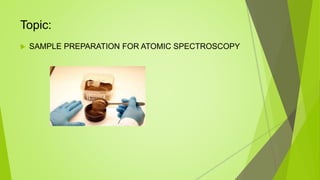
 SAMPLE PREPARATION FOR ATOMIC SPECTROSCOPY
ATOMIC SPECTROSCOPY
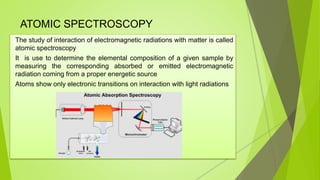
The study of interaction of electromagnetic radiations with matter is called
atomic spectroscopy
It is use to determine the elemental composition of a given sample by
measuring the corresponding absorbed or emitted electromagnetic
radiation coming from a proper energetic source
Atoms show only electronic transitions on interaction with light radiations
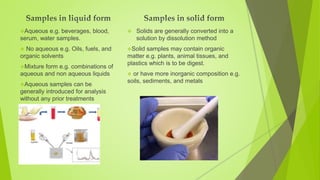
 Solids are generally converted into a
solution by dissolution method
Solid samples may contain organic
matter e.g. plants, animal tissues, and
plastics which is to be digest.
 or have more inorganic composition e.g.
soils, sediments, and metals
Aqueous e.g. beverages, blood,
serum, water samples.
 No aqueous e.g. Oils, fuels, and
organic solvents
Mixture form e.g. combinations of
aqueous and non aqueous liquids
Aqueous samples can be
generally introduced for analysis
without any prior treatments
SAMPLE PREPARTION
Sample preparation steps are generally the most critical part of
analysis because they are responsible for the most important errors in
atomic spectroscopy.
The preparation of solid samples includes several stages:
1.Sampling
2.Initial homogenization
3.Grinding of a sub-sample,
4.Mineralization
5.Solubilization
 Prevention of contamination
 Contamination sources especially come from laboratory equipments, such as homogenizer blade, knives,
grinders, sample containers, blenders.
Contamination from airborne dust and particles coming from clothing, skin, cosmetics and cigarette smoking
 Glassware and other equipment's
All glassware must be thoroughly cleaned  soaking all glassware overnight in an alkaline detergent, then
rinsing with deionized water, with a further soaking in 2% hydrochloric acid. The items should be then washed in
deionized water. They should then be left overnight for drying.
 Purity of chemical reagents and water
 The water used to dilute samples and reagents can be a potential source of contamination  deionized water
which has a very low conductivity is highly recommended.
 All chemical reagents used must be the highest quality.
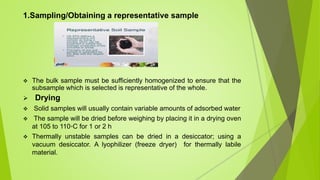
1.Sampling/Obtaining a representative sample
 The bulk sample must be sufficiently homogenized to ensure that the
subsample which is selected is representative of the whole.
 Drying
 Solid samples will usually contain variable amounts of adsorbed water
 The sample will be dried before weighing by placing it in a drying oven
at 105 to 110◦C for 1 or 2 h
 Thermally unstable samples can be dried in a desiccator; using a
vacuum desiccator. A lyophilizer (freeze dryer) for thermally labile
material.
DESTRUCTION OF ORGANIC MATERIALS FOR INORGANIC
ANALYSIS
 Organic matter has to be removed as this would interfere with the
analytical process.
 Exceptions are liquids such as beverages, including water, which may
only require dilution before analysis.
 Organic matter is usually removed from food samples by some form of
oxidation, either by the use of oxidizing acids in a wet digestion or by
dry ashing in the presence of air or pure oxygen.
 The method used will depend on the metals to be analyzed and the
nature of the food.
 Animal and plant tissue, biological fluids, and organic compounds are
usually decomposed by wet digestion or by dry ashing
Dry Ashing
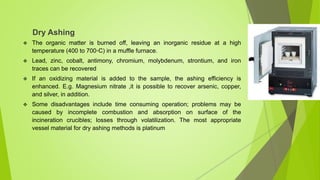
 The organic matter is burned off, leaving an inorganic residue at a high
temperature (400 to 700◦C) in a muffle furnace.
 Lead, zinc, cobalt, antimony, chromium, molybdenum, strontium, and iron
traces can be recovered
 If an oxidizing material is added to the sample, the ashing efficiency is
enhanced. E.g. Magnesium nitrate ,it is possible to recover arsenic, copper,
and silver, in addition.
 Some disadvantages include time consuming operation; problems may be
caused by incomplete combustion and absorption on surface of the
incineration crucibles; losses through volatilization. The most appropriate
vessel material for dry ashing methods is platinum
Wet digestion
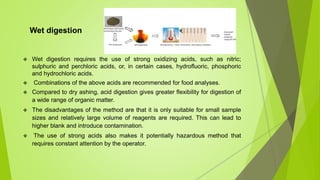
 Wet digestion requires the use of strong oxidizing acids, such as nitric;
sulphuric and perchloric acids, or, in certain cases, hydrofluoric, phosphoric
and hydrochloric acids.
 Combinations of the above acids are recommended for food analyses.
 Compared to dry ashing, acid digestion gives greater flexibility for digestion of
a wide range of organic matter.
 The disadvantages of the method are that it is only suitable for small sample
sizes and relatively large volume of reagents are required. This can lead to
higher blank and introduce contamination.
 The use of strong acids also makes it potentially hazardous method that
requires constant attention by the operator.
Nitric+perchloric acids
 Nitric+perchloric acidic mixtures are generally
used in the case of samples rich in proteins and
carbohydrates, but in the absence of fat.
Hydrofluoric acid
 Hydrofluoric acid has no oxidizing power and finds
unique application in the decomposition of organic
samples containing silicon or silica
 Only in this case, because hydrofluoric acid
attacks silicon bonds, it is essential to use non-
glass apparatus for the sample treatment.
Sample preparation for aas analysis

Sample preparation for aas analysis

  • 1.
    DEPARTMENT OF CHEMISTRY BY:SEHRISH SAMEER SAJIDA SHAMSHER KHAN
  • 2.
    Topic:  SAMPLE PREPARATIONFOR ATOMIC SPECTROSCOPY
  • 3.
    ATOMIC SPECTROSCOPY The studyof interaction of electromagnetic radiations with matter is called atomic spectroscopy It is use to determine the elemental composition of a given sample by measuring the corresponding absorbed or emitted electromagnetic radiation coming from a proper energetic source Atoms show only electronic transitions on interaction with light radiations
  • 4.
     Solids aregenerally converted into a solution by dissolution method Solid samples may contain organic matter e.g. plants, animal tissues, and plastics which is to be digest.  or have more inorganic composition e.g. soils, sediments, and metals Aqueous e.g. beverages, blood, serum, water samples.  No aqueous e.g. Oils, fuels, and organic solvents Mixture form e.g. combinations of aqueous and non aqueous liquids Aqueous samples can be generally introduced for analysis without any prior treatments
  • 5.
    SAMPLE PREPARTION Sample preparationsteps are generally the most critical part of analysis because they are responsible for the most important errors in atomic spectroscopy. The preparation of solid samples includes several stages: 1.Sampling 2.Initial homogenization 3.Grinding of a sub-sample, 4.Mineralization 5.Solubilization
  • 6.
     Prevention ofcontamination  Contamination sources especially come from laboratory equipments, such as homogenizer blade, knives, grinders, sample containers, blenders. Contamination from airborne dust and particles coming from clothing, skin, cosmetics and cigarette smoking  Glassware and other equipment's All glassware must be thoroughly cleaned  soaking all glassware overnight in an alkaline detergent, then rinsing with deionized water, with a further soaking in 2% hydrochloric acid. The items should be then washed in deionized water. They should then be left overnight for drying.  Purity of chemical reagents and water  The water used to dilute samples and reagents can be a potential source of contamination  deionized water which has a very low conductivity is highly recommended.  All chemical reagents used must be the highest quality.
  • 7.
    1.Sampling/Obtaining a representativesample  The bulk sample must be sufficiently homogenized to ensure that the subsample which is selected is representative of the whole.  Drying  Solid samples will usually contain variable amounts of adsorbed water  The sample will be dried before weighing by placing it in a drying oven at 105 to 110◦C for 1 or 2 h  Thermally unstable samples can be dried in a desiccator; using a vacuum desiccator. A lyophilizer (freeze dryer) for thermally labile material.
  • 8.
    DESTRUCTION OF ORGANICMATERIALS FOR INORGANIC ANALYSIS  Organic matter has to be removed as this would interfere with the analytical process.  Exceptions are liquids such as beverages, including water, which may only require dilution before analysis.  Organic matter is usually removed from food samples by some form of oxidation, either by the use of oxidizing acids in a wet digestion or by dry ashing in the presence of air or pure oxygen.  The method used will depend on the metals to be analyzed and the nature of the food.  Animal and plant tissue, biological fluids, and organic compounds are usually decomposed by wet digestion or by dry ashing
  • 9.
    Dry Ashing  Theorganic matter is burned off, leaving an inorganic residue at a high temperature (400 to 700◦C) in a muffle furnace.  Lead, zinc, cobalt, antimony, chromium, molybdenum, strontium, and iron traces can be recovered  If an oxidizing material is added to the sample, the ashing efficiency is enhanced. E.g. Magnesium nitrate ,it is possible to recover arsenic, copper, and silver, in addition.  Some disadvantages include time consuming operation; problems may be caused by incomplete combustion and absorption on surface of the incineration crucibles; losses through volatilization. The most appropriate vessel material for dry ashing methods is platinum
  • 10.
    Wet digestion  Wetdigestion requires the use of strong oxidizing acids, such as nitric; sulphuric and perchloric acids, or, in certain cases, hydrofluoric, phosphoric and hydrochloric acids.  Combinations of the above acids are recommended for food analyses.  Compared to dry ashing, acid digestion gives greater flexibility for digestion of a wide range of organic matter.  The disadvantages of the method are that it is only suitable for small sample sizes and relatively large volume of reagents are required. This can lead to higher blank and introduce contamination.  The use of strong acids also makes it potentially hazardous method that requires constant attention by the operator.
  • 11.
    Nitric+perchloric acids  Nitric+perchloricacidic mixtures are generally used in the case of samples rich in proteins and carbohydrates, but in the absence of fat. Hydrofluoric acid  Hydrofluoric acid has no oxidizing power and finds unique application in the decomposition of organic samples containing silicon or silica  Only in this case, because hydrofluoric acid attacks silicon bonds, it is essential to use non- glass apparatus for the sample treatment.