• Excavation of ground in order to study or
  sample the composition and structure of the
  subsurface, usually dug during a site
  investigation, a soil survey or a geological
  survey.
• To identify whether the site is suitable for the
  proposed work.
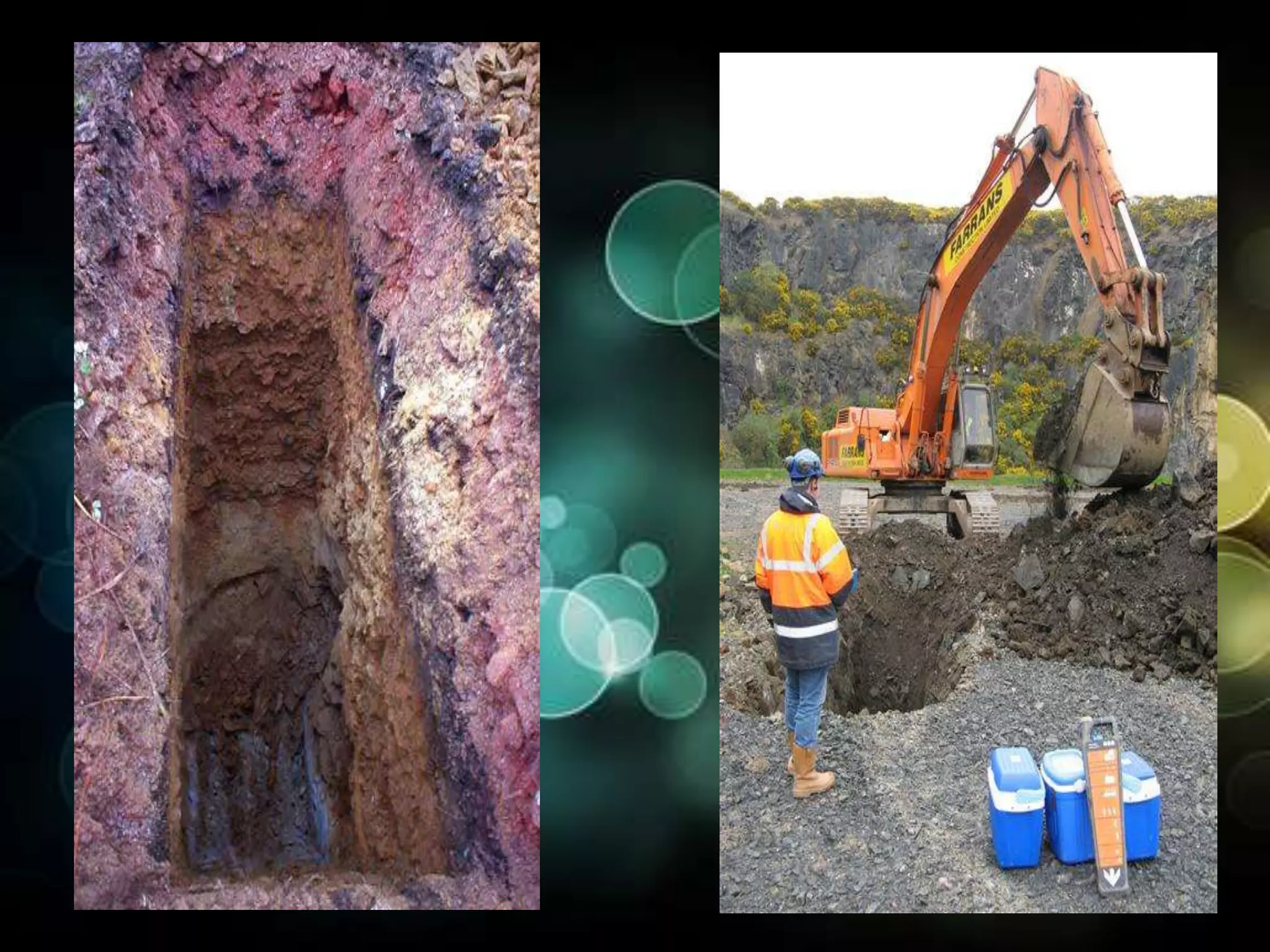
• Shallow excavations to a depth no greater 6m.

           Depth           Excavation Method
           0-2m                 By Hand
           2-4m            Wheeled Back Hoe
           4-6m            Hydraulic Excavator


• Support use are timbering, steel frames with
  hydraulic jack, battered or tapered side.
• Suitable for most low rise developments.
• Suitable for the investigation of all types of
  land.
ADVANTAGES                 DISADVANTAGES
•Preferred for cohesive      •Depth is limited.
soil and soft rock.          •Deeper excavation will
•Easy dug / excavated        require the human energy.
using diggers.
•Showing clear land
strata to facilitate rough
inspections.
HYDRAULIC EXCAVATOR


WHEELED BACK HOE
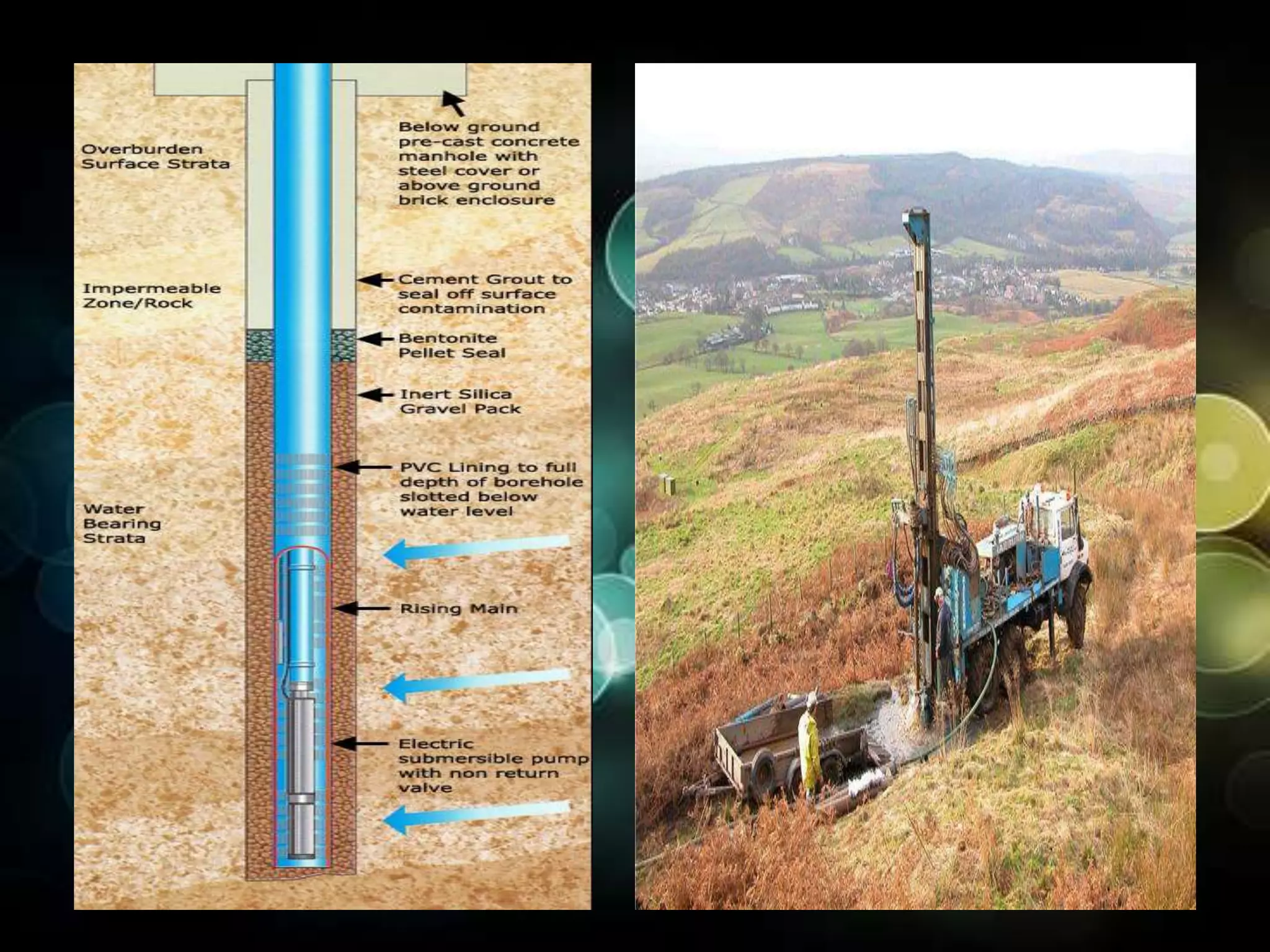
• Excavations to a depth above 6m depth.
• Excavation method using drilling rig
  machine.
• Common method of site investigation.
ADVANTAGES              DISADVANTAGES

•Can extract mineral        • Require skilled workers
resources.                  to do the work of drilling.
•Work becomes easier and •Labor cost expensive.
faster.                     •Noise that interferes with
•Can excavated soils to a   public.
depth above 6m.
Drilling rig machine
Trial pit n borehole

Trial pit n borehole

  • 2.
    • Excavation ofground in order to study or sample the composition and structure of the subsurface, usually dug during a site investigation, a soil survey or a geological survey. • To identify whether the site is suitable for the proposed work.
  • 3.
    • Shallow excavationsto a depth no greater 6m. Depth Excavation Method 0-2m By Hand 2-4m Wheeled Back Hoe 4-6m Hydraulic Excavator • Support use are timbering, steel frames with hydraulic jack, battered or tapered side. • Suitable for most low rise developments. • Suitable for the investigation of all types of land.
  • 4.
    ADVANTAGES DISADVANTAGES •Preferred for cohesive •Depth is limited. soil and soft rock. •Deeper excavation will •Easy dug / excavated require the human energy. using diggers. •Showing clear land strata to facilitate rough inspections.
  • 5.
  • 7.
    • Excavations toa depth above 6m depth. • Excavation method using drilling rig machine. • Common method of site investigation.
  • 8.
    ADVANTAGES DISADVANTAGES •Can extract mineral • Require skilled workers resources. to do the work of drilling. •Work becomes easier and •Labor cost expensive. faster. •Noise that interferes with •Can excavated soils to a public. depth above 6m.
  • 9.