REPRODUCTION OF
LAMBDA PHAGE
K.K.Banumathi
B.Sc.Microbiology
INTRODUCTION
•Lambda phage is a bacteriophage. Bacteriophages especially
infect bacteria , hence the name.
•Lambda phage very effectively uses K12 strain of Escherichia
coli .
•Another name of lambda phage is Temperate phage which
means it act as both virulent and non-virulent.
•If the phage act as virulent ,it follow lytic cycle.(Lytic-Lysis)
•The phage act as non-virulent, it follow lysogenic cycle.
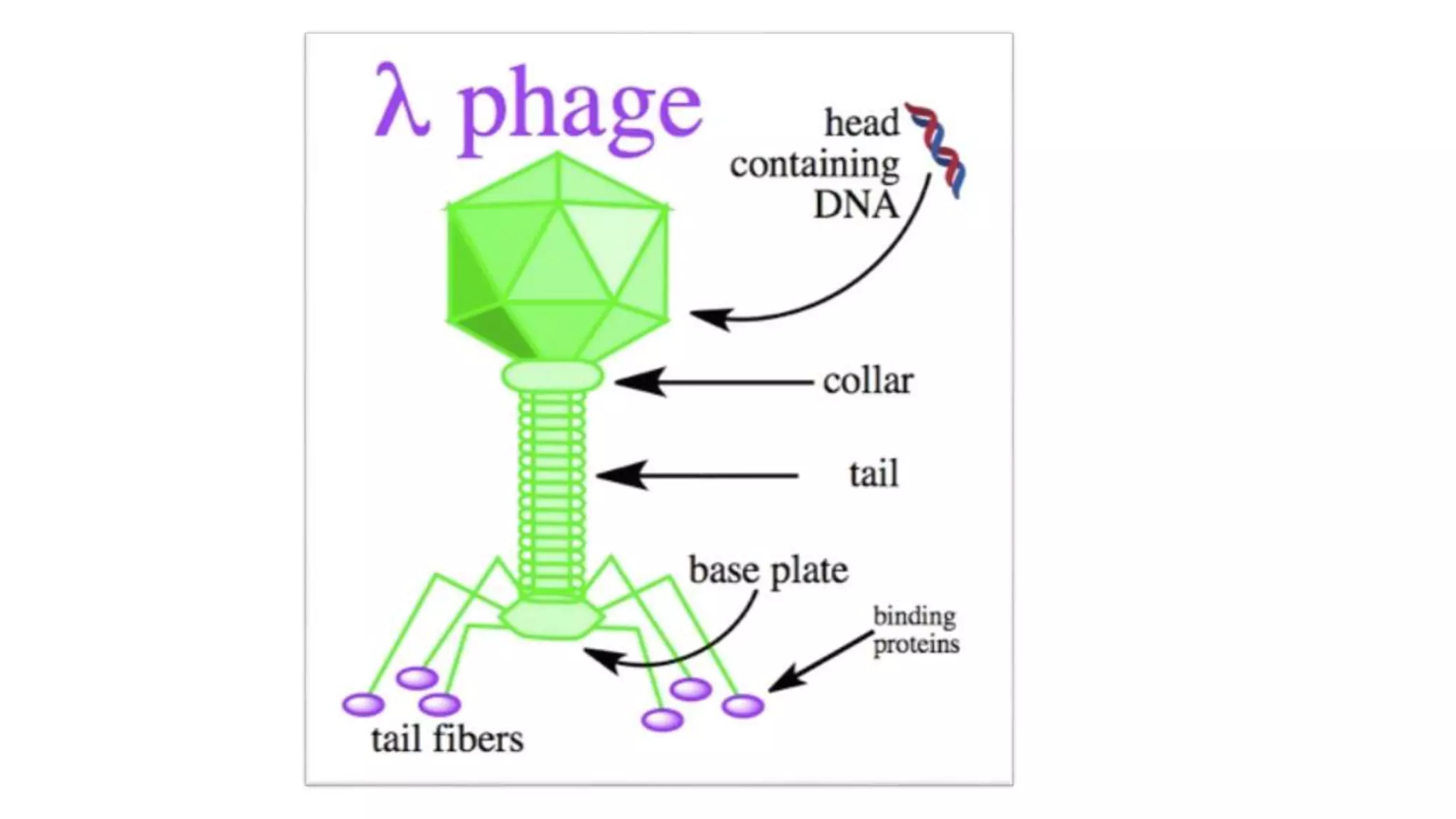
Structure of lambda phage
Lambda phage belongs to Sophoviridae family.
Head is icosadhedral in shape and is about 55nm in
diameter.
Capsid contains 300-600 subunits of capsomers.
Molecular weight of capsid protein is 37,500D. Head is
joined to tail by head tail connector.
Tail is long, flexible and is about 150×8nm in size with
25nm long non-contractile tail fiber.
Lambda DNA
DNA is double stranded linear and 17µm in length.
Genome has 46,500 base pairs.
The molecular weight of DNA is 31×106 Daltons.
Lambda DNA possesses 12 nucleotides as
extending units in either side of the DNA, which are
complementary to each other, & it is said to be
cohesive ends.
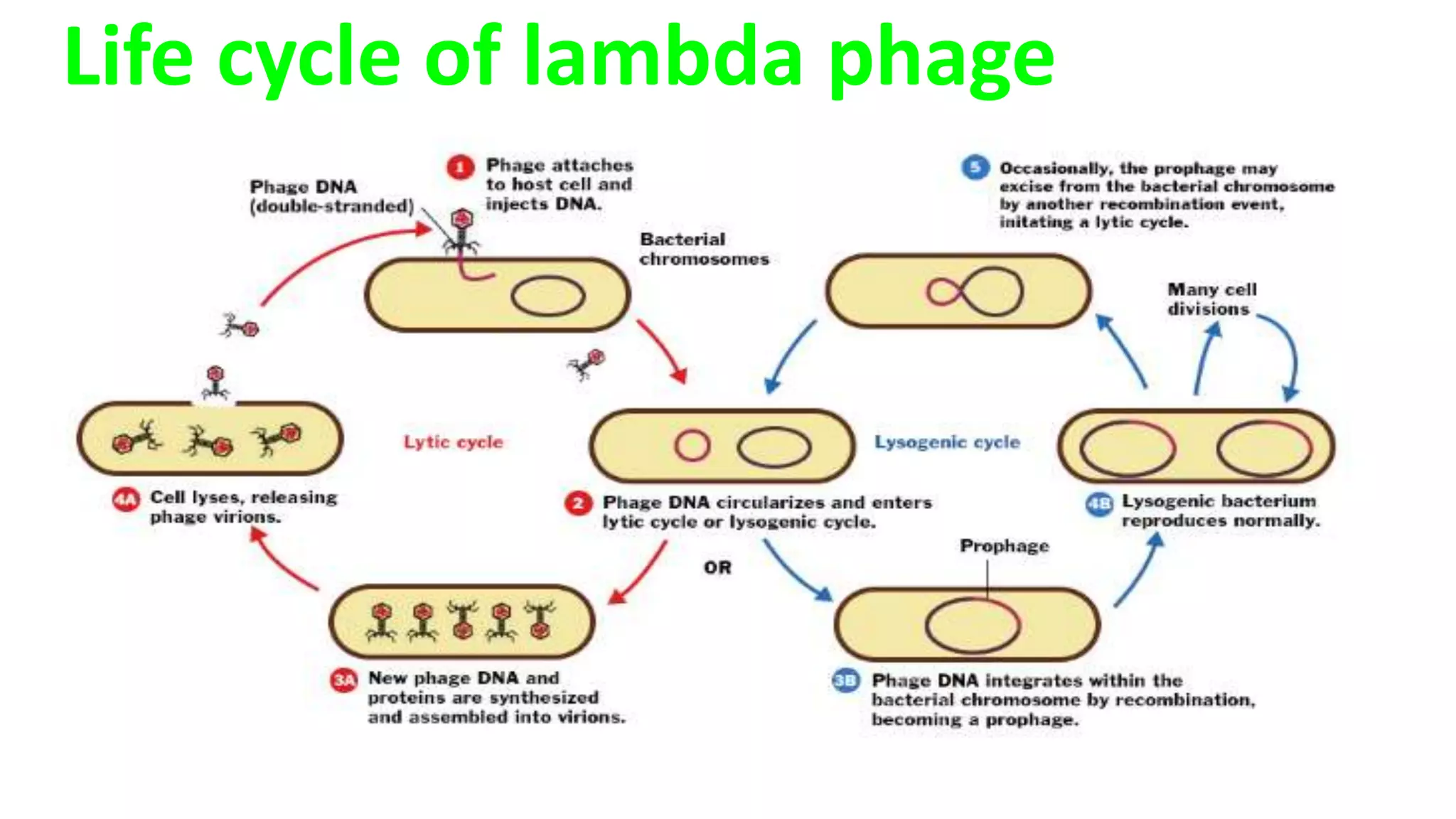
Life cycle of lambda phage
Lifecycle of lambda phage
Lambda phage is a temperate phage and is capable
carrying out both lytic and lysogenic life cycle.
Lytic cycle
Attachment
Entry
Transcription & Translation of early gene
Breakdown of Bacterial chromosome
Synthesis of structural proteins
Replication of DNA
Assembly or Morphogenesis
Release
Attachment
Attachment of a phage on a surface of bacterium is called
adsorption.
Entry
The penetration of phage DNA into the bacterium is
called entry. Penetration of DNA takes place by a pushing
force created during tail contraction. The phage produce
Lysozyme, which dissolves the bacterial cell wall and drills a
hole in it.
Transcription and Translation of early gene
Early phage genes are transcribed into mRNA and
translated into proteins.
Products of early genes are nuclease enzyme, Host DNA &
RNA polymerase modifying enzyme.
Breakdown of bacterial chromosome
Super Helical DNA becomes relaxed due to helix
destabilizing proteins of phage.
Nucleases digest the bacterial DNA into free nucleotides.
The free nucleotides remains in the cytoplasm and used or
phage replication.
Synthesis of structural proteins
The phage utilizes host machinery for the synthesis of
capsid, tail, tail fibres, core and phage DNA replication.
Structure proteins are the products of late genes of phage.
This results in accumulation of viral components in
bacterial cell cytoplasm.
Replication of DNA
Phage DNA replication begins at the 6th minute of
infection.
The phage DNA has unusual nucleotide 5-hydroxy methyl
cytosine (HMC). It is synthesized from the cytosine residue of
host DNA.
DNA synthesis begins with the synthesis of RNA primer.
Then DNA polymerase proceed the DNA synthesis by the
addition of new nucleotides using RNA primer as template.
At the end of this step, phage of DNA molecules
accumulate in the host cell.
Assembly or Morphogenesis
Build up of virus by fitting the viral proteins & DNA
together is called viral assembly.
Release
This occurs 22 minutes after viral attachment to the host
cell. Lysozyme synthesized by virus breaks cell wall, leading
to cracks in the cell wall.
Lysis of host cell releases 150-300 progeny virion.
Lysogeniccycle
Attachment
Entry
Circularization and To form prophage
Reproduction of Lysogenic bacterium
Enters into lytic cycle
Attachment and Entry
This steps happen as same as mentioned in the lytic cycle.
Circularization and To form prophage
After the penetration of phage DNA , the DNA get
circularized within the bacterial (host) cell.
Then it will be fused (mingled) with the bacterial
chromosome. These fusion of viral and bacterial DNA is
called as Prophage.
Reproduction of lysogenic bacterium
The infected bacterium i.e., lysogenic bacterium
reproduces normally with prophage.
Enters into lytic cycle
The lysogenic bacterium become virulent at their
favourable condition. It follow lytic cycle.
Occasionally, the prophage excise from the bacterial
chromosome and enters the lytic cycle. This point of cycle
switch is known as Genetic switch
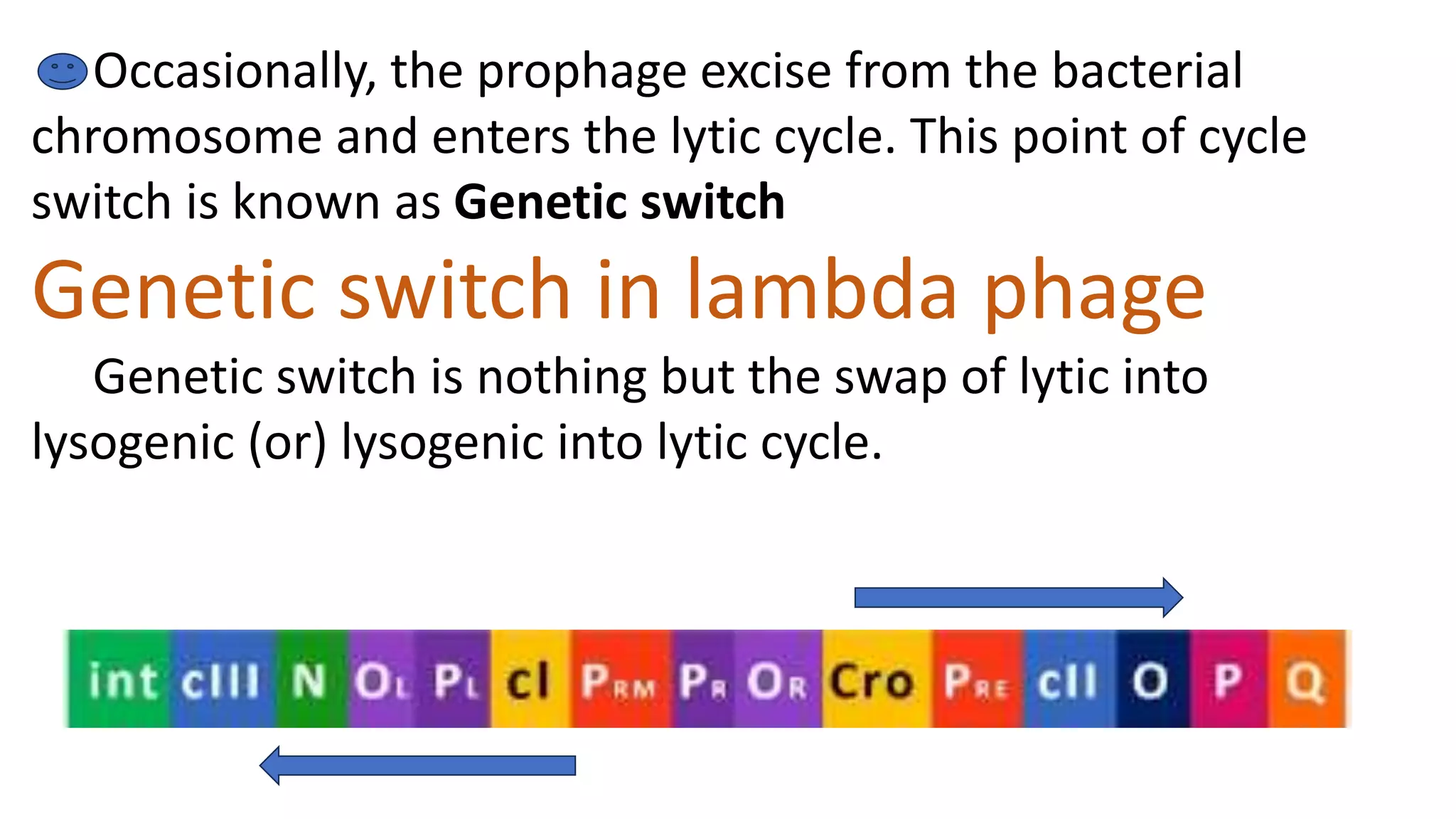
Genetic switch in lambda phage
Genetic switch is nothing but the swap of lytic into
lysogenic (or) lysogenic into lytic cycle.
The genome of lambda phage is madeup of 2 important
thing i.e., cro protein[Lytic cycle] and CI region (lambda
repressor)[Lysogenic cycle].
Lyticcycle
The cro protein region is composed of operator 3 (OR3).
The OR3 binds with CI region. Then the CI region can’t able
to transcribe. So the lysogenic cycle doesn’t takes place.
Lytic cycle is carried into left side.
Lysogeniccycle
The CI region is composed of operator 1,2 (OR1,2). The
OR1,2 binds with cro protein region. Then the cro region
can’t able to transcribe. So, the lytic cycle doesn’t take place.
Lysogenic cycle is carried into right side.

LAMBDA PHAGE AND THEIR REPRODUCTION

  • 1.
  • 2.
    INTRODUCTION •Lambda phage isa bacteriophage. Bacteriophages especially infect bacteria , hence the name. •Lambda phage very effectively uses K12 strain of Escherichia coli . •Another name of lambda phage is Temperate phage which means it act as both virulent and non-virulent. •If the phage act as virulent ,it follow lytic cycle.(Lytic-Lysis) •The phage act as non-virulent, it follow lysogenic cycle.
  • 3.
    Structure of lambdaphage Lambda phage belongs to Sophoviridae family. Head is icosadhedral in shape and is about 55nm in diameter. Capsid contains 300-600 subunits of capsomers. Molecular weight of capsid protein is 37,500D. Head is joined to tail by head tail connector. Tail is long, flexible and is about 150×8nm in size with 25nm long non-contractile tail fiber.
  • 5.
    Lambda DNA DNA isdouble stranded linear and 17µm in length. Genome has 46,500 base pairs. The molecular weight of DNA is 31×106 Daltons. Lambda DNA possesses 12 nucleotides as extending units in either side of the DNA, which are complementary to each other, & it is said to be cohesive ends.
  • 6.
    Life cycle oflambda phage
  • 7.
    Lifecycle of lambdaphage Lambda phage is a temperate phage and is capable carrying out both lytic and lysogenic life cycle. Lytic cycle Attachment Entry Transcription & Translation of early gene Breakdown of Bacterial chromosome Synthesis of structural proteins Replication of DNA
  • 8.
    Assembly or Morphogenesis Release Attachment Attachmentof a phage on a surface of bacterium is called adsorption. Entry The penetration of phage DNA into the bacterium is called entry. Penetration of DNA takes place by a pushing force created during tail contraction. The phage produce Lysozyme, which dissolves the bacterial cell wall and drills a hole in it.
  • 9.
    Transcription and Translationof early gene Early phage genes are transcribed into mRNA and translated into proteins. Products of early genes are nuclease enzyme, Host DNA & RNA polymerase modifying enzyme. Breakdown of bacterial chromosome Super Helical DNA becomes relaxed due to helix destabilizing proteins of phage. Nucleases digest the bacterial DNA into free nucleotides. The free nucleotides remains in the cytoplasm and used or phage replication.
  • 10.
    Synthesis of structuralproteins The phage utilizes host machinery for the synthesis of capsid, tail, tail fibres, core and phage DNA replication. Structure proteins are the products of late genes of phage. This results in accumulation of viral components in bacterial cell cytoplasm. Replication of DNA Phage DNA replication begins at the 6th minute of infection. The phage DNA has unusual nucleotide 5-hydroxy methyl cytosine (HMC). It is synthesized from the cytosine residue of host DNA.
  • 11.
    DNA synthesis beginswith the synthesis of RNA primer. Then DNA polymerase proceed the DNA synthesis by the addition of new nucleotides using RNA primer as template. At the end of this step, phage of DNA molecules accumulate in the host cell. Assembly or Morphogenesis Build up of virus by fitting the viral proteins & DNA together is called viral assembly. Release This occurs 22 minutes after viral attachment to the host cell. Lysozyme synthesized by virus breaks cell wall, leading
  • 12.
    to cracks inthe cell wall. Lysis of host cell releases 150-300 progeny virion. Lysogeniccycle Attachment Entry Circularization and To form prophage Reproduction of Lysogenic bacterium Enters into lytic cycle Attachment and Entry This steps happen as same as mentioned in the lytic cycle.
  • 13.
    Circularization and Toform prophage After the penetration of phage DNA , the DNA get circularized within the bacterial (host) cell. Then it will be fused (mingled) with the bacterial chromosome. These fusion of viral and bacterial DNA is called as Prophage. Reproduction of lysogenic bacterium The infected bacterium i.e., lysogenic bacterium reproduces normally with prophage. Enters into lytic cycle The lysogenic bacterium become virulent at their favourable condition. It follow lytic cycle.
  • 14.
    Occasionally, the prophageexcise from the bacterial chromosome and enters the lytic cycle. This point of cycle switch is known as Genetic switch Genetic switch in lambda phage Genetic switch is nothing but the swap of lytic into lysogenic (or) lysogenic into lytic cycle.
  • 15.
    The genome oflambda phage is madeup of 2 important thing i.e., cro protein[Lytic cycle] and CI region (lambda repressor)[Lysogenic cycle]. Lyticcycle The cro protein region is composed of operator 3 (OR3). The OR3 binds with CI region. Then the CI region can’t able to transcribe. So the lysogenic cycle doesn’t takes place. Lytic cycle is carried into left side. Lysogeniccycle The CI region is composed of operator 1,2 (OR1,2). The OR1,2 binds with cro protein region. Then the cro region
  • 16.
    can’t able totranscribe. So, the lytic cycle doesn’t take place. Lysogenic cycle is carried into right side.