BACTERIOPHAGE
LYTIC AND LYSOGENIC
CYCLE
Understanding the viral life
cycles in bacteria
By:
YAZHINI RAJ P.M.
BACTERIOPHAGE
DEFINITION:
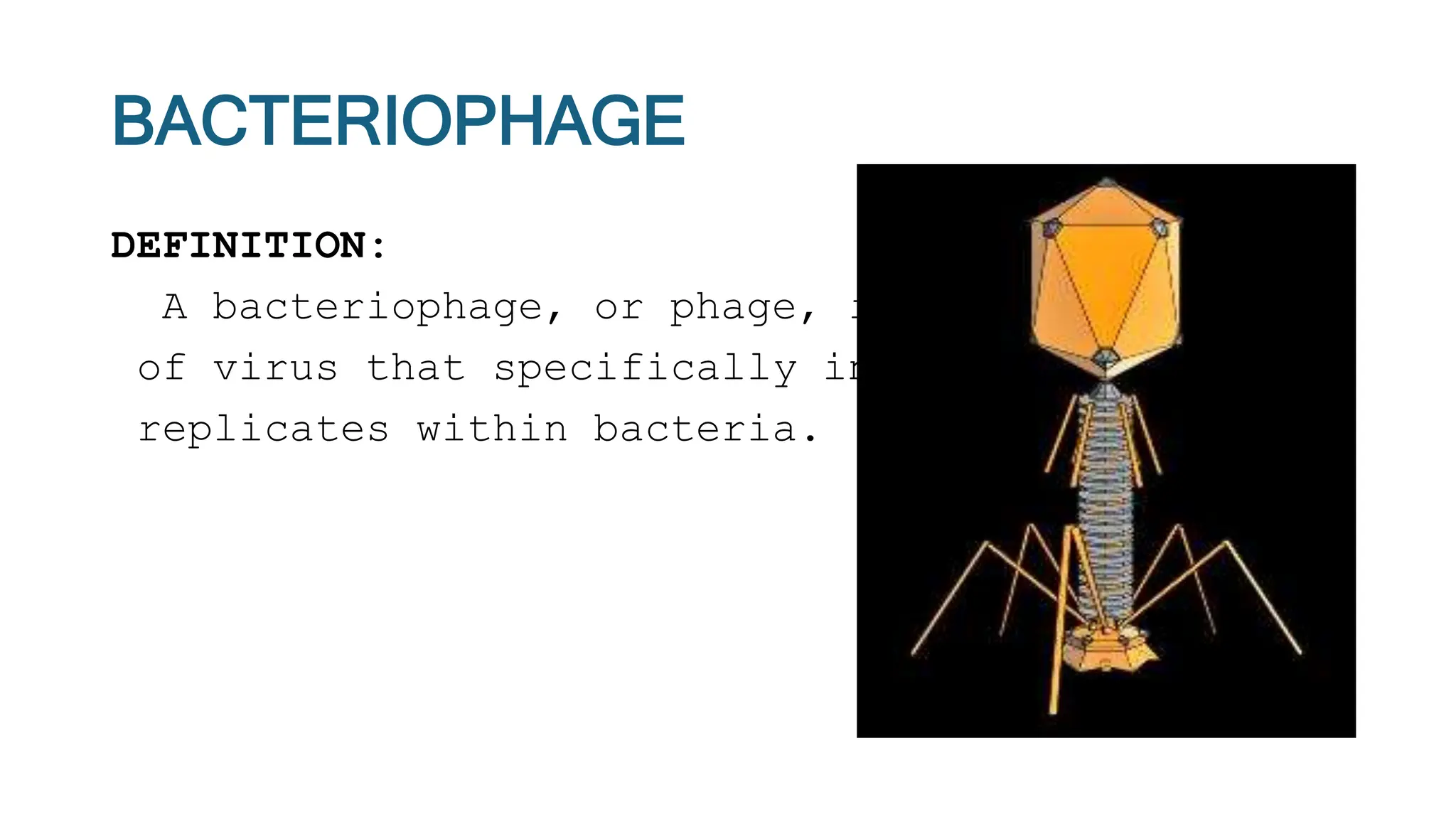
A bacteriophage, or phage, is a type
of virus that specifically infects and
replicates within bacteria.
STRUCTURE
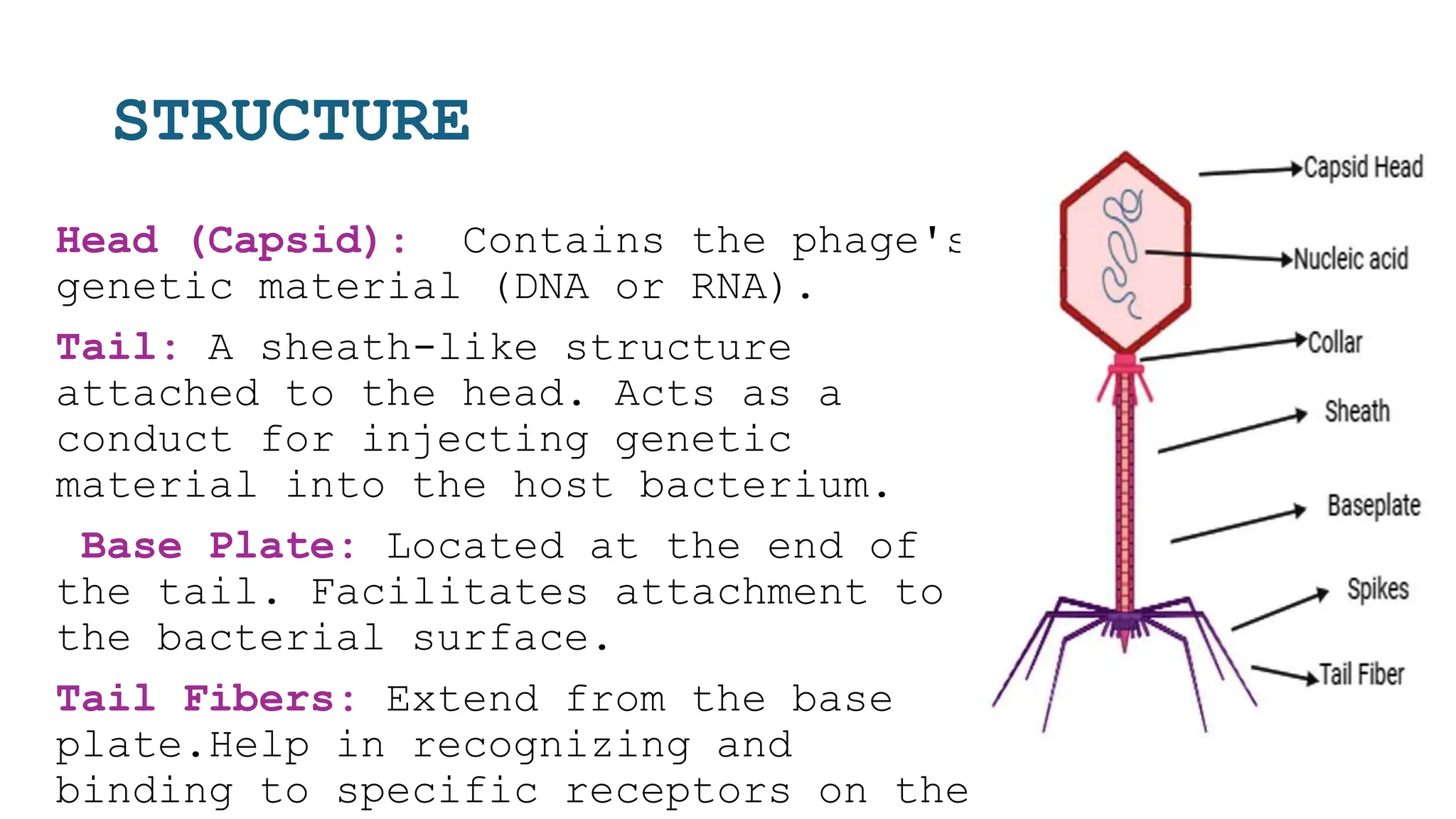
Head (Capsid): Contains the phage's
genetic material (DNA or RNA).
Tail: A sheath-like structure
attached to the head. Acts as a
conduct for injecting genetic
material into the host bacterium.
Base Plate: Located at the end of
the tail. Facilitates attachment to
the bacterial surface.
Tail Fibers: Extend from the base
plate.Help in recognizing and
binding to specific receptors on the
LYTIC CYCLE
• Definition:
A process where the phage
replicates and lyses the host cell.
• Steps:
• Attachment
• Penetration
• Biosynthesis
• Maturation
• Lysis
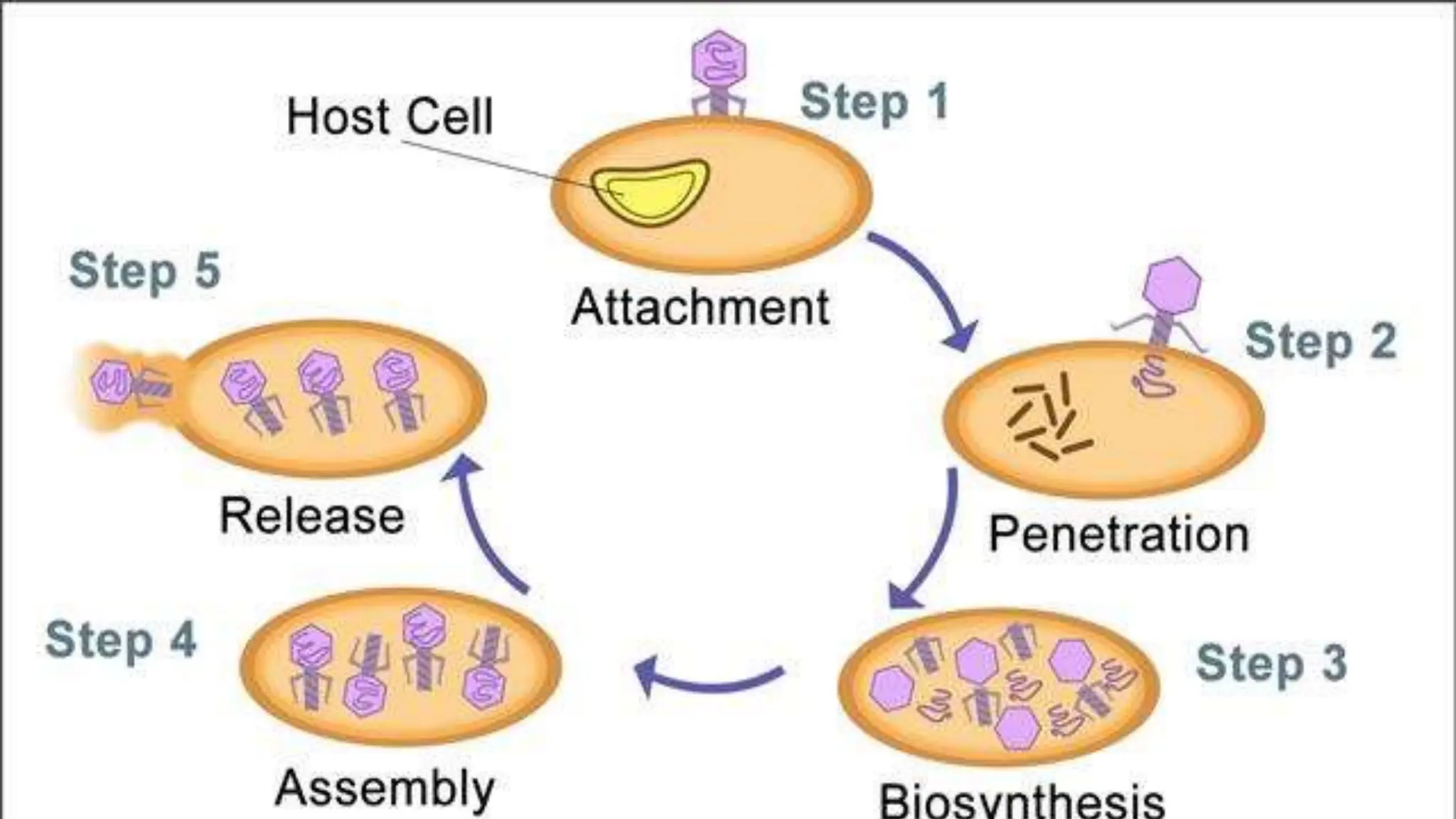
STEPS:
• Attachment: Phage attaches to specific
receptors on the bacterial surface.
• Penetration: Phage injects its DNA into
the host cell.
• Biosynthesis: Phage DNA replicates and
phage proteins are synthesized.
• Assembly: New phage particles are
assembled.
• Release: Host cell bursts, releasing new
phages.
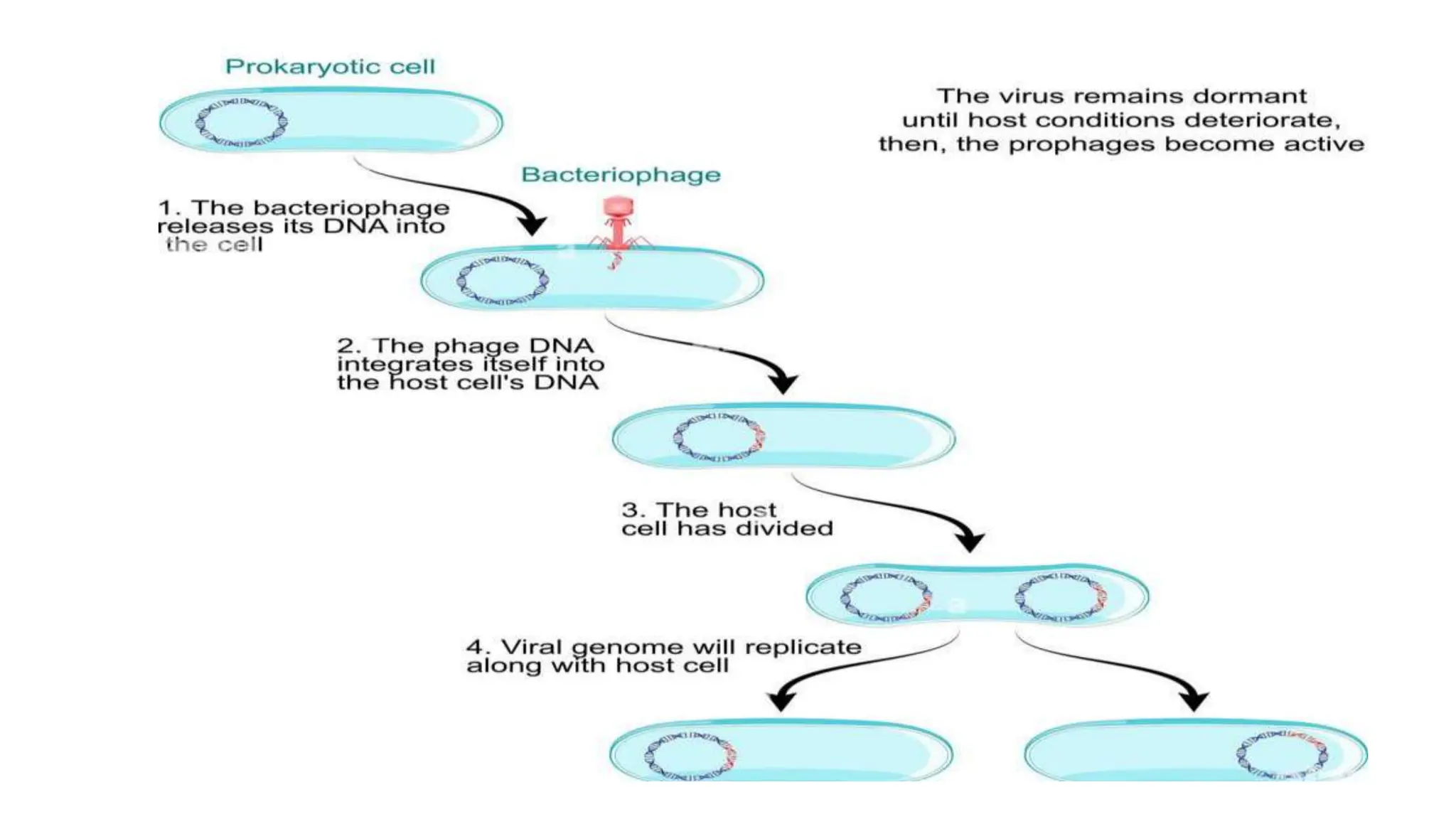
LYSOGENIC CYCLE:
• Definition: A process where the phage DNA
integrates into the host genome and replicates
with it without killing the host.
• Steps:
• Attachment
• Penetration
• Integration
• Prophage Replication
• Induction (trigger to enter lytic cycle)
STEPS:
• Attachment: Phage attaches to the bacterial
cell.
• Penetration: Phage injects its DNA into the
host.
• Integration: Phage DNA integrates into the
bacterial chromosome, becoming a prophage.
• Prophage Replication: Prophage replicates
along with the bacterial DNA.
• Induction: Under stress conditions, prophage
can excise from the genome and enter the lytic
cycle.
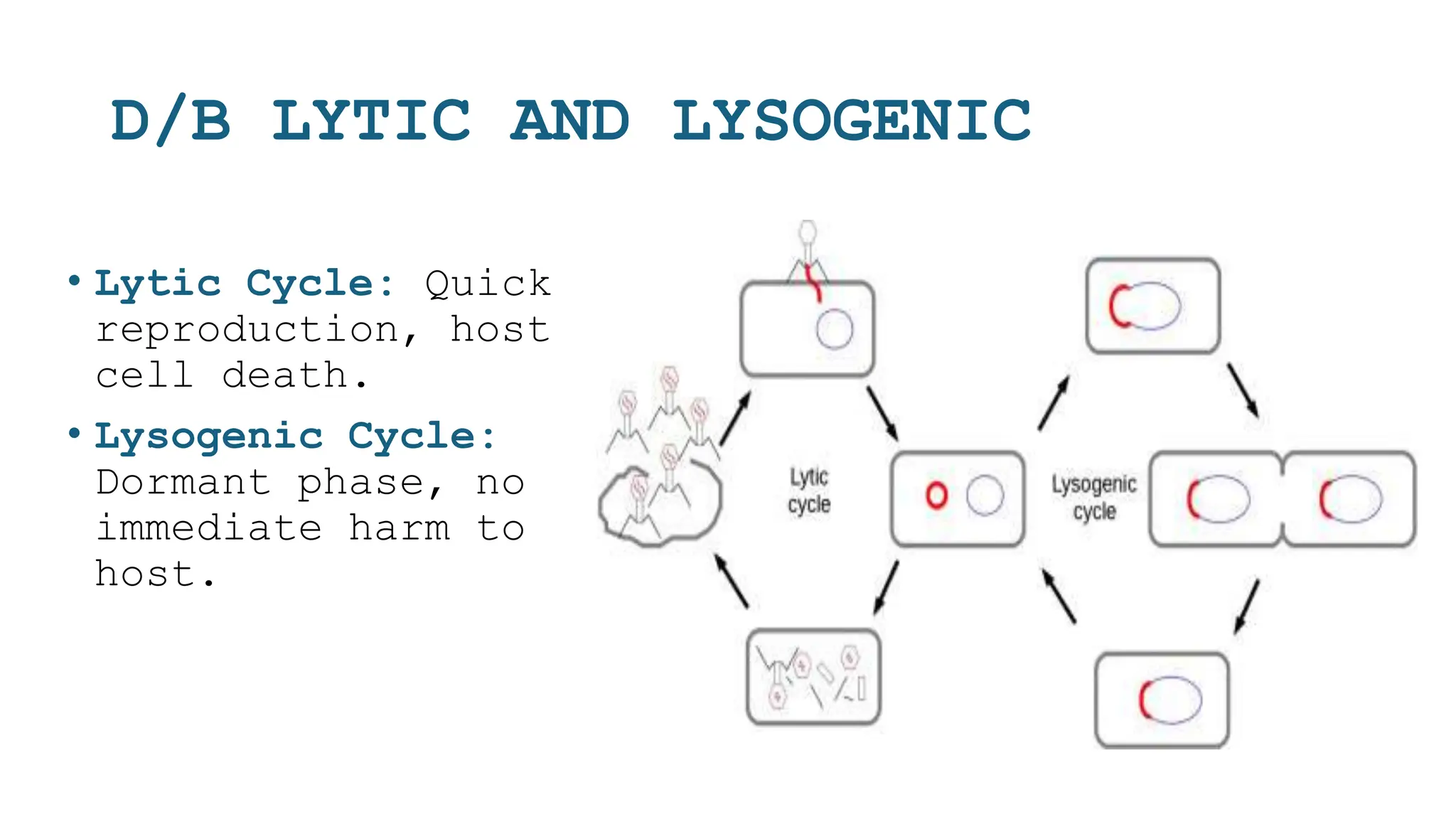
D/B LYTIC AND LYSOGENIC
• Lytic Cycle: Quick
reproduction, host
cell death.
• Lysogenic Cycle:
Dormant phase, no
immediate harm to
host.
Presentation (7).pptx forestry...........

Presentation (7).pptx forestry...........

  • 1.
    BACTERIOPHAGE LYTIC AND LYSOGENIC CYCLE Understandingthe viral life cycles in bacteria By: YAZHINI RAJ P.M.
  • 2.
    BACTERIOPHAGE DEFINITION: A bacteriophage, orphage, is a type of virus that specifically infects and replicates within bacteria.
  • 3.
    STRUCTURE Head (Capsid): Containsthe phage's genetic material (DNA or RNA). Tail: A sheath-like structure attached to the head. Acts as a conduct for injecting genetic material into the host bacterium. Base Plate: Located at the end of the tail. Facilitates attachment to the bacterial surface. Tail Fibers: Extend from the base plate.Help in recognizing and binding to specific receptors on the
  • 4.
    LYTIC CYCLE • Definition: Aprocess where the phage replicates and lyses the host cell. • Steps: • Attachment • Penetration • Biosynthesis • Maturation • Lysis
  • 5.
    STEPS: • Attachment: Phageattaches to specific receptors on the bacterial surface. • Penetration: Phage injects its DNA into the host cell. • Biosynthesis: Phage DNA replicates and phage proteins are synthesized. • Assembly: New phage particles are assembled. • Release: Host cell bursts, releasing new phages.
  • 7.
    LYSOGENIC CYCLE: • Definition:A process where the phage DNA integrates into the host genome and replicates with it without killing the host. • Steps: • Attachment • Penetration • Integration • Prophage Replication • Induction (trigger to enter lytic cycle)
  • 8.
    STEPS: • Attachment: Phageattaches to the bacterial cell. • Penetration: Phage injects its DNA into the host. • Integration: Phage DNA integrates into the bacterial chromosome, becoming a prophage. • Prophage Replication: Prophage replicates along with the bacterial DNA. • Induction: Under stress conditions, prophage can excise from the genome and enter the lytic cycle.
  • 10.
    D/B LYTIC ANDLYSOGENIC • Lytic Cycle: Quick reproduction, host cell death. • Lysogenic Cycle: Dormant phase, no immediate harm to host.