

Computer Network
Syllabus of Networking in
Gate
• Concept of layering. LAN technologies (Ethernet).
• Flow and error control techniques, switching.
• IPv4/IPv6, routers and routing algorithms (distance
vector, link state). TCP/UDP and sockets, congestion
control.
• Application layer protocols (DNS, SMTP, POP, FTP,
HTTP).
• Basics of Wi-Fi. Network security: authentication, basics
of public key and private key cryptography, digital
signatures and certificates, firewalls.
What is Networking
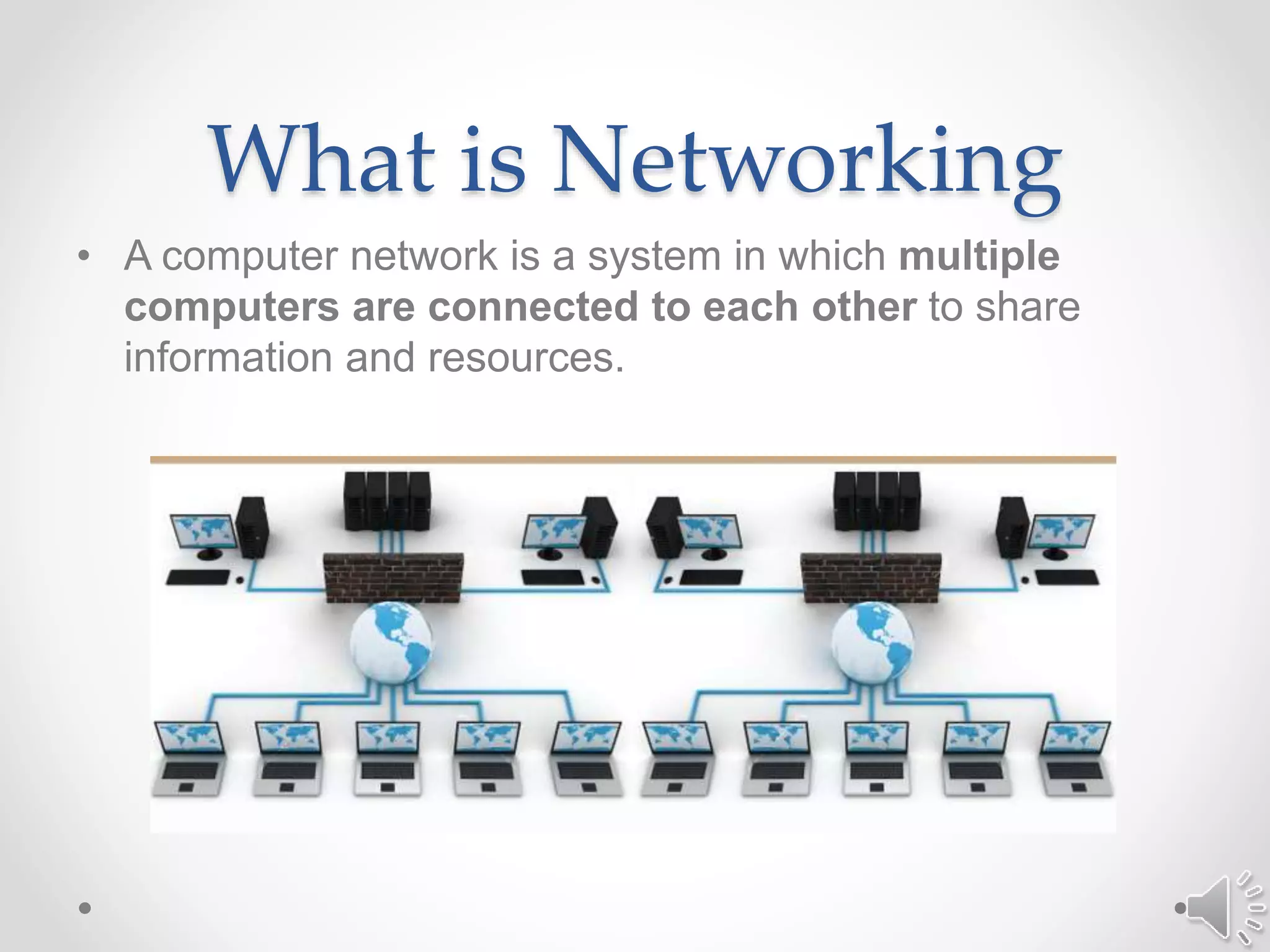
• A computer network is a system in which multiple
computers are connected to each other to share
information and resources.
Types of Network
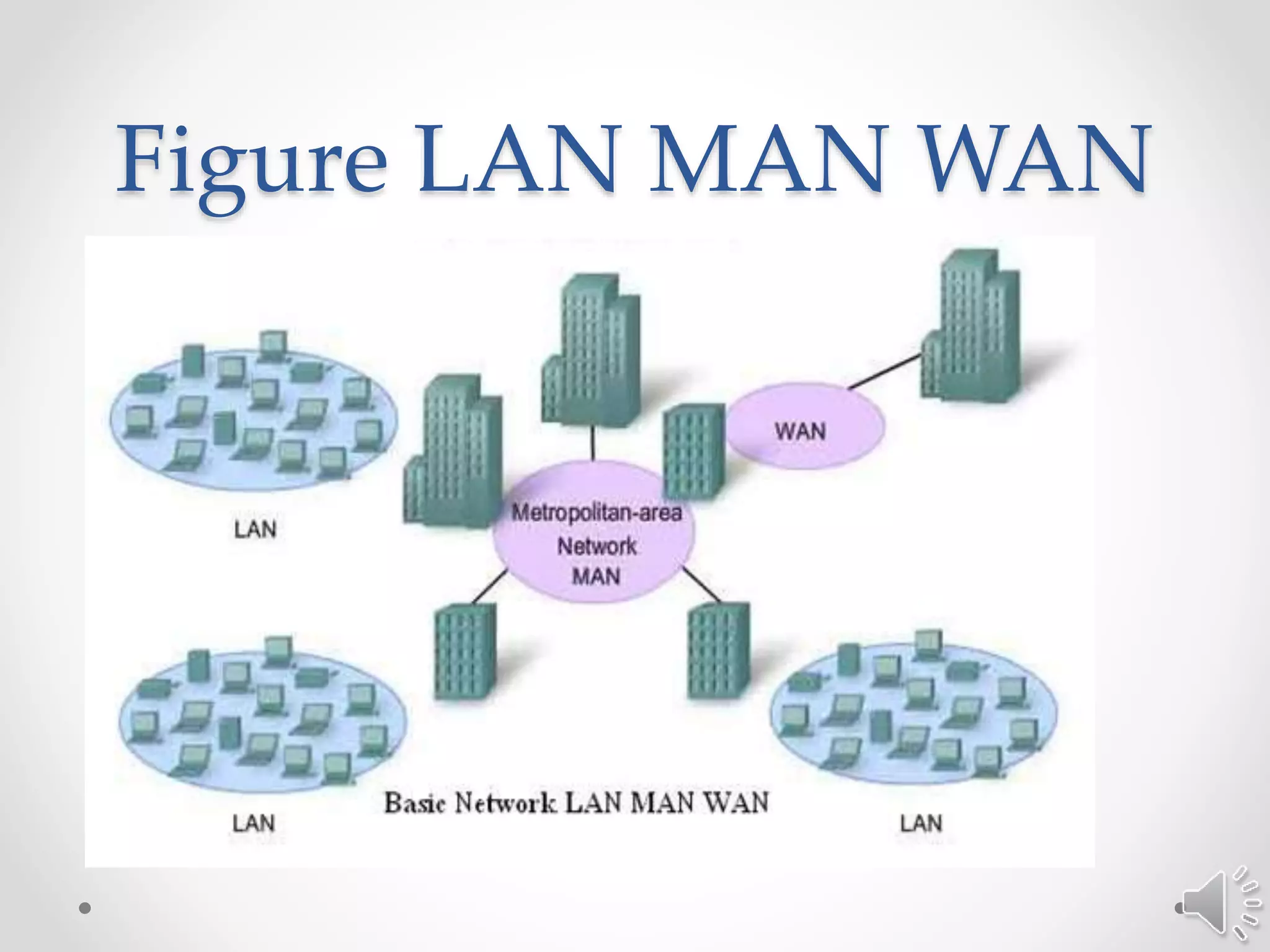
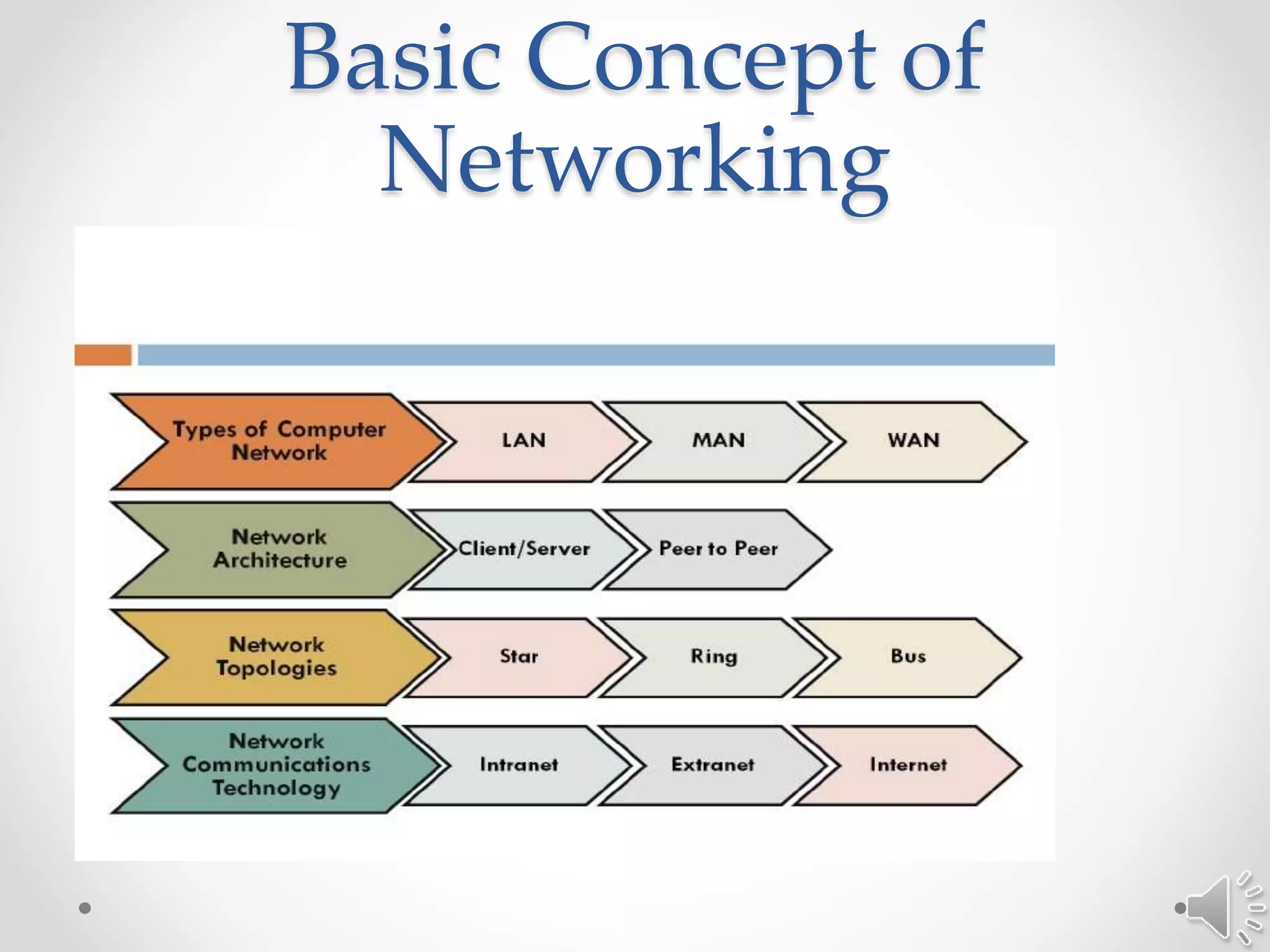
• LAN(Local Area Network)-Point to Point Connection
• MAN(Metropolitan Area Network) -a city, with dedicated
or high performance hardware. )
• WAN(Wide Area Network)-A WAN is geographically
dispersed collection of LANs.
Figure LAN MAN WAN
Basic Concept of
Networking
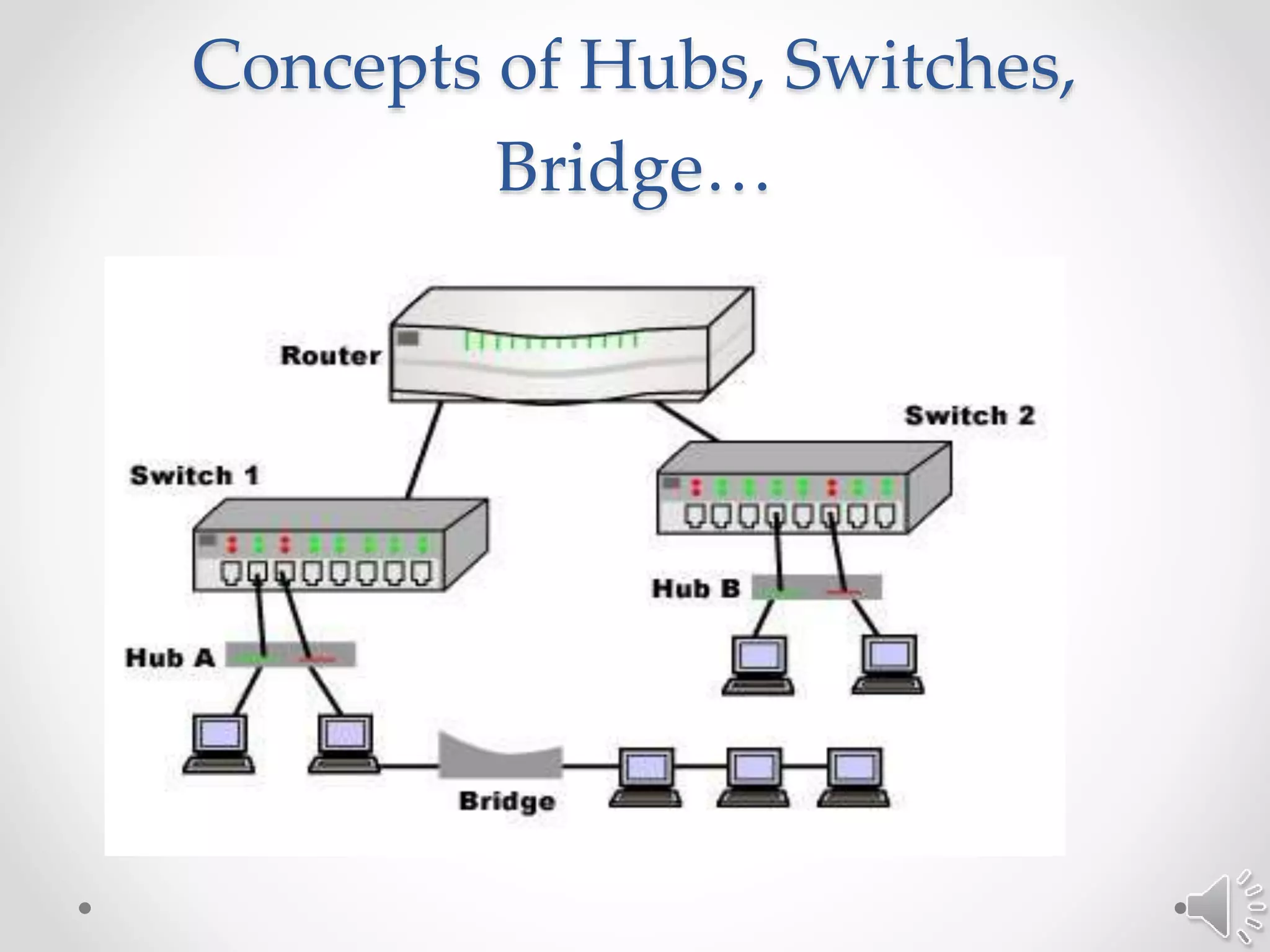
Concepts of Hubs, Switches,
Bridge…
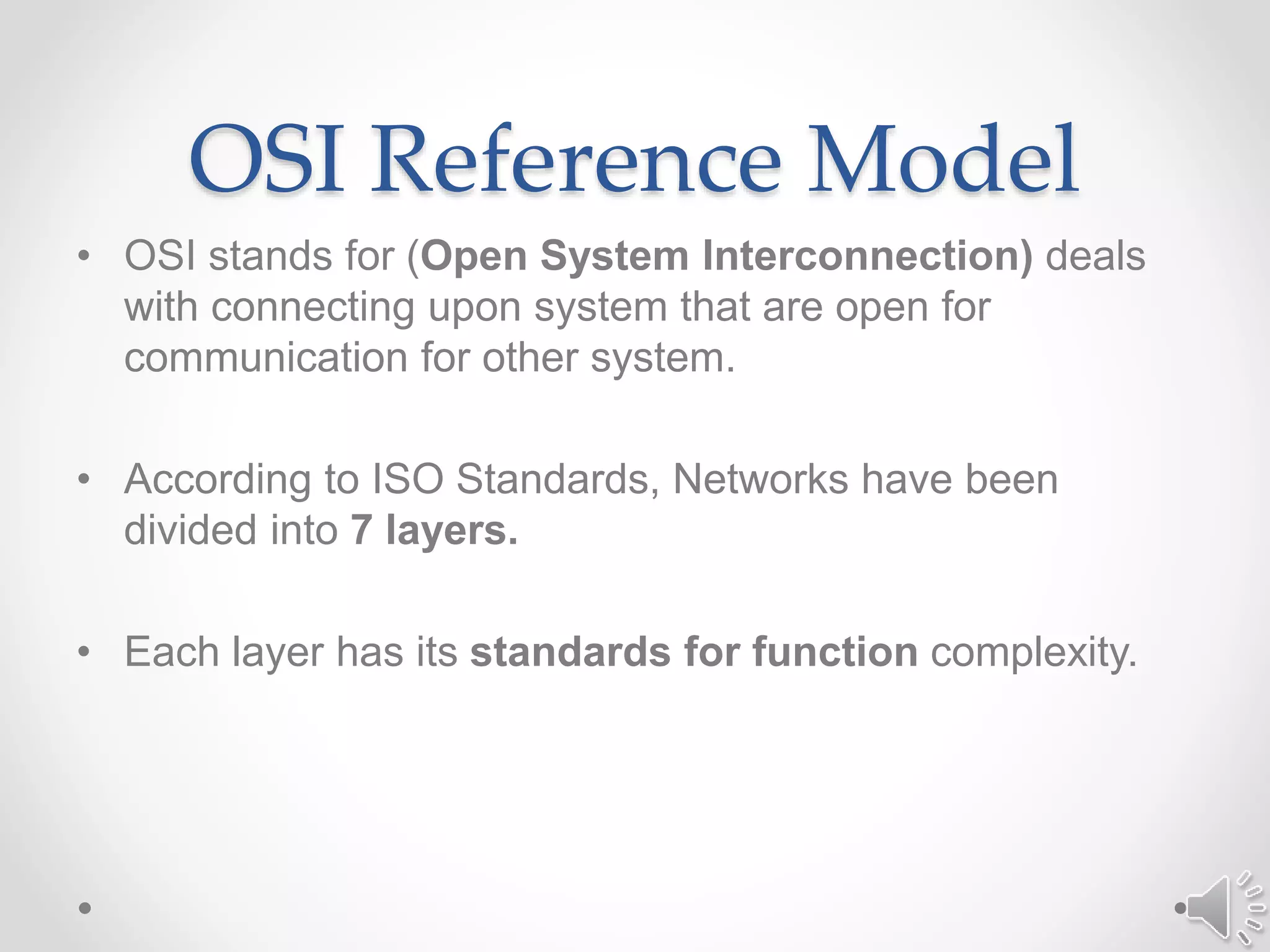
OSI Reference Model
• OSI stands for (Open System Interconnection) deals
with connecting upon system that are open for
communication for other system.
• According to ISO Standards, Networks have been
divided into 7 layers.
• Each layer has its standards for function complexity.
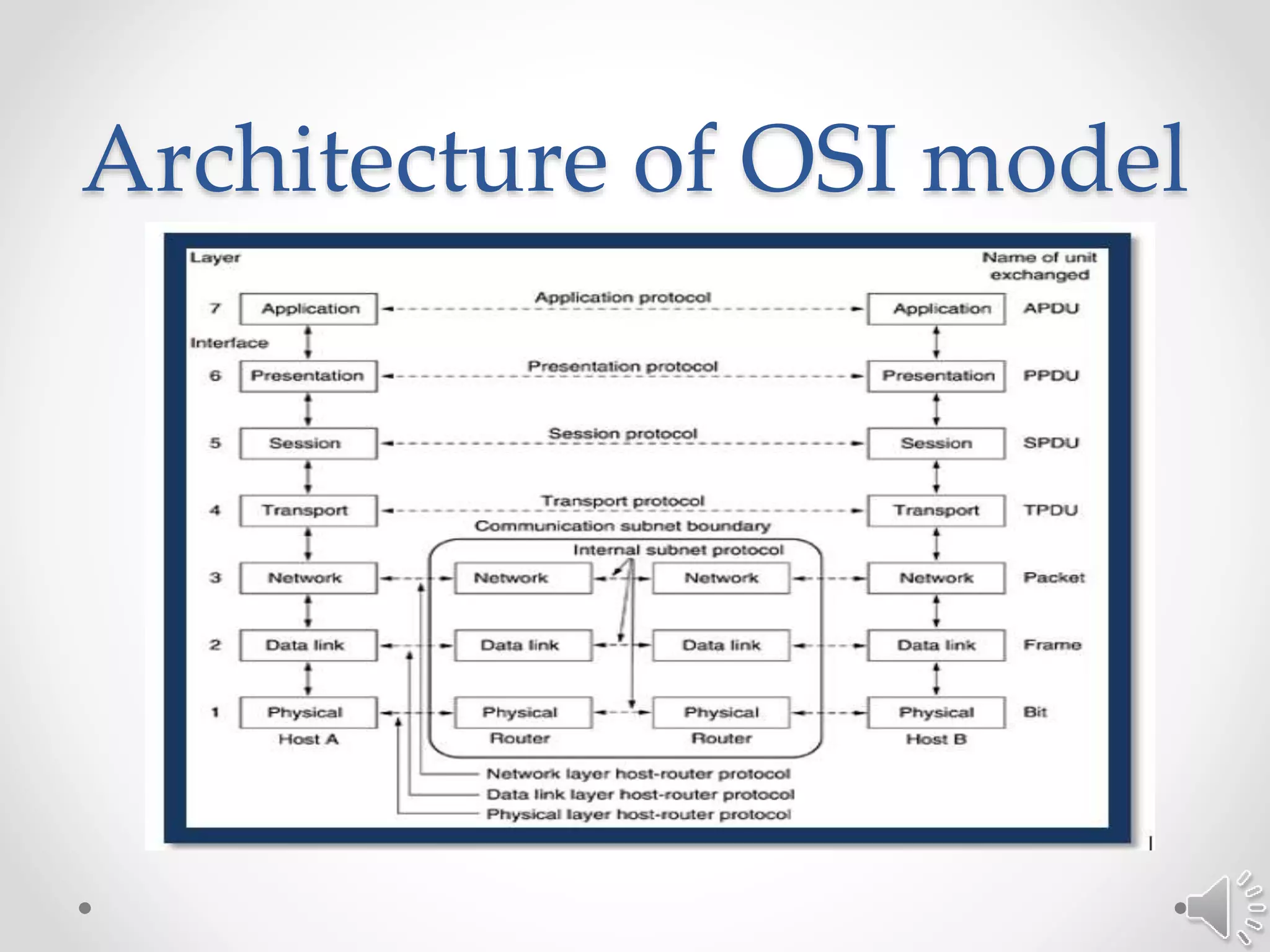
Architecture of OSI model
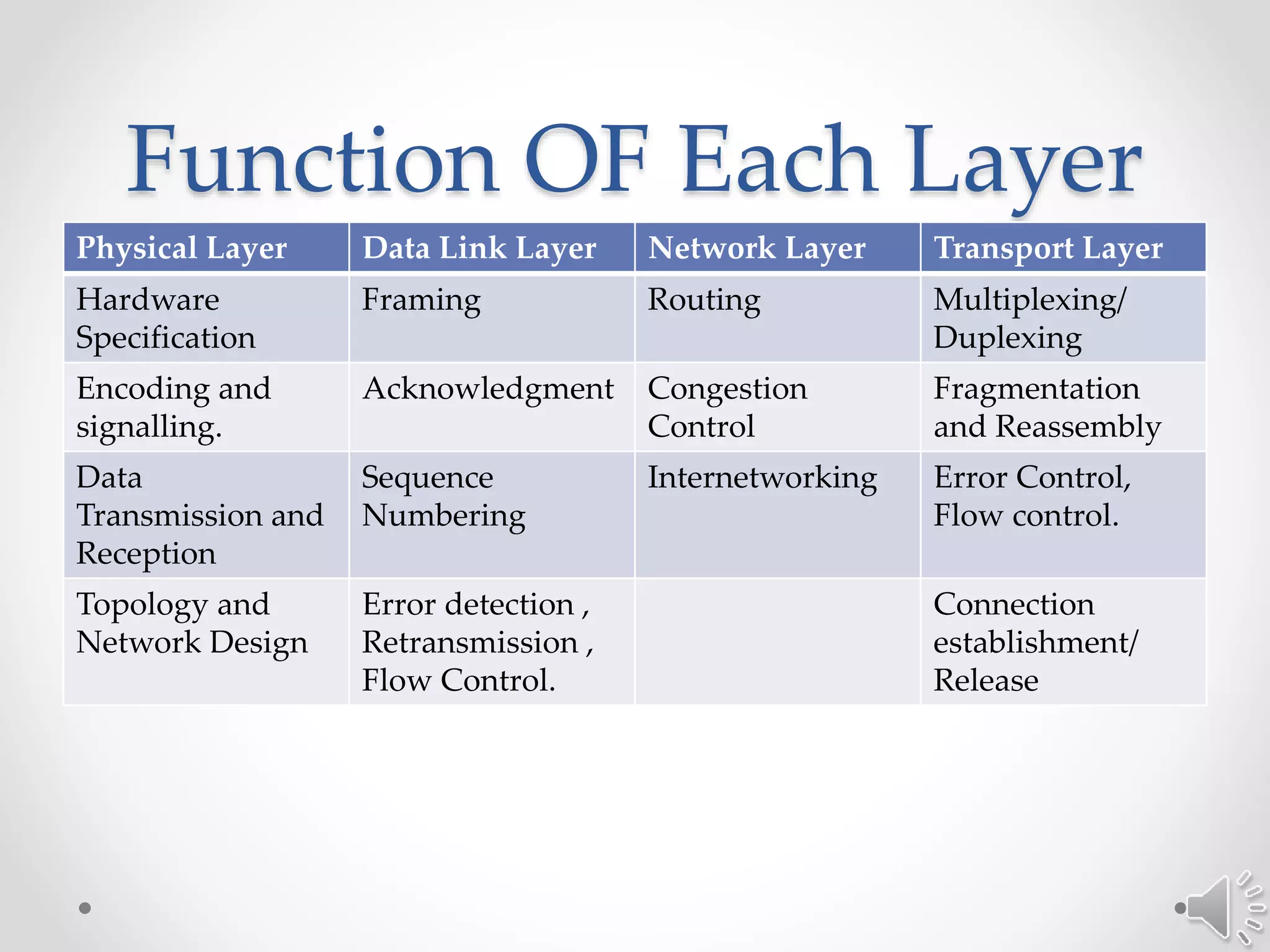
Function OF Each Layer
Physical Layer Data Link Layer Network Layer Transport Layer
Hardware
Specification
Framing Routing Multiplexing/
Duplexing
Encoding and
signalling.
Acknowledgment Congestion
Control
Fragmentation
and Reassembly
Data
Transmission and
Reception
Sequence
Numbering
Internetworking Error Control,
Flow control.
Topology and
Network Design
Error detection ,
Retransmission ,
Flow Control.
Connection
establishment/
Release
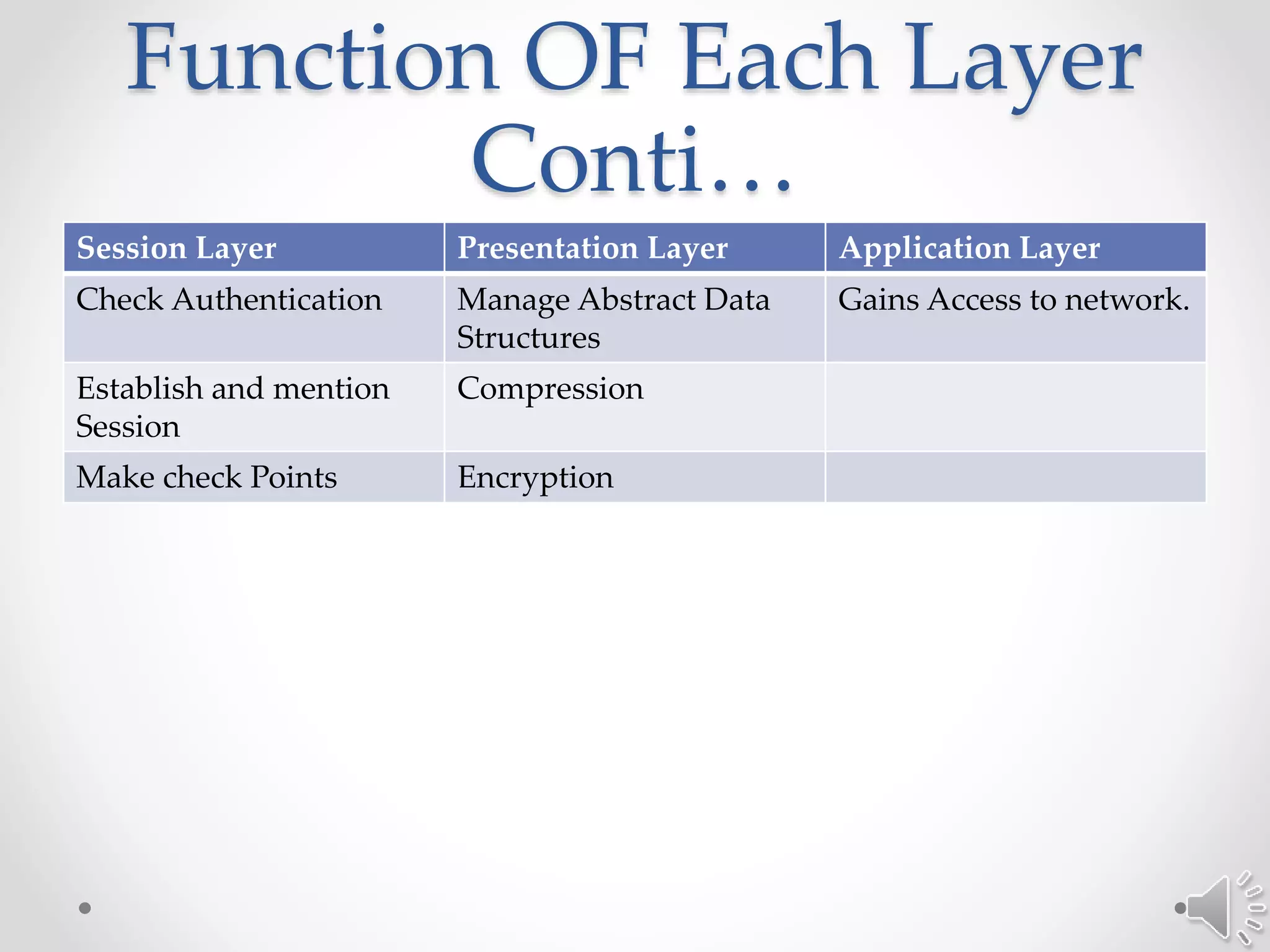
Function OF Each Layer
Conti…
Session Layer Presentation Layer Application Layer
Check Authentication Manage Abstract Data
Structures
Gains Access to network.
Establish and mention
Session
Compression
Make check Points Encryption
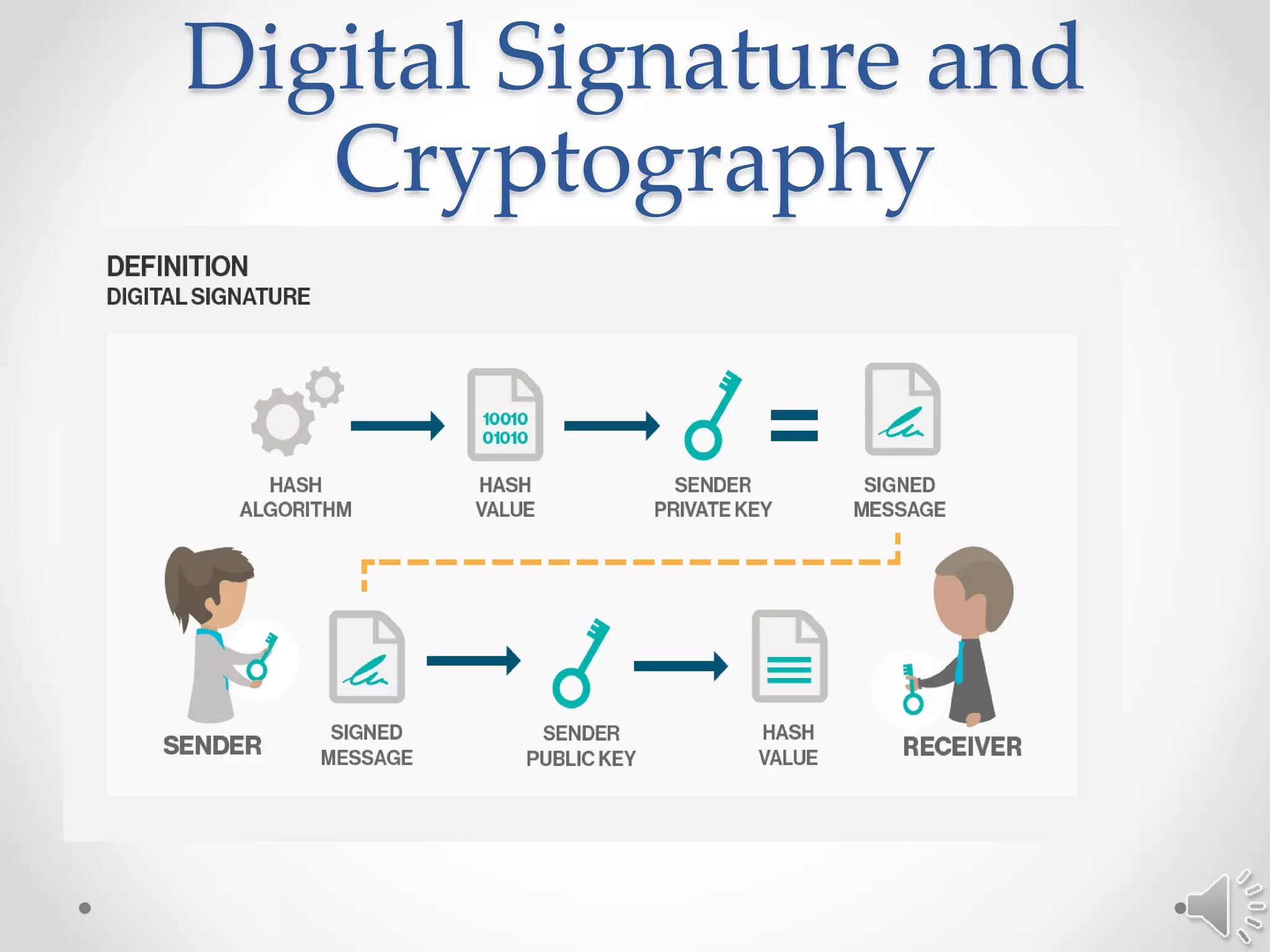
Digital Signature and
Cryptography
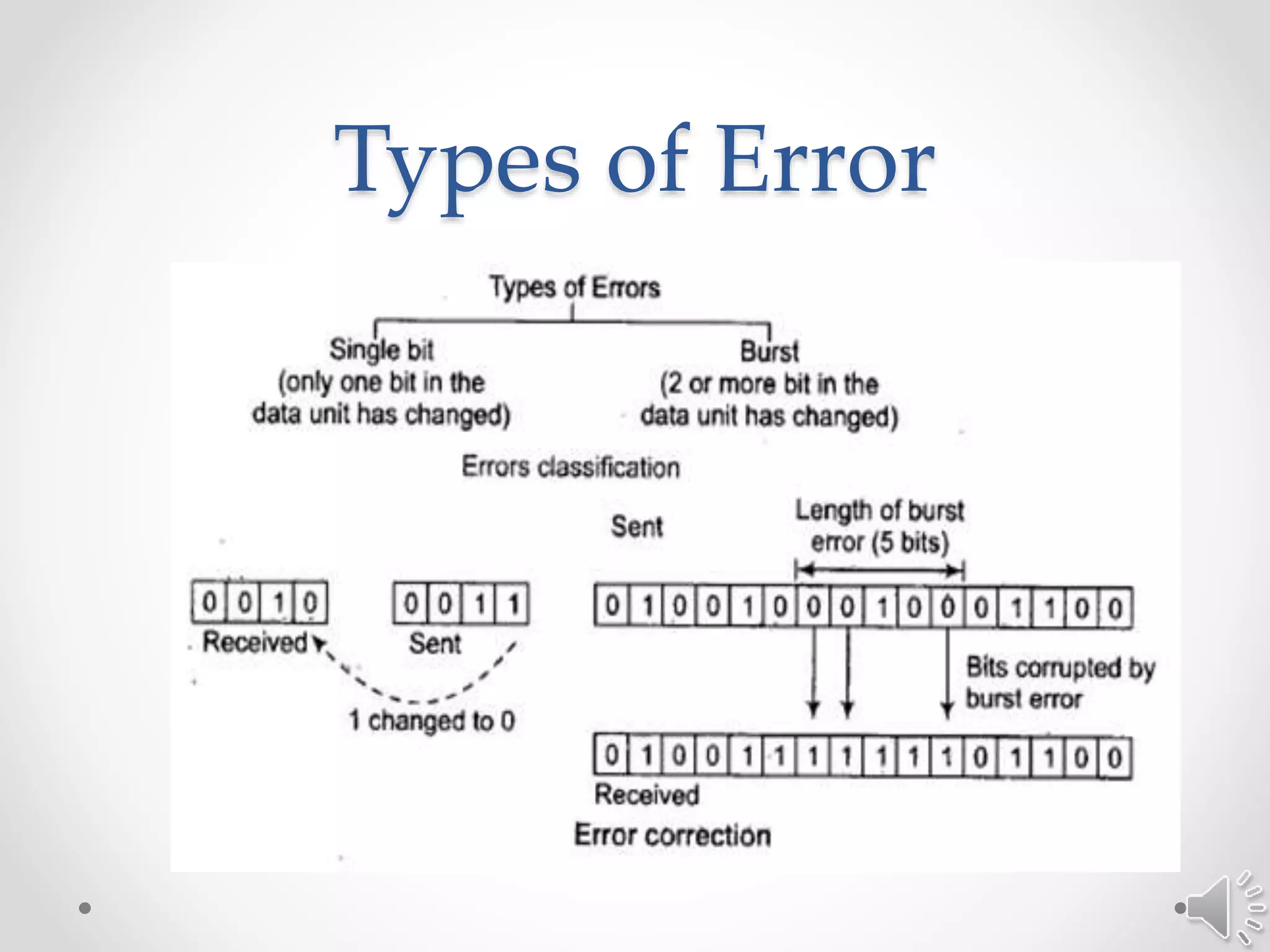
Types of Error
Methods
1.Error Detection
2.Error Correction
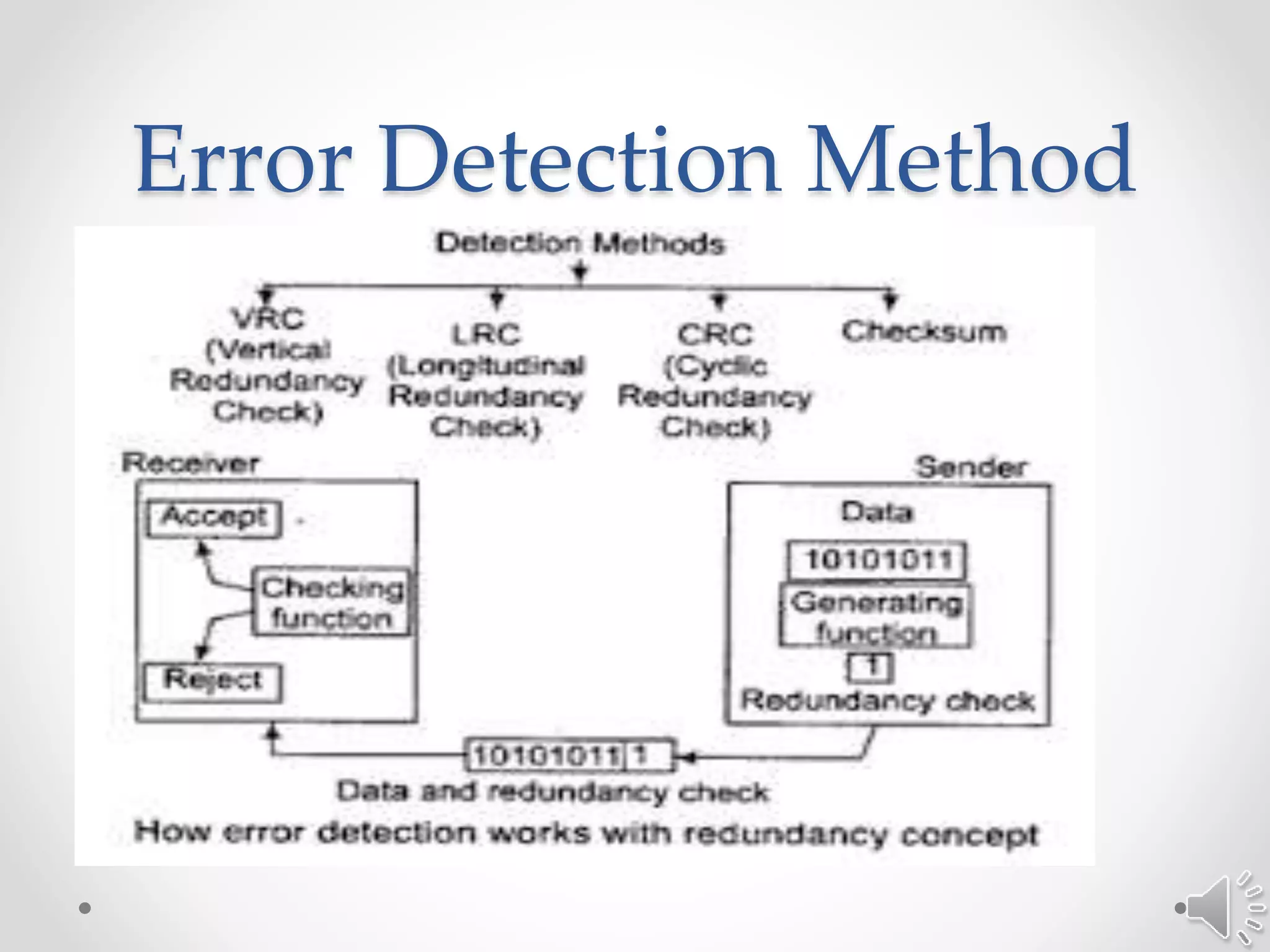
Error Detection Method
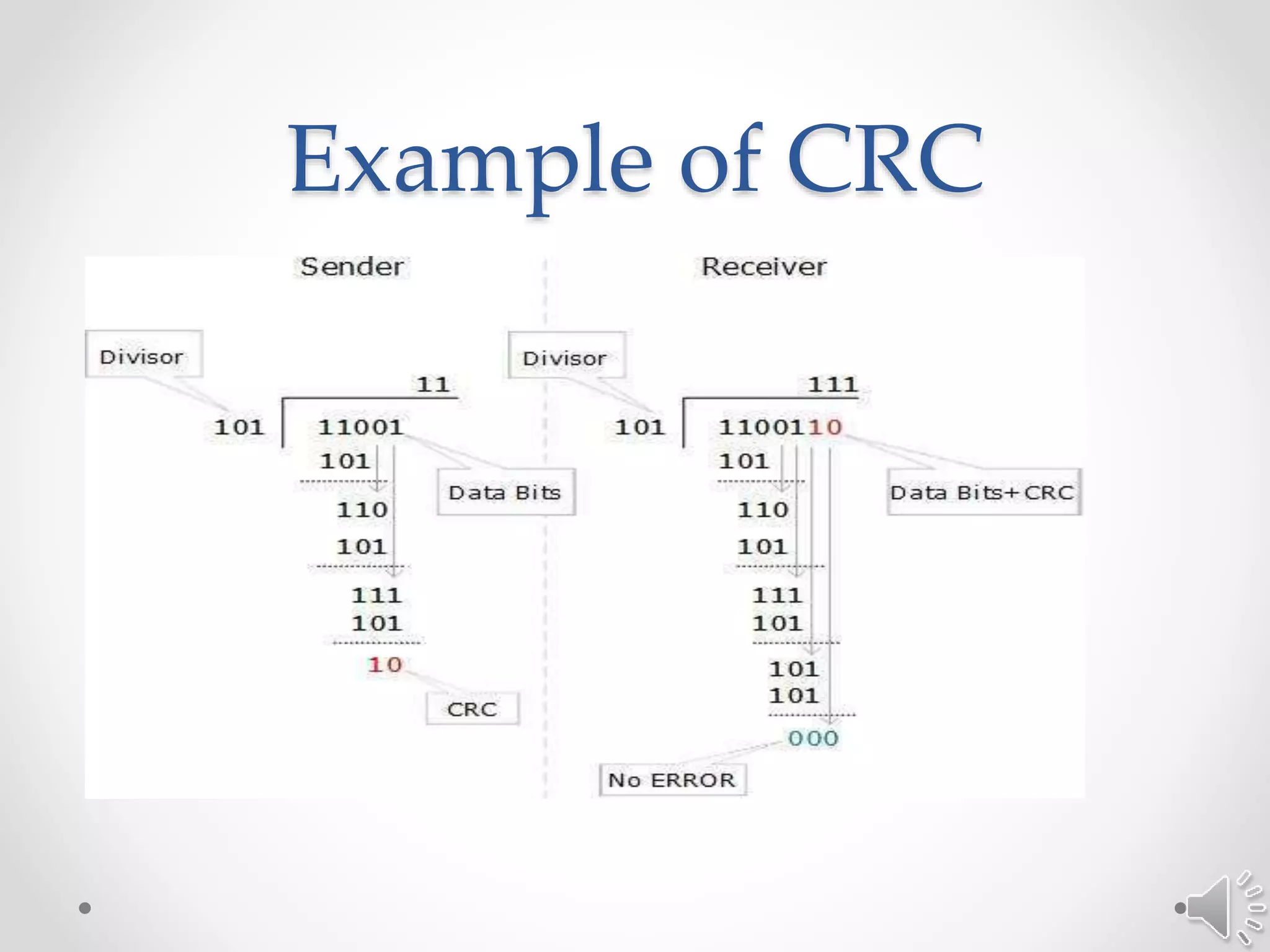
Example of CRC
Error Correction
1. Backward Error Correction
 When the receiver detects an error in the data received, it requests
back the sender to retransmit the data unit
2. Forward Error Correction
 When the receiver detects some error in the data received, it
executes error-correcting code, which helps it to auto-recover
and to correct some kinds of errors.
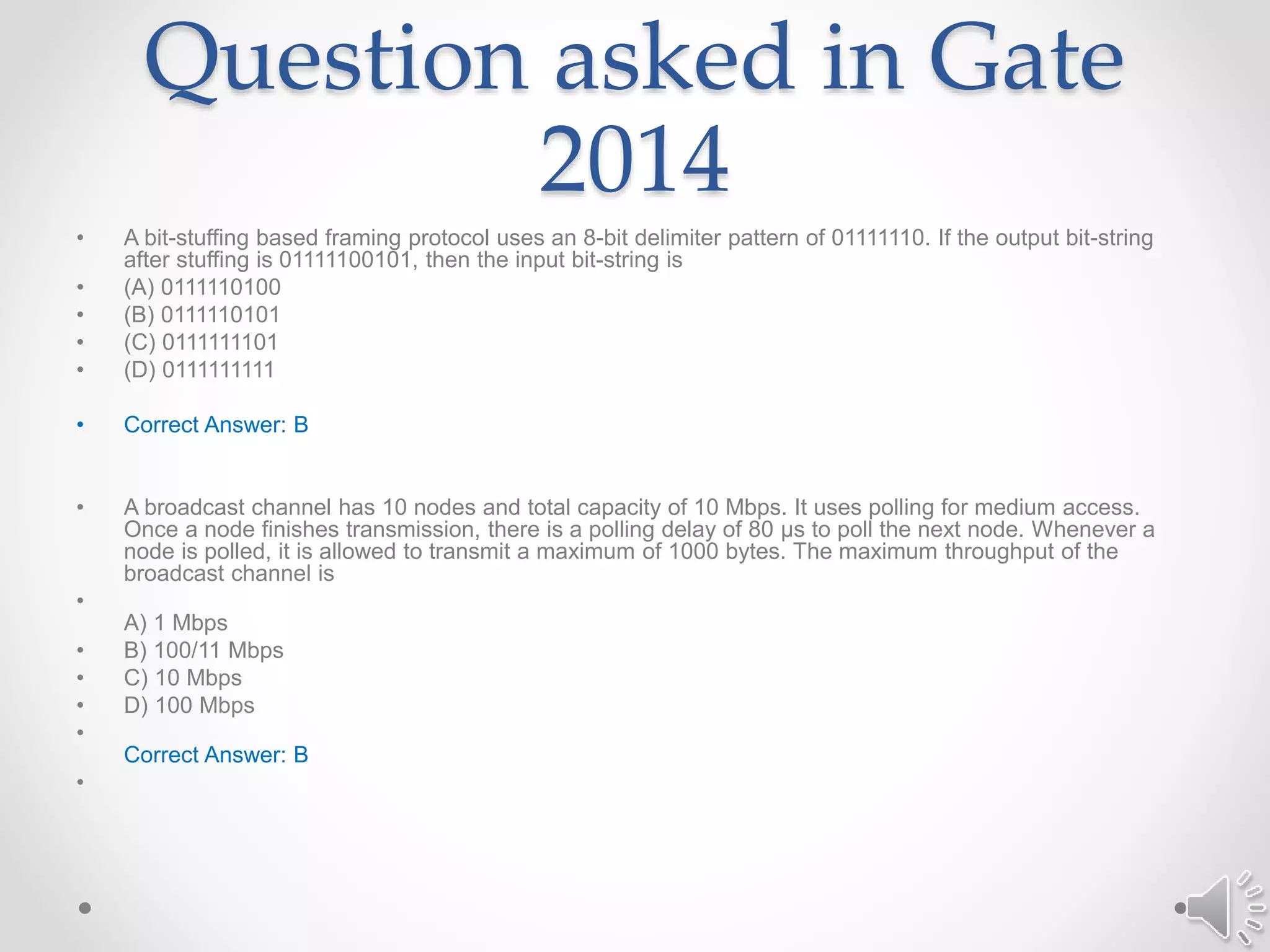
Question asked in Gate
2014
• A bit-stuffing based framing protocol uses an 8-bit delimiter pattern of 01111110. If the output bit-string
after stuffing is 01111100101, then the input bit-string is
• (A) 0111110100
• (B) 0111110101
• (C) 0111111101
• (D) 0111111111
• Correct Answer: B
• A broadcast channel has 10 nodes and total capacity of 10 Mbps. It uses polling for medium access.
Once a node finishes transmission, there is a polling delay of 80 μs to poll the next node. Whenever a
node is polled, it is allowed to transmit a maximum of 1000 bytes. The maximum throughput of the
broadcast channel is
•
A) 1 Mbps
• B) 100/11 Mbps
• C) 10 Mbps
• D) 100 Mbps
•
Correct Answer: B
•
Thank You For
Watching
For More Update Please Like And
Subscribe Our channel.

Computer network

  • 1.
  • 2.
    Syllabus of Networkingin Gate • Concept of layering. LAN technologies (Ethernet). • Flow and error control techniques, switching. • IPv4/IPv6, routers and routing algorithms (distance vector, link state). TCP/UDP and sockets, congestion control. • Application layer protocols (DNS, SMTP, POP, FTP, HTTP). • Basics of Wi-Fi. Network security: authentication, basics of public key and private key cryptography, digital signatures and certificates, firewalls.
  • 3.
    What is Networking •A computer network is a system in which multiple computers are connected to each other to share information and resources.
  • 4.
    Types of Network •LAN(Local Area Network)-Point to Point Connection • MAN(Metropolitan Area Network) -a city, with dedicated or high performance hardware. ) • WAN(Wide Area Network)-A WAN is geographically dispersed collection of LANs.
  • 5.
  • 6.
  • 7.
    Concepts of Hubs,Switches, Bridge…
  • 8.
    OSI Reference Model •OSI stands for (Open System Interconnection) deals with connecting upon system that are open for communication for other system. • According to ISO Standards, Networks have been divided into 7 layers. • Each layer has its standards for function complexity.
  • 9.
  • 10.
    Function OF EachLayer Physical Layer Data Link Layer Network Layer Transport Layer Hardware Specification Framing Routing Multiplexing/ Duplexing Encoding and signalling. Acknowledgment Congestion Control Fragmentation and Reassembly Data Transmission and Reception Sequence Numbering Internetworking Error Control, Flow control. Topology and Network Design Error detection , Retransmission , Flow Control. Connection establishment/ Release
  • 11.
    Function OF EachLayer Conti… Session Layer Presentation Layer Application Layer Check Authentication Manage Abstract Data Structures Gains Access to network. Establish and mention Session Compression Make check Points Encryption
  • 12.
  • 13.
  • 14.
  • 15.
  • 16.
  • 17.
    Error Correction 1. BackwardError Correction  When the receiver detects an error in the data received, it requests back the sender to retransmit the data unit 2. Forward Error Correction  When the receiver detects some error in the data received, it executes error-correcting code, which helps it to auto-recover and to correct some kinds of errors.
  • 18.
    Question asked inGate 2014 • A bit-stuffing based framing protocol uses an 8-bit delimiter pattern of 01111110. If the output bit-string after stuffing is 01111100101, then the input bit-string is • (A) 0111110100 • (B) 0111110101 • (C) 0111111101 • (D) 0111111111 • Correct Answer: B • A broadcast channel has 10 nodes and total capacity of 10 Mbps. It uses polling for medium access. Once a node finishes transmission, there is a polling delay of 80 μs to poll the next node. Whenever a node is polled, it is allowed to transmit a maximum of 1000 bytes. The maximum throughput of the broadcast channel is • A) 1 Mbps • B) 100/11 Mbps • C) 10 Mbps • D) 100 Mbps • Correct Answer: B •
  • 19.
    Thank You For Watching ForMore Update Please Like And Subscribe Our channel.