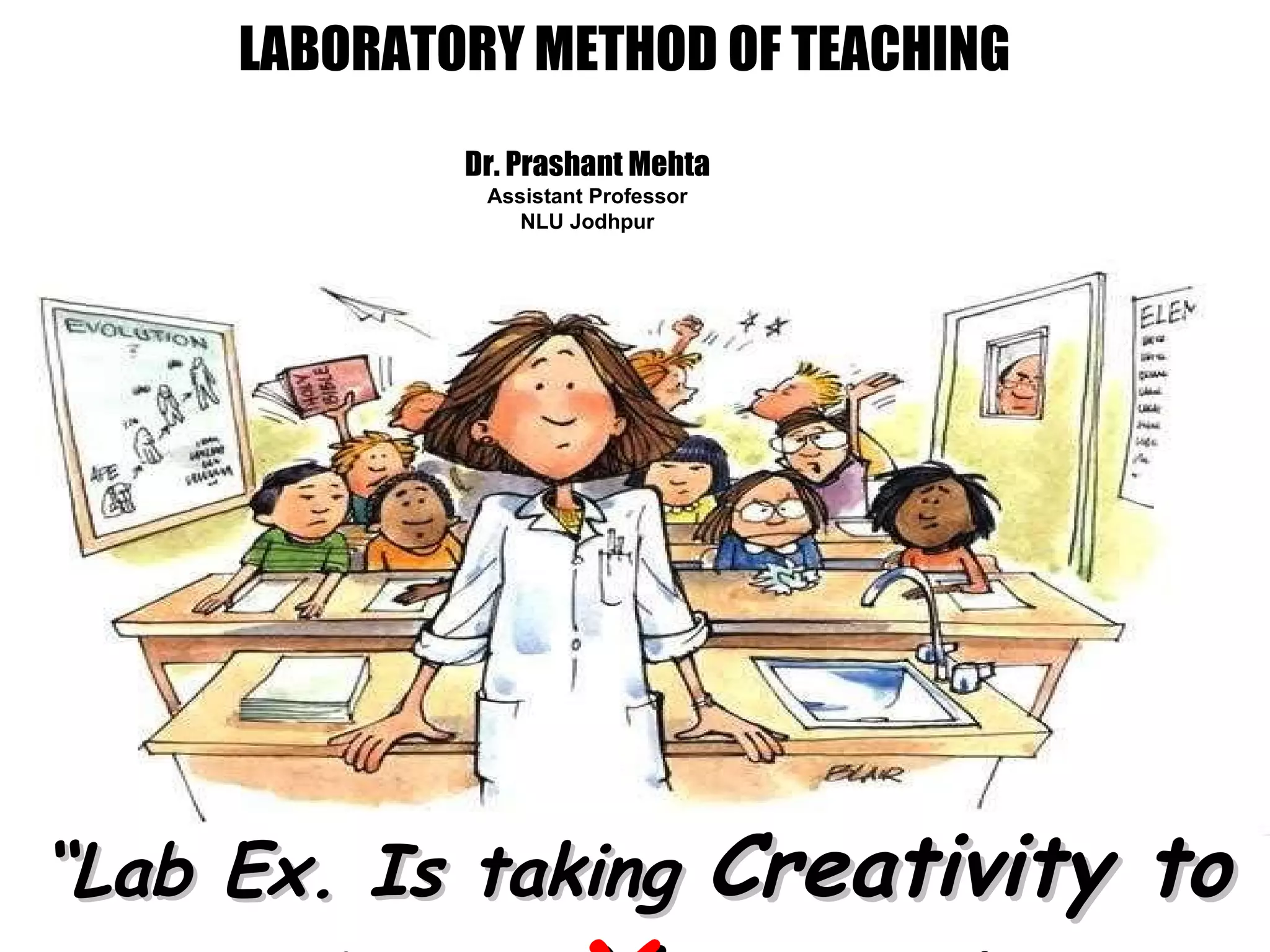
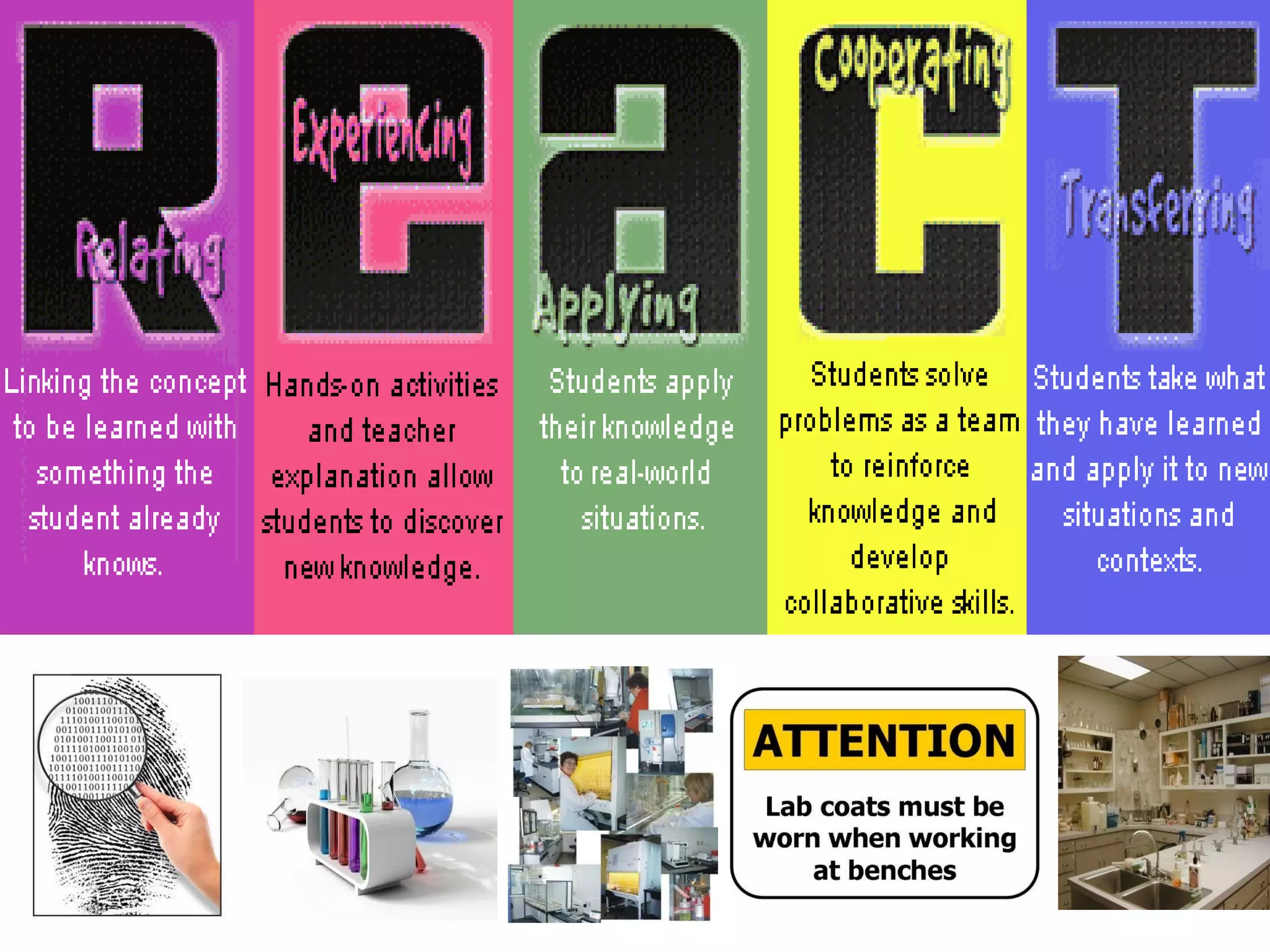
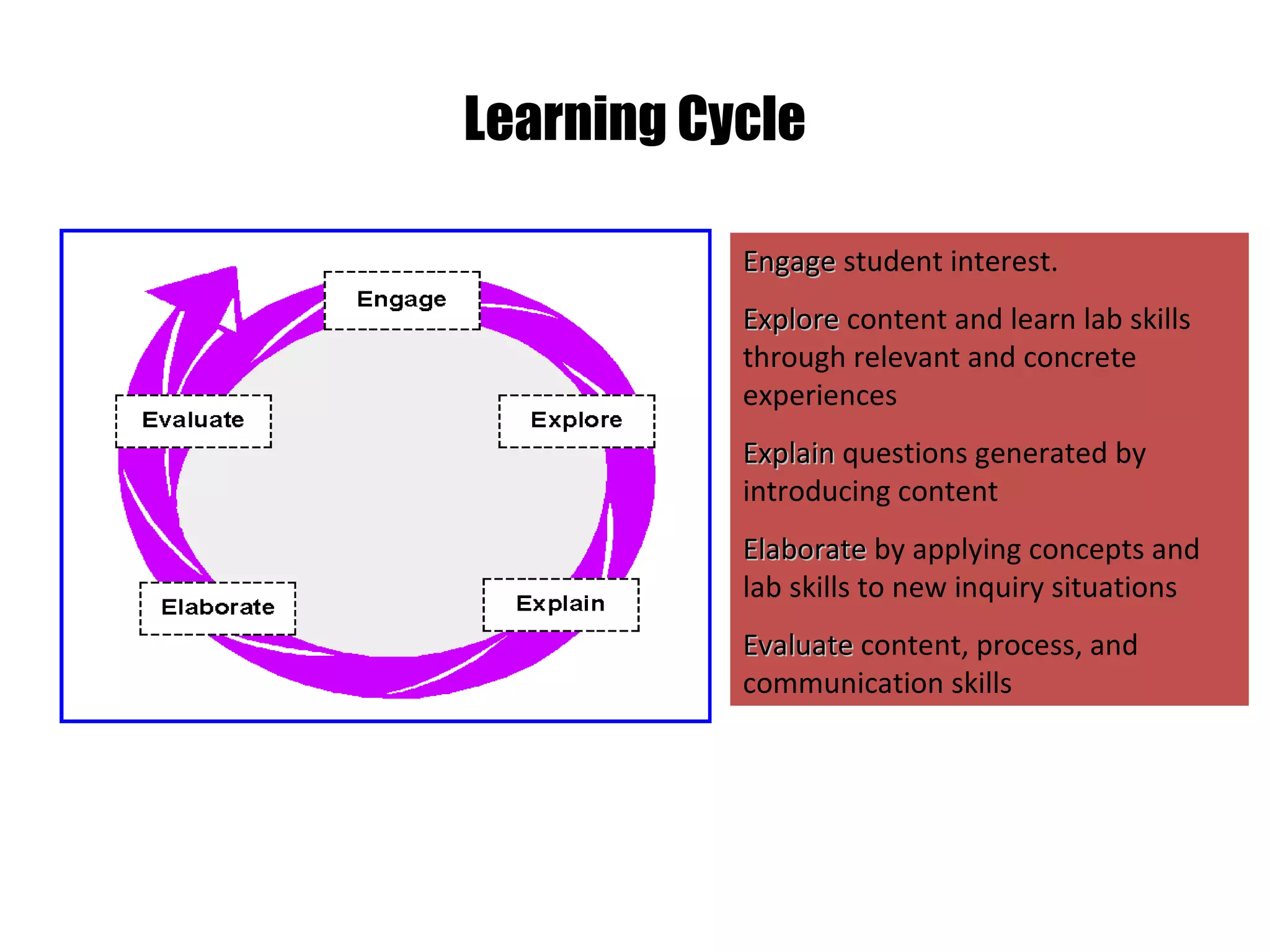
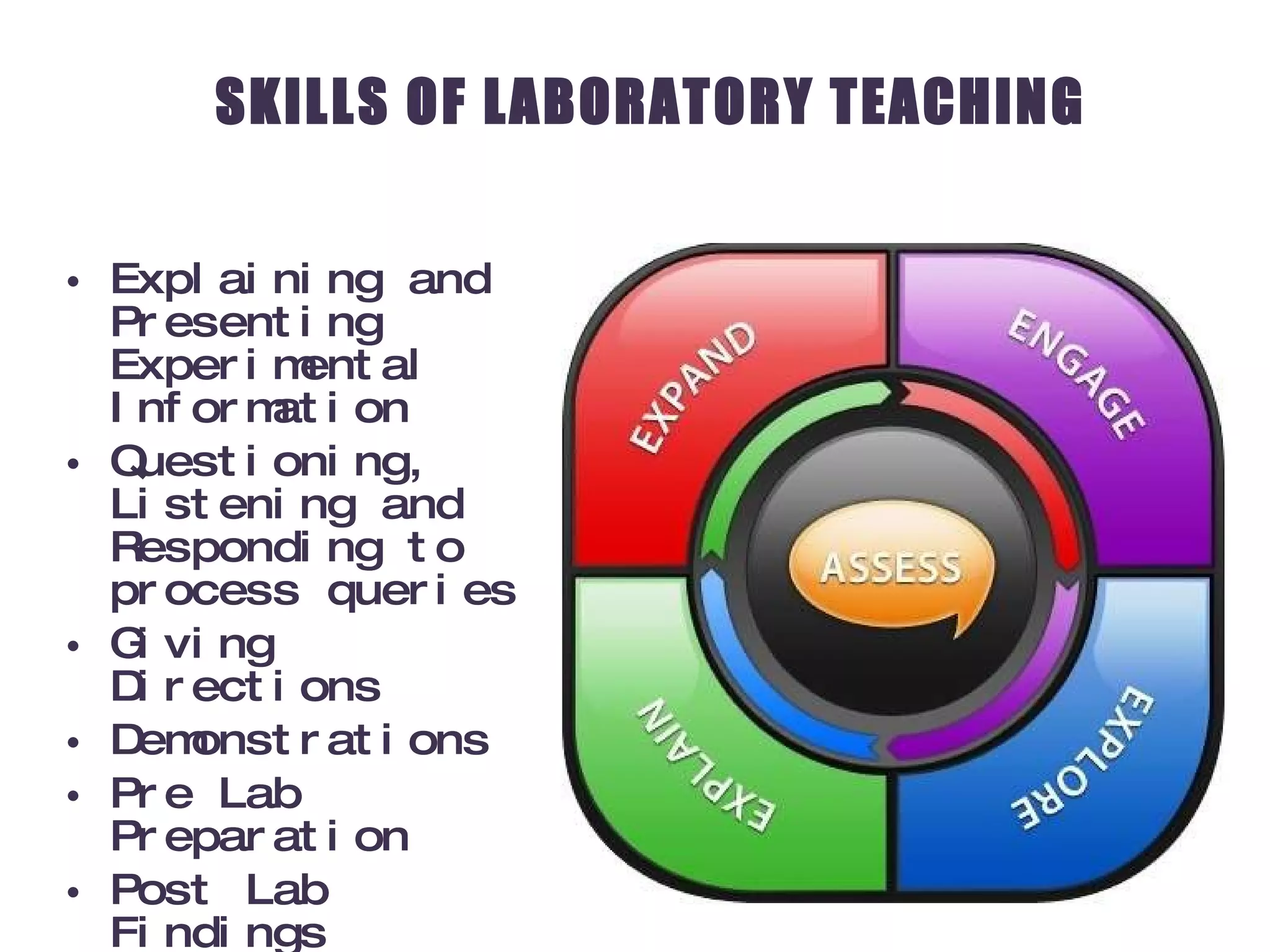
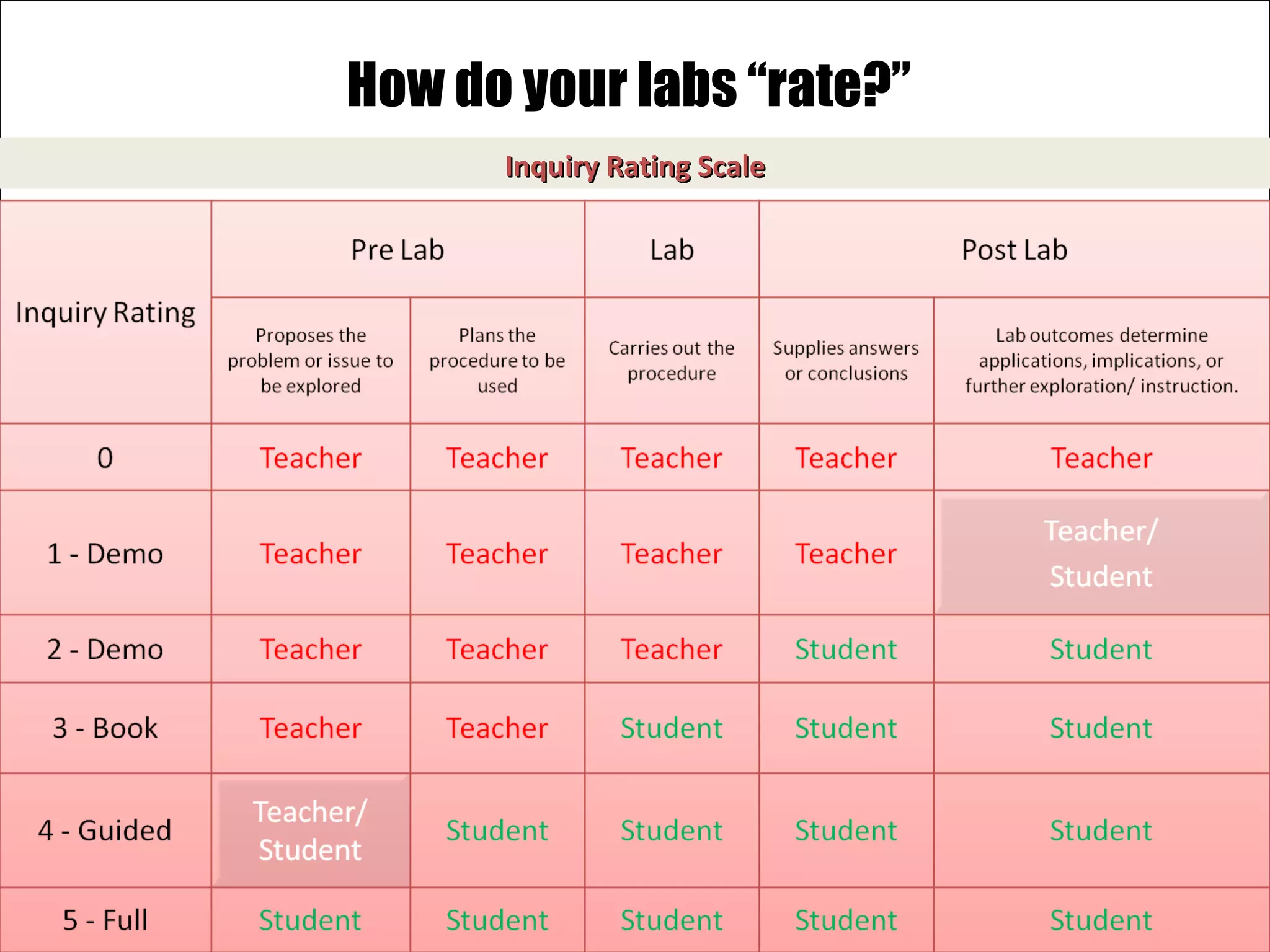
The document discusses the benefits of laboratory and inquiry-based teaching methods. It emphasizes that labs allow students to actively engage in science through hands-on activities rather than just listening to lectures. Effective lab instruction follows a learning cycle of engaging students, allowing them to explore concepts and learn skills, explaining questions generated, having students elaborate on their knowledge, and evaluating their understanding. Labs aim to teach observational and problem-solving skills while nurturing a constructive attitude.
Welcome to the6 Natural Science Oriented Wonders of the World I. Earth Formations Mount Everest The Grand Canyon Ayers Rock Victoria Falls Meteor Craters Great Barrier Reef
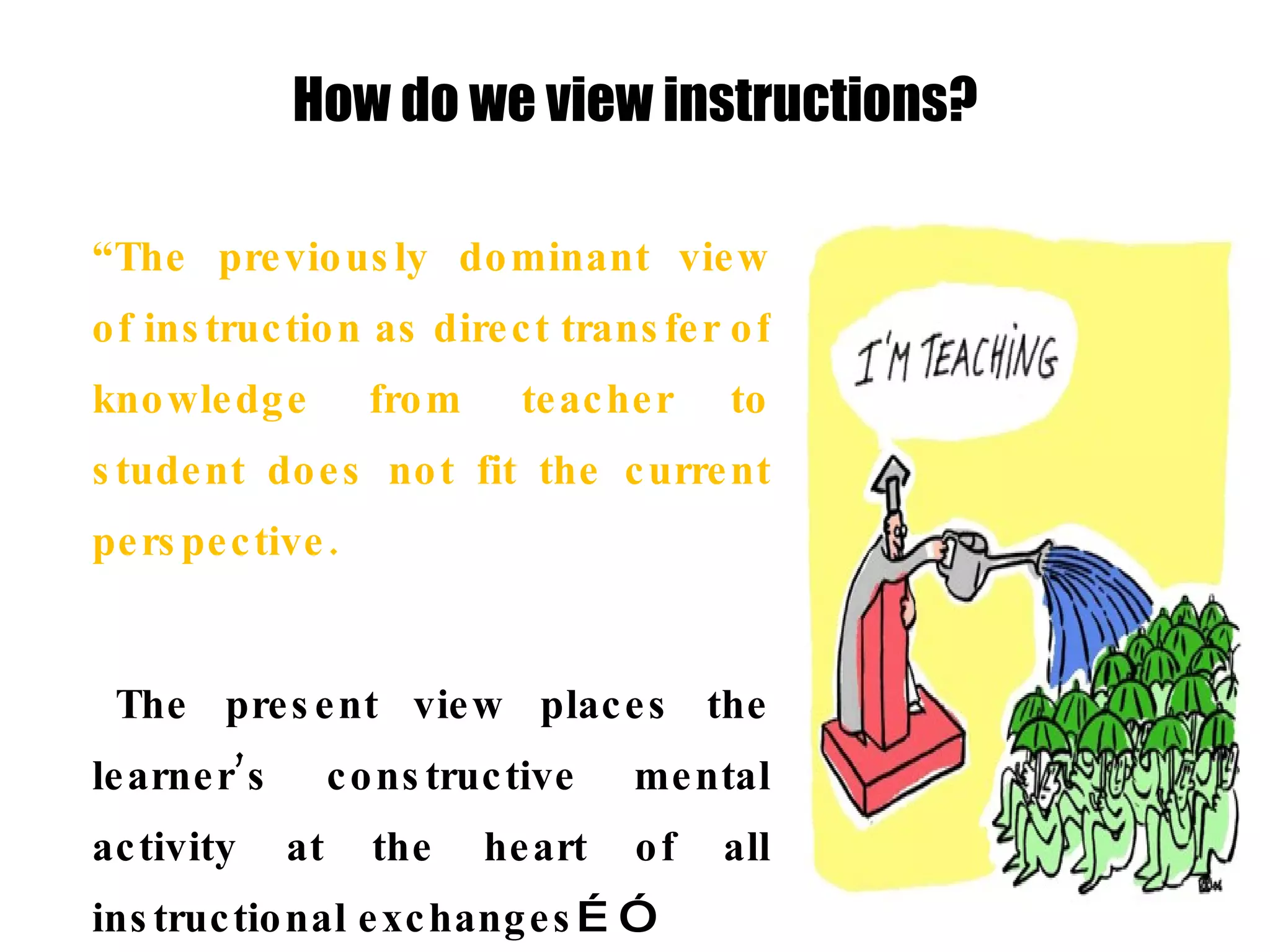
How do weview instructions? “ The previously dominant view of instruction as direct transfer of knowledge from teacher to student does not fit the current perspective. The present view places the learner’s constructive mental activity at the heart of all instructional exchanges …” “… This does not mean that students are left to discover everything for themselves, nor that what they discover and how they choose to describe and account for it are left solely to them …
8.
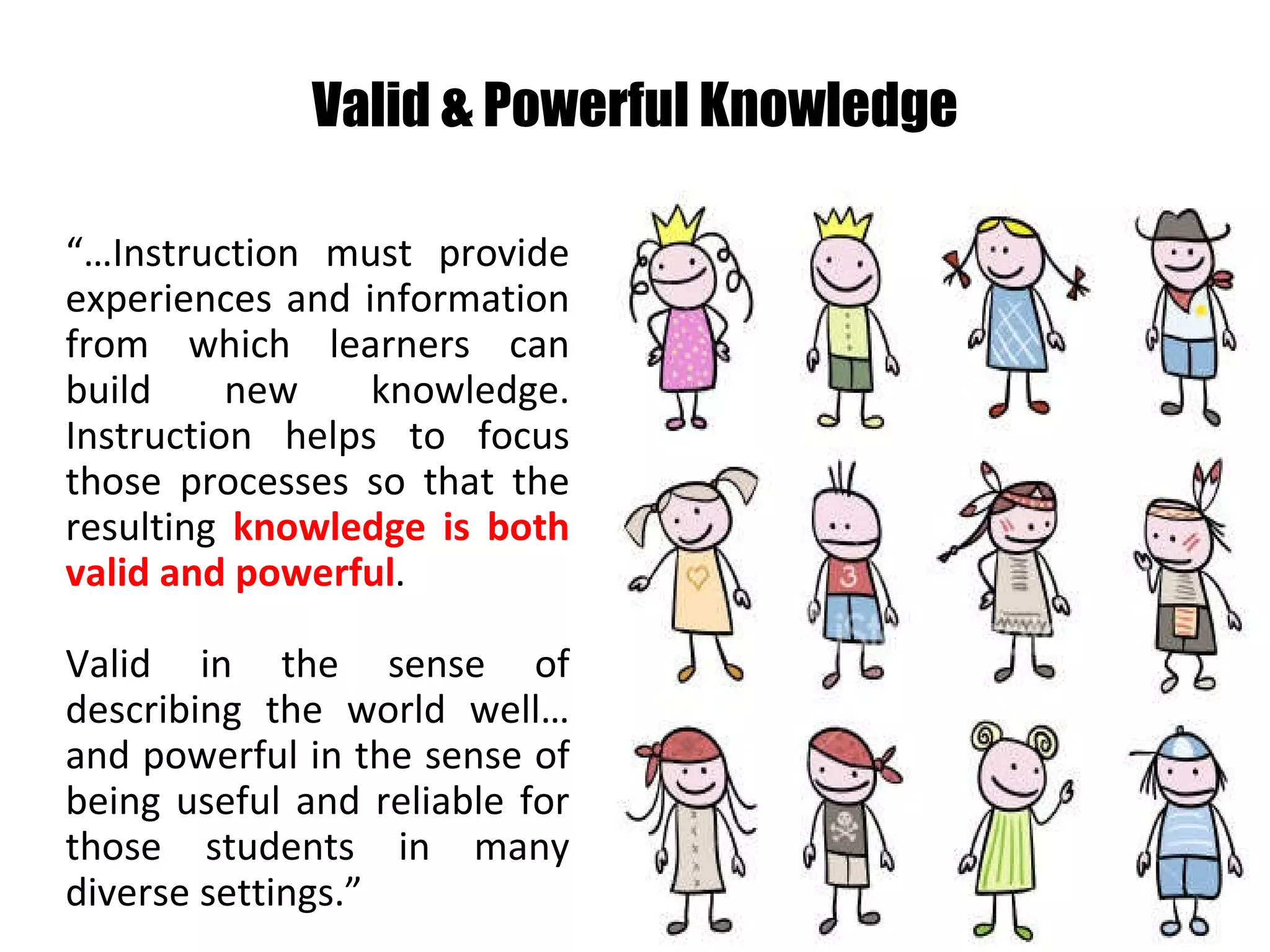
Valid & PowerfulKnowledge “… Instruction must provide experiences and information from which learners can build new knowledge. Instruction helps to focus those processes so that the resulting knowledge is both valid and powerful . Valid in the sense of describing the world well…and powerful in the sense of being useful and reliable for those students in many diverse settings.”
9.
THE PURPOSE OFTHIS SESSION (WHAT’S SO SPECIAL ABOUT TEACHING LABS?) Labs are often the best or only source of INTERACTION for the students Interaction with an instructor (you), with other students, with the subject material itself, or with their prior knowledge and ideas about a topic. Labs/recitations are about actually DOING SCIENCE (or the inquiry activities of your field), not listening to someone talk about it. With a diverse mix of students, this approach has fostered creativity and hands-on learning. Throughout the course students have created innovative interfaces that not only capture fundamental concepts of tangible interaction but also contribute novel techniques for supporting collaborative design.
10.
11.
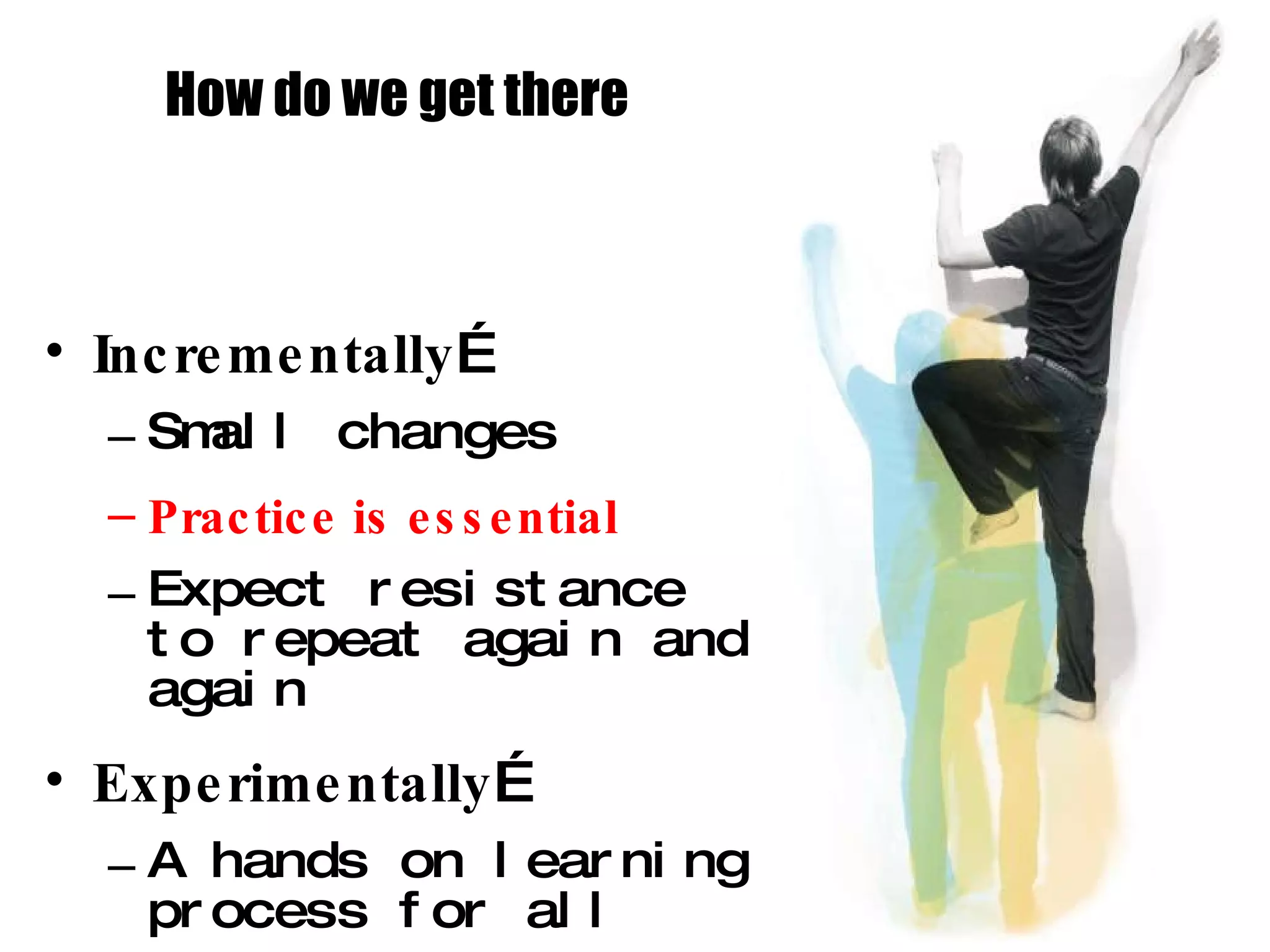
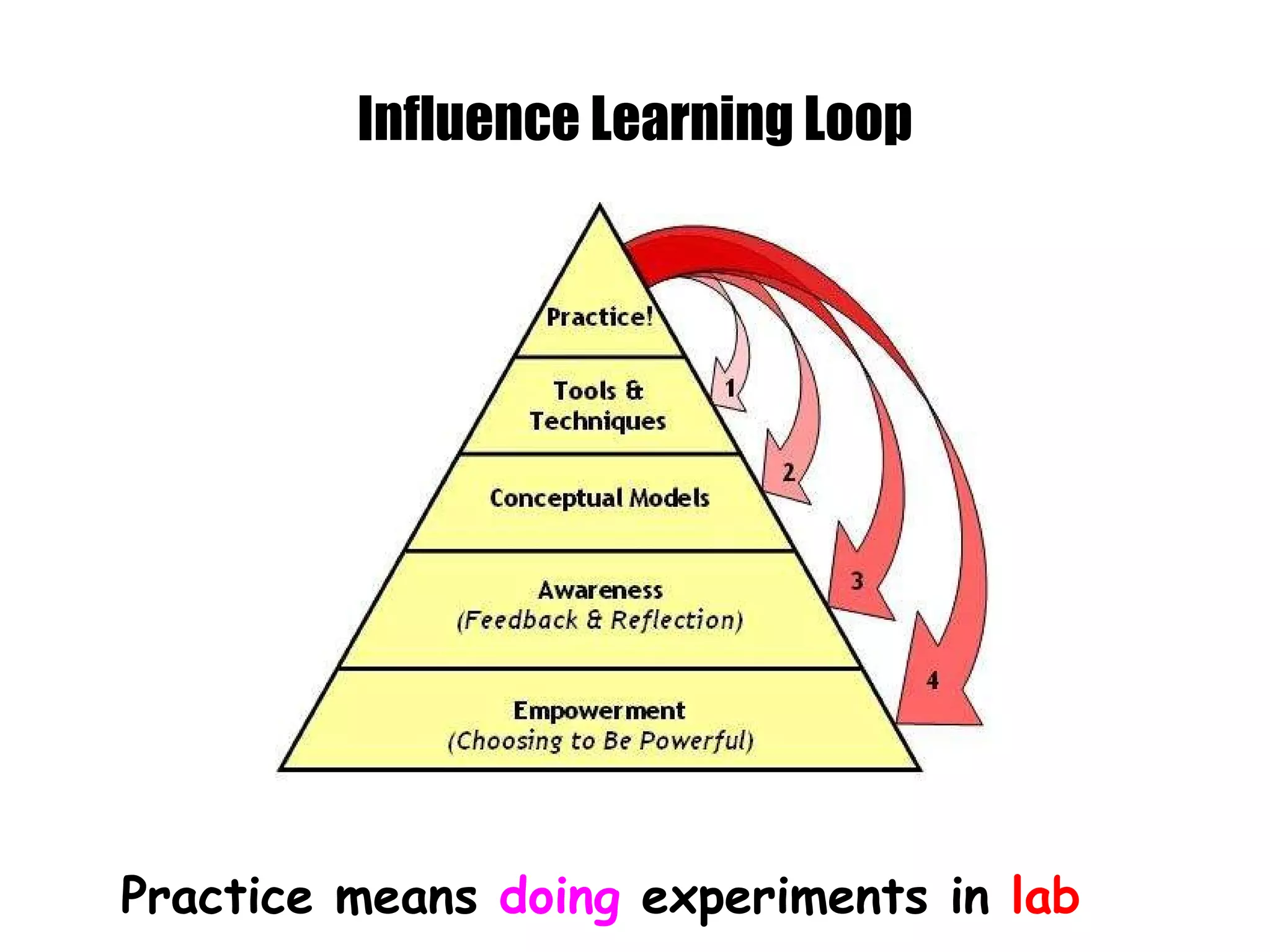
How do weget there Incrementally … Small changes Practice is essential Expect resistance to repeat again and again Experimentally … A hands on learning process for all Some things work well in laboratory setting Most things need “tweaking” adjustments
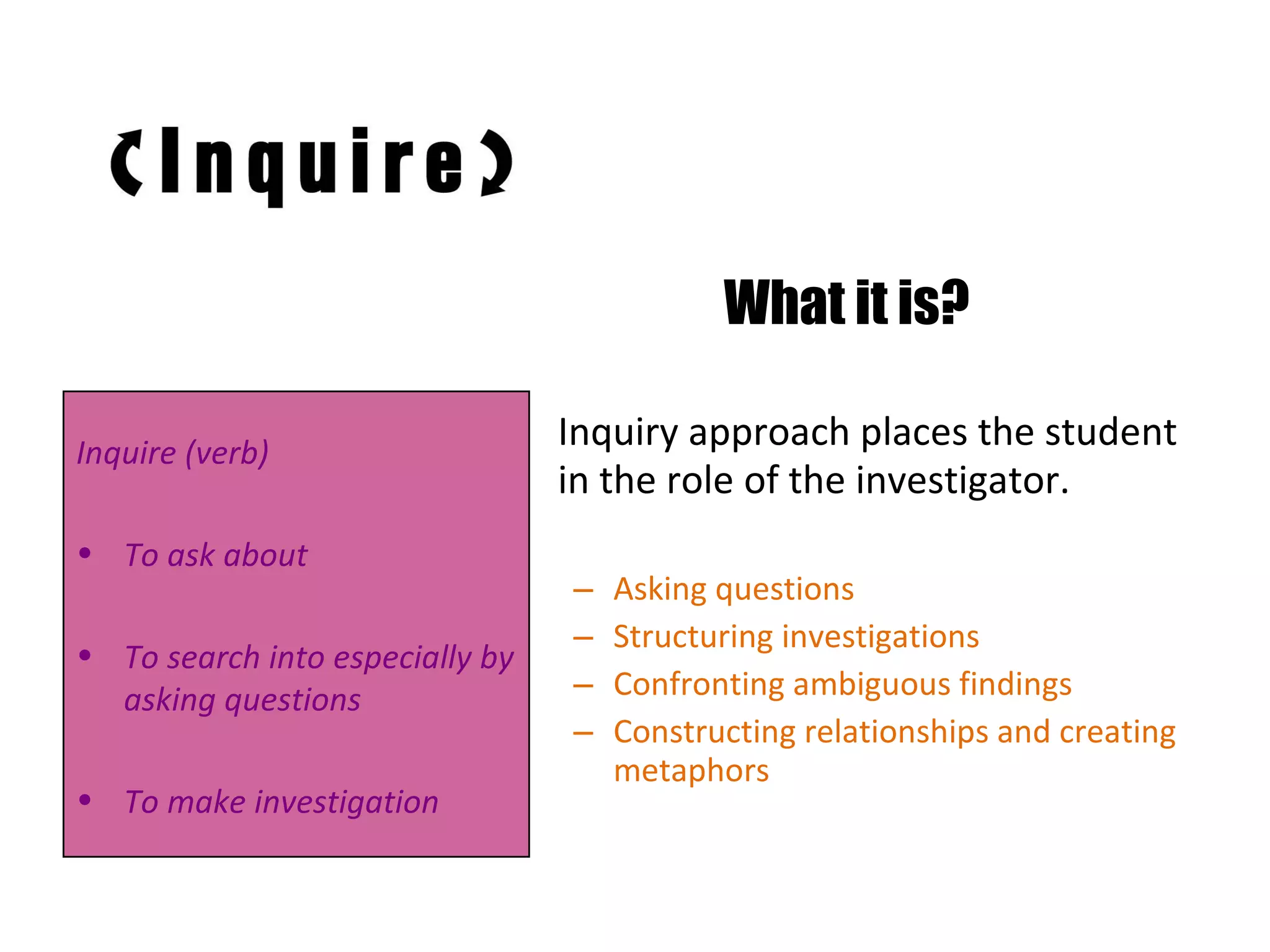
What it is?Inquiry approach places the student in the role of the investigator. Asking questions Structuring investigations Confronting ambiguous findings Constructing relationships and creating metaphors Inquire (verb) To ask about To search into especially by asking questions To make investigation
14.
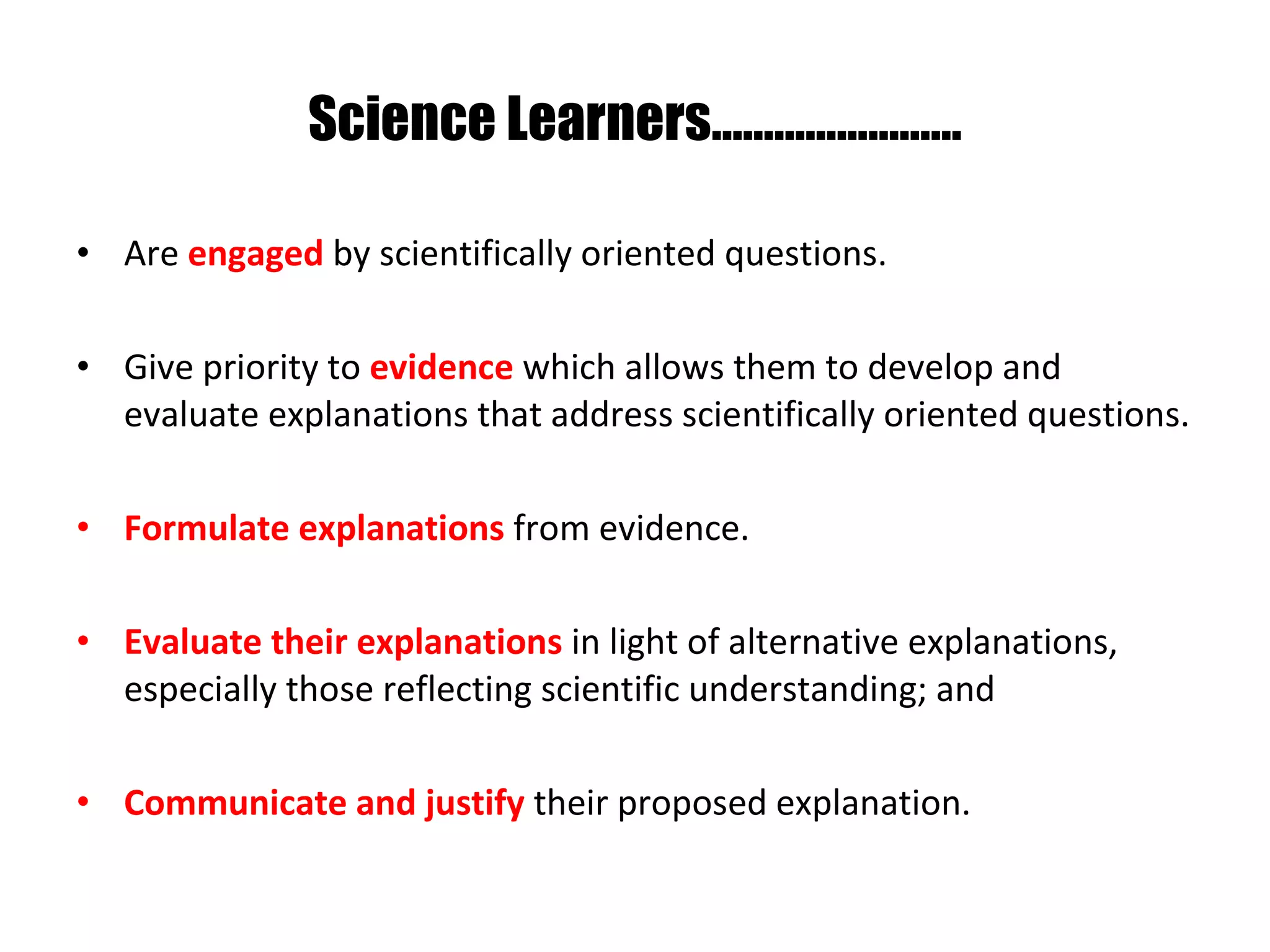
Science Learners…………………… Are engaged by scientifically oriented questions. Give priority to evidence which allows them to develop and evaluate explanations that address scientifically oriented questions. Formulate explanations from evidence. Evaluate their explanations in light of alternative explanations, especially those reflecting scientific understanding; and Communicate and justify their proposed explanation.
15.
16.
Learning Cycle Engage student interest. Explore content and learn lab skills through relevant and concrete experiences Explain questions generated by introducing content Elaborate by applying concepts and lab skills to new inquiry situations Evaluate content, process, and communication skills
17.
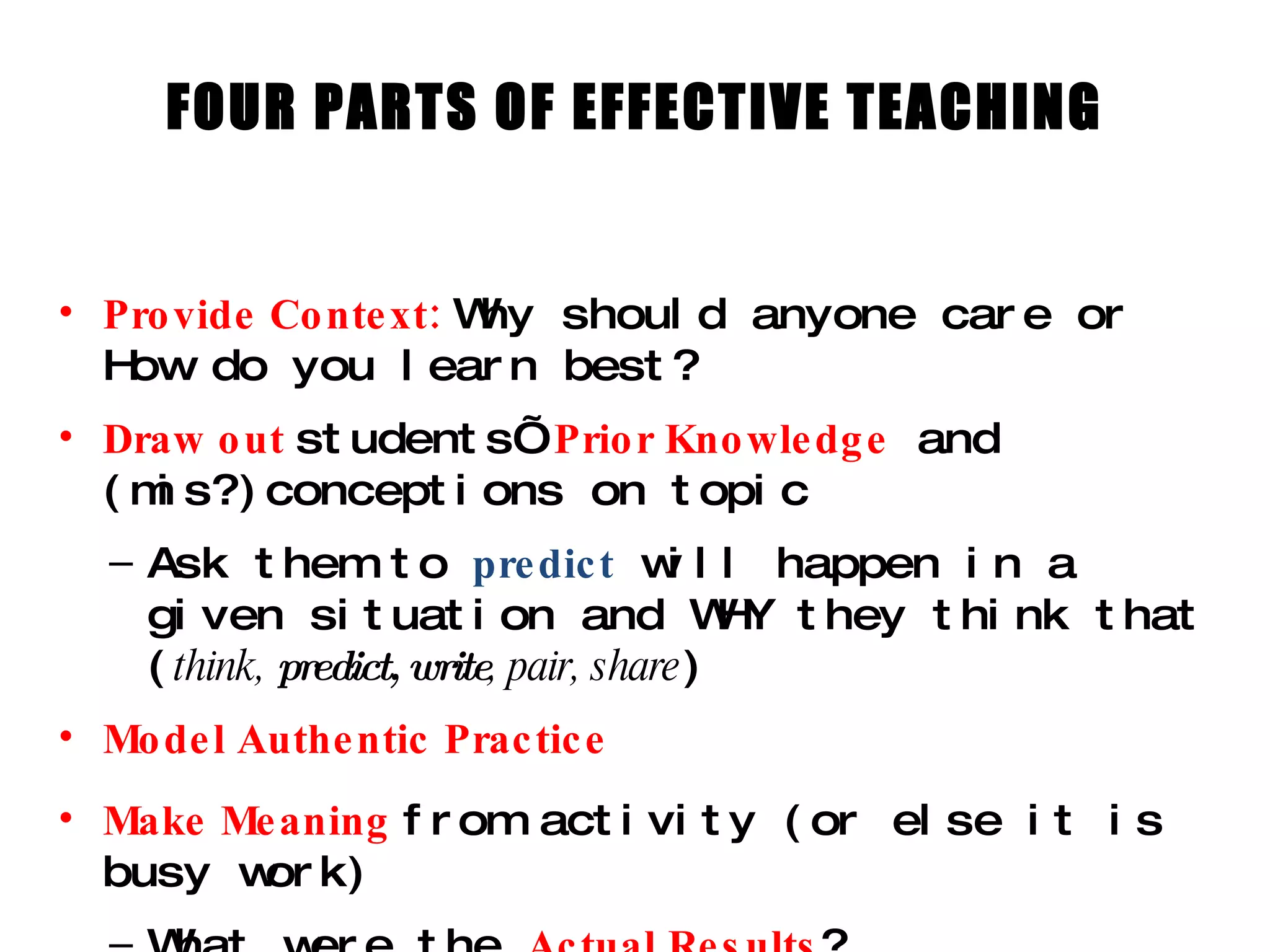
FOUR PARTS OFEFFECTIVE TEACHING Provide Context: Why should anyone care or How do you learn best? Draw out students’ Prior Knowledge and (mis?)conceptions on topic Ask them to predict will happen in a given situation and WHY they think that ( think, predict, write , pair, share ) Model Authentic Practice Make Meaning from activity (or else it is busy work) What were the Actual Results ? How does that connect back to the purpose of the activity? What do the Results Mean?
18.
MAJOR GOALS OFLAB WORK Teaching Manual and Observational skills relevant to the subject Improving understanding of methods of scientific enquiry Developing problem solving and doing by self skills Nurturing professional and constructive attitude
19.
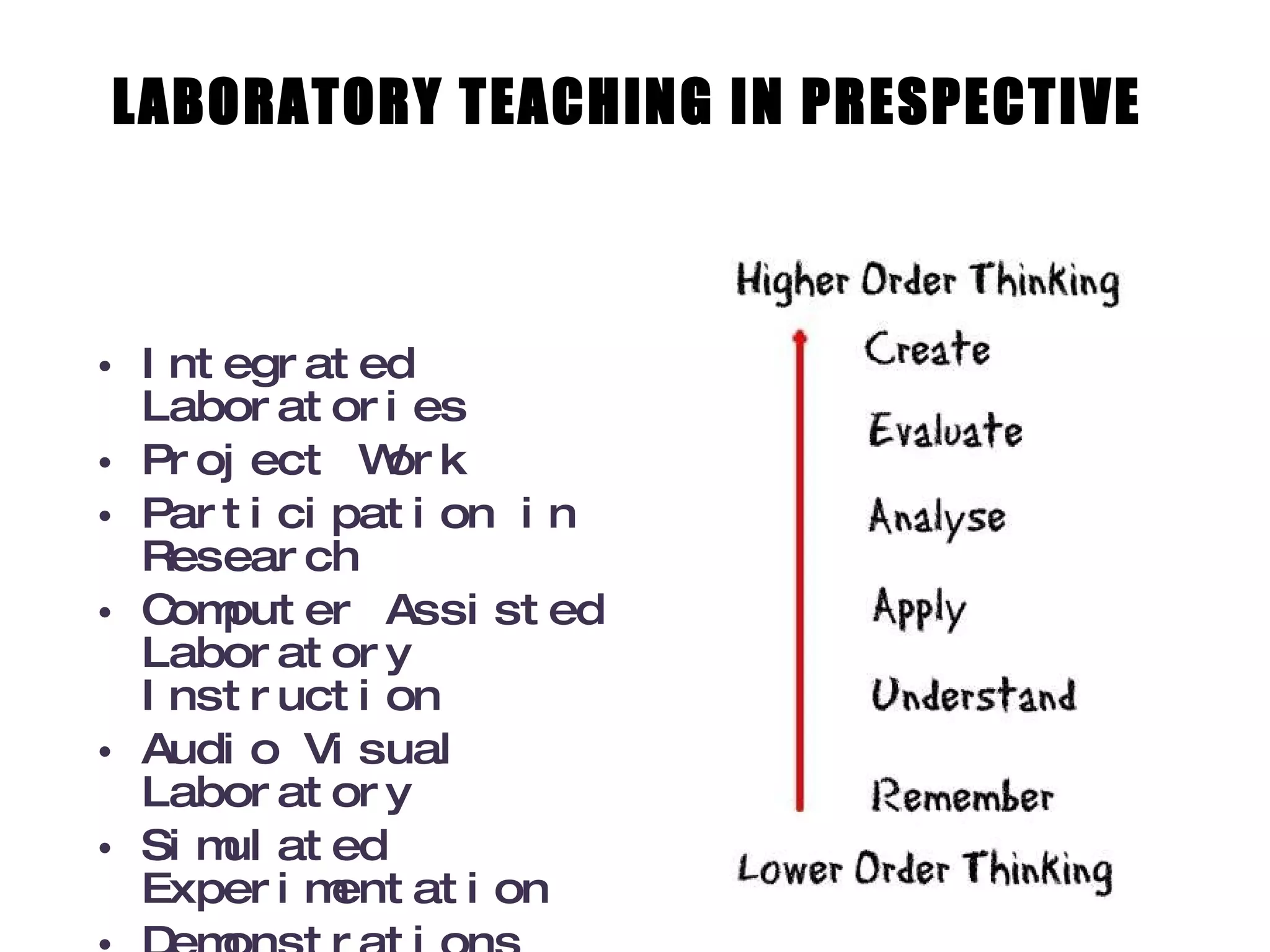
LABORATORY TEACHING INPRESPECTIVE Integrated Laboratories Project Work Participation in Research Computer Assisted Laboratory Instruction Audio Visual Laboratory Simulated Experimentation Demonstrations
20.
SKILLS OF LABORATORYTEACHING Explaining and Presenting Experimental Information Questioning, Listening and Responding to process queries Giving Directions Demonstrations Pre Lab Preparation Post Lab Findings Helping Students Preparing Laboratory Course
21.
SOME LABORATORY TEACHINGMETHODS Students learn by their own effort. Demonstration method Slide Booklets – Shows Process, Complex Procedure, and Complicated Apparatus. Tape Booklets – Provides instructions, Descriptions, and Method of Calculations Wall Charts Video recording or Interactive Video Computer Simulated Experiments
22.
LEARNING IN LABKnow exactly what the students are supposed to learn and why they have to learn these things. Perform the entire experiment in advance. Read and study the theory on which the experiment(s) are based. Research the relevance of the experiment, both the technique being taught and the applications of the theory being demonstrated. Talk to instructors who will often have very useful tips about experiments you are performing. Decide how to introduce new method to make the lab exercise most effective. Guide students in preparing their lab reports by using experimental data and help them in data analysis and interpretations of reults.
23.
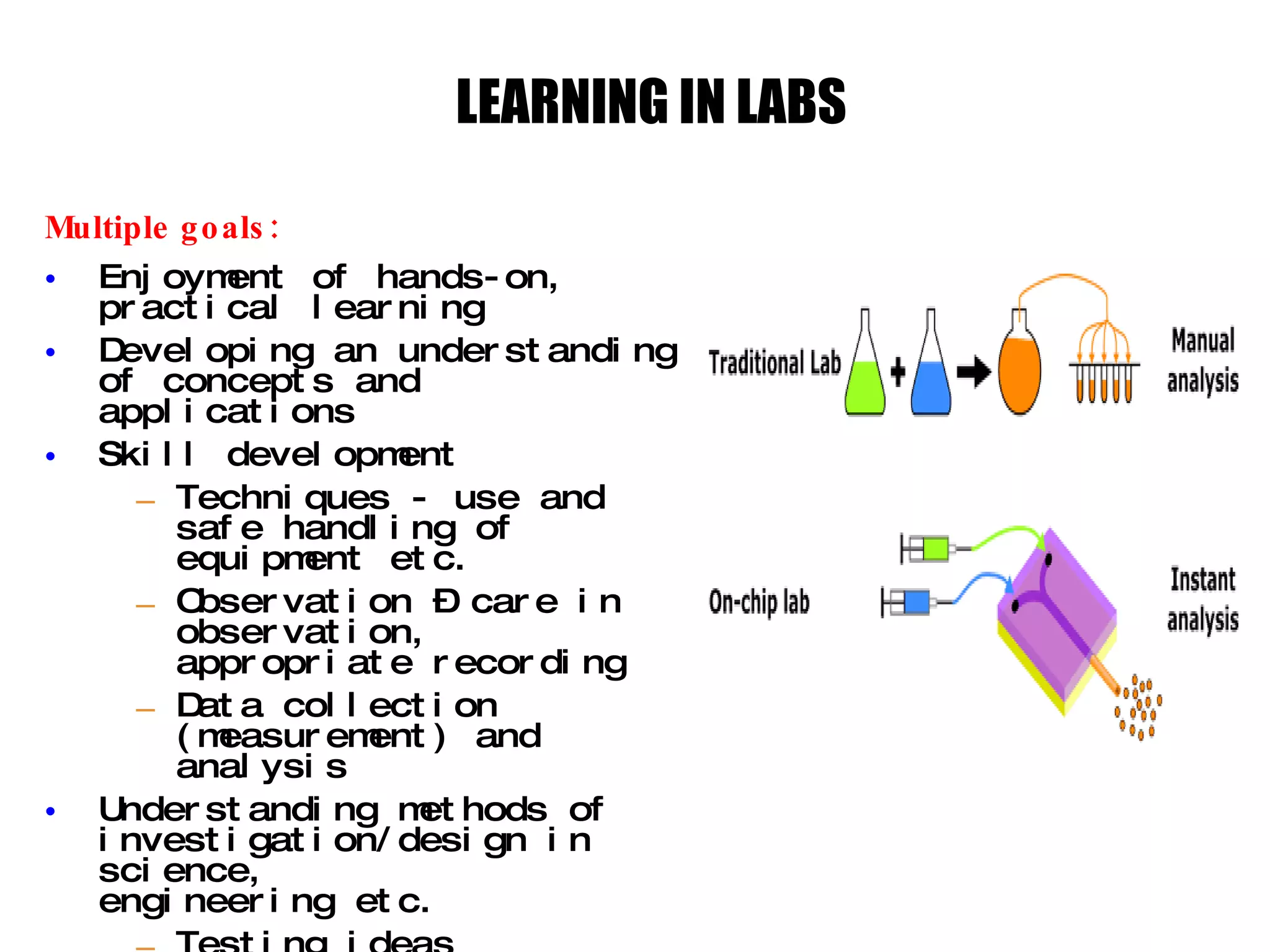
LEARNING IN LABSMultiple goals: Enjoyment of hands-on, practical learning Developing an understanding of concepts and applications Skill development Techniques - use and safe handling of equipment etc. Observation – care in observation, appropriate recording Data collection (measurement) and analysis Understanding methods of investigation/design in science, engineering etc. Testing ideas Cycles of questions, design, observation / measurement, analysis, drawing conclusions Communication of learning outcomes Collaborative learning
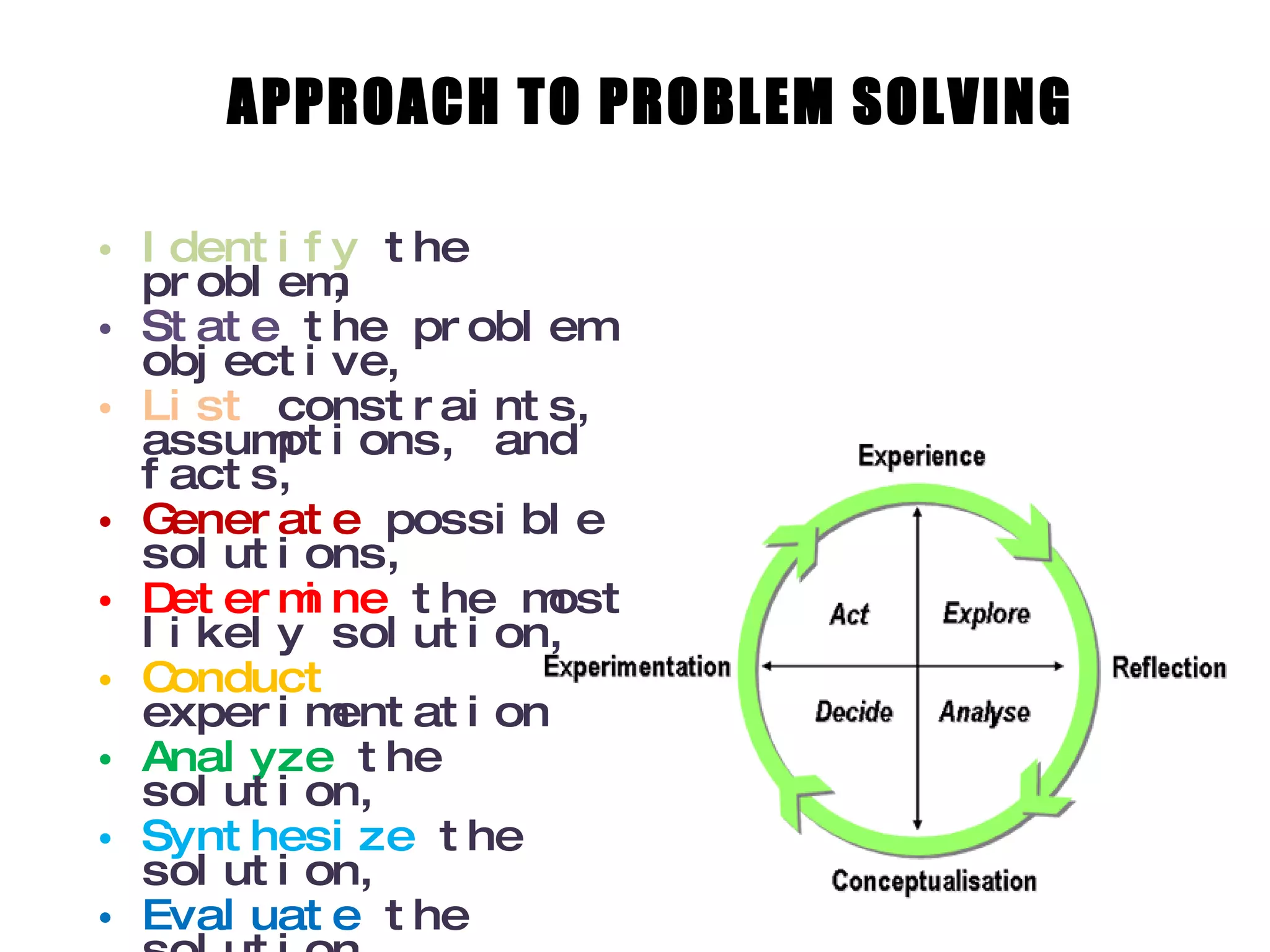
APPROACH TO PROBLEMSOLVING Identify the problem, State the problem objective, List constraints, assumptions, and facts, Generate possible solutions, Determine the most likely solution, Conduct experimentation Analyze the solution, Synthesize the solution, Evaluate the solution, Prepare a report, Implement the plan, Check results for consistency.
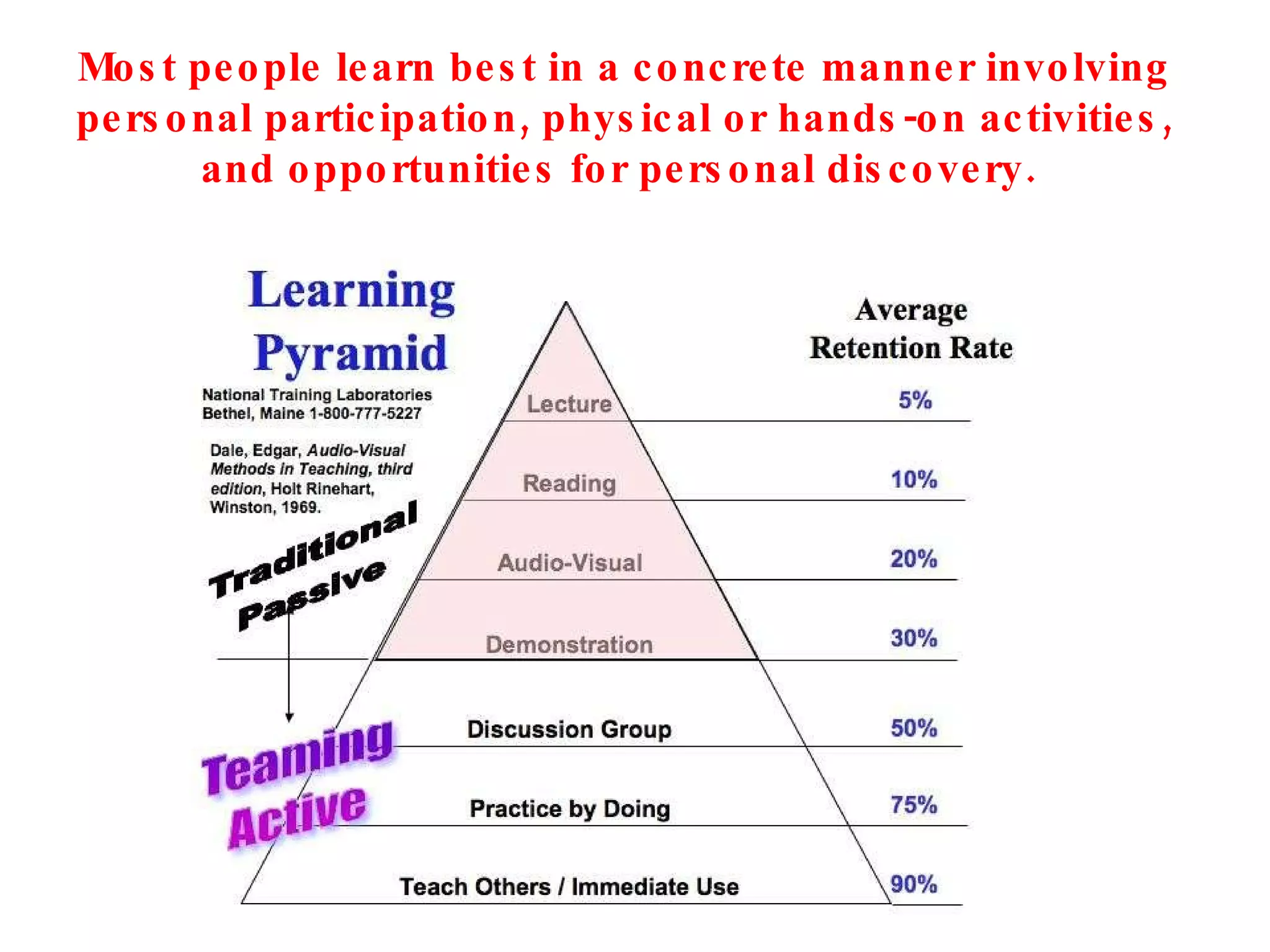
Most people learnbest in a concrete manner involving personal participation, physical or hands-on activities, and opportunities for personal discovery.
28.
29.
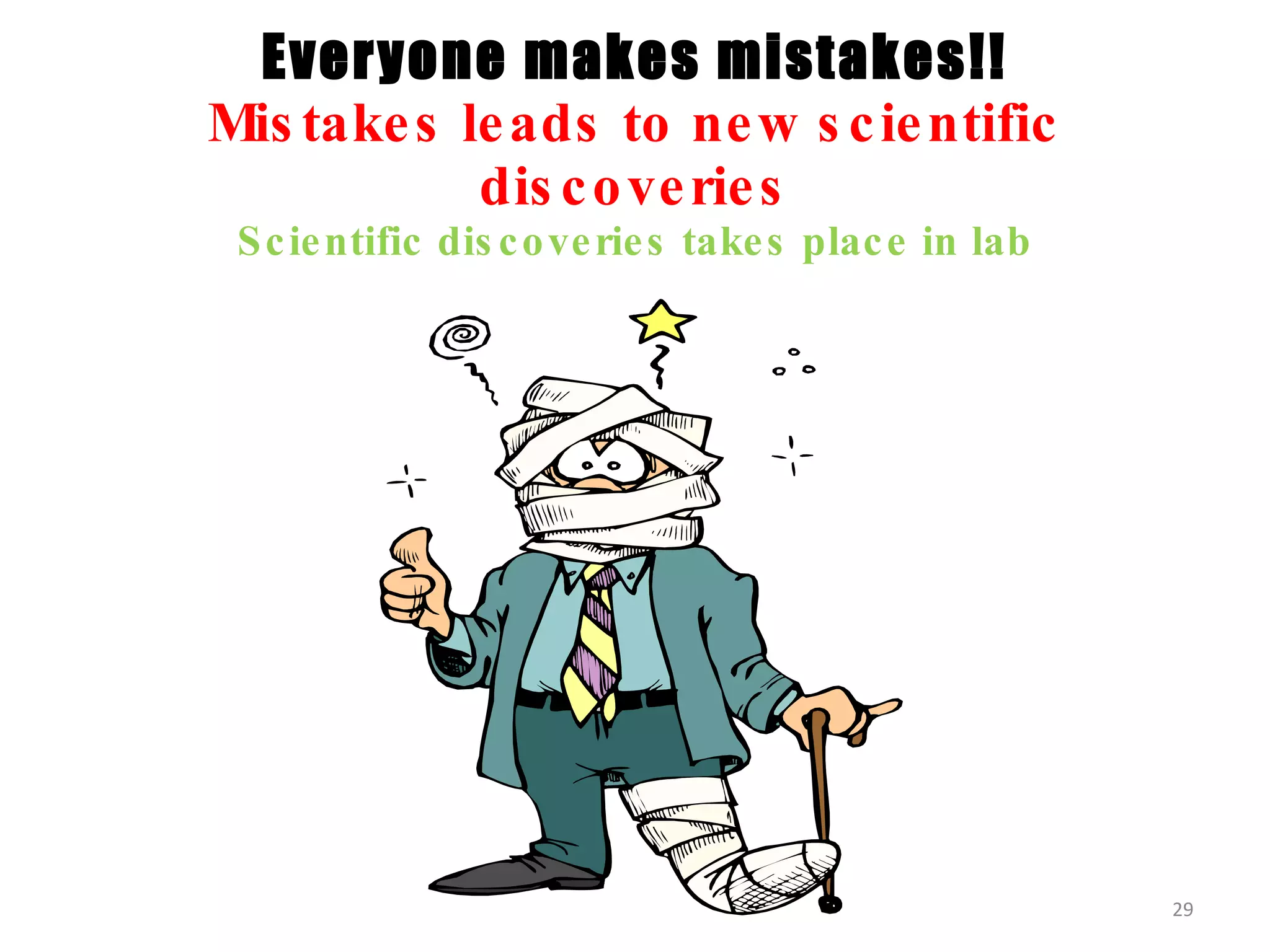
Everyone makes mistakes!!Mistakes leads to new scientific discoveries Scientific discoveries takes place in lab