It’s implementation within the classroom


                             Cherine Spirou – LMC NSWDEC
Tell me and I forget,
    show me and I
remember, involve me
  and I understand.
Wherever there is a child there
is curiosity and where there is
   curiosity there is science.
"Questions and inquiry make
    way for innovation.
 When you already have the
 answer there is no longer a
    reason to innovate."
     Twitter: @ktenkely
Inquiry Based Learning – what is it?
Inquiry Based Learning is a student – centred instructional method that
is based on substantially increased student involvement in the learning
                               process.
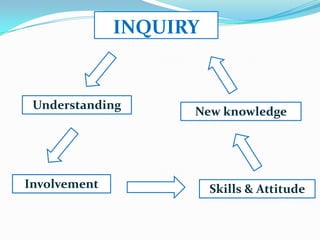
INQUIRY


 Understanding
                    New knowledge


Involvement             Skills & Attitude
Definition of Inquiry
 “A seeking for truth, information or knowledge – seeking
                information by questioning”

“Involving the learner and leading him/her to understand”

 Students become less prone to ask questions as they move through the
 higher years of education.

 For example: kindergarten children will ask hundreds of questions; while
 students in Year 9 may ask one or two questions depending on the reason
 behind it.
“To inquire into
 specific scientific
phenomena, students
need to draw upon a
   foundation of
    experience”
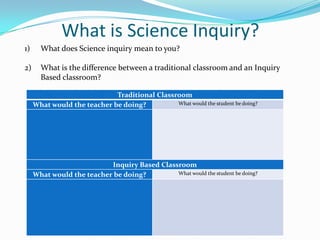
What is Science Inquiry?
1)     What does Science inquiry mean to you?

2)     What is the difference between a traditional classroom and an Inquiry
       Based classroom?

                             Traditional Classroom
     What would the teacher be doing?          What would the student be doing?


                           Inquiry Based Classroom
     What would the teacher be doing?         What would the student be doing?
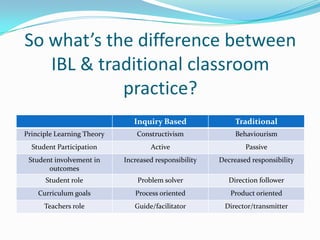
So what’s the difference between
   IBL & traditional classroom
            practice?
                               Inquiry Based                Traditional
Principle Learning Theory       Constructivism              Behaviourism
  Student Participation             Active                     Passive
 Student involvement in     Increased responsibility   Decreased responsibility
       outcomes
      Student role              Problem solver            Direction follower
    Curriculum goals           Process oriented           Product oriented
      Teachers role            Guide/facilitator        Director/transmitter
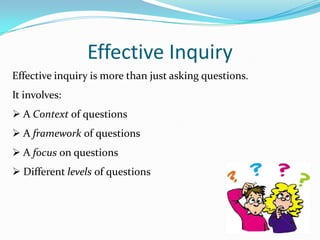
Effective Inquiry
Effective inquiry is more than just asking questions.
It involves:
 A Context of questions
 A framework of questions
 A focus on questions
 Different levels of questions
Essential Elements of Inquiry Based Learning
1.   Meanings should not be deceptive to beginners
                       (easy to understand)
2. Useful knowledge should be structured
                         (easy to map out)
3. Structured knowledge should be applicable, transferable and
     accessible to a broad range of applications & students.
                (easy to use and be shared easily)
4. Structured knowledge should be easily retrieved so that new
     knowledge can be gained without too much effort.
      (can relate to others and to further new knowledge)
“Students open
 exploration leads to a
 range of interests and
questions that lead into
deeper investigation and
    understanding”
“Exploring ways that inquirers
   collect and record first hand
   data, and observe and raise
questions, make predictions, test
     hypotheses and develop
    understanding allows us to
 formulate student patterns and
           relationships”
Inquiry Learning – Is it happening in your
               classroom?
1. Make a list of what you think regularly happens in your
   science class by reflecting on a lesson you did recently.

2. What were you doing? What were your students
   doing? Was it inquiry based or traditional learning?

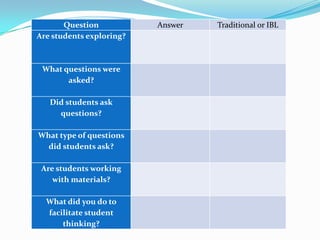
3. Use the following table to assist you in reflecting on
   your answers:
Question           Answer   Traditional or IBL
Are students exploring?


 What questions were
       asked?

   Did students ask
     questions?

What type of questions
  did students ask?

 Are students working
    with materials?

  What did you do to
  facilitate student
      thinking?
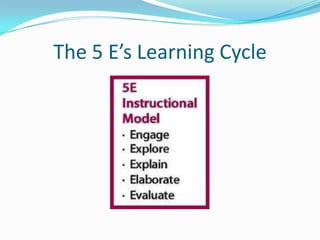
The 5 E’s Learning Cycle
ENGAGE!
Students need to:
 First encounter and identify the task
 Make connections between past and present learning
  connections
 Need to be asked a question or to define a problem to
  be engaged and focussed.
Students:
                       EXPLORE
 Have the opportunity to get directly involved
 Develop a knowledge and get experience in task
 Build a base of common experience
 Learn to share and communicate with other team
  members
 Allow the inquiry process to drive the instruction
 Have the teacher as the facilitator – to provide
  materials and guide their focus.
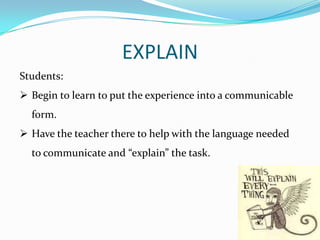
EXPLAIN
Students:
 Begin to learn to put the experience into a communicable
  form.
 Have the teacher there to help with the language needed
  to communicate and “explain” the task.
ELABORATE
Students:
 Expand on the concepts they have learned
 Make connections to other related concepts
 Apply their understanding to the world around them
EVALUATE
Students:
 Allow the teacher to determine if they have reached
  understanding of concepts and knowledge.
 Give the teachers a chance to revisit any misconceptions
  that student may have received from the inquiry process.
Starting the Inquiry Process in the
            classroom.
1. How do you motivate your students when starting a topic?

2. How do you engage your students?

3. How do you assess your students’ level of understanding
   of a new topic?

4. How do you know what your students want? (Using the
   method KWL (What do we Know, what do we Want to
   know and what have we Learnt) method for the beginning
   of a topic is always an easy way)
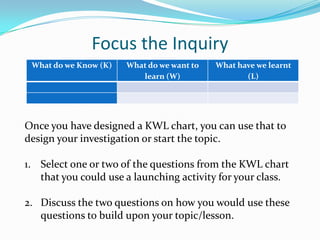
Focus the Inquiry
 What do we Know (K)   What do we want to   What have we learnt
                          learn (W)                (L)


Once you have designed a KWL chart, you can use that to
design your investigation or start the topic.

1. Select one or two of the questions from the KWL chart
   that you could use a launching activity for your class.

2. Discuss the two questions on how you would use these
   questions to build upon your topic/lesson.

Inquiry based learning pl faculties

  • 1.
    It’s implementation withinthe classroom Cherine Spirou – LMC NSWDEC
  • 2.
    Tell me andI forget, show me and I remember, involve me and I understand.
  • 3.
    Wherever there isa child there is curiosity and where there is curiosity there is science.
  • 4.
    "Questions and inquirymake way for innovation. When you already have the answer there is no longer a reason to innovate." Twitter: @ktenkely
  • 5.
    Inquiry Based Learning– what is it? Inquiry Based Learning is a student – centred instructional method that is based on substantially increased student involvement in the learning process.
  • 6.
    INQUIRY Understanding New knowledge Involvement Skills & Attitude
  • 7.
    Definition of Inquiry “A seeking for truth, information or knowledge – seeking information by questioning” “Involving the learner and leading him/her to understand” Students become less prone to ask questions as they move through the higher years of education. For example: kindergarten children will ask hundreds of questions; while students in Year 9 may ask one or two questions depending on the reason behind it.
  • 8.
    “To inquire into specific scientific phenomena, students need to draw upon a foundation of experience”
  • 9.
    What is ScienceInquiry? 1) What does Science inquiry mean to you? 2) What is the difference between a traditional classroom and an Inquiry Based classroom? Traditional Classroom What would the teacher be doing? What would the student be doing? Inquiry Based Classroom What would the teacher be doing? What would the student be doing?
  • 10.
    So what’s thedifference between IBL & traditional classroom practice? Inquiry Based Traditional Principle Learning Theory Constructivism Behaviourism Student Participation Active Passive Student involvement in Increased responsibility Decreased responsibility outcomes Student role Problem solver Direction follower Curriculum goals Process oriented Product oriented Teachers role Guide/facilitator Director/transmitter
  • 11.
    Effective Inquiry Effective inquiryis more than just asking questions. It involves:  A Context of questions  A framework of questions  A focus on questions  Different levels of questions
  • 12.
    Essential Elements ofInquiry Based Learning 1. Meanings should not be deceptive to beginners (easy to understand) 2. Useful knowledge should be structured (easy to map out) 3. Structured knowledge should be applicable, transferable and accessible to a broad range of applications & students. (easy to use and be shared easily) 4. Structured knowledge should be easily retrieved so that new knowledge can be gained without too much effort. (can relate to others and to further new knowledge)
  • 13.
    “Students open explorationleads to a range of interests and questions that lead into deeper investigation and understanding”
  • 14.
    “Exploring ways thatinquirers collect and record first hand data, and observe and raise questions, make predictions, test hypotheses and develop understanding allows us to formulate student patterns and relationships”
  • 15.
    Inquiry Learning –Is it happening in your classroom? 1. Make a list of what you think regularly happens in your science class by reflecting on a lesson you did recently. 2. What were you doing? What were your students doing? Was it inquiry based or traditional learning? 3. Use the following table to assist you in reflecting on your answers:
  • 16.
    Question Answer Traditional or IBL Are students exploring? What questions were asked? Did students ask questions? What type of questions did students ask? Are students working with materials? What did you do to facilitate student thinking?
  • 17.
    The 5 E’sLearning Cycle
  • 18.
    ENGAGE! Students need to: First encounter and identify the task  Make connections between past and present learning connections  Need to be asked a question or to define a problem to be engaged and focussed.
  • 19.
    Students: EXPLORE  Have the opportunity to get directly involved  Develop a knowledge and get experience in task  Build a base of common experience  Learn to share and communicate with other team members  Allow the inquiry process to drive the instruction  Have the teacher as the facilitator – to provide materials and guide their focus.
  • 20.
    EXPLAIN Students:  Begin tolearn to put the experience into a communicable form.  Have the teacher there to help with the language needed to communicate and “explain” the task.
  • 21.
    ELABORATE Students:  Expand onthe concepts they have learned  Make connections to other related concepts  Apply their understanding to the world around them
  • 22.
    EVALUATE Students:  Allow theteacher to determine if they have reached understanding of concepts and knowledge.  Give the teachers a chance to revisit any misconceptions that student may have received from the inquiry process.
  • 23.
    Starting the InquiryProcess in the classroom. 1. How do you motivate your students when starting a topic? 2. How do you engage your students? 3. How do you assess your students’ level of understanding of a new topic? 4. How do you know what your students want? (Using the method KWL (What do we Know, what do we Want to know and what have we Learnt) method for the beginning of a topic is always an easy way)
  • 24.
    Focus the Inquiry What do we Know (K) What do we want to What have we learnt learn (W) (L) Once you have designed a KWL chart, you can use that to design your investigation or start the topic. 1. Select one or two of the questions from the KWL chart that you could use a launching activity for your class. 2. Discuss the two questions on how you would use these questions to build upon your topic/lesson.