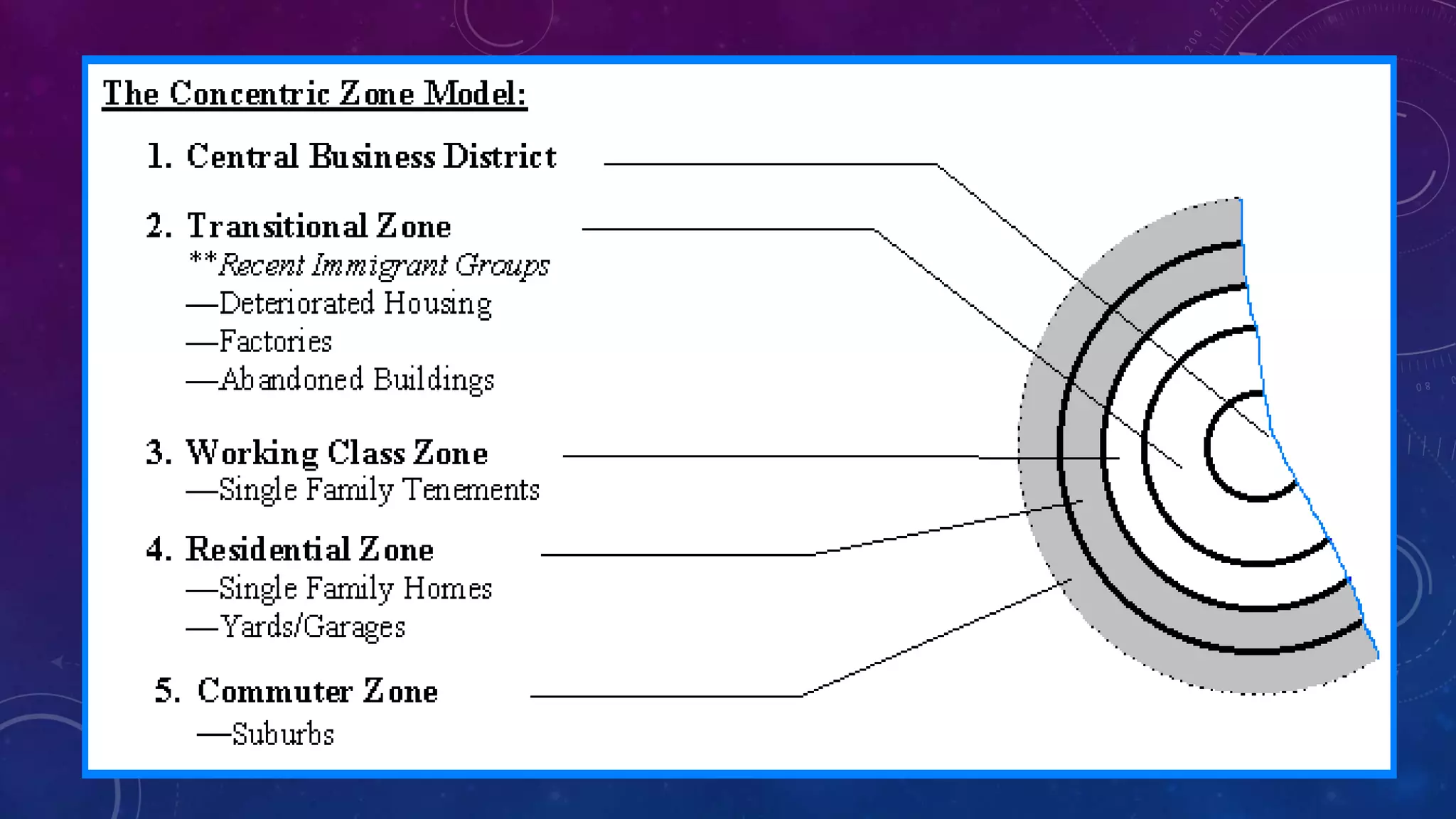
The concentric zone theory, developed in the 1920s by Ernest Burgess and Robert Park, proposed that social areas extend outward from the central business district in concentric zones. Population density decreases as one moves to outer zones. Zone 1 is the central business district. Zone 2 is a zone of transition with dilapidated housing and high crime. Zone 3 is a working class area. Zone 4 is middle class. Zone 5 is an upper class commuter zone. Later critics argued it does not apply to modern decentralized cities and assumes flat, unchanging landscapes.
ORIGINS OF THEORY
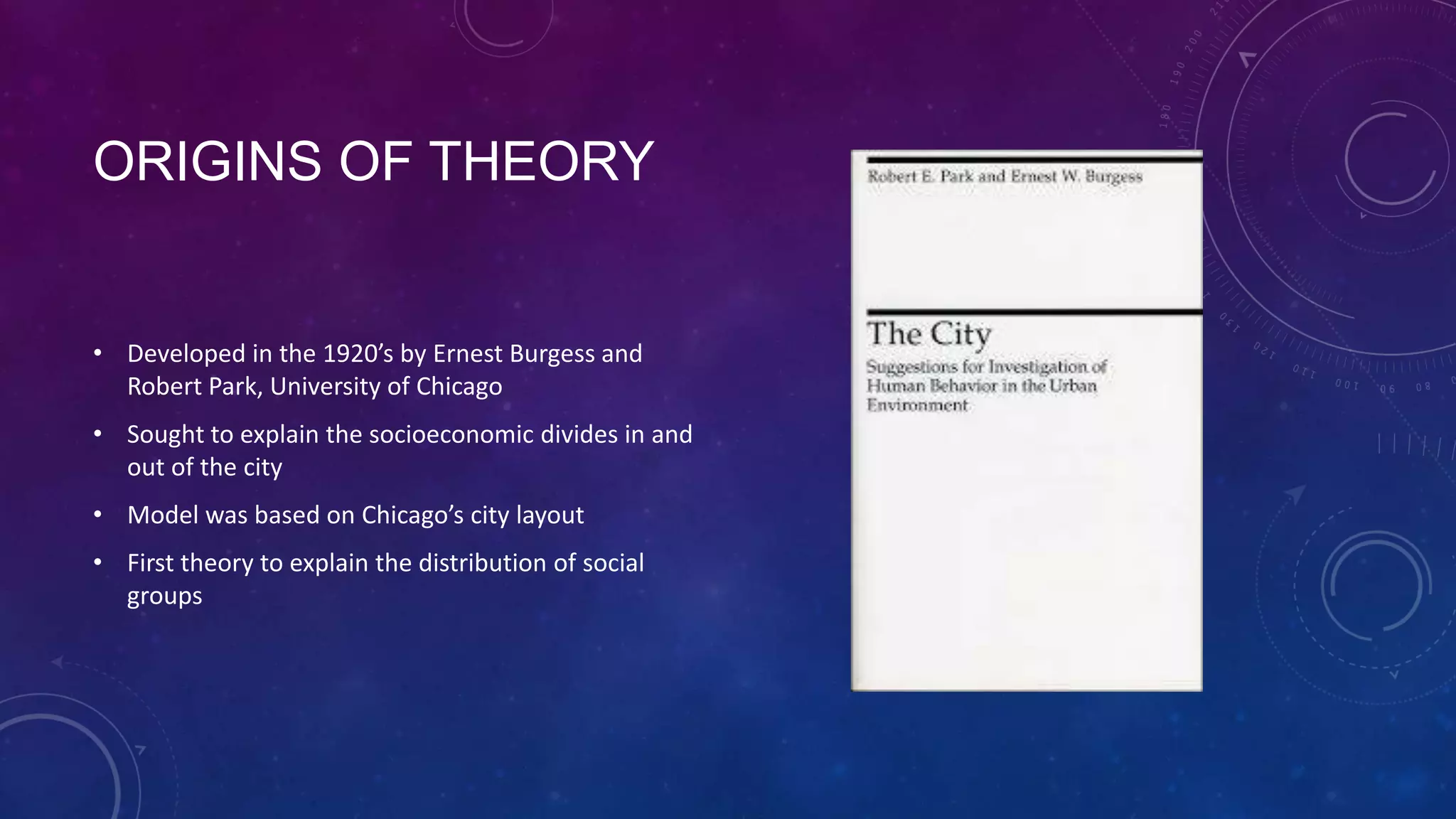
•Developed in the 1920’s by Ernest Burgess and
Robert Park, University of Chicago
• Sought to explain the socioeconomic divides in and
out of the city
• Model was based on Chicago’s city layout
• First theory to explain the distribution of social
groups
3.
WHAT IS THECONCENTRIC ZONE THEORY?
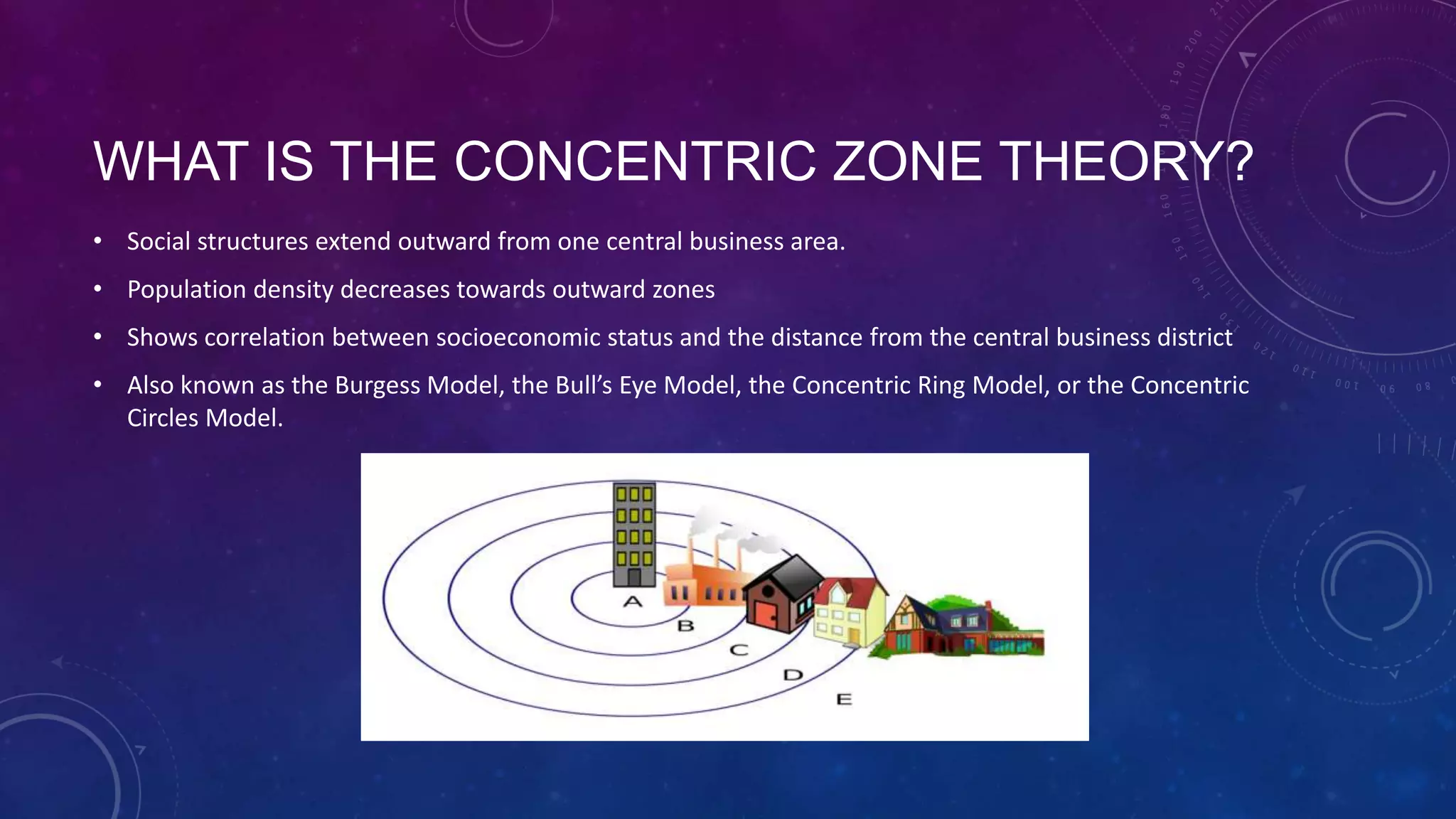
• Social structures extend outward from one central business area.
• Population density decreases towards outward zones
• Shows correlation between socioeconomic status and the distance from the central business district
• Also known as the Burgess Model, the Bull’s Eye Model, the Concentric Ring Model, or the Concentric
Circles Model.
5.
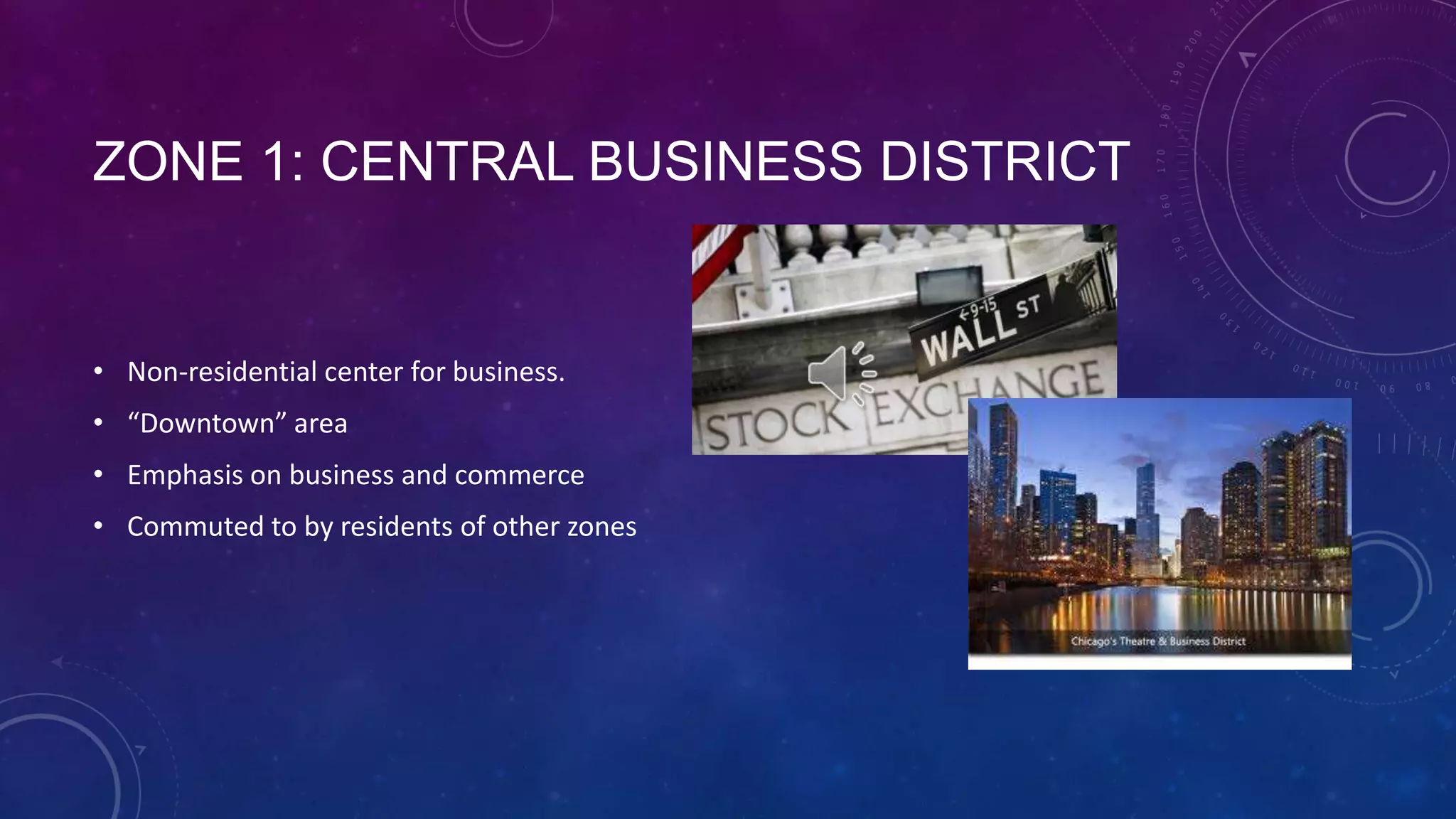
ZONE 1: CENTRALBUSINESS DISTRICT
• Non-residential center for business.
• “Downtown” area
• Emphasis on business and commerce
• Commuted to by residents of other zones
6.
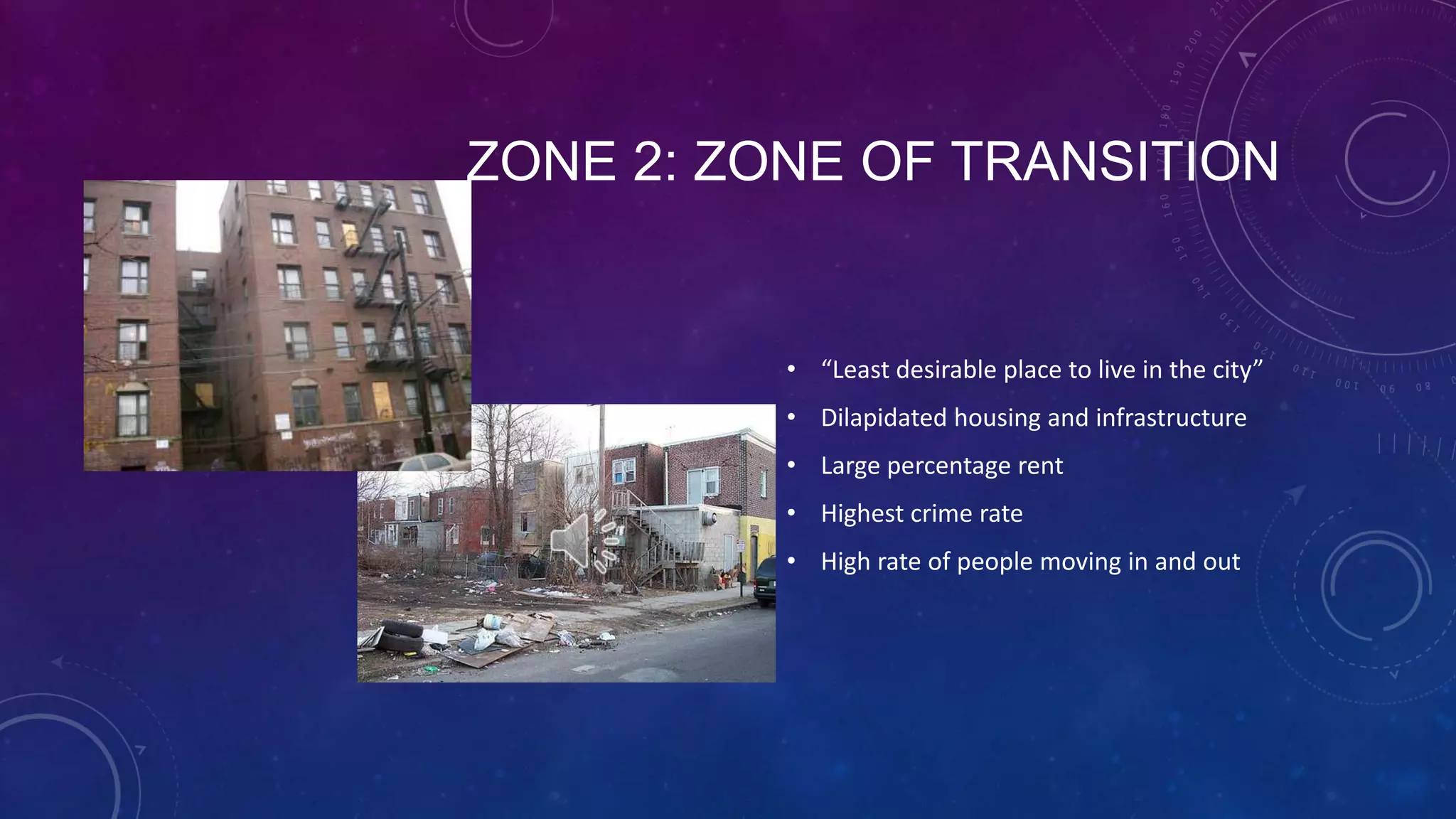
ZONE 2: ZONEOF TRANSITION
• “Least desirable place to live in the city”
• Dilapidated housing and infrastructure
• Large percentage rent
• Highest crime rate
• High rate of people moving in and out
7.
ZONE 3: WORKINGCLASS
• Modest older homes
• Stable, working class families
• Can afford to move out of Zone 2
• Second generation immigrants
8.
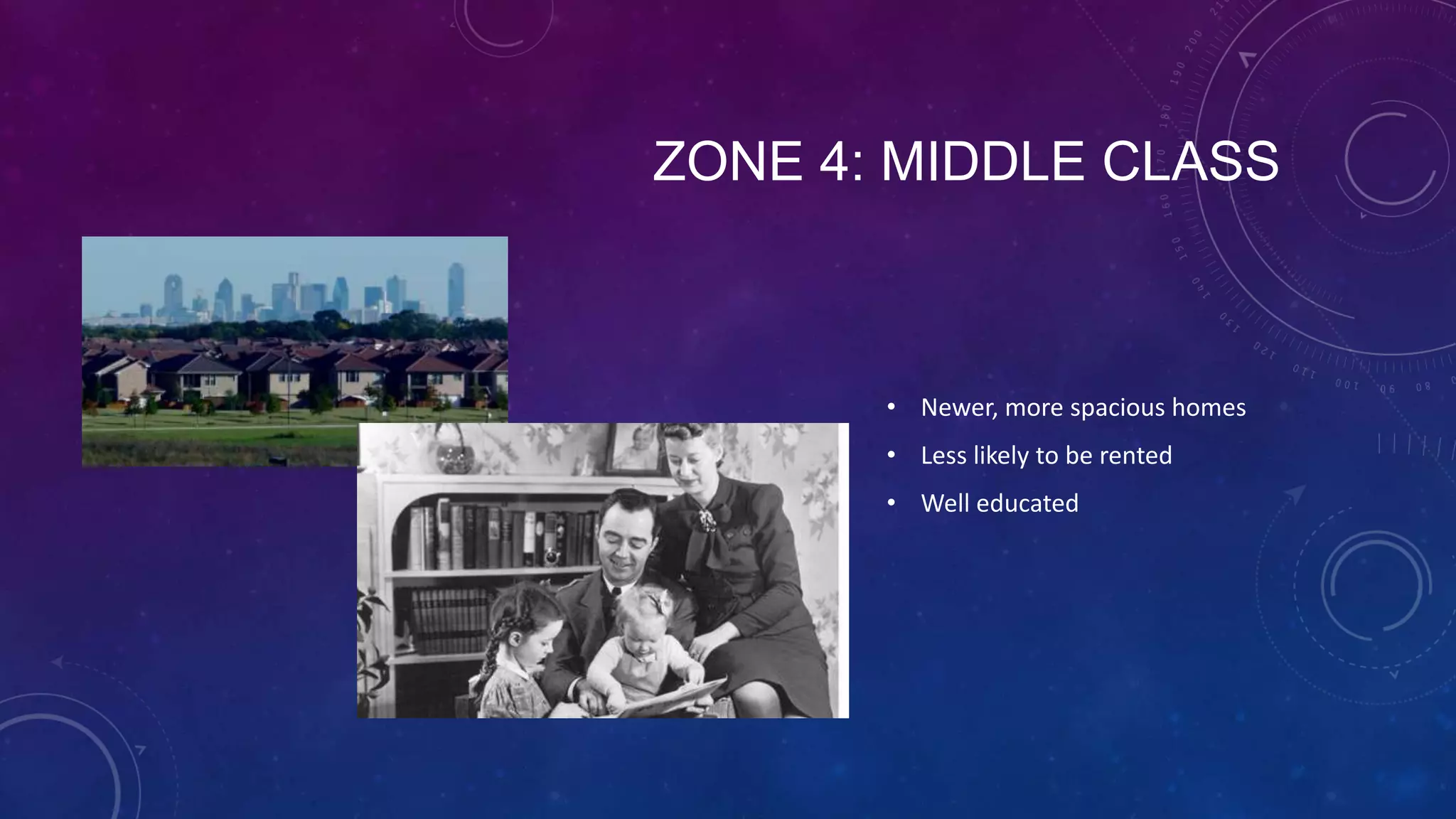
ZONE 4: MIDDLECLASS
• Newer, more spacious homes
• Less likely to be rented
• Well educated
9.
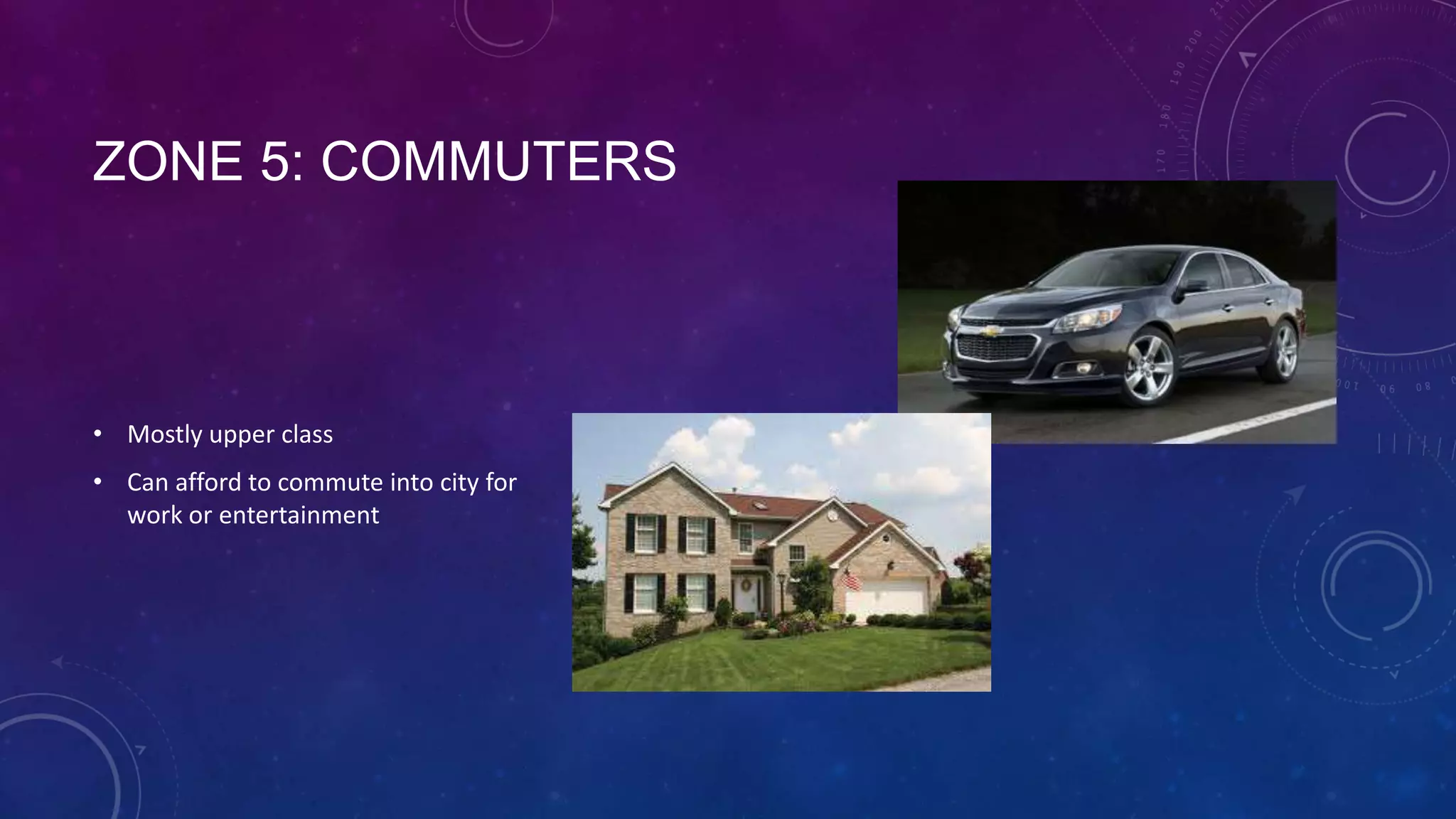
ZONE 5: COMMUTERS
•Mostly upper class
• Can afford to commute into city for
work or entertainment
10.
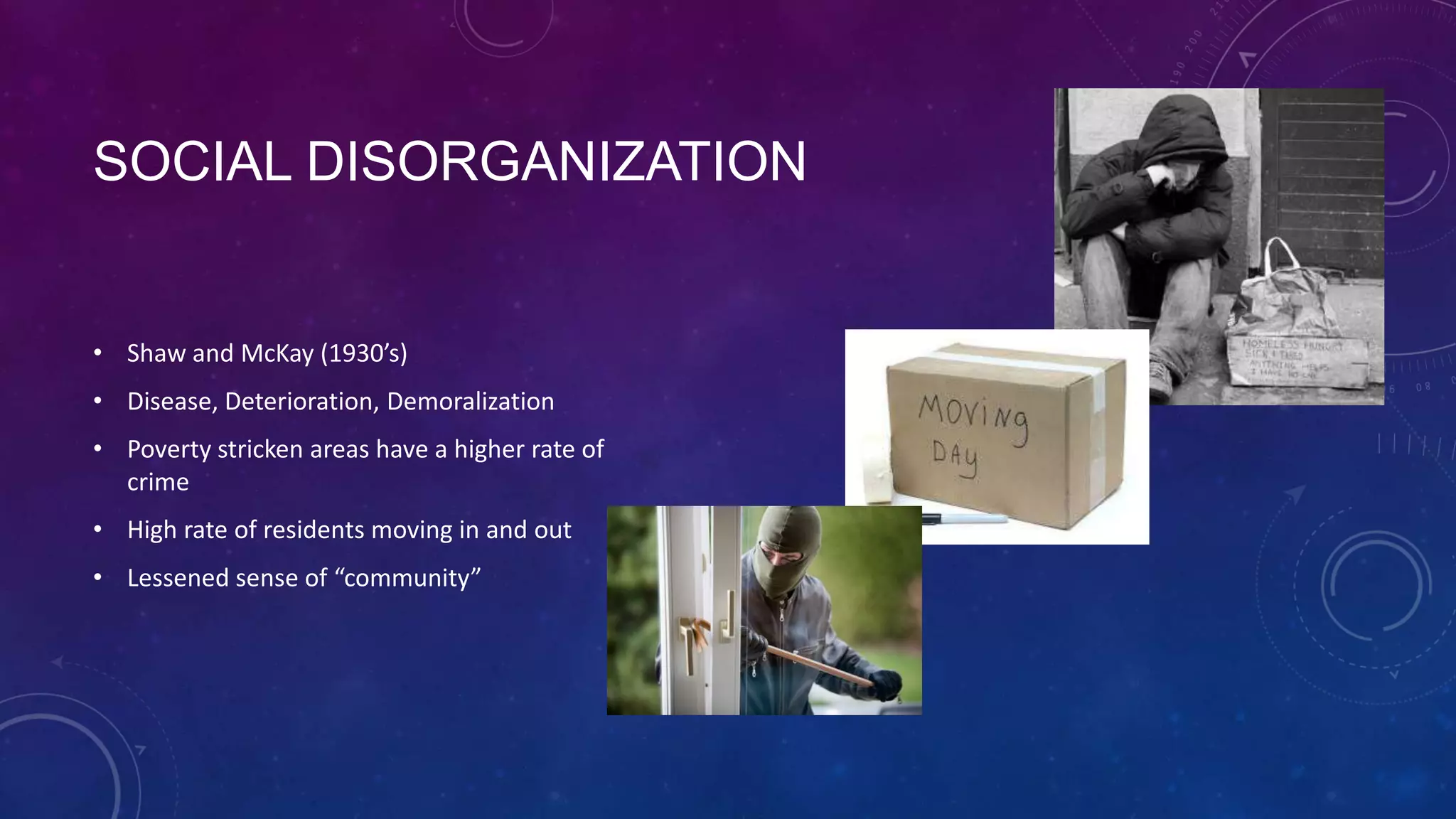
SOCIAL DISORGANIZATION
• Shawand McKay (1930’s)
• Disease, Deterioration, Demoralization
• Poverty stricken areas have a higher rate of
crime
• High rate of residents moving in and out
• Lessened sense of “community”
11.
PROBLEMS WITH THETHEORY
• Does not work with more modern cities, or cities outside of the
United States
• Assumes an unchanging landscape
• Assumes flat land, without geographic features inhibiting
growth
• Decentralization of business areas
12.
REFERENCES
• Bunyi, Joan.": Concentric Zone Model." : Concentric Zone Model. Lewis Historical Society, 1 May 2010.
Web. 17 Apr. 2014. <http://www.lewishistoricalsociety.com/wiki/tiki-read_article.php?articleId=16>.
• Pick, Ashley. "Social Disorganization." Crime and Place. N.p., n.d. Web. 17 Apr. 2014.
<http://crimeandplaceashleypick.weebly.com/social-disorganization.html>.



![[DSC Europe 25] Dragana Ilic - AI for Big Data in Astronomy.pptx](https://cdn.slidesharecdn.com/ss_thumbnails/8palya86qaatvjhva1ms-2-dragana-ilic-ai-ilic-251208151906-652b819c-thumbnail.jpg?width=640&height=640&fit=bounds)
![[DSC Europe 25] Andy Cotgreave - Nothing is new in analytics.pptx](https://cdn.slidesharecdn.com/ss_thumbnails/mba4vzcurvoh5lfrd5zw-6-251205194645-341bbbbe-thumbnail.jpg?width=640&height=640&fit=bounds)


![[DSC Europe 25] Goran Obradovic - The Rise of Sovereign AI: Building the Regi...](https://cdn.slidesharecdn.com/ss_thumbnails/7nw2xxixrxqdxvrb5wca-6-251205085714-ab09a2ac-thumbnail.jpg?width=640&height=640&fit=bounds)

![[DSC Europe 25] Dusan Jovicic - AI Story: From on-prem to cloud and back agai...](https://cdn.slidesharecdn.com/ss_thumbnails/8kp49m6uq22ifnbwhfnk-2-251205085715-964d11a6-thumbnail.jpg?width=640&height=640&fit=bounds)
![[DSC Europe 25] Bogdan Daniel Maruneac - AI - It starts with you.pptx](https://cdn.slidesharecdn.com/ss_thumbnails/odov3snhrcqs9hx5ny2n-4-251205085715-f1daacfe-thumbnail.jpg?width=640&height=640&fit=bounds)
![[DSC Europe 25] Vid Stimac - Policy Parsimony: Between Oversimplifying and Ov...](https://cdn.slidesharecdn.com/ss_thumbnails/eqlepagzqp2rhg3gbluh-dsc-stimac-251120-251205090438-059e7f54-thumbnail.jpg?width=640&height=640&fit=bounds)