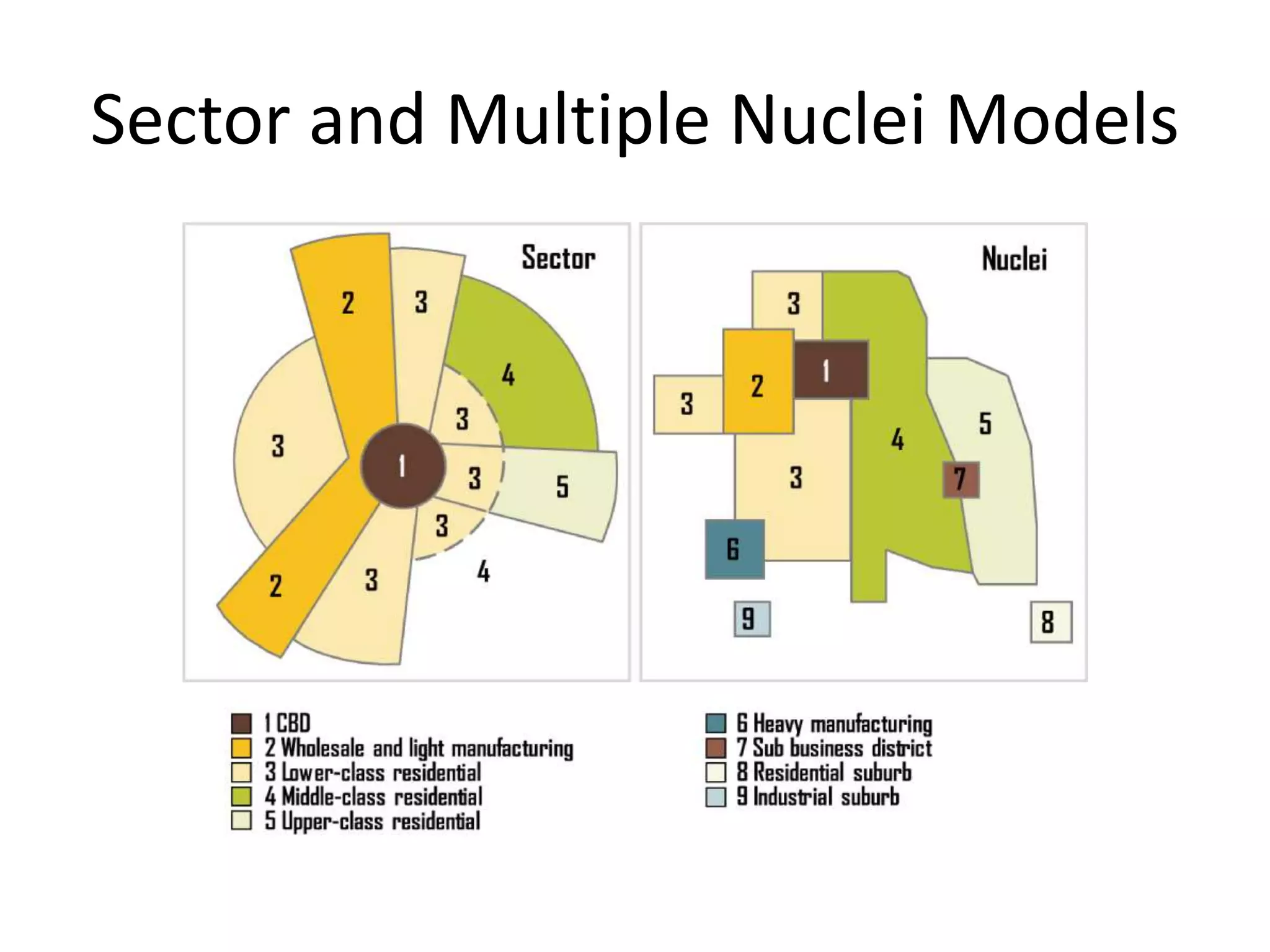
Sector and Multiple Nuclei Models
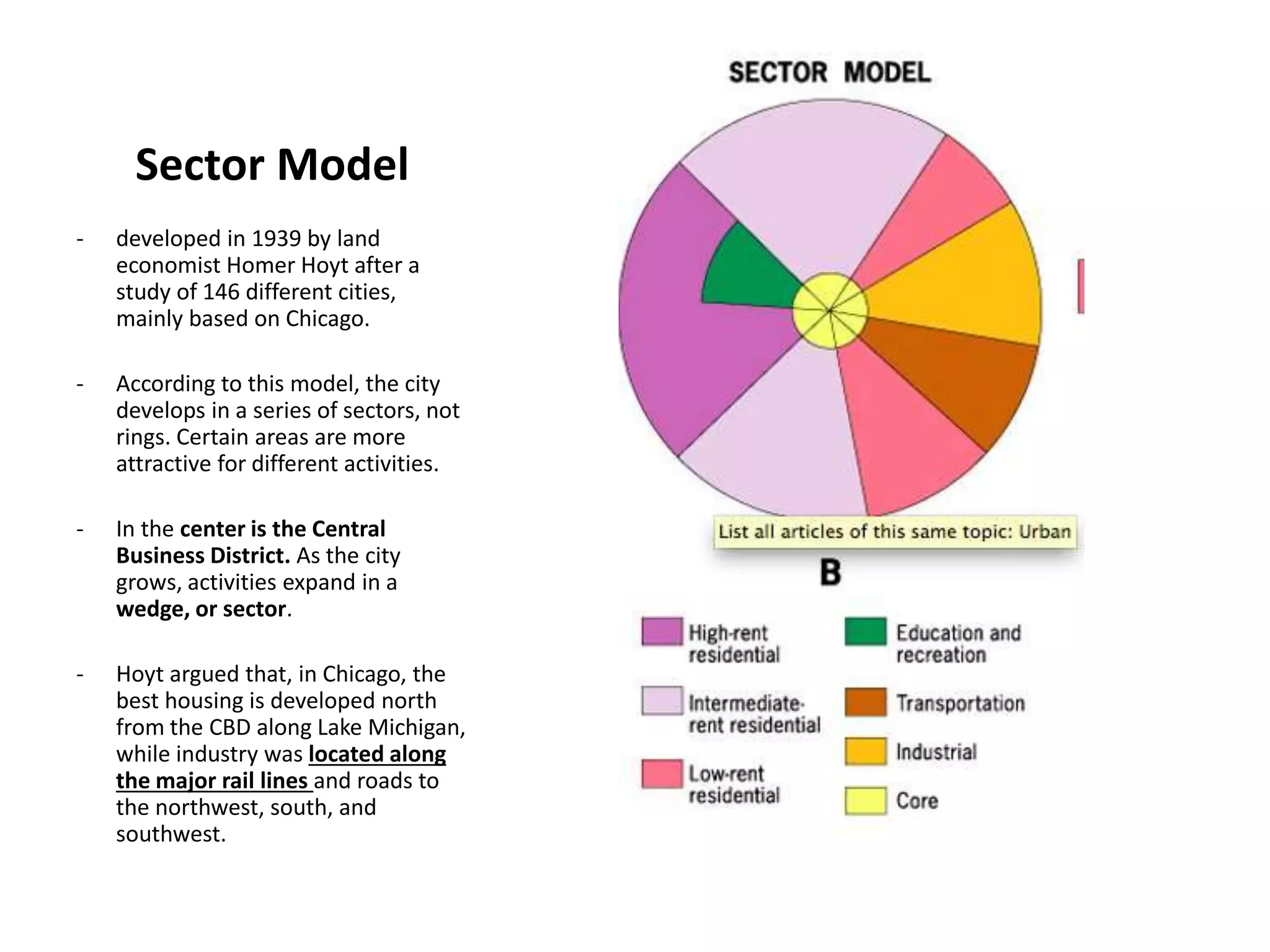
Sector Model
- developed in 1939 by land
economist Homer Hoyt after a
study of 146 different cities,
mainly based on Chicago.
- According to this model, the city
develops in a series of sectors, not
rings. Certain areas are more
attractive for different activities.
- In the center is the Central
Business District. As the city
grows, activities expand in a
wedge, or sector.
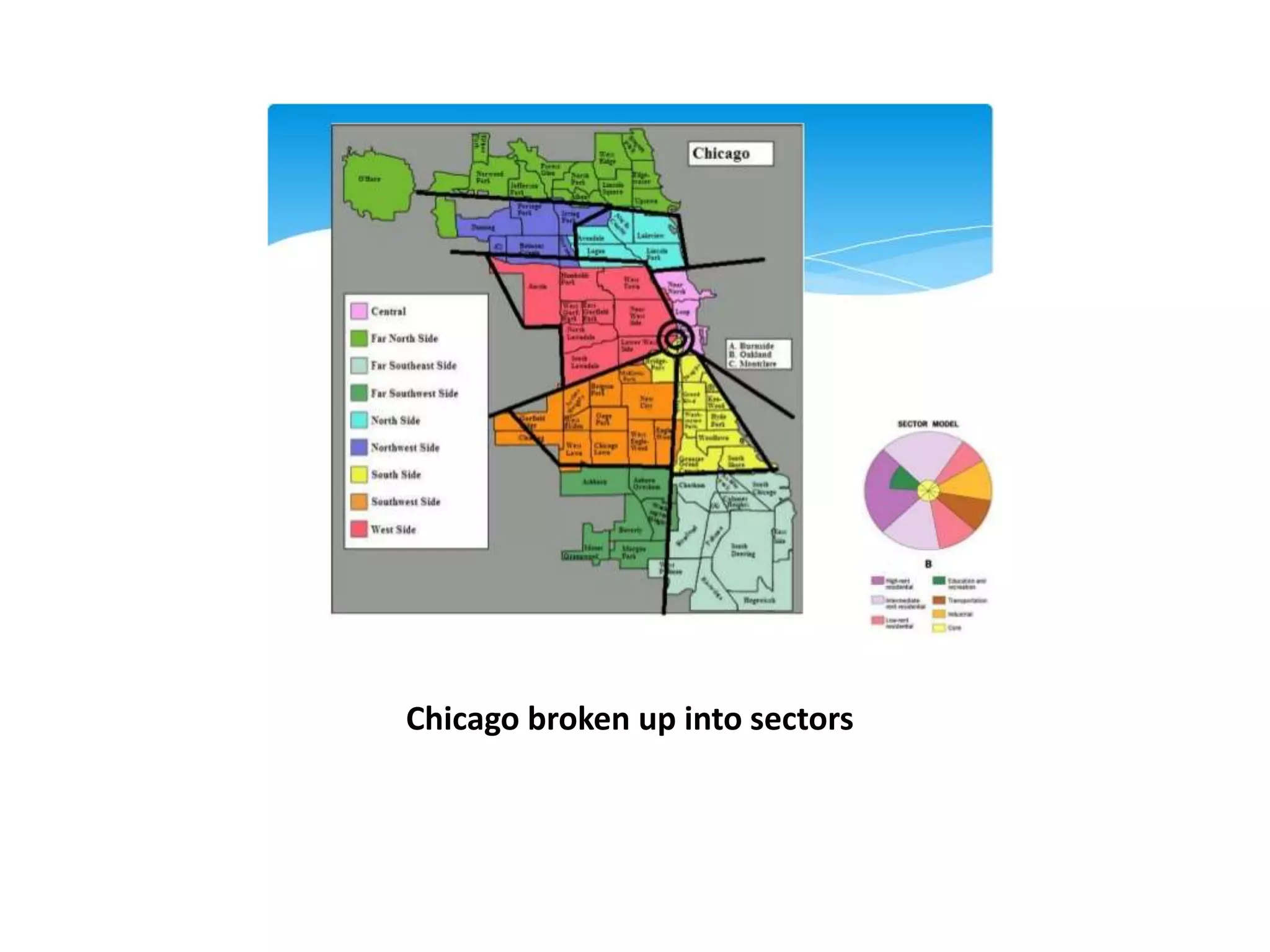
- Hoyt argued that, in Chicago, the
best housing is developed north
from the CBD along Lake Michigan,
while industry was located along
the major rail lines and roads to
the northwest, south, and
southwest.
Chicago broken up into sectors
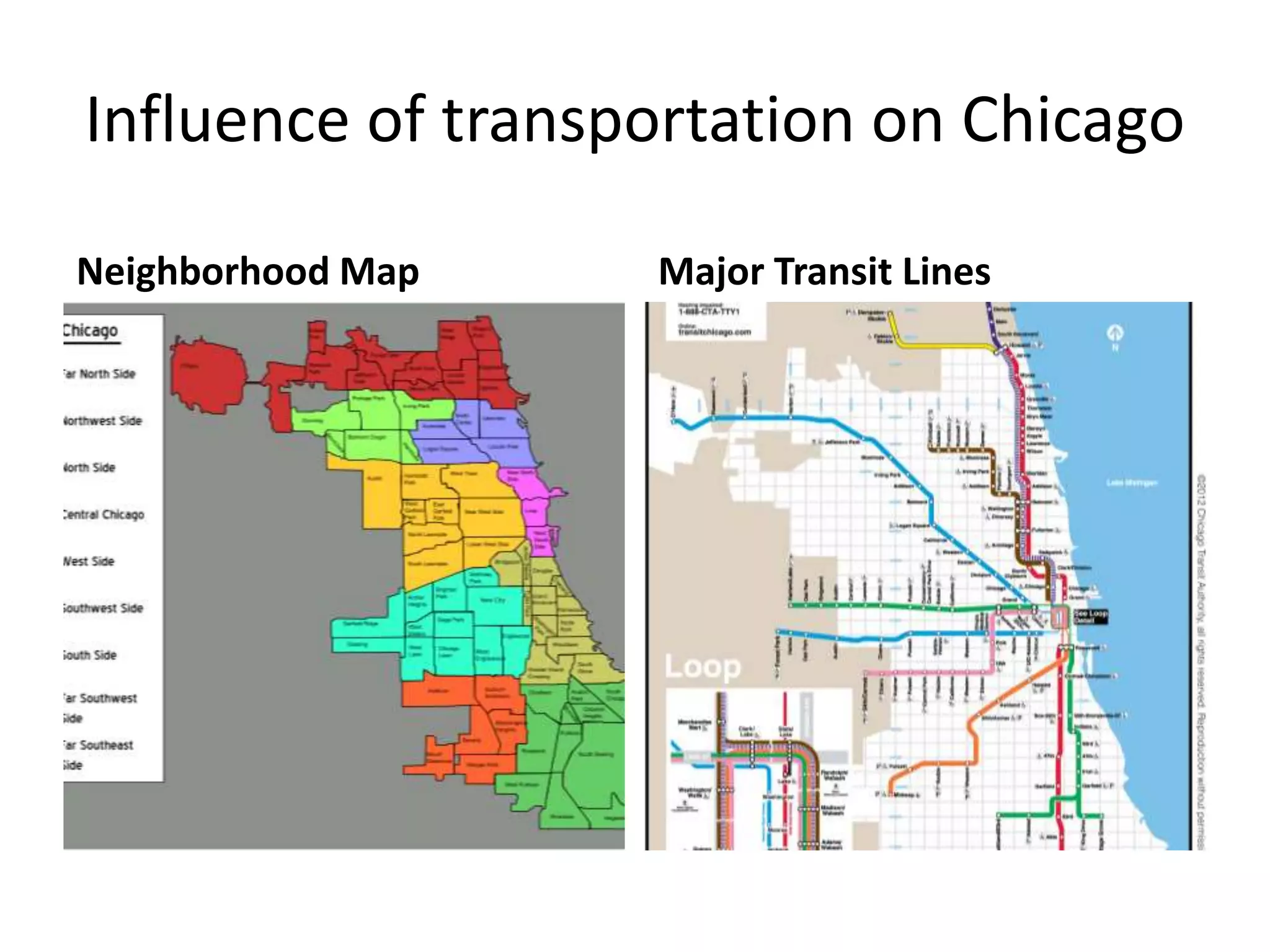
Influence of transportation on Chicago
Neighborhood Map Major Transit Lines
Criticisms of the Sector
Model
- Outdated: The model is too general
and doesn’t reflect cities today
- The model is based on the idea that
most people get to work by train.
- The model doesn’t take into account
urban renewal programs to develop
the inner-city.
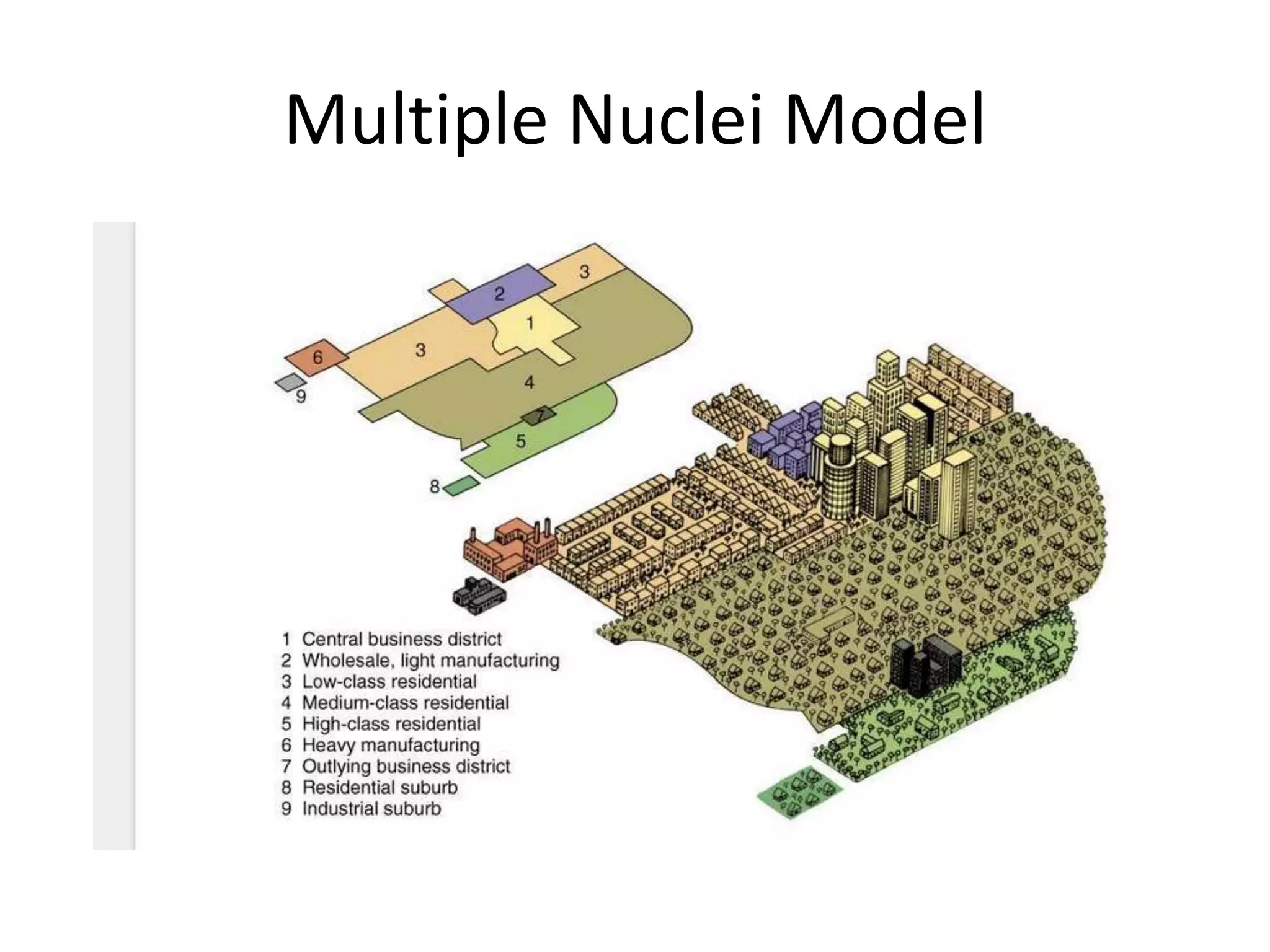
Multiple Nuclei Model
Description
• Invented in 1945
• States that cities develop around a number of
different business centers or “nuclei”.
• These growth points create the different
sectors of a city.
• The model also takes into account people’s
ownership of cars and their ability to get
around more easily.
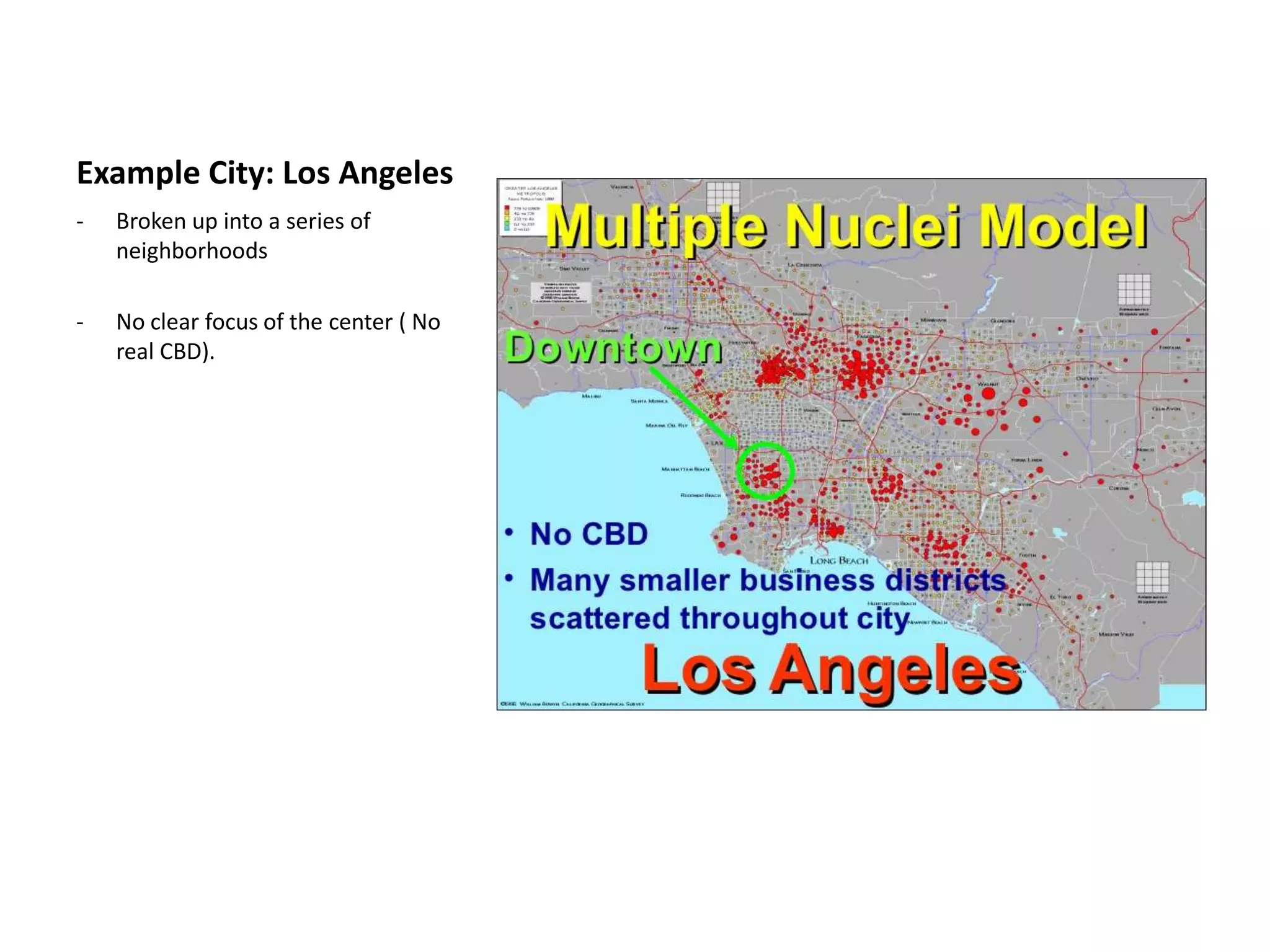
Example City: Los Angeles
- Broken up into a series of
neighborhoods
- No clear focus of the center ( No
real CBD).
Criticisms
• Neglects the height of buildings.
• Each zone is very complex. Does not provide a
general rule but more suggests a way to think
about cities.

Sector and multiple nuclei model presentation

  • 1.
    Sector and MultipleNuclei Models
  • 2.
    Sector Model - developedin 1939 by land economist Homer Hoyt after a study of 146 different cities, mainly based on Chicago. - According to this model, the city develops in a series of sectors, not rings. Certain areas are more attractive for different activities. - In the center is the Central Business District. As the city grows, activities expand in a wedge, or sector. - Hoyt argued that, in Chicago, the best housing is developed north from the CBD along Lake Michigan, while industry was located along the major rail lines and roads to the northwest, south, and southwest.
  • 3.
    Chicago broken upinto sectors
  • 4.
    Influence of transportationon Chicago Neighborhood Map Major Transit Lines
  • 5.
    Criticisms of theSector Model - Outdated: The model is too general and doesn’t reflect cities today - The model is based on the idea that most people get to work by train. - The model doesn’t take into account urban renewal programs to develop the inner-city.
  • 6.
  • 7.
    Description • Invented in1945 • States that cities develop around a number of different business centers or “nuclei”. • These growth points create the different sectors of a city. • The model also takes into account people’s ownership of cars and their ability to get around more easily.
  • 8.
    Example City: LosAngeles - Broken up into a series of neighborhoods - No clear focus of the center ( No real CBD).
  • 9.
    Criticisms • Neglects theheight of buildings. • Each zone is very complex. Does not provide a general rule but more suggests a way to think about cities.