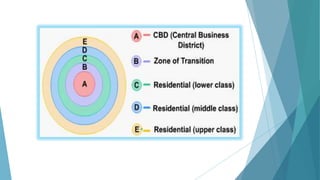
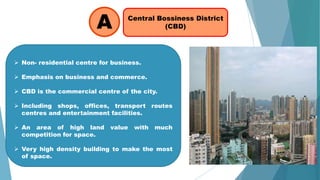
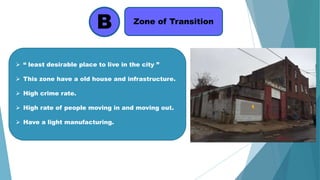
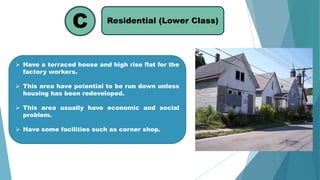
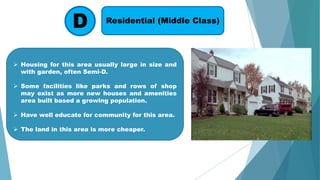
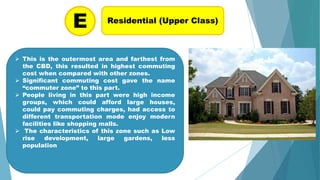
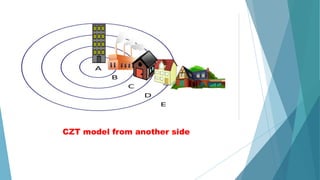
The Burgess Model or Concentric Zone Theory proposes that a city is organized into concentric semi-circular zones radiating out from the Central Business District. The innermost zone is used for commercial purposes and has the highest land values. The next zone is industrial and residential and sees more turnover of residents. The outer zones are exclusively residential, with higher income households living farther from the city center. This model was developed in the 1920s to explain socioeconomic divides and the relationship between status and distance from the urban core.