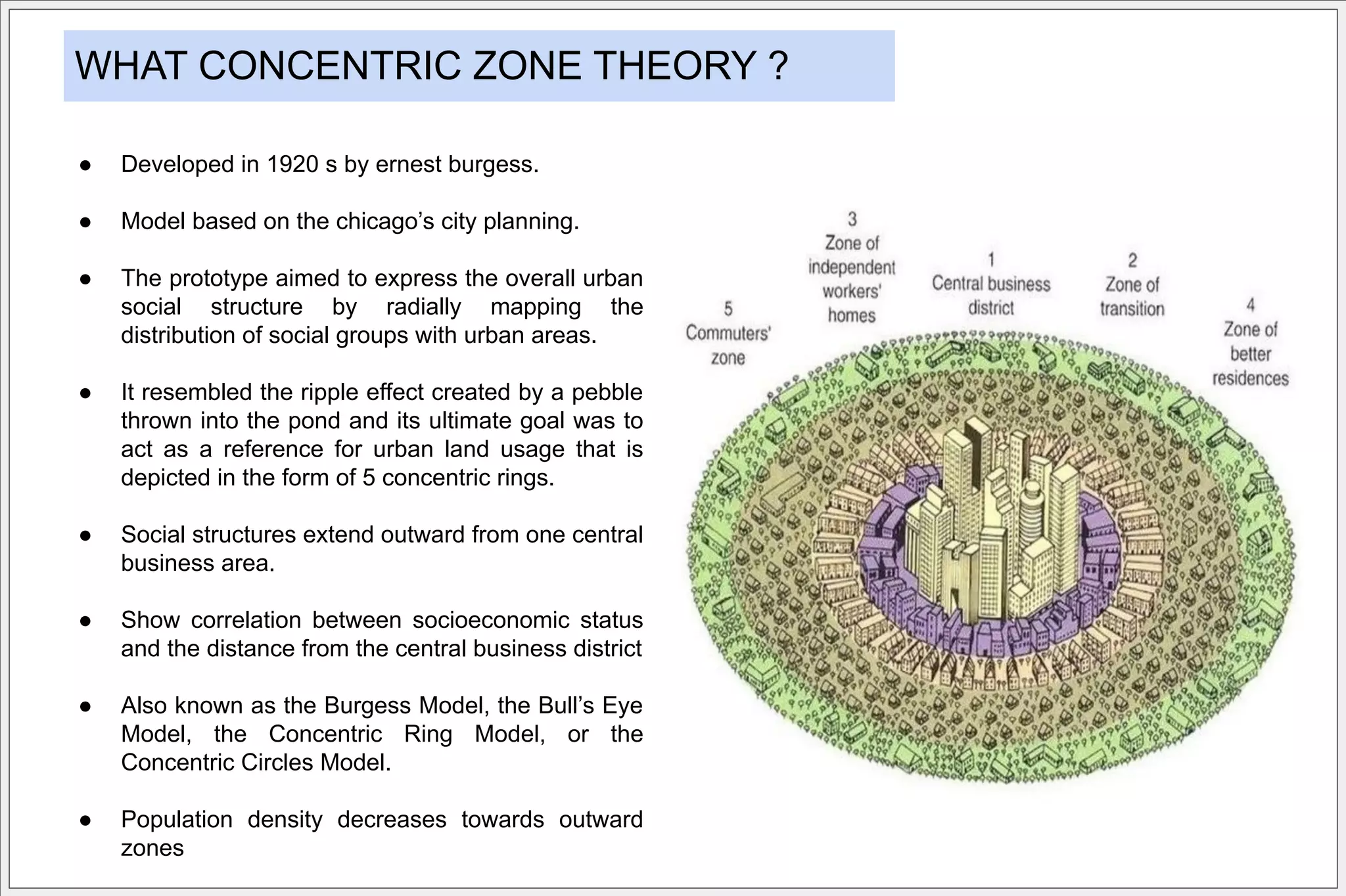
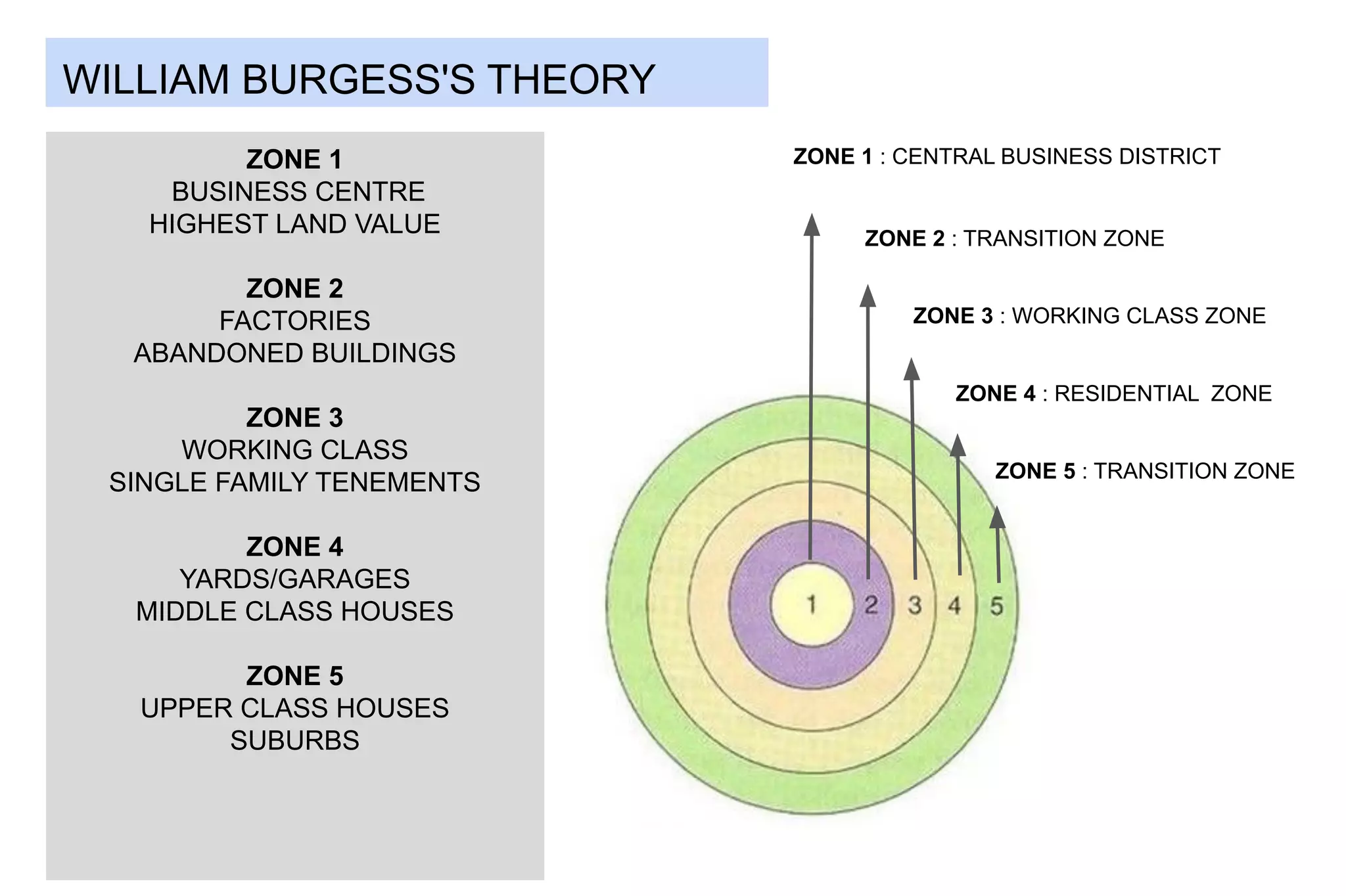
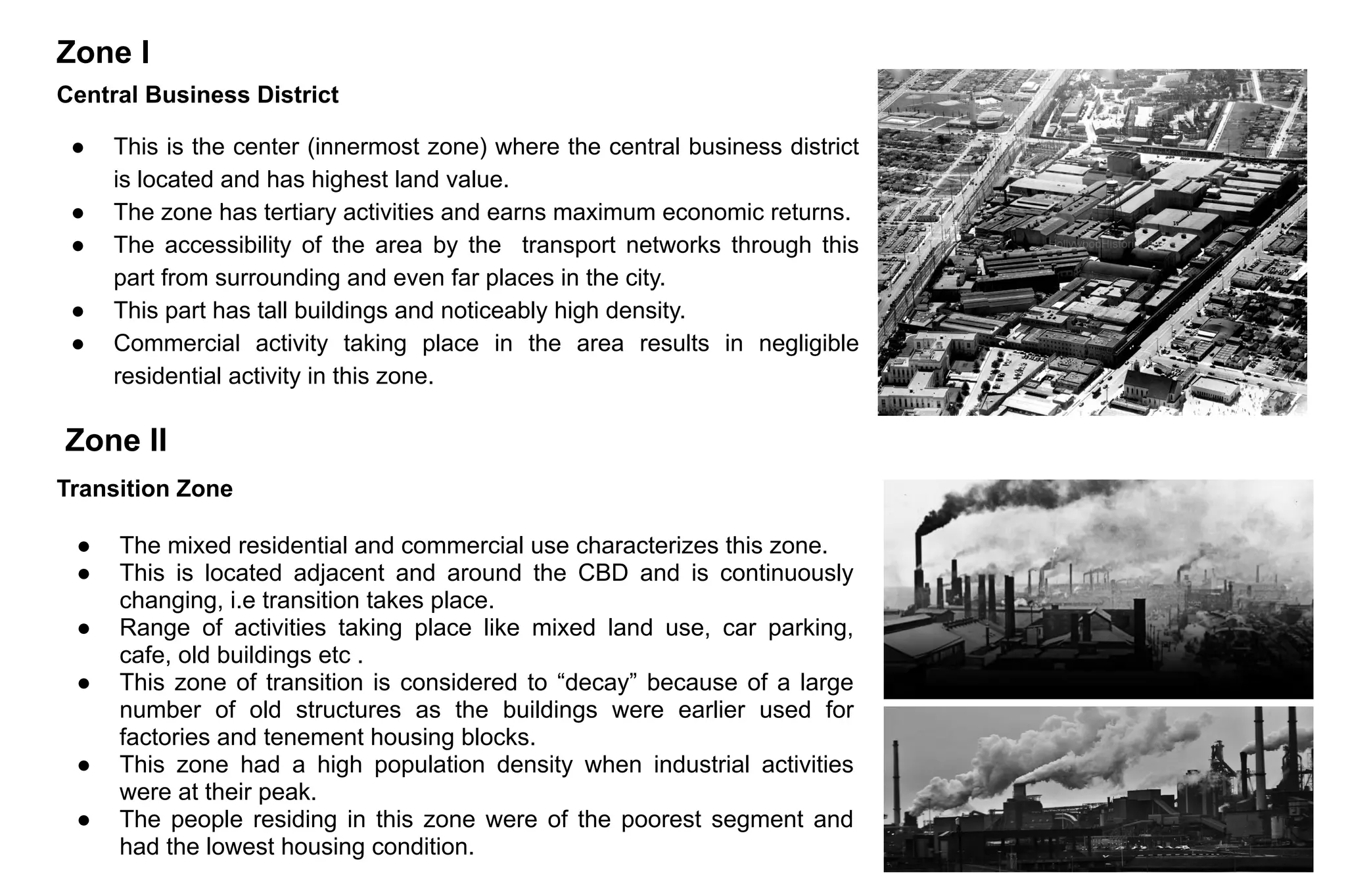
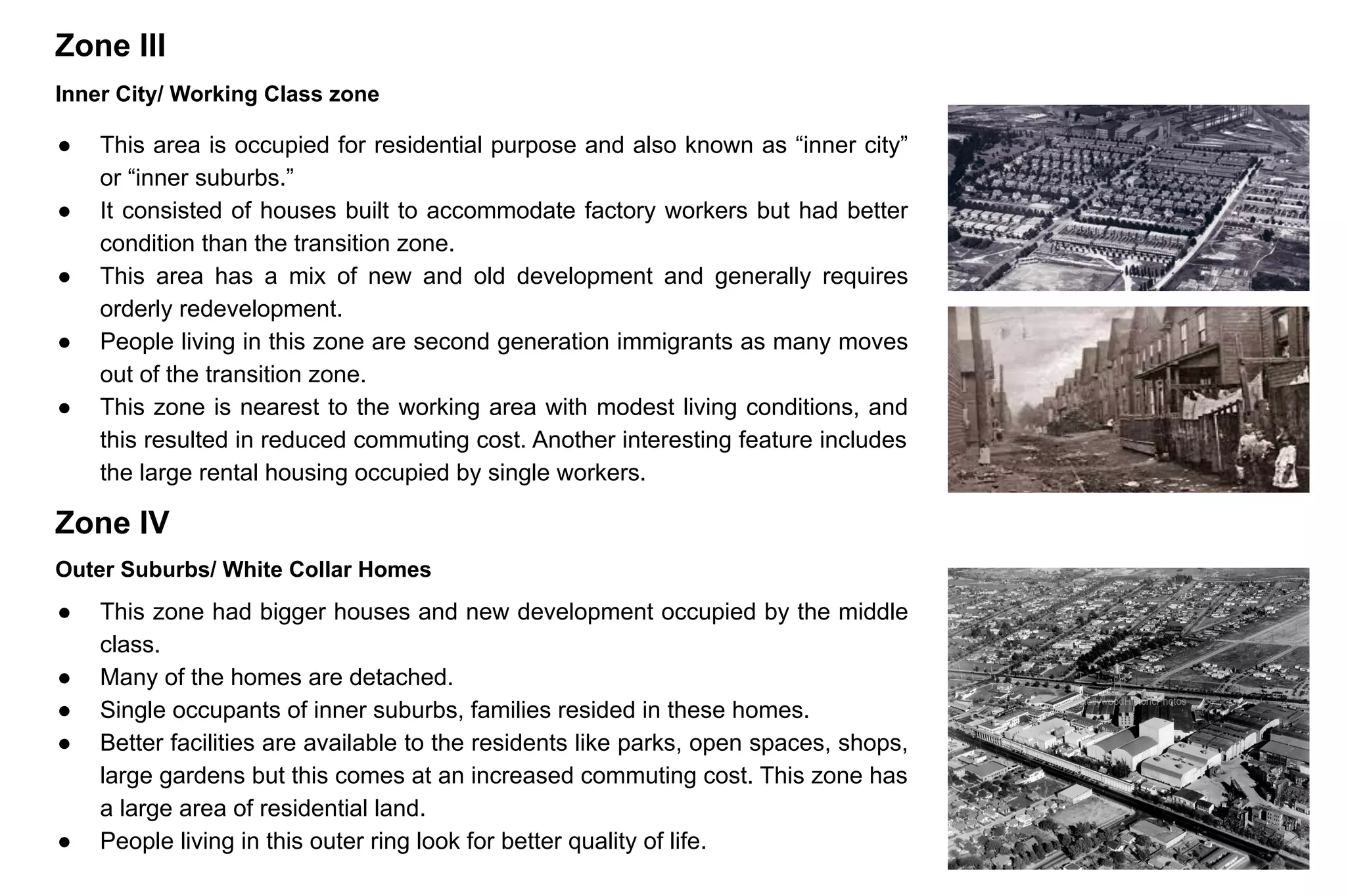
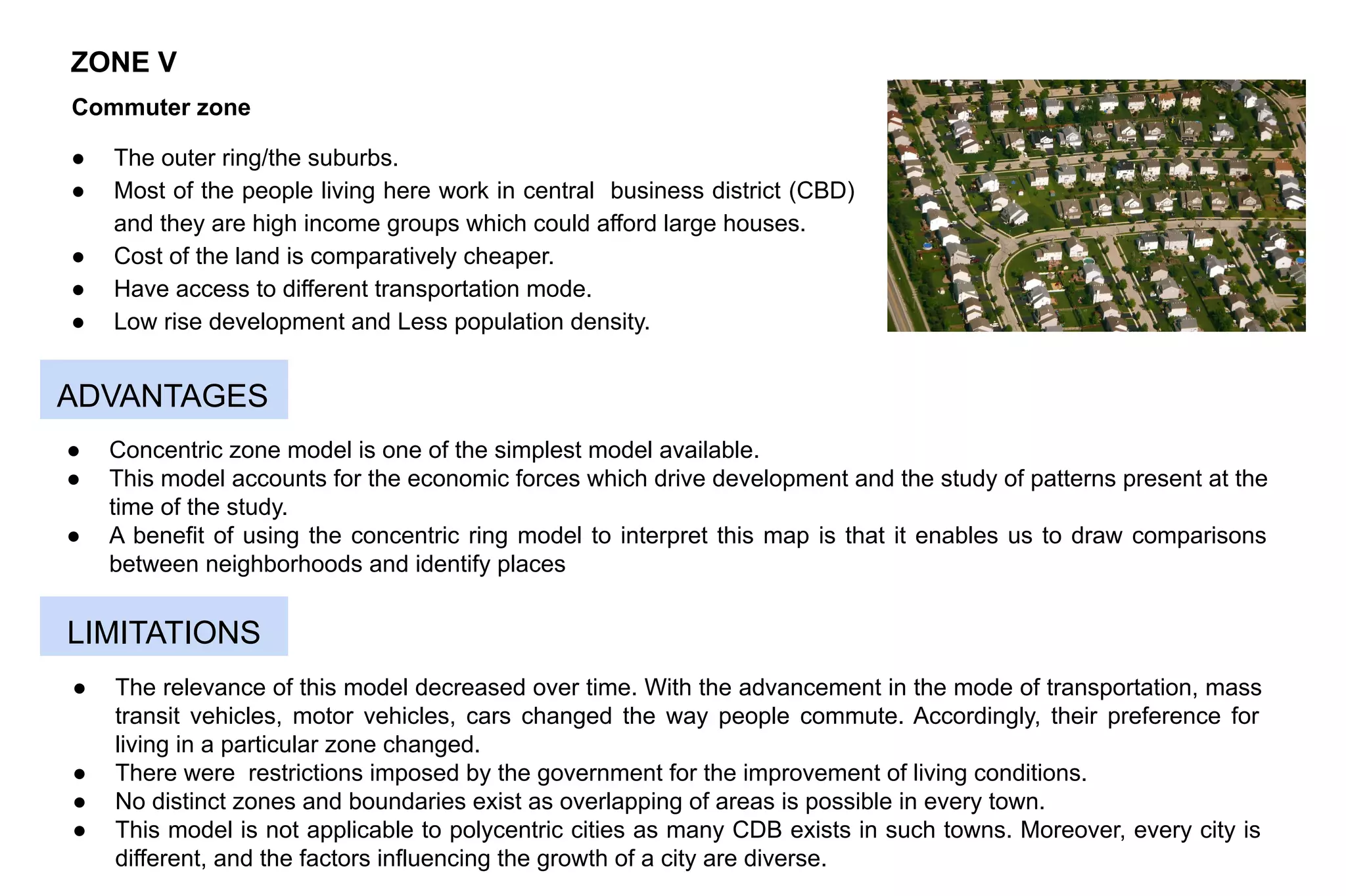
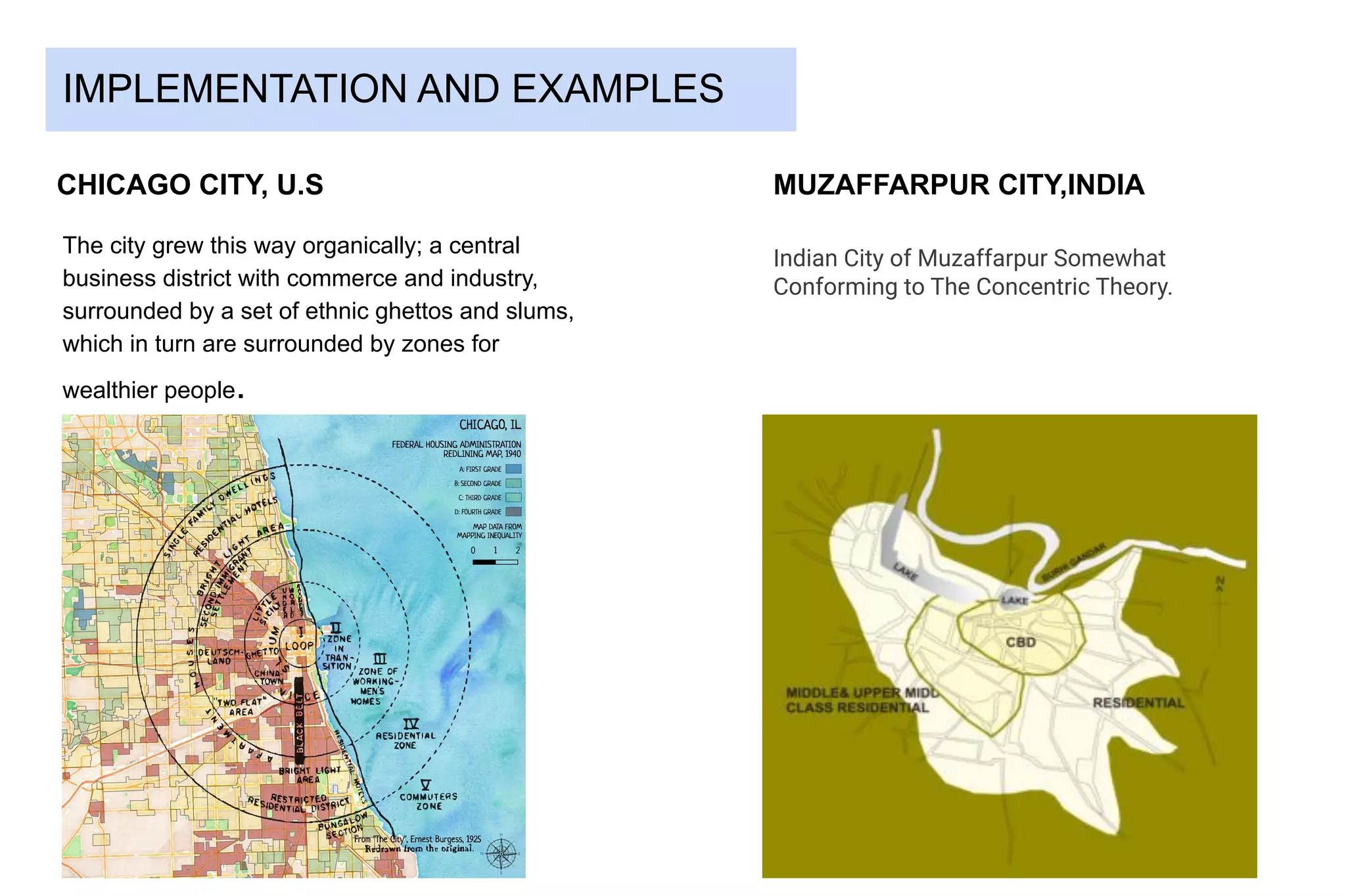
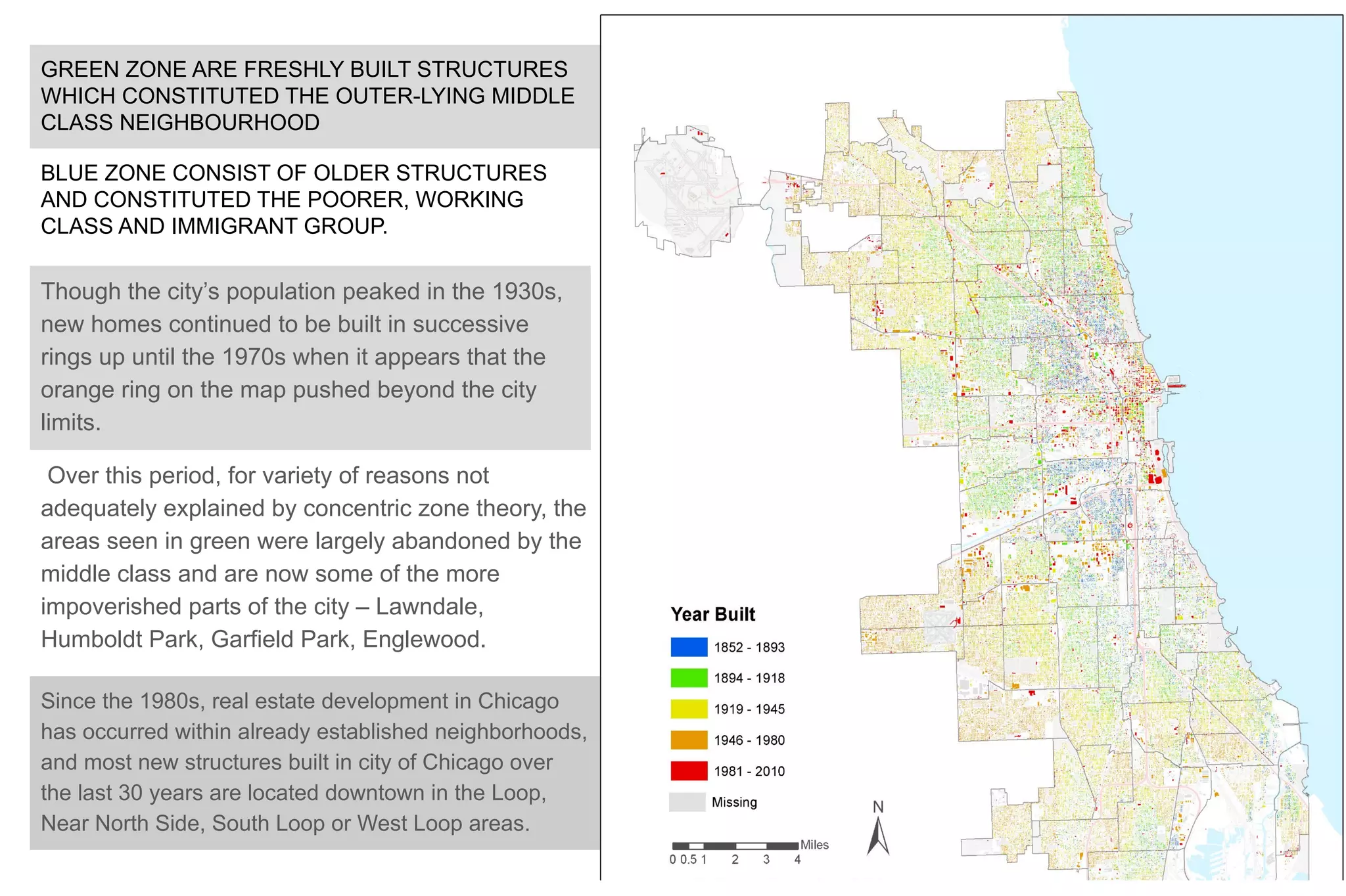
Ernest Burgess developed the concentric zone theory in the 1920s to model urban spatial patterns. The theory proposes that a city is organized into 5 concentric rings radiating out from the central business district. Zone 1 is the CBD with commercial activities. Zone 2 is a transitional zone with factories and abandoned buildings. Zone 3 is inhabited by working-class residents in tenements. Zone 4 contains middle-class houses, yards, and garages. Zone 5 is located furthest from the CBD and contains upper-class houses and suburbs. The theory argues that socioeconomic status decreases the further one moves from the CBD.