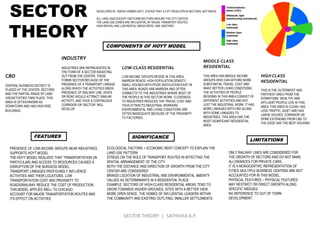
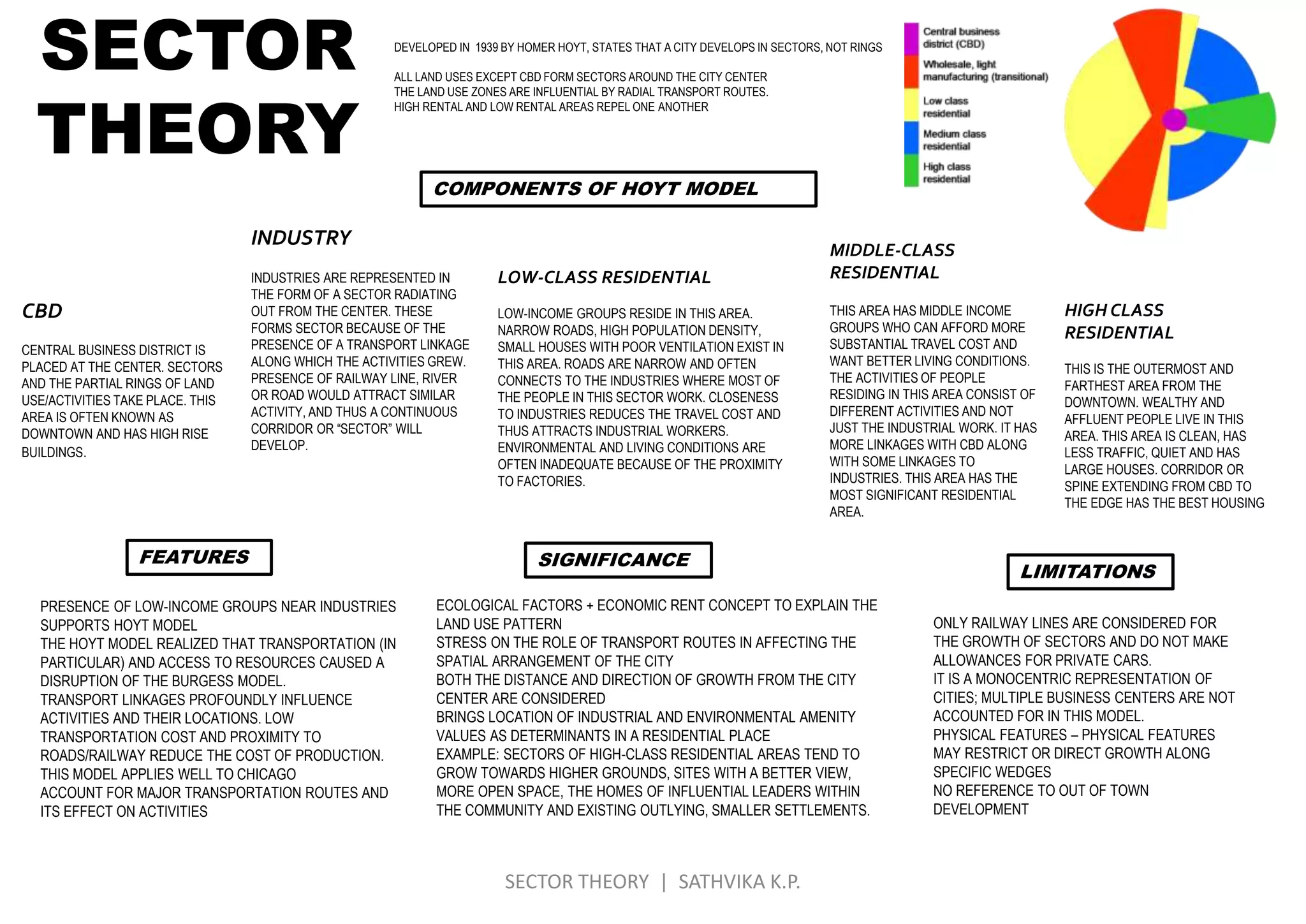
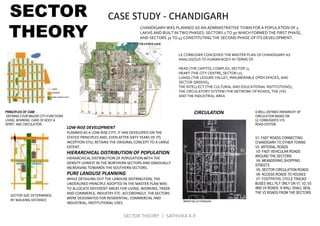
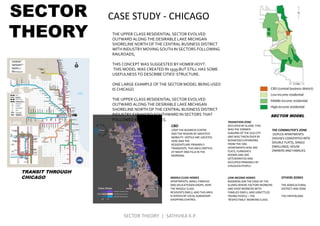
The Hoyt sector model proposes that cities develop in wedge-shaped sectors radiating out from the central business district rather than in concentric rings. The key components are the CBD at the center, followed outward by industrial, working-class residential, middle-class residential, and high-class residential sectors. Transportation routes strongly influence the shape and location of these land use zones. The model was influenced by Chicago's development and applies the concepts of ecological factors and economic rent. While insightful for its time, it has limitations such as only considering rail transport and not accounting for multiple business centers or recent decentralization trends.