Download as PDF, PPTX


![How might [company name] get closer
to existing customer?
Beyond commercial transactions, brand strength
is about relationship
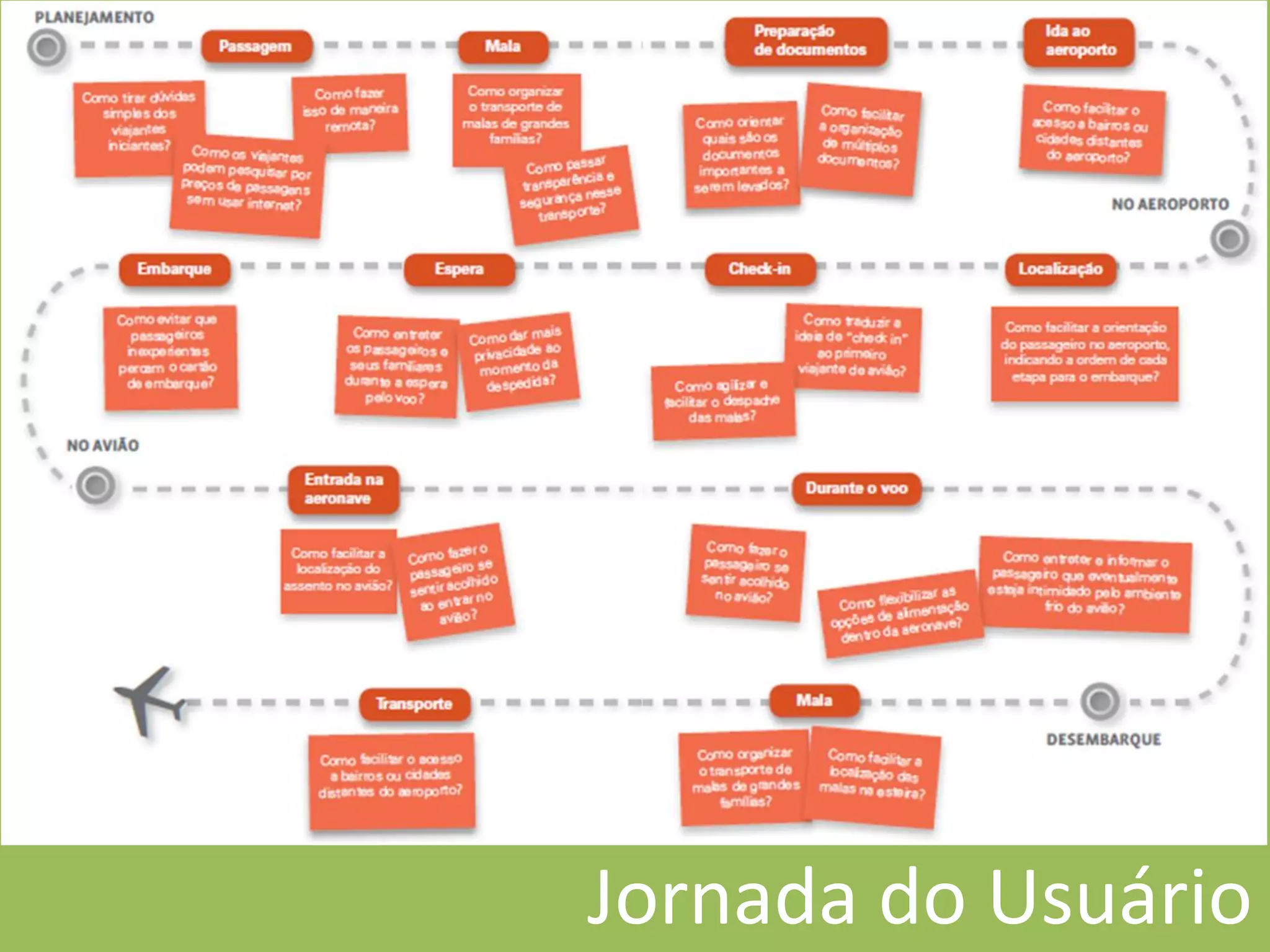
Customers can be seen to be on a journey through a series of touchpoints
with [company name]. To maintain a customer relationship all of these
touch points need to be continually cultivated and designed to be
increasingly satisfying experiences – through encouter, planning,
purchase, implementation and support, and continuing interactions.](https://image.slidesharecdn.com/designthinking-131008133750-phpapp02/75/Design-thinking-49-2048.jpg)
![How might [company name] encourage
business growth for its customers?
Creating new benefits, and value, for customers
through innovation
Can [company name] understand market trends and expectations better
than its customers. Can it provide innovation that build on this
knowledge with features that generate more business growth for its
customers?](https://image.slidesharecdn.com/designthinking-131008133750-phpapp02/75/Design-thinking-50-2048.jpg)
![How might technology be applied to
improve end-users experiences?
Is [company name] and engeneering firm – or is it
an innovation firm?
Manufacturing companies tend to regard themselves as primarily
engineering experts. Although quality and safety come first, customers
are often most interested in the benefits of innovation and technology is
only valued as a way to skillfully achieve those benefits
Innovation should be about bringing together smart approaches to
business, technology and user-understanding that ennable new and
better customer and end-user experiences.](https://image.slidesharecdn.com/designthinking-131008133750-phpapp02/75/Design-thinking-51-2048.jpg)

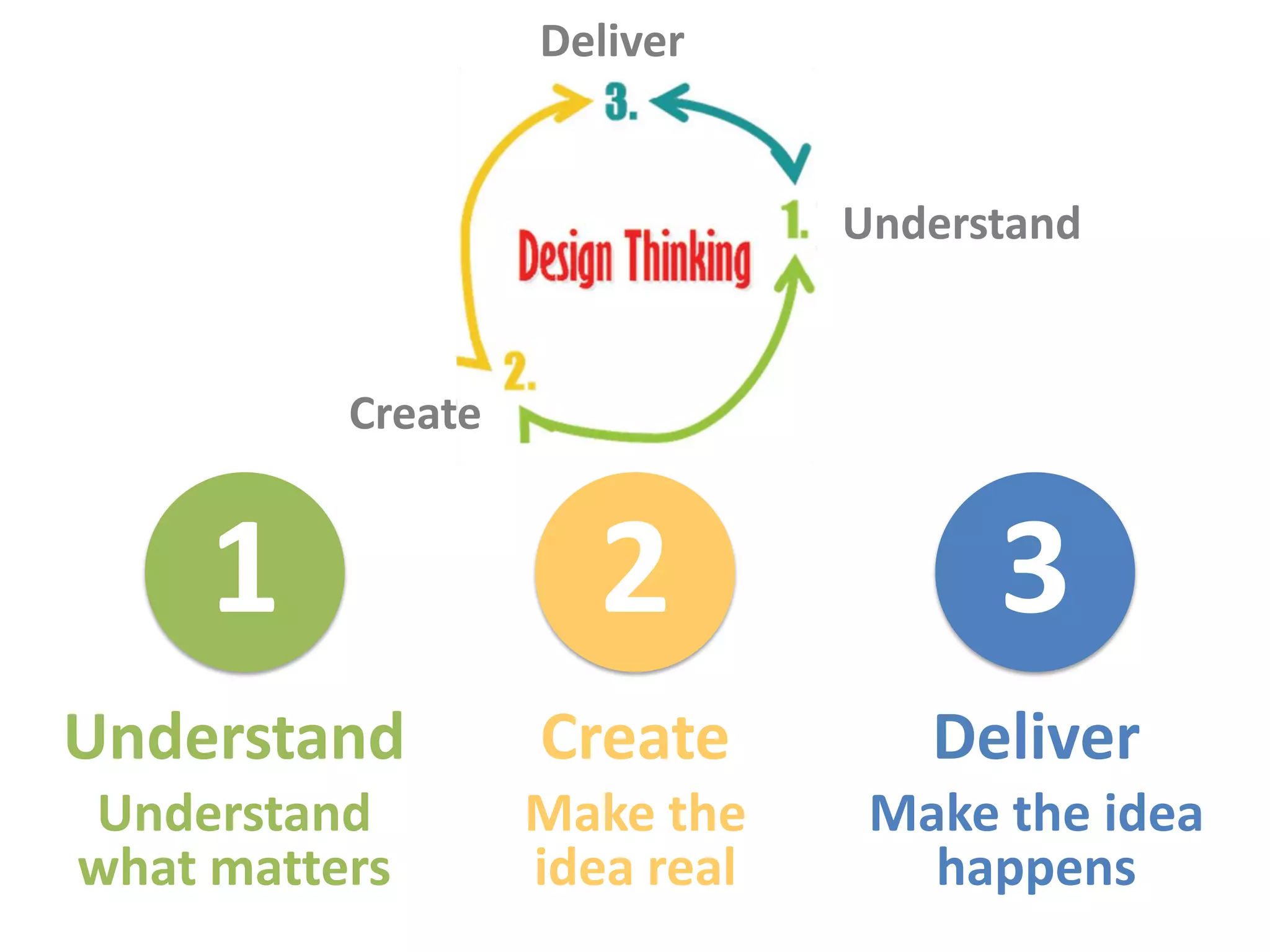
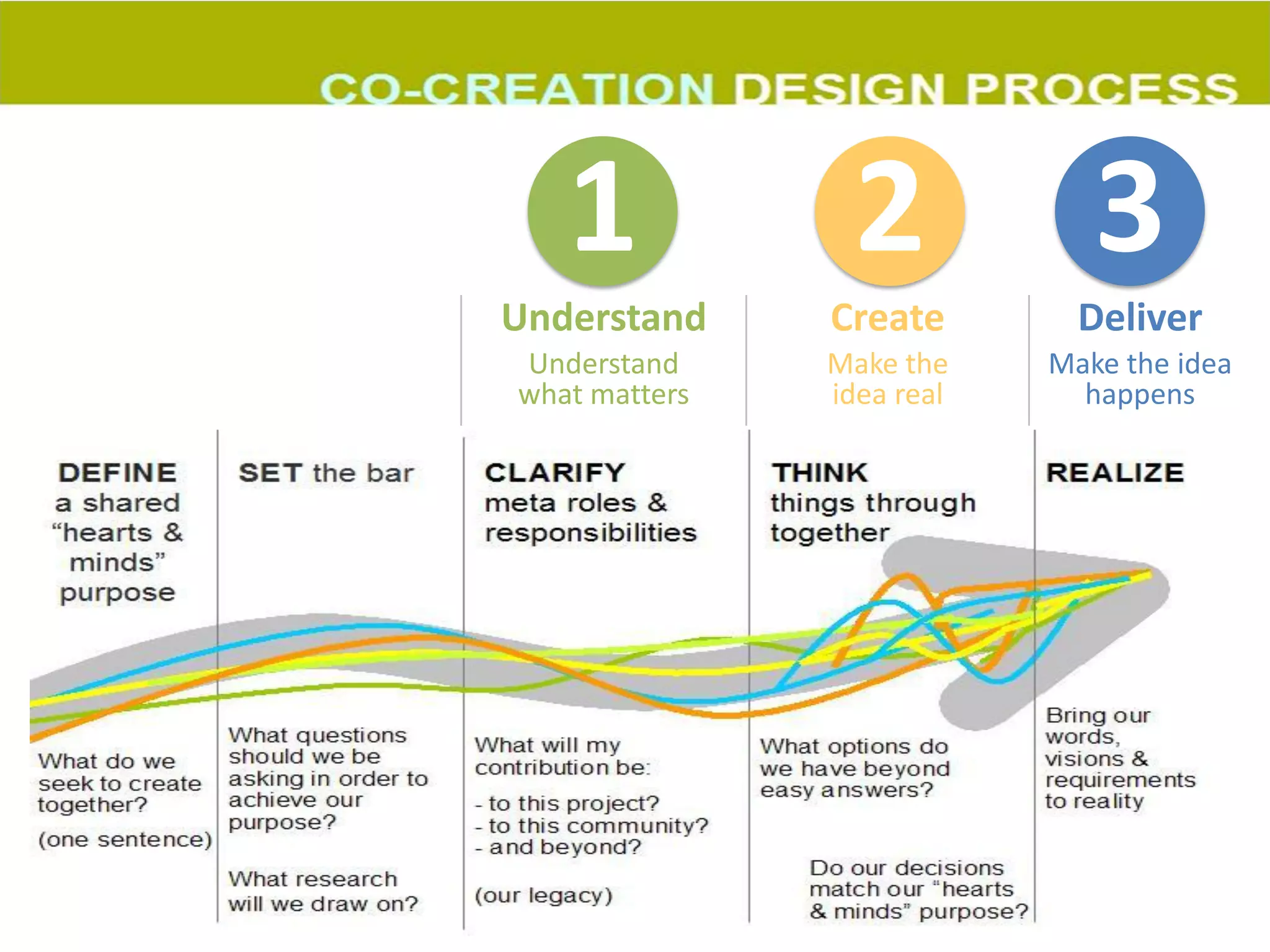
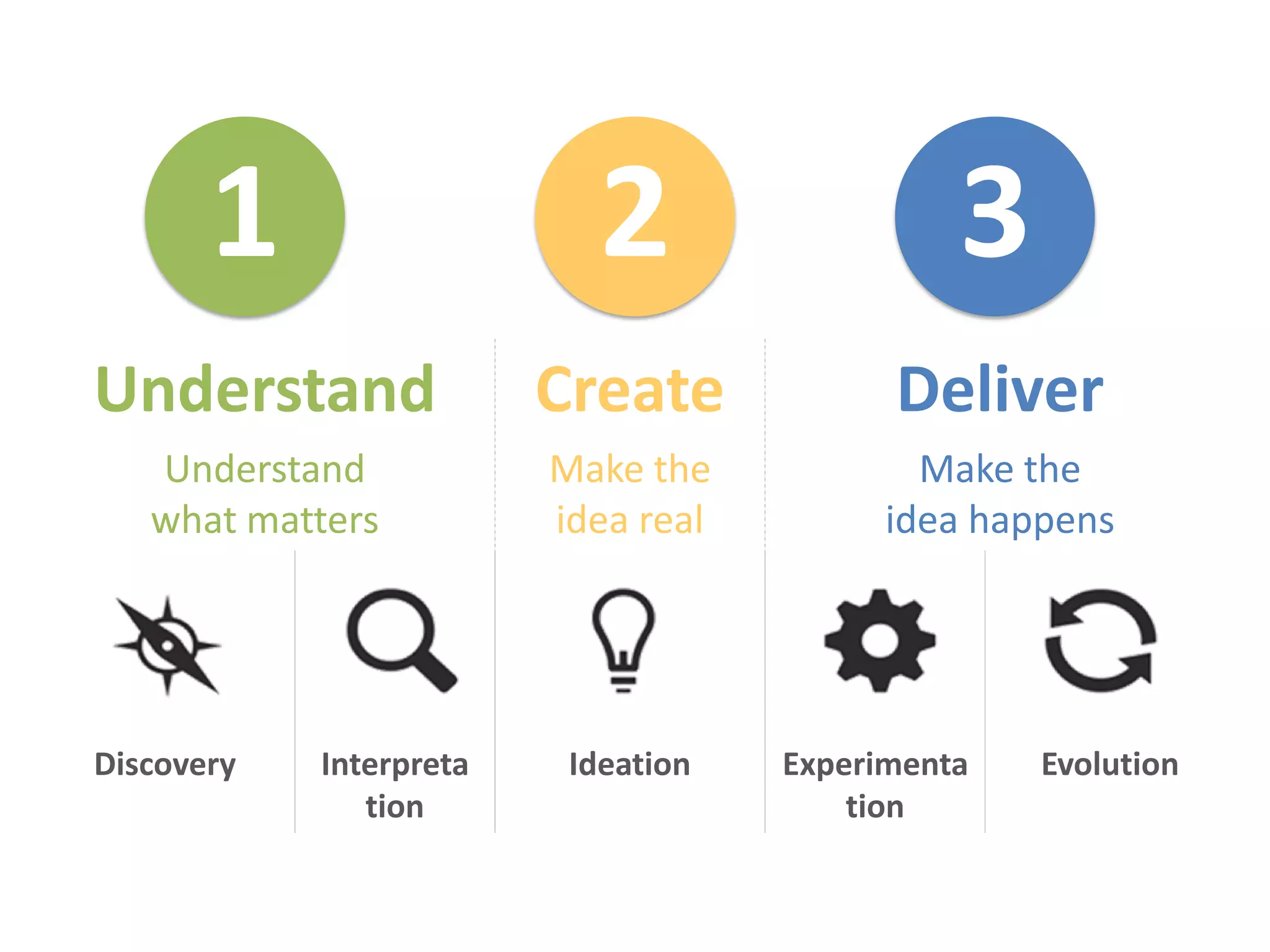
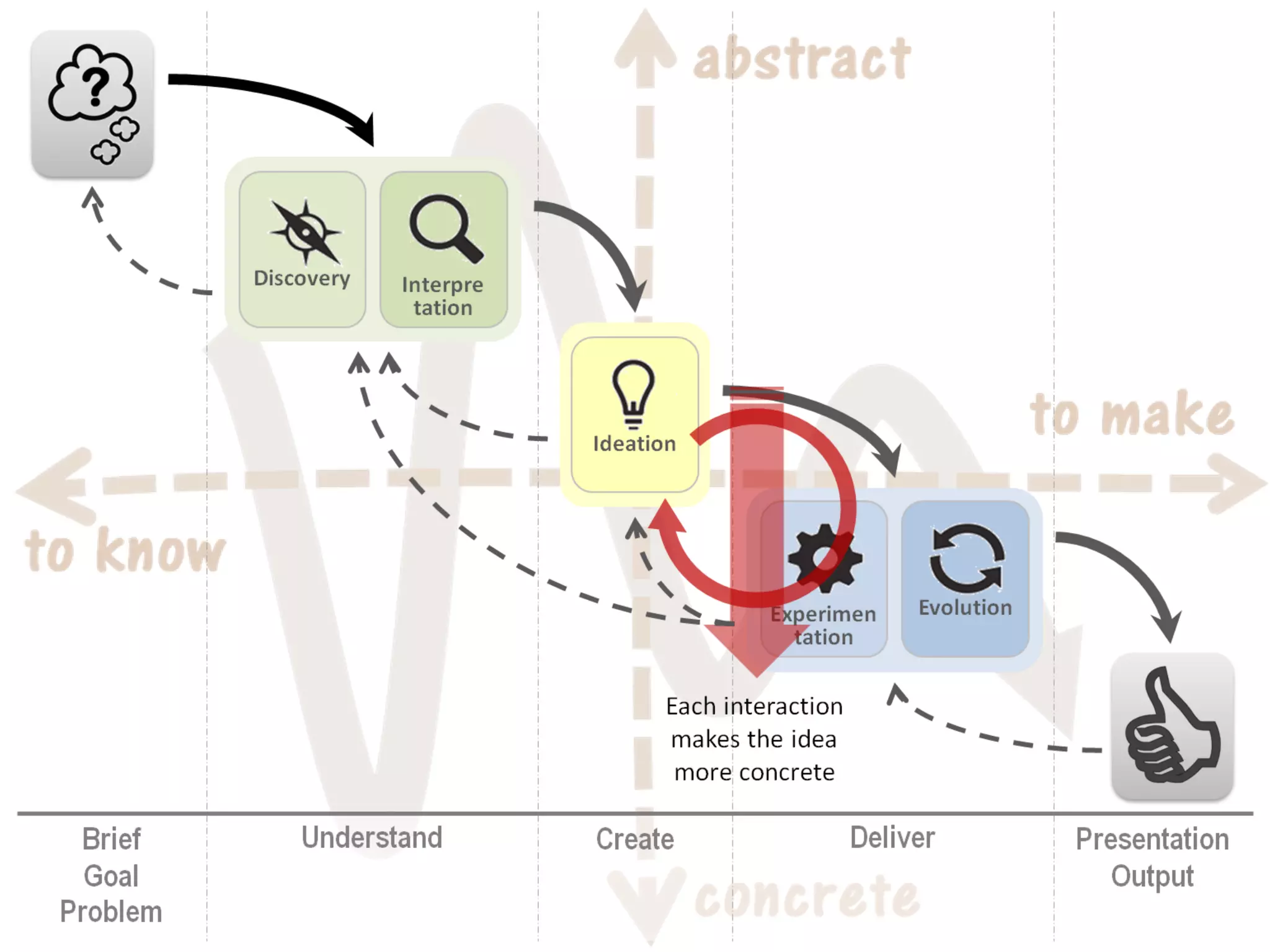
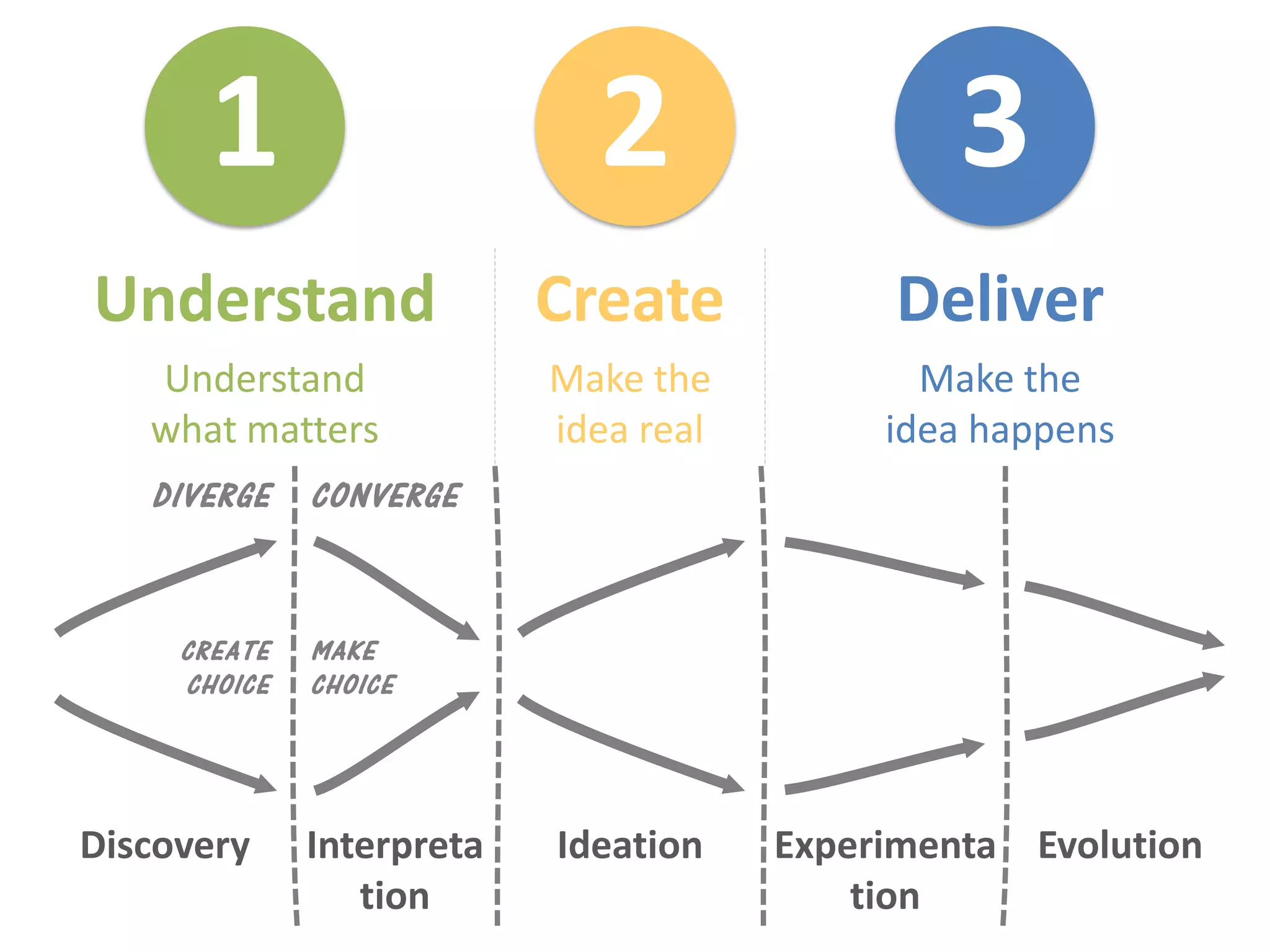
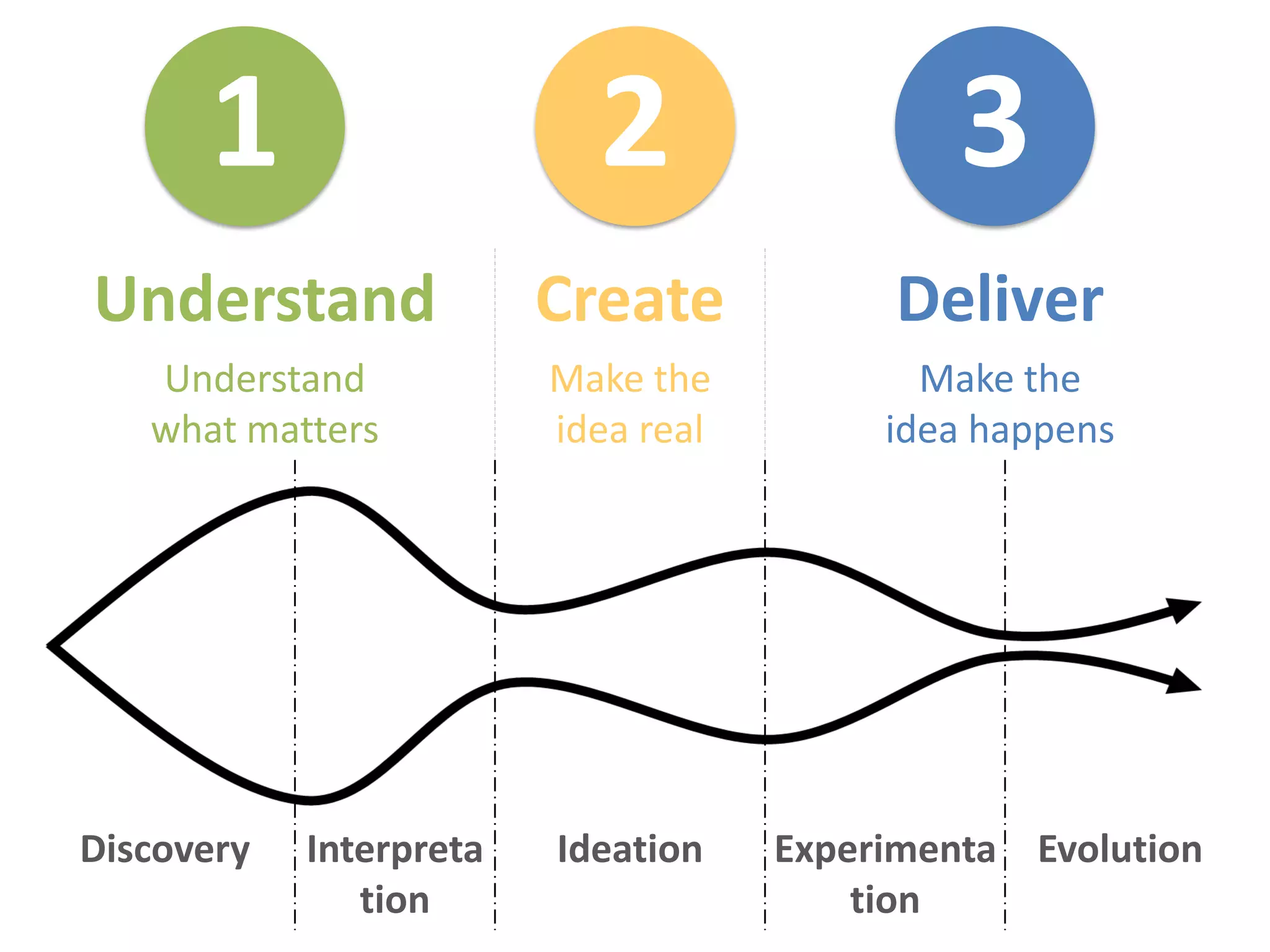
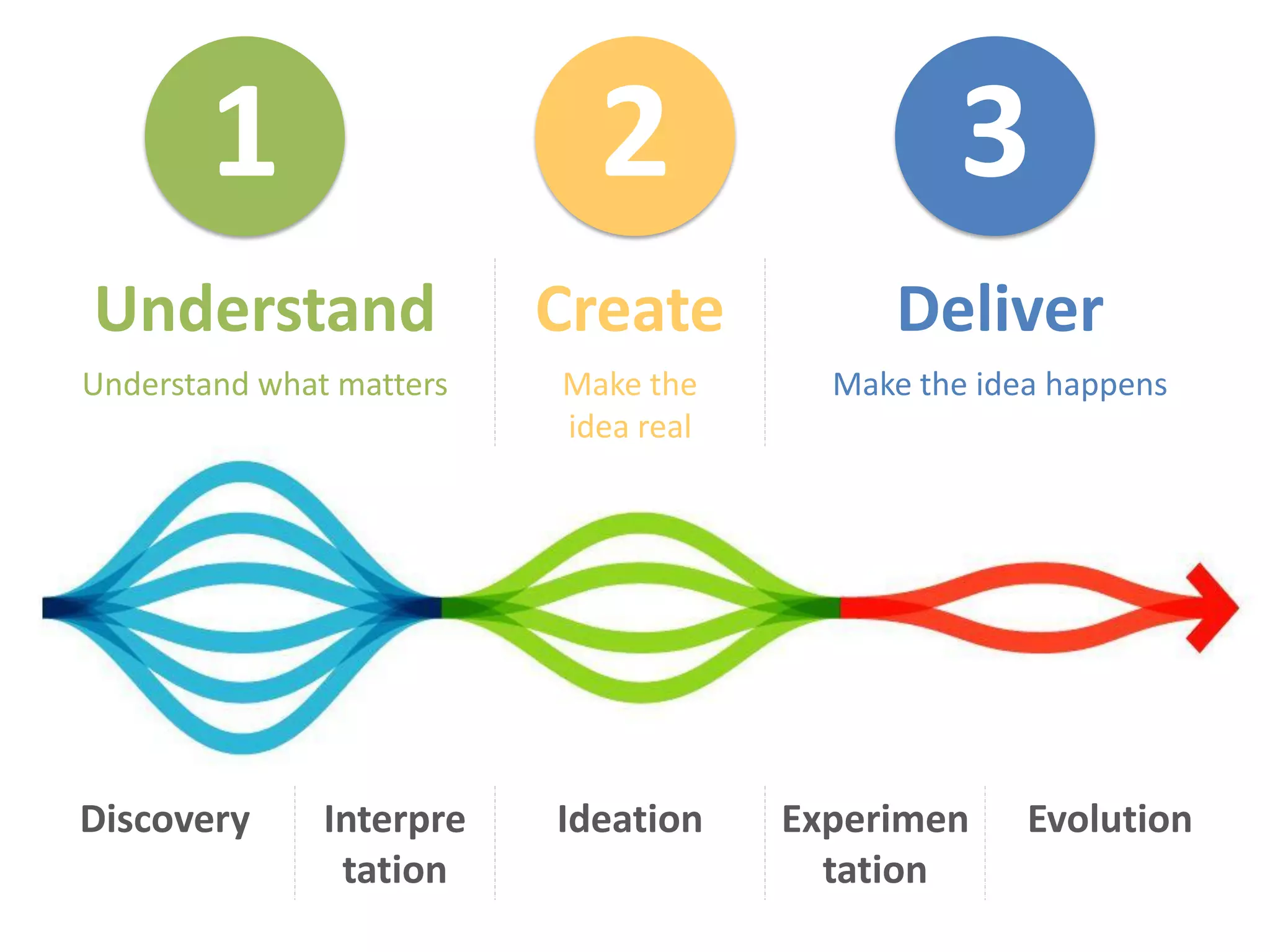

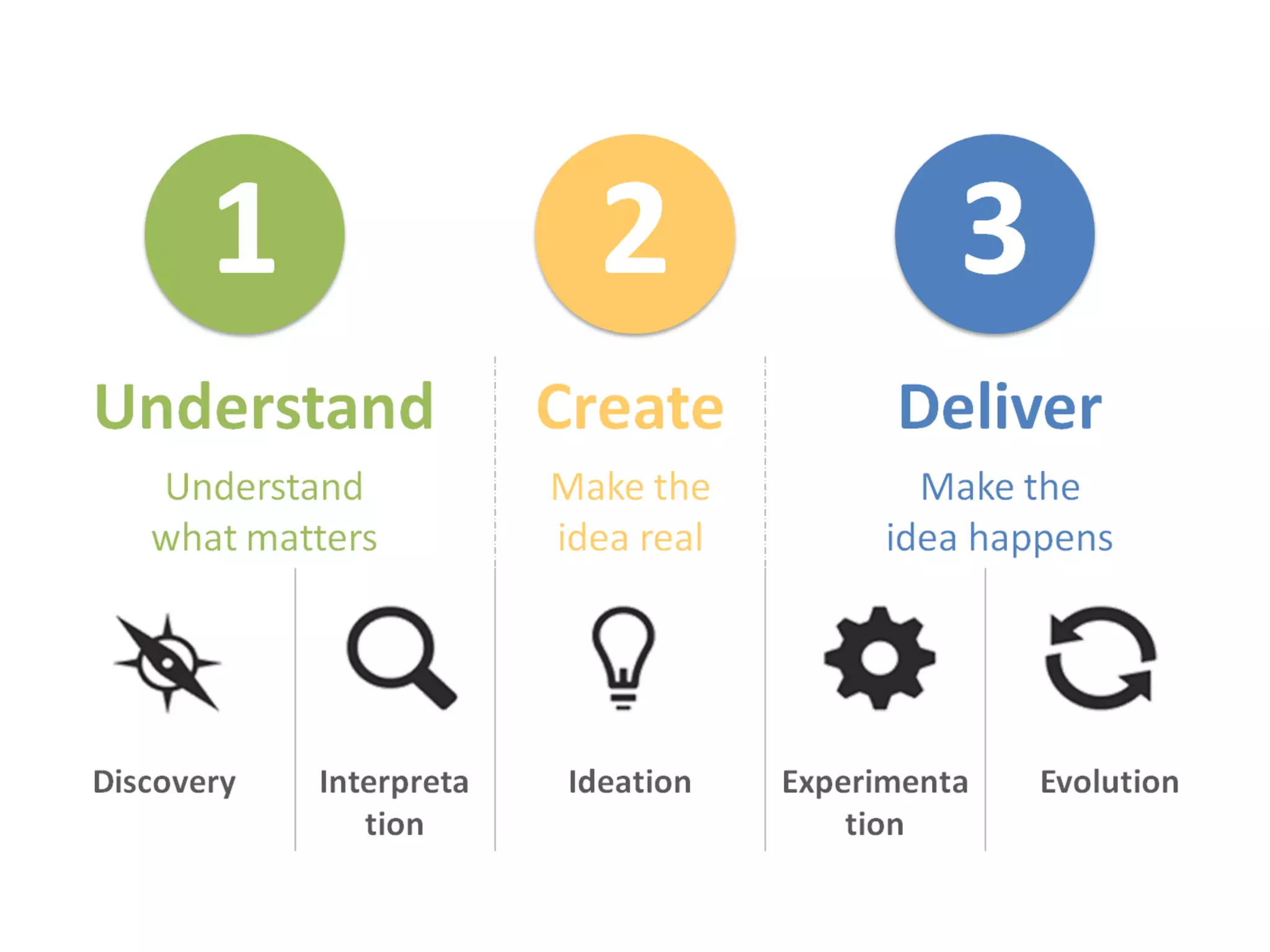
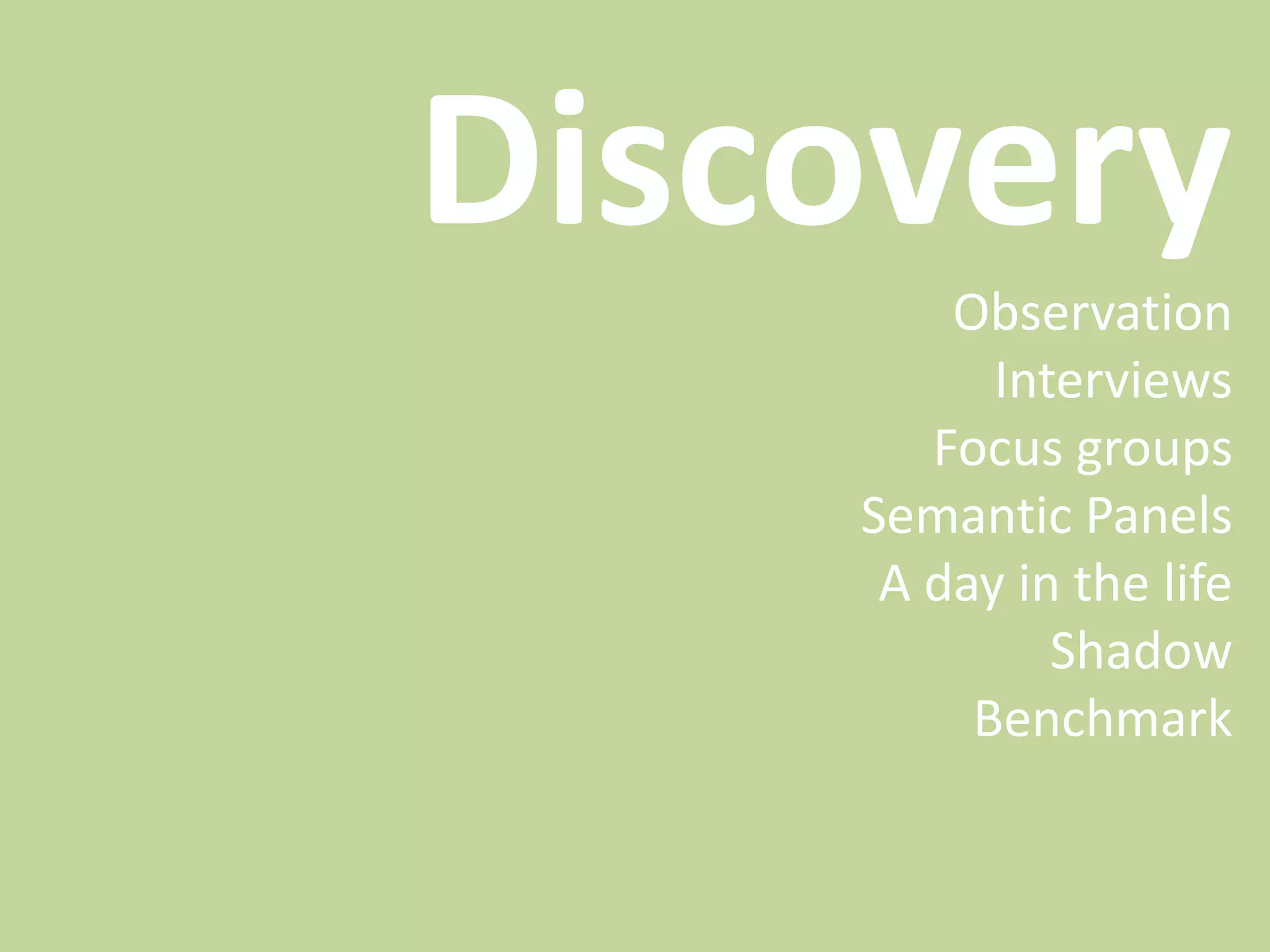
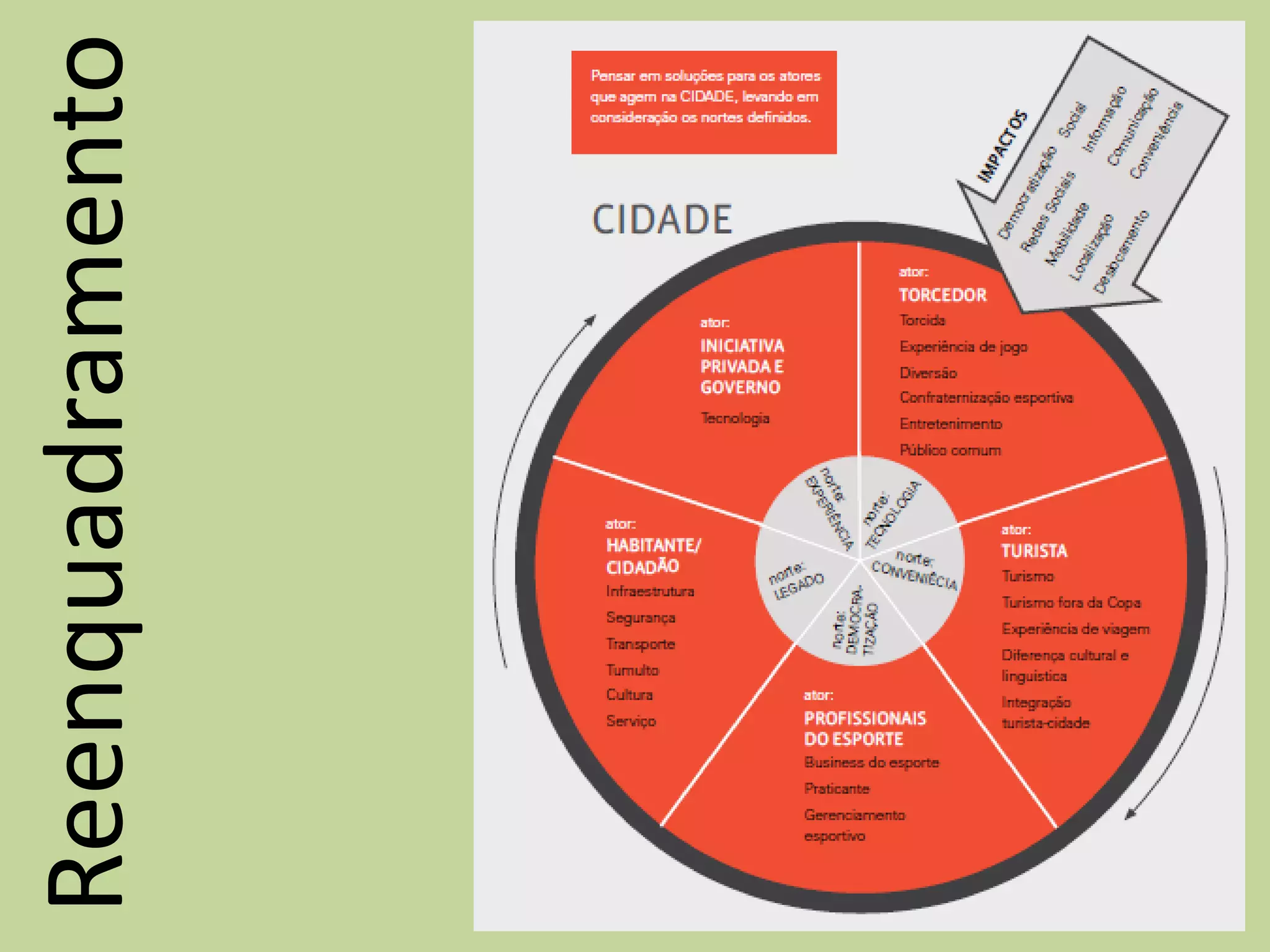
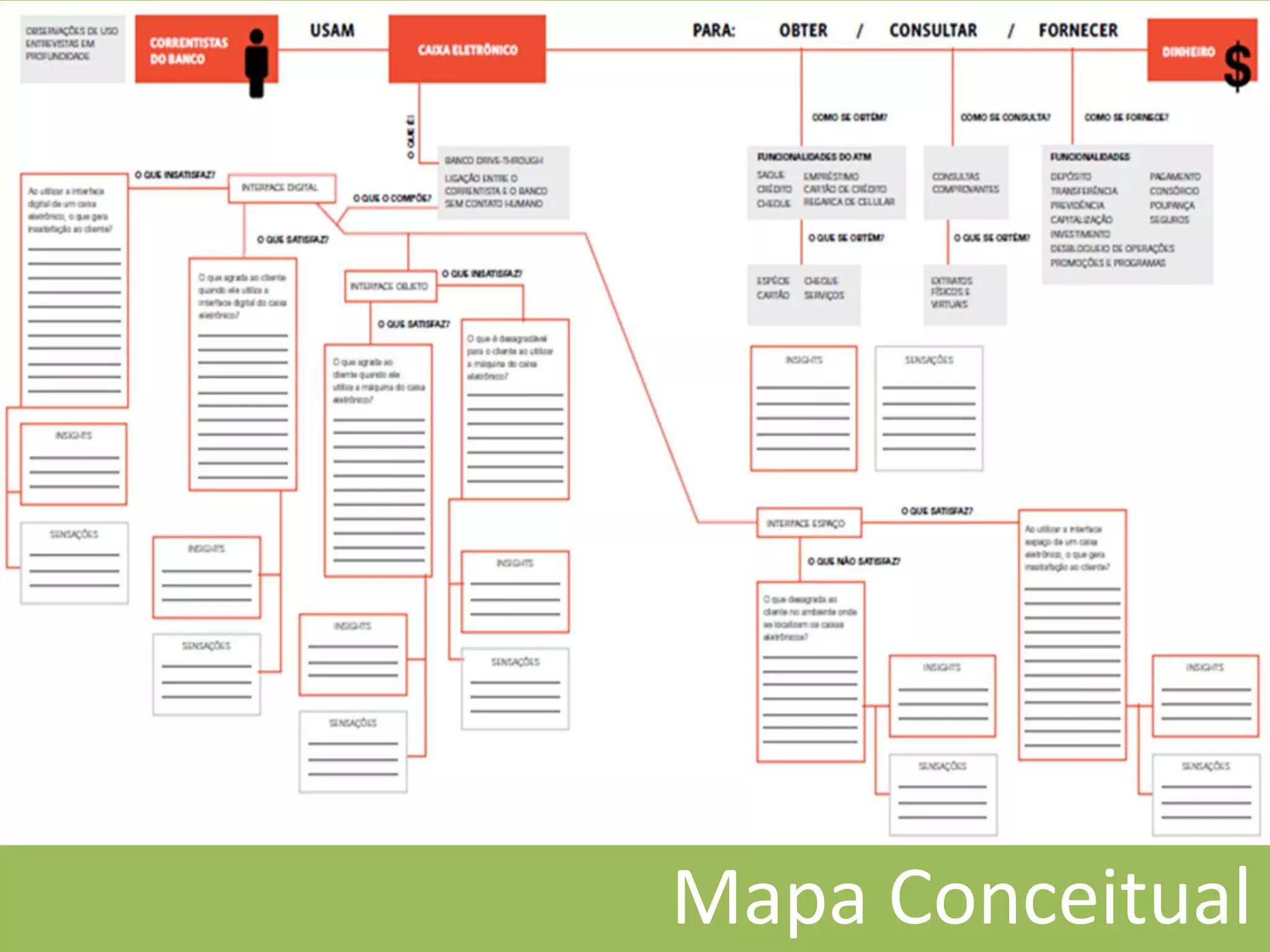
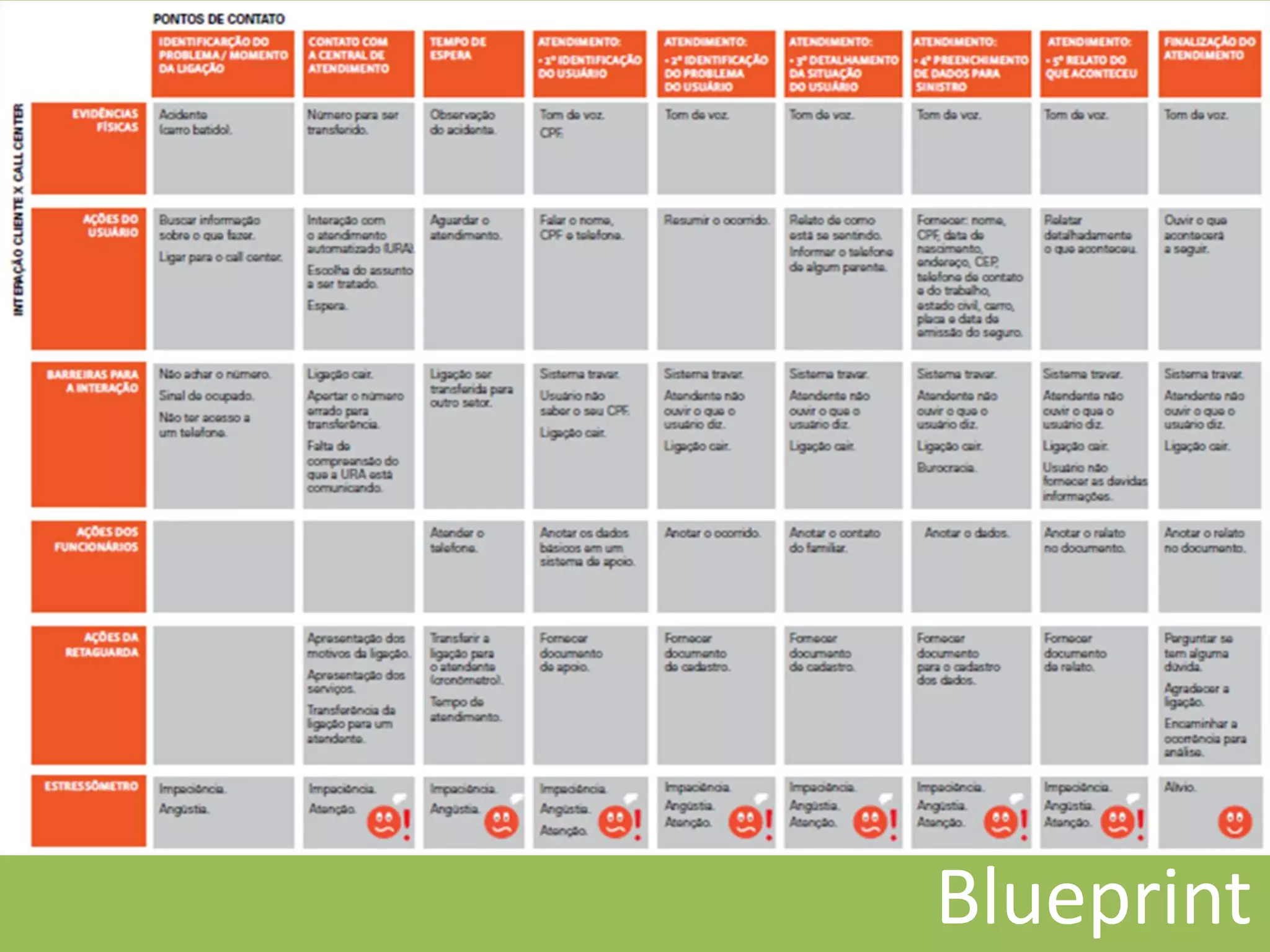
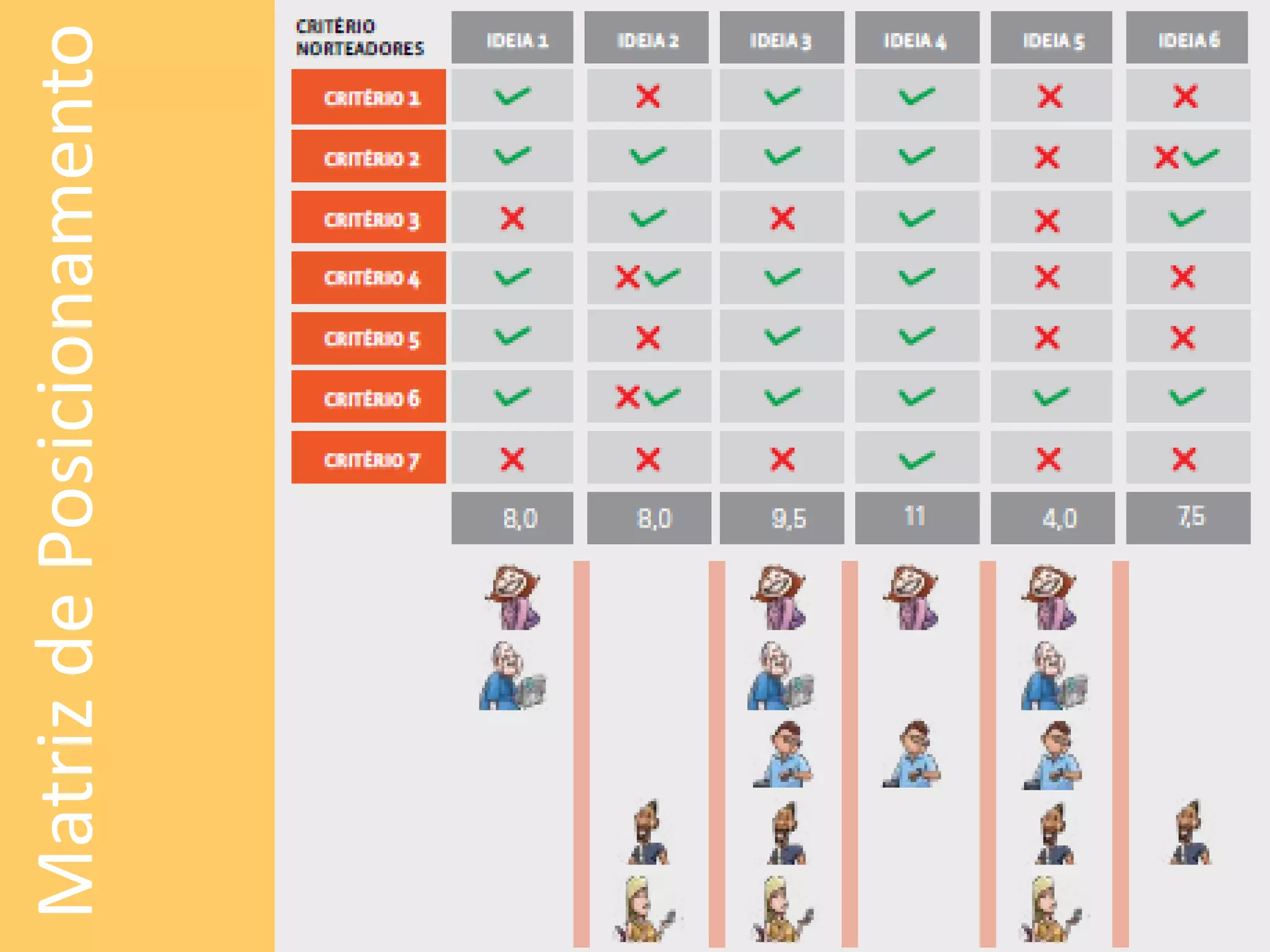
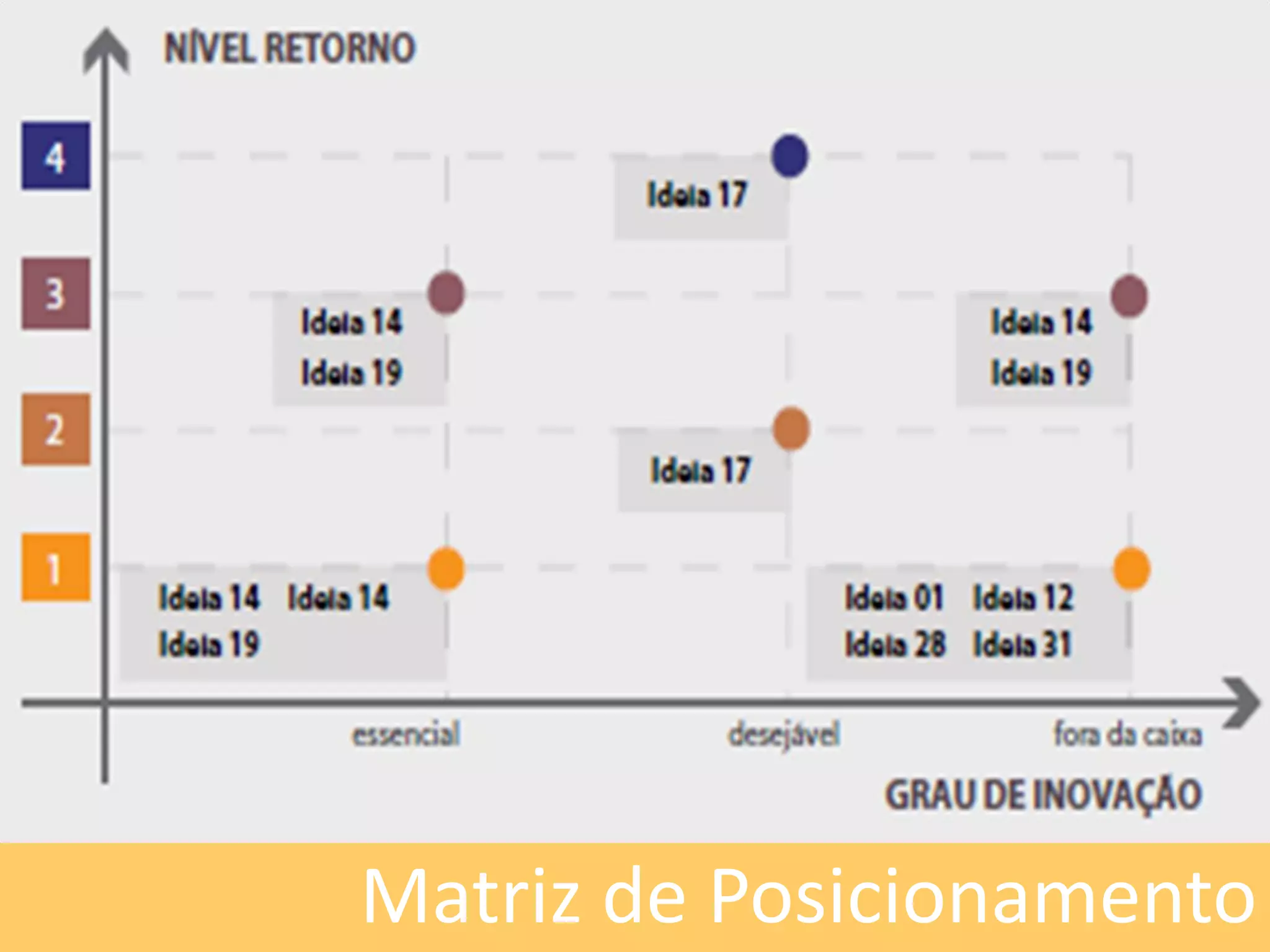
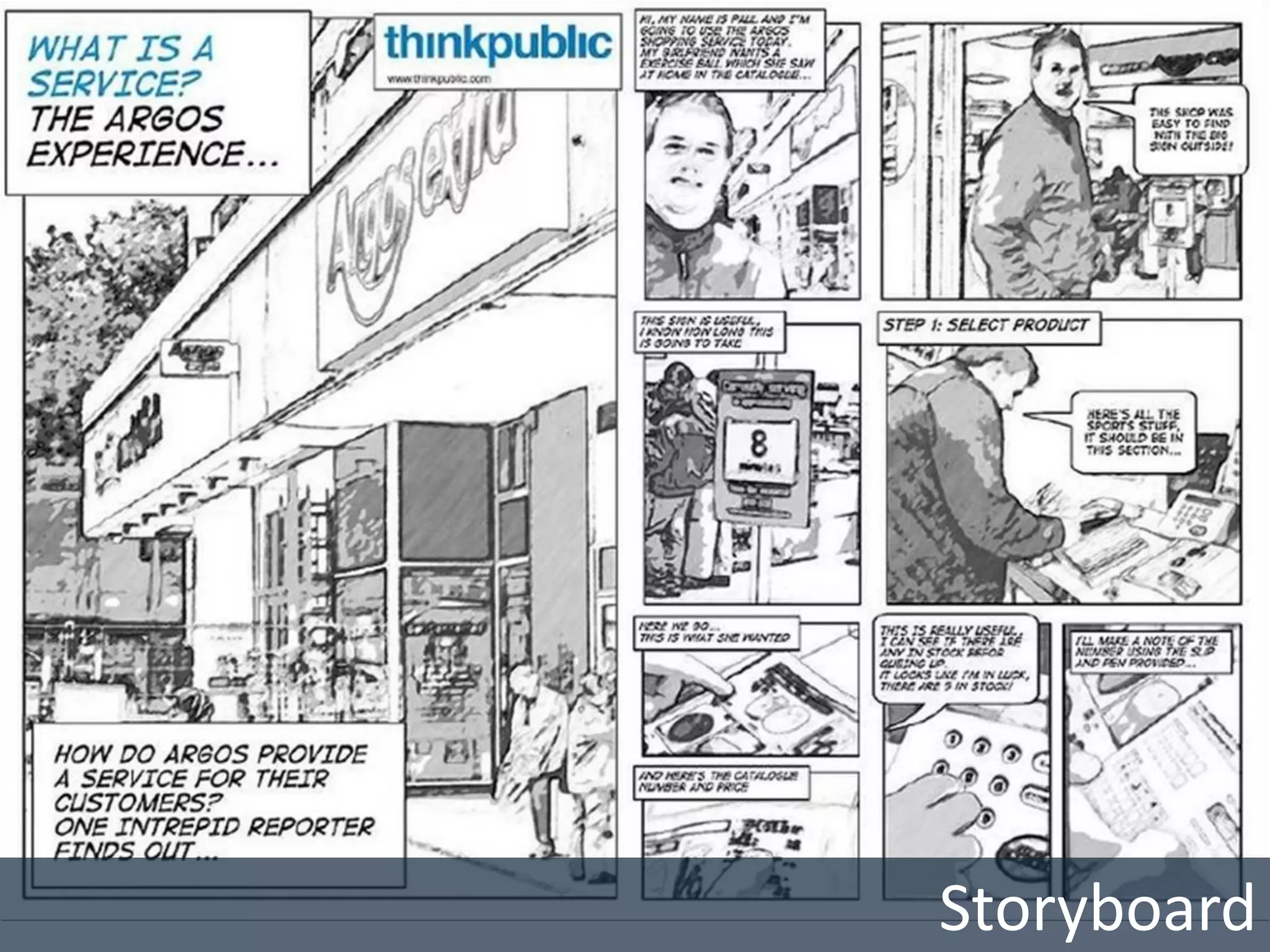

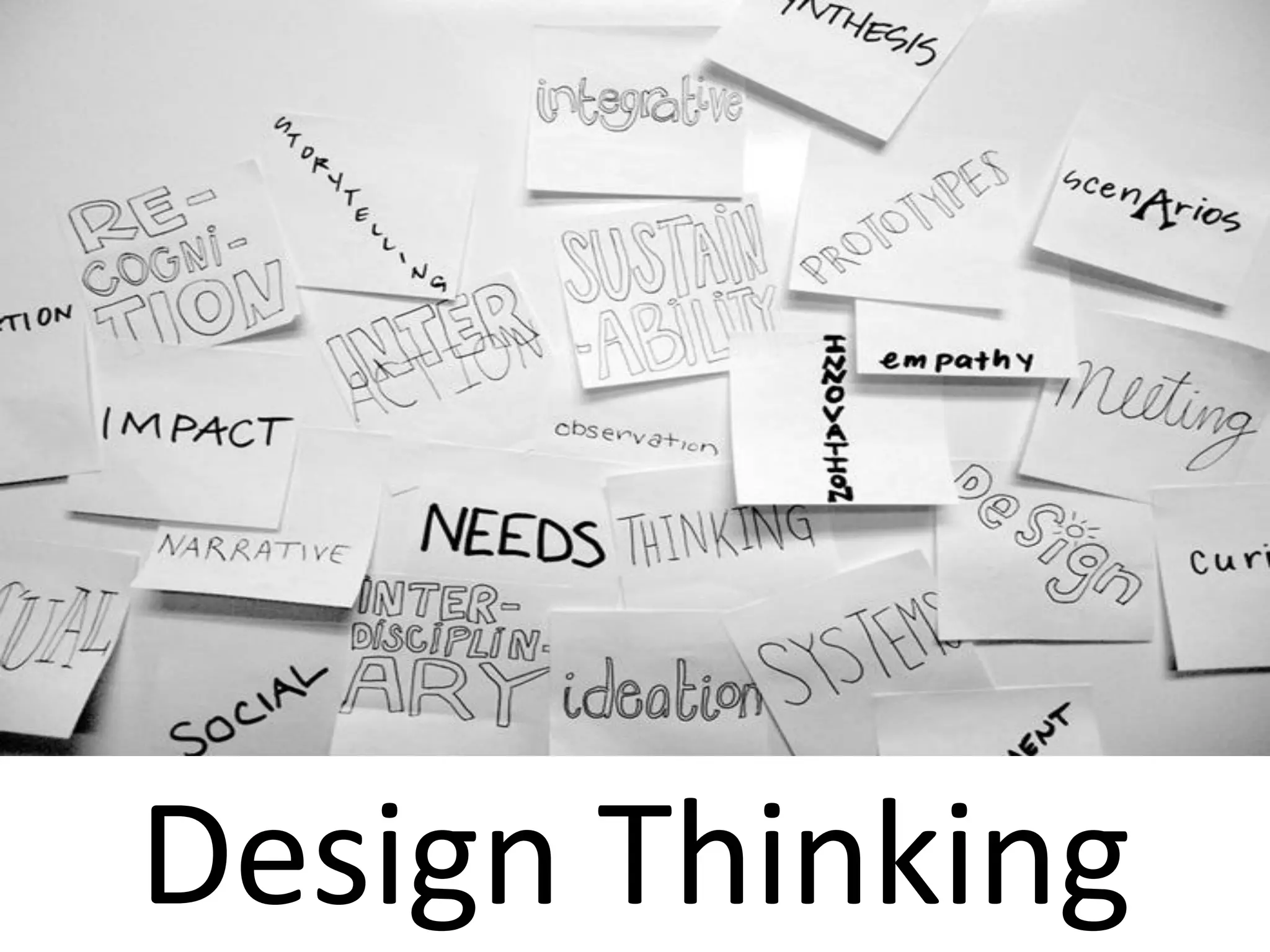
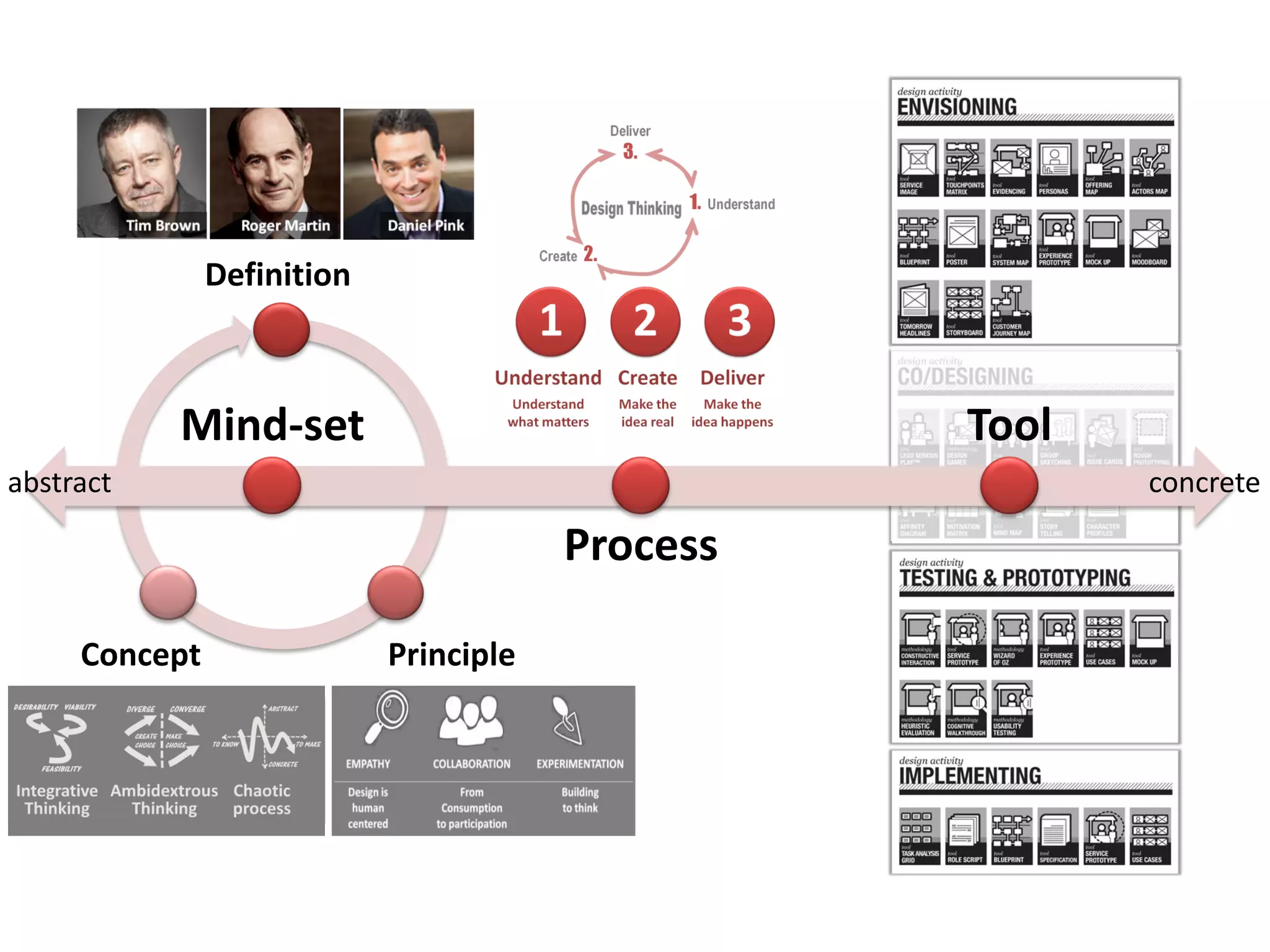
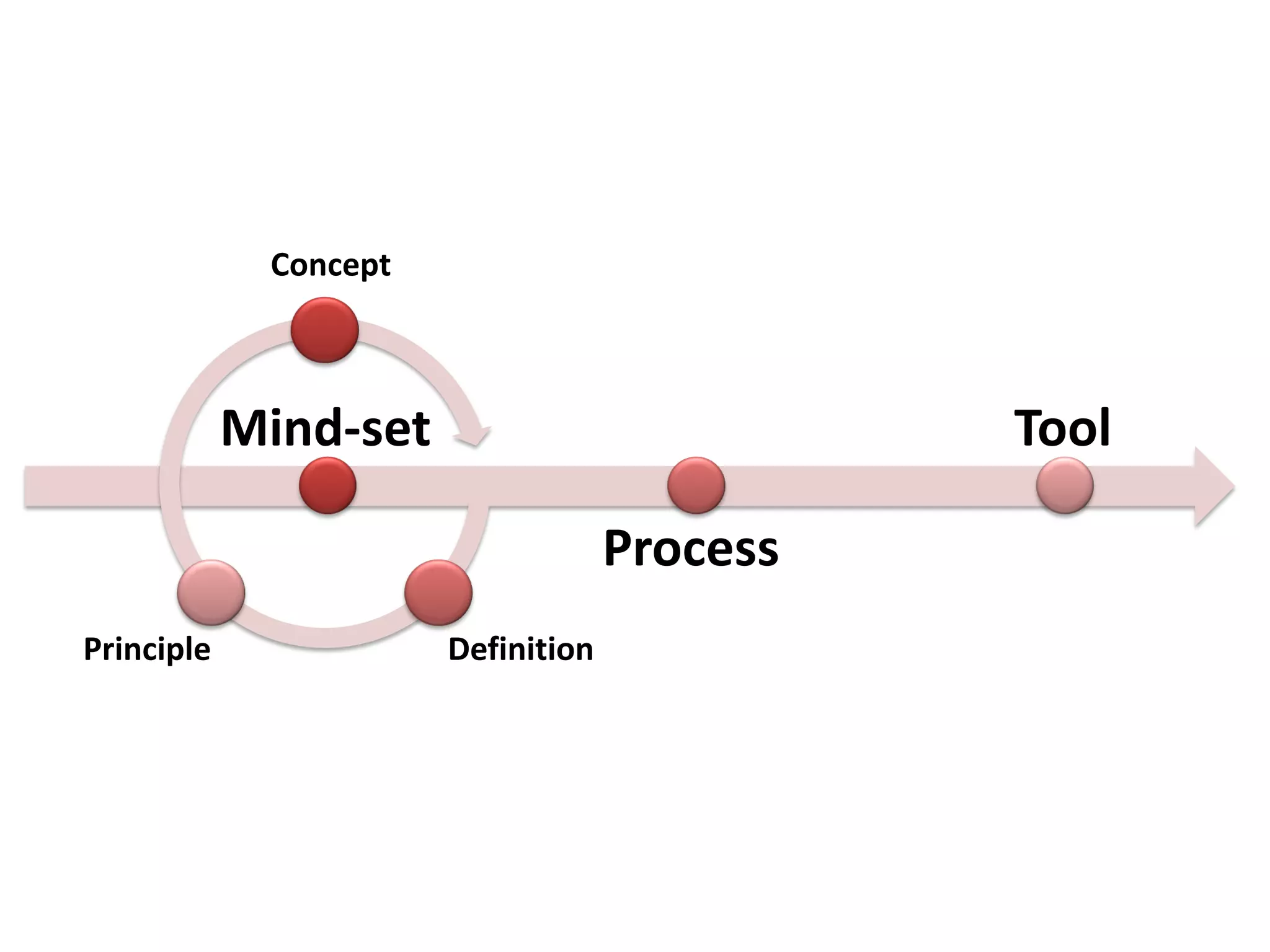
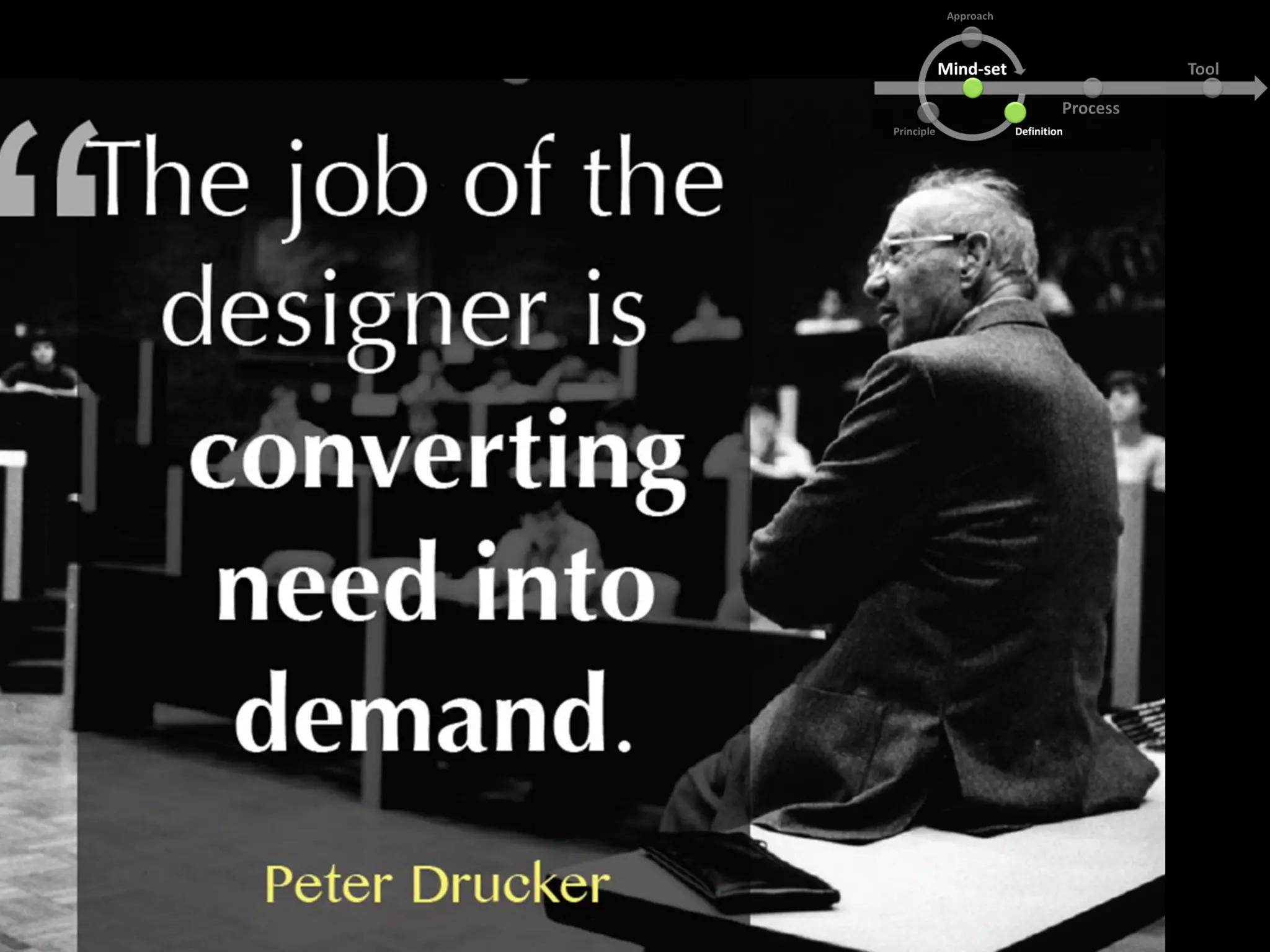
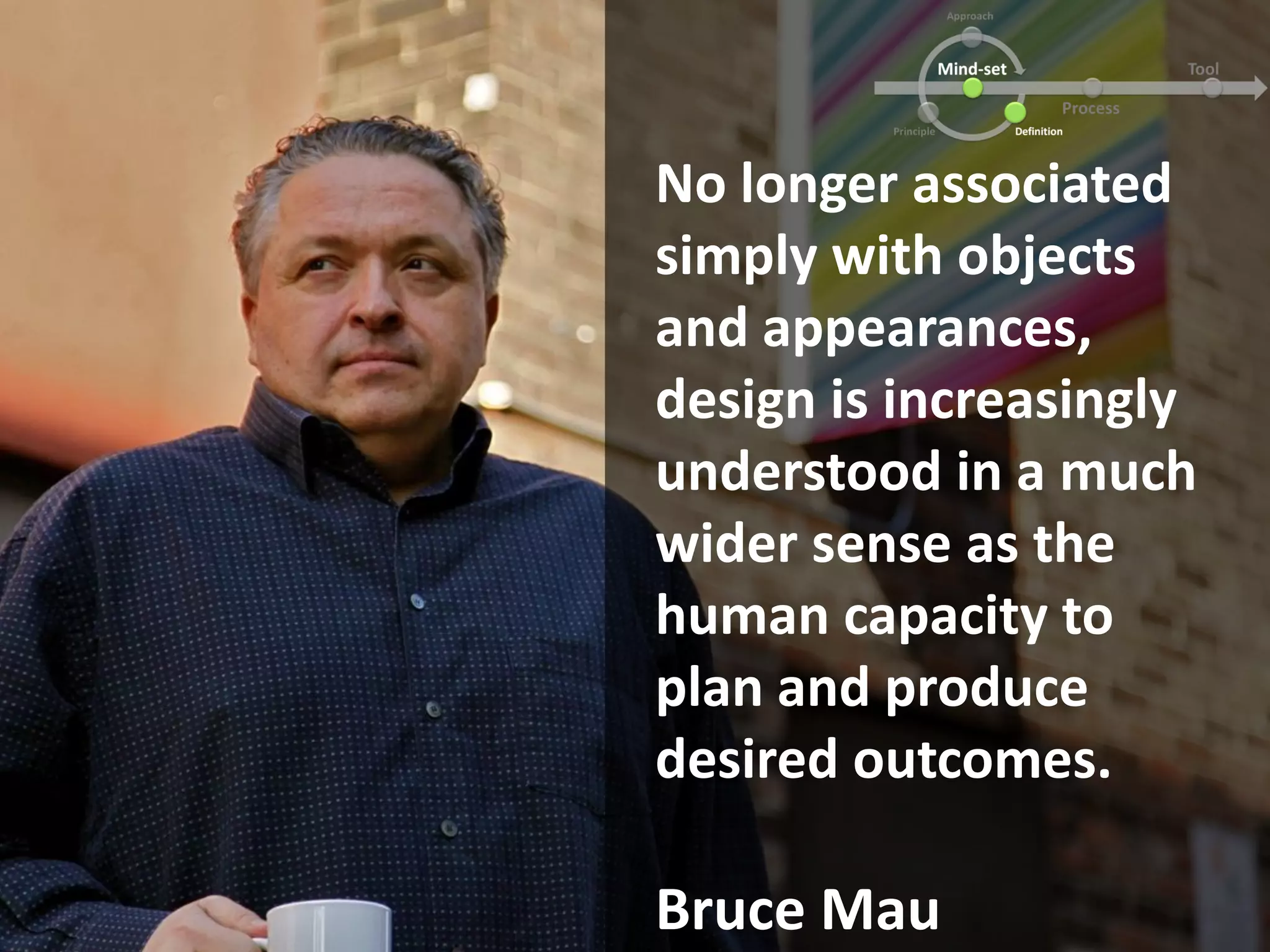
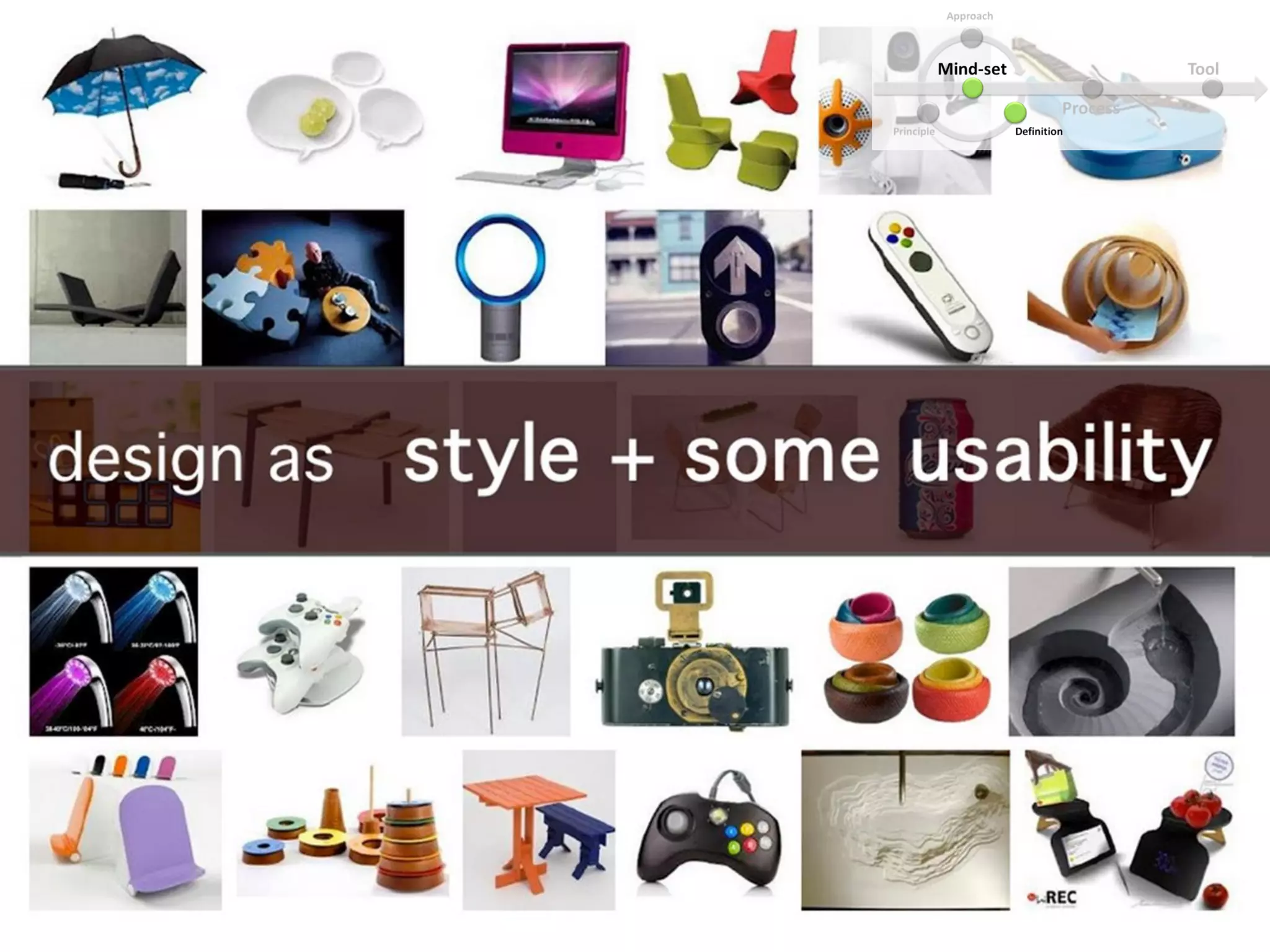
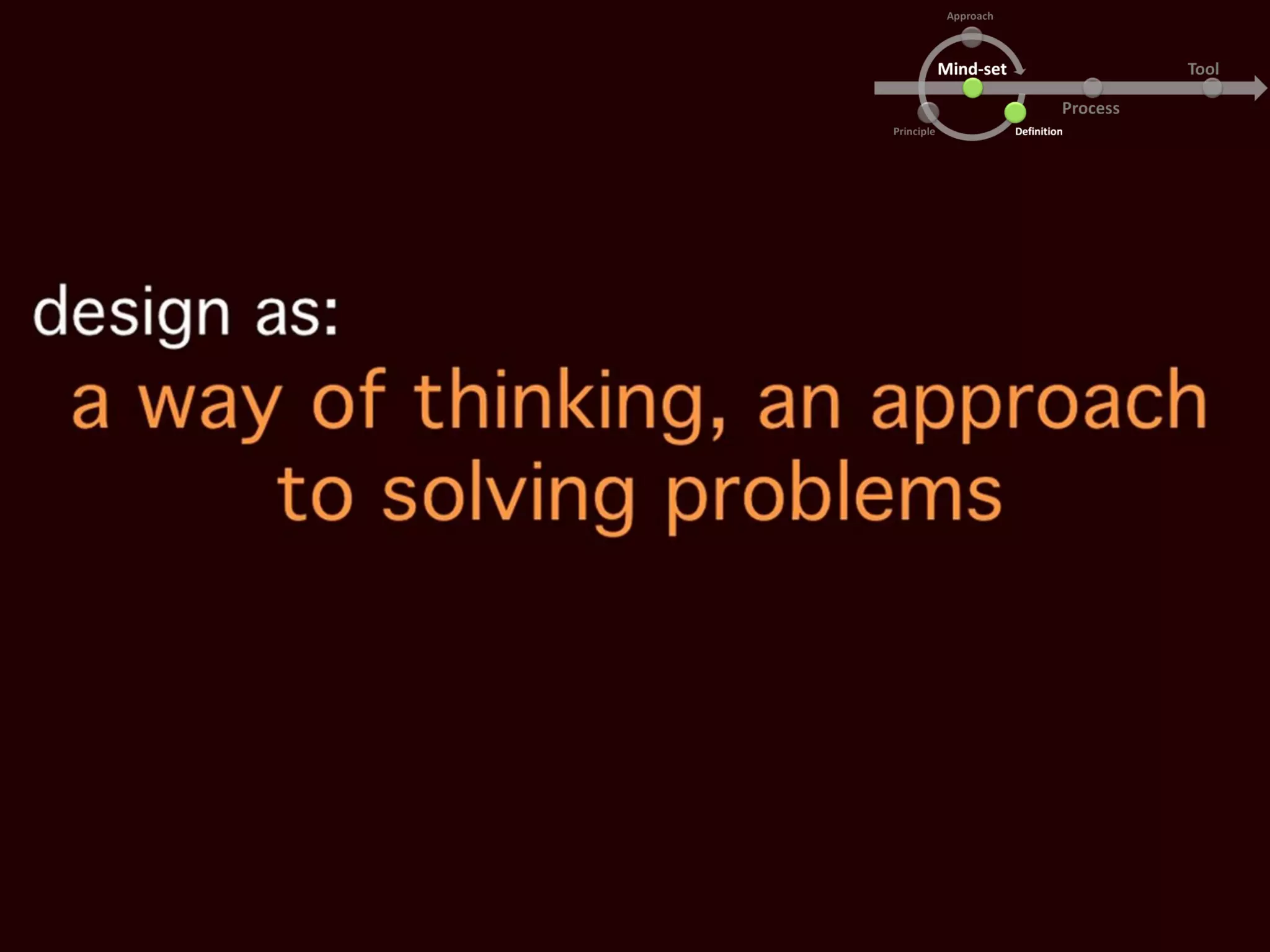
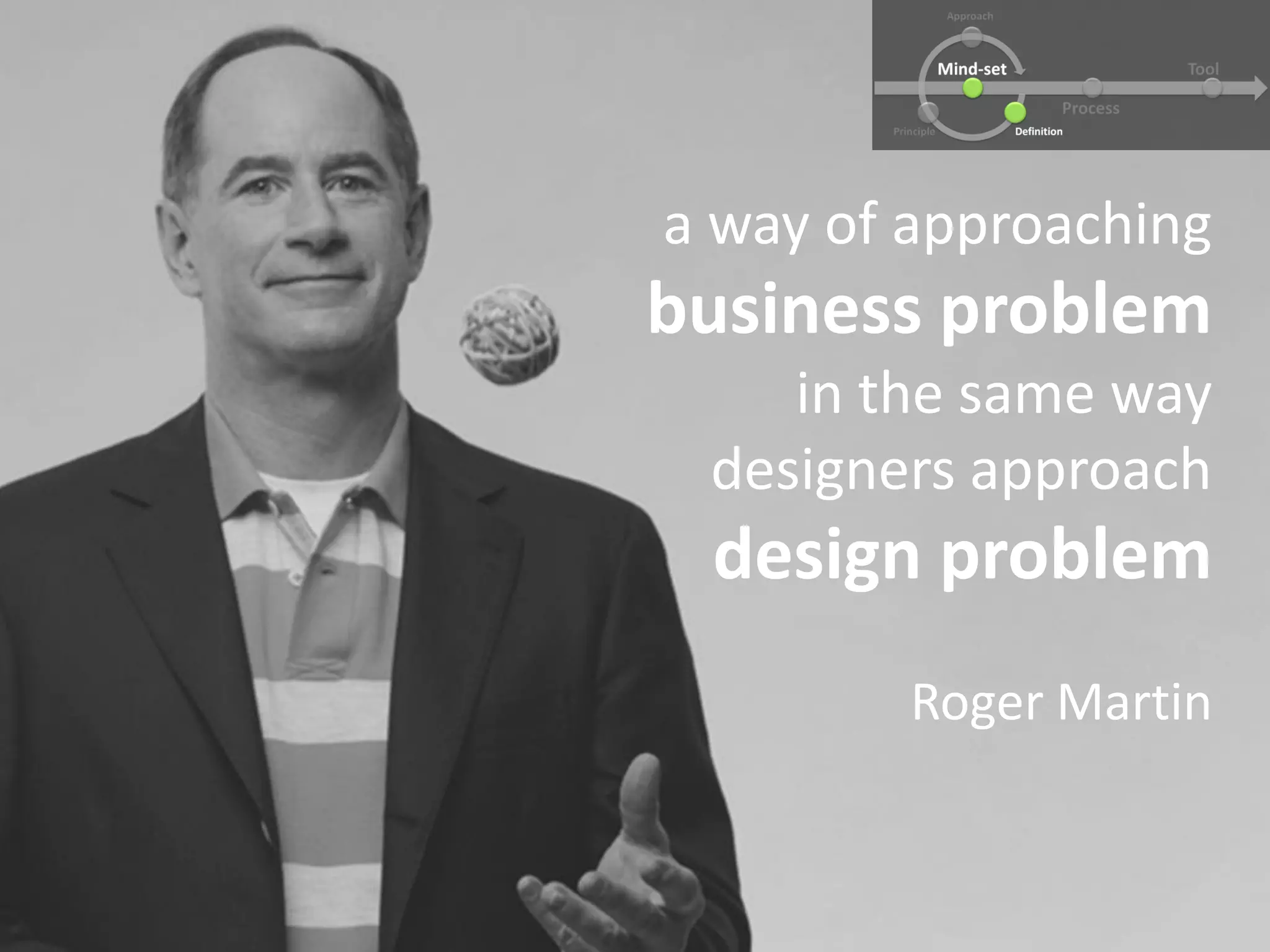
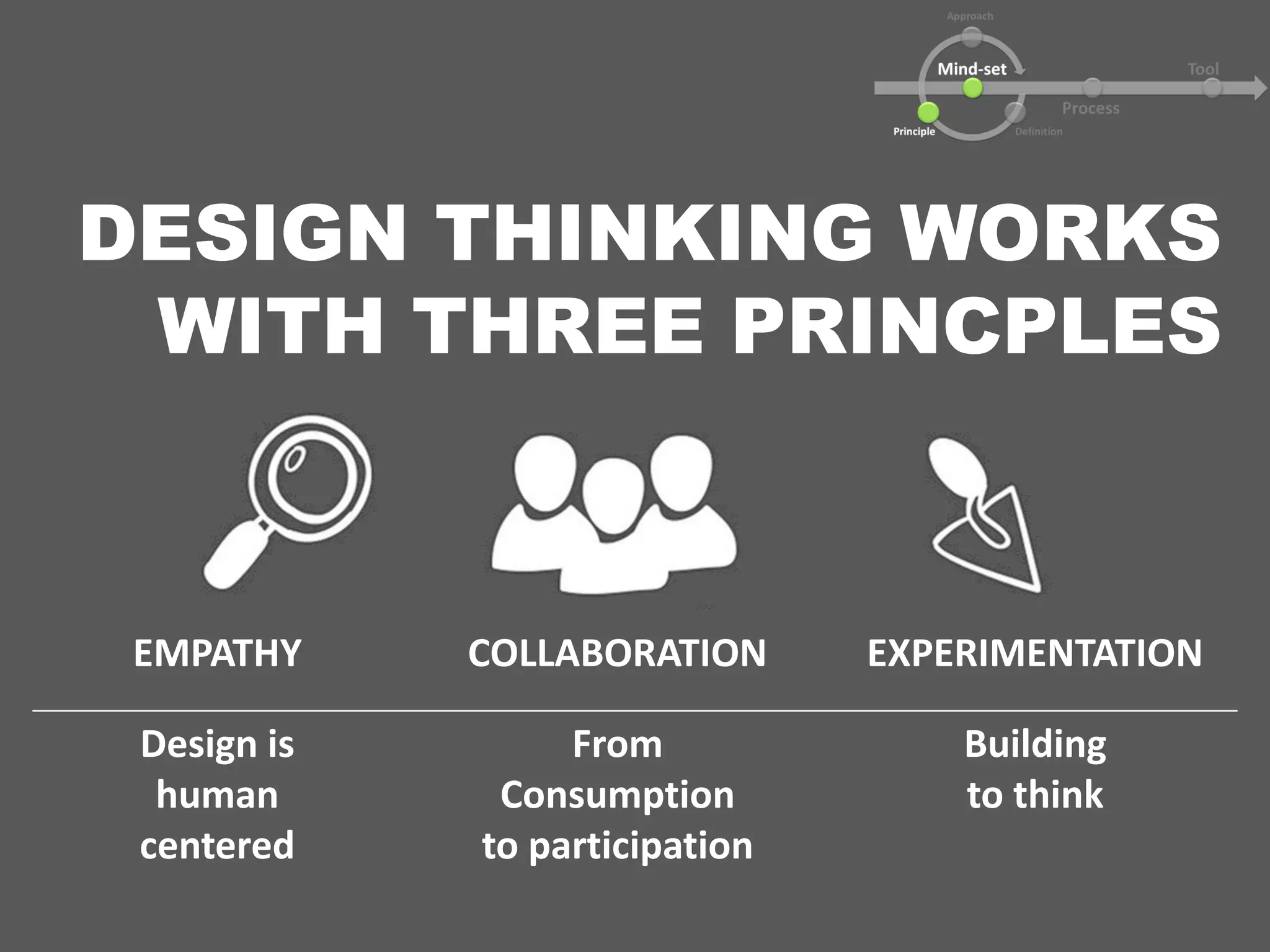
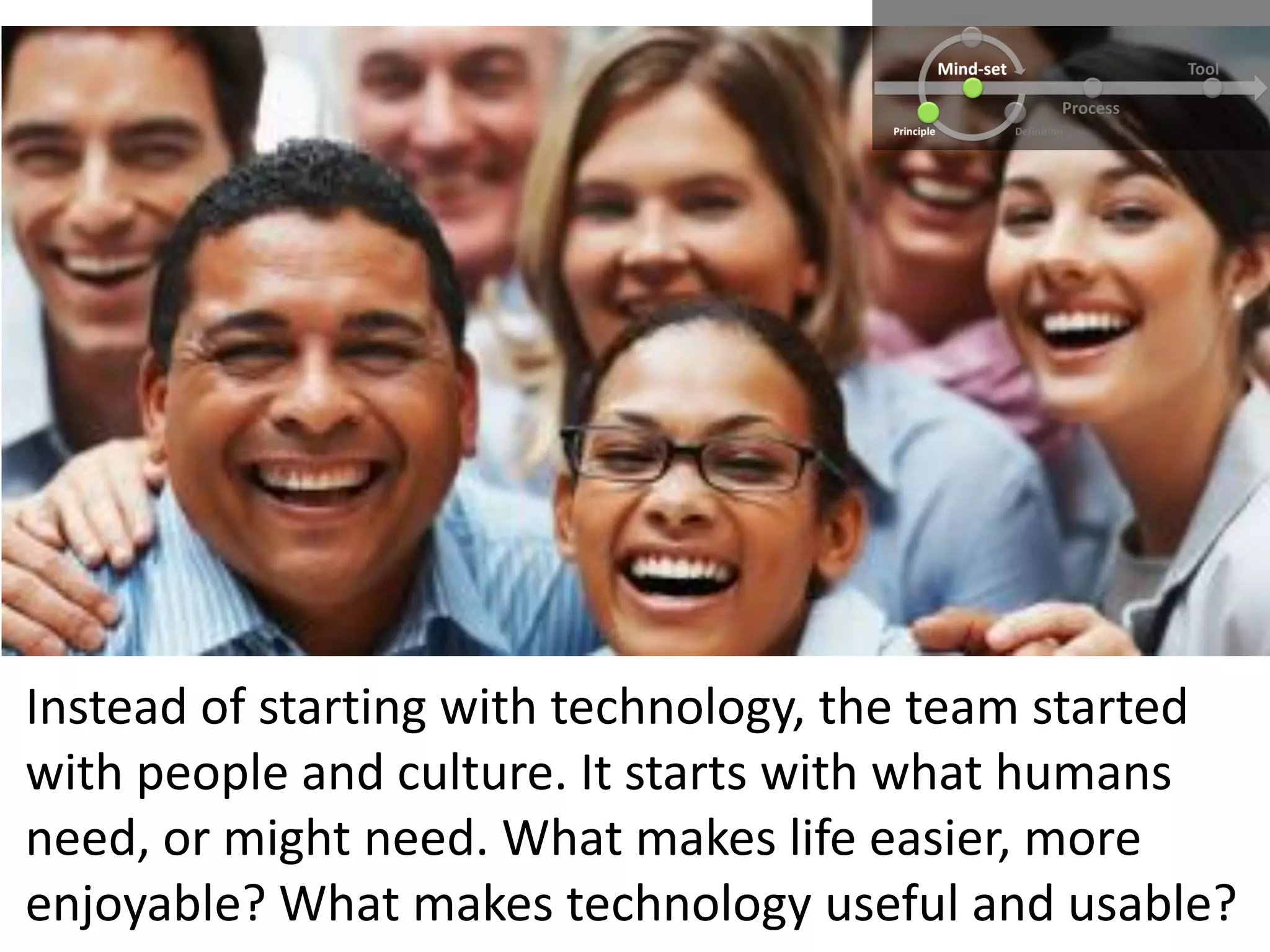
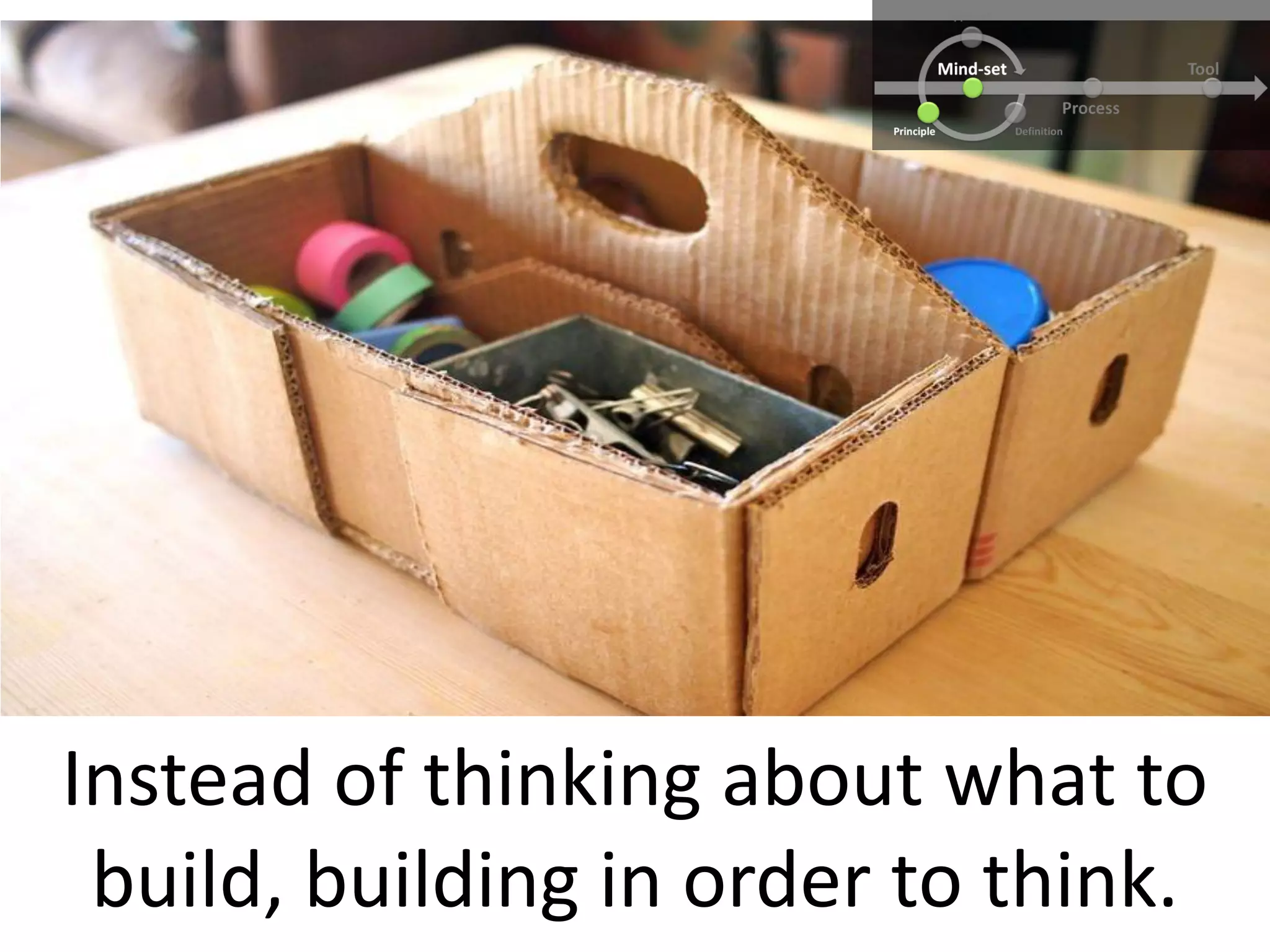
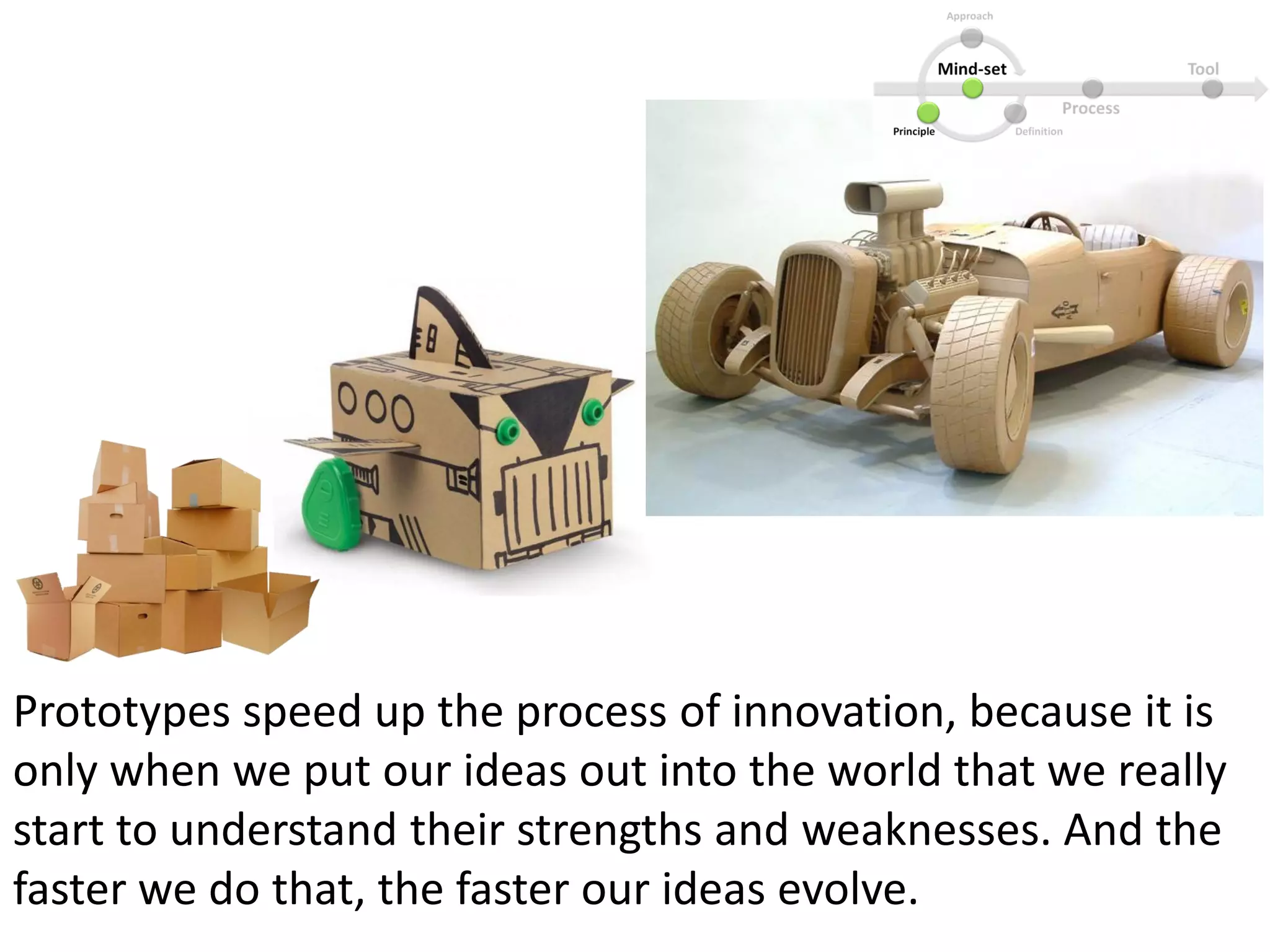
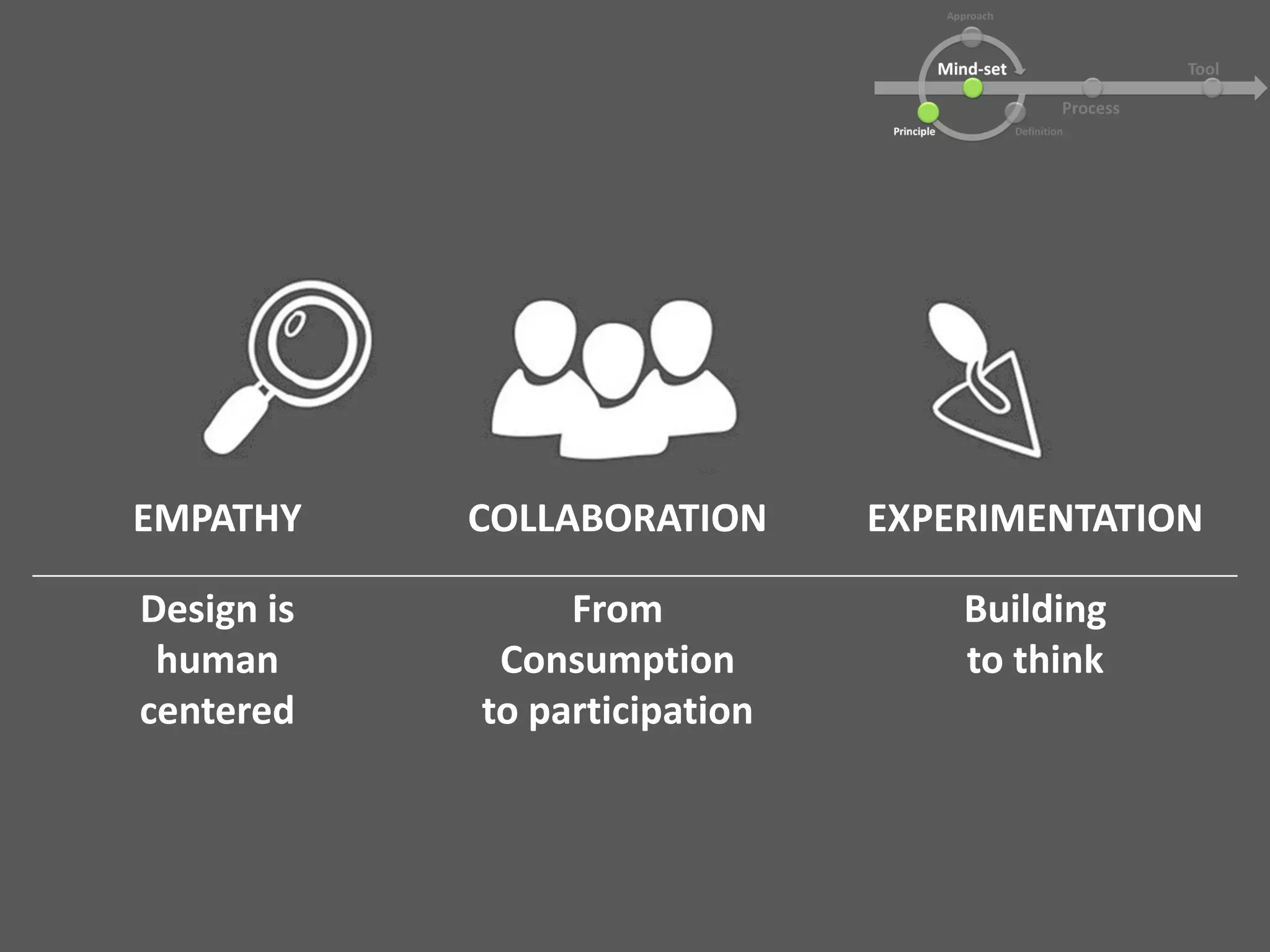
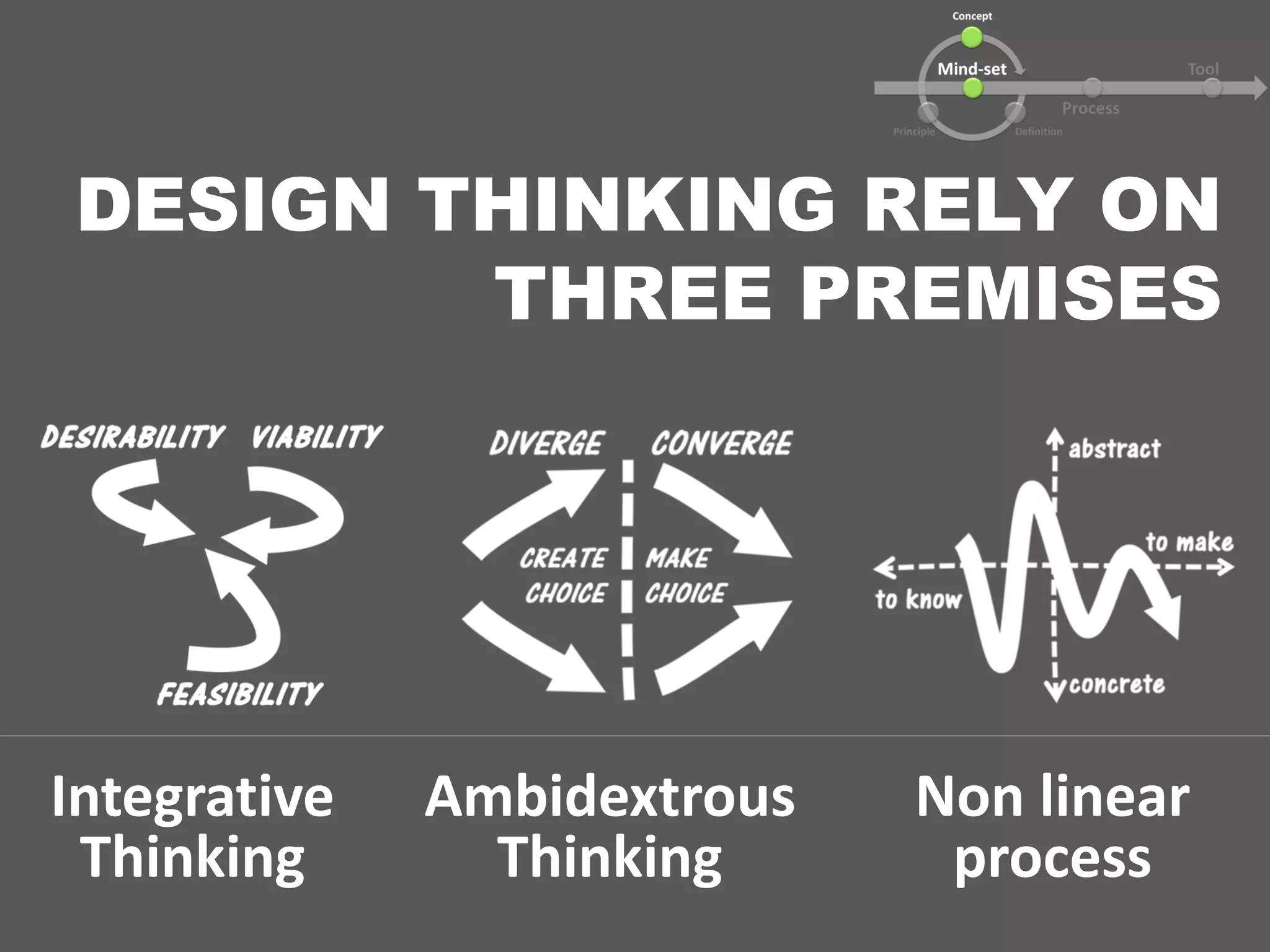
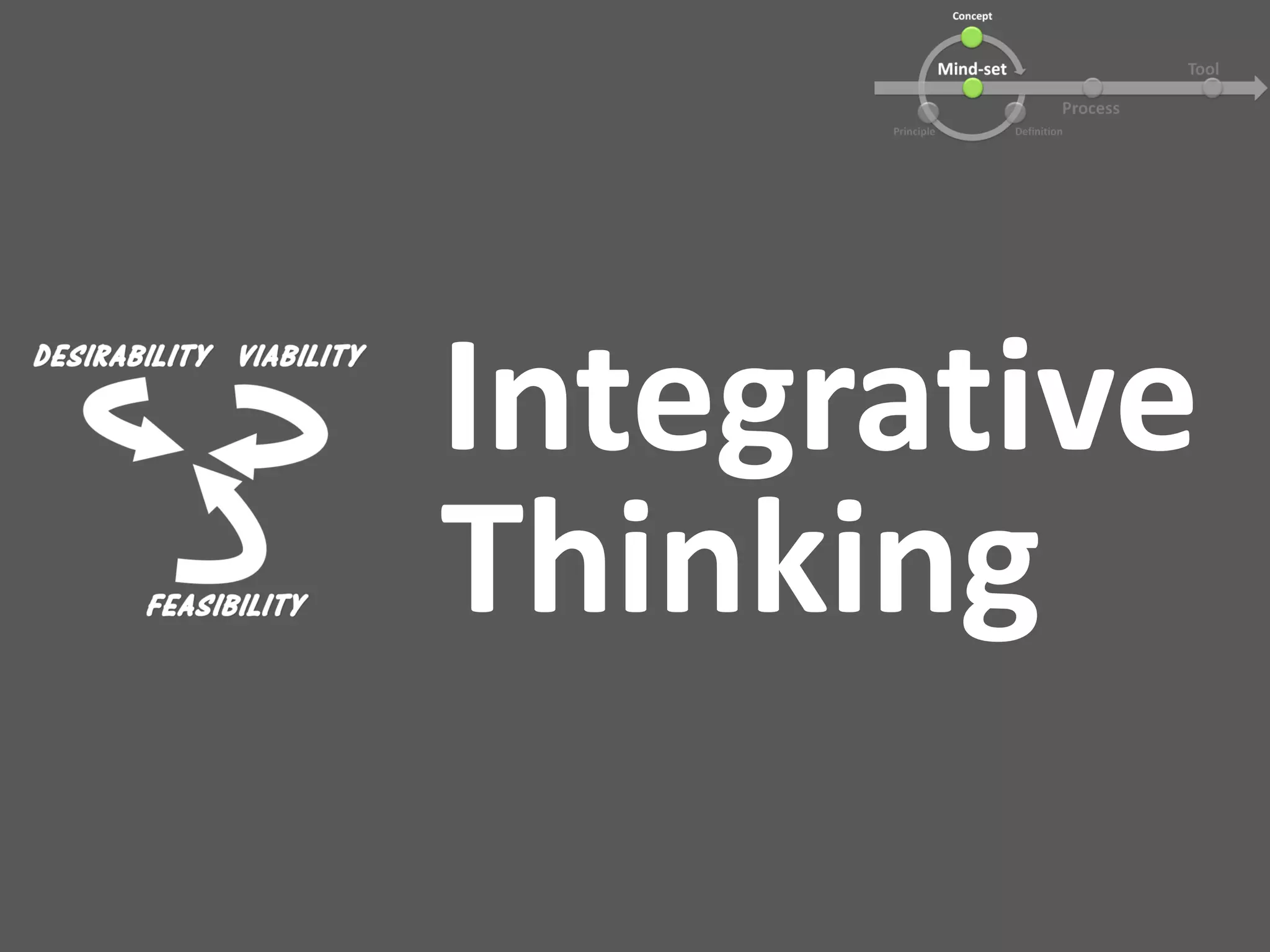
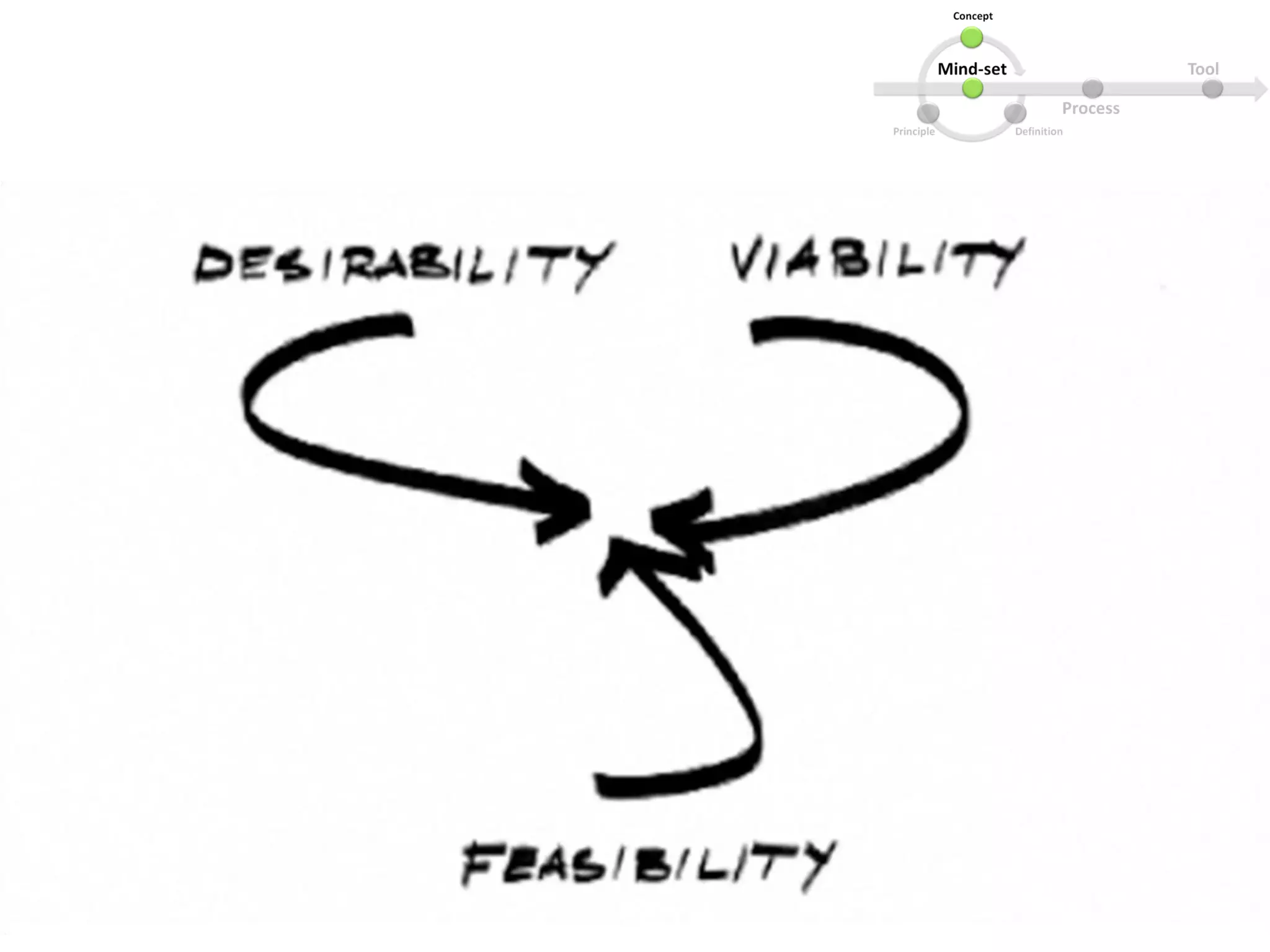
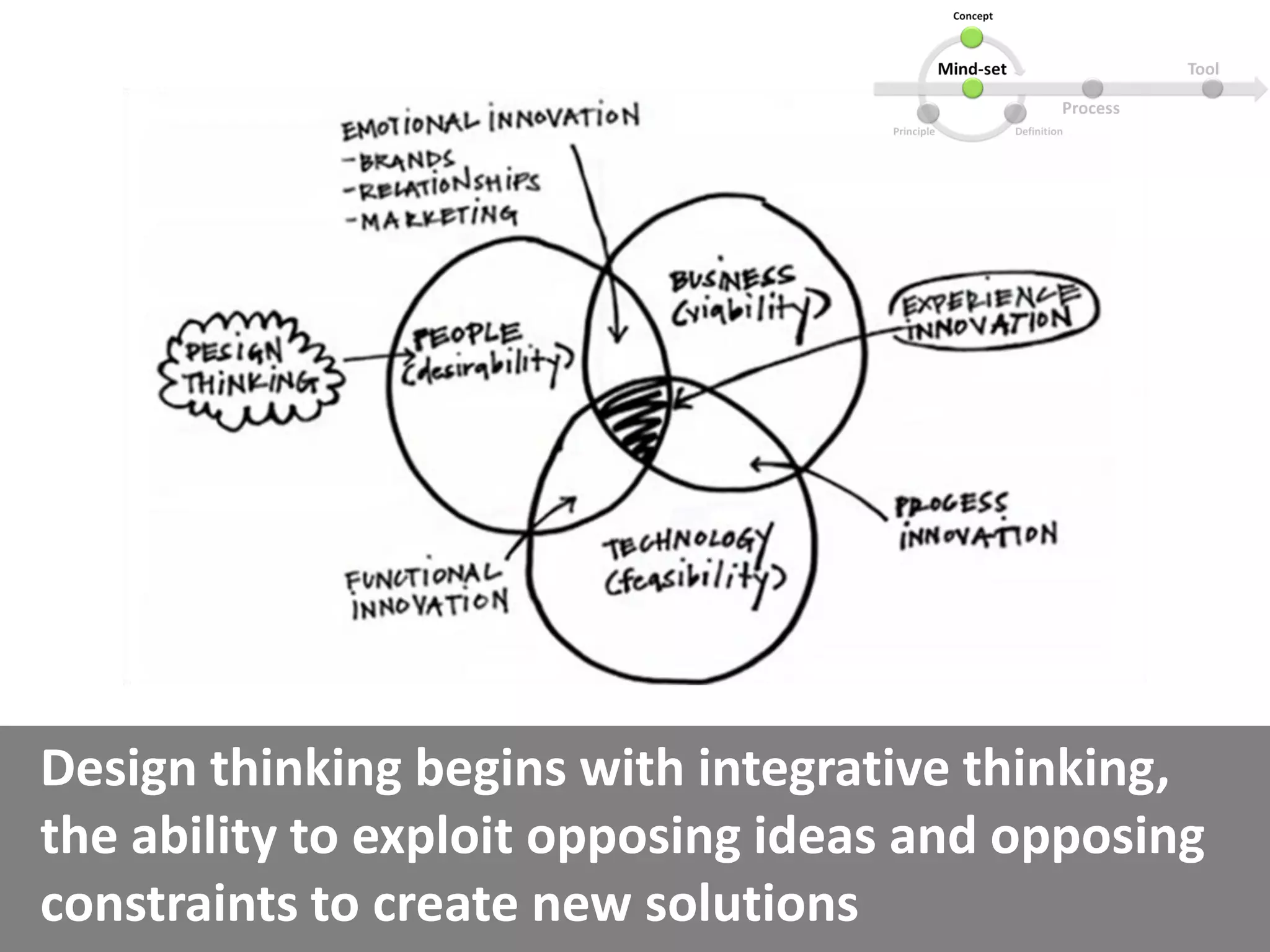
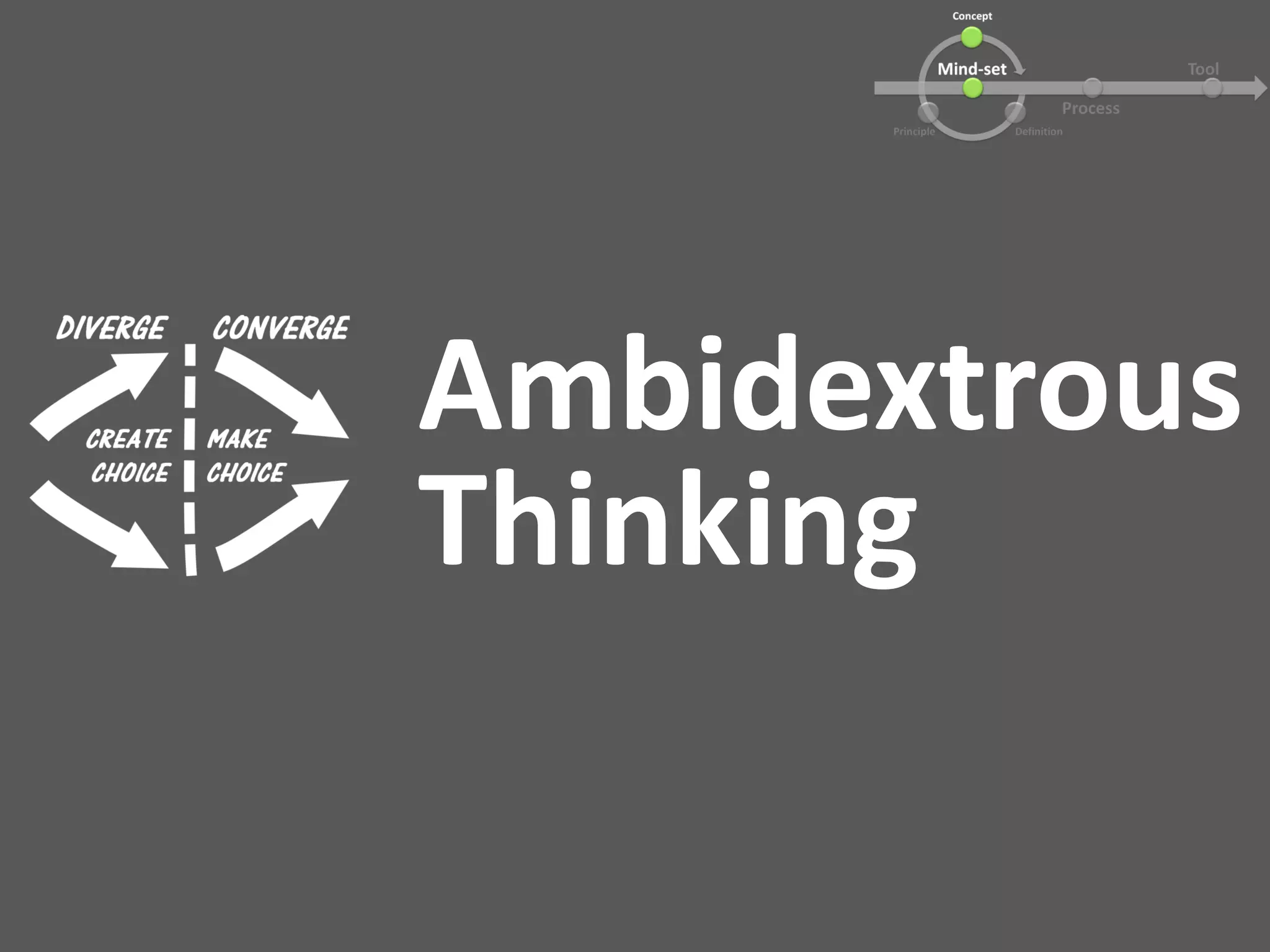
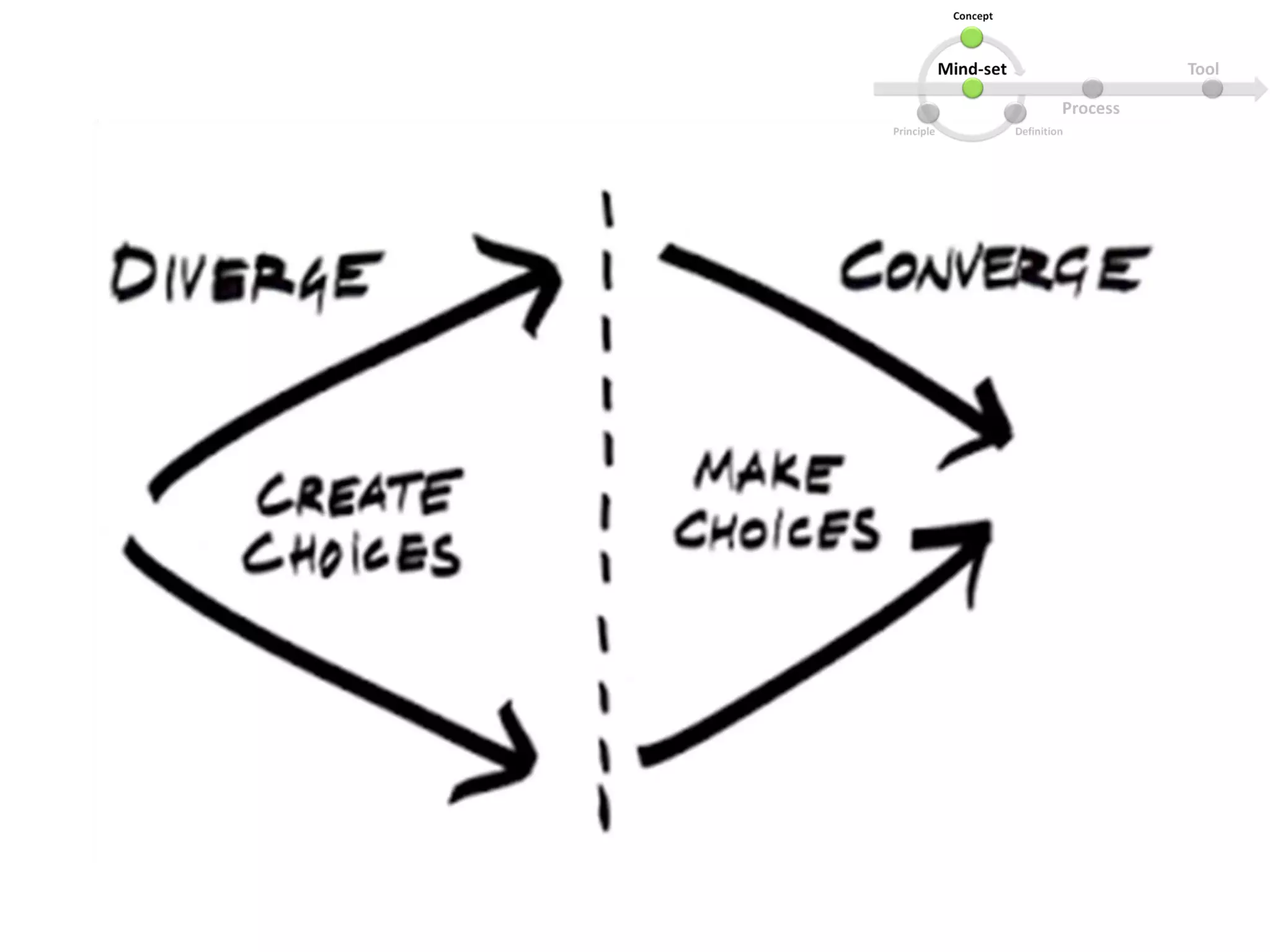
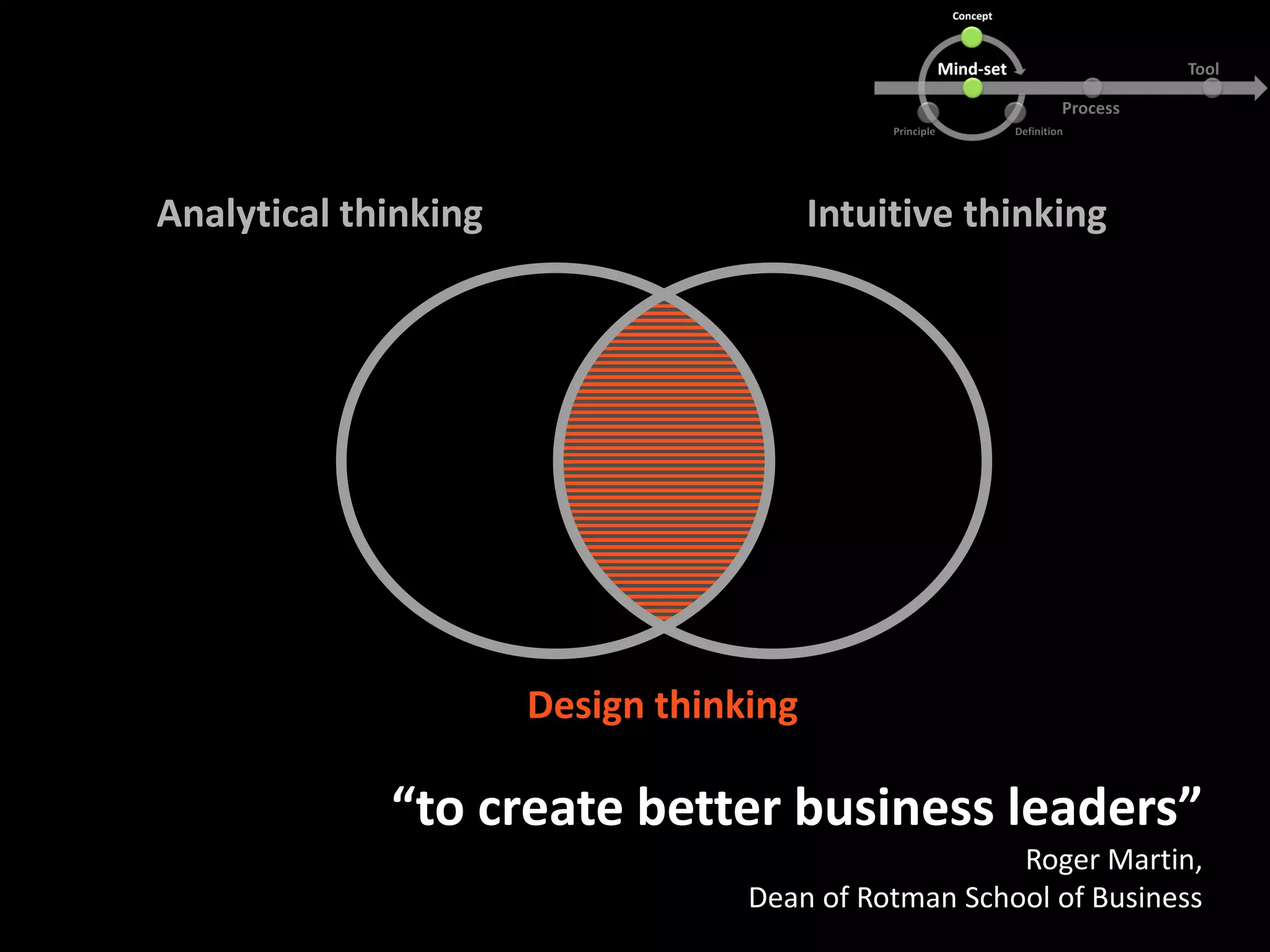
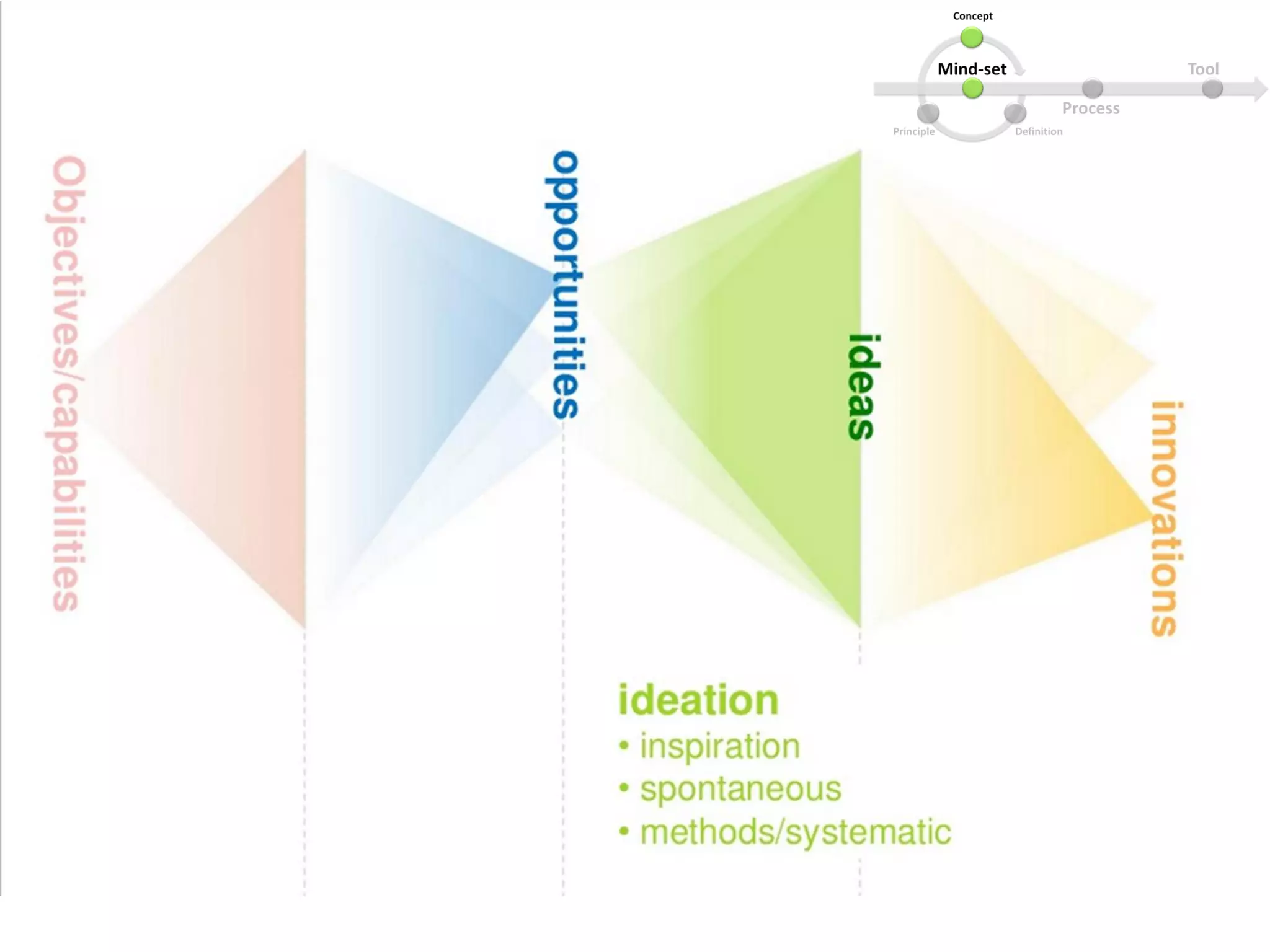
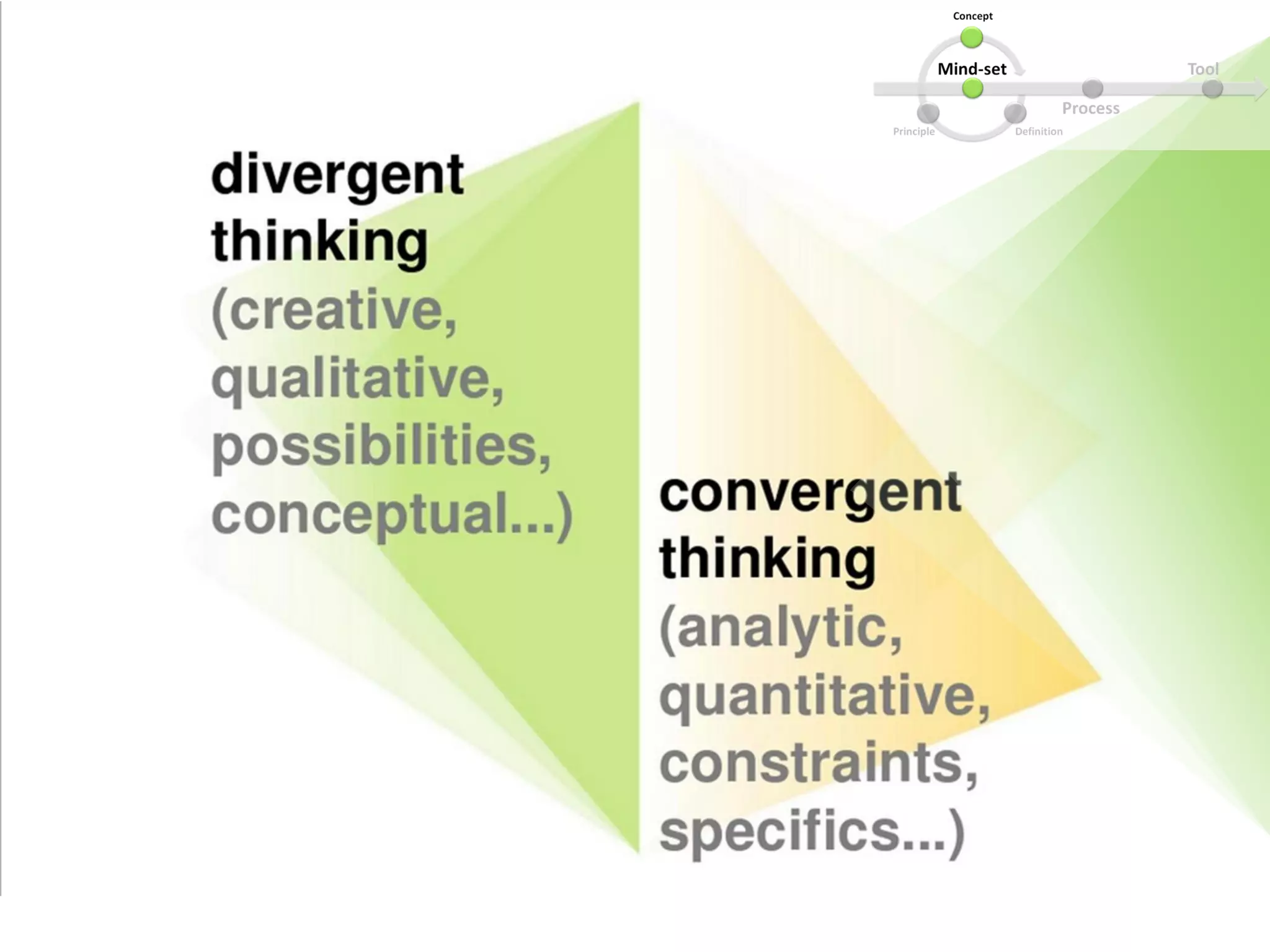
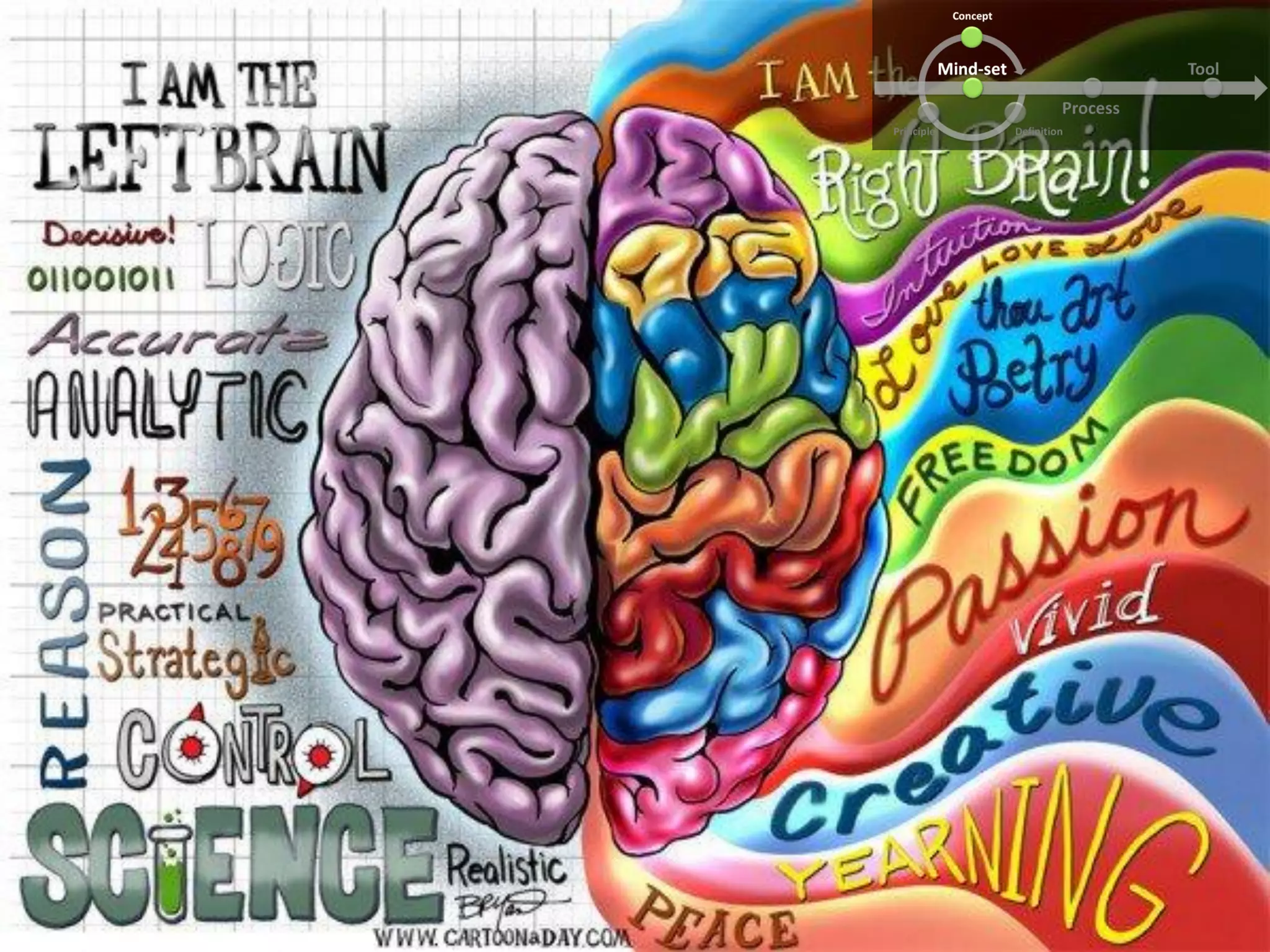
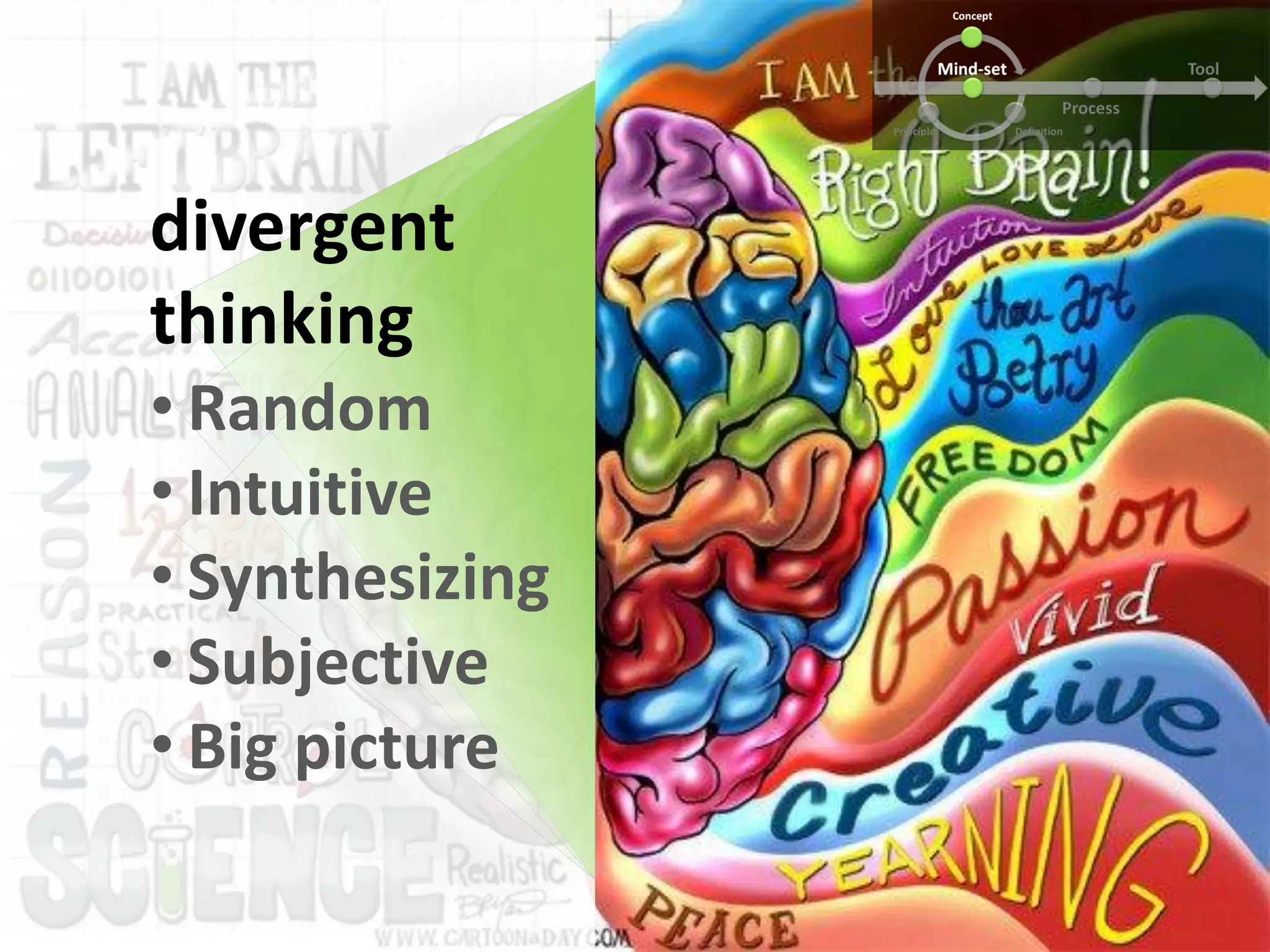
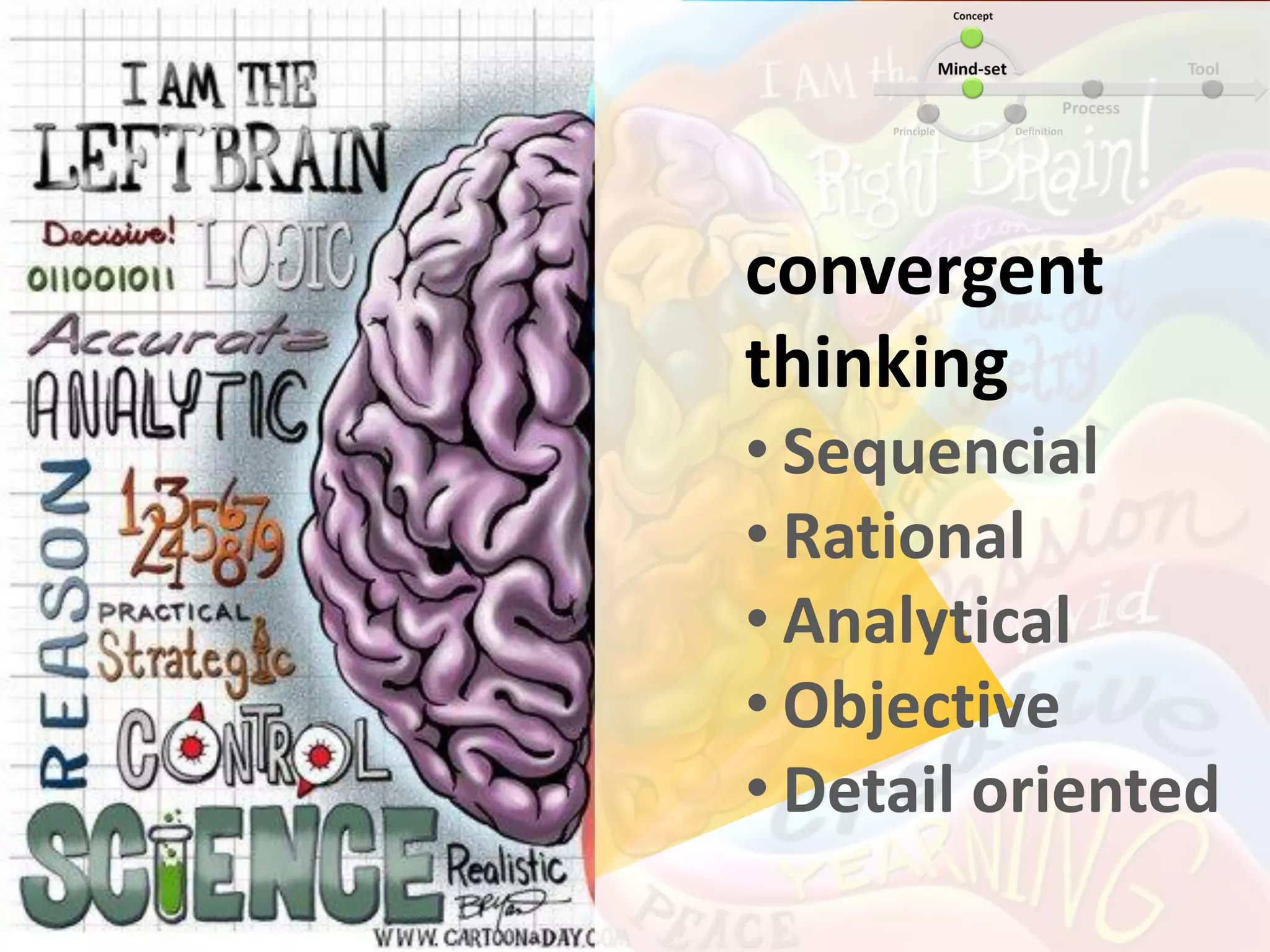
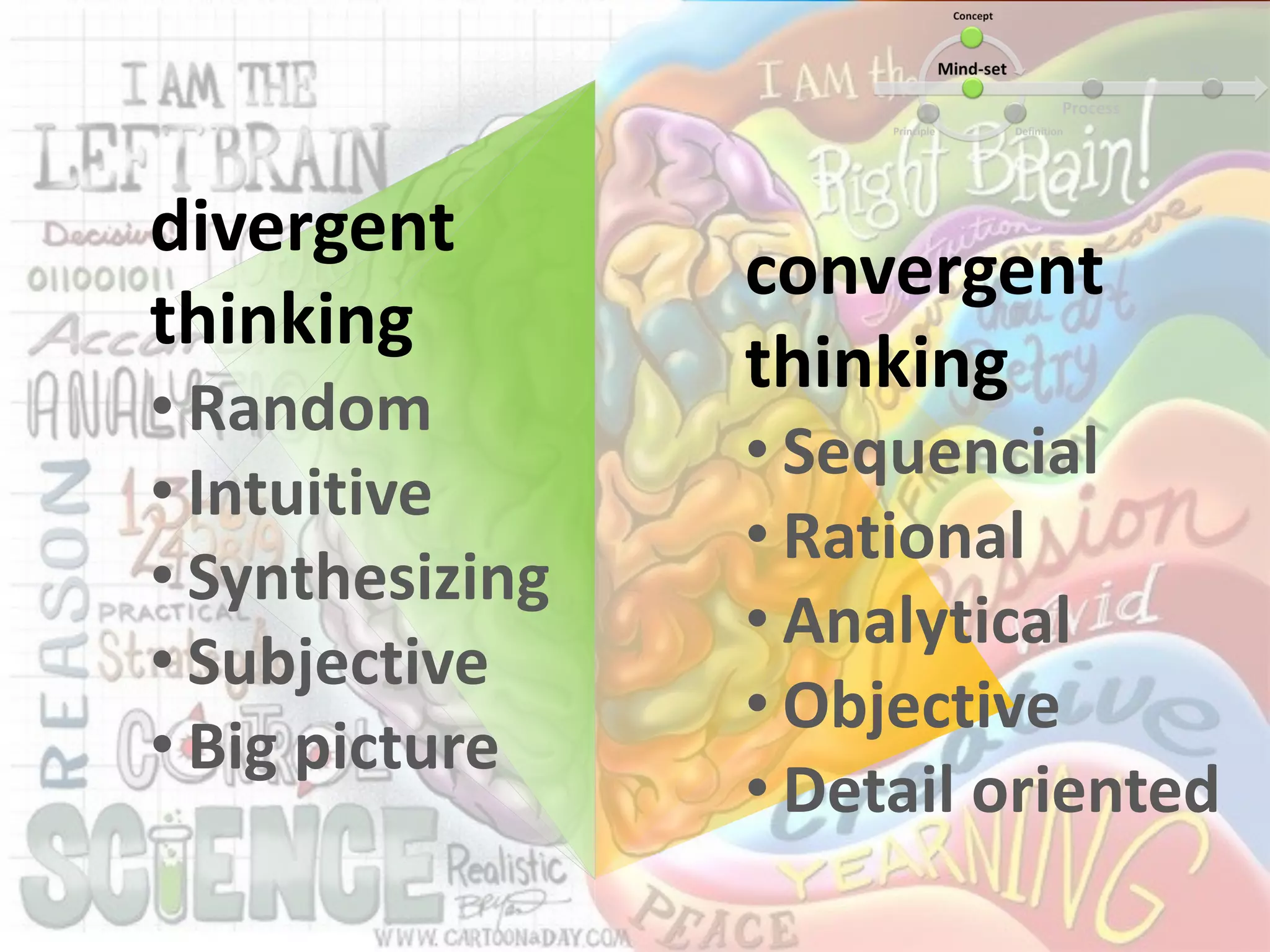
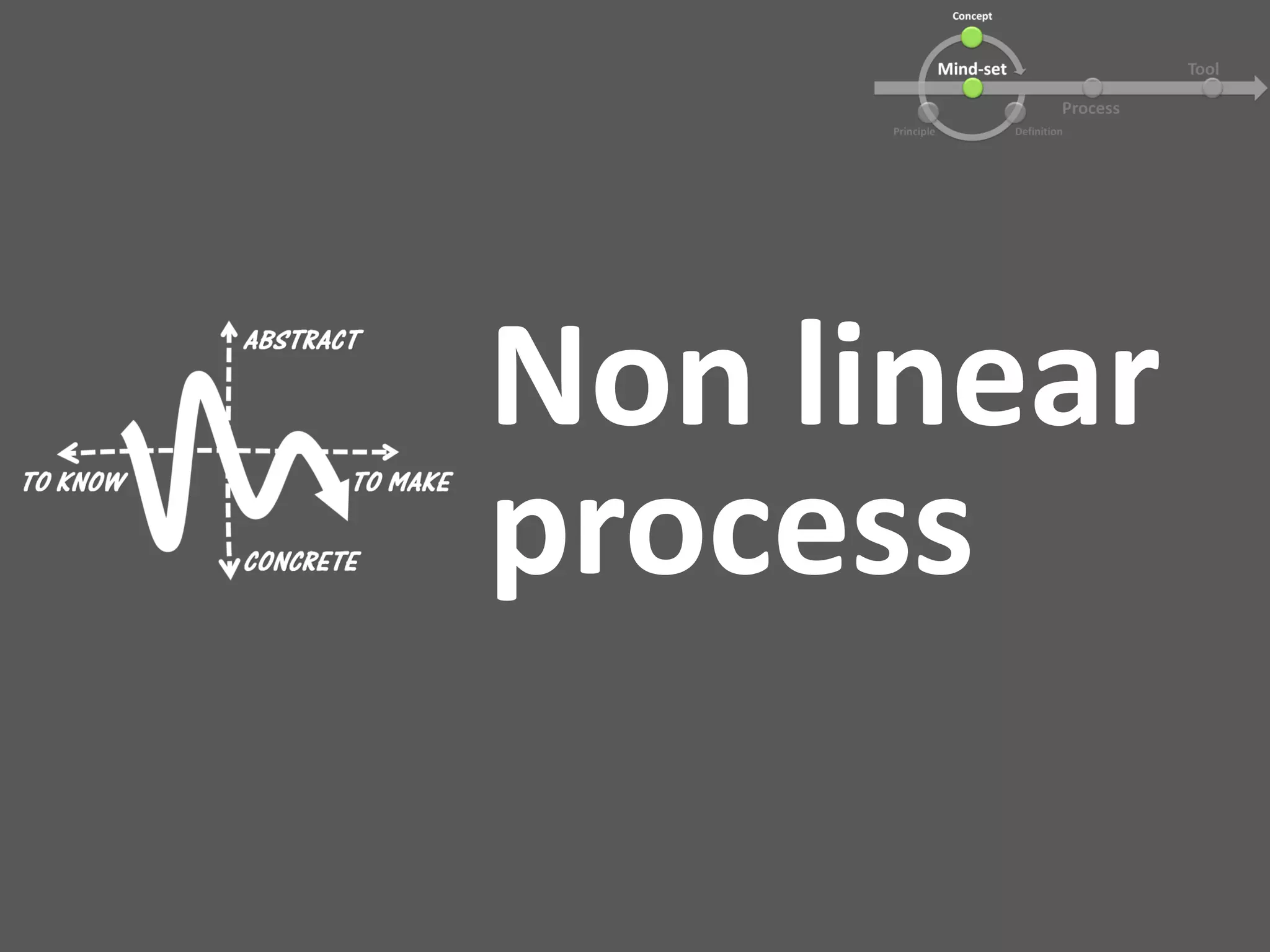
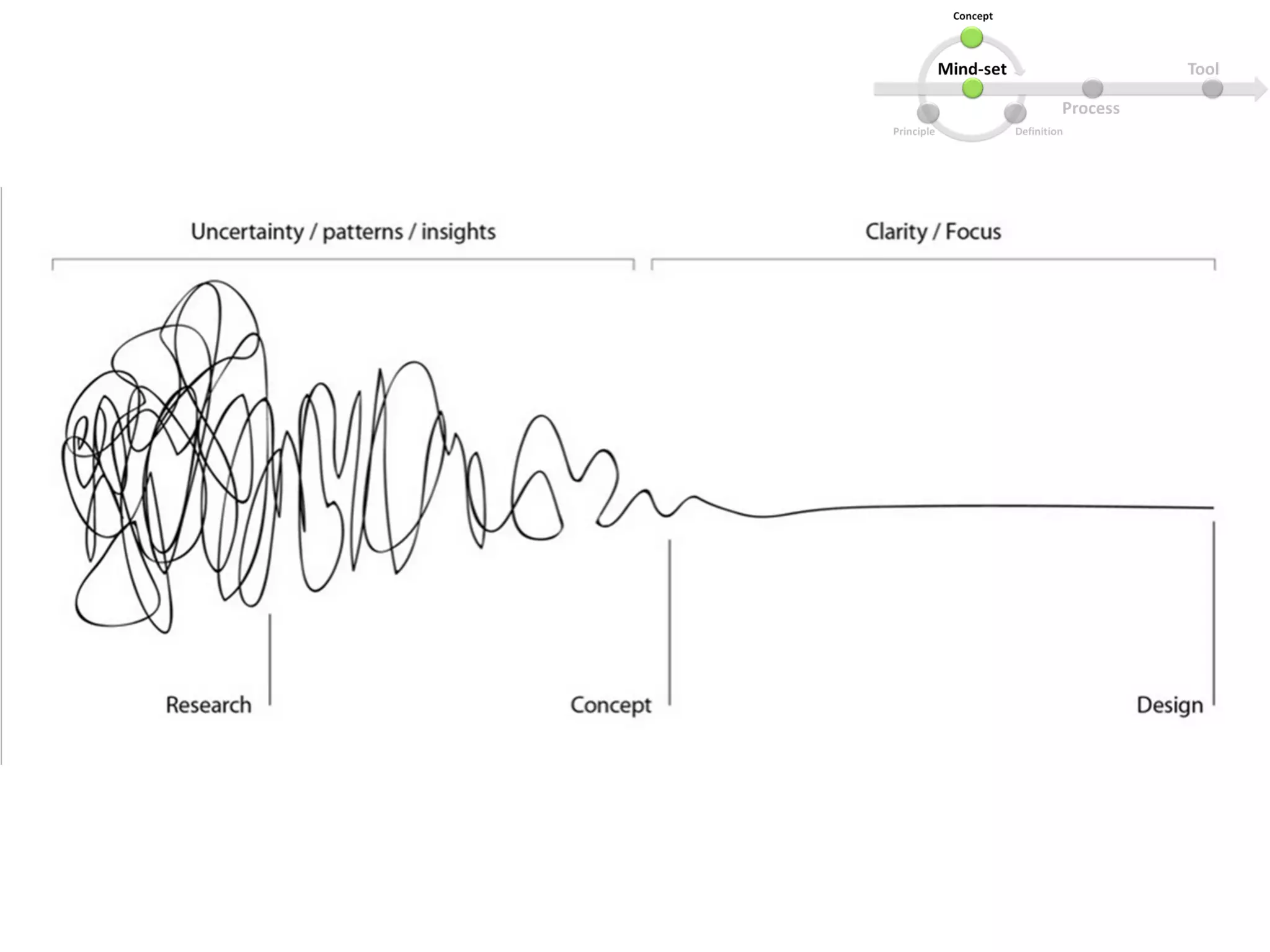
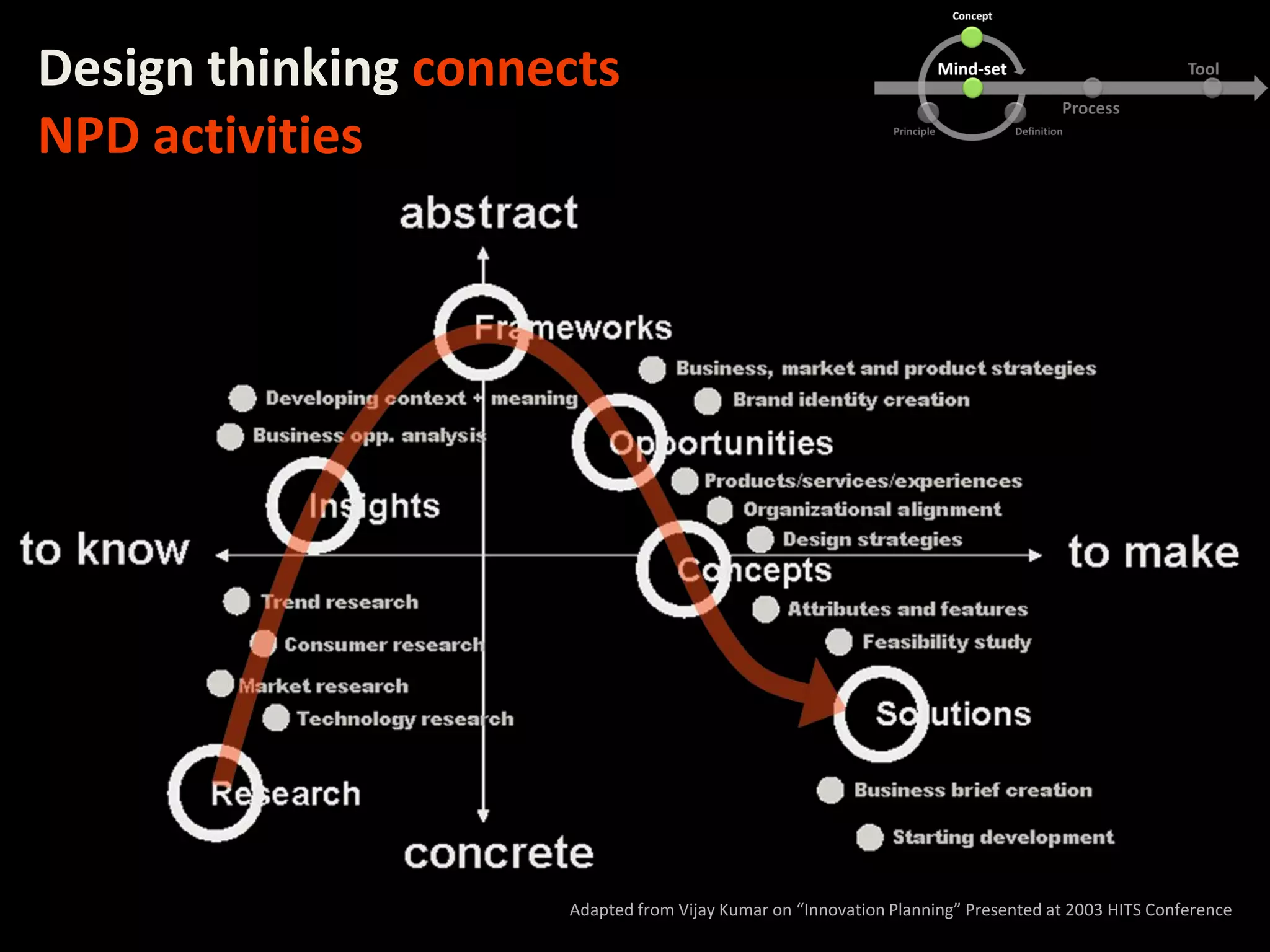
Design thinking is a human-centered approach to problem solving that relies on three main principles: empathy, collaboration, and experimentation. It involves understanding user needs through discovery, developing ideas through interpretation and ideation, and making ideas a reality through prototyping and experimentation. The process is non-linear and involves divergent and convergent thinking. Key tools used in design thinking include observation, interviews, storyboarding, paper prototyping, and other methods of understanding user needs and testing potential solutions.


![Chapter4_Initiation_of_Sediment_Motion_v2[1].pptx](https://cdn.slidesharecdn.com/ss_thumbnails/chapter4initiationofsedimentmotionv21-251208223747-f94ef163-thumbnail.jpg?width=640&height=640&fit=bounds)


![Soundtoys Mac v5.5.5.0 Crack for MacOS Full Version [Latest] pptx](https://cdn.slidesharecdn.com/ss_thumbnails/softwareoverview-251207193711-91d8ae6b-thumbnail.jpg?width=640&height=640&fit=bounds)


![Driver Easy Pro Key 7.1.0.2641 Full Mac Crack Free Activated Download [2026]....](https://cdn.slidesharecdn.com/ss_thumbnails/software-251207185324-b2fb71b4-thumbnail.jpg?width=640&height=640&fit=bounds)


![Wondershare Filmora 15.0.11 Crack for Mac Key Full Download [Latest] pptx](https://cdn.slidesharecdn.com/ss_thumbnails/software-251207184836-1d16ba16-thumbnail.jpg?width=640&height=640&fit=bounds)
