Lecture 2
Fluids: density, pressure,
Pascal’s principle.
What is a fluid?

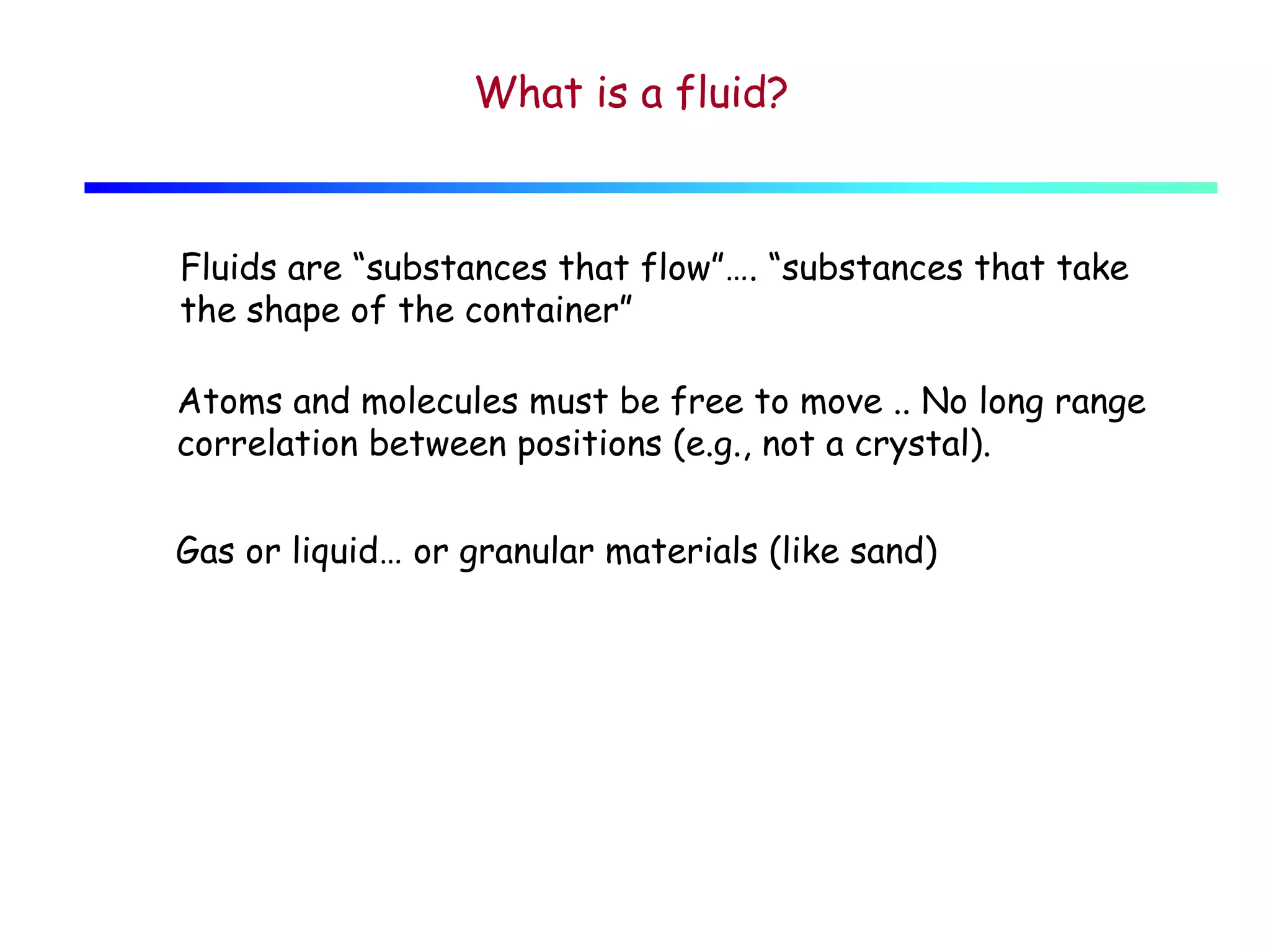
Fluids are “substances that flow”…. “substances that take
the shape of the container”
Atoms and molecules must be free to move .. No long range
correlation between positions (e.g., not a crystal).
Gas or liquid… or granular materials (like sand)
Density, pressure
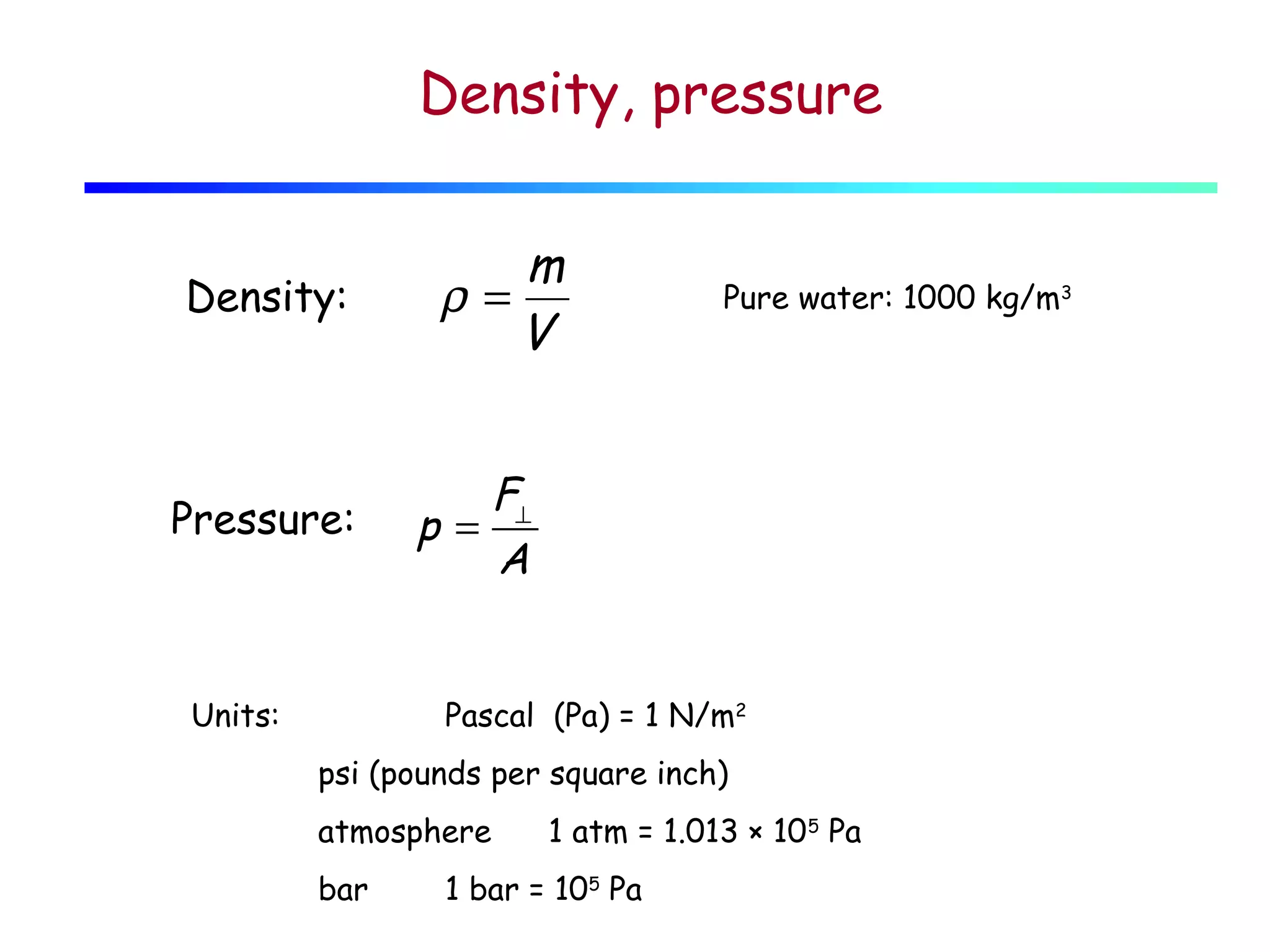
Density:

Pressure:

Units:

m
ρ=
V

Pure water: 1000 kg/m3

F⊥
p=
A
Pascal (Pa) = 1 N/m2

psi (pounds per square inch)
atmosphere
bar

1 atm = 1.013 × 10 5 Pa

1 bar = 105 Pa
Atmospheric pressure
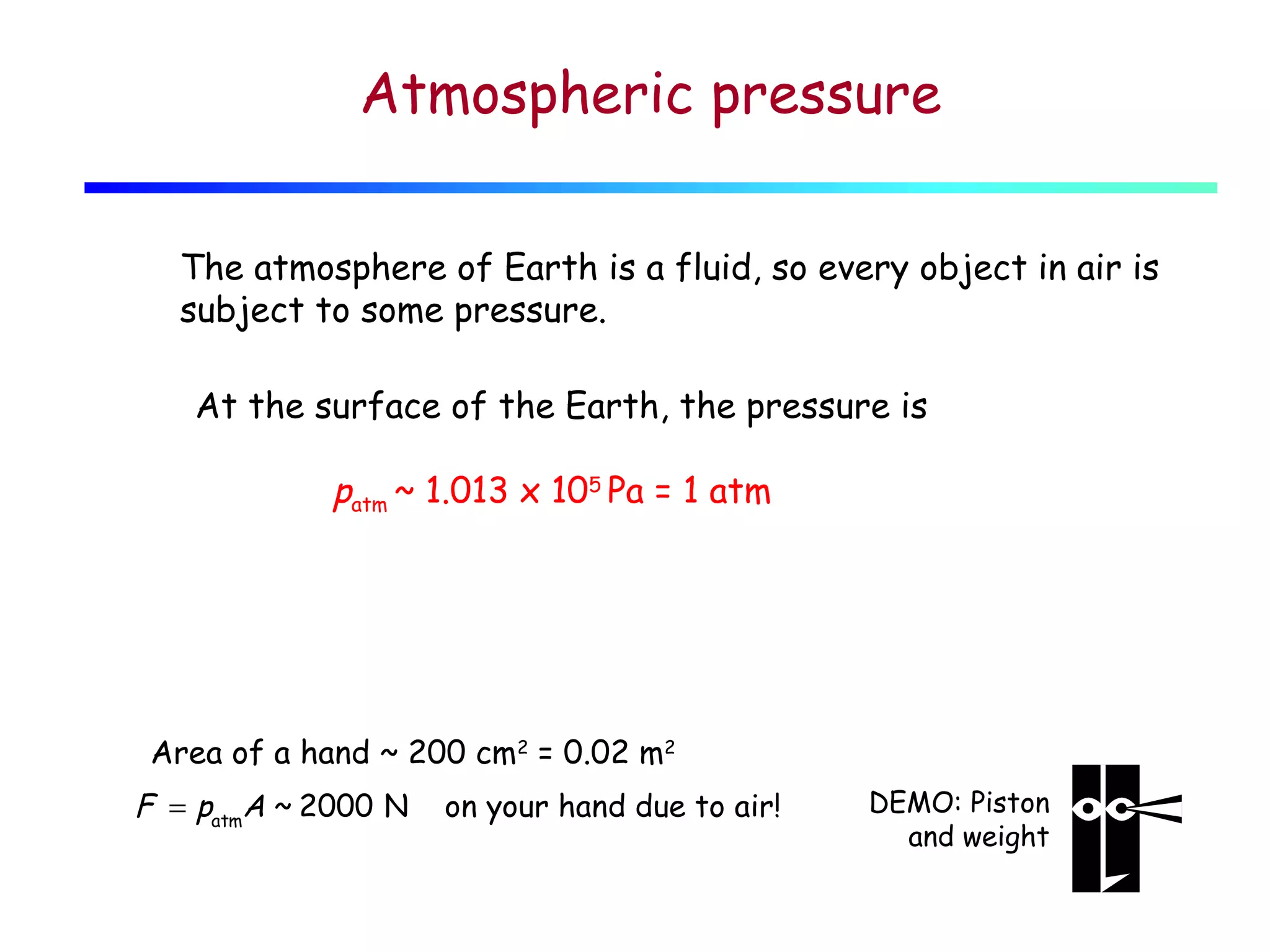
The atmosphere of Earth is a fluid, so every object in air is
subject to some pressure.
At the surface of the Earth, the pressure is

patm ~ 1.013 x 10⁵ Pa = 1 atm

Area of a hand ~ 200 cm2 = 0.02 m2
F = patmA ~ 2000 N

on your hand due to air!

DEMO: Piston
and weight
DEMO:
Plastic tube
with cover

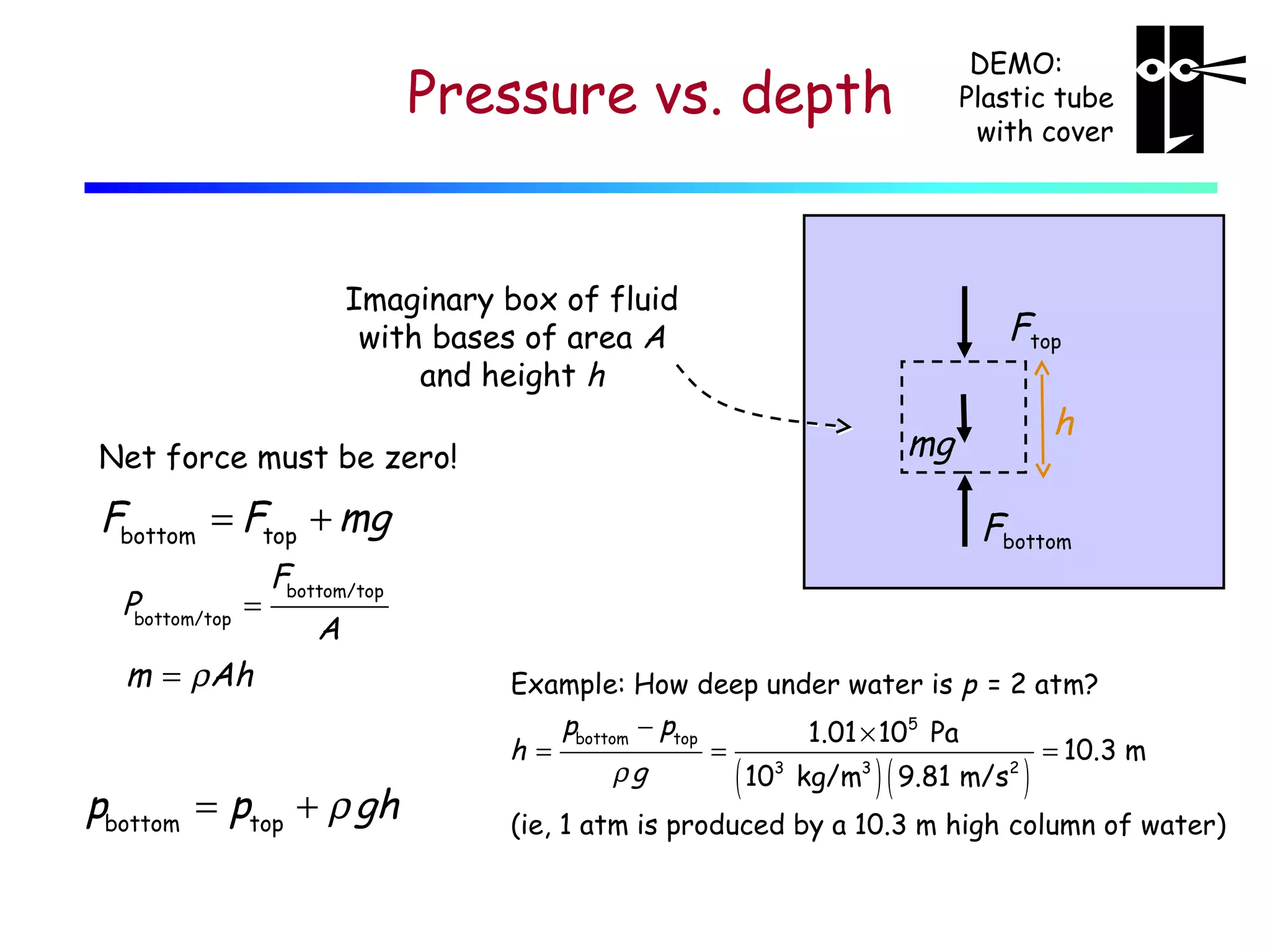
Pressure vs. depth

Imaginary box of fluid
with bases of area A
and height h

Ftop

Net force must be zero!

Fbottom = Ftop + mg
Pbottom/top =

m = ρAh

h

mg

Fbottom

Fbottom/top
A

pbottom = ptop + ρ gh

Example: How deep under water is p = 2 atm?
pbottom − ptop
1.01 × 10⁵ Pa
h=
=
= 10.3 m
3
3
2
ρg
10 kg/m 9.81 m/s

(

)(

)

(ie, 1 atm is produced by a 10.3 m high column of water)
DEMO:
ascal’s vases

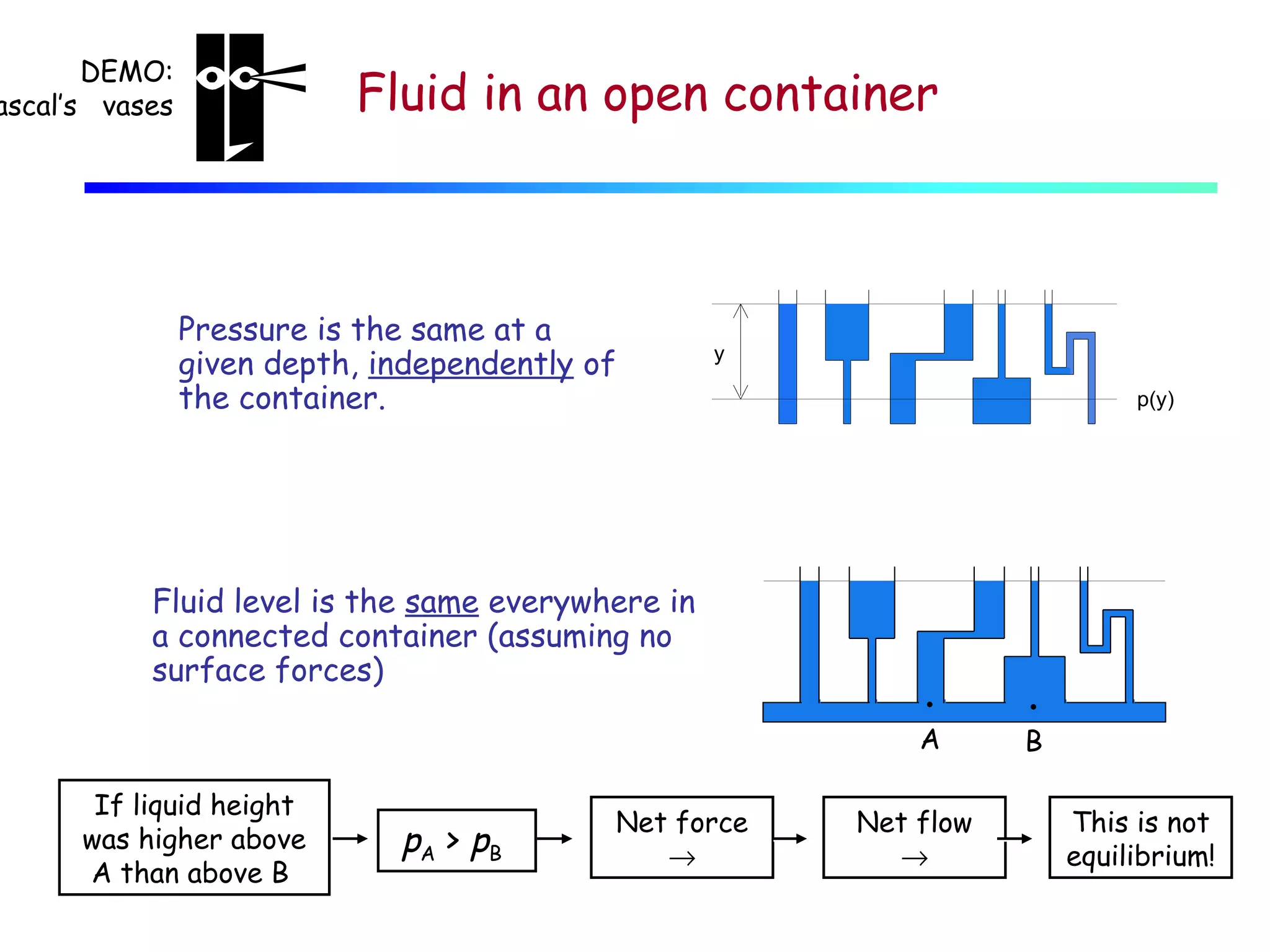
Fluid in an open container

Pressure is the same at a
given depth, independently of
the container.

y

Fluid level is the same everywhere in
a connected container (assuming no
surface forces)

If liquid height
was higher above
A than above B

pA > pB

Net force
→

p(y)

•
A
Net flow
→

•
B
This is not
equilibrium!
DEMO:
U-tube with
water and
kerosene

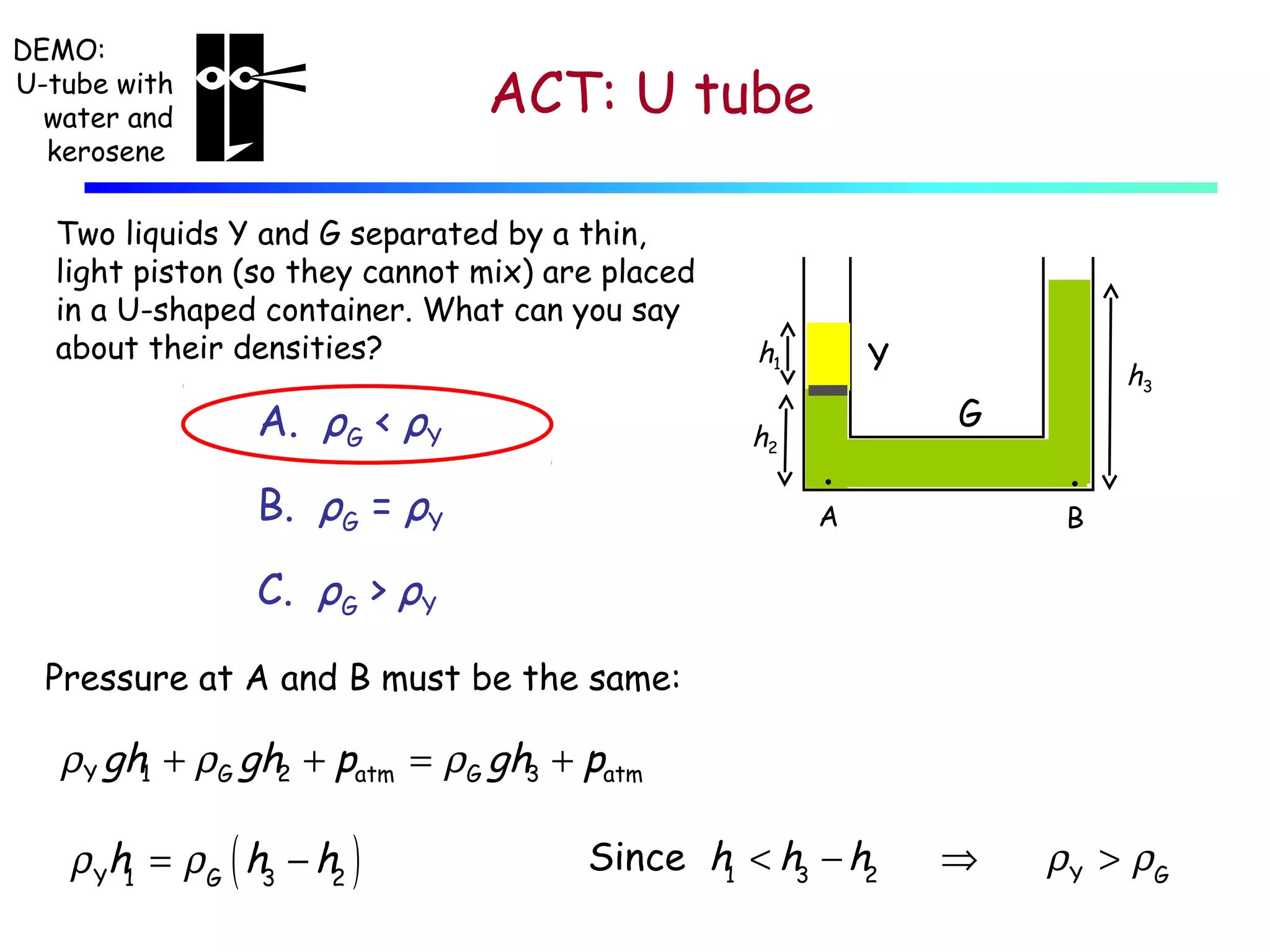
ACT: U tube

Two liquids Y and G separated by a thin,
light piston (so they cannot mix) are placed
in a U-shaped container. What can you say
about their densities?

A. ρG < ρY

h1

Y
G

h2
•
A

B. ρG = ρY

h3
•
B

C. ρG > ρY
Pressure at A and B must be the same:

ρ Y gh1 + ρG gh2 + patm = ρG gh3 + patm

ρ Yh1 = ρ G ( h3 − h2 )

Since h1 < h3 − h2

⇒

ρ Y > ρG
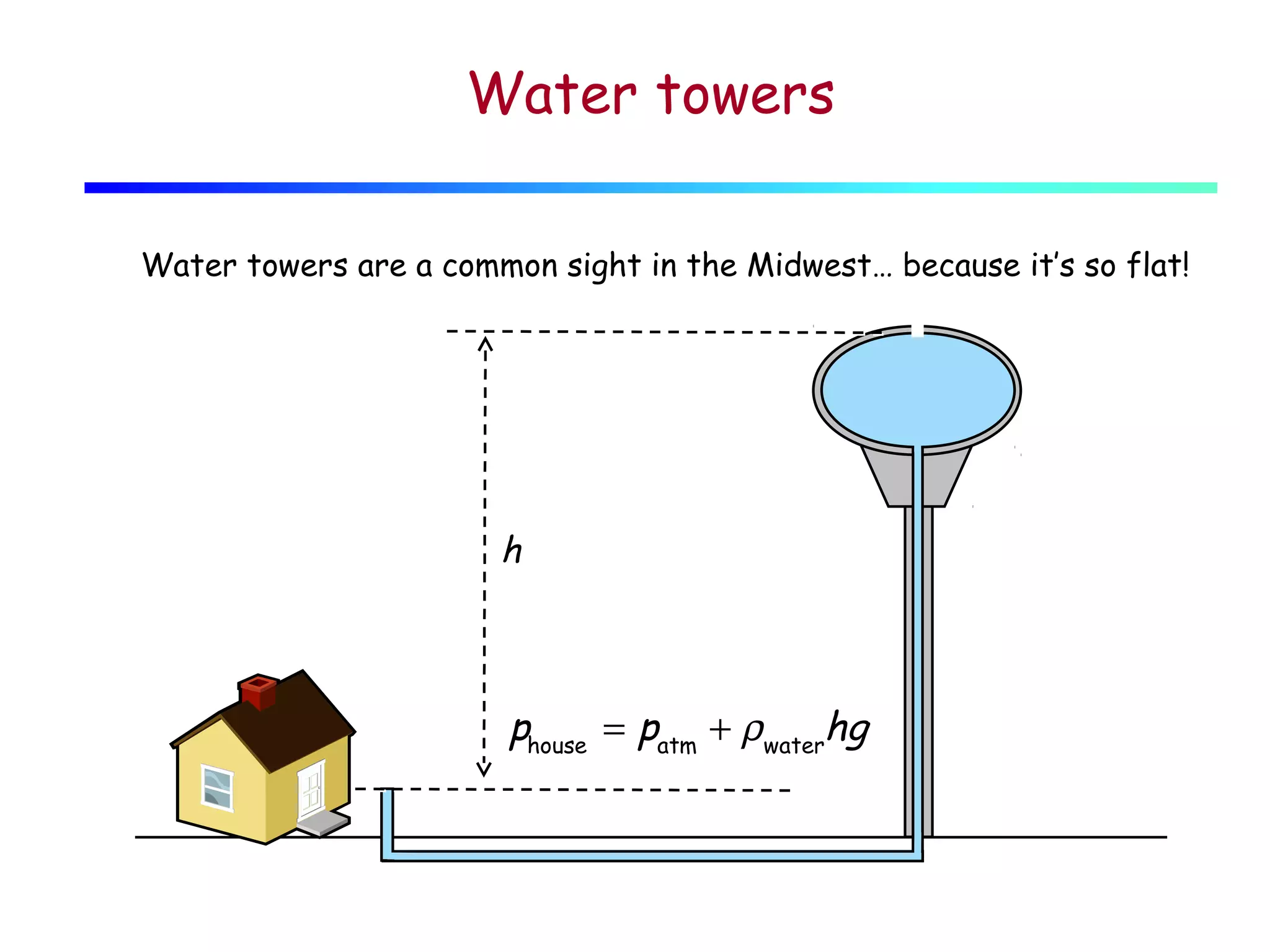
Water towers
Water towers are a common sight in the Midwest… because it’s so flat!

h

phouse = patm + ρwaterhg
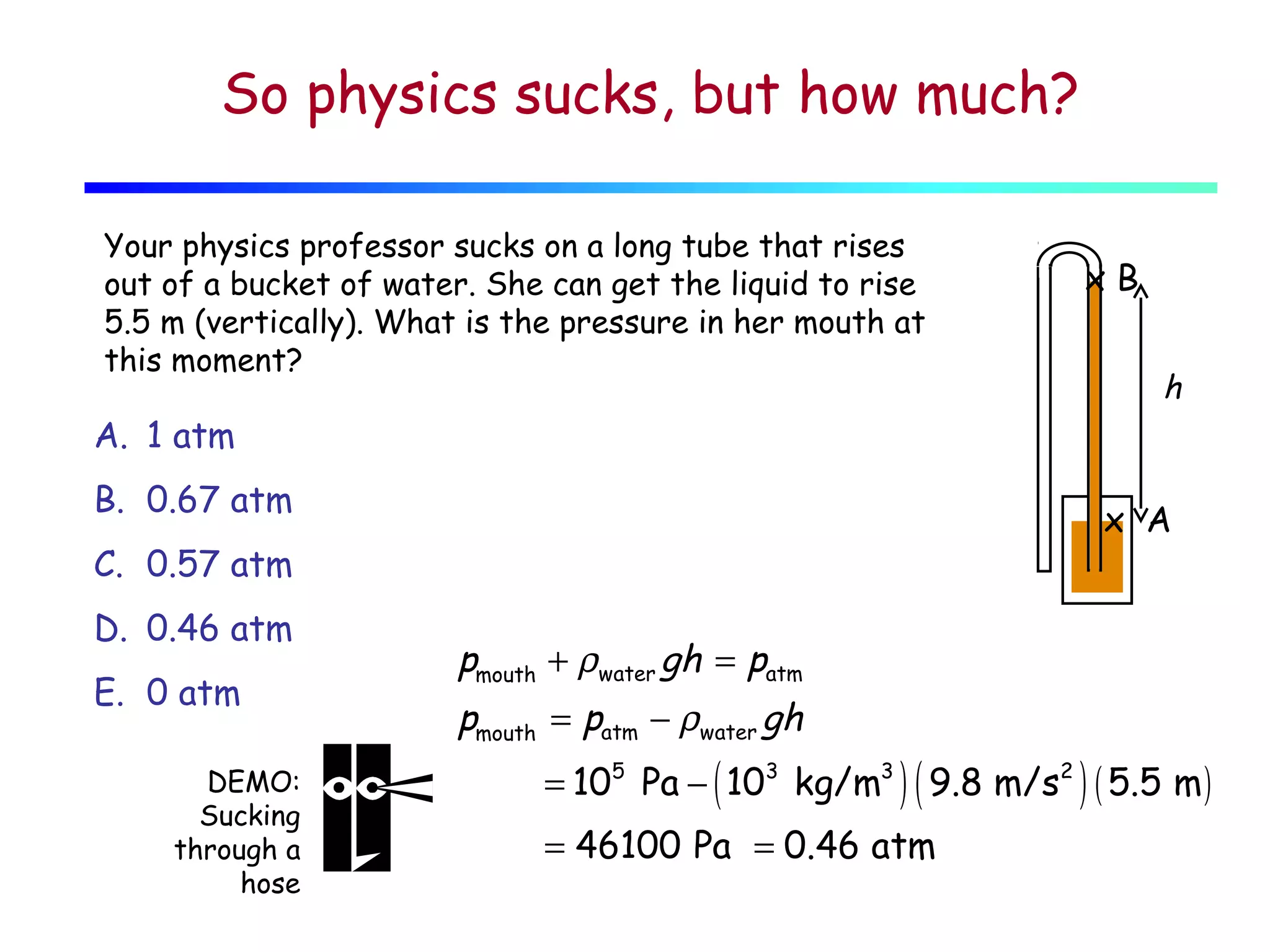
So physics sucks, but how much?
Your physics professor sucks on a long tube that rises
out of a bucket of water. She can get the liquid to rise
5.5 m (vertically). What is the pressure in her mouth at
this moment?

xB
h

A. 1 atm
B. 0.67 atm

x A

C. 0.57 atm
D. 0.46 atm
E. 0 atm
DEMO:
Sucking
through a
hose

pmouth + ρwater gh = patm
pmouth = patm − ρwater gh

= 105 Pa − ( 103 kg/m3 ) ( 9.8 m/s2 ) ( 5.5 m )
= 46100 Pa = 0.46 atm
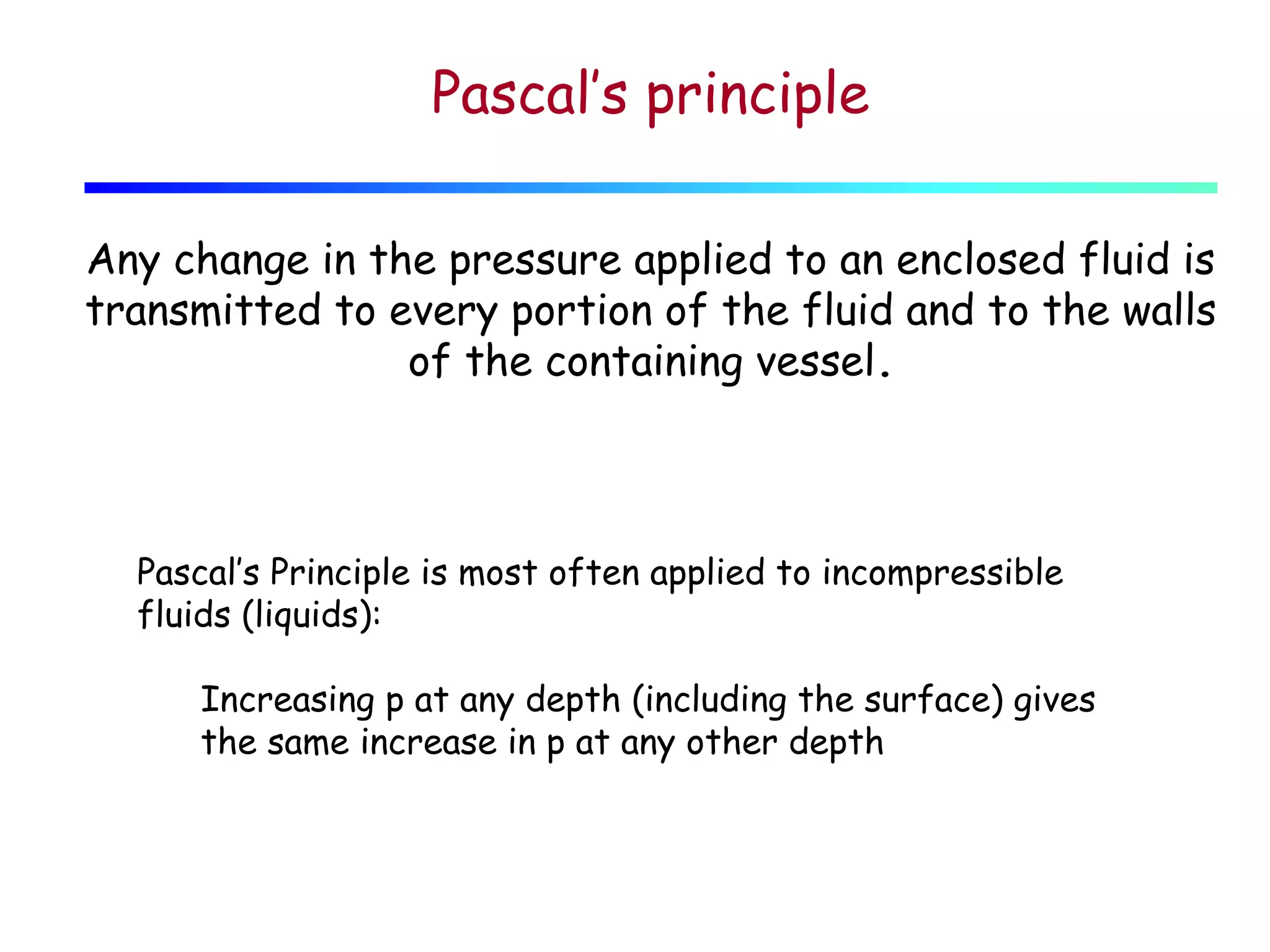
Pascal’s principle
Any change in the pressure applied to an enclosed fluid is
transmitted to every portion of the fluid and to the walls
of the containing vessel.

Pascal’s Principle is most often applied to incompressible
fluids (liquids):
Increasing p at any depth (including the surface) gives
the same increase in p at any other depth
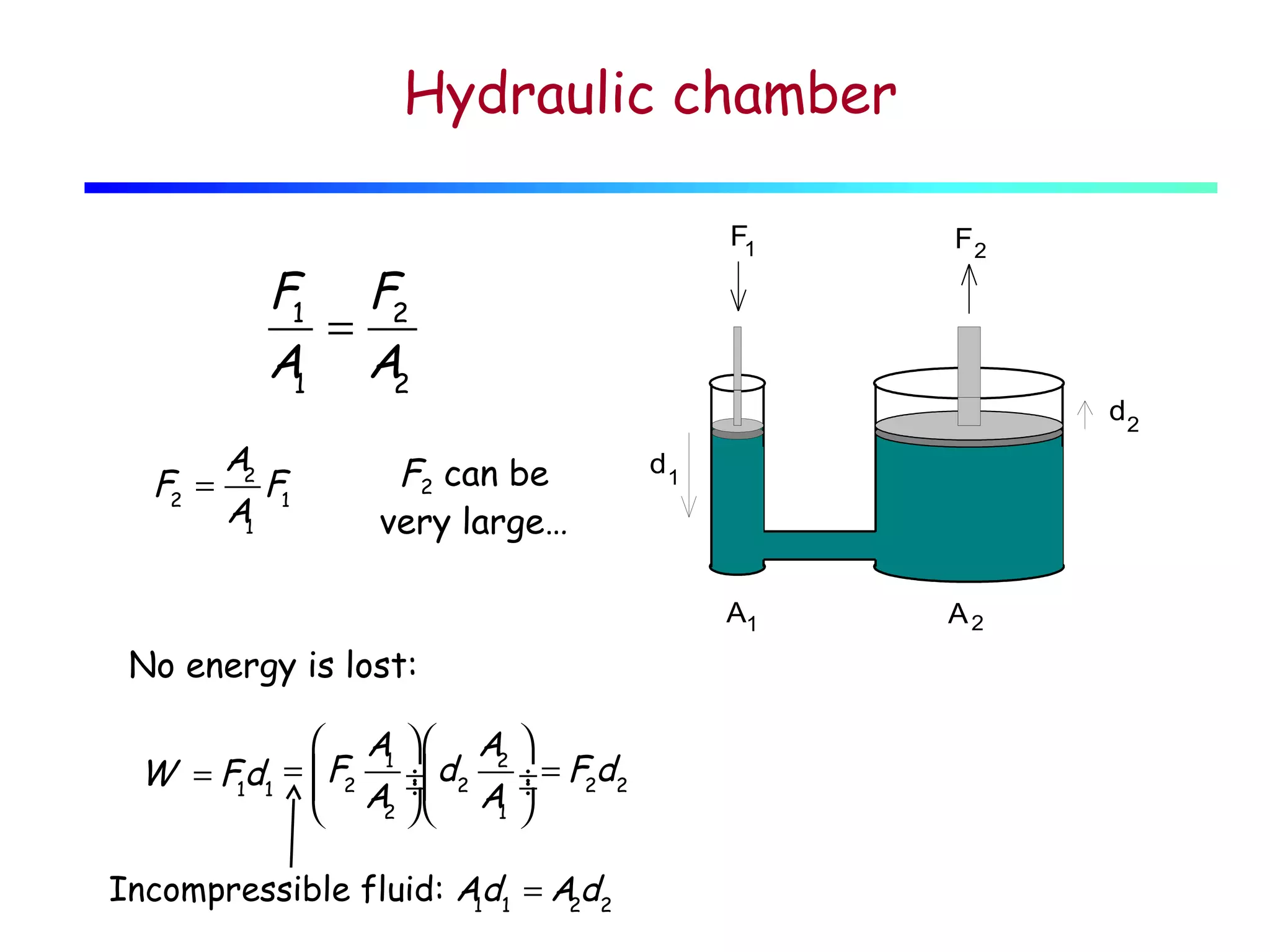
Hydraulic chamber
F1

F1 F2
=
A1 A2
A2
F2 = F1
A1

d2

F2 can be
very large…

d1

A1

No energy is lost:
 A1
W = F1d1 =  F2
 A

2

 A2
÷ d2
÷ A

1

F2


÷ = F2d2
÷


Incompressible fluid: Ad1 = A2d2
1

A2
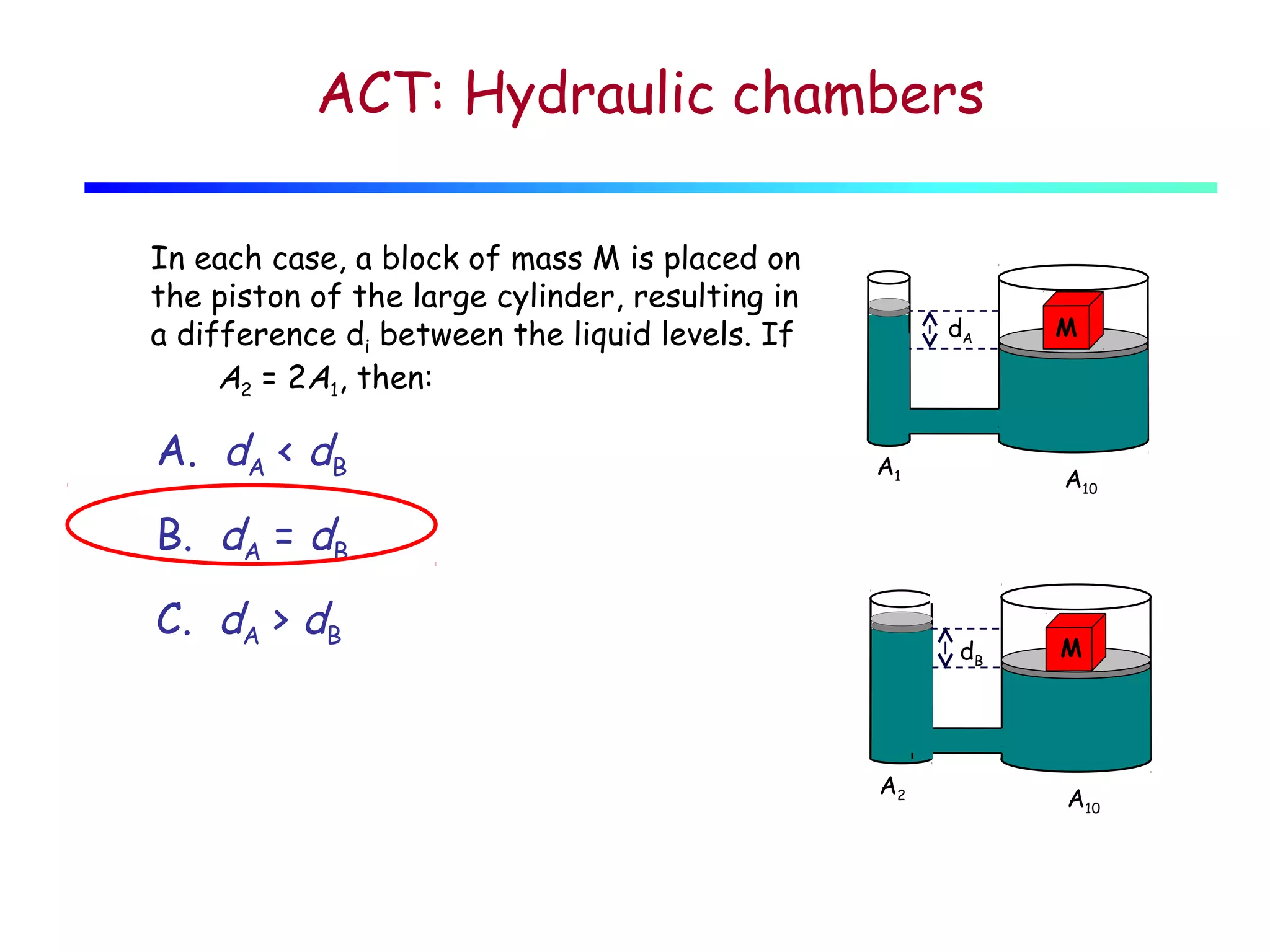
ACT: Hydraulic chambers
In each case, a block of mass M is placed on
the piston of the large cylinder, resulting in
a difference di between the liquid levels. If
A2 = 2A1, then:

A. dA < dB

dA

A1

M

A10

B. dA = dB
C. dA > dB

dB

A2

M

A10
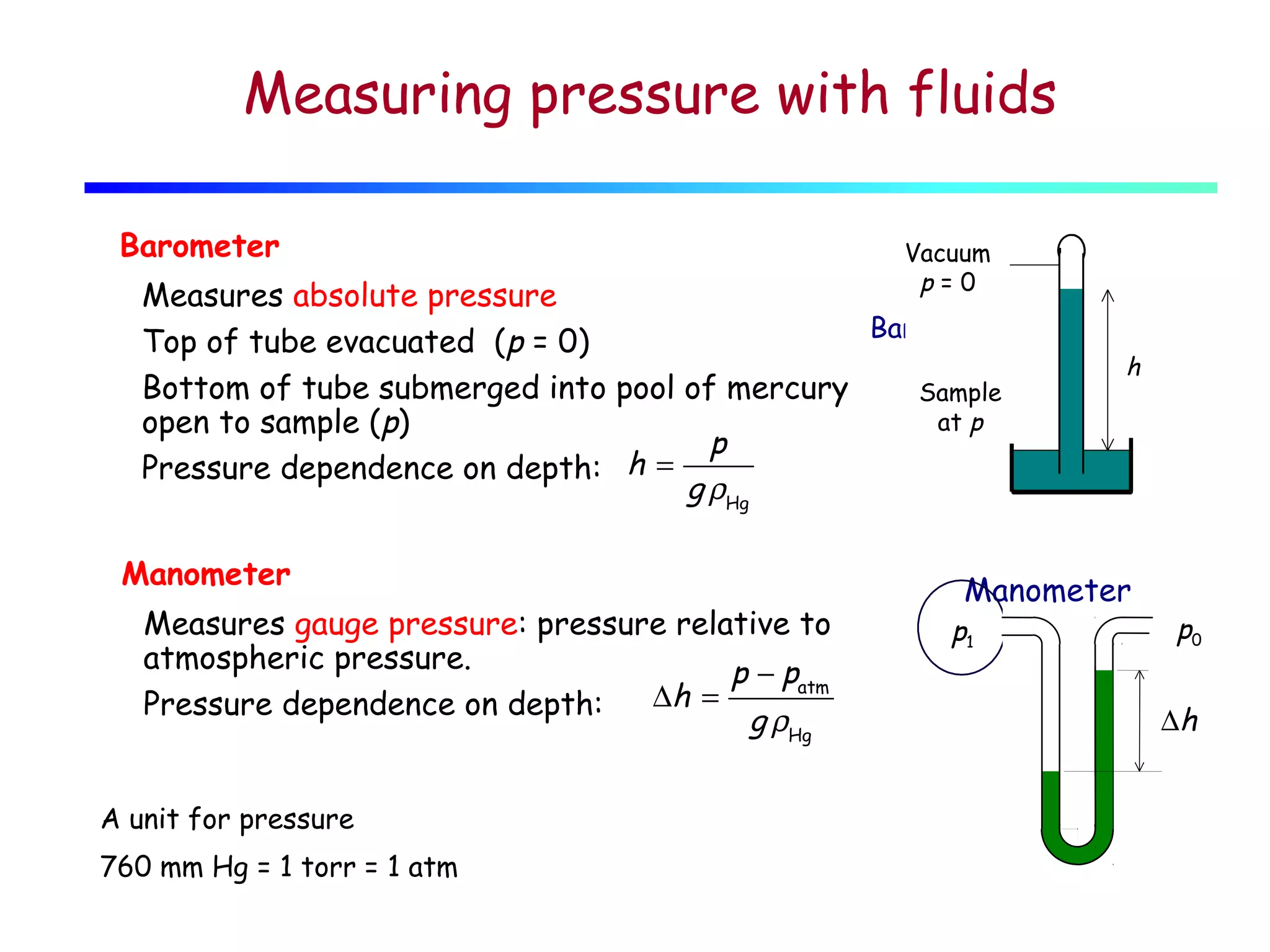
Measuring pressure with fluids
Barometer

vacuum
Vacuum
p p=0
=0

Measures absolute pressure
Barometer
Top of tube evacuated (p = 0)
atmosphere
Bottom of tube submerged into pool of mercury
Sample
p=p
at p0
open to sample (p)
p
Pressure dependence on depth: h =
g ρHg
Manometer
Measures gauge pressure: pressure relative to
atmospheric pressure.
p − patm
∆h =
Pressure dependence on depth:
g ρHg
A unit for pressure
760 mm Hg = 1 torr = 1 atm

h
h

Manometer

p1
p

p atm
p0atm
∆h
∆h

Lecture 02 density, pressure and pascal's principle

  • 1.
    Lecture 2 Fluids: density,pressure, Pascal’s principle.
  • 2.
    What is afluid? Fluids are “substances that flow”…. “substances that take the shape of the container” Atoms and molecules must be free to move .. No long range correlation between positions (e.g., not a crystal). Gas or liquid… or granular materials (like sand)
  • 3.
    Density, pressure Density: Pressure: Units: m ρ= V Pure water:1000 kg/m3 F⊥ p= A Pascal (Pa) = 1 N/m2 psi (pounds per square inch) atmosphere bar 1 atm = 1.013 × 10 5 Pa 1 bar = 105 Pa
  • 4.
    Atmospheric pressure The atmosphereof Earth is a fluid, so every object in air is subject to some pressure. At the surface of the Earth, the pressure is patm ~ 1.013 x 10⁵ Pa = 1 atm Area of a hand ~ 200 cm2 = 0.02 m2 F = patmA ~ 2000 N on your hand due to air! DEMO: Piston and weight
  • 5.
    DEMO: Plastic tube with cover Pressurevs. depth Imaginary box of fluid with bases of area A and height h Ftop Net force must be zero! Fbottom = Ftop + mg Pbottom/top = m = ρAh h mg Fbottom Fbottom/top A pbottom = ptop + ρ gh Example: How deep under water is p = 2 atm? pbottom − ptop 1.01 × 10⁵ Pa h= = = 10.3 m 3 3 2 ρg 10 kg/m 9.81 m/s ( )( ) (ie, 1 atm is produced by a 10.3 m high column of water)
  • 6.
    DEMO: ascal’s vases Fluid inan open container Pressure is the same at a given depth, independently of the container. y Fluid level is the same everywhere in a connected container (assuming no surface forces) If liquid height was higher above A than above B pA > pB Net force → p(y) • A Net flow → • B This is not equilibrium!
  • 7.
    DEMO: U-tube with water and kerosene ACT:U tube Two liquids Y and G separated by a thin, light piston (so they cannot mix) are placed in a U-shaped container. What can you say about their densities? A. ρG < ρY h1 Y G h2 • A B. ρG = ρY h3 • B C. ρG > ρY Pressure at A and B must be the same: ρ Y gh1 + ρG gh2 + patm = ρG gh3 + patm ρ Yh1 = ρ G ( h3 − h2 ) Since h1 < h3 − h2 ⇒ ρ Y > ρG
  • 8.
    Water towers Water towersare a common sight in the Midwest… because it’s so flat! h phouse = patm + ρwaterhg
  • 9.
    So physics sucks,but how much? Your physics professor sucks on a long tube that rises out of a bucket of water. She can get the liquid to rise 5.5 m (vertically). What is the pressure in her mouth at this moment? xB h A. 1 atm B. 0.67 atm x A C. 0.57 atm D. 0.46 atm E. 0 atm DEMO: Sucking through a hose pmouth + ρwater gh = patm pmouth = patm − ρwater gh = 105 Pa − ( 103 kg/m3 ) ( 9.8 m/s2 ) ( 5.5 m ) = 46100 Pa = 0.46 atm
  • 10.
    Pascal’s principle Any changein the pressure applied to an enclosed fluid is transmitted to every portion of the fluid and to the walls of the containing vessel. Pascal’s Principle is most often applied to incompressible fluids (liquids): Increasing p at any depth (including the surface) gives the same increase in p at any other depth
  • 11.
    Hydraulic chamber F1 F1 F2 = A1A2 A2 F2 = F1 A1 d2 F2 can be very large… d1 A1 No energy is lost:  A1 W = F1d1 =  F2  A  2  A2 ÷ d2 ÷ A  1 F2  ÷ = F2d2 ÷  Incompressible fluid: Ad1 = A2d2 1 A2
  • 12.
    ACT: Hydraulic chambers Ineach case, a block of mass M is placed on the piston of the large cylinder, resulting in a difference di between the liquid levels. If A2 = 2A1, then: A. dA < dB dA A1 M A10 B. dA = dB C. dA > dB dB A2 M A10
  • 13.
    Measuring pressure withfluids Barometer vacuum Vacuum p p=0 =0 Measures absolute pressure Barometer Top of tube evacuated (p = 0) atmosphere Bottom of tube submerged into pool of mercury Sample p=p at p0 open to sample (p) p Pressure dependence on depth: h = g ρHg Manometer Measures gauge pressure: pressure relative to atmospheric pressure. p − patm ∆h = Pressure dependence on depth: g ρHg A unit for pressure 760 mm Hg = 1 torr = 1 atm h h Manometer p1 p p atm p0atm ∆h ∆h

Editor's Notes