The Surgical Experience SEDATION AND ANESTHESIA Presented by: Mr. K.F.Monteiro  Dual role nurse practitioner
Sedation and anesthesia have four levels: Minimal sedation,  Moderate sedation,  Deep sedation,  Anesthesia.
A surgical procedure may also be performed using anesthetic agents that suspend sensation in parts of the body (local, regional, epidural, or spinal anesthesia).
The anesthesia experience For the patient, the anesthesia experience consists of having an intravenous line inserted, if it was not inserted earlier; receiving a sedating agent prior to induction with an anesthetic agent; losing consciousness; being intubated, if indicated;  and then receiving a combination of anesthetic agents. Typically the experience is a smooth one and the patient has no recall of the events.
Minimal Sedation The minimal sedation level is a drug-induced state during which the patient can  respond normally to verbal commands .  Cognitive function and coordination may be impaired, but ventilatory and cardiovascular functions are not affected (JCAHO, 2001; Patterson)
Moderate Sedation It is defined as a depressed level of consciousness that does not impair the patient’s ability to maintain a patent airway and to respond appropriately to physical stimulation and verbal command.  Its  goal  is a calm, tranquil, amnesic patient who, when sedation is combined with analgesic agents, is relatively pain-free during the procedure but able to maintain protective reflexes ( JCAHO, 2001; Patterson, 2000a, b).
Moderate sedation  :- Drugs used :- Midazolam (Versed) or diazepam (Valium) Analgesic agents (eg, morphine, fentanyl)  reversal agonists naloxone (Narcan) nurse who is knowledgeable and skilled in detecting dysrhythmias, administering oxygen,  Performing resuscitation must continuously monitor the patient who receives sedation.  The patient receiving this form of anesthesia is never left alone and is closely monitored for respiratory, cardiovascular, and central nervous system depression using such methods as pulse oximetry, ECG, and frequent measurement of vital signs (Patterson, 2000a, b).
Deep Sedation Deep sedation is a drug-induced state during which a patient cannot be easily aroused but can respond purposefully after repeated stimulation  (JCAHO, 2001).
difference The  difference  between deep sedation and anesthesia is that the anesthetized patient is not arousable. Deep sedation and anesthesia are achieved when an anesthetic agent is inhaled or administered intravenously. Inhaled anesthetic agents include volatile liquid agents and gases (Aranda & Hanson,2000; Townsend, 2002).
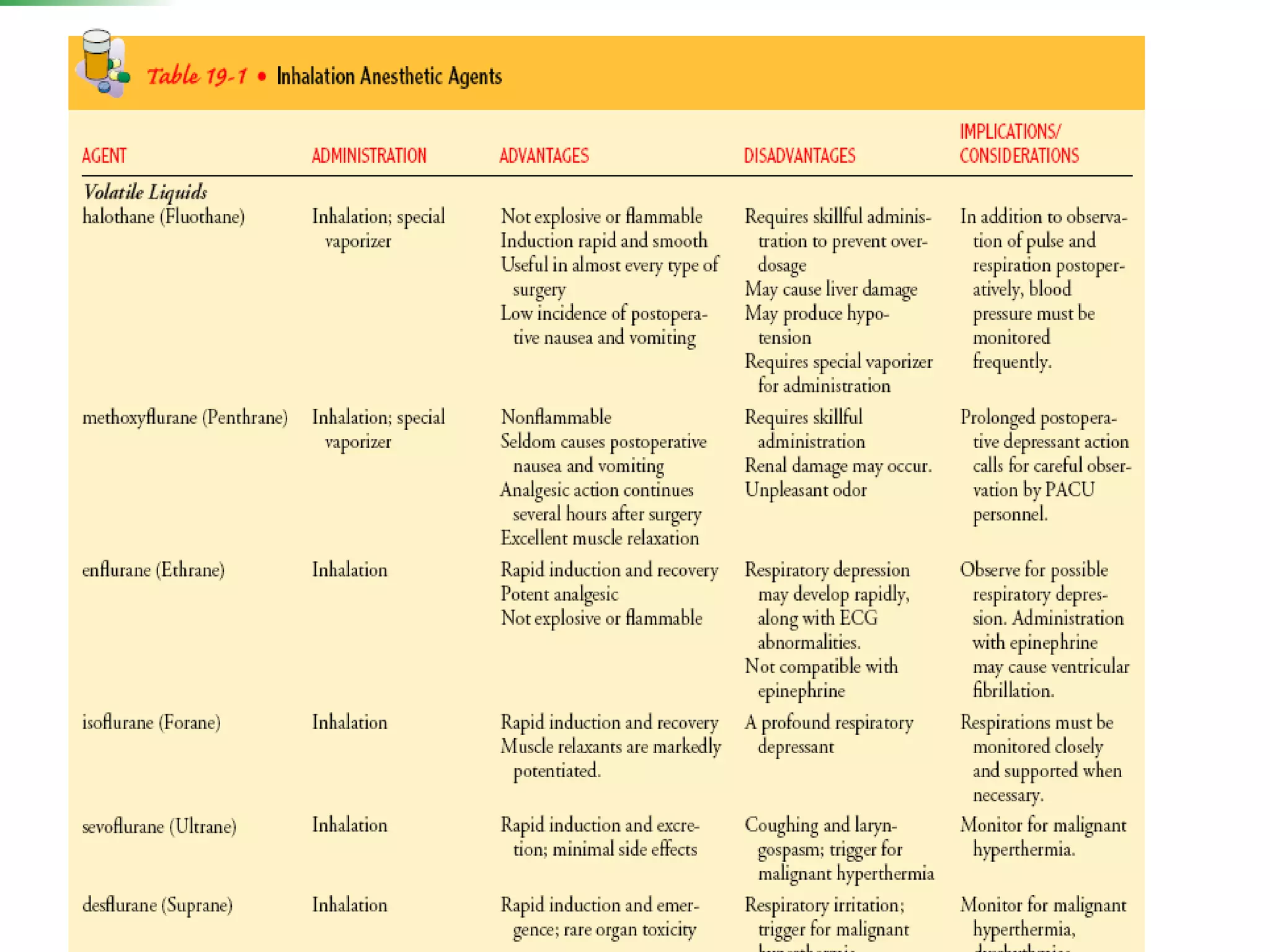
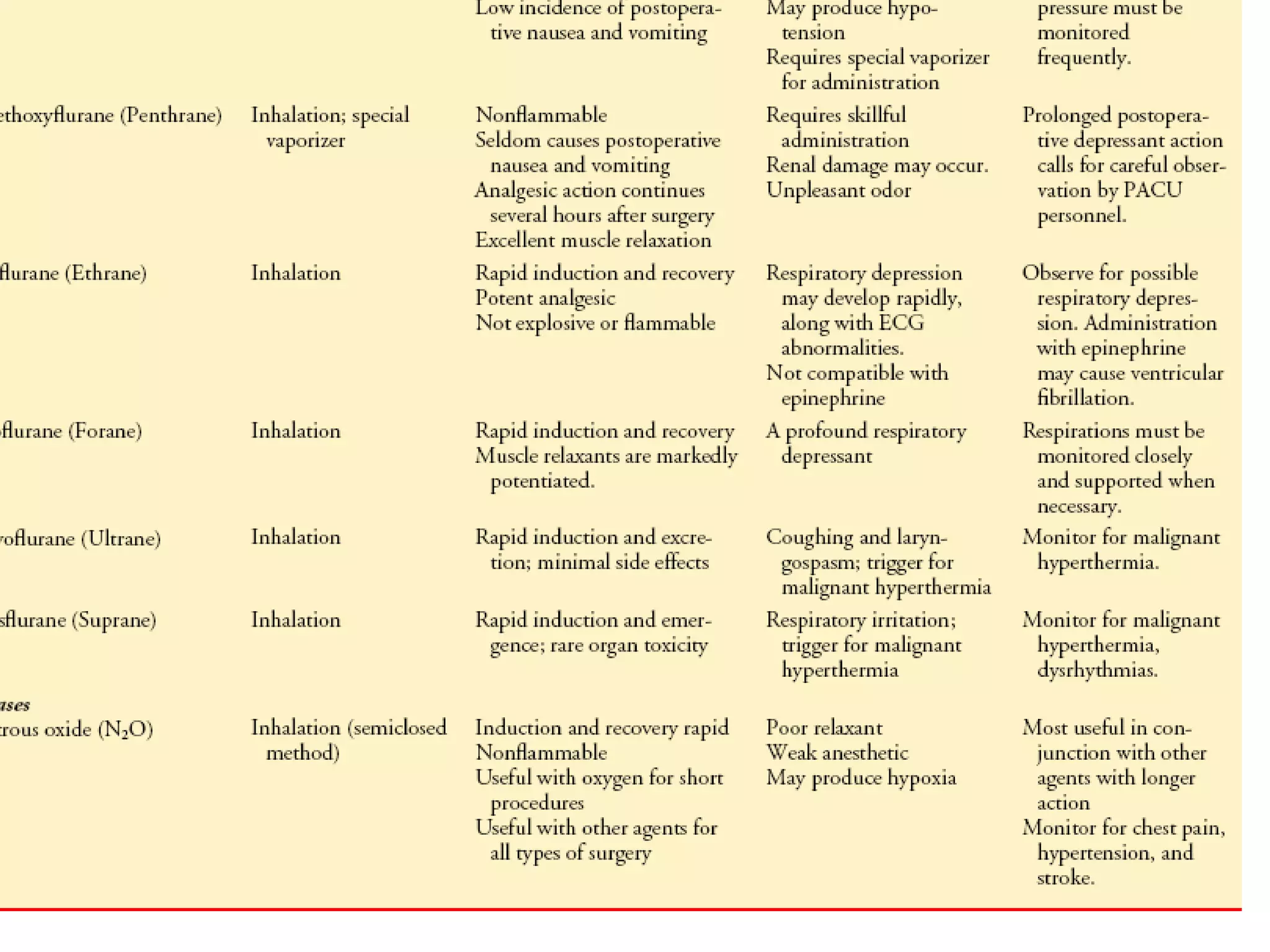
Volatile liquid anesthetics produce anesthesia when their vapors are inhaled. Included in this group arehalothane (Fluothane), enflurane (Ethrane), isoflurane (Forane),sevoflurane (Ultrane), and desflurane (Suprane). All are administered with oxygen, and usually with nitrous oxide as well.
Gas anesthetics are administered by inhalation and are always combined with oxygen. Nitrous oxide is the most commonly used gas anesthetic.
Mechanism When  inhaled , the anesthetics  enter the   blood  through the pulmonary capillaries and act on  cerebral centers  to produce loss of consciousness and sensation. When anesthetic administration is discontinued, the vapor or gas is eliminated through the  lungs.
Anesthesia
Anesthesia  is a state of narcosis (severe central nervous system depression produced by pharmacologic agents), analgesia, relaxation, and reflex loss.  Patients under general anesthesia are not arousable, even to painful stimuli. They lose the ability to maintain ventilatory function and require assistance in maintaining a patent airway.  Cardiovascular function may be impaired as well ( JCAHO, 2001).
General anesthesia General anesthesia  consists of  four  stages, each associated with specific clinical manifestations.
STAGE I: BEGINNING ANESTHESIA As the patient  breathes in  the anesthetic mixture, warmth, dizziness, and a feeling of detachment may be experienced.  The patient may have a ringing, roaring, or buzzing in the ears and, though still conscious, may sense an inability to move the extremities easily. During this stage, noises are exaggerated; even low voices or minor sounds seem loud and unreal.  For this reason, the nurse  avoids  making unnecessary noises or motions when anesthesia begins.
STAGE II: EXCITEMENT The excitement stage, characterized variously by  struggling, shouting, talking, singing, laughing, or crying , is often avoided if the anesthetic is administered smoothly and quickly. The pupils dilate , but  contract if exposed to light ; the  pulse rate is rapid , and respirations may be irregular . Because of the possibility of uncontrolled movements of the patient during this stage, the anesthesiologist or anesthetist must always be assisted by someone ready to  help restrain the patient . A  strap  may be in place across the patient’s thighs, and the hands may be secured to an arm board.  The  patient should not be touched  except for purposes of restraint, but restraints should not be applied over the operative site.  Manipulation increases circulation to the operative site and thereby increases the potential for bleeding.
STAGE III: SURGICAL ANESTHESIA Surgical anesthesia is reached by continued the administration of the anesthetic vapor or gas.  The patient is unconscious and lies quietly on the table. The pupils are small but contract when exposed to light. Respirations are regular,  the pulse rate and volume are normal, and the skin is pink or slightly flushed.  With proper administration of the anesthetic, this stage may be maintained for hours in one of several planes, ranging from light (1) to deep (4),depending on the depth of anesthesia needed.
STAGE IV: MEDULLARY DEPRESSION This stage is reached when too much anesthesia has been administered. Respirations become shallow, the pulse is weak and thready, and the pupils become widely dilated and no longer contract when exposed to light.  Cyanosis develops and, without prompt intervention, death rapidly follows.  If this stage develops, the anesthetic is discontinued immediately and respiratory and circulatory support is initiated to prevent death. Stimulants, although rarely used, may be administered; narcotic antagonists can be used if over dosage is due to opioids.
The  responses  of the pupils, the  blood pressure , and the  respiratory  and  cardiac rates  are probably the most reliable guides to the patient’s condition.
METHODS OF ANESTHESIA ADMINISTRATION


Anesthetics produce anesthesia because they are  delivered to the brain at a high partial pressure that enables them to cross the blood–brain barrier.  Relatively large amounts of anesthetic must be administered during induction and the early maintenance phases because the anesthetic is recirculated and deposited in body tissues. As these sites become saturated, smaller amounts of the anesthetic agent are required to maintain anesthesia because  equilibrium  or near equilibrium has been achieved between brain, blood, and other tissues.
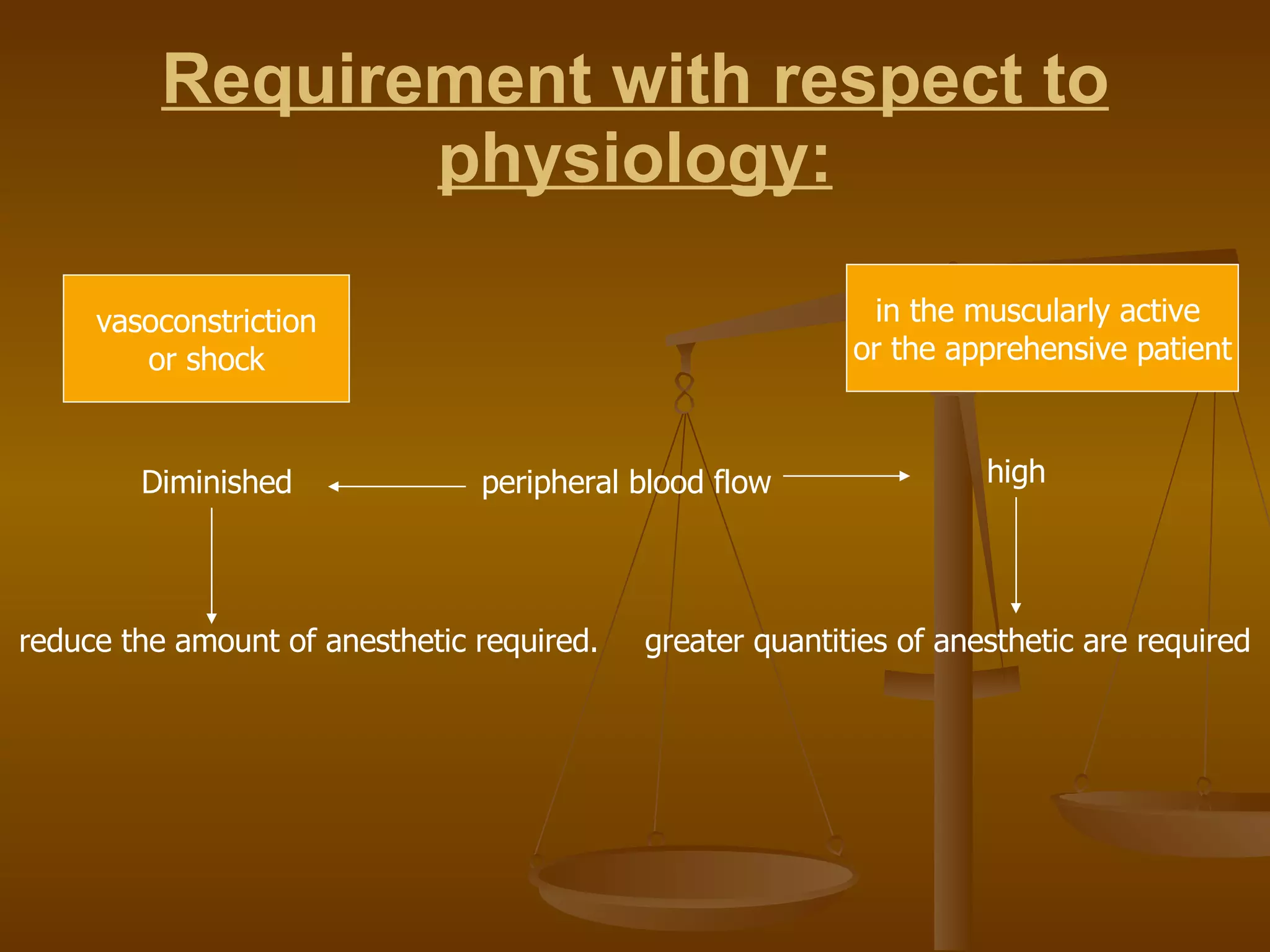
Requirement with respect to physiology: peripheral blood flow Diminished  high reduce the amount of anesthetic required. greater quantities of anesthetic are required vasoconstriction or shock in the muscularly active  or the apprehensive patient
Inhalation Liquid anesthetics may be administered by mixing the vapors with oxygen or nitrous oxide–oxygen and then having the patient inhale the mixture (Townsend, 2002). The vapor is administered to the patient through a tube or a mask.
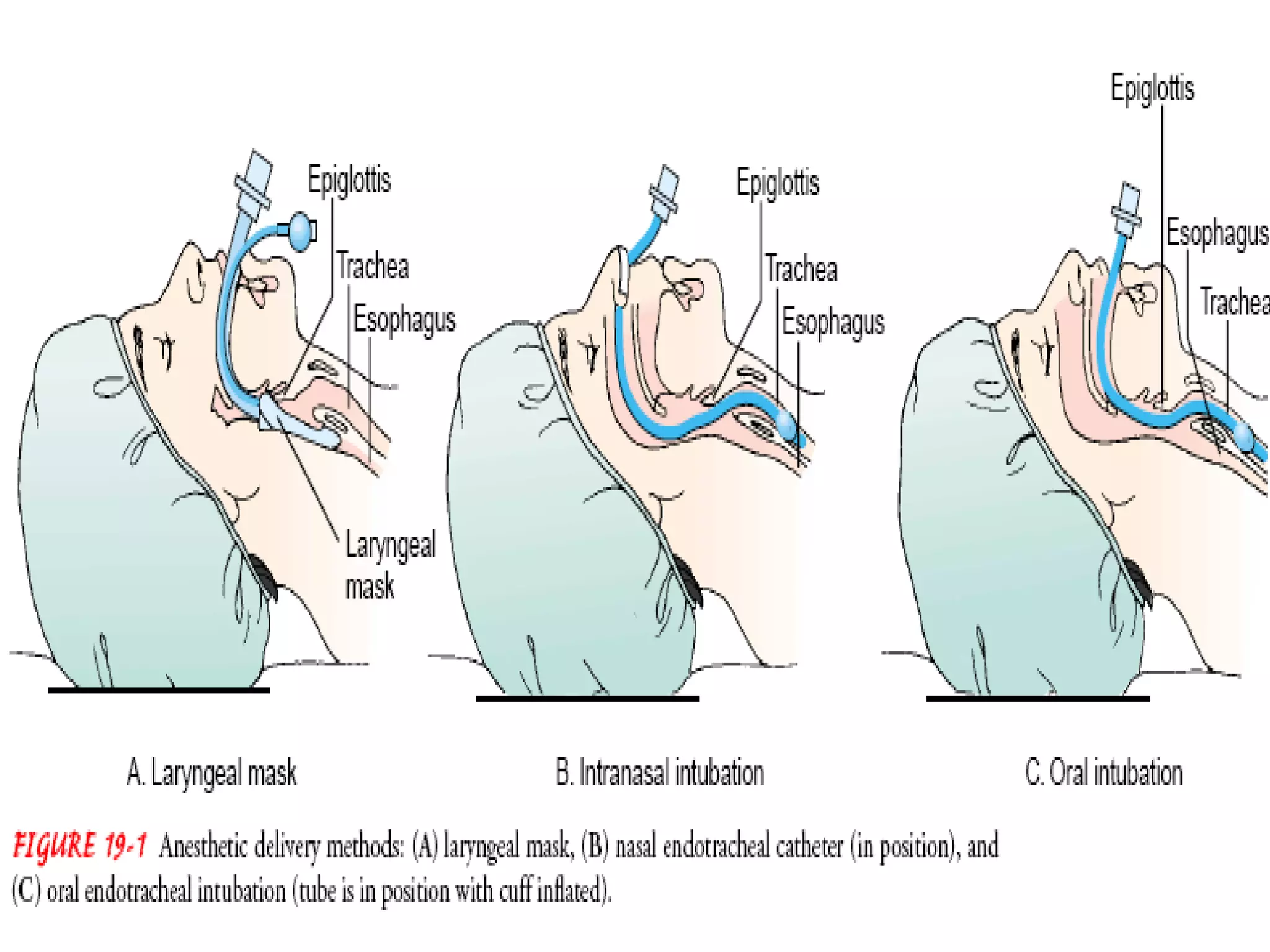
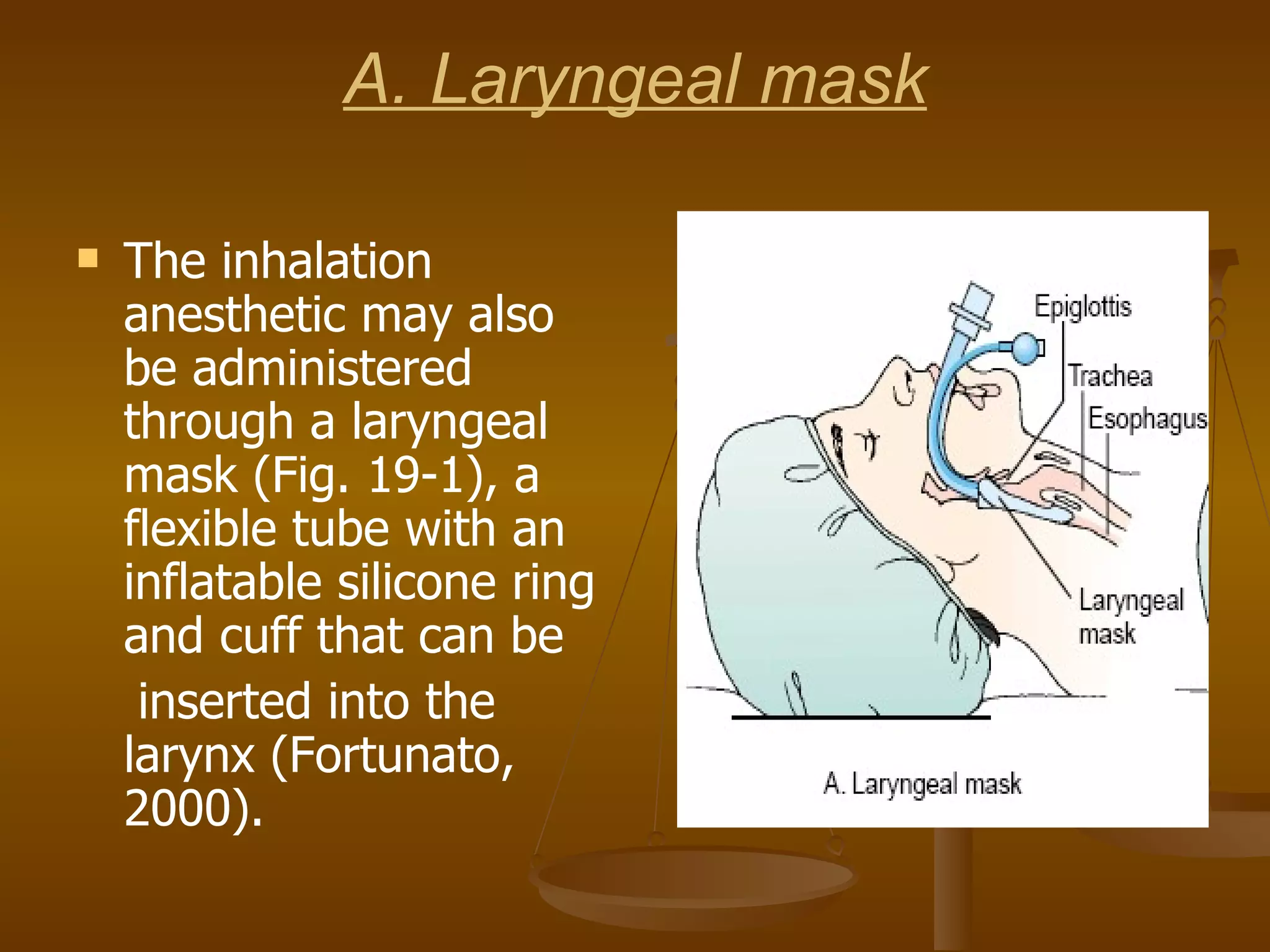
A. Laryngeal mask The inhalation anesthetic may also be administered through a laryngeal mask (Fig. 19-1), a flexible tube with an inflatable silicone ring and cuff that can be inserted into the larynx (Fortunato, 2000).
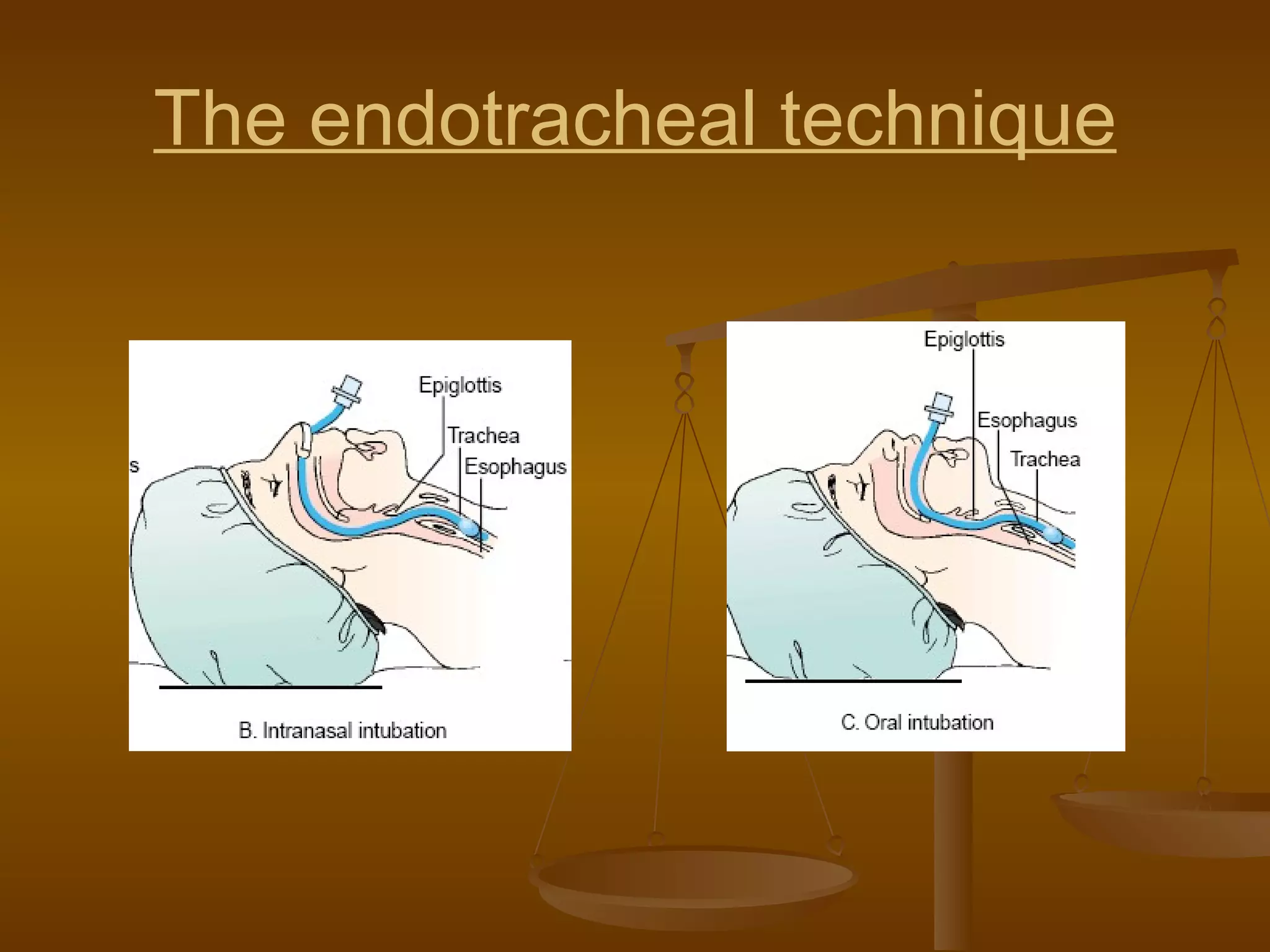
The endotracheal technique The endotracheal technique for administering anesthetics consists of introducing a soft rubber or plastic endotracheal tube into the trachea, usually by means of a laryngoscope. The endotracheal tube may be inserted through either the nose or mouth. When in place, the tube seals off the lungs from the esophagus so that if the patient vomits, stomach contents do not enter the lungs.
The endotracheal technique
Intravenous General anesthesia can also be produced by the intravenous injection of various substances, such as barbiturates, benzodiazepines,nonbarbiturate hypnotics, dissociative agents, and opioid agents (Aranda & Hanson, 2000; Townsend, 2002). These medications may be administered for induction (initiation) or maintenance of anesthesia.
An  advantage  of intravenous anesthesia is that the onset of anesthesia is pleasant; there is none of the buzzing, roaring, or dizziness known to follow administration of an inhalation anesthetic. For this  reason , induction of anesthesia usually begins with an intravenous agent and is often preferred by patients who have experienced various methods. The duration of action is brief, and the patient awakens with little nausea or vomiting.  Thiopental  is usually the agent of choice, and it is often administered with other anesthetic agents in prolonged procedures.
Advantages of intravenous anesthesia :- Intravenous anesthetic agents are nonexplosive. they require little equipment, and they are easy to administer. The low incidence of postoperative nausea and vomiting makes the method useful in eye surgery. Intravenous anesthesia is useful for short procedures
A  disadvantage  of an intravenous anesthetic such as thiopental is its powerful respiratory depressant effect. Sneezing, coughing, and laryngospasm are sometimes noted with its use.
Muscle   relaxant Purified curare was the first widely used muscle relaxant
The ideal muscle relaxant has the following characteristics:
1. It is nondepolarizing (noncompetitive agent), with an onset and duration of action similar to succinylcholine but without its problems of bradycardia and cardiac dysrhythmias (Townsend, 2002). 2. It has a duration of action between those of succinylcholine and pancuronium. 3. It lacks cumulative and cardiovascular effects. 4. It can be metabolized and does not depend on the kidneys for its elimination.
Regional Anesthesia Regional anesthesia is a form of local anesthesia in which an anesthetic agent is injected around nerves so that the  area supplied by these nerves  is anesthetized.
The patient receiving  spinal or local anesthesia  is awake and aware of his or her surroundings unless medications are given to produce mild sedation or to relieve anxiety.  #The nurse must avoid careless conversation, unnecessary noise, and unpleasant odors; these may be noticed by the patient in the OR and may contribute to a negative view of the surgical experience. # A quiet environment is therapeutic.  #The diagnosis must not be stated aloud if the patient is not  to know it at this time.
Conduction Blocks and Spinal Anesthesia
Types of conduction block   *Epidural anesthesia *Brachial plexus block * Paravertebral anesthesia * Transsacral (caudal) block
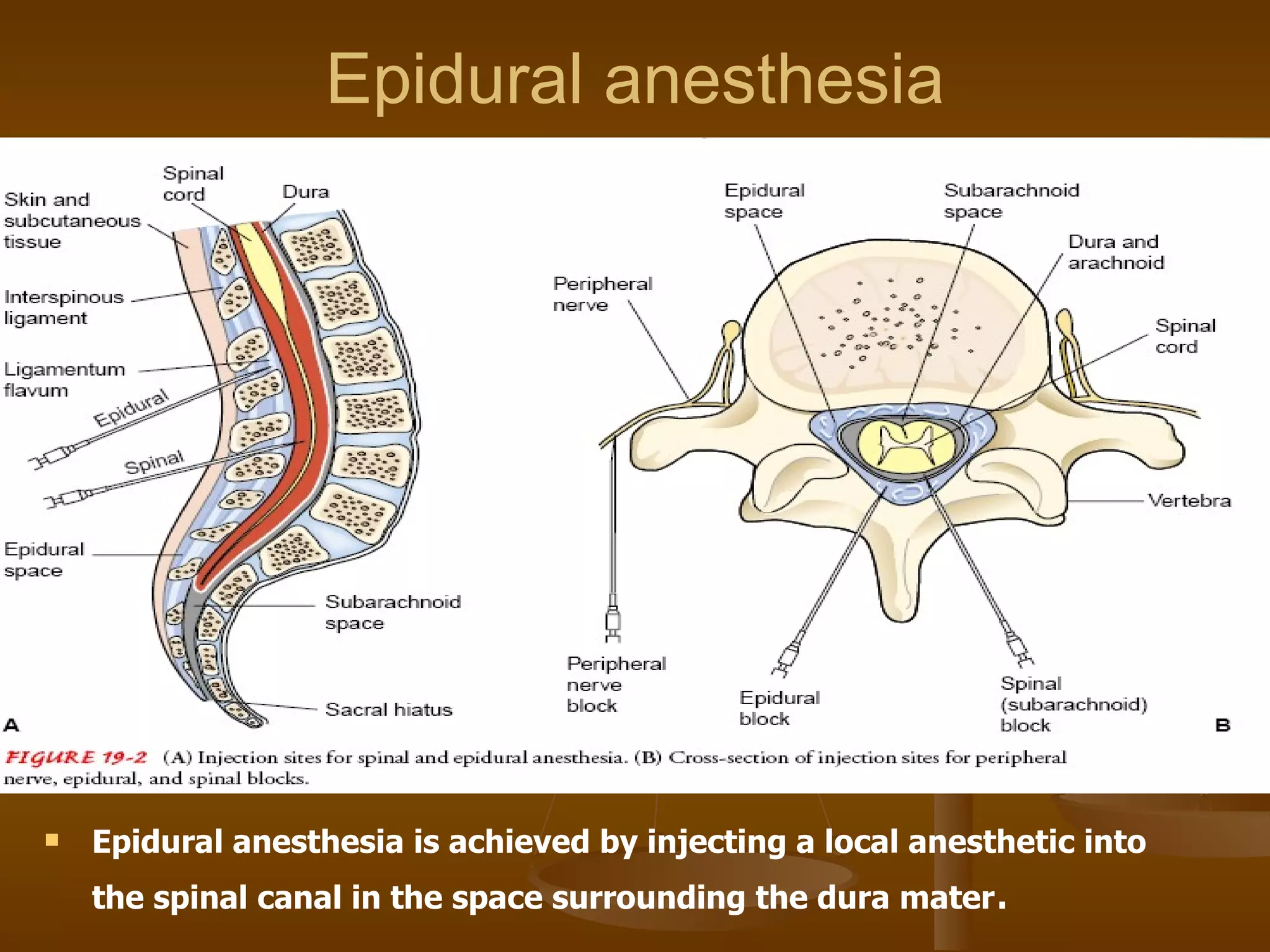
Epidural anesthesia Epidural anesthesia is achieved by injecting a local anesthetic into the spinal canal in the space surrounding the dura mater .
For/Against An  advantage  of epidural anesthesia is the absence of headache that occasionally results from subarachnoid injection. A  disadvantage  is the greater technical challenge of introducing the anesthetic into the epidural rather than the subarachnoid space.
Spinal anesthesia Spinal anesthesia   is a type of  extensive conduction   nerve block  that is produced when a local anesthetic is introduced into the subarachnoid space at the lumbar level, usually between L4 and L5 .It produces anesthesia of the lower extremities, perineum, and lower abdomen.
For the lumbar puncture procedure, the patient usually lies on the side in a  knee–chest position . Sterile technique is used as a spinal puncture is made and the medication is injected through the needle. As soon as the injection has been made, the patient is positioned on his or her  back . If a relatively high level of block is sought, the head and shoulders are lowered .
A few minutes after induction of a spinal anesthetic, anesthesia and paralysis affect the  toes and perineum  and then gradually  the legs and abdomen . If the anesthetic reaches the upper thoracic and cervical spinal cord in high concentrations, a temporary partial or complete  respiratory paralysis  results. Paralysis of the respiratory muscles is managed by  mechanical ventilation  until the effects of the anesthetic on the respiratory nerves have worn off.
Nausea, vomiting, and pain  may occur during surgery when spinal anesthesia is used. As a rule, these reactions result from  manipulation of various structures , particularly those within the abdominal cavity. The simultaneous intravenous administration of a weak solution of  thiopental and inhalation of nitrous oxide  may prevent such reactions.
Headache may be an after-effect of spinal anesthesia .
Factors are involved in the incidence of headache: 1.The  size  of the spinal needle used 2. The  leakage  of fluid from the subarachnoid space through the  puncture site 3.The patient’s  hydration status.
Question. How to relieve spinal headache :- These include keeping the patient lying flat, quiet, and well hydrated.
Local Infiltration Anesthesia Infiltration anesthesia is the injection of a solution containing the local anesthetic into the tissues at the planned incision site.
The advantages of local anesthesia are as follows: •  It is simple, economical, and nonexplosive. •  Equipment needed is minimal. •  Postoperative recovery is brief. •  Undesirable effects of general anesthesia are avoided. •  It is ideal for short and superficial surgical procedures.
Local anesthesia is often administered in combination with epinephrine . Epinephrine constricts blood vessels, which prevents rapid absorption of the anesthetic agent and thus prolongs its local action. Rapid absorption of the anesthetic agent into the bloodstream, which could cause  seizures , is also prevented. The skin is prepared as for any surgical procedure, and a  small   gauge needle  is used to inject a modest amount of the anesthetic into the skin layers. This produces  blanching or a wheal . Additional anesthetic is then injected in the skin until an area the length of the proposed incision is anesthetized. A larger, longer needle then is used to infiltrate deeper tissues with the anesthetic.
The action of the agent is almost immediate, so surgery may begin as soon as the injection is complete. Anesthesia lasts 45 minutes to 3 hours , depending on the anesthetic and the use of epinephrine.
Thank you
 

sedation and anesthesia

  • 1.
    The Surgical ExperienceSEDATION AND ANESTHESIA Presented by: Mr. K.F.Monteiro Dual role nurse practitioner
  • 2.
    Sedation and anesthesiahave four levels: Minimal sedation, Moderate sedation, Deep sedation, Anesthesia.
  • 3.
    A surgical proceduremay also be performed using anesthetic agents that suspend sensation in parts of the body (local, regional, epidural, or spinal anesthesia).
  • 4.
    The anesthesia experienceFor the patient, the anesthesia experience consists of having an intravenous line inserted, if it was not inserted earlier; receiving a sedating agent prior to induction with an anesthetic agent; losing consciousness; being intubated, if indicated; and then receiving a combination of anesthetic agents. Typically the experience is a smooth one and the patient has no recall of the events.
  • 5.
    Minimal Sedation Theminimal sedation level is a drug-induced state during which the patient can respond normally to verbal commands . Cognitive function and coordination may be impaired, but ventilatory and cardiovascular functions are not affected (JCAHO, 2001; Patterson)
  • 6.
    Moderate Sedation Itis defined as a depressed level of consciousness that does not impair the patient’s ability to maintain a patent airway and to respond appropriately to physical stimulation and verbal command. Its goal is a calm, tranquil, amnesic patient who, when sedation is combined with analgesic agents, is relatively pain-free during the procedure but able to maintain protective reflexes ( JCAHO, 2001; Patterson, 2000a, b).
  • 7.
    Moderate sedation :- Drugs used :- Midazolam (Versed) or diazepam (Valium) Analgesic agents (eg, morphine, fentanyl) reversal agonists naloxone (Narcan) nurse who is knowledgeable and skilled in detecting dysrhythmias, administering oxygen, Performing resuscitation must continuously monitor the patient who receives sedation. The patient receiving this form of anesthesia is never left alone and is closely monitored for respiratory, cardiovascular, and central nervous system depression using such methods as pulse oximetry, ECG, and frequent measurement of vital signs (Patterson, 2000a, b).
  • 8.
    Deep Sedation Deepsedation is a drug-induced state during which a patient cannot be easily aroused but can respond purposefully after repeated stimulation (JCAHO, 2001).
  • 9.
    difference The difference between deep sedation and anesthesia is that the anesthetized patient is not arousable. Deep sedation and anesthesia are achieved when an anesthetic agent is inhaled or administered intravenously. Inhaled anesthetic agents include volatile liquid agents and gases (Aranda & Hanson,2000; Townsend, 2002).
  • 10.
    Volatile liquid anestheticsproduce anesthesia when their vapors are inhaled. Included in this group arehalothane (Fluothane), enflurane (Ethrane), isoflurane (Forane),sevoflurane (Ultrane), and desflurane (Suprane). All are administered with oxygen, and usually with nitrous oxide as well.
  • 11.
    Gas anesthetics areadministered by inhalation and are always combined with oxygen. Nitrous oxide is the most commonly used gas anesthetic.
  • 12.
    Mechanism When inhaled , the anesthetics enter the blood through the pulmonary capillaries and act on cerebral centers to produce loss of consciousness and sensation. When anesthetic administration is discontinued, the vapor or gas is eliminated through the lungs.
  • 13.
  • 14.
    Anesthesia isa state of narcosis (severe central nervous system depression produced by pharmacologic agents), analgesia, relaxation, and reflex loss. Patients under general anesthesia are not arousable, even to painful stimuli. They lose the ability to maintain ventilatory function and require assistance in maintaining a patent airway. Cardiovascular function may be impaired as well ( JCAHO, 2001).
  • 15.
    General anesthesia Generalanesthesia consists of four stages, each associated with specific clinical manifestations.
  • 16.
    STAGE I: BEGINNINGANESTHESIA As the patient breathes in the anesthetic mixture, warmth, dizziness, and a feeling of detachment may be experienced. The patient may have a ringing, roaring, or buzzing in the ears and, though still conscious, may sense an inability to move the extremities easily. During this stage, noises are exaggerated; even low voices or minor sounds seem loud and unreal. For this reason, the nurse avoids making unnecessary noises or motions when anesthesia begins.
  • 17.
    STAGE II: EXCITEMENTThe excitement stage, characterized variously by struggling, shouting, talking, singing, laughing, or crying , is often avoided if the anesthetic is administered smoothly and quickly. The pupils dilate , but contract if exposed to light ; the pulse rate is rapid , and respirations may be irregular . Because of the possibility of uncontrolled movements of the patient during this stage, the anesthesiologist or anesthetist must always be assisted by someone ready to help restrain the patient . A strap may be in place across the patient’s thighs, and the hands may be secured to an arm board. The patient should not be touched except for purposes of restraint, but restraints should not be applied over the operative site. Manipulation increases circulation to the operative site and thereby increases the potential for bleeding.
  • 18.
    STAGE III: SURGICALANESTHESIA Surgical anesthesia is reached by continued the administration of the anesthetic vapor or gas. The patient is unconscious and lies quietly on the table. The pupils are small but contract when exposed to light. Respirations are regular, the pulse rate and volume are normal, and the skin is pink or slightly flushed. With proper administration of the anesthetic, this stage may be maintained for hours in one of several planes, ranging from light (1) to deep (4),depending on the depth of anesthesia needed.
  • 19.
    STAGE IV: MEDULLARYDEPRESSION This stage is reached when too much anesthesia has been administered. Respirations become shallow, the pulse is weak and thready, and the pupils become widely dilated and no longer contract when exposed to light. Cyanosis develops and, without prompt intervention, death rapidly follows. If this stage develops, the anesthetic is discontinued immediately and respiratory and circulatory support is initiated to prevent death. Stimulants, although rarely used, may be administered; narcotic antagonists can be used if over dosage is due to opioids.
  • 20.
    The responses of the pupils, the blood pressure , and the respiratory and cardiac rates are probably the most reliable guides to the patient’s condition.
  • 21.
    METHODS OF ANESTHESIAADMINISTRATION
  • 22.
  • 23.
  • 24.
  • 25.
    Anesthetics produce anesthesiabecause they are delivered to the brain at a high partial pressure that enables them to cross the blood–brain barrier. Relatively large amounts of anesthetic must be administered during induction and the early maintenance phases because the anesthetic is recirculated and deposited in body tissues. As these sites become saturated, smaller amounts of the anesthetic agent are required to maintain anesthesia because equilibrium or near equilibrium has been achieved between brain, blood, and other tissues.
  • 26.
    Requirement with respectto physiology: peripheral blood flow Diminished high reduce the amount of anesthetic required. greater quantities of anesthetic are required vasoconstriction or shock in the muscularly active or the apprehensive patient
  • 27.
    Inhalation Liquid anestheticsmay be administered by mixing the vapors with oxygen or nitrous oxide–oxygen and then having the patient inhale the mixture (Townsend, 2002). The vapor is administered to the patient through a tube or a mask.
  • 28.
    A. Laryngeal maskThe inhalation anesthetic may also be administered through a laryngeal mask (Fig. 19-1), a flexible tube with an inflatable silicone ring and cuff that can be inserted into the larynx (Fortunato, 2000).
  • 29.
    The endotracheal techniqueThe endotracheal technique for administering anesthetics consists of introducing a soft rubber or plastic endotracheal tube into the trachea, usually by means of a laryngoscope. The endotracheal tube may be inserted through either the nose or mouth. When in place, the tube seals off the lungs from the esophagus so that if the patient vomits, stomach contents do not enter the lungs.
  • 30.
  • 31.
    Intravenous General anesthesiacan also be produced by the intravenous injection of various substances, such as barbiturates, benzodiazepines,nonbarbiturate hypnotics, dissociative agents, and opioid agents (Aranda & Hanson, 2000; Townsend, 2002). These medications may be administered for induction (initiation) or maintenance of anesthesia.
  • 32.
    An advantage of intravenous anesthesia is that the onset of anesthesia is pleasant; there is none of the buzzing, roaring, or dizziness known to follow administration of an inhalation anesthetic. For this reason , induction of anesthesia usually begins with an intravenous agent and is often preferred by patients who have experienced various methods. The duration of action is brief, and the patient awakens with little nausea or vomiting. Thiopental is usually the agent of choice, and it is often administered with other anesthetic agents in prolonged procedures.
  • 33.
    Advantages of intravenousanesthesia :- Intravenous anesthetic agents are nonexplosive. they require little equipment, and they are easy to administer. The low incidence of postoperative nausea and vomiting makes the method useful in eye surgery. Intravenous anesthesia is useful for short procedures
  • 34.
    A disadvantage of an intravenous anesthetic such as thiopental is its powerful respiratory depressant effect. Sneezing, coughing, and laryngospasm are sometimes noted with its use.
  • 35.
    Muscle relaxant Purified curare was the first widely used muscle relaxant
  • 36.
    The ideal musclerelaxant has the following characteristics:
  • 37.
    1. It isnondepolarizing (noncompetitive agent), with an onset and duration of action similar to succinylcholine but without its problems of bradycardia and cardiac dysrhythmias (Townsend, 2002). 2. It has a duration of action between those of succinylcholine and pancuronium. 3. It lacks cumulative and cardiovascular effects. 4. It can be metabolized and does not depend on the kidneys for its elimination.
  • 38.
    Regional Anesthesia Regionalanesthesia is a form of local anesthesia in which an anesthetic agent is injected around nerves so that the area supplied by these nerves is anesthetized.
  • 39.
    The patient receiving spinal or local anesthesia is awake and aware of his or her surroundings unless medications are given to produce mild sedation or to relieve anxiety. #The nurse must avoid careless conversation, unnecessary noise, and unpleasant odors; these may be noticed by the patient in the OR and may contribute to a negative view of the surgical experience. # A quiet environment is therapeutic. #The diagnosis must not be stated aloud if the patient is not to know it at this time.
  • 40.
    Conduction Blocks andSpinal Anesthesia
  • 41.
    Types of conductionblock *Epidural anesthesia *Brachial plexus block * Paravertebral anesthesia * Transsacral (caudal) block
  • 42.
    Epidural anesthesia Epiduralanesthesia is achieved by injecting a local anesthetic into the spinal canal in the space surrounding the dura mater .
  • 43.
    For/Against An advantage of epidural anesthesia is the absence of headache that occasionally results from subarachnoid injection. A disadvantage is the greater technical challenge of introducing the anesthetic into the epidural rather than the subarachnoid space.
  • 44.
    Spinal anesthesia Spinalanesthesia is a type of extensive conduction nerve block that is produced when a local anesthetic is introduced into the subarachnoid space at the lumbar level, usually between L4 and L5 .It produces anesthesia of the lower extremities, perineum, and lower abdomen.
  • 45.
    For the lumbarpuncture procedure, the patient usually lies on the side in a knee–chest position . Sterile technique is used as a spinal puncture is made and the medication is injected through the needle. As soon as the injection has been made, the patient is positioned on his or her back . If a relatively high level of block is sought, the head and shoulders are lowered .
  • 46.
    A few minutesafter induction of a spinal anesthetic, anesthesia and paralysis affect the toes and perineum and then gradually the legs and abdomen . If the anesthetic reaches the upper thoracic and cervical spinal cord in high concentrations, a temporary partial or complete respiratory paralysis results. Paralysis of the respiratory muscles is managed by mechanical ventilation until the effects of the anesthetic on the respiratory nerves have worn off.
  • 47.
    Nausea, vomiting, andpain may occur during surgery when spinal anesthesia is used. As a rule, these reactions result from manipulation of various structures , particularly those within the abdominal cavity. The simultaneous intravenous administration of a weak solution of thiopental and inhalation of nitrous oxide may prevent such reactions.
  • 48.
    Headache may bean after-effect of spinal anesthesia .
  • 49.
    Factors are involvedin the incidence of headache: 1.The size of the spinal needle used 2. The leakage of fluid from the subarachnoid space through the puncture site 3.The patient’s hydration status.
  • 50.
    Question. How torelieve spinal headache :- These include keeping the patient lying flat, quiet, and well hydrated.
  • 51.
    Local Infiltration AnesthesiaInfiltration anesthesia is the injection of a solution containing the local anesthetic into the tissues at the planned incision site.
  • 52.
    The advantages oflocal anesthesia are as follows: • It is simple, economical, and nonexplosive. • Equipment needed is minimal. • Postoperative recovery is brief. • Undesirable effects of general anesthesia are avoided. • It is ideal for short and superficial surgical procedures.
  • 53.
    Local anesthesia isoften administered in combination with epinephrine . Epinephrine constricts blood vessels, which prevents rapid absorption of the anesthetic agent and thus prolongs its local action. Rapid absorption of the anesthetic agent into the bloodstream, which could cause seizures , is also prevented. The skin is prepared as for any surgical procedure, and a small gauge needle is used to inject a modest amount of the anesthetic into the skin layers. This produces blanching or a wheal . Additional anesthetic is then injected in the skin until an area the length of the proposed incision is anesthetized. A larger, longer needle then is used to infiltrate deeper tissues with the anesthetic.
  • 54.
    The action ofthe agent is almost immediate, so surgery may begin as soon as the injection is complete. Anesthesia lasts 45 minutes to 3 hours , depending on the anesthetic and the use of epinephrine.
  • 55.
  • 56.