
Prepared by-
Afia Nabila
Lecturer
Department of Pharmacy
University of Science and Technology Chittagong
GENERAL
ANESTHETICS
P
H
A
R
M
A
C
O
L
O
G
Y
Anesthesia or anaesthesia (from Greek "without
sensation") is a state of controlled, temporary loss
of sensation or awareness that is induced for
medical purposes.
(an =without, aisthesis = sensation )
 General anaesthesia or anesthesia is a medically induced
coma with loss of protective reflexes, resulting from the
administration of one or more general anaesthetic agents.
 It is carried out to allow medical procedures that would
otherwise be intolerably painful for the patient; or
where the nature of the procedure itself precludes the
patient being awake.
DEFINITION
General anaesthetics (GAs) are drugs which
causes REVERSIBLE loss of all sensation and
consciousness
General anesthetics depress the central nervous
system to a sufficient degree to permit the
performance of surgery and other noxious or
unpleasant procedures
GENERAL ANAESTHETICS
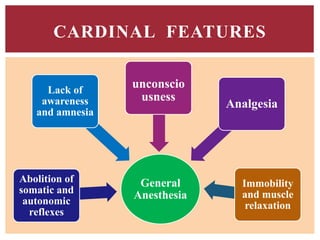
General
Anesthesia
Lack of
awareness
and amnesia
unconscio
usness
Analgesia
Abolition of
somatic and
autonomic
reflexes
Immobility
and muscle
relaxation
CARDINAL FEATURES
Patients cooperation in not absolutely essential
for the success of GA.
Patient is unconscious.
Patient does not respond to pain.
Amnesia is present.
GA may be the only technique that will prove
successful for certain patients.
Rapid onset of action.
ADVANTAGES
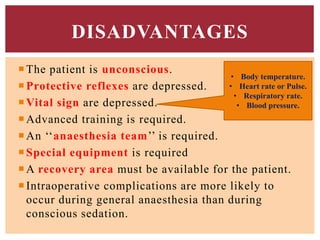
The patient is unconscious.
Protective reflexes are depressed.
Vital sign are depressed.
Advanced training is required.
An ‘‘anaesthesia team’’ is required.
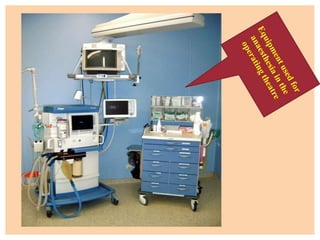
Special equipment is required
A recovery area must be available for the patient.
Intraoperative complications are more likely to
occur during general anaesthesia than during
conscious sedation.
DISADVANTAGES
• Body temperature.
• Heart rate or Pulse.
• Respiratory rate.
• Blood pressure.
Post-anesthetic complications are more
common following general anaesthesia than after
conscious sedation
The patient receiving general anaesthesia must
receive nothing by mouth for 6 hours before
the procedure.
Patients receiving general anaesthesia must be
evaluated more extensively preoperatively than
patients receiving conscious sedation
DISADVANTAGES
conscious sedation = relax the body & relief pain but stay awake
Extreme anxiety and fear.
Adults or children who have mental or
physical disabilities, senile patients, or
disoriented patients.
Short, traumatic procedures.
Prolonged traumatic procedures.
INDICATIONS
Pre-anaesthetic assessment
Administration of general anaesthetic drugs
Cardio-respiratory monitoring
Ensure Analgesia
Airway management
Fluid management
Postoperative pain relief
CONCERN
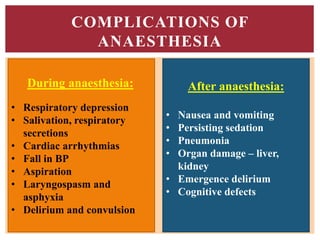
COMPLICATIONS OF
ANAESTHESIA
During anaesthesia:
• Respiratory depression
• Salivation, respiratory
secretions
• Cardiac arrhythmias
• Fall in BP
• Aspiration
• Laryngospasm and
asphyxia
• Delirium and convulsion
After anaesthesia:
• Nausea and vomiting
• Persisting sedation
• Pneumonia
• Organ damage – liver,
kidney
• Emergence delirium
• Cognitive defects
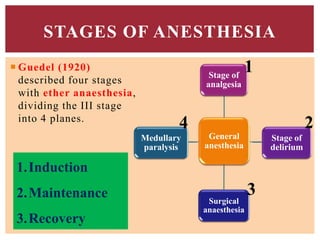
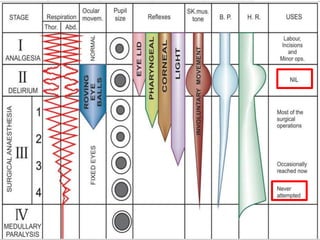
 Guedel (1920)
described four stages
with ether anaesthesia,
dividing the III stage
into 4 planes.
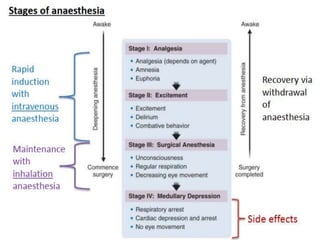
STAGES OF ANESTHESIA
General
anesthesia
Stage of
analgesia
Stage of
delirium
Surgical
anaesthesia
Medullary
paralysis
1.Induction
2.Maintenance
3.Recovery
1
2
3
4
Starts from beginning of anaesthetic inhalation
and lasts upto the loss of consciousness.
Pain is progressively abolished.
Patient remains conscious, can hear and see, and
feels a dream like state;
Amnesia develops by the end of this stage.
Reflexes and respiration remain normal.
Though some minor operations can be carried out
during this stage, it is rather difficult to maintain
Use is limited to short procedures.
I. STAGE OF ANALGESIA
 From loss of consciousness to beginning of regular
respiration.
 Apparent excitement is seen
 Patient may shout, struggle and hold his breath;
 Muscle tone increases, jaws are tightly closed, breathing
is jerky; vomiting, involuntary micturition or defecation
may occur.
 Heart rate and bp may rise and pupils dilate due to
sympathetic stimulation.
 No stimulus should be applied or operative procedure
carried out during this stage.
 This stage is not clear in modern anaesthesia.
II. STAGE OF DELIRIUM
 Extends from onset of regular respiration to cessation of
spontaneous breathing.
 This has been divided into 4 planes which may be distinguished
as:
 Plane 1 roving eyeballs. This plane ends when eyes become
fixed.
 Plane 2 loss of corneal and laryngeal reflexes.
 Plane 3 pupil starts dilating and light reflex is lost.
 Plane 4 intercostal paralysis, shallow abdominal respiration,
dilated pupil.
 As anaesthesia passes to deeper planes, progressively—
 Muscle tone decreases, bp falls, hr increases with weak pulse,
 Respiration decreases in depth and later in frequency also.
 Thoracic respiration lags behind abdominal respiration.
III. SURGICAL ANAESTHESIA
 Cessation of breathing to failure of circulation and
death.
 Pupil is widely dilated, muscles are totally flabby,
 Pulse is thready or imperceptible and bp is very low.
 Many of the above indices of anaesthesia have been
balanced by the use of atropine (pupillary, heart rate),
morphine (respiration, pupillary), muscle relaxants
(muscle tone, respiration, eye movements, reflexes),
etc.
 And the modern anaesthetist has to depend on several
other observations to measure the depth of anaesthesia.
IV. MEDULLARY PARALYSIS
 If eyelash reflex is present and patient is making
swallowing movements — stage II has NOT been
reached.
 Loss of response to painful stimulus — stage III has
been reached
 Continuous careful monitoring is required to prevent
undesired progression into Stage IV.
 Incision of the skin causes reflex - increase in
respiration, bp rise or other effects;
Insertion of endotracheal tube is resisted and induces
coughing, vomiting, laryngospasm;
Tears appear in eye; passive inflation of lungs is
resisted—anaesthesia is light.
 Fall in bp, cardiac and respiratory depression are signs
of deep anaesthesia
MAINTENANCE OF ANESTHESIA
Maintenance is the period during which the
patient is surgically anesthetized.
After administering the selected anesthetic
mixture, the patient’s vital signs and response
to various stimuli are monitored continuously
throughout the surgical procedure to carefully
balance the amount of
drug inhaled and/or infused with the DEPTH OF
ANESTHESIA.
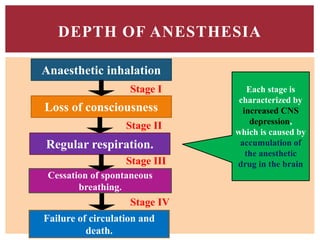
Anaesthetic inhalation
Loss of consciousness
Regular respiration.
Cessation of spontaneous
breathing.
DEPTH OF ANESTHESIA
Failure of circulation and
death.
Stage I
Stage II
Stage III
Stage IV
Each stage is
characterized by
increased CNS
depression,
which is caused by
accumulation of
the anesthetic
drug in the brain
 Postoperatively, the anesthetic admixture is
withdrawn, and the patient is monitored for the
return of consciousness.
 For most anesthetic agents, recovery is the reverse of
induction.
redistribution from the site of action
 The anesthesiologist continues to monitor the patient to
be sure that he or she is fully recovered, with normal
physiologic functions
 Patients are observed for delayed reactions such as
respiratory depression from opioids administered for
postoperative pain control
RECOVERY
A. For the patient
 It should be pleasant, nonirritating, should not cause
nausea or vomiting.
 Induction and recovery should be fast with no after
effects.
B. For the surgeon
 It should provide adequate analgesia, immobility and
muscle relaxation.
 It should be noninflammable and nonexplosive
IDEAL CHARACTERISTICS
OF GENERAL ANESTHETICS
C. For the anaesthetist
 Its administration should be easy, controllable and
versatile.
 Margin of safety should be wide—no fall in BP
 Heart, liver and other organs should not be affected.
 It should be potent so that low concentrations are
needed and oxygenation of the patient does not suffer.
 Rapid onset, induction & adjustments in depth of
anaesthesia should be possible.
 It should be cheap, stable and easily stored ( longer
shelf life).
 It should not react with rubber tubing or soda lime
 Minimal side effects
 No CNS excitation
 No cardiovascular or respiratory depression
 No adverse drug reactions
 No organ specific damage
 Non-trigger for malignant hyperthermia
 Additional benefits
 Minimal metabolism with lung excretion
 Bronchodilator
 Anticonvulsant, antiemetic, analgesic
tachycardia,
muscle rigidity,
tachypnea, and
hyperkalemia.
Later signs include
fever,
myoglobinuria,
and multiple organ
failure.
PRE-ANESTHETIC
MEDICATION
 Preanaesthetic medication refers to the use of drugs
before anaesthesia to make it more pleasant and safe.
 Aims:
1. Relief of anxiety and apprehension preoperatively and
to facilitate smooth induction.
2. Amnesia for pre- and postoperative events.
3. Supplement analgesic action of anaesthetics and
potentiate them so that less anaesthetic is needed.
4. Decrease secretions and vagal stimulation that may be
caused by the anaesthetic.
5. Antiemetic effect extending to the postoperative period.
6. Decrease acidity and volume of gastric juice so that it
is less damaging if aspirated
Benzodiazepines like diazepam (5–10 mg oral)
or lorazepam (2 mg oral or 0.05 mg/kg i.m. 1
hour before) have become popular drugs for
preanaesthetic medication because they produce
tranquility and smoothen induction;
Disadvantage:
loss of recall of postoperative events,
accentuation of postoperative vomiting.
1. SEDATIVE-ANTIANXIETY
DRUGS
 Morphine (10 mg) or pethidine (50–100 mg), i.m.
diminish anxiety and apprehension of the operation,
produce pre- and postoperative analgesia, smoothen
induction, reduce the dose of anaesthetic required
and supplement poor analgesic (thiopentone,
halothane) or weak anaesthetics (N2O).
 Postoperative restlessness is also reduced
 Use of opioids is now mostly restricted to those having
preoperative pain.
 When indicated, fentanyl is mostly injected i.v. just
before induction.
2. OPIOIDS
Disadvantages
They depress respiration, interfere with pupillary
signs of anaesthesia, may cause fall in BP during
anaesthesia, can precipitate asthma and tend to
delay recovery.
Other disadvantages are lack of amnesia,
flushing, delayed gastric emptying and biliary
spasm.
Some patients experience dysphoria.
Morphine particularly contributes to postoperative
constipation, vomiting and urinary retention.
Tachycardia sometimes occurs when pethidine has
been used.
 Atropine or hyoscine (0.6 mg or 10–20 μg/kg i.m./i.v.)
or glycopyrrolate (0.2–0.3 mg or 5–10 μg/kg i.m./ i.v.)
have been used, primarily to reduce salivary and
bronchial secretions. (block Ach)
 The main aim of their use now is to prevent vagal
bradycardia and hypotension and prophylaxis of
laryngospasm which is caused by respiratory
secretions.
 Disadvantages: dryness of mouth in pre &
postoperative period may be distressing disadvantage.
3. ANTICHOLINERGICS
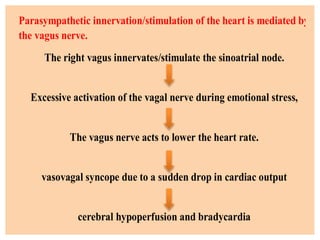
Parasympathetic innervation/stimulation of the heart is mediated by
the vagus nerve.
The right vagus innervates/stimulate the sinoatrial node.
Excessive activation of the vagal nerve during emotional stress,
The vagus nerve acts to lower the heart rate.
vasovagal syncope due to a sudden drop in cardiac output
cerebral hypoperfusion and bradycardia
Chlorpromazine (25 mg), triflupromazine (10
mg) or haloperidol (2–4 mg) i.m. are
infrequently used in premedication.
They removes anxiety, smoothen induction and
have antiemetic action.
However, they potentiate respiratory depression
and hypotension caused by the anaesthetics and
delay recovery.
Involuntary movements and muscle dystonias
can occur, especially in children
4. NEUROLEPTICS
Patients undergoing prolonged operations,
caesarian section and obese patients are at
increased risk of gastric regurgitation and
aspiration pneumonia.
Ranitidine (150 mg)/famotidine (20 mg) or
omeprazole (20 mg)/pantoprazole (40 mg)
given night before and in the morning benefit by
raising pH of gastric juice and may also reduce
its volume and thus chances of regurgitation.
5. H2 BLOCKERS/PROTON PUMP
INHIBITORS
Metoclopramide 10–20 mg i.m. preoperatively is
effective in reducing postoperative vomiting.
Combined use of metoclopramide and H2
blockers is more effective.
Domperidone is nearly as effective and does not
produce extrapyramidal side effects
6. ANTIEMETICS
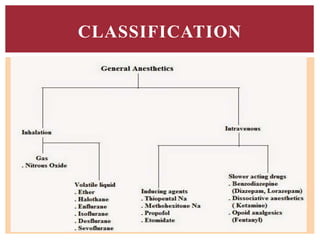
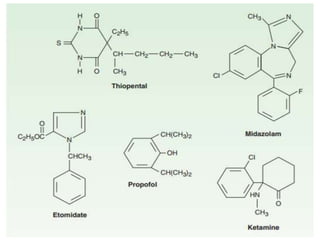
CLASSIFICATION
 IV anesthetics cause the rapid induction of anesthesia
because the blood concentration can be raised quickly
 This is often described as occurring within one "ARM-
BRAIN CIRCULATION TIME,” or the time it takes
the drug to travel from the site of injection (usually
the arm) to the brain, where it has its effect.
 Anesthesia may then be maintained with an appropriate
inhalation agent.
 IV anesthetics may be used as the sole agents for short
procedures or administered as infusions to help
maintain anesthesia during longer procedures.
INTRAVENOUS
As non-volatile compounds, intravenous agents
cannot be removed from the body by ventilation
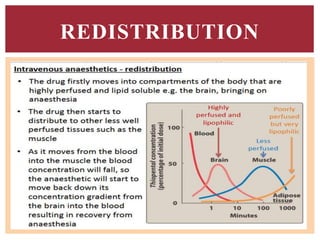
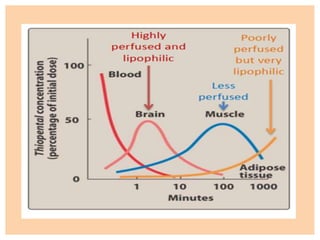
Recovery occurs rapidly as the drug is
redistributed around the body
Metabolism and/or excretion then slowly
decreases overall body levels
In lower doses, they may be used to provide
sedation.
INTRAVENOUS
REDISTRIBUTION
Propofol [PROPE-o-fol] is an IV
sedative/hypnotic used in the induction or
maintenance of anesthesia.
Propofol is widely used and has replaced
thiopental as the first choice for anesthesia
induction and sedation, because it produces a
euphoric feeling in the patient and does not
cause postanesthetic nausea and vomiting.
PROPOFOL
PROPOFOL
 The CNS effects of propofol are similar to those of barbiturates,
but, unlike thiopental, propofol is not a proven acute intervention
for seizures.
 Cardiovascular Propofol produces a dose-dependent decrease in
blood pressure that is significantly greater than that produced by
thiopental
 Propofol produces a slightly greater degree of respiratory
depression than thiopental.
 Propofol has significant antiemetic action and is a good choice for
sedation or anesthesia of patients at high risk for nausea and
vomiting
 Propofol provokes anaphylactoid reactions and histamine release
at about the same low frequency as thiopental
 Propofol is considered safe for use in pregnant women
CNS Effects
 Propofol acts as hypnotic but does not have analgesic
properties.
 Although the drug leads to a general suppression of CNS
activity, excitatory effects such as twitching or spontaneous
movement are occasionally observed during induction of
anesthesia.
 Propofol decreases cerebral blood flow and the cerebral
metabolic rate for oxygen (CMRO2), which decreases
intracranial pressure (ICP) and intraocular pressure.
 When administered in large doses, propofol produces burst
suppression in the EEG, an end point that has been used when
administering intravenous anesthetics for neuroprotection
during neurosurgical procedures.
ORGAN SYSTEM EFFECTS
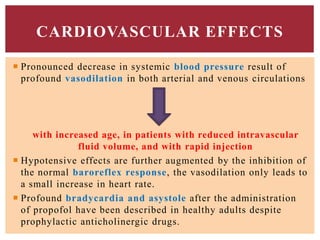
 Pronounced decrease in systemic blood pressure result of
profound vasodilation in both arterial and venous circulations
with increased age, in patients with reduced intravascular
fluid volume, and with rapid injection
 Hypotensive effects are further augmented by the inhibition of
the normal baroreflex response, the vasodilation only leads to
a small increase in heart rate.
 Profound bradycardia and asystole after the administration
of propofol have been described in healthy adults despite
prophylactic anticholinergic drugs.
CARDIOVASCULAR EFFECTS
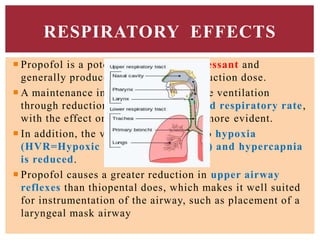
 Propofol is a potent respiratory depressant and
generally produces apnea after an induction dose.
 A maintenance infusion reduces minute ventilation
through reductions in tidal volume and respiratory rate,
with the effect on tidal volume being more evident.
 In addition, the ventilatory response to hypoxia
(HVR=Hypoxic ventilatory response) and hypercapnia
is reduced.
 Propofol causes a greater reduction in upper airway
reflexes than thiopental does, which makes it well suited
for instrumentation of the airway, such as placement of a
laryngeal mask airway
RESPIRATORY EFFECTS
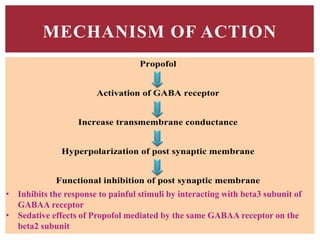
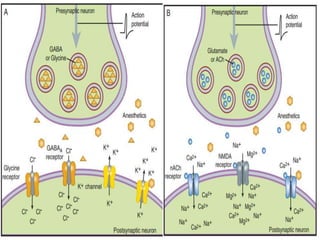
MECHANISM OF ACTION
Propofol
Activation of GABA receptor
Increase transmembrane conductance
Hyperpolarization of post synaptic membrane
Functional inhibition of post synaptic membrane
• Inhibits the response to painful stimuli by interacting with beta3 subunit of
GABAA receptor
• Sedative effects of Propofol mediated by the same GABAA receptor on the
beta2 subunit
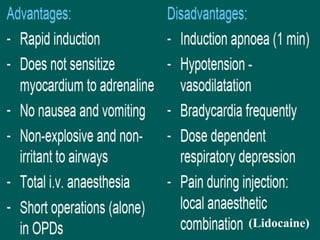
(Lidocaine)
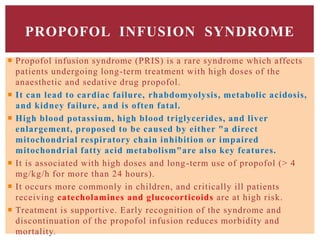
PROPOFOL INFUSION SYNDROME
 Propofol infusion syndrome (PRIS) is a rare syndrome which affects
patients undergoing long-term treatment with high doses of the
anaesthetic and sedative drug propofol.
 It can lead to cardiac failure, rhabdomyolysis, metabolic acidosis,
and kidney failure, and is often fatal.
 High blood potassium, high blood triglycerides, and liver
enlargement, proposed to be caused by either "a direct
mitochondrial respiratory chain inhibition or impaired
mitochondrial fatty acid metabolism"are also key features.
 It is associated with high doses and long-term use of propofol (> 4
mg/kg/h for more than 24 hours).
 It occurs more commonly in children, and critically ill patients
receiving catecholamines and glucocorticoids are at high risk.
 Treatment is supportive. Early recognition of the syndrome and
discontinuation of the propofol infusion reduces morbidity and
mortality.
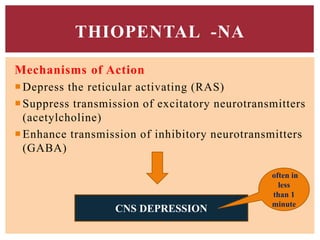
Mechanisms of Action
Depress the reticular activating (RAS)
Suppress transmission of excitatory neurotransmitters
(acetylcholine)
Enhance transmission of inhibitory neurotransmitters
(GABA)
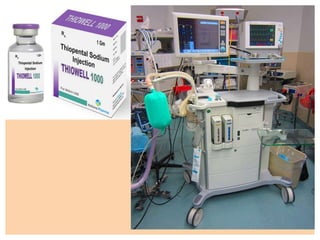
THIOPENTAL -NA
CNS DEPRESSION
often in
less
than 1
minute
 Disadvantages:
- Depth of anaesthesia
difficult to judge
- Pharyngeal and laryngeal
reflexes persists
- apnoea –controlled
ventilation
- Respiratory depression
- Hypotension (rapid) –
shock and hypovolemia
- Poor analgesic and muscle
relaxant
- Gangrene and necrosis
- Shivering and delirium
 Side effects
 Pre-anaesthetic course –
laryngospasm
 Noncompatibility –
succinylcholine
 Tissue necrosis—
gangrene
 Post-anaesthetic course -
analgesic
CONS
 Dose dependent effect
sedation → sleep →anaesthesia → coma.
 Induces General Anaesthesia → loss of consciousness, amnesia
& ↓↓ response to pain R.S. & C.V.S. depression
 They do not produce analgesia; instead, some evidence suggests
they may reduce the pain threshold causing hyperalgesia.
 Barbiturates are potent cerebral vasoconstrictors and produce
predictable decreases in cerebral blood flow, cerebral blood
volume, and ICP
they decrease CMRO2 consumption in a dose-
dependent manner up to a dose at which they suppress all EEG
activity.
 decrease electrical activity on the EEG and can be used as
anticonvulsants.
CNS EFFECTS
 Decrease in systemic blood pressure is primarily due to
peripheral vasodilation
 There are also direct negative inotropic effects on the heart
 Increases in heart rate limit the decrease in blood pressure and
make it transient.
 The depressant effects on systemic blood pressure are increased
in patients with hypovolemia, cardiac tamponade,
cardiomyopathy, coronary artery disease, or cardiac valvular
disease because such patients are less able to compensate for the
effects of peripheral vasodilation.
 Leads to unchanged myocardial contractility ↑↑ in heart
rate.
 Direct myocardial depression occurs at doses used to ↓↓
intracranial pressure
CARDIOVASCULAR EFFECTS
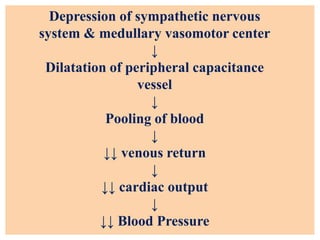
Depression of sympathetic nervous
system & medullary vasomotor center
↓
Dilatation of peripheral capacitance
vessel
↓
Pooling of blood
↓
↓↓ venous return
↓
↓↓ cardiac output
↓
↓↓ Blood Pressure
RESPIRATORY SYSTEM
 transient apnea, which will be more pronounced if other
respiratory depressants are also administered.
 reduced tidal volumes and respiratory rate and also
decrease the ventilatory responses to hypercapnia and
hypoxia
 Suppression of laryngeal reflexes and cough
reflexes is probably not as profound as after an
propofol administration
 laryngospasm or bronchospasm
OTHERS
 Skeletal muscle
↓↓ Neuro muscular excitability
 Kidney
↓↓ blood flow & GFR .
Suppression of adrenal cortex &↓↓ cortisol level, but it is
reversible.
 Liver
↓↓ hepatic blood flow
Induction of microsomal enzyme & increase metabolism of drugs,
For Ex. Oral-anticoagulant, Phenytoin,Vit. K, Bile Salt,
corticosteroid.
↑↑ Glucouronyl transferase activity.
↑↑ δ aminolavilunate activity & precipitate porphyria’s.
 heart disease or circulatory problems, as these can suddenly be
made more severe by
 thiopental
 severe anaemia, blood pressure problems (high blood pressure
or low blood pressure), raised
 blood potassium, increased blood urea, bacterial infection in the
blood, severe bleeding
 liver or kidney disease
 increased pressure in the brain
 muscle weakness or degeneration (such as myasthenia gravis or
muscular dystrophies)
 thyroid gland problems
 diabetes
PRECAUTIONS
 dehydration, malnutrition or wasting
 underproduction of steroid hormones by the adrenal
gland (even when controlled by cortisone)
 a metabolic disorder caused by an underactive thyroid
gland (a reduced dose may be required)
 asthma
 burns
 shock
 hypovolaemia – a low level of fluids in the body
 are elderly (a reduced dose may be required)
 are taking opioid analgesics - strong pain relievers.
 are on a sodium controlled diet, as this product
contains 53.5mg sodium per vial.
 Dissociative anesthesia is a form of anesthesia
characterized by catalepsy, catatonia, analgesia, and
amnesia. It does not necessarily involve loss of
consciousness and thus does not always imply a state of
general anesthesia.
 Dissociative drugs are a class of hallucinogen and are
known for altering perceptions of sight, sound and
connections with one's surroundings
 dissociative sedation. A trancelike state induced by
anesthetics in which a patient feels no pain, and has no
memory of unpleasant events, but can cooperate with
commands and suggestions. In this state the patient has
normal airway (protective) reflexes.
DISSOCIATIVE ANESTHESIA
 Rapid onset of action, relatively short duration of action
water and lipid soluble
 Initially distributed to highly perfused tissues such as
brain
 Undergoes extensive redistribution and can accumulate
in fatty tissues
 Solubility ensures its rapid transfer across the BBB
 Peak plasma concentrations occur within 1 min after IV
administration & within 5 mins after IM injection
 Oral ketamine is easily broken down by bile acids, thus
has a low bioavailability
KITAMINE
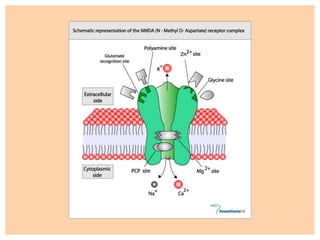
 Antagonism of the NMDA receptor is thought to be responsible
for the anesthetic, amnesic, dissociative, and hallucinogenic
effects of ketamine.
 ketamine's actions interfere with pain transmission in the spinal
cord.
 Inhibition of nitric oxide synthase lowers the production of nitric
oxide – a gasotransmitter involved in pain perception, hence
further contributing to analgesia
 Ketamine interacts with N-methyl-D-aspartate (NMDA)
receptors, opioid receptors, monoaminergic receptors,
muscarinic receptors and voltage sensitive Ca ion channels.
Unlike other general anaesthetic agents, ketamine does not
interact with GABA receptors.
MECHANISM F ACTION
Central Nervous System (CNS)
 Ketamine is potent cerebral vasodilator
 Capable of increasing cerebral blood flow by 60% in
normal individual & causes a rise in intracranial pressure
 increase cerebral metabolic rate of oxygen consumption
(CMRO2)
 With i/v injection the effects on the CNS begin slowly
than other anaesthetic induction
 The duration of action depends on the route of
administration
 "dissociative anesthesia" -- patient is detached from the
environment and self
ACTIONS OF KETAMINE ON THE BODY
 In contrast to the smooth induction of anaesthesia, the
patient may be agitated on recovery
 This is often called "emergence delirium", during
which the patient may be disorientated, restless, and
even crying.
 Patients may continue to experience unpleasant dreams
up to 24 hours after the drug has been given
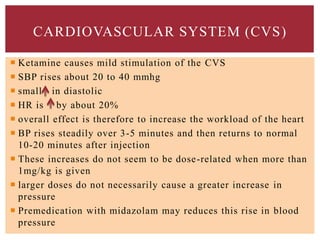
CARDIOVASCULAR SYSTEM (CVS)
 Ketamine causes mild stimulation of the CVS
 SBP rises about 20 to 40 mmhg
 small in diastolic
 HR is by about 20%
 overall effect is therefore to increase the workload of the heart
 BP rises steadily over 3-5 minutes and then returns to normal
10-20 minutes after injection
 These increases do not seem to be dose-related when more than
1mg/kg is given
 larger doses do not necessarily cause a greater increase in
pressure
 Premedication with midazolam may reduces this rise in blood
pressure
 If Ketamine is administered rapidly by intravenous injection
it often causes the patient to stop breathing for a short
time (up to one minute).
 After a slow intravenous induction, breathing is well
maintained and may even increase slightly.
 The airway is usually well maintained during Ketamine
anesthesia and there is some preservation of pharyngeal and
laryngeal reflexes in comparison with other intravenous
agents.
 However this cannot be guaranteed, and normal airway care
must be maintained to prevent obstruction or aspiration
 Ketamine produces some bronchodilation making it a useful
anaesthetic drug for patients with asthma
RESPIRATORY SYSTEM
 The intra-ocular pressure rises for a short time after
administration.
 Eye movements may continue throughout surgery
 Pupils are moderately dilated
 Also not suitable for ophthalmic surgery where a still
eye is
required
EYE
 SKELETAL MUSCLE
• Muscle tone is often increased.
• Spontaneous movements may occur during anesthesia
 UTERUS
• Increases uterine tone without adverse effect on the
uterine blood flow
 PLACENTA
• Ketamine crosses the placenta easily .
 SECRETIONS
• Salivation is increased
OTHERS
 Anesthesia in children, as the sole anesthetic for minor
procedures such as ear foreign body removal,
 Asthmatics or people with chronic obstructive airway disease
 As a sedative for physically painful procedures in emergency
departments
 Emergency surgery in field conditions in war zones
 To supplement spinal or epidural anesthesia/analgesia using low
doses
 It is the anesthetic of choice when reliable ventilation
equipment is not available
 For people in shock may be due to sepsis or acute blood loss
who are at risk of hypotension
USES
 Ketamine is a bronchodilator and can be used as part of
the treatment for status asthmaticus
 May be used for postoperative pain management.
 Sub-anesthetic doses of ketamine i.e. 0.3 mg/kg/hr
improves analgesia and may reduce the likelihood of
opioid tolerance.
 Low doses may decrease morphine use, nausea, and
vomiting after surgery.
 As an intravenous analgesic with opiates to manage
intractable , neuropathic pain
 Ketamine at subanaesthetic doses is a rapid-acting used in
depression disorders,
These antidepressant effects persist for at least a week following a
single infusion
 Not yet approved or marketed for use as an antidepressant though
“ketamine clinics” give intravenous ketamine (off-label) to treat
depression
 It also may be effective in rapidly alleviating suicidal ideation
 Intermittent treatment with low dose ketamine also results in long-
term suppression of obsessions & compulsions in patients with
obsessive compulsive disorder
 For Patients who have strong allergy to sulfur group or egg protiens
ketamine may be used
SIDE EFFECTS
 Increase pulse rate, high blood pressure
 Increased intracranial pressure.
 Transient reddening of the skin , transient measles-like rash
 reduced appetite, nausea, increased salivation, vomiting
 Pain, eruptions or rashes at the injection site
 tonic-clonic movements
 Double vision , involuntary eye movements, tunnel vision
 Increased bronchial secretions
 Anaphylaxis,
 dependence,
 emergence reaction
 ketamine has been associated with cognitive deficits, urotoxicity,
hepatotoxicity, and other complications in some individuals with long-
term use.
Schizophrenia and psychosis
Ketamine hypersensitivity
Age < 3months(increase risk of respiratory
complications )
porphyria
Hypertthyroidism and thyroid medication
Uncontrolled epilepsy
ABSOLUTE CONTRAINDICATIONS
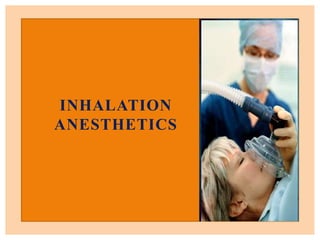
INHALATION
ANESTHETICS
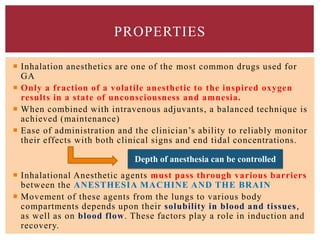
 Inhalation anesthetics are one of the most common drugs used for
GA
 Only a fraction of a volatile anesthetic to the inspired oxygen
results in a state of unconsciousness and amnesia.
 When combined with intravenous adjuvants, a balanced technique is
achieved (maintenance)
 Ease of administration and the clinician’s ability to reliably monitor
their effects with both clinical signs and end tidal concentrations.
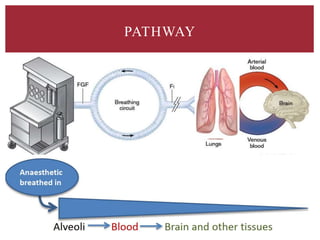
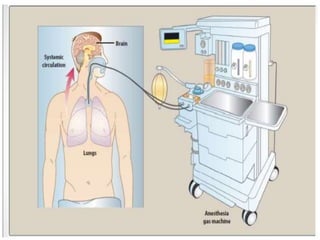
 Inhalational Anesthetic agents must pass through various barriers
between the ANESTHESIA MACHINE AND THE BRAIN
 Movement of these agents from the lungs to various body
compartments depends upon their solubility in blood and tissues,
as well as on blood flow. These factors play a role in induction and
recovery.
PROPERTIES
Depth of anesthesia can be controlled
PATHWAY
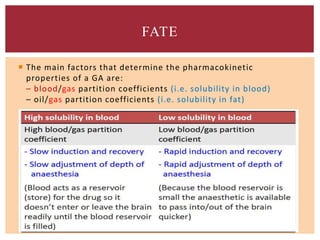
 The main factors that determine the pharmacokinetic
properties of a GA are:
– blood/gas partition coefficients (i.e. solubility in blood)
– oil/gas partition coefficients (i.e. solubility in fat)
FATE
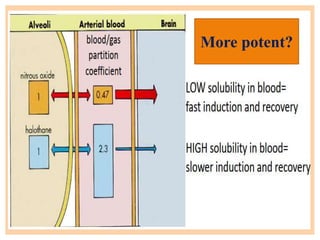
More potent?
MINIMAL ALVEOLAR CONCENTRATION
(MAC)
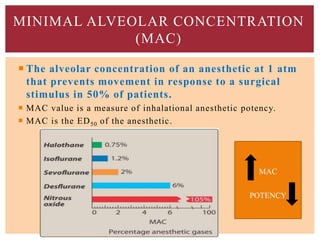
 The alveolar concentration of an anesthetic at 1 atm
that prevents movement in response to a surgical
stimulus in 50% of patients.
 MAC value is a measure of inhalational anesthetic potency.
 MAC is the ED50 of the anesthetic.
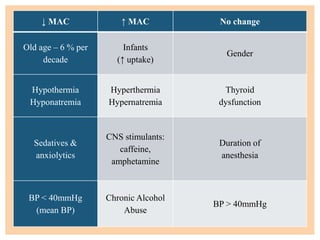
MAC
POTENCY
↓ MAC ↑ MAC No change
Old age – 6 % per
decade
Infants
(↑ uptake)
Gender
Hypothermia
Hyponatremia
Hyperthermia
Hypernatremia
Thyroid
dysfunction
Sedatives &
anxiolytics
CNS stimulants:
caffeine,
amphetamine
Duration of
anesthesia
BP < 40mmHg
(mean BP)
Chronic Alcohol
Abuse
BP > 40mmHg
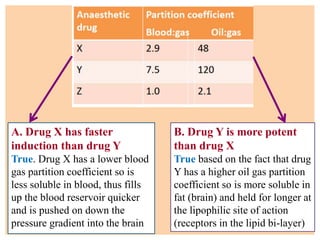
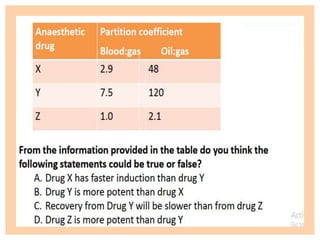
A. Drug X has faster
induction than drug Y
True. Drug X has a lower blood
gas partition coefficient so is
less soluble in blood, thus fills
up the blood reservoir quicker
and is pushed on down the
pressure gradient into the brain
B. Drug Y is more potent
than drug X
True based on the fact that drug
Y has a higher oil gas partition
coefficient so is more soluble in
fat (brain) and held for longer at
the lipophilic site of action
(receptors in the lipid bi-layer)
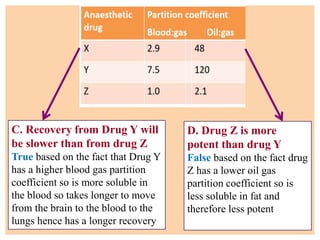
C. Recovery from Drug Y will
be slower than from drug Z
True based on the fact that Drug Y
has a higher blood gas partition
coefficient so is more soluble in
the blood so takes longer to move
from the brain to the blood to the
lungs hence has a longer recovery
D. Drug Z is more
potent than drug Y
False based on the fact drug
Z has a lower oil gas
partition coefficient so is
less soluble in fat and
therefore less potent
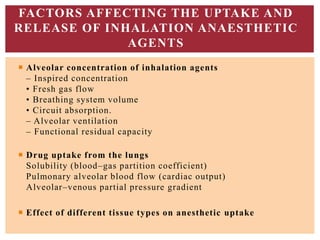
FACTORS AFFECTING THE UPTAKE AND
RELEASE OF INHALATION ANAESTHETIC
AGENTS
 Alveolar concentration of inhalation agents
– Inspired concentration
• Fresh gas flow
• Breathing system volume
• Circuit absorption.
– Alveolar ventilation
– Functional residual capacity
 Drug uptake from the lungs
Solubility (blood–gas partition coefficient)
Pulmonary alveolar blood flow (cardiac output)
Alveolar–venous partial pressure gradient
 Effect of different tissue types on anesthetic uptake
 Fresh Gas Flow rate:
↑ FGF → ↑ speed of induction & recovery.
 Volume of breathing circuit (apparatus dead space):
increase ↑volume → slower induction (dilution of anesthetic
gases.)
 Absorption by the breathing circuit:
rubber tubing absorbs ˃ plastic & silicon.
 Alveolar ventilation: Increased alveolar ventilation results in
faster increase in alveolar partial pressure
 Functional residual capacity (FRC): A larger FRC dilutes
the inspired concentration of gas resulting initially in a lower
alveolar partial pressure and therefore slower onset of
anaesthesia.
FACTORS AFFECTING INSPIRED GAS
CONCENTRATION (FI)
1. Solubility
 One of the most important factors influencing the transfer of an
anesthetic from the lungs to the arterial blood
 Solubility in the blood is called the blood/gas partition
coefficient and defines the relative affinity of an anesthetic for
the blood compared with that of inspired gas.
 The solubility in blood is ranked in the following order:
halothane>enflurane>isoflurane>sevoflurane>desflurane>N2O.
 An inhalational anesthetic agent with low solubility in blood
shows fast induction and also recovery time (e.g., N2O), and
an agent with relatively high solubility in blood shows slower
induction and recovery time (e.g., halothane)
Low solubility in blood fast induction and also recovery
High solubility in blood slow induction and also recovery
FACTORS CONTROLLING UPTAKE
 Cardiac output (CO) affects removal of anesthetic to
peripheral tissues, which are not the site of action (CNS).
 For inhaled anesthetics, higher CO removes anesthetic
from the alveoli faster and thus slows the rate of rise in
the alveolar concentration of the gas.
 It will therefore take longer for the gas to reach
equilibrium between the alveoli and the site of action in
the brain.
 Thus, for inhaled anesthetics, higher CO = slower
induction.
 A low CO (shock) speeds the rate of rise of the alveolar
concentration of the gas, since there is less uptake to
peripheral tissues
2. CARDIAC OUT PUT
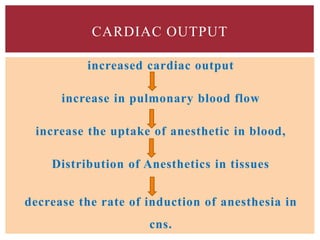
increased cardiac output
increase in pulmonary blood flow
increase the uptake of anesthetic in blood,
Distribution of Anesthetics in tissues
decrease the rate of induction of anesthesia in
cns.
CARDIAC OUTPUT
3. ALVEOLAR–VENOUS PARTIAL
PRESSURE GRADIENT
Lungs Heart
3. ALVEOLAR–VENOUS PARTIAL
PRESSURE GRADIENT
liver, kidney,
and endocrine
glands
Brain
Skeletal
muscles
Bone,
ligaments, and
cartilage
Fat
GA+blood
VENUS
RETURN
+ GA
GA
Arterial
circulation
3. ALVEOLAR–VENOUS PARTIAL
PRESSURE GRADIENT
Lungs Heart
GA
Conc.
Difference due
to PP
VR
Uptake in blood
CNS
Uptake in Tissue
No conc. difference
No uptake
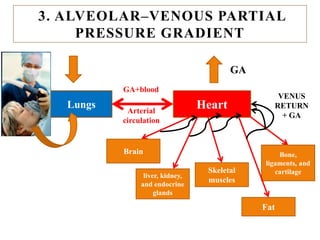
 The arterial circulation distributes the anesthetic to various
tissues, and the pressure gradient drives free anesthetic gas
into tissues.
 As the venous circulation returns blood depleted of
anesthetic to the lung, more gas moves into the blood from
the lung according to the partial pressure difference.
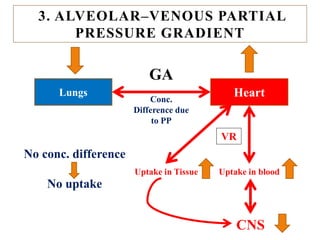
 The greater is the difference in anesthetic concentration
between alveolar (arterial) to venous blood, the higher
the uptake and the slower the induction.
 Over time, the partial pressure in the venous blood closely
approximates the partial pressure in the inspired mixture.
 That is, no further net anesthetic uptake from the lung
occurs.
3. ALVEOLAR–VENOUS PARTIAL
PRESSURE GRADIENT
 During maintenance of anesthesia with inhaled anesthetics,
the drug continues to be transferred between various tissues
at rates dependent on the solubility of the agent, the
concentration gradient between the blood and the tissue,
and the tissue blood flow.
 Faster flow results in a more rapidly achieved steady state
 It is also directly proportional to the capacity of that tissue
to store anesthetic (that is, a larger capacity results in a
longer time required to achieve steady state)
 Capacity, in turn, is directly proportional to the tissue’s
volume and the tissue/blood solubility coefficient of the
anesthetic molecules.
EFFECT OF DIFFERENT TISSUE TYPES
ON ANESTHETIC UPTAKE
The higher the blood flow to a region, the faster the delivery of
anaesthetic and the more rapid will be equilibration
Four major tissue compartments determine the time course of
anesthetic uptake:
a. Brain, heart, liver, kidney, and endocrine glands:
These highly perfused tissues
rapidly attain a steady state with the partial pressure of anesthetic in
the blood.
b. Skeletal muscles:
These are poorly perfused during anesthesia
prolongs the time required to achieve steady state.
c. Fat:
This tissue is also poorly perfused.
However, potent volatile general anesthetics are very lipid soluble.
Therefore, fat has a large capacity to store anesthetic.
This combination of slow delivery to a high-capacity compartment
prolongs the time required to achieve steady state in that tissue.
d. Bone, ligaments, and cartilage:
These are poorly perfused and have a relatively low capacity to store
anesthetic.
Therefore, these tissues have only a slight impact on the time course
of anesthetic distribution in the body.
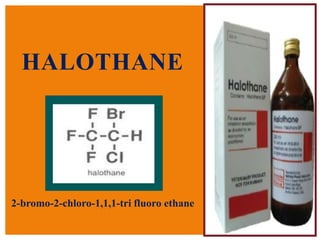
HALOTHANE
2-bromo-2-chloro-1,1,1-tri fluoro ethane
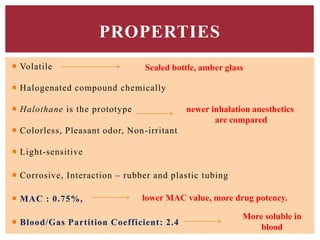
 Volatile
 Halogenated compound chemically
 Halothane is the prototype
 Colorless, Pleasant odor, Non-irritant
 Light-sensitive
 Corrosive, Interaction – rubber and plastic tubing
 MAC : 0.75%,
 Blood/Gas Partition Coefficient: 2.4
PROPERTIES
Sealed bottle, amber glass
newer inhalation anesthetics
are compared
lower MAC value, more drug potency.
More soluble in
blood
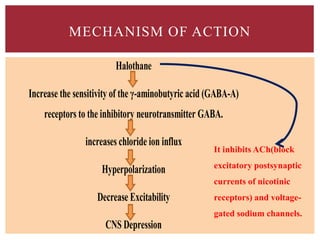
MECHANISM OF ACTION
Halothane
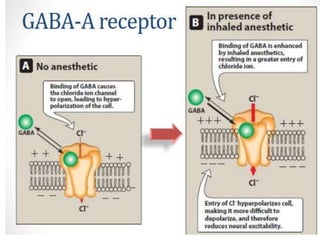
Increase the sensitivity of the γ-aminobutyric acid (GABA-A)
receptors to the inhibitory neurotransmitter GABA.
increases chloride ion influx
Hyperpolarization
Decrease Excitability
CNS Depression
It inhibits ACh(block
excitatory postsynaptic
currents of nicotinic
receptors) and voltage-
gated sodium channels.
 Halothane is a potent anesthetic but a relatively weak
analgesic. Thus, it is usually co-administered with nitrous
oxide, opioids, or local anesthetics.
 It is a potent bronchodilator.
 Halothane relaxes both skeletal and uterine muscles and
can be used in obstetrics when uterine relaxation is
indicated.
 Halothane is not hepatotoxic in children (unlike its
potential effect on adults).
 Combined with its pleasant odor, it is suitable in
pediatrics for inhalation induction, although sevoflurane is
now the agent of choice.
USES
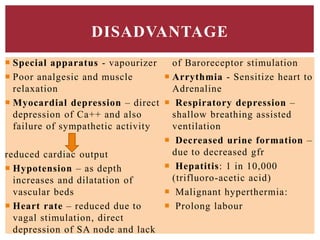
 Special apparatus - vapourizer
 Poor analgesic and muscle
relaxation
 Myocardial depression – direct
depression of Ca++ and also
failure of sympathetic activity
reduced cardiac output
 Hypotension – as depth
increases and dilatation of
vascular beds
 Heart rate – reduced due to
vagal stimulation, direct
depression of SA node and lack
of Baroreceptor stimulation
 Arrythmia - Sensitize heart to
Adrenaline
 Respiratory depression –
shallow breathing assisted
ventilation
 Decreased urine formation –
due to decreased gfr
 Hepatitis: 1 in 10,000
(trifluoro-acetic acid)
 Malignant hyperthermia:
 Prolong labour
DISADVANTAGE

General anesthetics

  • 1.
    Prepared by- Afia Nabila Lecturer Departmentof Pharmacy University of Science and Technology Chittagong GENERAL ANESTHETICS P H A R M A C O L O G Y
  • 2.
    Anesthesia or anaesthesia(from Greek "without sensation") is a state of controlled, temporary loss of sensation or awareness that is induced for medical purposes. (an =without, aisthesis = sensation )  General anaesthesia or anesthesia is a medically induced coma with loss of protective reflexes, resulting from the administration of one or more general anaesthetic agents.  It is carried out to allow medical procedures that would otherwise be intolerably painful for the patient; or where the nature of the procedure itself precludes the patient being awake. DEFINITION
  • 3.
    General anaesthetics (GAs)are drugs which causes REVERSIBLE loss of all sensation and consciousness General anesthetics depress the central nervous system to a sufficient degree to permit the performance of surgery and other noxious or unpleasant procedures GENERAL ANAESTHETICS
  • 4.
    General Anesthesia Lack of awareness and amnesia unconscio usness Analgesia Abolitionof somatic and autonomic reflexes Immobility and muscle relaxation CARDINAL FEATURES
  • 5.
    Patients cooperation innot absolutely essential for the success of GA. Patient is unconscious. Patient does not respond to pain. Amnesia is present. GA may be the only technique that will prove successful for certain patients. Rapid onset of action. ADVANTAGES
  • 6.
    The patient isunconscious. Protective reflexes are depressed. Vital sign are depressed. Advanced training is required. An ‘‘anaesthesia team’’ is required. Special equipment is required A recovery area must be available for the patient. Intraoperative complications are more likely to occur during general anaesthesia than during conscious sedation. DISADVANTAGES • Body temperature. • Heart rate or Pulse. • Respiratory rate. • Blood pressure.
  • 8.
    Post-anesthetic complications aremore common following general anaesthesia than after conscious sedation The patient receiving general anaesthesia must receive nothing by mouth for 6 hours before the procedure. Patients receiving general anaesthesia must be evaluated more extensively preoperatively than patients receiving conscious sedation DISADVANTAGES conscious sedation = relax the body & relief pain but stay awake
  • 9.
    Extreme anxiety andfear. Adults or children who have mental or physical disabilities, senile patients, or disoriented patients. Short, traumatic procedures. Prolonged traumatic procedures. INDICATIONS
  • 10.
    Pre-anaesthetic assessment Administration ofgeneral anaesthetic drugs Cardio-respiratory monitoring Ensure Analgesia Airway management Fluid management Postoperative pain relief CONCERN
  • 11.
    COMPLICATIONS OF ANAESTHESIA During anaesthesia: •Respiratory depression • Salivation, respiratory secretions • Cardiac arrhythmias • Fall in BP • Aspiration • Laryngospasm and asphyxia • Delirium and convulsion After anaesthesia: • Nausea and vomiting • Persisting sedation • Pneumonia • Organ damage – liver, kidney • Emergence delirium • Cognitive defects
  • 12.
     Guedel (1920) describedfour stages with ether anaesthesia, dividing the III stage into 4 planes. STAGES OF ANESTHESIA General anesthesia Stage of analgesia Stage of delirium Surgical anaesthesia Medullary paralysis 1.Induction 2.Maintenance 3.Recovery 1 2 3 4
  • 13.
    Starts from beginningof anaesthetic inhalation and lasts upto the loss of consciousness. Pain is progressively abolished. Patient remains conscious, can hear and see, and feels a dream like state; Amnesia develops by the end of this stage. Reflexes and respiration remain normal. Though some minor operations can be carried out during this stage, it is rather difficult to maintain Use is limited to short procedures. I. STAGE OF ANALGESIA
  • 14.
     From lossof consciousness to beginning of regular respiration.  Apparent excitement is seen  Patient may shout, struggle and hold his breath;  Muscle tone increases, jaws are tightly closed, breathing is jerky; vomiting, involuntary micturition or defecation may occur.  Heart rate and bp may rise and pupils dilate due to sympathetic stimulation.  No stimulus should be applied or operative procedure carried out during this stage.  This stage is not clear in modern anaesthesia. II. STAGE OF DELIRIUM
  • 15.
     Extends fromonset of regular respiration to cessation of spontaneous breathing.  This has been divided into 4 planes which may be distinguished as:  Plane 1 roving eyeballs. This plane ends when eyes become fixed.  Plane 2 loss of corneal and laryngeal reflexes.  Plane 3 pupil starts dilating and light reflex is lost.  Plane 4 intercostal paralysis, shallow abdominal respiration, dilated pupil.  As anaesthesia passes to deeper planes, progressively—  Muscle tone decreases, bp falls, hr increases with weak pulse,  Respiration decreases in depth and later in frequency also.  Thoracic respiration lags behind abdominal respiration. III. SURGICAL ANAESTHESIA
  • 16.
     Cessation ofbreathing to failure of circulation and death.  Pupil is widely dilated, muscles are totally flabby,  Pulse is thready or imperceptible and bp is very low.  Many of the above indices of anaesthesia have been balanced by the use of atropine (pupillary, heart rate), morphine (respiration, pupillary), muscle relaxants (muscle tone, respiration, eye movements, reflexes), etc.  And the modern anaesthetist has to depend on several other observations to measure the depth of anaesthesia. IV. MEDULLARY PARALYSIS
  • 17.
     If eyelashreflex is present and patient is making swallowing movements — stage II has NOT been reached.  Loss of response to painful stimulus — stage III has been reached  Continuous careful monitoring is required to prevent undesired progression into Stage IV.  Incision of the skin causes reflex - increase in respiration, bp rise or other effects; Insertion of endotracheal tube is resisted and induces coughing, vomiting, laryngospasm; Tears appear in eye; passive inflation of lungs is resisted—anaesthesia is light.  Fall in bp, cardiac and respiratory depression are signs of deep anaesthesia
  • 19.
    MAINTENANCE OF ANESTHESIA Maintenanceis the period during which the patient is surgically anesthetized. After administering the selected anesthetic mixture, the patient’s vital signs and response to various stimuli are monitored continuously throughout the surgical procedure to carefully balance the amount of drug inhaled and/or infused with the DEPTH OF ANESTHESIA.
  • 20.
    Anaesthetic inhalation Loss ofconsciousness Regular respiration. Cessation of spontaneous breathing. DEPTH OF ANESTHESIA Failure of circulation and death. Stage I Stage II Stage III Stage IV Each stage is characterized by increased CNS depression, which is caused by accumulation of the anesthetic drug in the brain
  • 21.
     Postoperatively, theanesthetic admixture is withdrawn, and the patient is monitored for the return of consciousness.  For most anesthetic agents, recovery is the reverse of induction. redistribution from the site of action  The anesthesiologist continues to monitor the patient to be sure that he or she is fully recovered, with normal physiologic functions  Patients are observed for delayed reactions such as respiratory depression from opioids administered for postoperative pain control RECOVERY
  • 23.
    A. For thepatient  It should be pleasant, nonirritating, should not cause nausea or vomiting.  Induction and recovery should be fast with no after effects. B. For the surgeon  It should provide adequate analgesia, immobility and muscle relaxation.  It should be noninflammable and nonexplosive IDEAL CHARACTERISTICS OF GENERAL ANESTHETICS
  • 24.
    C. For theanaesthetist  Its administration should be easy, controllable and versatile.  Margin of safety should be wide—no fall in BP  Heart, liver and other organs should not be affected.  It should be potent so that low concentrations are needed and oxygenation of the patient does not suffer.  Rapid onset, induction & adjustments in depth of anaesthesia should be possible.  It should be cheap, stable and easily stored ( longer shelf life).  It should not react with rubber tubing or soda lime
  • 26.
     Minimal sideeffects  No CNS excitation  No cardiovascular or respiratory depression  No adverse drug reactions  No organ specific damage  Non-trigger for malignant hyperthermia  Additional benefits  Minimal metabolism with lung excretion  Bronchodilator  Anticonvulsant, antiemetic, analgesic tachycardia, muscle rigidity, tachypnea, and hyperkalemia. Later signs include fever, myoglobinuria, and multiple organ failure.
  • 27.
    PRE-ANESTHETIC MEDICATION  Preanaesthetic medicationrefers to the use of drugs before anaesthesia to make it more pleasant and safe.  Aims: 1. Relief of anxiety and apprehension preoperatively and to facilitate smooth induction. 2. Amnesia for pre- and postoperative events. 3. Supplement analgesic action of anaesthetics and potentiate them so that less anaesthetic is needed. 4. Decrease secretions and vagal stimulation that may be caused by the anaesthetic. 5. Antiemetic effect extending to the postoperative period. 6. Decrease acidity and volume of gastric juice so that it is less damaging if aspirated
  • 28.
    Benzodiazepines like diazepam(5–10 mg oral) or lorazepam (2 mg oral or 0.05 mg/kg i.m. 1 hour before) have become popular drugs for preanaesthetic medication because they produce tranquility and smoothen induction; Disadvantage: loss of recall of postoperative events, accentuation of postoperative vomiting. 1. SEDATIVE-ANTIANXIETY DRUGS
  • 29.
     Morphine (10mg) or pethidine (50–100 mg), i.m. diminish anxiety and apprehension of the operation, produce pre- and postoperative analgesia, smoothen induction, reduce the dose of anaesthetic required and supplement poor analgesic (thiopentone, halothane) or weak anaesthetics (N2O).  Postoperative restlessness is also reduced  Use of opioids is now mostly restricted to those having preoperative pain.  When indicated, fentanyl is mostly injected i.v. just before induction. 2. OPIOIDS
  • 30.
    Disadvantages They depress respiration,interfere with pupillary signs of anaesthesia, may cause fall in BP during anaesthesia, can precipitate asthma and tend to delay recovery. Other disadvantages are lack of amnesia, flushing, delayed gastric emptying and biliary spasm. Some patients experience dysphoria. Morphine particularly contributes to postoperative constipation, vomiting and urinary retention. Tachycardia sometimes occurs when pethidine has been used.
  • 31.
     Atropine orhyoscine (0.6 mg or 10–20 μg/kg i.m./i.v.) or glycopyrrolate (0.2–0.3 mg or 5–10 μg/kg i.m./ i.v.) have been used, primarily to reduce salivary and bronchial secretions. (block Ach)  The main aim of their use now is to prevent vagal bradycardia and hypotension and prophylaxis of laryngospasm which is caused by respiratory secretions.  Disadvantages: dryness of mouth in pre & postoperative period may be distressing disadvantage. 3. ANTICHOLINERGICS
  • 32.
    Parasympathetic innervation/stimulation ofthe heart is mediated by the vagus nerve. The right vagus innervates/stimulate the sinoatrial node. Excessive activation of the vagal nerve during emotional stress, The vagus nerve acts to lower the heart rate. vasovagal syncope due to a sudden drop in cardiac output cerebral hypoperfusion and bradycardia
  • 33.
    Chlorpromazine (25 mg),triflupromazine (10 mg) or haloperidol (2–4 mg) i.m. are infrequently used in premedication. They removes anxiety, smoothen induction and have antiemetic action. However, they potentiate respiratory depression and hypotension caused by the anaesthetics and delay recovery. Involuntary movements and muscle dystonias can occur, especially in children 4. NEUROLEPTICS
  • 35.
    Patients undergoing prolongedoperations, caesarian section and obese patients are at increased risk of gastric regurgitation and aspiration pneumonia. Ranitidine (150 mg)/famotidine (20 mg) or omeprazole (20 mg)/pantoprazole (40 mg) given night before and in the morning benefit by raising pH of gastric juice and may also reduce its volume and thus chances of regurgitation. 5. H2 BLOCKERS/PROTON PUMP INHIBITORS
  • 36.
    Metoclopramide 10–20 mgi.m. preoperatively is effective in reducing postoperative vomiting. Combined use of metoclopramide and H2 blockers is more effective. Domperidone is nearly as effective and does not produce extrapyramidal side effects 6. ANTIEMETICS
  • 37.
  • 38.
     IV anestheticscause the rapid induction of anesthesia because the blood concentration can be raised quickly  This is often described as occurring within one "ARM- BRAIN CIRCULATION TIME,” or the time it takes the drug to travel from the site of injection (usually the arm) to the brain, where it has its effect.  Anesthesia may then be maintained with an appropriate inhalation agent.  IV anesthetics may be used as the sole agents for short procedures or administered as infusions to help maintain anesthesia during longer procedures. INTRAVENOUS
  • 39.
    As non-volatile compounds,intravenous agents cannot be removed from the body by ventilation Recovery occurs rapidly as the drug is redistributed around the body Metabolism and/or excretion then slowly decreases overall body levels In lower doses, they may be used to provide sedation. INTRAVENOUS
  • 40.
  • 44.
    Propofol [PROPE-o-fol] isan IV sedative/hypnotic used in the induction or maintenance of anesthesia. Propofol is widely used and has replaced thiopental as the first choice for anesthesia induction and sedation, because it produces a euphoric feeling in the patient and does not cause postanesthetic nausea and vomiting. PROPOFOL
  • 45.
    PROPOFOL  The CNSeffects of propofol are similar to those of barbiturates, but, unlike thiopental, propofol is not a proven acute intervention for seizures.  Cardiovascular Propofol produces a dose-dependent decrease in blood pressure that is significantly greater than that produced by thiopental  Propofol produces a slightly greater degree of respiratory depression than thiopental.  Propofol has significant antiemetic action and is a good choice for sedation or anesthesia of patients at high risk for nausea and vomiting  Propofol provokes anaphylactoid reactions and histamine release at about the same low frequency as thiopental  Propofol is considered safe for use in pregnant women
  • 46.
    CNS Effects  Propofolacts as hypnotic but does not have analgesic properties.  Although the drug leads to a general suppression of CNS activity, excitatory effects such as twitching or spontaneous movement are occasionally observed during induction of anesthesia.  Propofol decreases cerebral blood flow and the cerebral metabolic rate for oxygen (CMRO2), which decreases intracranial pressure (ICP) and intraocular pressure.  When administered in large doses, propofol produces burst suppression in the EEG, an end point that has been used when administering intravenous anesthetics for neuroprotection during neurosurgical procedures. ORGAN SYSTEM EFFECTS
  • 47.
     Pronounced decreasein systemic blood pressure result of profound vasodilation in both arterial and venous circulations with increased age, in patients with reduced intravascular fluid volume, and with rapid injection  Hypotensive effects are further augmented by the inhibition of the normal baroreflex response, the vasodilation only leads to a small increase in heart rate.  Profound bradycardia and asystole after the administration of propofol have been described in healthy adults despite prophylactic anticholinergic drugs. CARDIOVASCULAR EFFECTS
  • 48.
     Propofol isa potent respiratory depressant and generally produces apnea after an induction dose.  A maintenance infusion reduces minute ventilation through reductions in tidal volume and respiratory rate, with the effect on tidal volume being more evident.  In addition, the ventilatory response to hypoxia (HVR=Hypoxic ventilatory response) and hypercapnia is reduced.  Propofol causes a greater reduction in upper airway reflexes than thiopental does, which makes it well suited for instrumentation of the airway, such as placement of a laryngeal mask airway RESPIRATORY EFFECTS
  • 49.
    MECHANISM OF ACTION Propofol Activationof GABA receptor Increase transmembrane conductance Hyperpolarization of post synaptic membrane Functional inhibition of post synaptic membrane • Inhibits the response to painful stimuli by interacting with beta3 subunit of GABAA receptor • Sedative effects of Propofol mediated by the same GABAA receptor on the beta2 subunit
  • 50.
  • 51.
    PROPOFOL INFUSION SYNDROME Propofol infusion syndrome (PRIS) is a rare syndrome which affects patients undergoing long-term treatment with high doses of the anaesthetic and sedative drug propofol.  It can lead to cardiac failure, rhabdomyolysis, metabolic acidosis, and kidney failure, and is often fatal.  High blood potassium, high blood triglycerides, and liver enlargement, proposed to be caused by either "a direct mitochondrial respiratory chain inhibition or impaired mitochondrial fatty acid metabolism"are also key features.  It is associated with high doses and long-term use of propofol (> 4 mg/kg/h for more than 24 hours).  It occurs more commonly in children, and critically ill patients receiving catecholamines and glucocorticoids are at high risk.  Treatment is supportive. Early recognition of the syndrome and discontinuation of the propofol infusion reduces morbidity and mortality.
  • 52.
    Mechanisms of Action Depressthe reticular activating (RAS) Suppress transmission of excitatory neurotransmitters (acetylcholine) Enhance transmission of inhibitory neurotransmitters (GABA) THIOPENTAL -NA CNS DEPRESSION often in less than 1 minute
  • 53.
     Disadvantages: - Depthof anaesthesia difficult to judge - Pharyngeal and laryngeal reflexes persists - apnoea –controlled ventilation - Respiratory depression - Hypotension (rapid) – shock and hypovolemia - Poor analgesic and muscle relaxant - Gangrene and necrosis - Shivering and delirium  Side effects  Pre-anaesthetic course – laryngospasm  Noncompatibility – succinylcholine  Tissue necrosis— gangrene  Post-anaesthetic course - analgesic CONS
  • 54.
     Dose dependenteffect sedation → sleep →anaesthesia → coma.  Induces General Anaesthesia → loss of consciousness, amnesia & ↓↓ response to pain R.S. & C.V.S. depression  They do not produce analgesia; instead, some evidence suggests they may reduce the pain threshold causing hyperalgesia.  Barbiturates are potent cerebral vasoconstrictors and produce predictable decreases in cerebral blood flow, cerebral blood volume, and ICP they decrease CMRO2 consumption in a dose- dependent manner up to a dose at which they suppress all EEG activity.  decrease electrical activity on the EEG and can be used as anticonvulsants. CNS EFFECTS
  • 55.
     Decrease insystemic blood pressure is primarily due to peripheral vasodilation  There are also direct negative inotropic effects on the heart  Increases in heart rate limit the decrease in blood pressure and make it transient.  The depressant effects on systemic blood pressure are increased in patients with hypovolemia, cardiac tamponade, cardiomyopathy, coronary artery disease, or cardiac valvular disease because such patients are less able to compensate for the effects of peripheral vasodilation.  Leads to unchanged myocardial contractility ↑↑ in heart rate.  Direct myocardial depression occurs at doses used to ↓↓ intracranial pressure CARDIOVASCULAR EFFECTS
  • 56.
    Depression of sympatheticnervous system & medullary vasomotor center ↓ Dilatation of peripheral capacitance vessel ↓ Pooling of blood ↓ ↓↓ venous return ↓ ↓↓ cardiac output ↓ ↓↓ Blood Pressure
  • 57.
    RESPIRATORY SYSTEM  transientapnea, which will be more pronounced if other respiratory depressants are also administered.  reduced tidal volumes and respiratory rate and also decrease the ventilatory responses to hypercapnia and hypoxia  Suppression of laryngeal reflexes and cough reflexes is probably not as profound as after an propofol administration  laryngospasm or bronchospasm
  • 58.
    OTHERS  Skeletal muscle ↓↓Neuro muscular excitability  Kidney ↓↓ blood flow & GFR . Suppression of adrenal cortex &↓↓ cortisol level, but it is reversible.  Liver ↓↓ hepatic blood flow Induction of microsomal enzyme & increase metabolism of drugs, For Ex. Oral-anticoagulant, Phenytoin,Vit. K, Bile Salt, corticosteroid. ↑↑ Glucouronyl transferase activity. ↑↑ δ aminolavilunate activity & precipitate porphyria’s.
  • 59.
     heart diseaseor circulatory problems, as these can suddenly be made more severe by  thiopental  severe anaemia, blood pressure problems (high blood pressure or low blood pressure), raised  blood potassium, increased blood urea, bacterial infection in the blood, severe bleeding  liver or kidney disease  increased pressure in the brain  muscle weakness or degeneration (such as myasthenia gravis or muscular dystrophies)  thyroid gland problems  diabetes PRECAUTIONS
  • 60.
     dehydration, malnutritionor wasting  underproduction of steroid hormones by the adrenal gland (even when controlled by cortisone)  a metabolic disorder caused by an underactive thyroid gland (a reduced dose may be required)  asthma  burns  shock  hypovolaemia – a low level of fluids in the body  are elderly (a reduced dose may be required)  are taking opioid analgesics - strong pain relievers.  are on a sodium controlled diet, as this product contains 53.5mg sodium per vial.
  • 61.
     Dissociative anesthesiais a form of anesthesia characterized by catalepsy, catatonia, analgesia, and amnesia. It does not necessarily involve loss of consciousness and thus does not always imply a state of general anesthesia.  Dissociative drugs are a class of hallucinogen and are known for altering perceptions of sight, sound and connections with one's surroundings  dissociative sedation. A trancelike state induced by anesthetics in which a patient feels no pain, and has no memory of unpleasant events, but can cooperate with commands and suggestions. In this state the patient has normal airway (protective) reflexes. DISSOCIATIVE ANESTHESIA
  • 62.
     Rapid onsetof action, relatively short duration of action water and lipid soluble  Initially distributed to highly perfused tissues such as brain  Undergoes extensive redistribution and can accumulate in fatty tissues  Solubility ensures its rapid transfer across the BBB  Peak plasma concentrations occur within 1 min after IV administration & within 5 mins after IM injection  Oral ketamine is easily broken down by bile acids, thus has a low bioavailability KITAMINE
  • 63.
     Antagonism ofthe NMDA receptor is thought to be responsible for the anesthetic, amnesic, dissociative, and hallucinogenic effects of ketamine.  ketamine's actions interfere with pain transmission in the spinal cord.  Inhibition of nitric oxide synthase lowers the production of nitric oxide – a gasotransmitter involved in pain perception, hence further contributing to analgesia  Ketamine interacts with N-methyl-D-aspartate (NMDA) receptors, opioid receptors, monoaminergic receptors, muscarinic receptors and voltage sensitive Ca ion channels. Unlike other general anaesthetic agents, ketamine does not interact with GABA receptors. MECHANISM F ACTION
  • 65.
    Central Nervous System(CNS)  Ketamine is potent cerebral vasodilator  Capable of increasing cerebral blood flow by 60% in normal individual & causes a rise in intracranial pressure  increase cerebral metabolic rate of oxygen consumption (CMRO2)  With i/v injection the effects on the CNS begin slowly than other anaesthetic induction  The duration of action depends on the route of administration  "dissociative anesthesia" -- patient is detached from the environment and self ACTIONS OF KETAMINE ON THE BODY
  • 66.
     In contrastto the smooth induction of anaesthesia, the patient may be agitated on recovery  This is often called "emergence delirium", during which the patient may be disorientated, restless, and even crying.  Patients may continue to experience unpleasant dreams up to 24 hours after the drug has been given
  • 67.
    CARDIOVASCULAR SYSTEM (CVS) Ketamine causes mild stimulation of the CVS  SBP rises about 20 to 40 mmhg  small in diastolic  HR is by about 20%  overall effect is therefore to increase the workload of the heart  BP rises steadily over 3-5 minutes and then returns to normal 10-20 minutes after injection  These increases do not seem to be dose-related when more than 1mg/kg is given  larger doses do not necessarily cause a greater increase in pressure  Premedication with midazolam may reduces this rise in blood pressure
  • 68.
     If Ketamineis administered rapidly by intravenous injection it often causes the patient to stop breathing for a short time (up to one minute).  After a slow intravenous induction, breathing is well maintained and may even increase slightly.  The airway is usually well maintained during Ketamine anesthesia and there is some preservation of pharyngeal and laryngeal reflexes in comparison with other intravenous agents.  However this cannot be guaranteed, and normal airway care must be maintained to prevent obstruction or aspiration  Ketamine produces some bronchodilation making it a useful anaesthetic drug for patients with asthma RESPIRATORY SYSTEM
  • 69.
     The intra-ocularpressure rises for a short time after administration.  Eye movements may continue throughout surgery  Pupils are moderately dilated  Also not suitable for ophthalmic surgery where a still eye is required EYE
  • 70.
     SKELETAL MUSCLE •Muscle tone is often increased. • Spontaneous movements may occur during anesthesia  UTERUS • Increases uterine tone without adverse effect on the uterine blood flow  PLACENTA • Ketamine crosses the placenta easily .  SECRETIONS • Salivation is increased OTHERS
  • 71.
     Anesthesia inchildren, as the sole anesthetic for minor procedures such as ear foreign body removal,  Asthmatics or people with chronic obstructive airway disease  As a sedative for physically painful procedures in emergency departments  Emergency surgery in field conditions in war zones  To supplement spinal or epidural anesthesia/analgesia using low doses  It is the anesthetic of choice when reliable ventilation equipment is not available  For people in shock may be due to sepsis or acute blood loss who are at risk of hypotension USES
  • 72.
     Ketamine isa bronchodilator and can be used as part of the treatment for status asthmaticus  May be used for postoperative pain management.  Sub-anesthetic doses of ketamine i.e. 0.3 mg/kg/hr improves analgesia and may reduce the likelihood of opioid tolerance.  Low doses may decrease morphine use, nausea, and vomiting after surgery.  As an intravenous analgesic with opiates to manage intractable , neuropathic pain
  • 73.
     Ketamine atsubanaesthetic doses is a rapid-acting used in depression disorders, These antidepressant effects persist for at least a week following a single infusion  Not yet approved or marketed for use as an antidepressant though “ketamine clinics” give intravenous ketamine (off-label) to treat depression  It also may be effective in rapidly alleviating suicidal ideation  Intermittent treatment with low dose ketamine also results in long- term suppression of obsessions & compulsions in patients with obsessive compulsive disorder  For Patients who have strong allergy to sulfur group or egg protiens ketamine may be used
  • 74.
    SIDE EFFECTS  Increasepulse rate, high blood pressure  Increased intracranial pressure.  Transient reddening of the skin , transient measles-like rash  reduced appetite, nausea, increased salivation, vomiting  Pain, eruptions or rashes at the injection site  tonic-clonic movements  Double vision , involuntary eye movements, tunnel vision  Increased bronchial secretions  Anaphylaxis,  dependence,  emergence reaction  ketamine has been associated with cognitive deficits, urotoxicity, hepatotoxicity, and other complications in some individuals with long- term use.
  • 75.
    Schizophrenia and psychosis Ketaminehypersensitivity Age < 3months(increase risk of respiratory complications ) porphyria Hypertthyroidism and thyroid medication Uncontrolled epilepsy ABSOLUTE CONTRAINDICATIONS
  • 76.
  • 77.
     Inhalation anestheticsare one of the most common drugs used for GA  Only a fraction of a volatile anesthetic to the inspired oxygen results in a state of unconsciousness and amnesia.  When combined with intravenous adjuvants, a balanced technique is achieved (maintenance)  Ease of administration and the clinician’s ability to reliably monitor their effects with both clinical signs and end tidal concentrations.  Inhalational Anesthetic agents must pass through various barriers between the ANESTHESIA MACHINE AND THE BRAIN  Movement of these agents from the lungs to various body compartments depends upon their solubility in blood and tissues, as well as on blood flow. These factors play a role in induction and recovery. PROPERTIES Depth of anesthesia can be controlled
  • 78.
  • 79.
     The mainfactors that determine the pharmacokinetic properties of a GA are: – blood/gas partition coefficients (i.e. solubility in blood) – oil/gas partition coefficients (i.e. solubility in fat) FATE
  • 80.
  • 81.
    MINIMAL ALVEOLAR CONCENTRATION (MAC) The alveolar concentration of an anesthetic at 1 atm that prevents movement in response to a surgical stimulus in 50% of patients.  MAC value is a measure of inhalational anesthetic potency.  MAC is the ED50 of the anesthetic. MAC POTENCY
  • 82.
    ↓ MAC ↑MAC No change Old age – 6 % per decade Infants (↑ uptake) Gender Hypothermia Hyponatremia Hyperthermia Hypernatremia Thyroid dysfunction Sedatives & anxiolytics CNS stimulants: caffeine, amphetamine Duration of anesthesia BP < 40mmHg (mean BP) Chronic Alcohol Abuse BP > 40mmHg
  • 84.
    A. Drug Xhas faster induction than drug Y True. Drug X has a lower blood gas partition coefficient so is less soluble in blood, thus fills up the blood reservoir quicker and is pushed on down the pressure gradient into the brain B. Drug Y is more potent than drug X True based on the fact that drug Y has a higher oil gas partition coefficient so is more soluble in fat (brain) and held for longer at the lipophilic site of action (receptors in the lipid bi-layer)
  • 85.
    C. Recovery fromDrug Y will be slower than from drug Z True based on the fact that Drug Y has a higher blood gas partition coefficient so is more soluble in the blood so takes longer to move from the brain to the blood to the lungs hence has a longer recovery D. Drug Z is more potent than drug Y False based on the fact drug Z has a lower oil gas partition coefficient so is less soluble in fat and therefore less potent
  • 86.
    FACTORS AFFECTING THEUPTAKE AND RELEASE OF INHALATION ANAESTHETIC AGENTS  Alveolar concentration of inhalation agents – Inspired concentration • Fresh gas flow • Breathing system volume • Circuit absorption. – Alveolar ventilation – Functional residual capacity  Drug uptake from the lungs Solubility (blood–gas partition coefficient) Pulmonary alveolar blood flow (cardiac output) Alveolar–venous partial pressure gradient  Effect of different tissue types on anesthetic uptake
  • 87.
     Fresh GasFlow rate: ↑ FGF → ↑ speed of induction & recovery.  Volume of breathing circuit (apparatus dead space): increase ↑volume → slower induction (dilution of anesthetic gases.)  Absorption by the breathing circuit: rubber tubing absorbs ˃ plastic & silicon.  Alveolar ventilation: Increased alveolar ventilation results in faster increase in alveolar partial pressure  Functional residual capacity (FRC): A larger FRC dilutes the inspired concentration of gas resulting initially in a lower alveolar partial pressure and therefore slower onset of anaesthesia. FACTORS AFFECTING INSPIRED GAS CONCENTRATION (FI)
  • 88.
    1. Solubility  Oneof the most important factors influencing the transfer of an anesthetic from the lungs to the arterial blood  Solubility in the blood is called the blood/gas partition coefficient and defines the relative affinity of an anesthetic for the blood compared with that of inspired gas.  The solubility in blood is ranked in the following order: halothane>enflurane>isoflurane>sevoflurane>desflurane>N2O.  An inhalational anesthetic agent with low solubility in blood shows fast induction and also recovery time (e.g., N2O), and an agent with relatively high solubility in blood shows slower induction and recovery time (e.g., halothane) Low solubility in blood fast induction and also recovery High solubility in blood slow induction and also recovery FACTORS CONTROLLING UPTAKE
  • 89.
     Cardiac output(CO) affects removal of anesthetic to peripheral tissues, which are not the site of action (CNS).  For inhaled anesthetics, higher CO removes anesthetic from the alveoli faster and thus slows the rate of rise in the alveolar concentration of the gas.  It will therefore take longer for the gas to reach equilibrium between the alveoli and the site of action in the brain.  Thus, for inhaled anesthetics, higher CO = slower induction.  A low CO (shock) speeds the rate of rise of the alveolar concentration of the gas, since there is less uptake to peripheral tissues 2. CARDIAC OUT PUT
  • 90.
    increased cardiac output increasein pulmonary blood flow increase the uptake of anesthetic in blood, Distribution of Anesthetics in tissues decrease the rate of induction of anesthesia in cns. CARDIAC OUTPUT
  • 91.
    3. ALVEOLAR–VENOUS PARTIAL PRESSUREGRADIENT Lungs Heart 3. ALVEOLAR–VENOUS PARTIAL PRESSURE GRADIENT liver, kidney, and endocrine glands Brain Skeletal muscles Bone, ligaments, and cartilage Fat GA+blood VENUS RETURN + GA GA Arterial circulation
  • 92.
    3. ALVEOLAR–VENOUS PARTIAL PRESSUREGRADIENT Lungs Heart GA Conc. Difference due to PP VR Uptake in blood CNS Uptake in Tissue No conc. difference No uptake
  • 93.
     The arterialcirculation distributes the anesthetic to various tissues, and the pressure gradient drives free anesthetic gas into tissues.  As the venous circulation returns blood depleted of anesthetic to the lung, more gas moves into the blood from the lung according to the partial pressure difference.  The greater is the difference in anesthetic concentration between alveolar (arterial) to venous blood, the higher the uptake and the slower the induction.  Over time, the partial pressure in the venous blood closely approximates the partial pressure in the inspired mixture.  That is, no further net anesthetic uptake from the lung occurs. 3. ALVEOLAR–VENOUS PARTIAL PRESSURE GRADIENT
  • 94.
     During maintenanceof anesthesia with inhaled anesthetics, the drug continues to be transferred between various tissues at rates dependent on the solubility of the agent, the concentration gradient between the blood and the tissue, and the tissue blood flow.  Faster flow results in a more rapidly achieved steady state  It is also directly proportional to the capacity of that tissue to store anesthetic (that is, a larger capacity results in a longer time required to achieve steady state)  Capacity, in turn, is directly proportional to the tissue’s volume and the tissue/blood solubility coefficient of the anesthetic molecules. EFFECT OF DIFFERENT TISSUE TYPES ON ANESTHETIC UPTAKE
  • 95.
    The higher theblood flow to a region, the faster the delivery of anaesthetic and the more rapid will be equilibration Four major tissue compartments determine the time course of anesthetic uptake: a. Brain, heart, liver, kidney, and endocrine glands: These highly perfused tissues rapidly attain a steady state with the partial pressure of anesthetic in the blood. b. Skeletal muscles: These are poorly perfused during anesthesia prolongs the time required to achieve steady state.
  • 96.
    c. Fat: This tissueis also poorly perfused. However, potent volatile general anesthetics are very lipid soluble. Therefore, fat has a large capacity to store anesthetic. This combination of slow delivery to a high-capacity compartment prolongs the time required to achieve steady state in that tissue. d. Bone, ligaments, and cartilage: These are poorly perfused and have a relatively low capacity to store anesthetic. Therefore, these tissues have only a slight impact on the time course of anesthetic distribution in the body.
  • 98.
  • 99.
     Volatile  Halogenatedcompound chemically  Halothane is the prototype  Colorless, Pleasant odor, Non-irritant  Light-sensitive  Corrosive, Interaction – rubber and plastic tubing  MAC : 0.75%,  Blood/Gas Partition Coefficient: 2.4 PROPERTIES Sealed bottle, amber glass newer inhalation anesthetics are compared lower MAC value, more drug potency. More soluble in blood
  • 101.
    MECHANISM OF ACTION Halothane Increasethe sensitivity of the γ-aminobutyric acid (GABA-A) receptors to the inhibitory neurotransmitter GABA. increases chloride ion influx Hyperpolarization Decrease Excitability CNS Depression It inhibits ACh(block excitatory postsynaptic currents of nicotinic receptors) and voltage- gated sodium channels.
  • 103.
     Halothane isa potent anesthetic but a relatively weak analgesic. Thus, it is usually co-administered with nitrous oxide, opioids, or local anesthetics.  It is a potent bronchodilator.  Halothane relaxes both skeletal and uterine muscles and can be used in obstetrics when uterine relaxation is indicated.  Halothane is not hepatotoxic in children (unlike its potential effect on adults).  Combined with its pleasant odor, it is suitable in pediatrics for inhalation induction, although sevoflurane is now the agent of choice. USES
  • 104.
     Special apparatus- vapourizer  Poor analgesic and muscle relaxation  Myocardial depression – direct depression of Ca++ and also failure of sympathetic activity reduced cardiac output  Hypotension – as depth increases and dilatation of vascular beds  Heart rate – reduced due to vagal stimulation, direct depression of SA node and lack of Baroreceptor stimulation  Arrythmia - Sensitize heart to Adrenaline  Respiratory depression – shallow breathing assisted ventilation  Decreased urine formation – due to decreased gfr  Hepatitis: 1 in 10,000 (trifluoro-acetic acid)  Malignant hyperthermia:  Prolong labour DISADVANTAGE