Sedation in neurocritical care
unit
Dr. Tushar Kumar
DA, DNB
PDCC- Neuroanesthesia
Why sedate my patient:
• To control intracranial pressure (ICP) and cerebral perfusion
pressure and decrease the cerebral rate of oxygen utilization
• Blunt central hyperventilation.
• Refractory status epilepsy .
• Patients with traumatic brain injury (TBI)
• To alleviate pain
• Delirium and agitation
What is sedation
Conscious sedation:
Minimally depressed levels of consciousness that retains the patients
ability to independently and continuously maintain an airway and
respond appropriately to physical stimulation or verbal command
that is produced by pharmacological or non pharmacological or a
combination of both.
Sedation in context with neurocritical patients:
Defined as incremental reduction in level of consciousness to maintain
a state of amnesia, hypnosis and analgesia, from which patients can
be readily recruited to participate in a comprehensive neurological
examination.
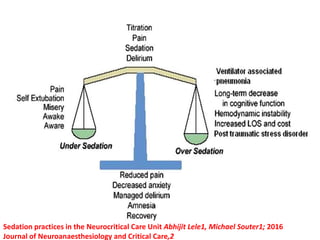
Sedation practices in the Neurocritical Care Unit Abhijit Lele1, Michael Souter1; 2016
Journal of Neuroanaesthesiology and Critical Care,2
Causes of agitation
• Pain
• Raised ICP
• Hypoxia
• hypercarbia,
• hypoglycaemia
• symptom of drug or alcohol withdrawal
Drugs causing delirium & agitation:
• Benzodiazepines
• Opiates (especially meperidine)
• Anticholinergics
• Antihistamines
• H2 blockers
• Antibiotics
• Corticosteroids
• Metoclopramide
Consequences of inappropriate
sedation:
Over-sedation:
1. Confounding neuro assessment,
2. Need for frequent neuroimaging studies
3. Delayed emergence
4. Disuse atrophy of muscles,
5. Respiratory depression, hypotension, venous thrombosis,
6. Hampers mobility,
7. Increases time on ventilator & ICU length of stay and Cost.
Consequences of inappropriate
sedation:
Under sedation:
1. Lead to agitation and anxiety, pain, distress.
2. Elevated ICP,
3. Tachycardia, hypertension, predispose to arrhythmias and myocardial
ischaemia.
4. Tachypnea hypocapnea causing vasoconstriction and reduced CBF.
5. Promote ventilator dyssynchrony,
6. Increased oxygen consumption
7. Wound disruption,
8. Risk and accidental removal of tubes, catheters, lines and drains.
Goals of sedation:
1. Anxiolytic
2. Analgesic
3. Reduce CMRO2
4. Reduce ICP
5. Anti-convulsant
Assessment of sedation:
• Neurological wake-up tests (NWTs) :
Gold standard
Frequent neuro checks to assess
neurological functioning.
• Worse outcomes if infusions are continued.
• Daily awakening trials and a need for sedation
Interruption.
Problems in de escalation of sedatives:
1. Individual bias regarding agents employed
2. Fear of extubation
3. Decannulation
4. Worsening cardiac ischemia
5. Psychological distress
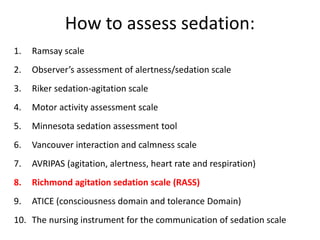
How to assess sedation:
1. Ramsay scale
2. Observer’s assessment of alertness/sedation scale
3. Riker sedation-agitation scale
4. Motor activity assessment scale
5. Minnesota sedation assessment tool
6. Vancouver interaction and calmness scale
7. AVRIPAS (agitation, alertness, heart rate and respiration)
8. Richmond agitation sedation scale (RASS)
9. ATICE (consciousness domain and tolerance Domain)
10. The nursing instrument for the communication of sedation scale
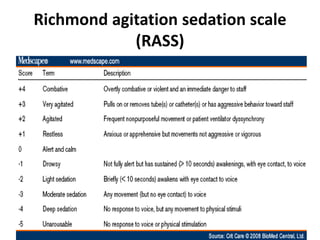
Richmond agitation sedation scale
(RASS)
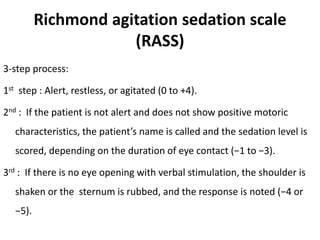
Richmond agitation sedation scale
(RASS)
3-step process:
1st step : Alert, restless, or agitated (0 to +4).
2nd : If the patient is not alert and does not show positive motoric
characteristics, the patient’s name is called and the sedation level is
scored, depending on the duration of eye contact (−1 to −3).
3rd : If there is no eye opening with verbal stimulation, the shoulder is
shaken or the sternum is rubbed, and the response is noted (−4 or
−5).
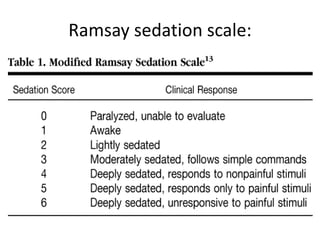
Ramsay sedation scale:
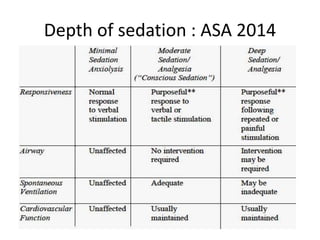
Depth of sedation : ASA 2014
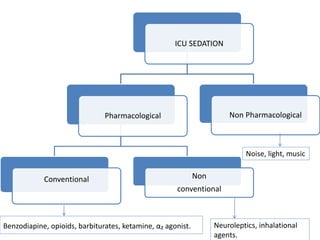
ICU SEDATION
Pharmacological
Conventional Non
conventional
Non Pharmacological
Benzodiapine, opioids, barbiturates, ketamine, α₂ agonist. Neuroleptics, inhalational
agents.
Noise, light, music
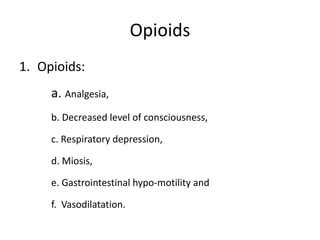
Opioids
1. Opioids:
a. Analgesia,
b. Decreased level of consciousness,
c. Respiratory depression,
d. Miosis,
e. Gastrointestinal hypo-motility and
f. Vasodilatation.
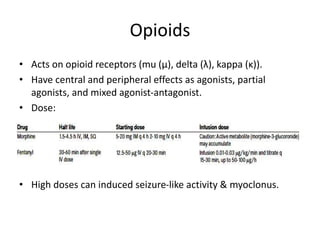
Opioids
• Acts on opioid receptors (mu (μ), delta (λ), kappa (κ)).
• Have central and peripheral effects as agonists, partial
agonists, and mixed agonist-antagonist.
• Dose:
• High doses can induced seizure-like activity & myoclonus.
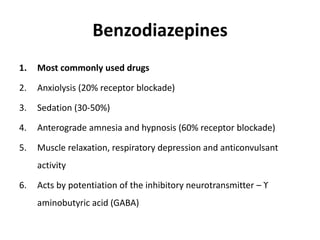
Benzodiazepines
1. Most commonly used drugs
2. Anxiolysis (20% receptor blockade)
3. Sedation (30-50%)
4. Anterograde amnesia and hypnosis (60% receptor blockade)
5. Muscle relaxation, respiratory depression and anticonvulsant
activity
6. Acts by potentiation of the inhibitory neurotransmitter – ϒ
aminobutyric acid (GABA)
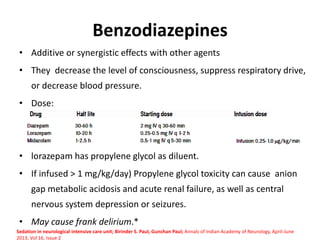
Benzodiazepines
• Additive or synergistic effects with other agents
• They decrease the level of consciousness, suppress respiratory drive,
or decrease blood pressure.
• Dose:
• lorazepam has propylene glycol as diluent.
• If infused > 1 mg/kg/day) Propylene glycol toxicity can cause anion
gap metabolic acidosis and acute renal failure, as well as central
nervous system depression or seizures.
• May cause frank delirium.*
Sedation in neurological intensive care unit; Birinder S. Paul, Gunchan Paul; Annals of Indian Academy of Neurology, April-June
2013, Vol 16, Issue 2
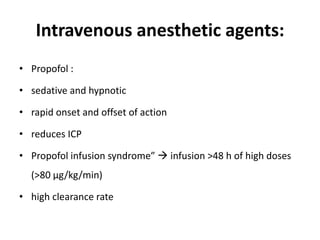
Intravenous anesthetic agents:
• Propofol :
• sedative and hypnotic
• rapid onset and offset of action
• reduces ICP
• Propofol infusion syndrome”  infusion >48 h of high doses
(>80 μg/kg/min)
• high clearance rate
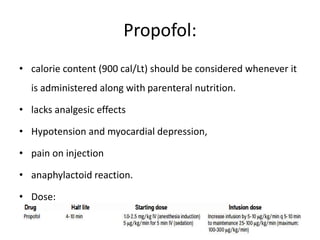
Propofol:
• calorie content (900 cal/Lt) should be considered whenever it
is administered along with parenteral nutrition.
• lacks analgesic effects
• Hypotension and myocardial depression,
• pain on injection
• anaphylactoid reaction.
• Dose:
Propofol:
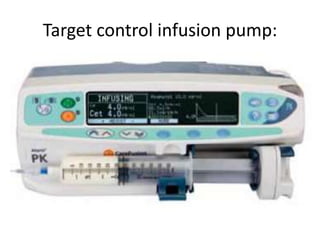
• Target Controlled Infusion
Propofol is administered via an infusion pump. Patient’s body
weight is entered.
Propofol concentration required in the patient’s blood,
instead of setting the dose rate.
• Optimum depth of sedation in a range of 0.3-4.0 mg/kg/h.
Target control infusion pump:
Thiopentone
• Dose-dependent sedative, hypnotic, or anesthetic action.
• Anticonvulsant and cerebro-protective properties.
• The only indications of continuous infusion of
thiopentone are in the management of refractory status
epilepticus and reduction of refractory intra cranial
hypertension
Thiopentone
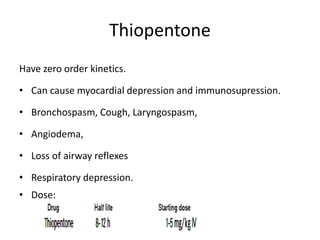
Have zero order kinetics.
• Can cause myocardial depression and immunosupression.
• Bronchospasm, Cough, Laryngospasm,
• Angiodema,
• Loss of airway reflexes
• Respiratory depression.
• Dose:
α2-agonists
• Presynaptic inhibition of descending noradrenergic activation
of spinal neurons
• Activation of postsynaptic alpha-2 adrenergic receptors
coupled to potassium-channel
• Activating G-proteins : Analgesia, sedation, and anxiolysis.
• Multiple therapies can be avoided
• Arousability is maintained at deeper levels of sedation.
• At higher doses respiratory is maintained.
• But only recommended for 24 hr infusion due to lack of
evidence.
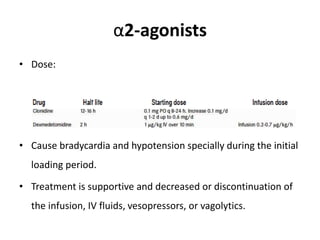
α2-agonists
• Dose:
• Cause bradycardia and hypotension specially during the initial
loading period.
• Treatment is supportive and decreased or discontinuation of
the infusion, IV fluids, vesopressors, or vagolytics.
Ketamine
• Phencyclidine derivative
• A non-competitive N-methyl-D-aspartate receptor antagonist
• Causes functional and electrophysiological dissociation
between the thalamo-neocortical and limbic systems.
• “sensory isolation”: potent analgesic, sedative, and amnestic
• properties.
• Negative effects on CMRO2, CBF and ICP  not very popular
• ketamine (dose range of 1.5–3 mg/kg)
Ketamine
• Reduce ICP in patients with traumatic brain injury
• CPP, jugular oxygen saturation and middle cerebral artery
blood flow remains almost same.
• Used to facilitate routine bedside procedures.
• Provide good analgosedation after major spine surgeries.
• Opioid-sparing effect.
• Psychomimetic (emergence) phenomenon
• Hypersalivation nausea & vomitting.
Drugs for seadtion:
Neuroleptic agents
• Haloperidol / Quetiapine:
• Anti-psychotic
• Central dopaminergic D2 blockade.
• Diminished motor activity, anxiolysis, and indifference to the
external environment.
• Postoperative psychosis and delirium
• Profound sedation with minimal respiratory depression.
Neuroleptic agents
Adverse effects:
a. ECG Changes
b. Hypotension
c. Neurolept malignant syndrome
d. Increased prolactin secretion
e. Larynospasm and bronchospasm.
f. Anticholinergic effects
Sedation and Analgesia in Critically Ill Neurologic Patients John J. Lewin III ; 2013
Neurocritical Care Society Practice Update
Role of Neuromuscular blocking agents
• Do not provide sedation:
Indications include:
1. Invasive ventilation modes
2. Control of ventilation in those with a high respiratory drive
3. Reduction of oxygen consumption in critically hypoxaemic
patients
4. Control of raised intracranial pressure.
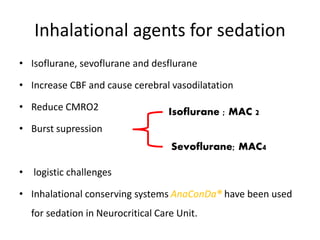
Inhalational agents for sedation
• Isoflurane, sevoflurane and desflurane
• Increase CBF and cause cerebral vasodilatation
• Reduce CMRO2
• Burst supression
• logistic challenges
• Inhalational conserving systems AnaConDa® have been used
for sedation in Neurocritical Care Unit.
Isoflurane ; MAC 2
Sevoflurane; MAC4
Inhalational agents for sedation
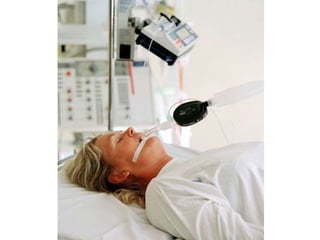
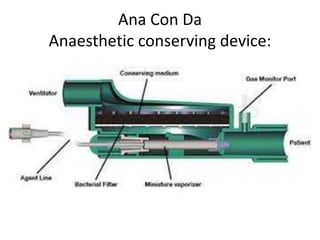
• Ana Con Da : anaesthetic conserving devices.
• Designed to deliver isoflurane and sevoflurane in mechanically
ventilated patient.
• Small device placed between ET tube and Y piece.
• AnaConDa® : Modified heat moisture exchanger (HME).
• Low dead space: 100 mL and can be used with any standard ICU
ventilator.
A review of the practice of sedation with inhalational anaesthetics in the intensive care unit
with the AnaConDa® device:Satyajeet Misra, Thomas Koshy; 2012; 56: 6; 518-523.
Ana Con Da:
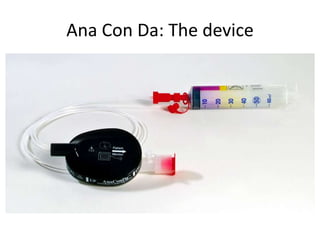
About the device
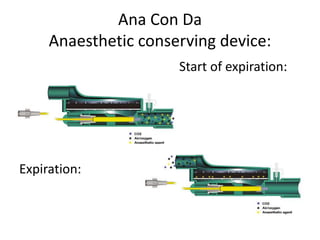
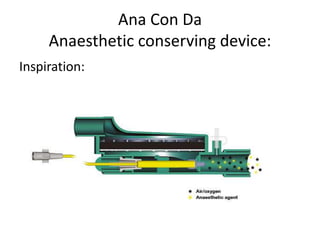
• Miniature porous evaporator rod that converts the volatile
anaesthetic agent from liquid to vapour state.
• The liquid anaesthetic agent is continuously infused into the
evaporator by an infusion pump incorporating a syringe
system.
• Activated carbon fibres in HME adsorb, store and release the
anaesthetic vapours.
Ana Con Da: The device
Ana Con Da
Anaesthetic conserving device:
Ana Con Da
Anaesthetic conserving device:
Start of expiration:
Expiration:
Ana Con Da
Anaesthetic conserving device:
Inspiration:
Benefits of volatile anaesthetic agents:
1. Rapid onset, rapid recovery.
2. Hemodynamics are well maintained.
3. Cerebroprotective.
4. Does not require circle absorber so No risk of compound A
formation.
5. Opioid sparing action
6. Active Gas Scavenging is Unnecessary When Using the
AnaConDa Volatile Agent Delivery System*
* Active Gas Scavenging is Unnecessary When Using the AnaConDa Volatile Agent Delivery
System;Hosnieh Djafari Marbini; JICS; 2014.
Drawbacks:
a. Change every 24 hrs
b. Mild hypercapnea
c. Slight increase in dead space
d. Autopumping: lead to severe overdose.
e. Technical difficulty: colour coding and marked "Not for IV
use”
Sedation holidays:
 Involves stopping the sedative infusions and allowing the
patient to wake.
 The infusion is restarted once the patient is fully awake and
obeying commands or until they became uncomfortable or
agitated.
 Ideally, this should be performed on a daily basis
 To reduce incidence of delirium
Delirium:
• Delirium is an acute disturbance of consciousness accompanied
by inattention, disorganized thinking, and perceptual
disturbances that fluctuates over a short period of time.
• 20 – 80 % in ICU patient suffers from delirium
• Makes neurological examination impossible
• Types:
Hypoactive delirium
Hyperactive delirium
Phathophysiology:
• Neurotransmitter imbalance.
• Inflammatory mediators (TNF-α), IL-1, and other cytokines
and chemokines.
• Impaired oxidative metabolism
• Large neutral amino acids.
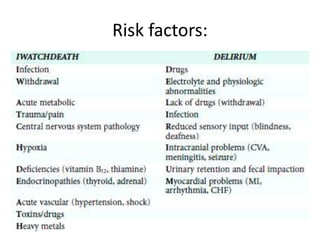
Risk factors:
Nonpharmacological methods:
To promote sleep in ICU:
• Modification of the patient's local environment and reduction of
unnecessary noise.
• Sleep occurs best below 35 Db
• A noise level of 80 dB will cause arousal.
• Lighting of the bed space to mimic the day–night orientation is helpful.
• Targeted music therapy : Decrease heart rate, ventilatory frequency,
myocardial oxygen demand, anxiety scores, and improve sleep.
Prolonged sedation
1. Over-sedation
2. Hemodynamic
instability
3. Prolonged duration of
intubation and ICU
stay.
1. Renal and hepatic
dysfunction
2. Drug-drug interactions,
3. Shock
4. Hypoproteinemia.
5. Active metabolites
Prolonged sedation:
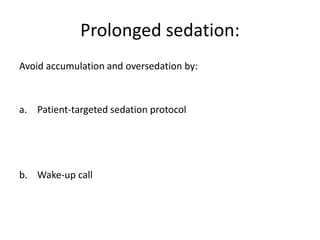
Avoid accumulation and oversedation by:
a. Patient-targeted sedation protocol
b. Wake-up call
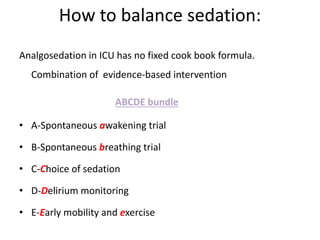
How to balance sedation:
Analgosedation in ICU has no fixed cook book formula.
Combination of evidence-based intervention
ABCDE bundle
• A-Spontaneous awakening trial
• B-Spontaneous breathing trial
• C-Choice of sedation
• D-Delirium monitoring
• E-Early mobility and exercise
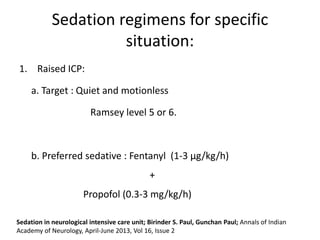
Sedation regimens for specific
situation:
1. Raised ICP:
a. Target : Quiet and motionless
Ramsey level 5 or 6.
b. Preferred sedative : Fentanyl (1-3 μg/kg/h)
+
Propofol (0.3-3 mg/kg/h)
Sedation in neurological intensive care unit; Birinder S. Paul, Gunchan Paul; Annals of Indian
Academy of Neurology, April-June 2013, Vol 16, Issue 2
Sedation regimens for specific
situation:
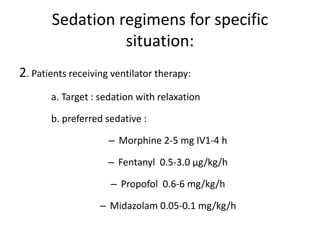
2. Patients receiving ventilator therapy:
a. Target : sedation with relaxation
b. preferred sedative :
– Morphine 2-5 mg IV1-4 h
– Fentanyl 0.5-3.0 μg/kg/h
– Propofol 0.6-6 mg/kg/h
– Midazolam 0.05-0.1 mg/kg/h
Sedation regimens for specific
situation:
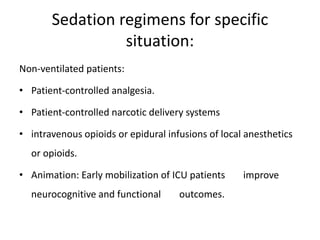
Non-ventilated patients:
• Patient-controlled analgesia.
• Patient-controlled narcotic delivery systems
• intravenous opioids or epidural infusions of local anesthetics
or opioids.
• Animation: Early mobilization of ICU patients improve
neurocognitive and functional outcomes.
Sedation regimens for specific
situation:
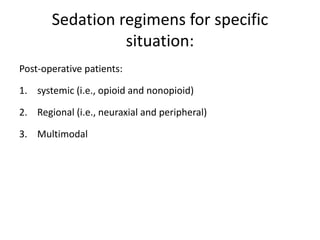
Post-operative patients:
1. systemic (i.e., opioid and nonopioid)
2. Regional (i.e., neuraxial and peripheral)
3. Multimodal
Sedation regimens for specific
situation:
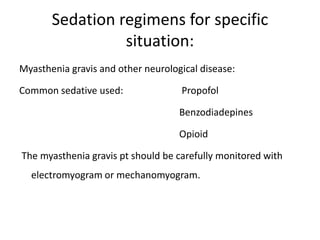
Myasthenia gravis and other neurological disease:
Common sedative used: Propofol
Benzodiadepines
Opioid
The myasthenia gravis pt should be carefully monitored with
electromyogram or mechanomyogram.
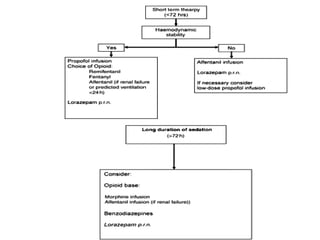
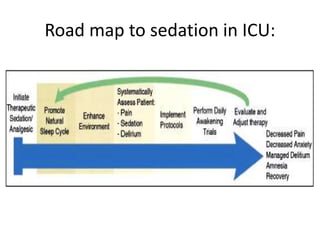
Road map to sedation in ICU:
Summary :
• Physiological derangements
• Require long duration of analgesic and sedative therapy.
• Rapid onset / rapid recovery
• Predictable dose response,
• lack of drug accumulation and toxicity.
• Serial neurological examinations
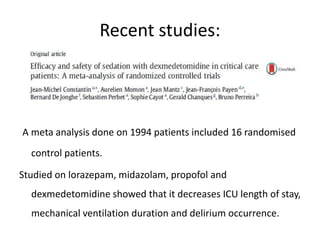
Recent studies:
A meta analysis done on 1994 patients included 16 randomised
control patients.
Studied on lorazepam, midazolam, propofol and
dexmedetomidine showed that it decreases ICU length of stay,
mechanical ventilation duration and delirium occurrence.
Sedation in neurocritical care unit

Sedation in neurocritical care unit

  • 1.
    Sedation in neurocriticalcare unit Dr. Tushar Kumar DA, DNB PDCC- Neuroanesthesia
  • 3.
    Why sedate mypatient: • To control intracranial pressure (ICP) and cerebral perfusion pressure and decrease the cerebral rate of oxygen utilization • Blunt central hyperventilation. • Refractory status epilepsy . • Patients with traumatic brain injury (TBI) • To alleviate pain • Delirium and agitation
  • 4.
    What is sedation Conscioussedation: Minimally depressed levels of consciousness that retains the patients ability to independently and continuously maintain an airway and respond appropriately to physical stimulation or verbal command that is produced by pharmacological or non pharmacological or a combination of both. Sedation in context with neurocritical patients: Defined as incremental reduction in level of consciousness to maintain a state of amnesia, hypnosis and analgesia, from which patients can be readily recruited to participate in a comprehensive neurological examination.
  • 5.
    Sedation practices inthe Neurocritical Care Unit Abhijit Lele1, Michael Souter1; 2016 Journal of Neuroanaesthesiology and Critical Care,2
  • 6.
    Causes of agitation •Pain • Raised ICP • Hypoxia • hypercarbia, • hypoglycaemia • symptom of drug or alcohol withdrawal
  • 7.
    Drugs causing delirium& agitation: • Benzodiazepines • Opiates (especially meperidine) • Anticholinergics • Antihistamines • H2 blockers • Antibiotics • Corticosteroids • Metoclopramide
  • 8.
    Consequences of inappropriate sedation: Over-sedation: 1.Confounding neuro assessment, 2. Need for frequent neuroimaging studies 3. Delayed emergence 4. Disuse atrophy of muscles, 5. Respiratory depression, hypotension, venous thrombosis, 6. Hampers mobility, 7. Increases time on ventilator & ICU length of stay and Cost.
  • 9.
    Consequences of inappropriate sedation: Undersedation: 1. Lead to agitation and anxiety, pain, distress. 2. Elevated ICP, 3. Tachycardia, hypertension, predispose to arrhythmias and myocardial ischaemia. 4. Tachypnea hypocapnea causing vasoconstriction and reduced CBF. 5. Promote ventilator dyssynchrony, 6. Increased oxygen consumption 7. Wound disruption, 8. Risk and accidental removal of tubes, catheters, lines and drains.
  • 10.
    Goals of sedation: 1.Anxiolytic 2. Analgesic 3. Reduce CMRO2 4. Reduce ICP 5. Anti-convulsant
  • 11.
    Assessment of sedation: •Neurological wake-up tests (NWTs) : Gold standard Frequent neuro checks to assess neurological functioning. • Worse outcomes if infusions are continued. • Daily awakening trials and a need for sedation Interruption.
  • 12.
    Problems in deescalation of sedatives: 1. Individual bias regarding agents employed 2. Fear of extubation 3. Decannulation 4. Worsening cardiac ischemia 5. Psychological distress
  • 13.
    How to assesssedation: 1. Ramsay scale 2. Observer’s assessment of alertness/sedation scale 3. Riker sedation-agitation scale 4. Motor activity assessment scale 5. Minnesota sedation assessment tool 6. Vancouver interaction and calmness scale 7. AVRIPAS (agitation, alertness, heart rate and respiration) 8. Richmond agitation sedation scale (RASS) 9. ATICE (consciousness domain and tolerance Domain) 10. The nursing instrument for the communication of sedation scale
  • 14.
  • 15.
    Richmond agitation sedationscale (RASS) 3-step process: 1st step : Alert, restless, or agitated (0 to +4). 2nd : If the patient is not alert and does not show positive motoric characteristics, the patient’s name is called and the sedation level is scored, depending on the duration of eye contact (−1 to −3). 3rd : If there is no eye opening with verbal stimulation, the shoulder is shaken or the sternum is rubbed, and the response is noted (−4 or −5).
  • 16.
  • 17.
  • 18.
    ICU SEDATION Pharmacological Conventional Non conventional NonPharmacological Benzodiapine, opioids, barbiturates, ketamine, α₂ agonist. Neuroleptics, inhalational agents. Noise, light, music
  • 19.
    Opioids 1. Opioids: a. Analgesia, b.Decreased level of consciousness, c. Respiratory depression, d. Miosis, e. Gastrointestinal hypo-motility and f. Vasodilatation.
  • 20.
    Opioids • Acts onopioid receptors (mu (μ), delta (λ), kappa (κ)). • Have central and peripheral effects as agonists, partial agonists, and mixed agonist-antagonist. • Dose: • High doses can induced seizure-like activity & myoclonus.
  • 21.
    Benzodiazepines 1. Most commonlyused drugs 2. Anxiolysis (20% receptor blockade) 3. Sedation (30-50%) 4. Anterograde amnesia and hypnosis (60% receptor blockade) 5. Muscle relaxation, respiratory depression and anticonvulsant activity 6. Acts by potentiation of the inhibitory neurotransmitter – ϒ aminobutyric acid (GABA)
  • 22.
    Benzodiazepines • Additive orsynergistic effects with other agents • They decrease the level of consciousness, suppress respiratory drive, or decrease blood pressure. • Dose: • lorazepam has propylene glycol as diluent. • If infused > 1 mg/kg/day) Propylene glycol toxicity can cause anion gap metabolic acidosis and acute renal failure, as well as central nervous system depression or seizures. • May cause frank delirium.* Sedation in neurological intensive care unit; Birinder S. Paul, Gunchan Paul; Annals of Indian Academy of Neurology, April-June 2013, Vol 16, Issue 2
  • 23.
    Intravenous anesthetic agents: •Propofol : • sedative and hypnotic • rapid onset and offset of action • reduces ICP • Propofol infusion syndrome”  infusion >48 h of high doses (>80 μg/kg/min) • high clearance rate
  • 24.
    Propofol: • calorie content(900 cal/Lt) should be considered whenever it is administered along with parenteral nutrition. • lacks analgesic effects • Hypotension and myocardial depression, • pain on injection • anaphylactoid reaction. • Dose:
  • 25.
    Propofol: • Target ControlledInfusion Propofol is administered via an infusion pump. Patient’s body weight is entered. Propofol concentration required in the patient’s blood, instead of setting the dose rate. • Optimum depth of sedation in a range of 0.3-4.0 mg/kg/h.
  • 26.
  • 27.
    Thiopentone • Dose-dependent sedative,hypnotic, or anesthetic action. • Anticonvulsant and cerebro-protective properties. • The only indications of continuous infusion of thiopentone are in the management of refractory status epilepticus and reduction of refractory intra cranial hypertension
  • 28.
    Thiopentone Have zero orderkinetics. • Can cause myocardial depression and immunosupression. • Bronchospasm, Cough, Laryngospasm, • Angiodema, • Loss of airway reflexes • Respiratory depression. • Dose:
  • 29.
    α2-agonists • Presynaptic inhibitionof descending noradrenergic activation of spinal neurons • Activation of postsynaptic alpha-2 adrenergic receptors coupled to potassium-channel • Activating G-proteins : Analgesia, sedation, and anxiolysis. • Multiple therapies can be avoided • Arousability is maintained at deeper levels of sedation. • At higher doses respiratory is maintained. • But only recommended for 24 hr infusion due to lack of evidence.
  • 30.
    α2-agonists • Dose: • Causebradycardia and hypotension specially during the initial loading period. • Treatment is supportive and decreased or discontinuation of the infusion, IV fluids, vesopressors, or vagolytics.
  • 31.
    Ketamine • Phencyclidine derivative •A non-competitive N-methyl-D-aspartate receptor antagonist • Causes functional and electrophysiological dissociation between the thalamo-neocortical and limbic systems. • “sensory isolation”: potent analgesic, sedative, and amnestic • properties. • Negative effects on CMRO2, CBF and ICP  not very popular • ketamine (dose range of 1.5–3 mg/kg)
  • 32.
    Ketamine • Reduce ICPin patients with traumatic brain injury • CPP, jugular oxygen saturation and middle cerebral artery blood flow remains almost same. • Used to facilitate routine bedside procedures. • Provide good analgosedation after major spine surgeries. • Opioid-sparing effect. • Psychomimetic (emergence) phenomenon • Hypersalivation nausea & vomitting.
  • 33.
    Drugs for seadtion: Neurolepticagents • Haloperidol / Quetiapine: • Anti-psychotic • Central dopaminergic D2 blockade. • Diminished motor activity, anxiolysis, and indifference to the external environment. • Postoperative psychosis and delirium • Profound sedation with minimal respiratory depression.
  • 34.
    Neuroleptic agents Adverse effects: a.ECG Changes b. Hypotension c. Neurolept malignant syndrome d. Increased prolactin secretion e. Larynospasm and bronchospasm. f. Anticholinergic effects Sedation and Analgesia in Critically Ill Neurologic Patients John J. Lewin III ; 2013 Neurocritical Care Society Practice Update
  • 35.
    Role of Neuromuscularblocking agents • Do not provide sedation: Indications include: 1. Invasive ventilation modes 2. Control of ventilation in those with a high respiratory drive 3. Reduction of oxygen consumption in critically hypoxaemic patients 4. Control of raised intracranial pressure.
  • 36.
    Inhalational agents forsedation • Isoflurane, sevoflurane and desflurane • Increase CBF and cause cerebral vasodilatation • Reduce CMRO2 • Burst supression • logistic challenges • Inhalational conserving systems AnaConDa® have been used for sedation in Neurocritical Care Unit. Isoflurane ; MAC 2 Sevoflurane; MAC4
  • 37.
    Inhalational agents forsedation • Ana Con Da : anaesthetic conserving devices. • Designed to deliver isoflurane and sevoflurane in mechanically ventilated patient. • Small device placed between ET tube and Y piece. • AnaConDa® : Modified heat moisture exchanger (HME). • Low dead space: 100 mL and can be used with any standard ICU ventilator. A review of the practice of sedation with inhalational anaesthetics in the intensive care unit with the AnaConDa® device:Satyajeet Misra, Thomas Koshy; 2012; 56: 6; 518-523.
  • 38.
    Ana Con Da: Aboutthe device • Miniature porous evaporator rod that converts the volatile anaesthetic agent from liquid to vapour state. • The liquid anaesthetic agent is continuously infused into the evaporator by an infusion pump incorporating a syringe system. • Activated carbon fibres in HME adsorb, store and release the anaesthetic vapours.
  • 39.
    Ana Con Da:The device
  • 41.
    Ana Con Da Anaestheticconserving device:
  • 42.
    Ana Con Da Anaestheticconserving device: Start of expiration: Expiration:
  • 43.
    Ana Con Da Anaestheticconserving device: Inspiration:
  • 44.
    Benefits of volatileanaesthetic agents: 1. Rapid onset, rapid recovery. 2. Hemodynamics are well maintained. 3. Cerebroprotective. 4. Does not require circle absorber so No risk of compound A formation. 5. Opioid sparing action 6. Active Gas Scavenging is Unnecessary When Using the AnaConDa Volatile Agent Delivery System* * Active Gas Scavenging is Unnecessary When Using the AnaConDa Volatile Agent Delivery System;Hosnieh Djafari Marbini; JICS; 2014.
  • 45.
    Drawbacks: a. Change every24 hrs b. Mild hypercapnea c. Slight increase in dead space d. Autopumping: lead to severe overdose. e. Technical difficulty: colour coding and marked "Not for IV use”
  • 46.
    Sedation holidays:  Involvesstopping the sedative infusions and allowing the patient to wake.  The infusion is restarted once the patient is fully awake and obeying commands or until they became uncomfortable or agitated.  Ideally, this should be performed on a daily basis  To reduce incidence of delirium
  • 47.
    Delirium: • Delirium isan acute disturbance of consciousness accompanied by inattention, disorganized thinking, and perceptual disturbances that fluctuates over a short period of time. • 20 – 80 % in ICU patient suffers from delirium • Makes neurological examination impossible • Types: Hypoactive delirium Hyperactive delirium
  • 48.
    Phathophysiology: • Neurotransmitter imbalance. •Inflammatory mediators (TNF-α), IL-1, and other cytokines and chemokines. • Impaired oxidative metabolism • Large neutral amino acids.
  • 49.
  • 50.
    Nonpharmacological methods: To promotesleep in ICU: • Modification of the patient's local environment and reduction of unnecessary noise. • Sleep occurs best below 35 Db • A noise level of 80 dB will cause arousal. • Lighting of the bed space to mimic the day–night orientation is helpful. • Targeted music therapy : Decrease heart rate, ventilatory frequency, myocardial oxygen demand, anxiety scores, and improve sleep.
  • 51.
    Prolonged sedation 1. Over-sedation 2.Hemodynamic instability 3. Prolonged duration of intubation and ICU stay. 1. Renal and hepatic dysfunction 2. Drug-drug interactions, 3. Shock 4. Hypoproteinemia. 5. Active metabolites
  • 52.
    Prolonged sedation: Avoid accumulationand oversedation by: a. Patient-targeted sedation protocol b. Wake-up call
  • 53.
    How to balancesedation: Analgosedation in ICU has no fixed cook book formula. Combination of evidence-based intervention ABCDE bundle • A-Spontaneous awakening trial • B-Spontaneous breathing trial • C-Choice of sedation • D-Delirium monitoring • E-Early mobility and exercise
  • 55.
    Sedation regimens forspecific situation: 1. Raised ICP: a. Target : Quiet and motionless Ramsey level 5 or 6. b. Preferred sedative : Fentanyl (1-3 μg/kg/h) + Propofol (0.3-3 mg/kg/h) Sedation in neurological intensive care unit; Birinder S. Paul, Gunchan Paul; Annals of Indian Academy of Neurology, April-June 2013, Vol 16, Issue 2
  • 56.
    Sedation regimens forspecific situation: 2. Patients receiving ventilator therapy: a. Target : sedation with relaxation b. preferred sedative : – Morphine 2-5 mg IV1-4 h – Fentanyl 0.5-3.0 μg/kg/h – Propofol 0.6-6 mg/kg/h – Midazolam 0.05-0.1 mg/kg/h
  • 57.
    Sedation regimens forspecific situation: Non-ventilated patients: • Patient-controlled analgesia. • Patient-controlled narcotic delivery systems • intravenous opioids or epidural infusions of local anesthetics or opioids. • Animation: Early mobilization of ICU patients improve neurocognitive and functional outcomes.
  • 58.
    Sedation regimens forspecific situation: Post-operative patients: 1. systemic (i.e., opioid and nonopioid) 2. Regional (i.e., neuraxial and peripheral) 3. Multimodal
  • 59.
    Sedation regimens forspecific situation: Myasthenia gravis and other neurological disease: Common sedative used: Propofol Benzodiadepines Opioid The myasthenia gravis pt should be carefully monitored with electromyogram or mechanomyogram.
  • 60.
    Road map tosedation in ICU:
  • 61.
    Summary : • Physiologicalderangements • Require long duration of analgesic and sedative therapy. • Rapid onset / rapid recovery • Predictable dose response, • lack of drug accumulation and toxicity. • Serial neurological examinations
  • 62.
    Recent studies: A metaanalysis done on 1994 patients included 16 randomised control patients. Studied on lorazepam, midazolam, propofol and dexmedetomidine showed that it decreases ICU length of stay, mechanical ventilation duration and delirium occurrence.

Editor's Notes

  • #14 Society of Critical Care Medicine’s (SCCM) 2013 clinical practice guidelines for management of pain, agitation and delirium in adult patients in the ICU, recommends RASS.
  • #23 such as CNS depression and seizures.
  • #25 No an ideal drug in icu.
  • #36 (e.g. inverse ratios, high pressures);
  • #37 evidence of long‑term safety are lacking and there are concerns about rebound hypertension and tachycardia on discontinuation. However, several clinical studies have demonstrated safe use for a week and longer in mechanically ventilated critically ill patients
  • #38 Made for single use and should be replaced every day.
  • #45 A total volume of 1.2 mL is required for prefilling the system. The infusion rates are usually started at approximately 5-10 mL/h.( 0.3- 0.5 expired vol.%)  sevoflurane 2-6 mL/h (0.5-1 expired vol. %) provide acceptable sedation.
  • #49 1. Neurotransmitter imbalance. Multiple neurotransmitters have been implicated, including dopamine (excess), acetylcholine (relative depletion), γ-aminobutyric acid (GABA), serotonin, endorphins, norepinephrine, and glutamate.29-32 • Inflammatory mediators. Inflammatory mediators, such as tumor necrosis factor alpha (TNF-α), interleukin 1 (IL-1), and other cytokines and chemokines, have been implicated in the pathogenesis of endothelial damage, thrombin formation, and microvascular dysfunction in the central nervous system (CNS), contributing to delirium.32 • Impaired oxidative metabolism. According to this hypothesis, delirium is a result of cerebral insufficiency secondary to a global failure of oxidative metabolism.33 • Large neutral amino acids. Increased cerebral uptake of tryptophan and tyrosine can lead to elevated levels of serotonin, dopamine, and norepinephrine in the CNS. Altered availability of these amino acids is associated with increased risk of development of delirium.34 Assessment 2. 3. . According to this hypothesis, delirium is a result of cerebral insufficiency secondary to a global failure of oxidative metabolism.33 4. Increased cerebral uptake of tryptophan and tyrosine can lead to elevated levels of serotonin, dopamine, and norepinephrine in the CNS. Altered availability of these amino acids is associated with increased risk of development of delirium.34 Assessment
  • #53 a. A structured approach to the assessment of patient’s pain and distress • Coupled with an algorithm that directs drug escalation and de‑escalation based on the assessment b. interruption of continuous sedative infusions till the patient awakens and restarting infusion at half the previous dose if the patient exhibits distress
  • #59 analgesia is achieved by combining different analgesics that act by different mechanisms and at different sites in the nervous system, resulting in additive or synergistic analgesia with lowered adverse effects than when individual analgesics are administered as sole agents