INTRODUCTION
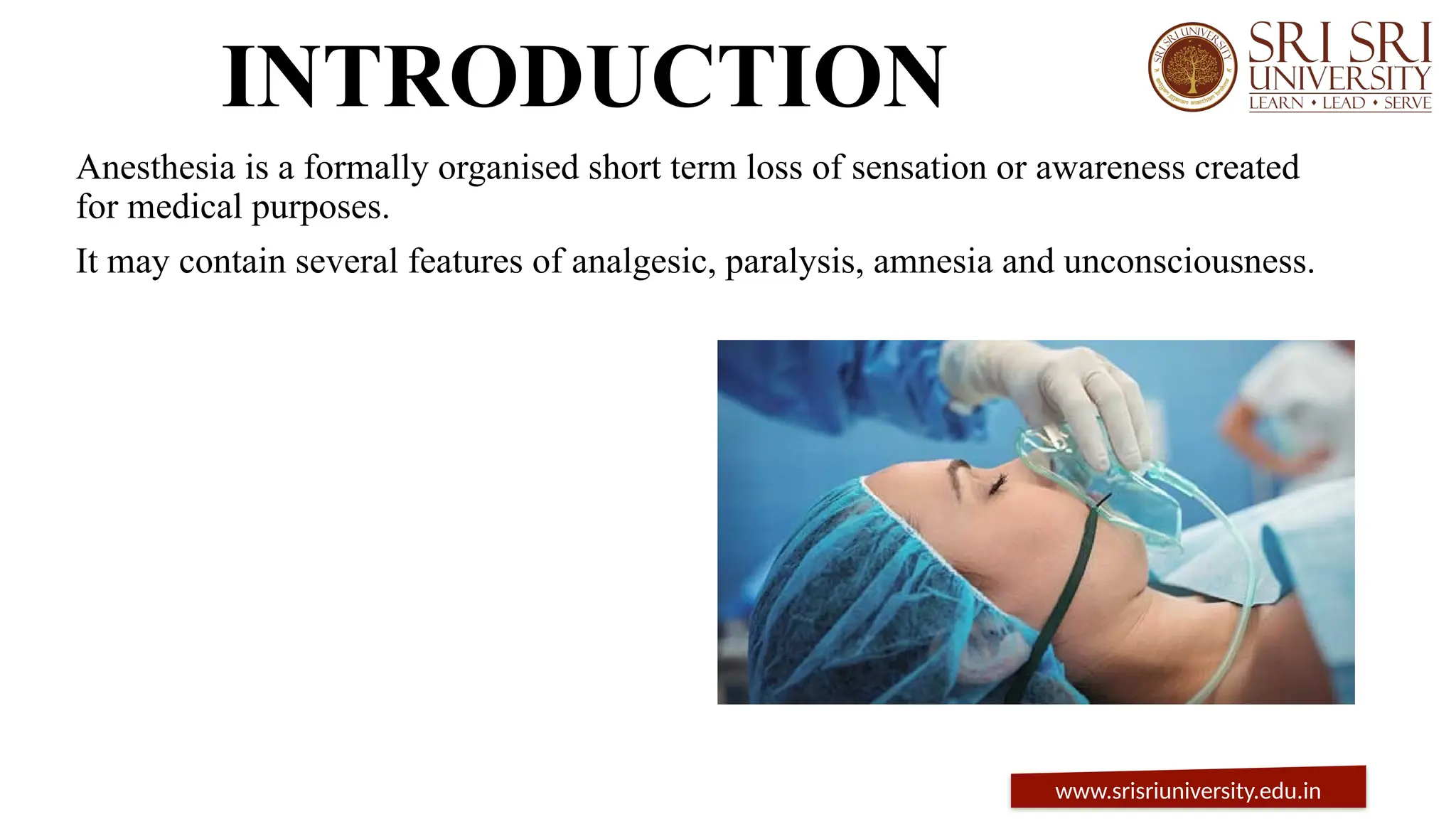
Anesthesia is aformally organised short term loss of sensation or awareness created
for medical purposes.
It may contain several features of analgesic, paralysis, amnesia and unconsciousness.
www.srisriuniversity.edu.in
5.
TYPES
1. General Anesthesia:It causes one to lose consciousness completely and have no sensation
or memory of the procedure. It is used in major operations like knee replacement, open heart
surgery.
2. Regional Anesthesia: It blocks pain in a large part of your body, while you remain awake or
lightly sedated. Commonly used in childbirth. Surgeries of arms, legs, hips or lower
abdomen.
a) Neuraxial Anesthesia:
• Spinal: Single injection of local anaesthetic into the cerebrospinal fluid around the spinal
cord, numbing the lower half of the body.
• Epidural: Cachetter is placed in the epidural space around the spinal cord to allow for
continuous infusion or repeated doses of anaesthetic, commonly used in labour
b) Peripheral nerve blocks: Involves injecting local anaesthetic around a major nerve or group
of nerves to block pain in a specific limb.
c) Intravenous bier block: Local anaesthetic injected into a vein in a limb after a tourniquet is
applied to keep the medication localised. www.srisriuniversity.edu.in
6.
TYPES
3) Local anaesthesia:Numbing a small specific area of the body, even though you are
awake and alert
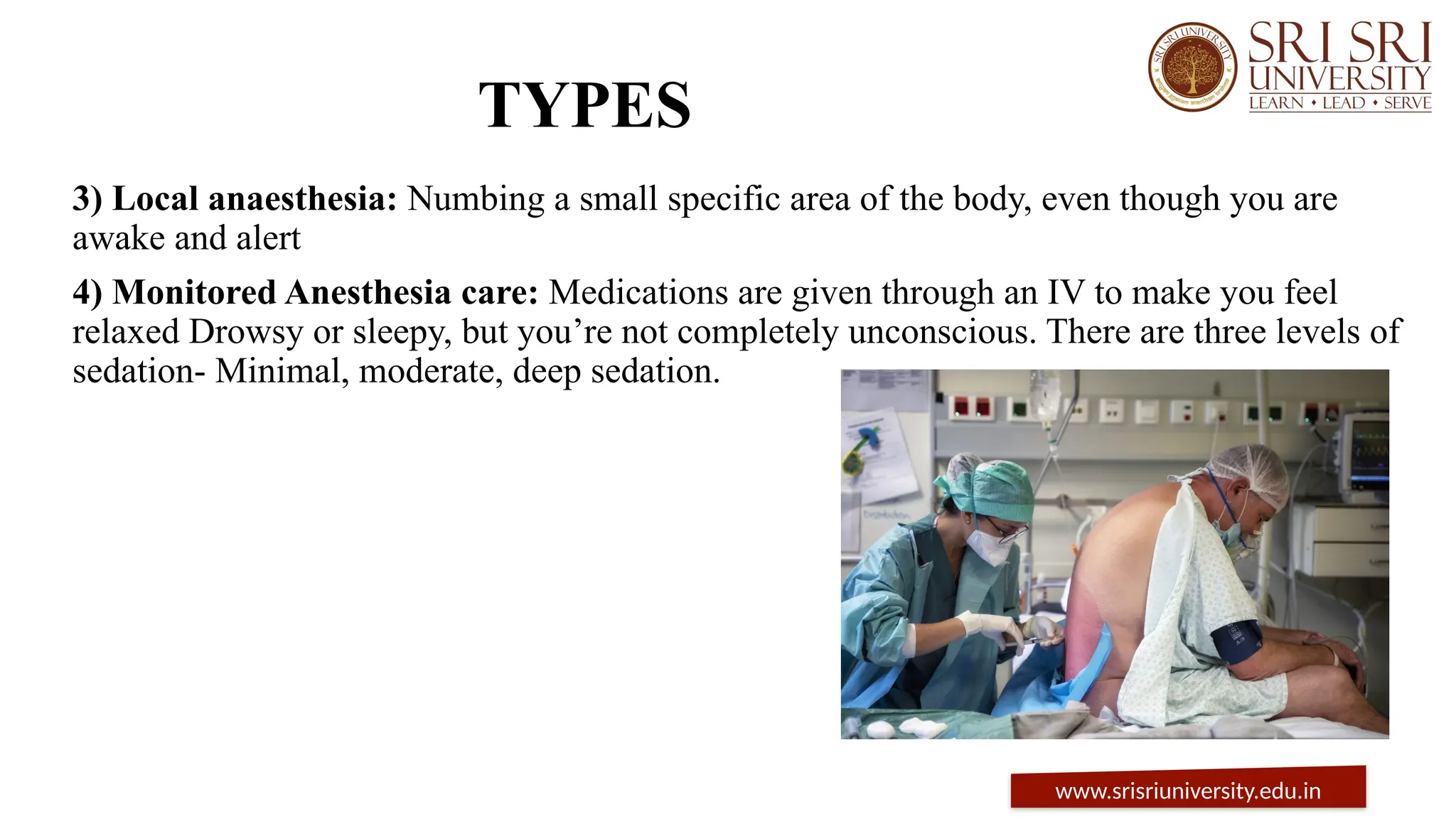
4) Monitored Anesthesia care: Medications are given through an IV to make you feel
relaxed Drowsy or sleepy, but you’re not completely unconscious. There are three levels of
sedation- Minimal, moderate, deep sedation.
www.srisriuniversity.edu.in
7.
METHODS OF ADMINISTRATION
Anesthesiacan be administered in various ways, depending on the type of anesthesia required
(local, regional, general, or sedation), the procedure being performed, and the patient's
individual health and preferences.
1. Inhalation (Breathing Gas): Anesthetic gases are mixed with oxygen and inhaled through a
mask placed over the nose and mouth, or through a breathing tube inserted into the
windpipe after the patient is asleep. (Nitrous oxide)
2. Intravenous Injection: Medications are injected directly into a vein, typically in the arm or
hand, through an IV line. (Thiopentone sodium, benzodiazepines)
3. Injections (Local and Regional Block): A local anesthetic (numbing medication) is injected
directly into specific tissues or around nerves.
4. Topical Application: Anesthetic medications are applied directly to the surface of the skin
or mucous membranes.
www.srisriuniversity.edu.in
8.
EFFECTS OF ANESTHESIA
1.General Anesthesia: Loss of consciousness, amnesia, analgesia, muscle relaxation,
areflexia. Along with these some common short term side effects like nausea and
vomiting, sore throat, drowsiness, chills, muscle aches, Headache, dizziness, itching.
Serious potential effects like dental injury, malignant hyperthermia, Cardiovascular
events, breathing complications, delirium and Nerve damage.
2. Regional Anesthesia: Numbness, paralysis, pain relief. Some Common Short side
effects like pain, headache, Itching, difficulty urinating, tingling sensations. Serious
Potential effects like nerve damage, infection, hematoma, hypotension.
3. Local Anesthesia: localized Numbness, some common side effects like discomfort,
soreness at the injection site, dizziness, headache and blurred vision. Serious effects likw
allergic reaction, systemic toxicity
4. Sedation: relaxation and drowsiness, amnesia, pain control. Some common side effects
like drowsiness, nausea, slurred speech, bradycardia, hypotension
www.srisriuniversity.edu.in
9.
STAGES
• The mostwell-known classification system is Guedel's Stages of Anesthesia, developed by
Arthur Guedel in 1937.
Guedel's Four Stages of General Anesthesia:
Stage I: Analgesia or Disorientation (Induction)
Onset: Begins with the administration of anesthetic agents.
Characteristics:
The patient moves from being fully awake to experiencing analgesia (pain relief) and
potentially amnesia (memory loss).
Consciousness is gradually lost.
The patient may still be able to respond to commands, feel drowsy, and experience a
"dream-like" state.
Breathing is typically regular and slow.
End: Marked by the loss of consciousness.
www.srisriuniversity.edu.in
10.
CONT.
Stage II: Excitementor Delirium
Onset: From the loss of consciousness to the onset of automatic (regular) breathing.
Characteristics: This is often considered a dangerous or undesirable stage in modern anesthesia
due to:
• Excitement and involuntary movements: Patients may struggle, shout, or make
uncontrolled movements (e.g., thrashing, jerking).
• Irregular breathing: Breath-holding, coughing, or irregular respiratory patterns are
common.
• Increased heart rate and blood pressure (tachycardia and hypertension): Due to
sympathetic nervous system stimulation.
• Risk of complications: Airway reflexes are still present and hypersensitive, increasing the
risk of laryngospasm (vocal cord spasm) or vomiting and aspiration (inhaling stomach
contents into the lungs).
• Eyelash reflex disappears.
Goal in modern practice: Anesthesiologists aim to pass through this stage as rapidly as possible
using fast-acting induction agents (like Propofol) to minimize risks.
www.srisriuniversity.edu.in
11.
CONT.
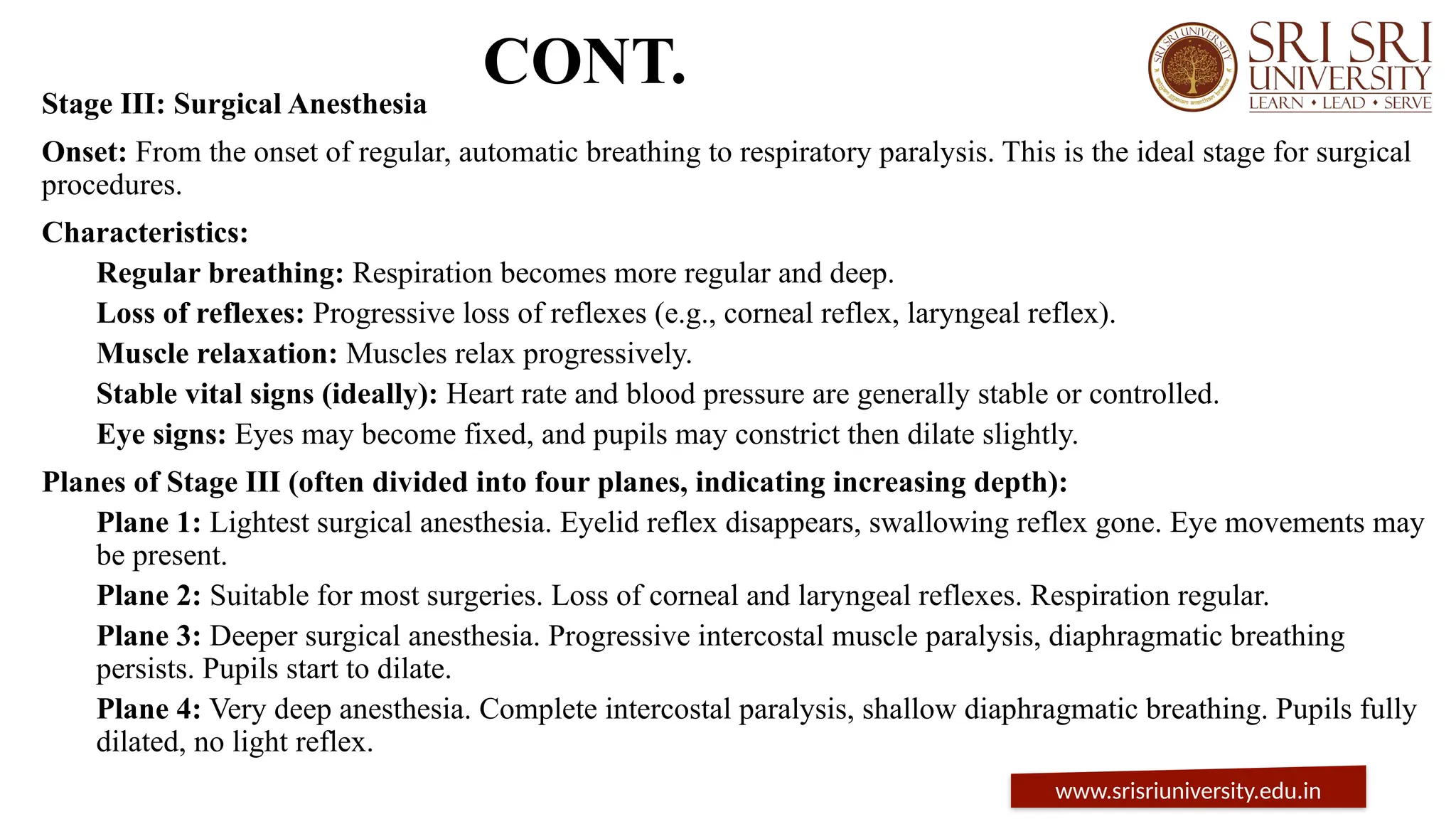
Stage III: SurgicalAnesthesia
Onset: From the onset of regular, automatic breathing to respiratory paralysis. This is the ideal stage for surgical
procedures.
Characteristics:
Regular breathing: Respiration becomes more regular and deep.
Loss of reflexes: Progressive loss of reflexes (e.g., corneal reflex, laryngeal reflex).
Muscle relaxation: Muscles relax progressively.
Stable vital signs (ideally): Heart rate and blood pressure are generally stable or controlled.
Eye signs: Eyes may become fixed, and pupils may constrict then dilate slightly.
Planes of Stage III (often divided into four planes, indicating increasing depth):
Plane 1: Lightest surgical anesthesia. Eyelid reflex disappears, swallowing reflex gone. Eye movements may
be present.
Plane 2: Suitable for most surgeries. Loss of corneal and laryngeal reflexes. Respiration regular.
Plane 3: Deeper surgical anesthesia. Progressive intercostal muscle paralysis, diaphragmatic breathing
persists. Pupils start to dilate.
Plane 4: Very deep anesthesia. Complete intercostal paralysis, shallow diaphragmatic breathing. Pupils fully
dilated, no light reflex.
www.srisriuniversity.edu.in
12.
CONT.
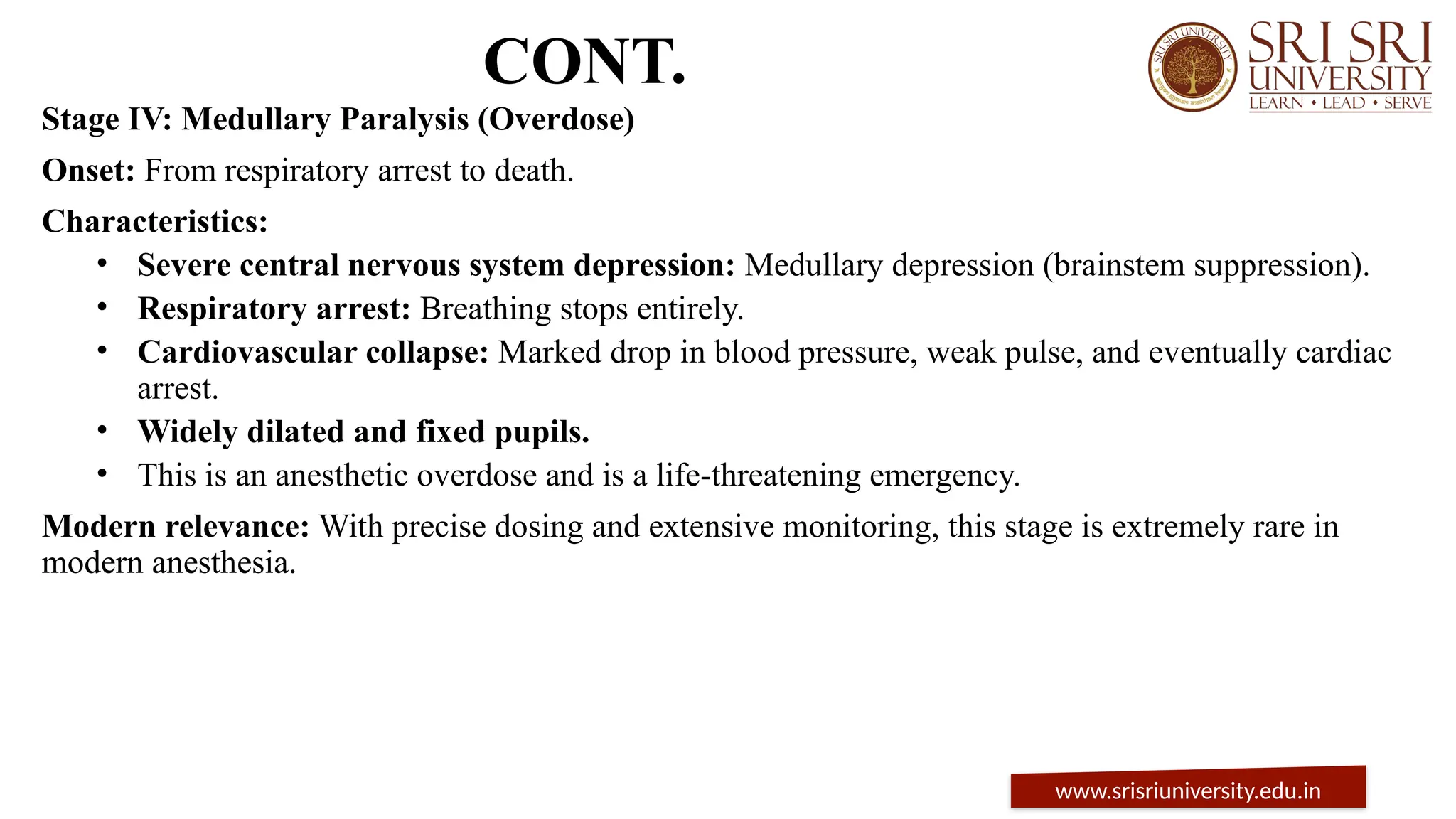
Stage IV: MedullaryParalysis (Overdose)
Onset: From respiratory arrest to death.
Characteristics:
• Severe central nervous system depression: Medullary depression (brainstem suppression).
• Respiratory arrest: Breathing stops entirely.
• Cardiovascular collapse: Marked drop in blood pressure, weak pulse, and eventually cardiac
arrest.
• Widely dilated and fixed pupils.
• This is an anesthetic overdose and is a life-threatening emergency.
Modern relevance: With precise dosing and extensive monitoring, this stage is extremely rare in
modern anesthesia.
www.srisriuniversity.edu.in
13.
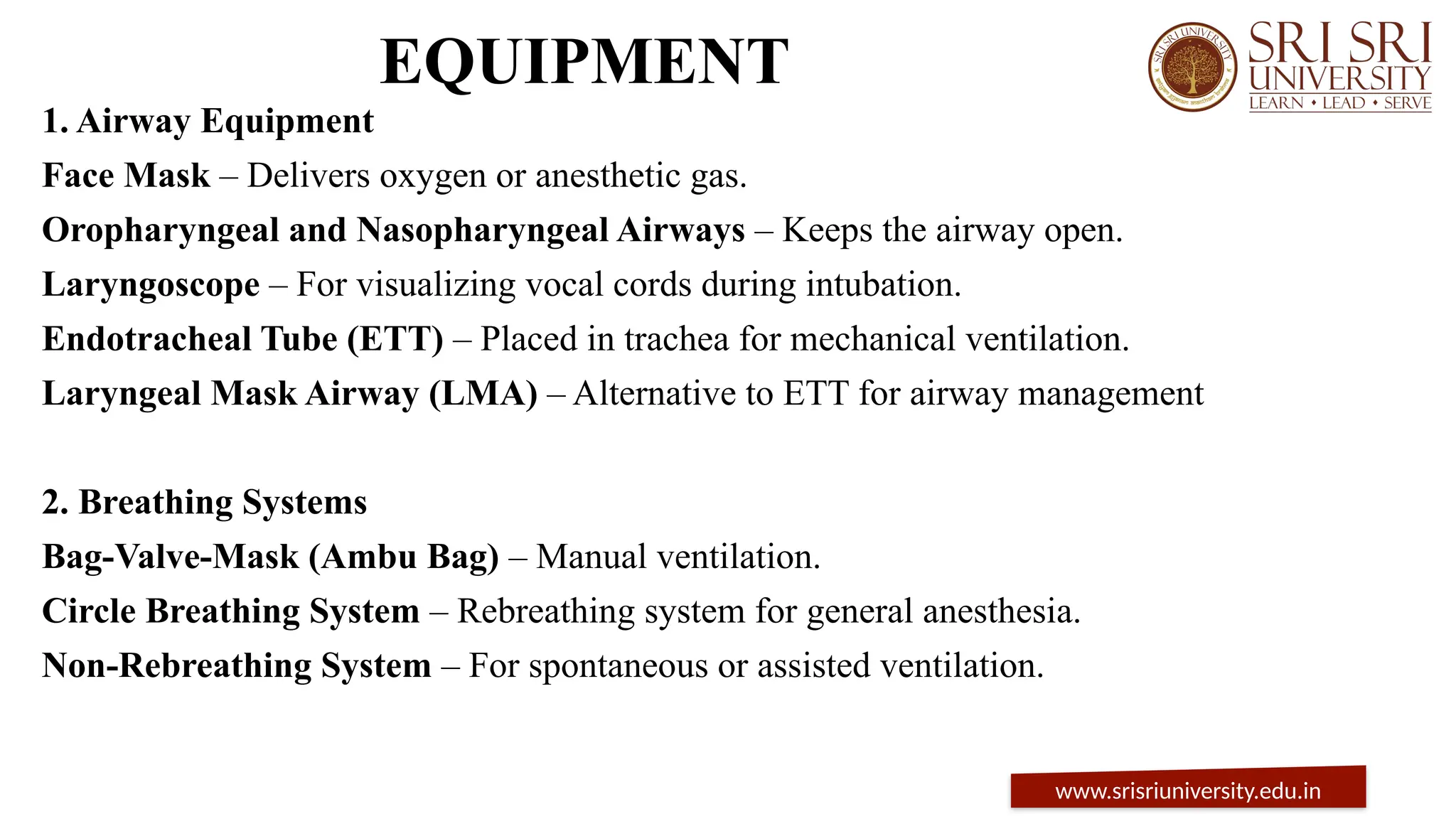
EQUIPMENT
1. Airway Equipment
FaceMask – Delivers oxygen or anesthetic gas.
Oropharyngeal and Nasopharyngeal Airways – Keeps the airway open.
Laryngoscope – For visualizing vocal cords during intubation.
Endotracheal Tube (ETT) – Placed in trachea for mechanical ventilation.
Laryngeal Mask Airway (LMA) – Alternative to ETT for airway management
2. Breathing Systems
Bag-Valve-Mask (Ambu Bag) – Manual ventilation.
Circle Breathing System – Rebreathing system for general anesthesia.
Non-Rebreathing System – For spontaneous or assisted ventilation.
www.srisriuniversity.edu.in
14.
EQUIPMENT
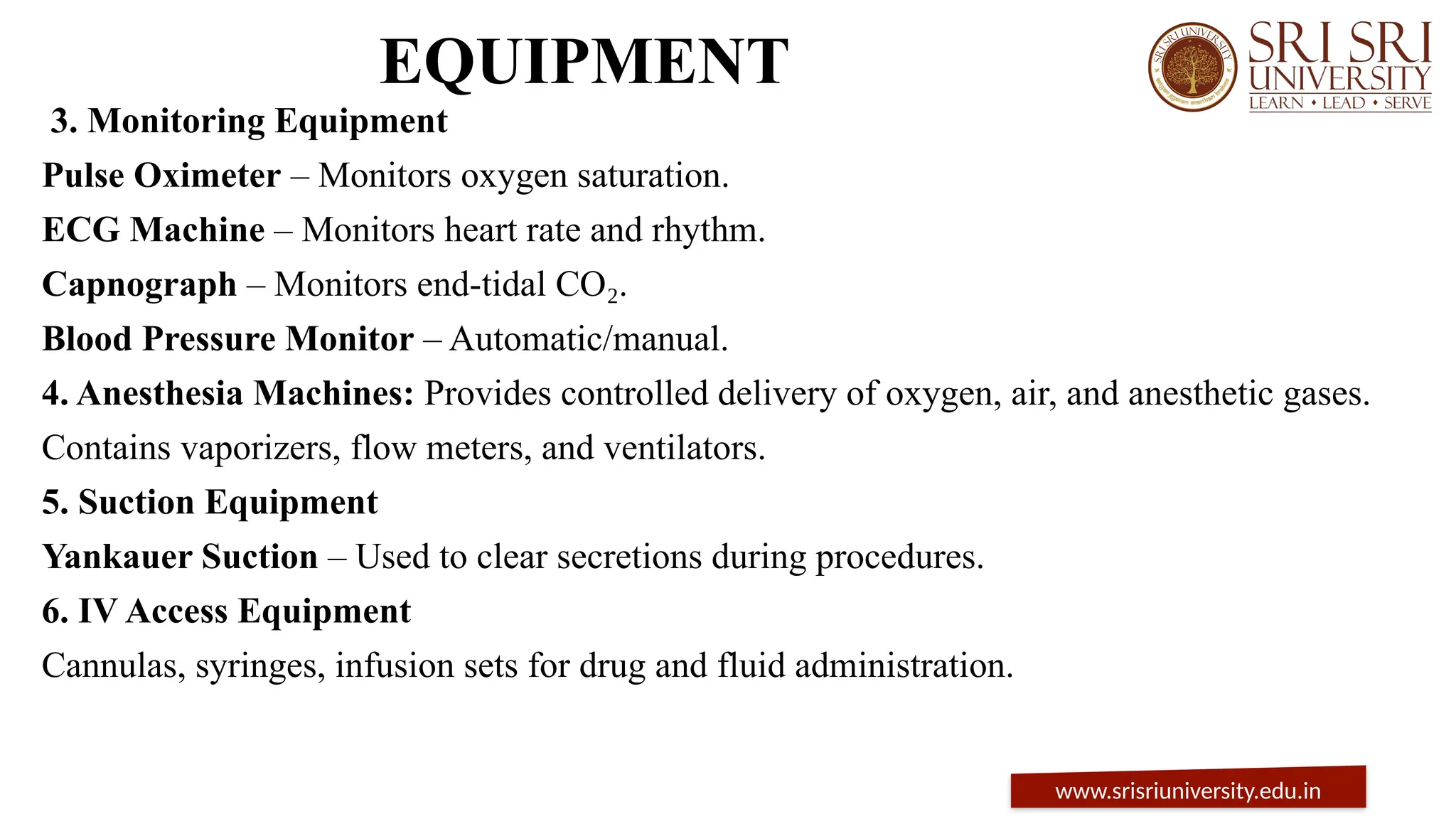
3. Monitoring Equipment
PulseOximeter – Monitors oxygen saturation.
ECG Machine – Monitors heart rate and rhythm.
Capnograph – Monitors end-tidal CO .
₂
Blood Pressure Monitor – Automatic/manual.
4. Anesthesia Machines: Provides controlled delivery of oxygen, air, and anesthetic gases.
Contains vaporizers, flow meters, and ventilators.
5. Suction Equipment
Yankauer Suction – Used to clear secretions during procedures.
6. IV Access Equipment
Cannulas, syringes, infusion sets for drug and fluid administration.
www.srisriuniversity.edu.in
15.
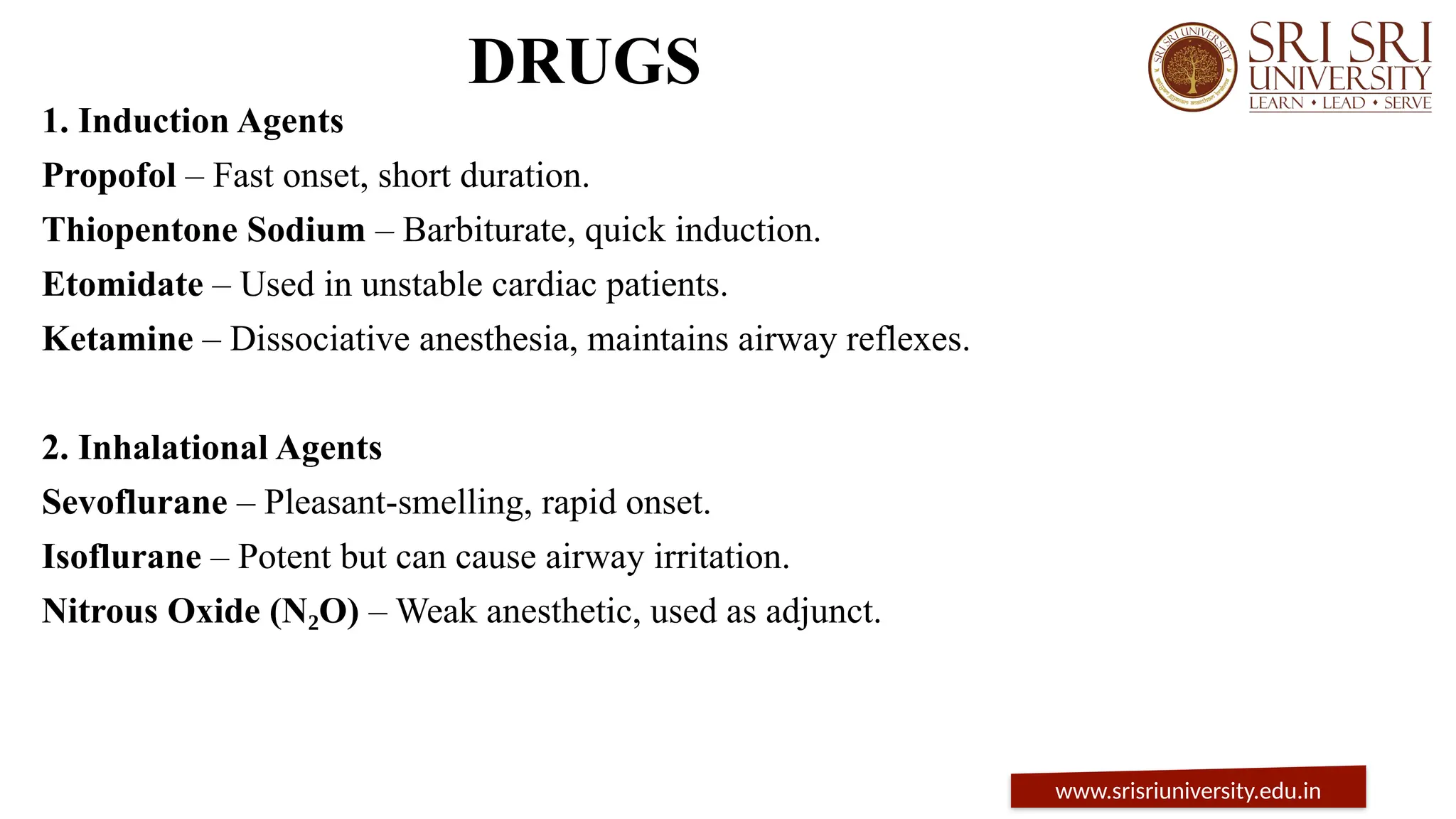
DRUGS
1. Induction Agents
Propofol– Fast onset, short duration.
Thiopentone Sodium – Barbiturate, quick induction.
Etomidate – Used in unstable cardiac patients.
Ketamine – Dissociative anesthesia, maintains airway reflexes.
2. Inhalational Agents
Sevoflurane – Pleasant-smelling, rapid onset.
Isoflurane – Potent but can cause airway irritation.
Nitrous Oxide (N O)
₂ – Weak anesthetic, used as adjunct.
www.srisriuniversity.edu.in
16.
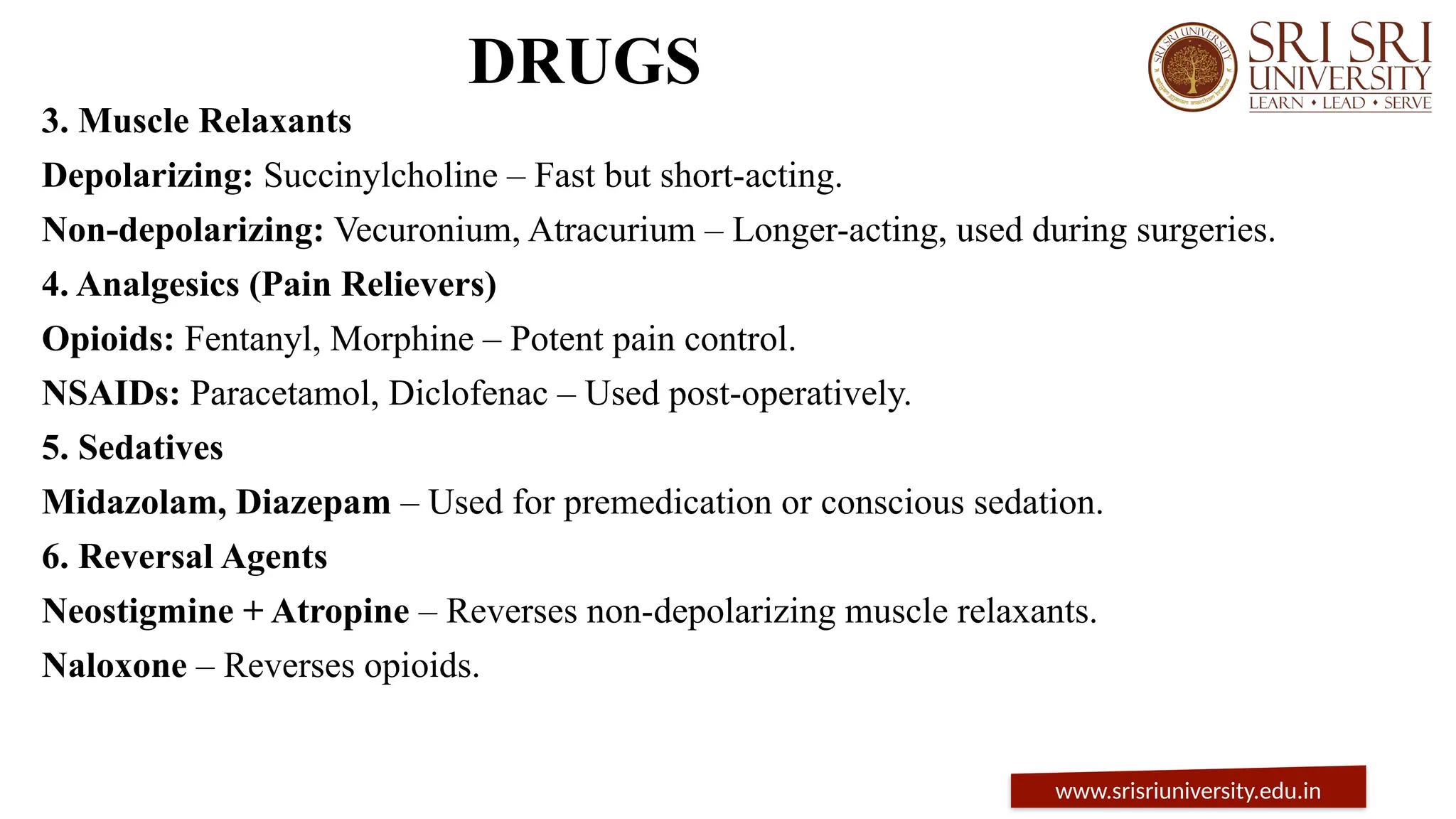
DRUGS
3. Muscle Relaxants
Depolarizing:Succinylcholine – Fast but short-acting.
Non-depolarizing: Vecuronium, Atracurium – Longer-acting, used during surgeries.
4. Analgesics (Pain Relievers)
Opioids: Fentanyl, Morphine – Potent pain control.
NSAIDs: Paracetamol, Diclofenac – Used post-operatively.
5. Sedatives
Midazolam, Diazepam – Used for premedication or conscious sedation.
6. Reversal Agents
Neostigmine + Atropine – Reverses non-depolarizing muscle relaxants.
Naloxone – Reverses opioids.
www.srisriuniversity.edu.in