
 DEFINITION: loss of sensation
 TYPES: General anesthesia
Retinol anesthesia
Local anesthesia
 Anesthesia may induce temporary loss of
sensation or awareness
 It may categorized as :-
 analgesia (relief from or prevention of pain)
 paralysis(muscle relaxation)
 amnesia (loss of memory)
or unconsciousness.
 A patient under the effects
of anesthetic drugs is referred to as
being anesthetized.
 General anesthesia suppresses central
nervous system.
 Regional anesthesia and local anesthesia,
which block transmission of nerve impulses
between a targeted part of the body.
MAIN PURPOSE OF ANESTHESIA
 Hypnosis (temporary loss of consciousness)
 Analgesia(lack of sensation)
 muscle relaxation
 General anesthetics can affect all of the
endpoints.
 Whereas local/regional anesthetics
affect the endpoints differently.
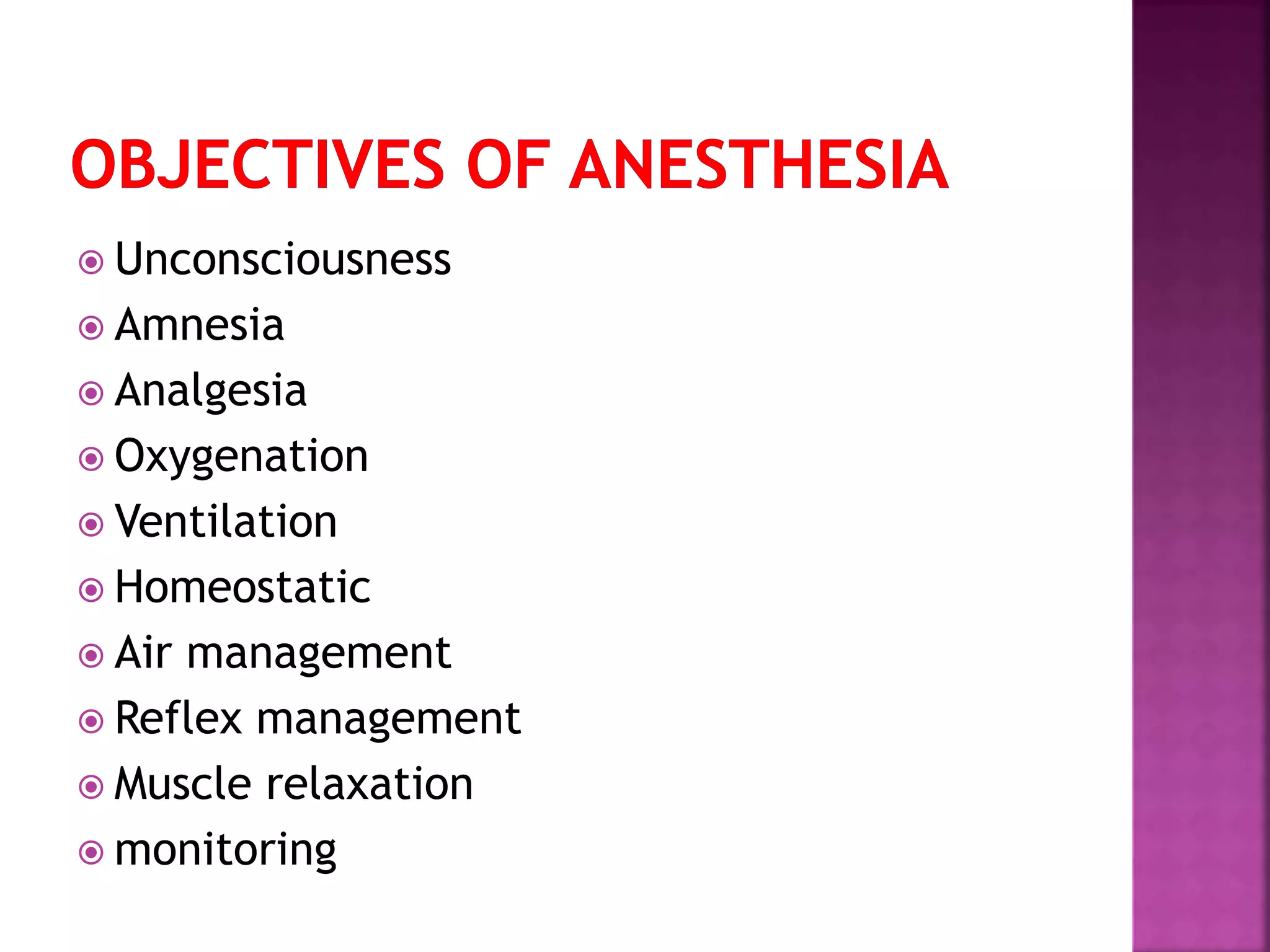
 Unconsciousness
 Amnesia
 Analgesia
 Oxygenation
 Ventilation
 Homeostatic
 Air management
 Reflex management
 Muscle relaxation
 monitoring
 INTRAVENOUS DRUGS:-
 Thiopentone
 Propofol
 Others like:-
etomidate,benzodiazepines,ketamine.
 INHALATIONAL DRUGS:-
 NITROUS OXIDE
 ISOFLURANE
 SEVOFLURANE
 DESFLURANE
 HALOTHANE
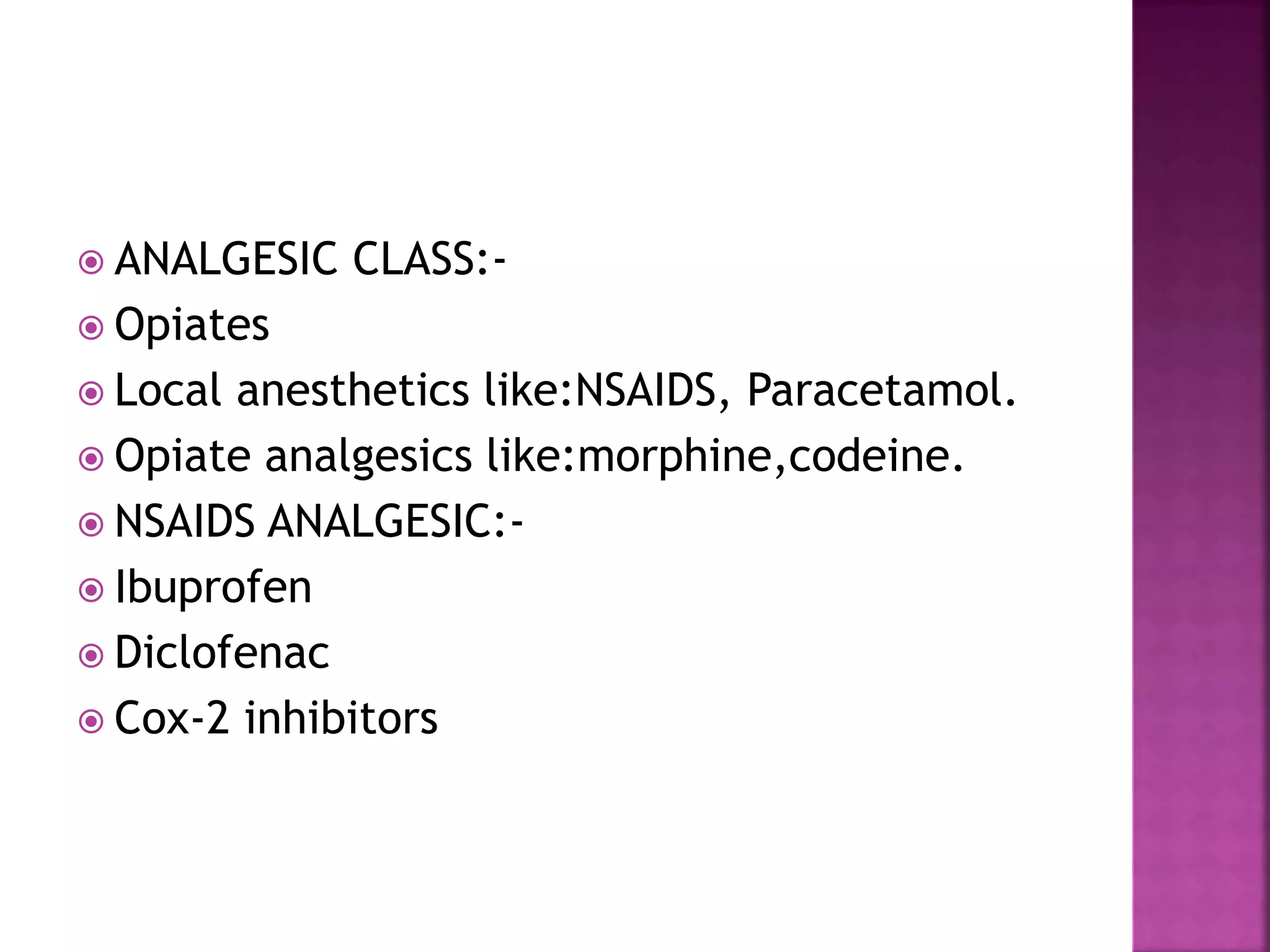
 ANALGESIC CLASS:-
 Opiates
 Local anesthetics like:NSAIDS, Paracetamol.
 Opiate analgesics like:morphine,codeine.
 NSAIDS ANALGESIC:-
 Ibuprofen
 Diclofenac
 Cox-2 inhibitors
 Muscle relaxant anesthesia drugs like:-
 Suxmethonium
 Tracurium
 LOCAL ANESTHESIA
ex:lignocaine,bupivacaine, prilocaine
 Effective alternative to general anesthesia
 Avoids polypharmacy
 Allergic reactions
 Patient can remain awake
 LIMITED SCOPE
 HIGHER FAILURE RATE
 RISK OF NEURAL INJURY
 In coding it classified as:-
 Spinal anesthesia
 Epidural anesthesia
 Nerve block anesthesia
 Time of anesthesia is calculated in units
 Each 15 minutes=I unit
 Time starts from preparing the patient for
the induction of anesthesia in OP room and
ends when the patient may be safely placed
under postoperative supervision
 Depending upon the type of services codes
are listed in E/M services
 special services are listed in medicine
 Multiple procedures under single anesthetic
administration code represents most complex
procedure.
 Range of anesthesia code 00100-01999 plus
addition of physical state modifier.
 The use of other optional modifiers may be
appropriate
 Based on (ASA)
 P1:a normal healthy patient
 P2 :a patient with mild systemic disease
 P3:a patient with severe systemic disease
 P4:a patient with severe systemic disease
that is a constant threat to life
 P5:a moribund(hospitalized)patient who is
not expected to survive without the
operation
 p6:a declared brain-dead patient whose
organs are being removed for donor purposes
 AA: anesthesia given by anesthelogist.
 CRNA: certified registered nurse
anesthelogist
 SRNA:student registered nurse anesthetist
 MAC:monitored anesthesia care
 AD:medical super vision by a physician more
than 4 concurrent anesthesia procedures
 QK:medical direction of 2,3,or 4 concurrent
anesthesia procedures.
 QY:medical direction of 1 crna by
anesthesiologist.
 QX:crna service with medical direction by
anesthesiologist
 QZ:crna services without medical direction
by anesthesiologist
 QS:MAC services
 G8: monitored anesthesia by deep complex,
complicated(or)marketly invasive surgical
procedure
 G9:MAC for a patient who has the history of
severe cardiopulmonary condition
 https://www.medesunglobal.com
THANK YOU

Anesthesia CPT Coding 2017

  • 2.
     DEFINITION: lossof sensation  TYPES: General anesthesia Retinol anesthesia Local anesthesia
  • 3.
     Anesthesia mayinduce temporary loss of sensation or awareness  It may categorized as :-  analgesia (relief from or prevention of pain)  paralysis(muscle relaxation)  amnesia (loss of memory) or unconsciousness.
  • 4.
     A patientunder the effects of anesthetic drugs is referred to as being anesthetized.  General anesthesia suppresses central nervous system.  Regional anesthesia and local anesthesia, which block transmission of nerve impulses between a targeted part of the body.
  • 5.
    MAIN PURPOSE OFANESTHESIA  Hypnosis (temporary loss of consciousness)  Analgesia(lack of sensation)  muscle relaxation
  • 6.
     General anestheticscan affect all of the endpoints.  Whereas local/regional anesthetics affect the endpoints differently.
  • 7.
     Unconsciousness  Amnesia Analgesia  Oxygenation  Ventilation  Homeostatic  Air management  Reflex management  Muscle relaxation  monitoring
  • 8.
     INTRAVENOUS DRUGS:- Thiopentone  Propofol  Others like:- etomidate,benzodiazepines,ketamine.
  • 9.
     INHALATIONAL DRUGS:- NITROUS OXIDE  ISOFLURANE  SEVOFLURANE  DESFLURANE  HALOTHANE
  • 10.
     ANALGESIC CLASS:- Opiates  Local anesthetics like:NSAIDS, Paracetamol.  Opiate analgesics like:morphine,codeine.  NSAIDS ANALGESIC:-  Ibuprofen  Diclofenac  Cox-2 inhibitors
  • 11.
     Muscle relaxantanesthesia drugs like:-  Suxmethonium  Tracurium  LOCAL ANESTHESIA ex:lignocaine,bupivacaine, prilocaine
  • 12.
     Effective alternativeto general anesthesia  Avoids polypharmacy  Allergic reactions  Patient can remain awake
  • 13.
     LIMITED SCOPE HIGHER FAILURE RATE  RISK OF NEURAL INJURY
  • 14.
     In codingit classified as:-  Spinal anesthesia  Epidural anesthesia  Nerve block anesthesia  Time of anesthesia is calculated in units  Each 15 minutes=I unit
  • 15.
     Time startsfrom preparing the patient for the induction of anesthesia in OP room and ends when the patient may be safely placed under postoperative supervision  Depending upon the type of services codes are listed in E/M services  special services are listed in medicine
  • 16.
     Multiple proceduresunder single anesthetic administration code represents most complex procedure.  Range of anesthesia code 00100-01999 plus addition of physical state modifier.  The use of other optional modifiers may be appropriate
  • 17.
     Based on(ASA)  P1:a normal healthy patient  P2 :a patient with mild systemic disease  P3:a patient with severe systemic disease  P4:a patient with severe systemic disease that is a constant threat to life  P5:a moribund(hospitalized)patient who is not expected to survive without the operation  p6:a declared brain-dead patient whose organs are being removed for donor purposes
  • 18.
     AA: anesthesiagiven by anesthelogist.  CRNA: certified registered nurse anesthelogist  SRNA:student registered nurse anesthetist  MAC:monitored anesthesia care  AD:medical super vision by a physician more than 4 concurrent anesthesia procedures
  • 19.
     QK:medical directionof 2,3,or 4 concurrent anesthesia procedures.  QY:medical direction of 1 crna by anesthesiologist.  QX:crna service with medical direction by anesthesiologist  QZ:crna services without medical direction by anesthesiologist  QS:MAC services
  • 20.
     G8: monitoredanesthesia by deep complex, complicated(or)marketly invasive surgical procedure  G9:MAC for a patient who has the history of severe cardiopulmonary condition  https://www.medesunglobal.com
  • 21.