The Axial Skeleton: The human skeleton is divided into two major subdivisions.  The first of these is: Skull Thoracic Cage Vertebral Column ? Which part is this? Which part is this? Which part is this?
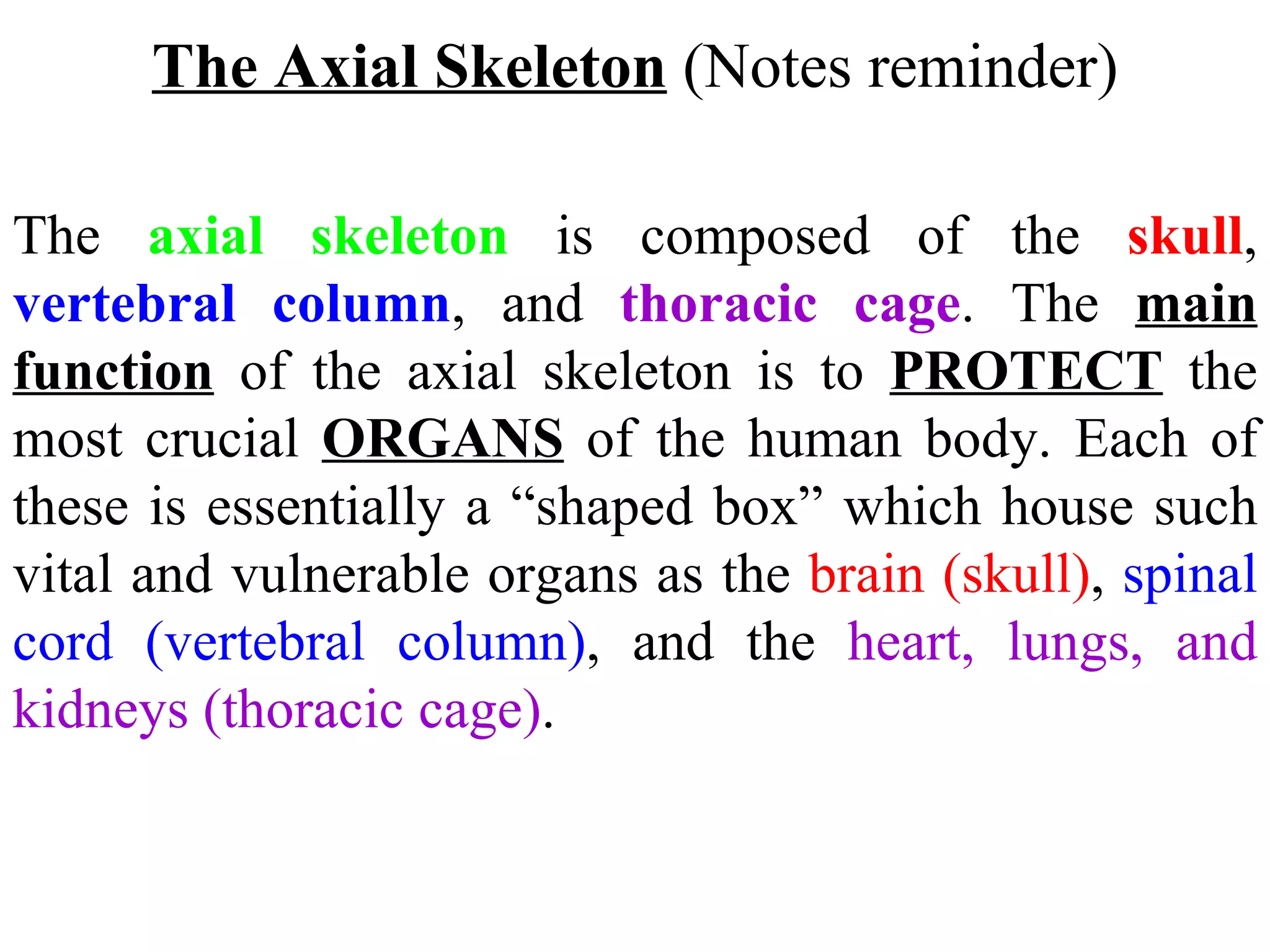
The  axial skeleton  is composed of the  skull ,  vertebral column , and  thoracic cage . The  main   function  of the axial skeleton is to  PROTECT  the most crucial  ORGANS  of the human body. Each of these is essentially a “shaped box” which house such vital and vulnerable organs as the  brain (skull) ,  spinal cord (vertebral column) , and the  heart, lungs, and kidneys (thoracic cage) . The Axial Skeleton  (Notes reminder)
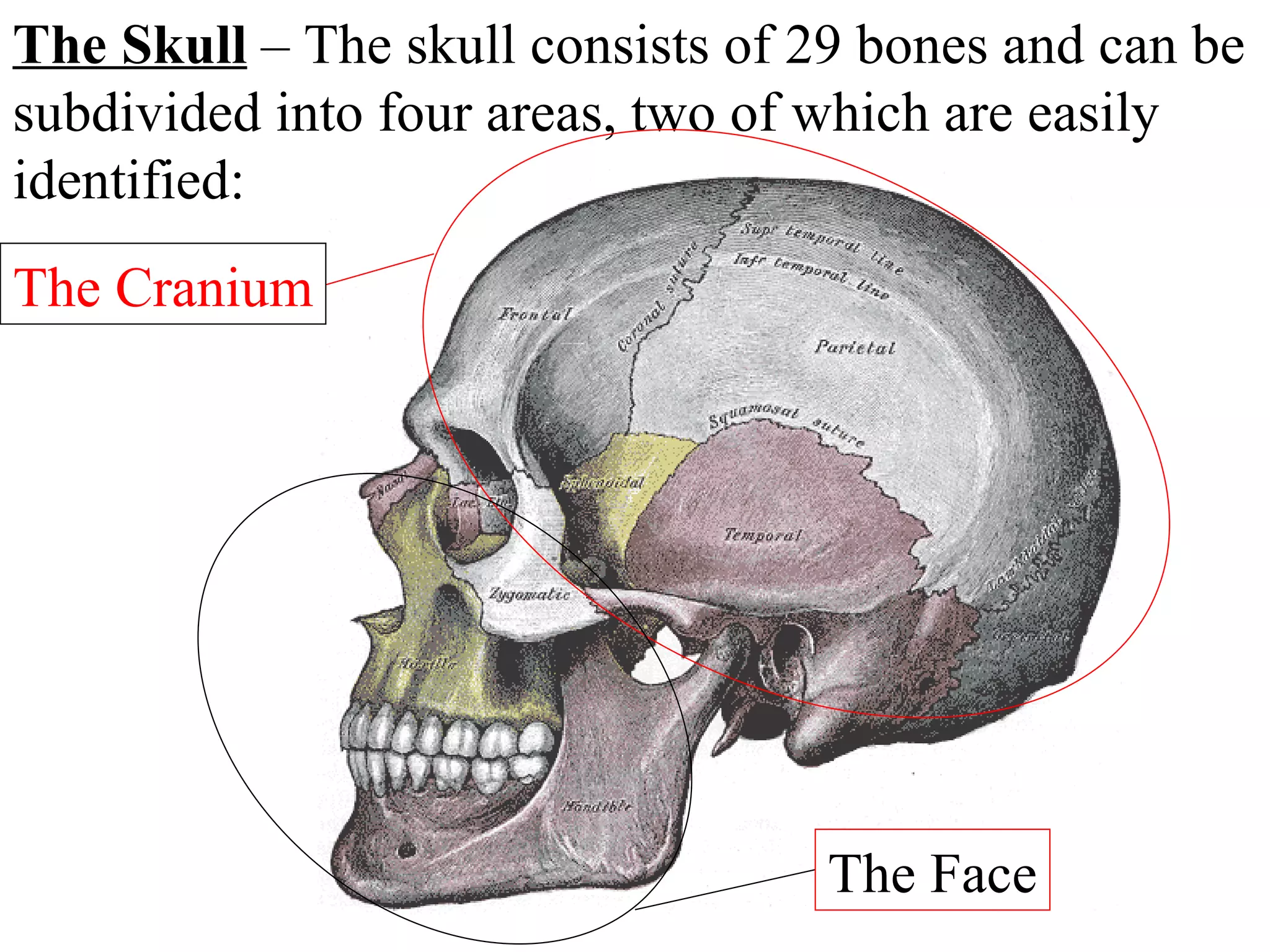
The Skull  – The skull consists of 29 bones and can be subdivided into four areas, two of which are easily identified: The Cranium The Face ? ?
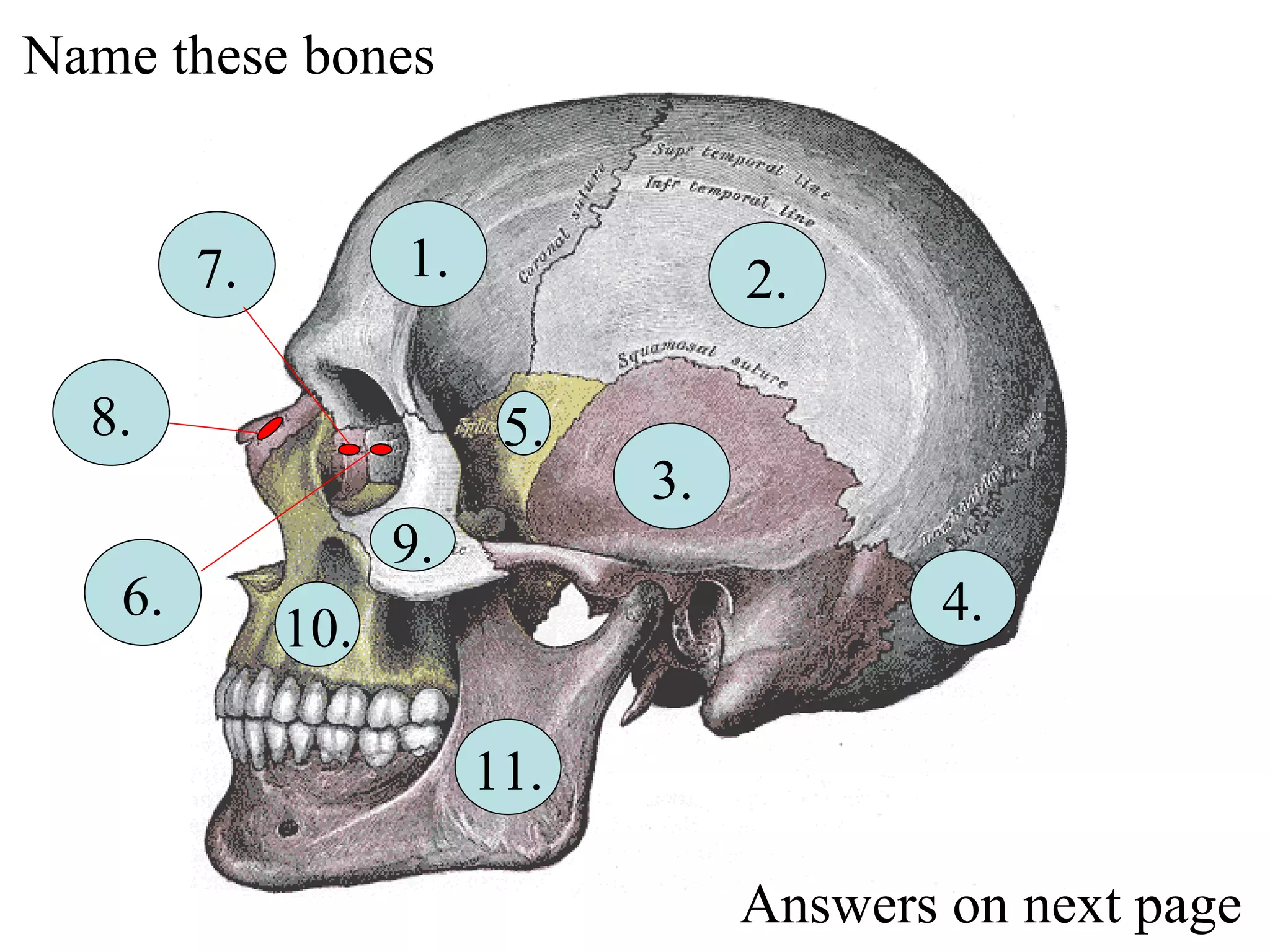
1. 2. 5. 4. 3. 6. 8. 7. 9. 10. 11. Name these bones Answers on next page
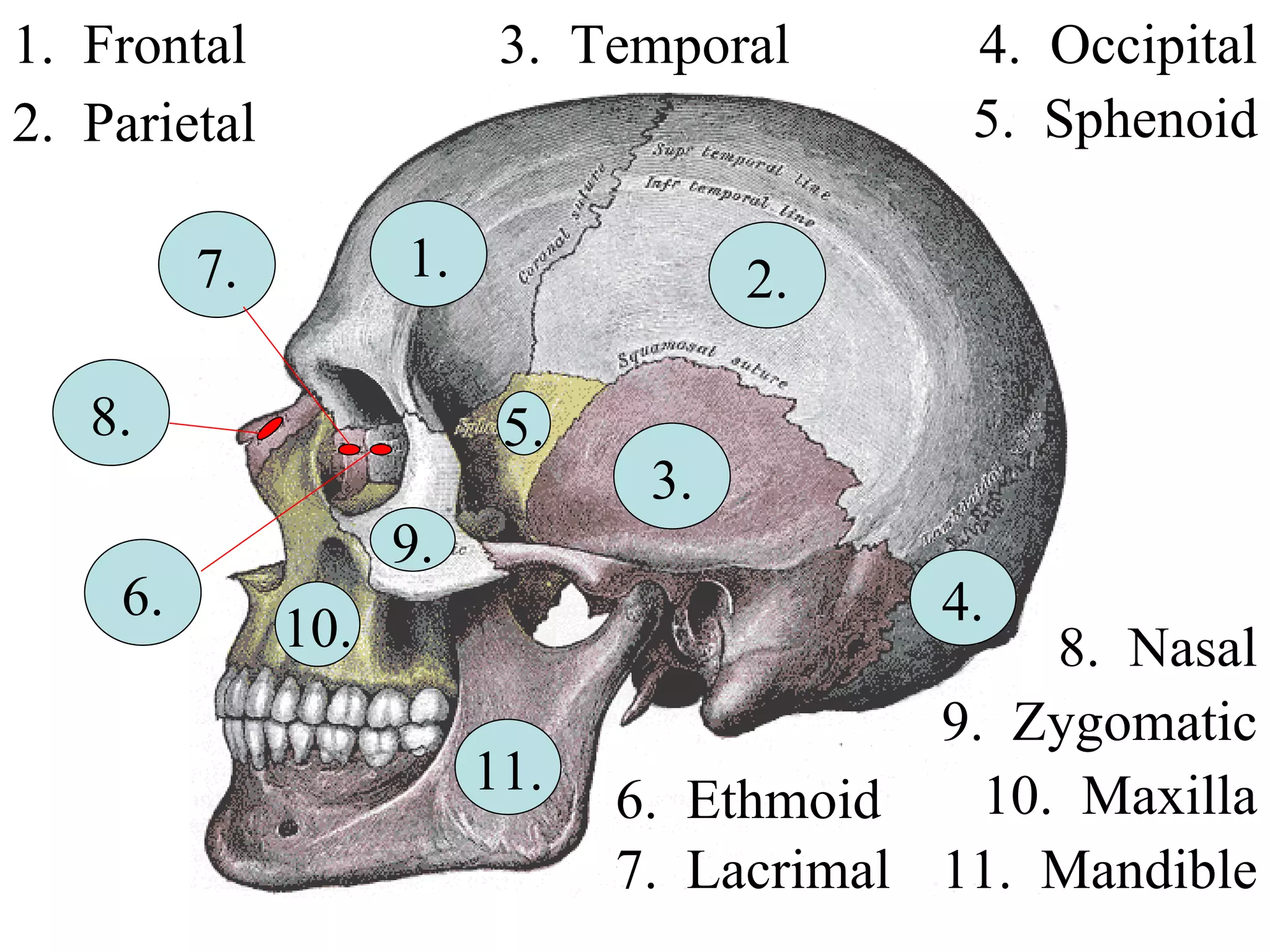
1.  Frontal 2.  Parietal 3.  Temporal 4.  Occipital 5.  Sphenoid 6.  Ethmoid 7.  Lacrimal 8.  Nasal 11.  Mandible 9.  Zygomatic 10.  Maxilla 1. 2. 5. 4. 3. 6. 8. 7. 9. 10. 11.
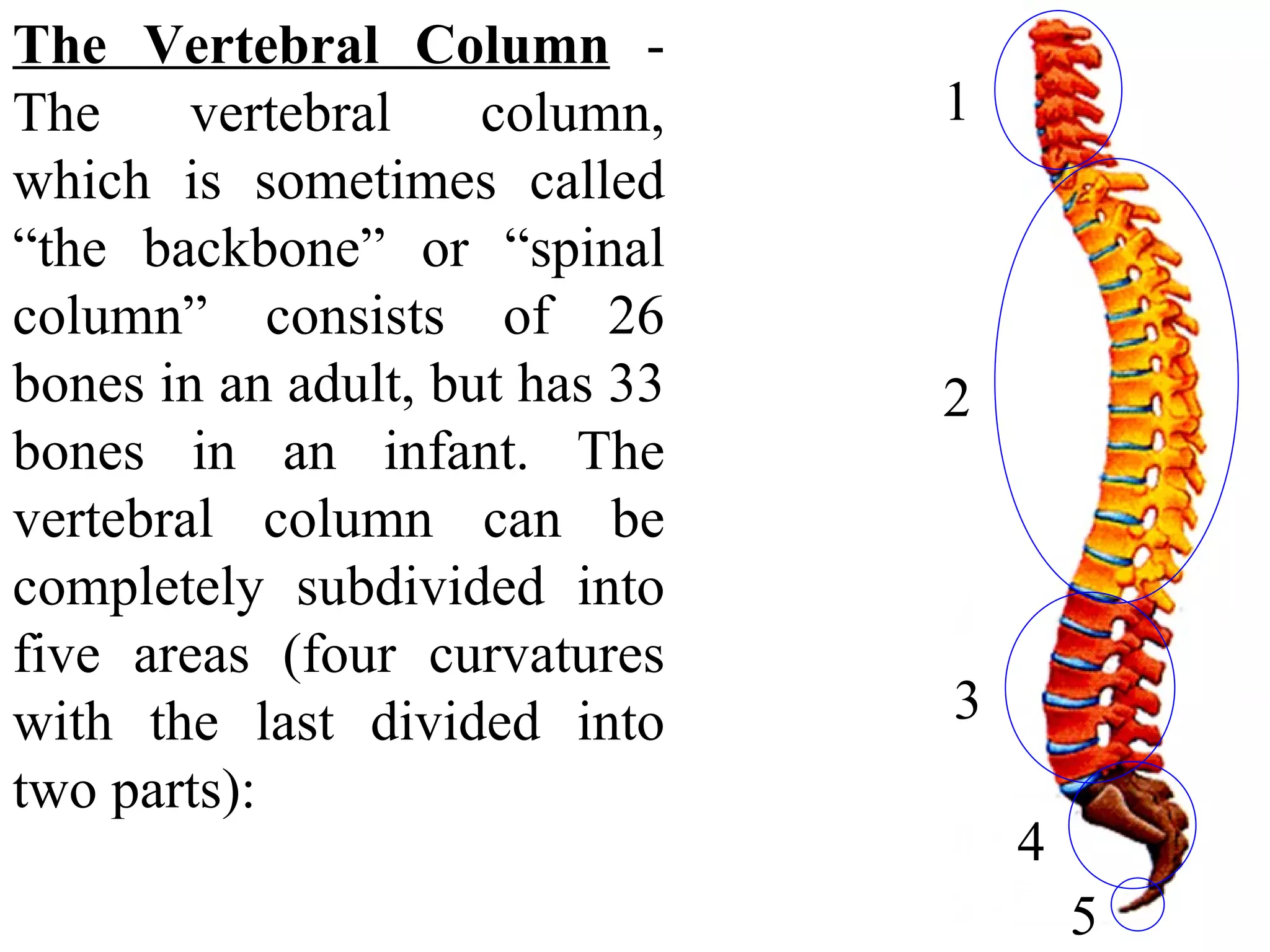
The Vertebral Column  - The vertebral column, which is sometimes called “the backbone” or “spinal column” consists of 26 bones in an adult, but has 33 bones in an infant. The vertebral column can be completely subdivided into five areas (four curvatures with the last divided into two parts): 1 2 3 4 5
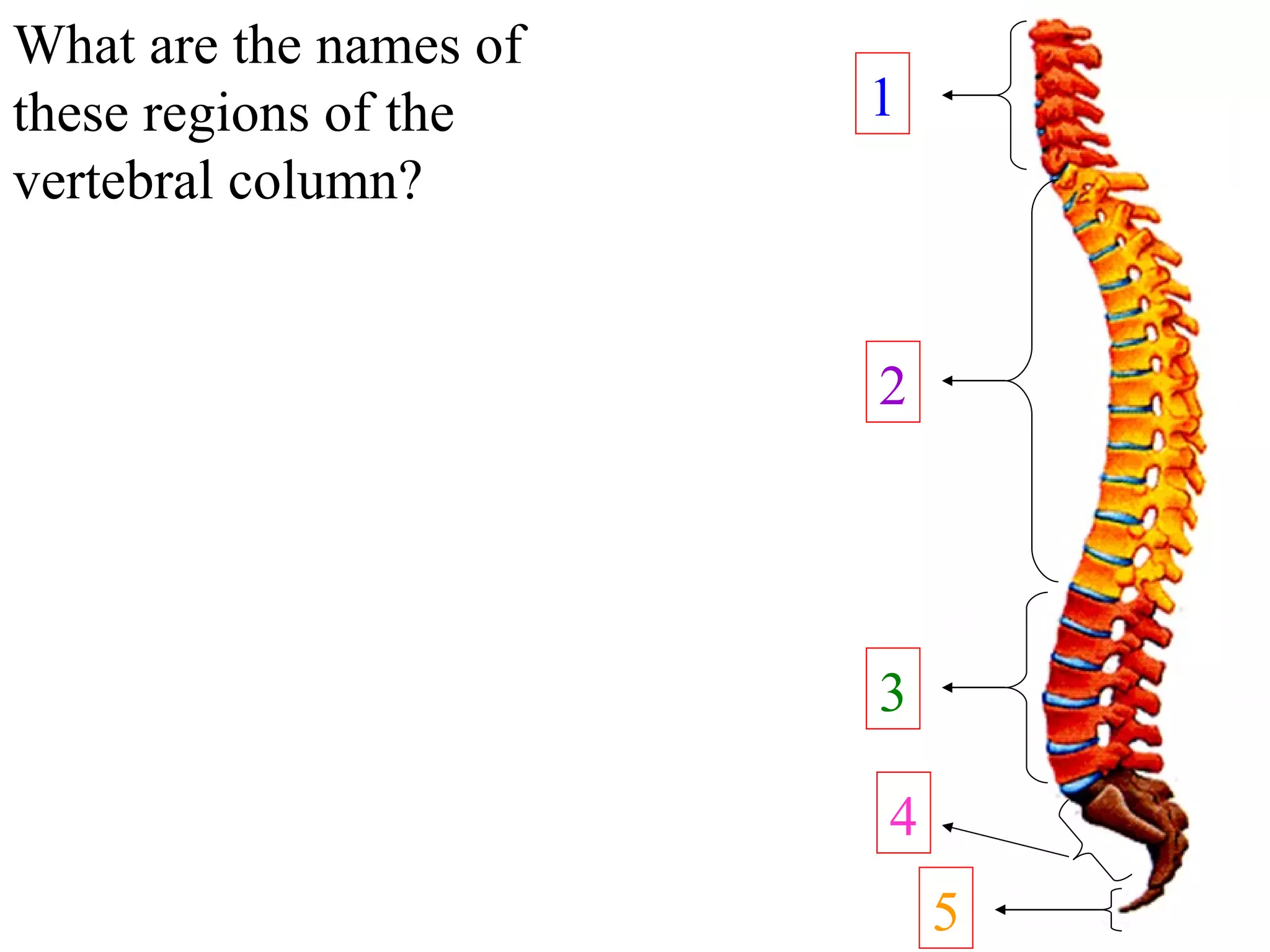
1 2 3 5 4 What are the names of these regions of the vertebral column?
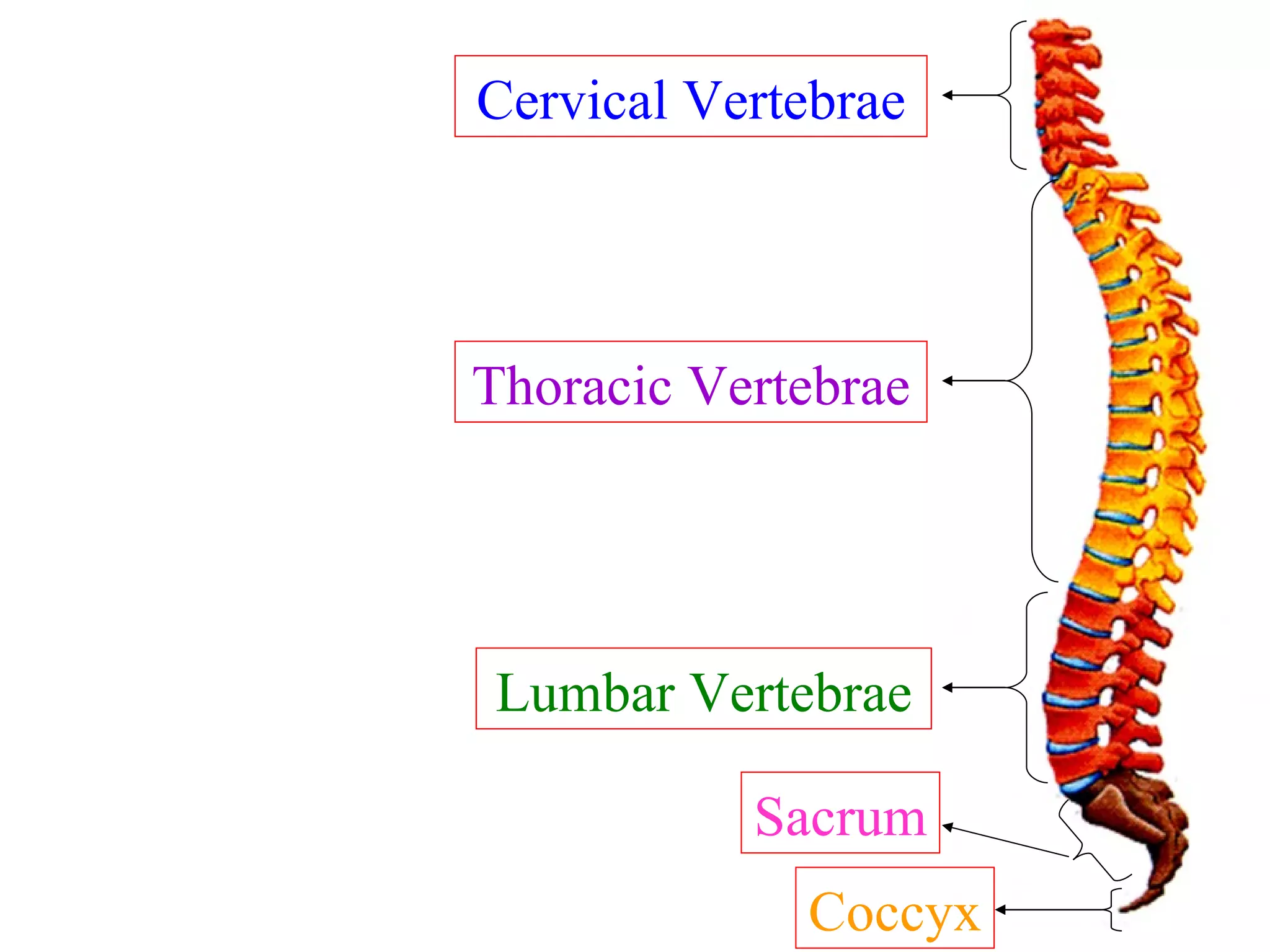
Cervical Vertebrae Thoracic Vertebrae Lumbar Vertebrae Coccyx Sacrum
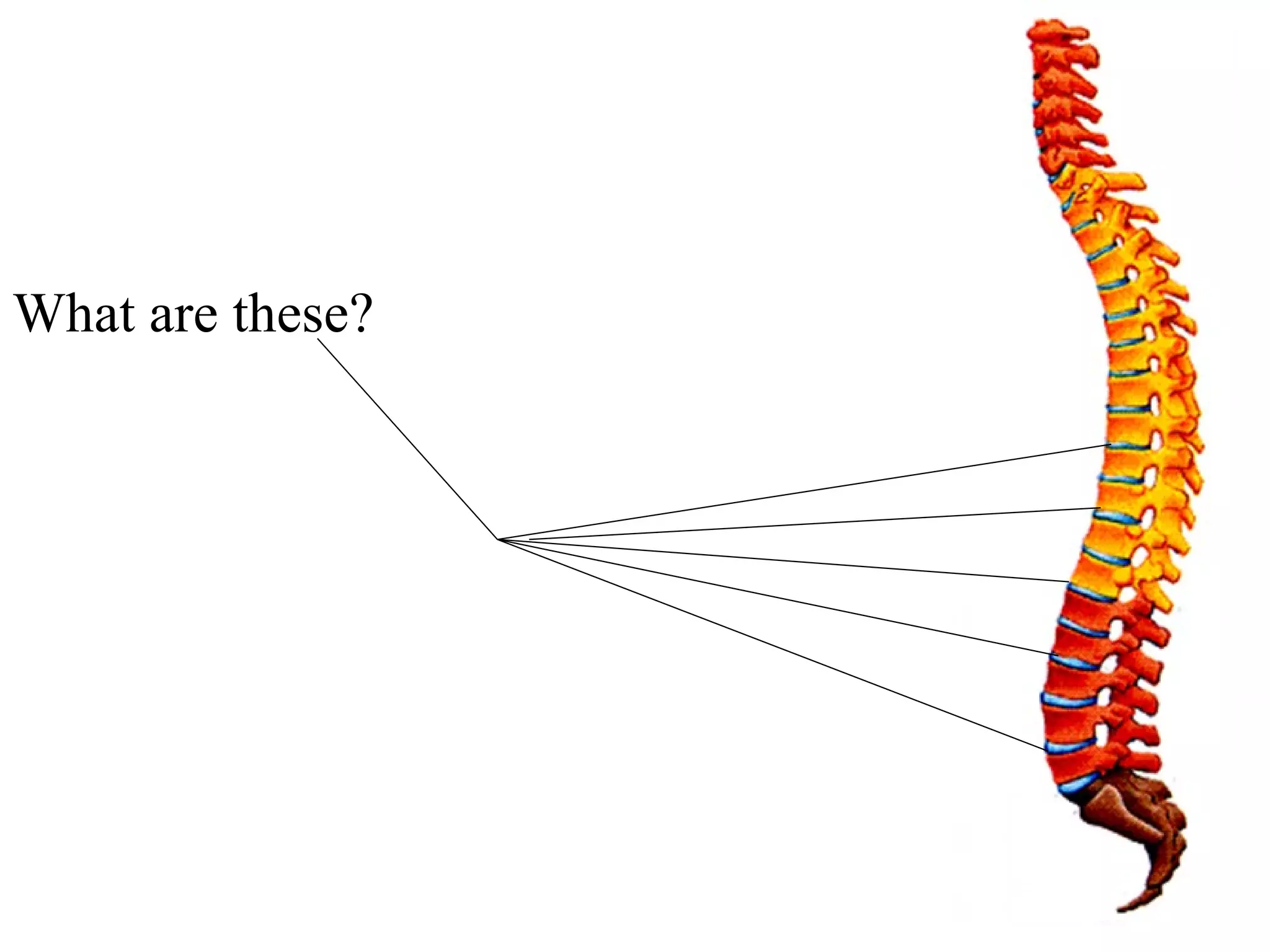
What are these?
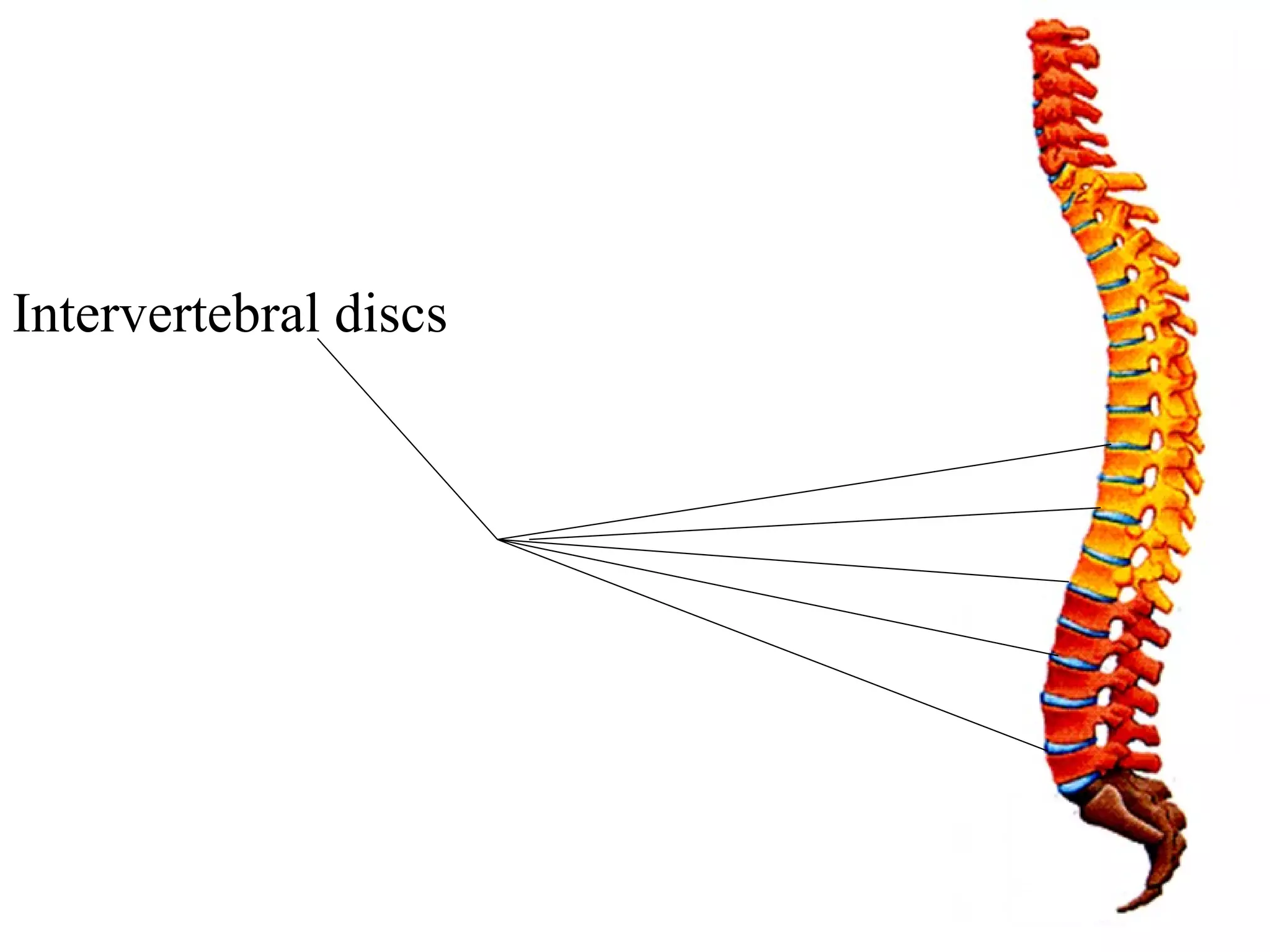
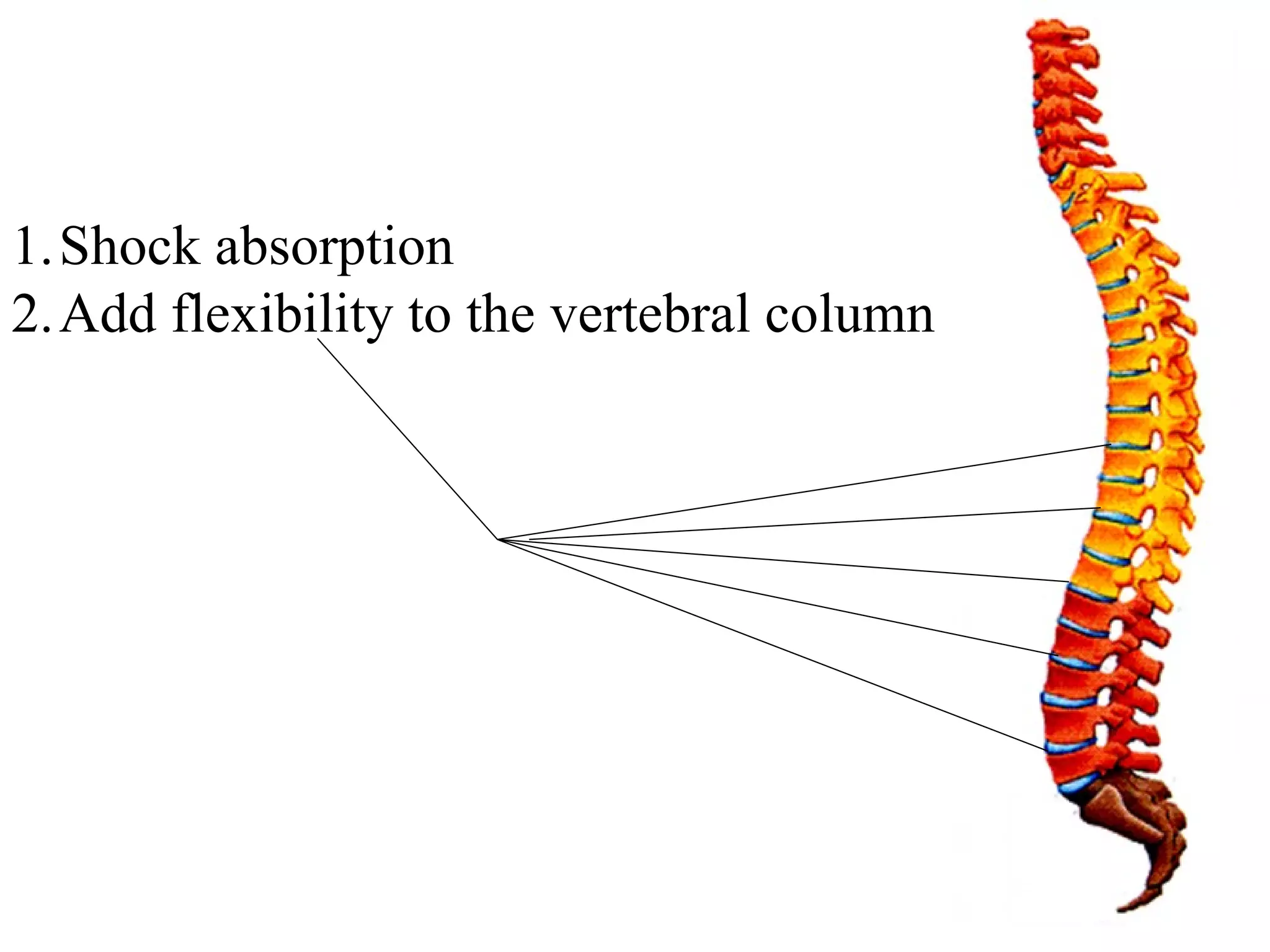
Intervertebral discs
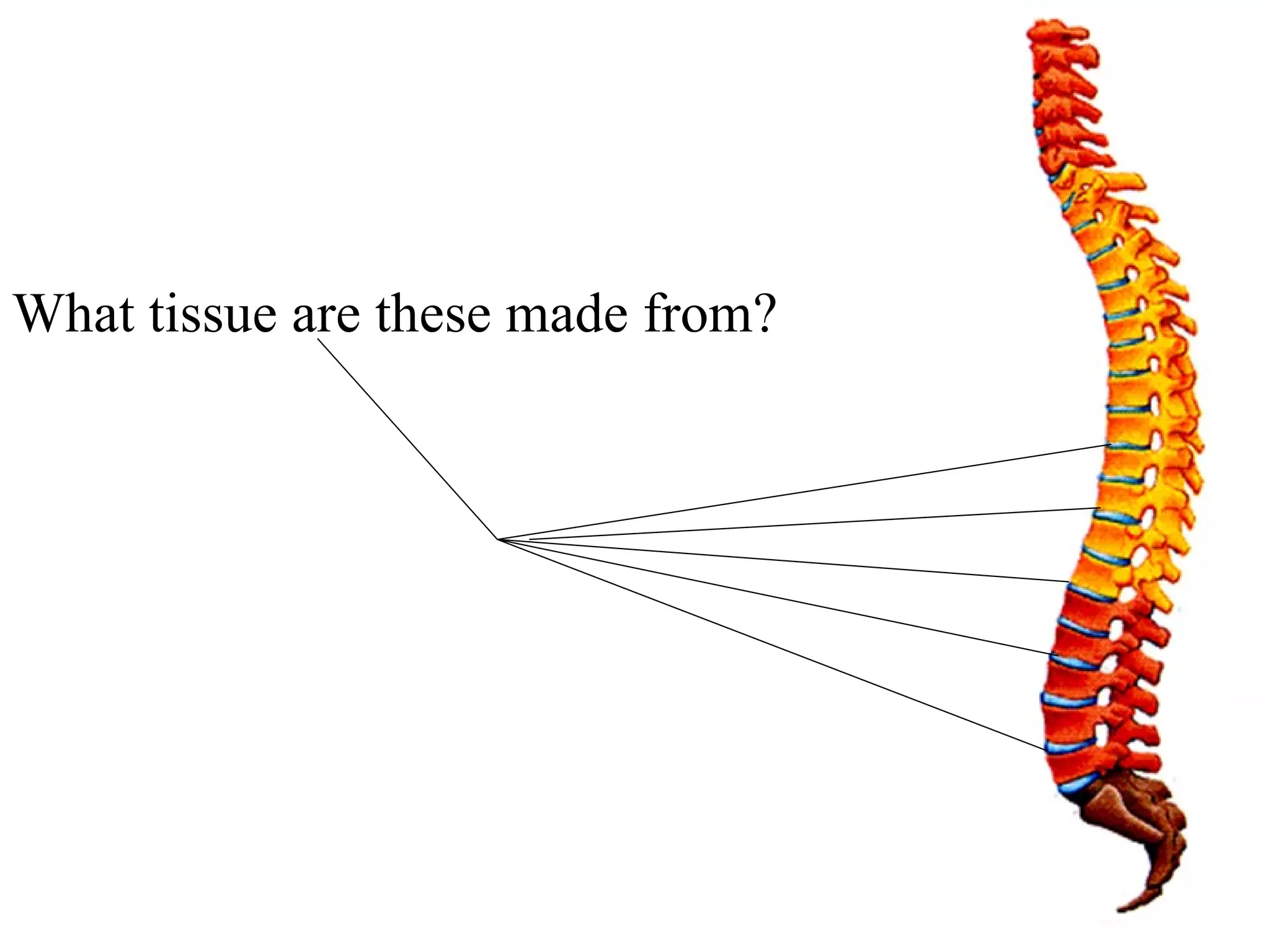
What tissue are these made from?
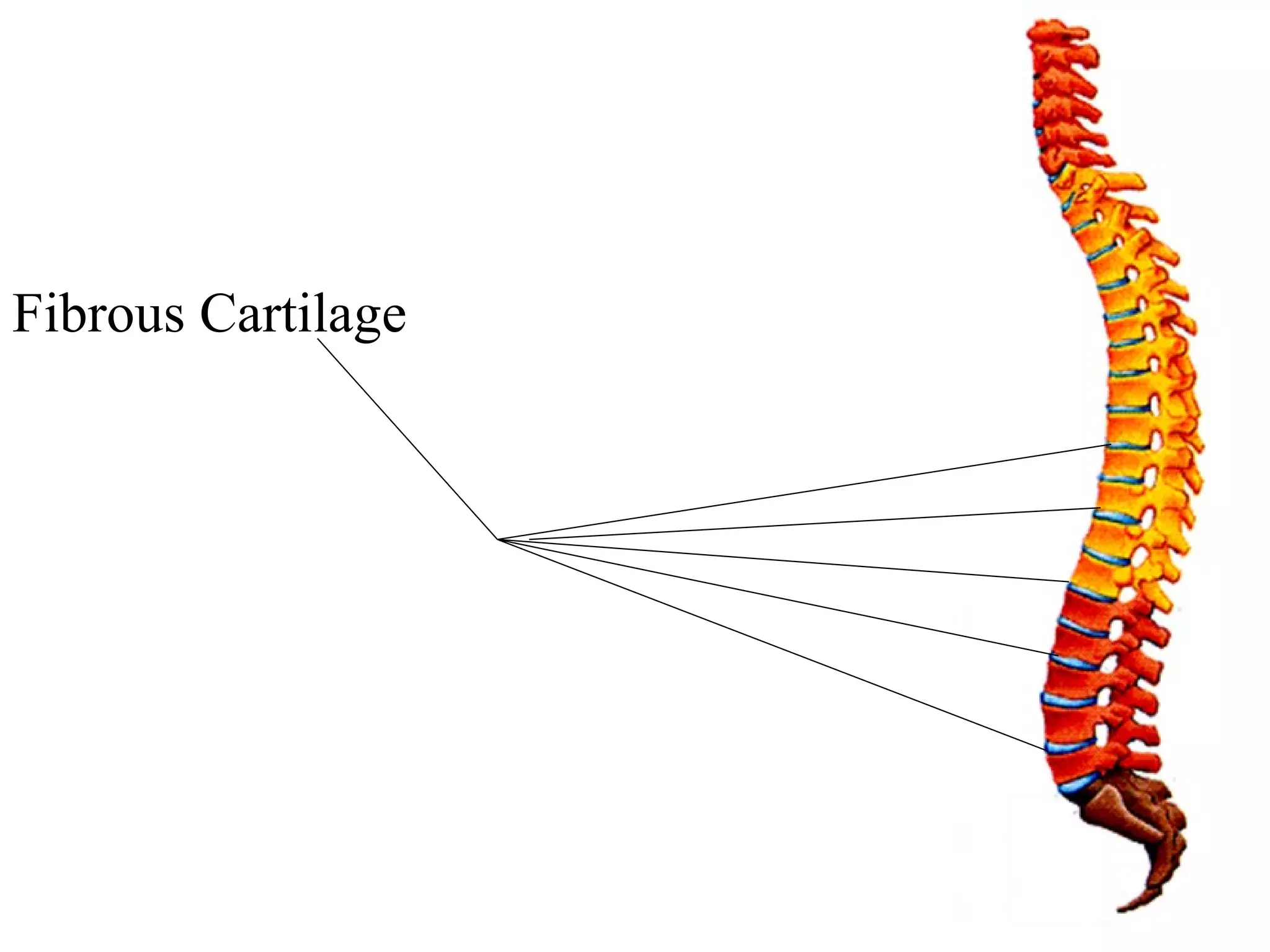
Fibrous Cartilage
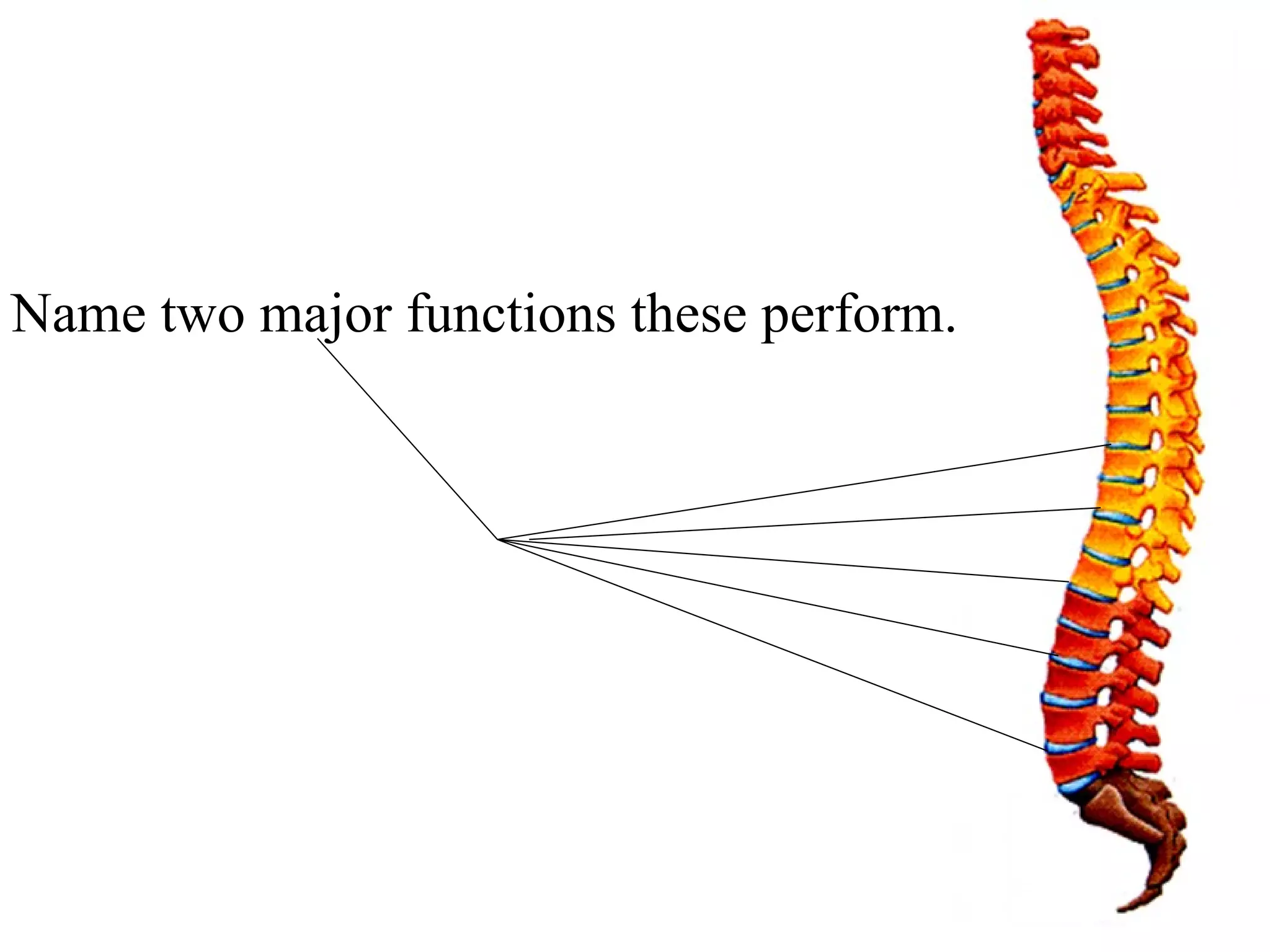
Name two major functions these perform.
Shock absorption Add flexibility to the vertebral column
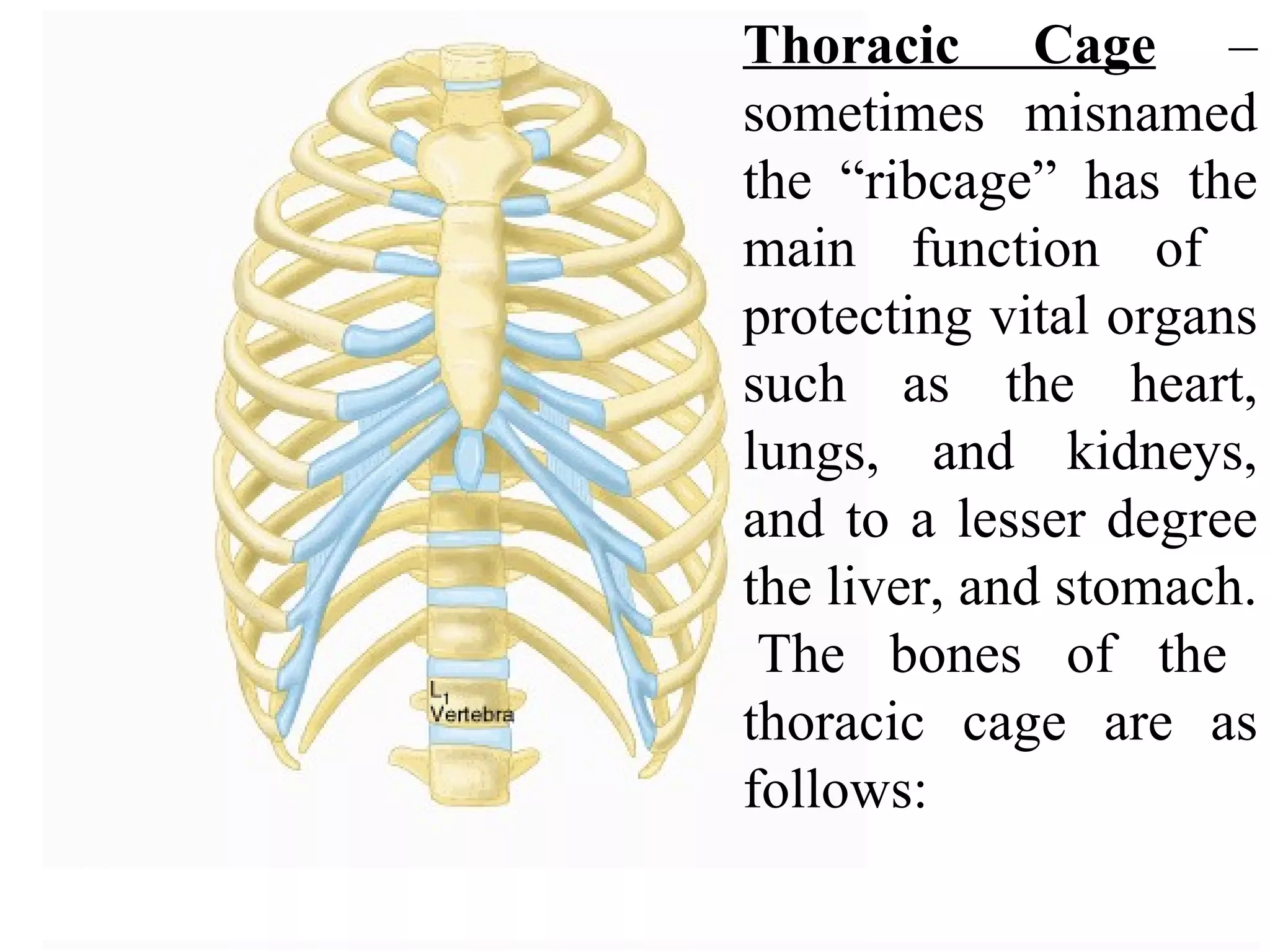
Thoracic Cage  – sometimes misnamed the “ribcage” has the main function of  protecting vital organs such as the heart, lungs, and kidneys, and to a lesser degree the liver, and stomach.  The bones of the thoracic cage are as follows:
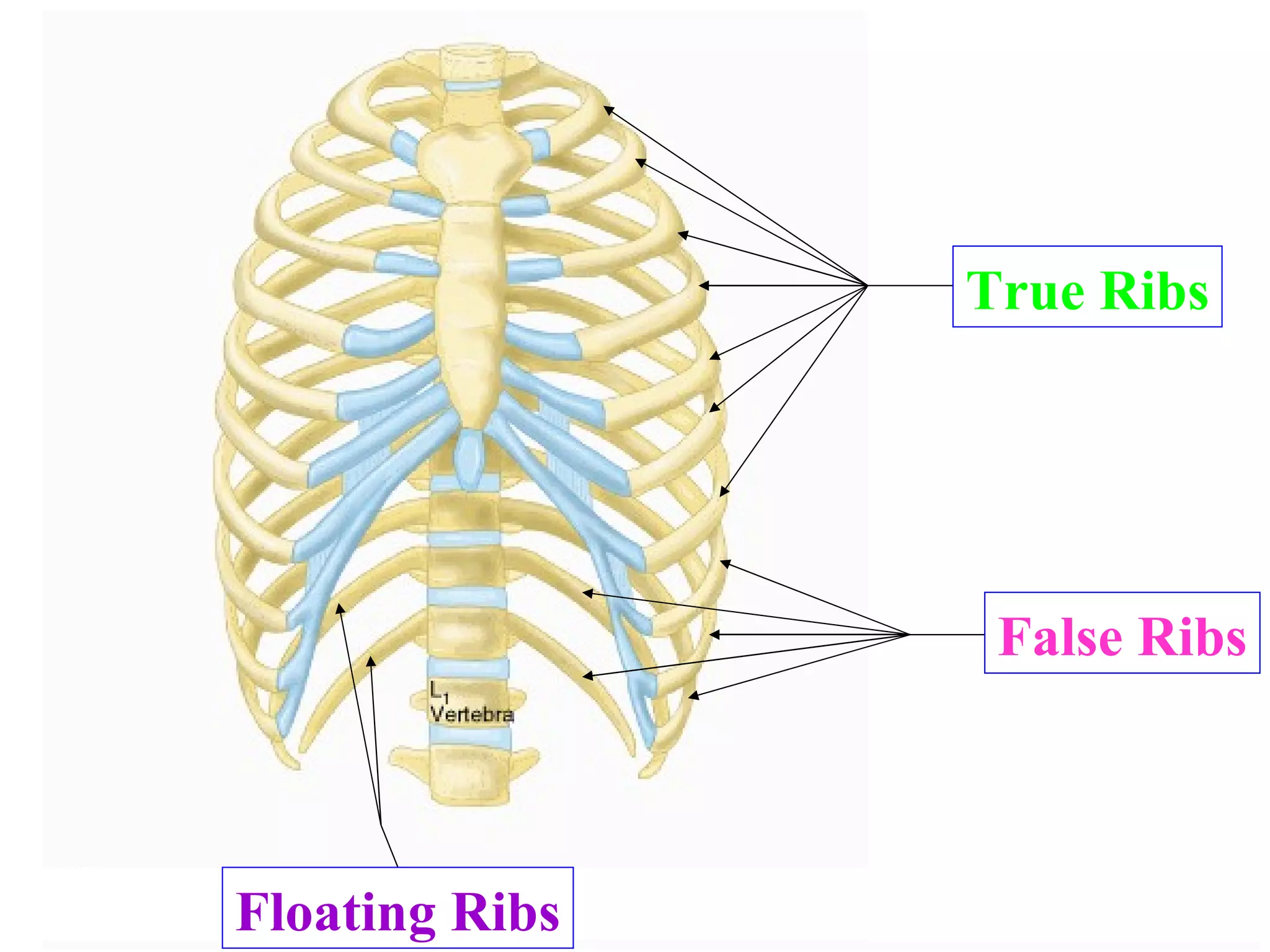
True Ribs False Ribs Floating Ribs Name? Name? Special name?
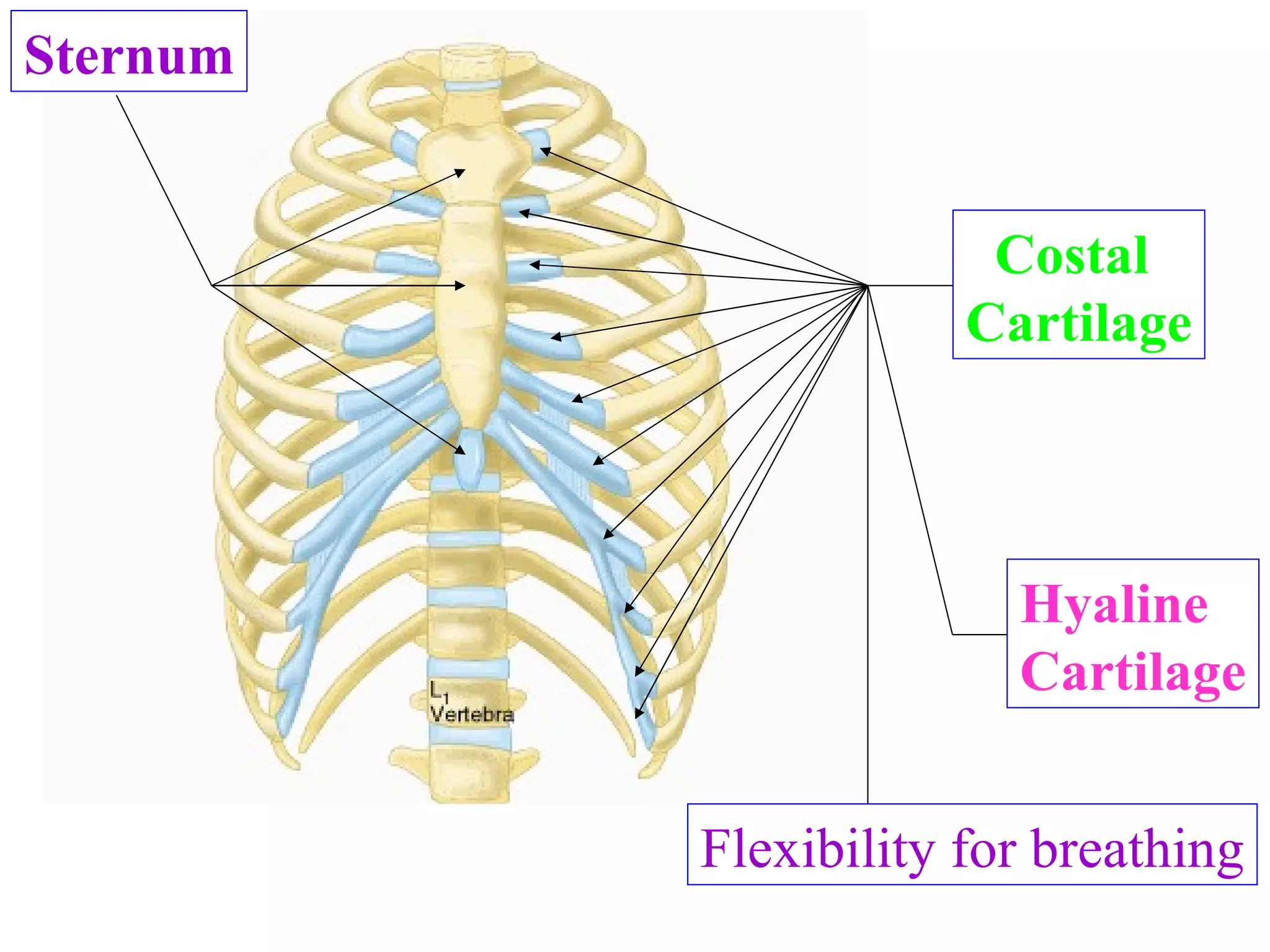
Costal  Cartilage Hyaline Cartilage Sternum Name? Tissue Type? Name? What important characteristic does this tissue add to the Thoracic Cage? Flexibility for breathing
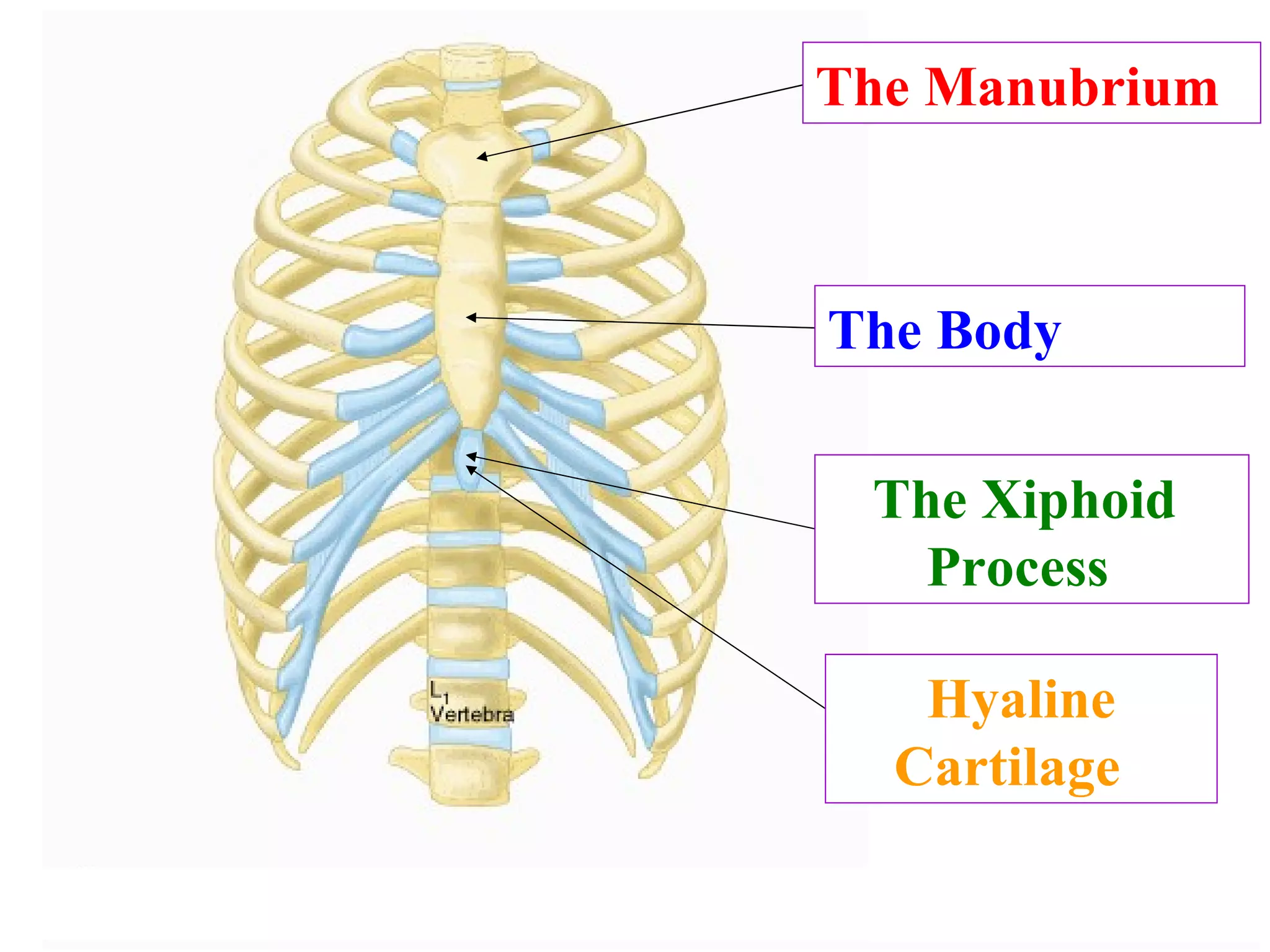
The Manubrium  The Body  The Xiphoid  Process  Hyaline Cartilage  Which part is this? Which part is this? Which part is this? What tissue type is this?
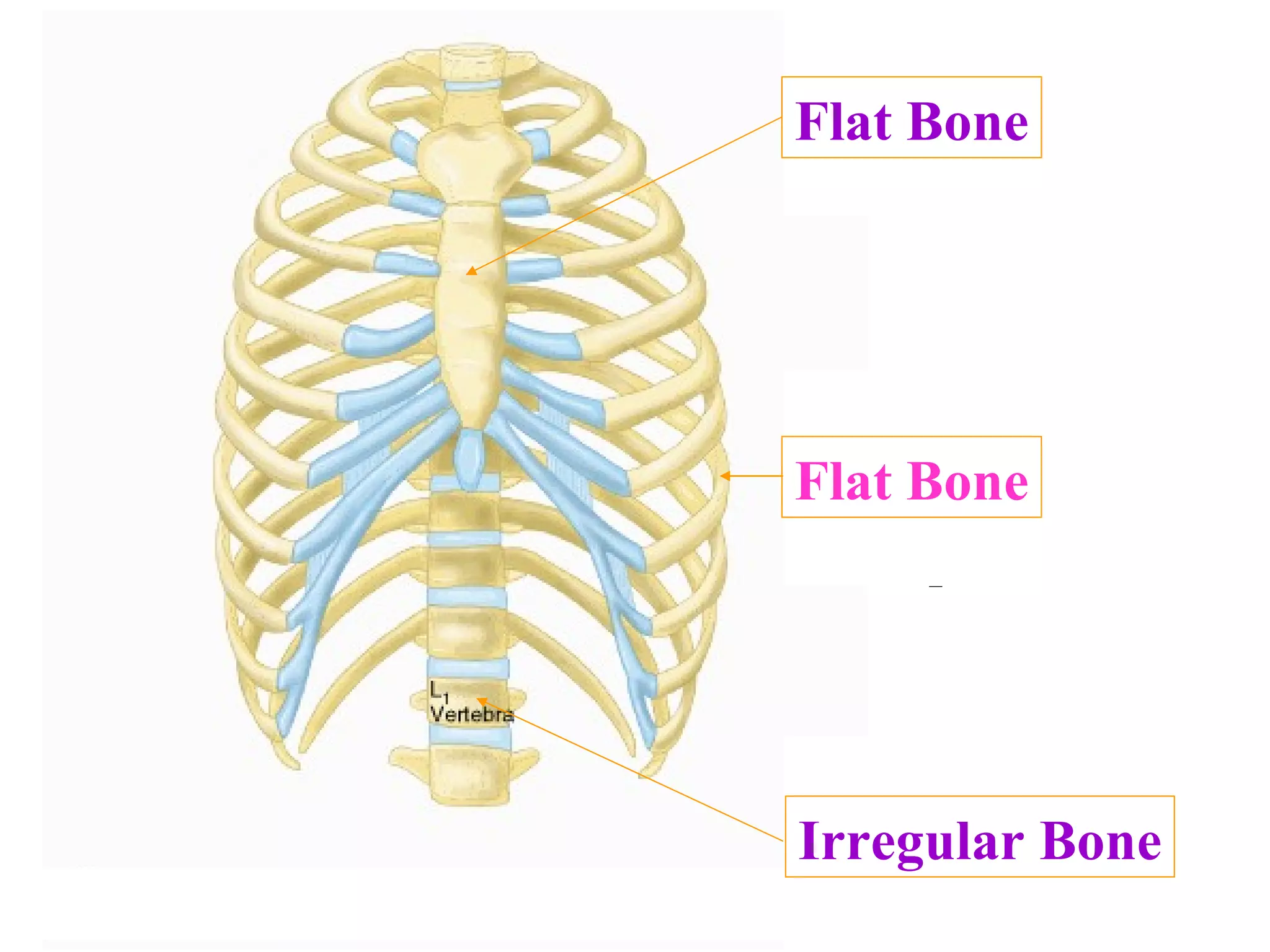
What type of bone is this, with respect to shape? What type of bone is this, with respect to shape? What type of bone is this, with respect to shape? Flat Bone Flat Bone Irregular Bone
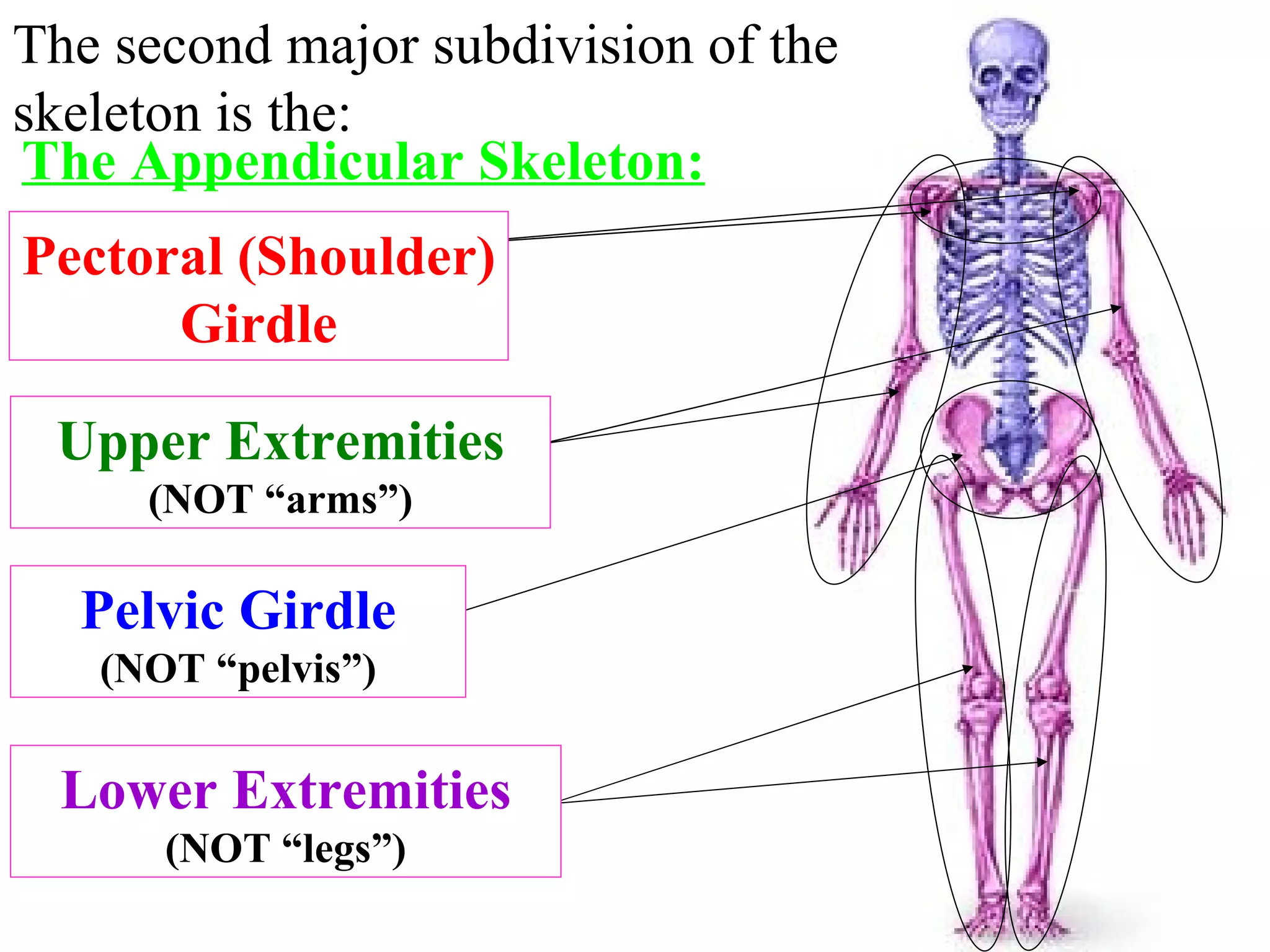
The Appendicular Skeleton: The second major subdivision of the skeleton is the: Lower Extremities (NOT “legs”) Pelvic Girdle (NOT “pelvis”) Upper Extremities (NOT “arms”) Pectoral (Shoulder) Girdle Which part is this? Which parts are these? Which part is this? Which parts are these?
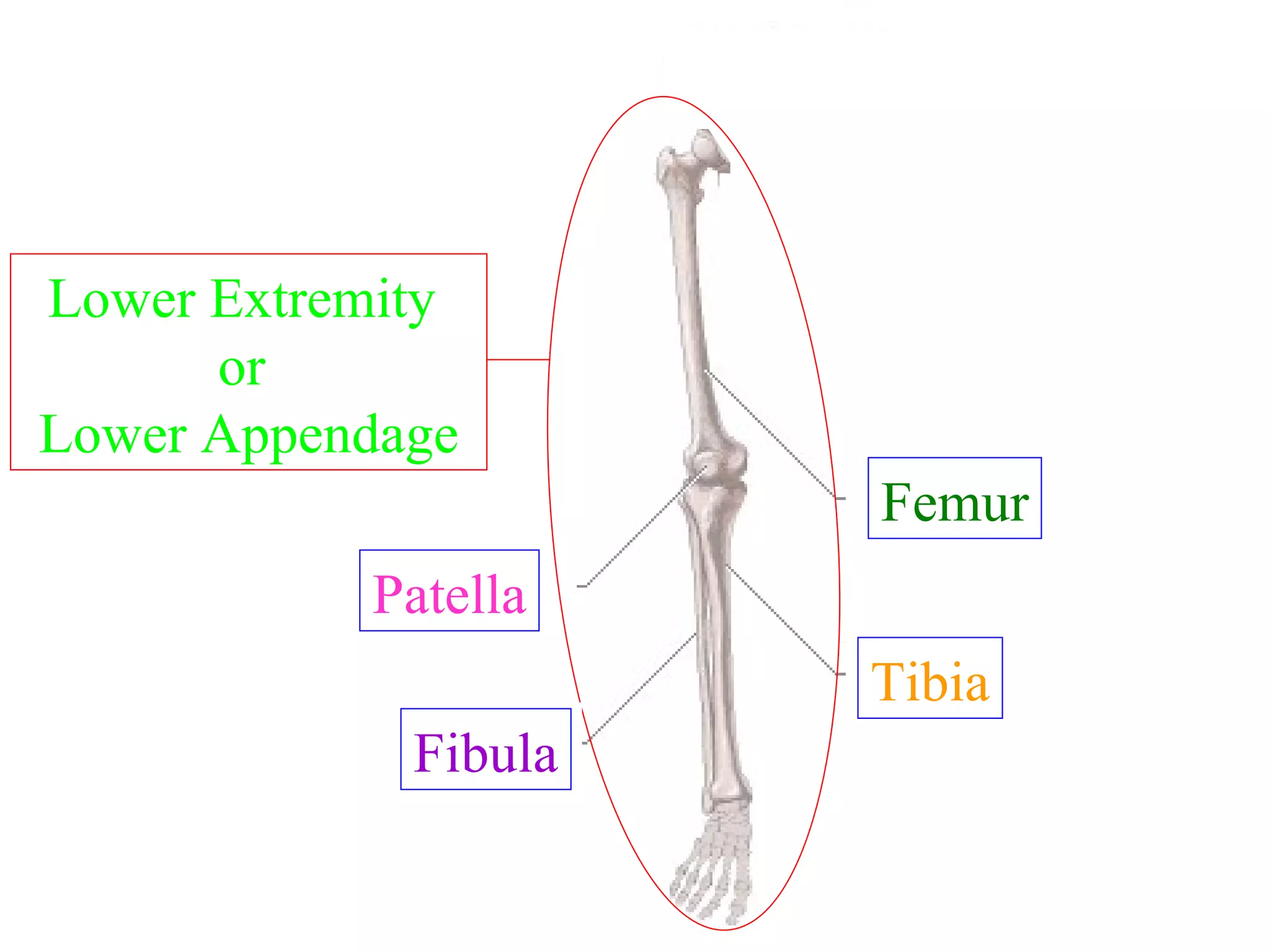
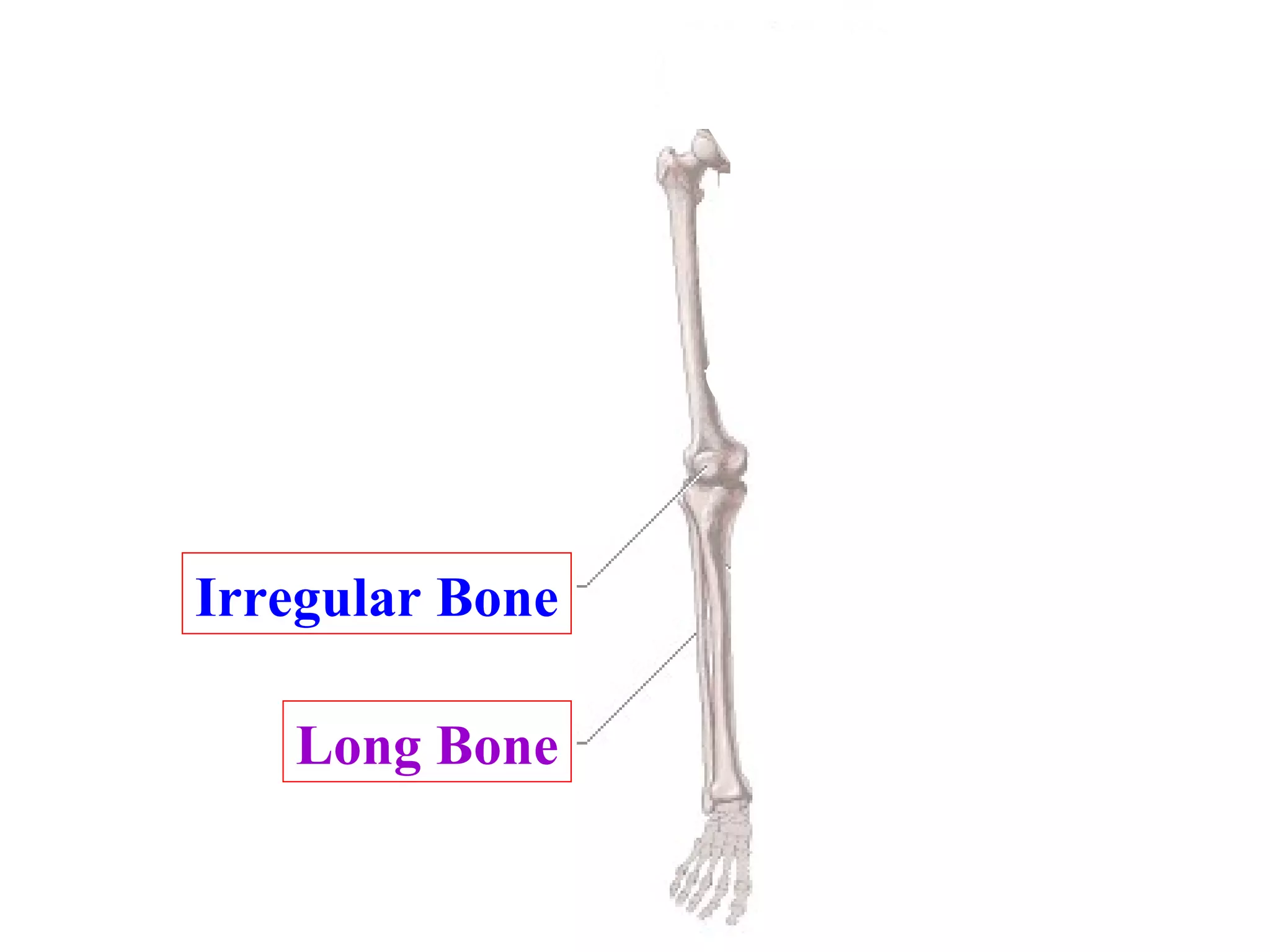
Lower Extremity  or  Lower Appendage Patella Fibula Femur Tibia Name of entire structure? 2? 3? 4? 1?
What type of bone is this, with respect to shape? What type of bone is this, with respect to shape? Long Bone Irregular Bone
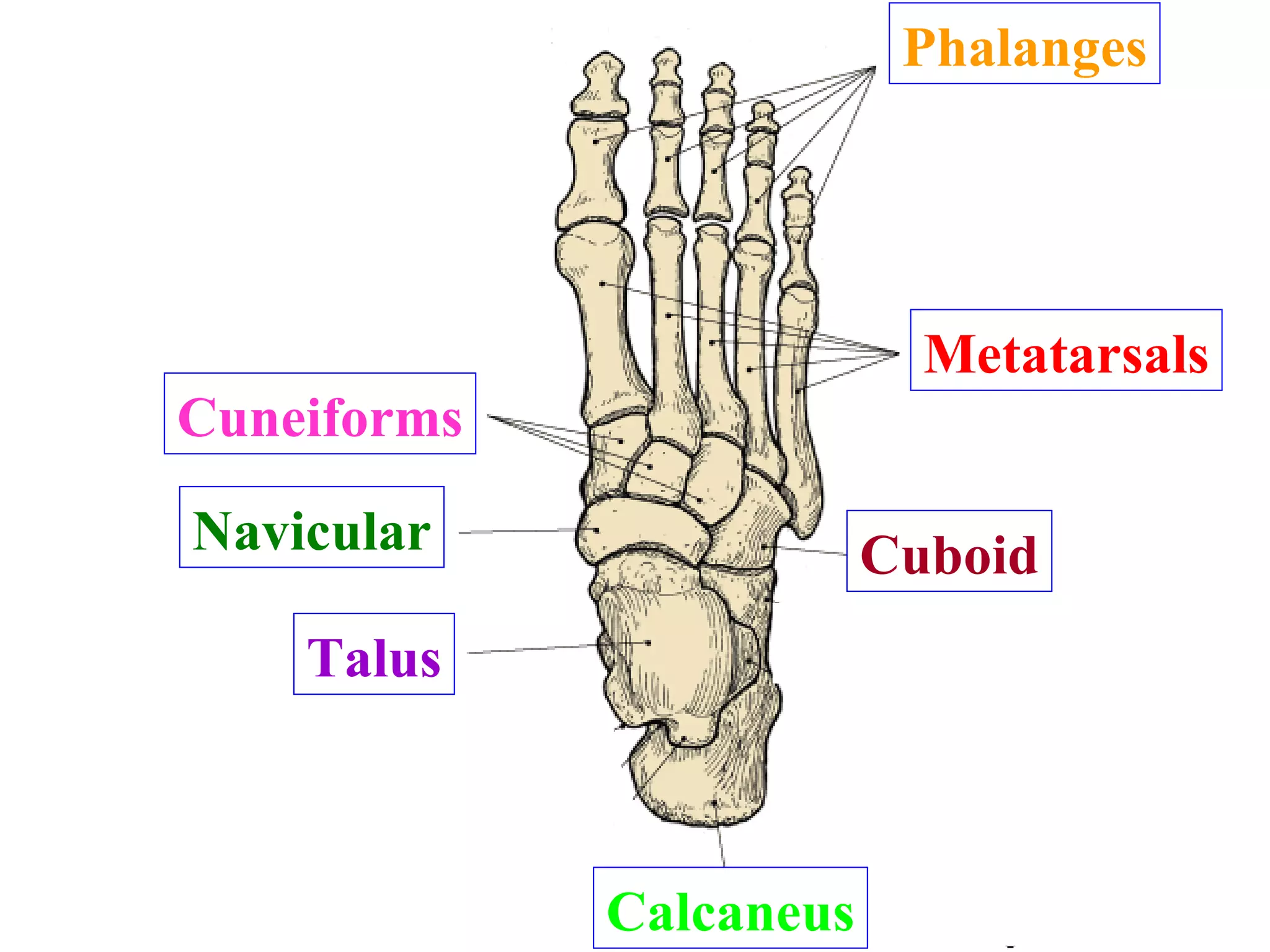
3? 4? 5? 6? 7? 2? 1? Phalanges Metatarsals Cuneiforms Navicular Talus Calcaneus Cuboid
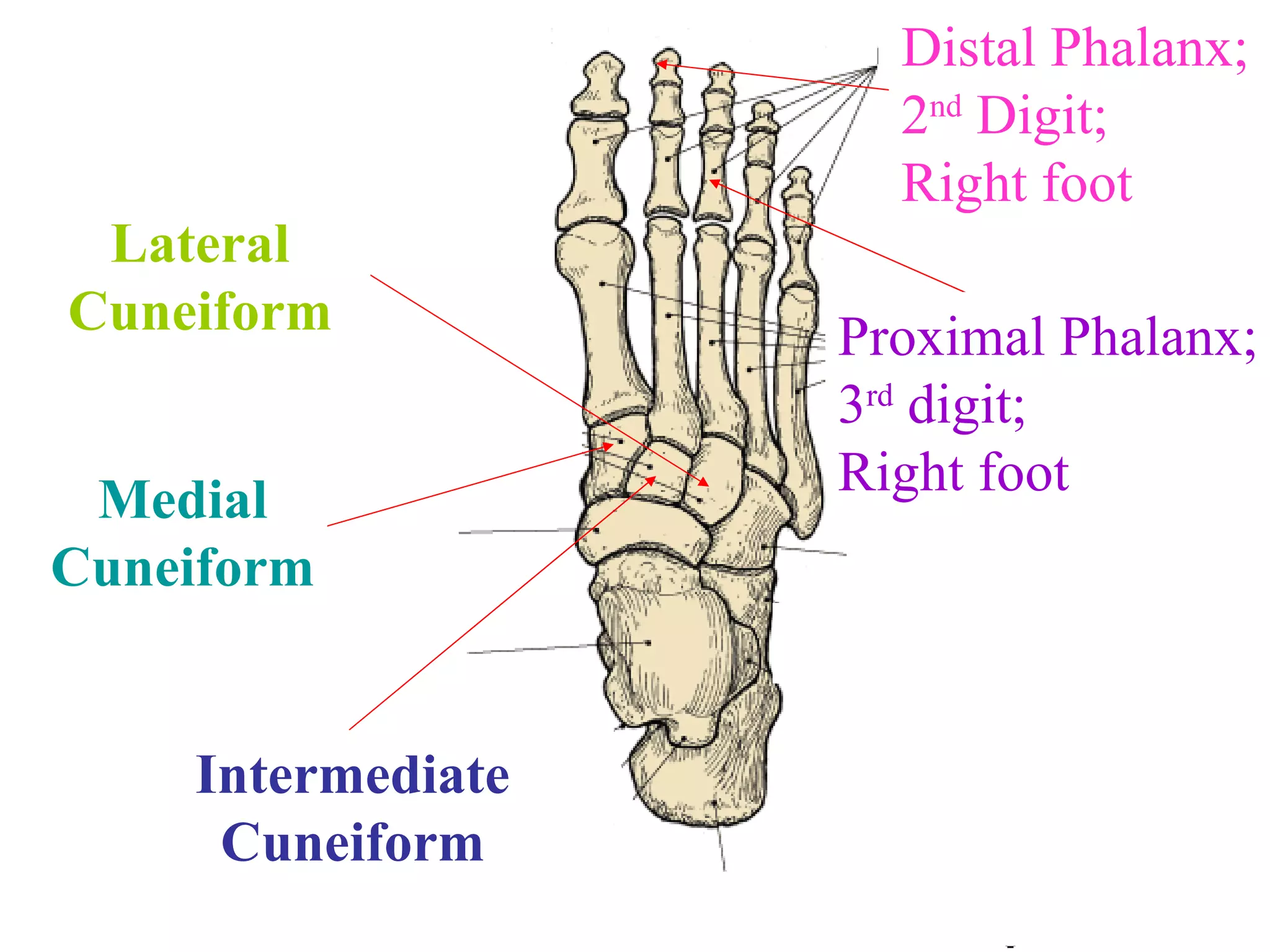
Lateral Cuneiform Medial Cuneiform Intermediate Cuneiform Distal Phalanx; 2 nd  Digit; Right foot Proximal Phalanx; 3 rd  digit; Right foot What is the more specific names given to each of these.
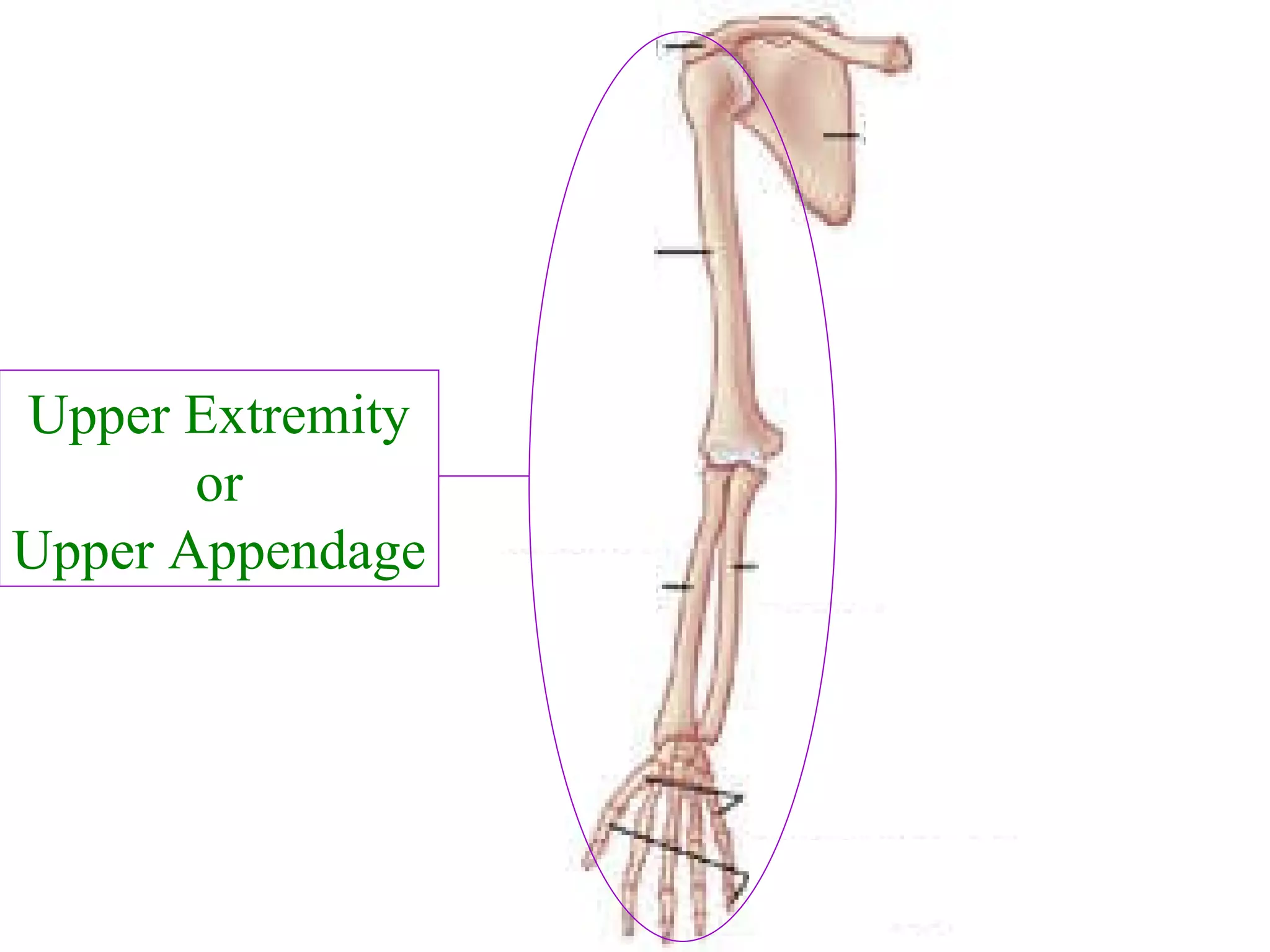
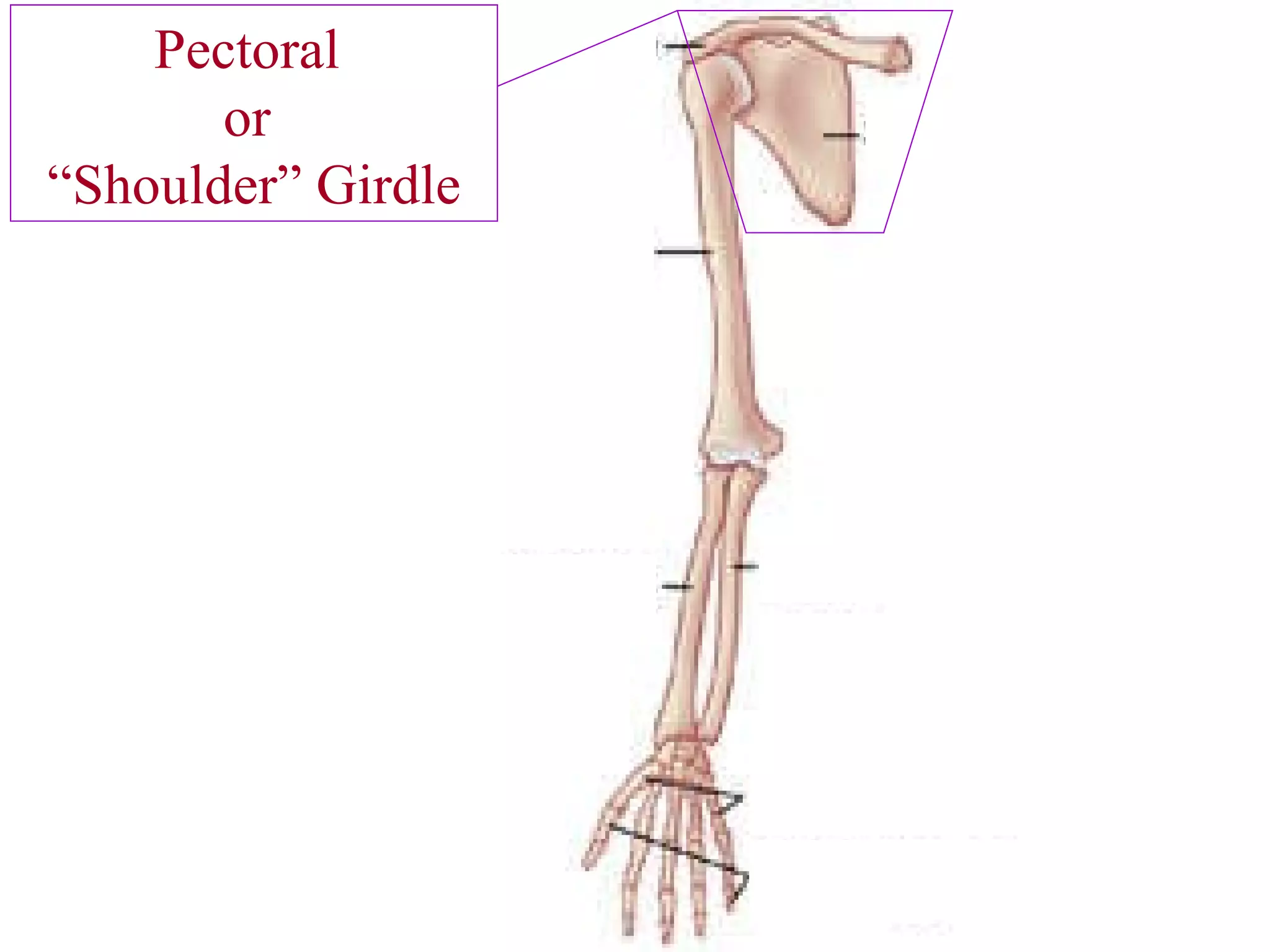
Upper Extremity or Upper Appendage Name this entire structure
Pectoral  or  “ Shoulder” Girdle This represents “half” of what skeletal subdivision?
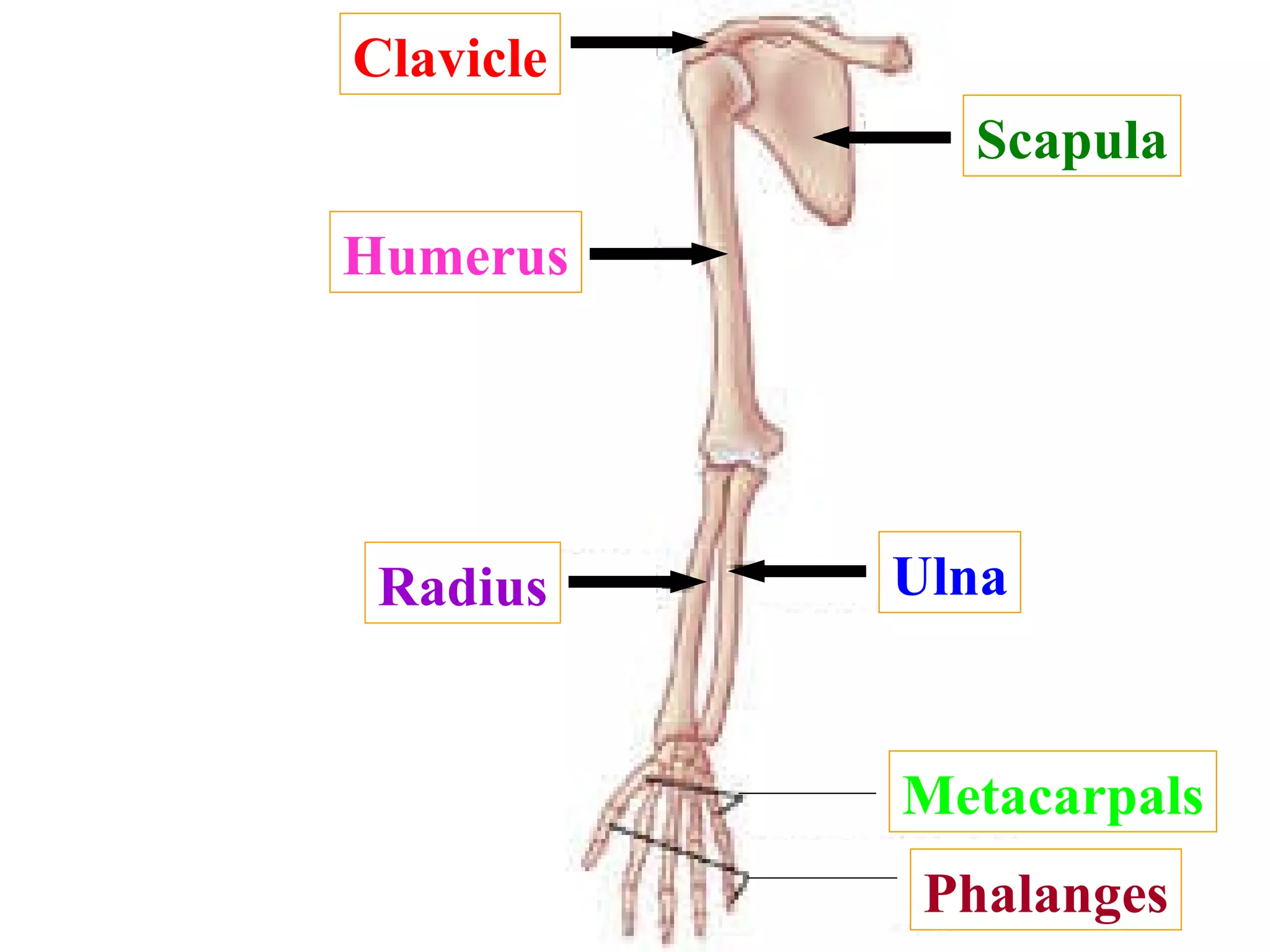
Name each of these bones 1? Clavicle 2? Humerus 3? 6? 5? 4? 7? Radius Scapula Ulna Metacarpals Phalanges
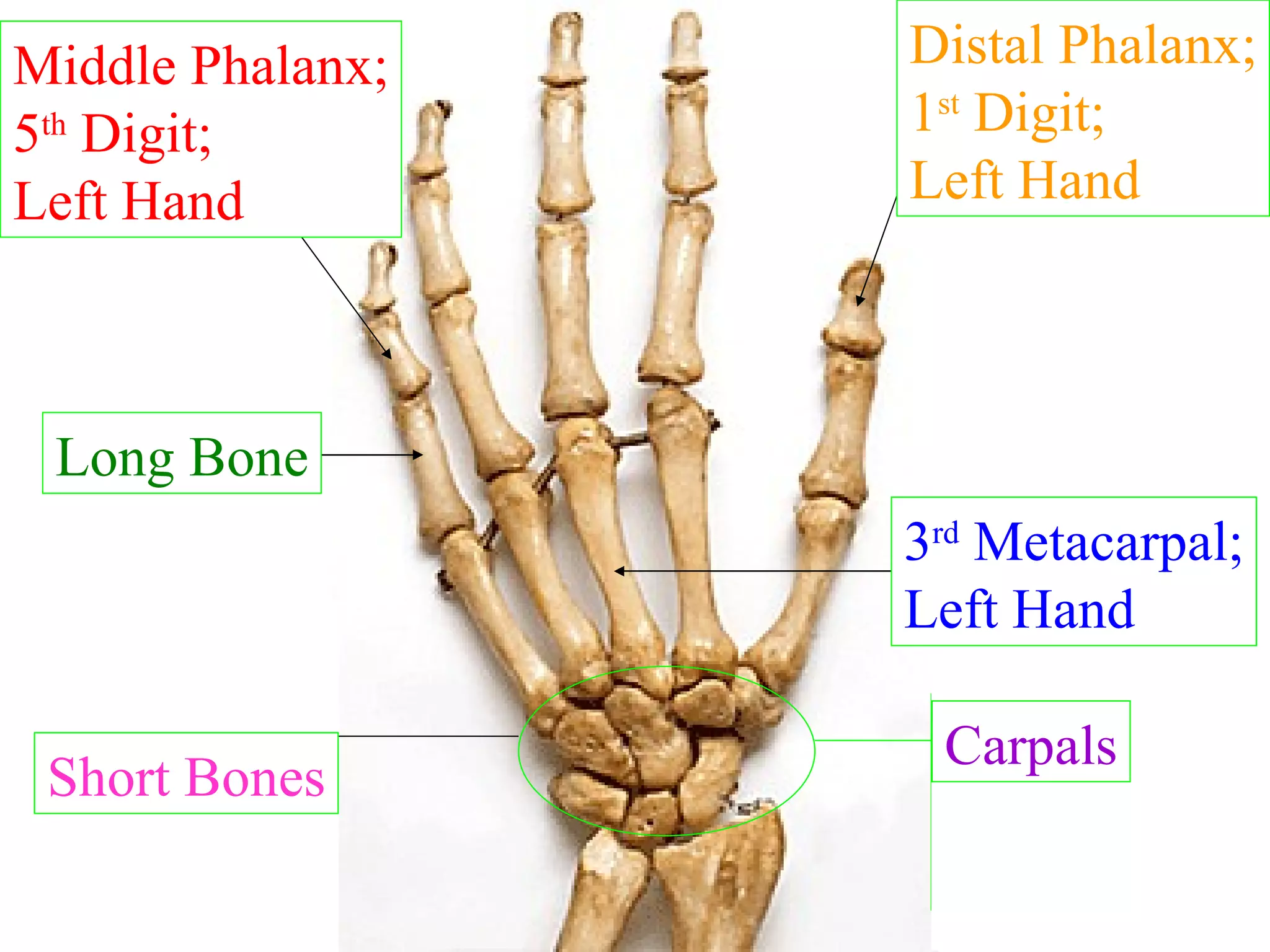
Middle Phalanx; 5 th  Digit; Left Hand Distal Phalanx; 1 st  Digit; Left Hand 3 rd  Metacarpal; Left Hand Carpals Specific Name? Specific Name? Specific Name? Group of Bones Called? What type of bones are these, with respect to shape? Short Bones What type of bone is this, with respect to shape? Long Bone
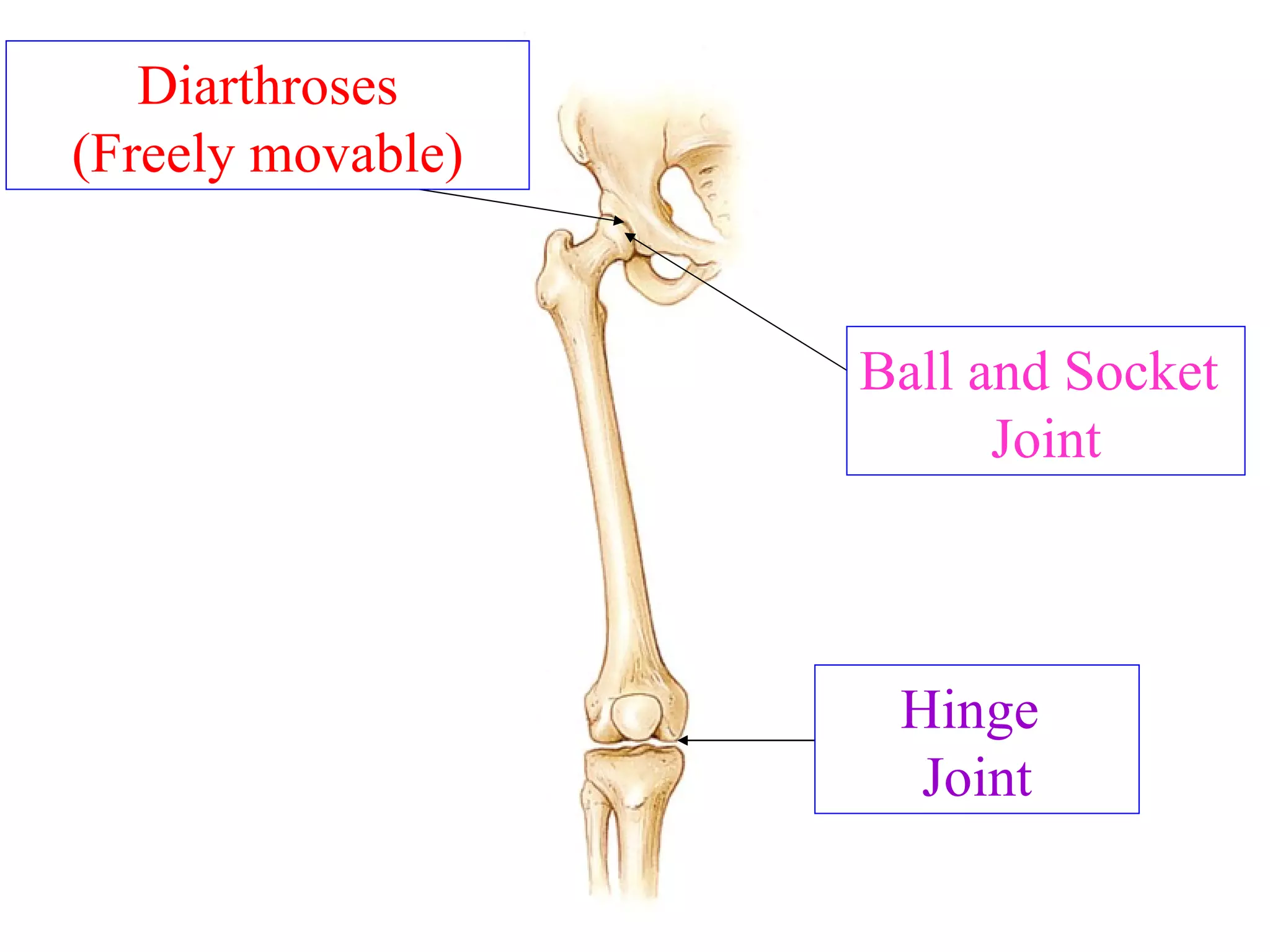
Ball and Socket  Joint Diarthroses (Freely movable) Hinge  Joint Type of joint with respect to movement? Specific type of joint? Specific type of joint?
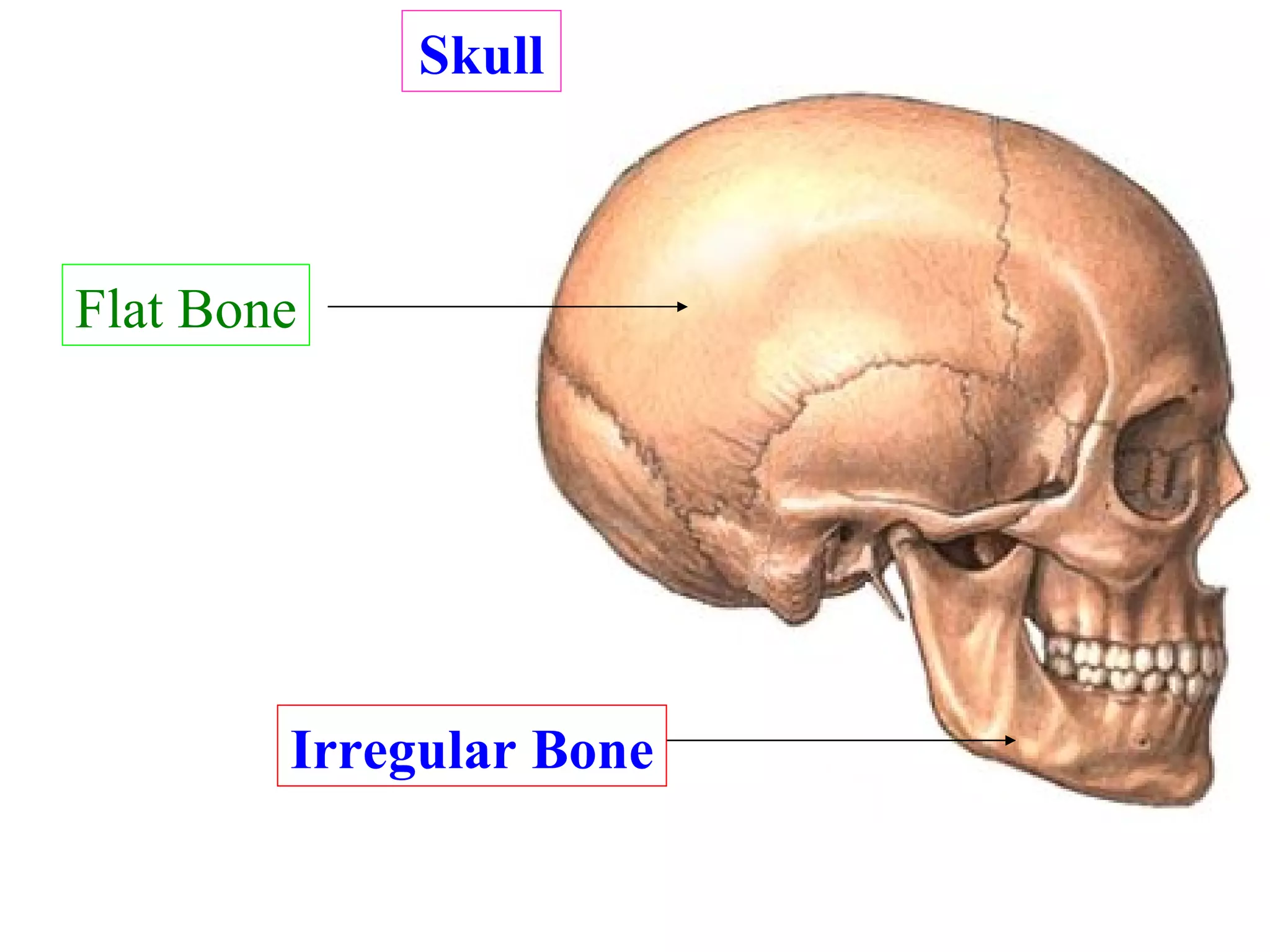
What is the name of this entire structure? What type of bone is this, with respect to shape? What type of bone is this, with respect to shape? Irregular Bone Flat Bone Skull
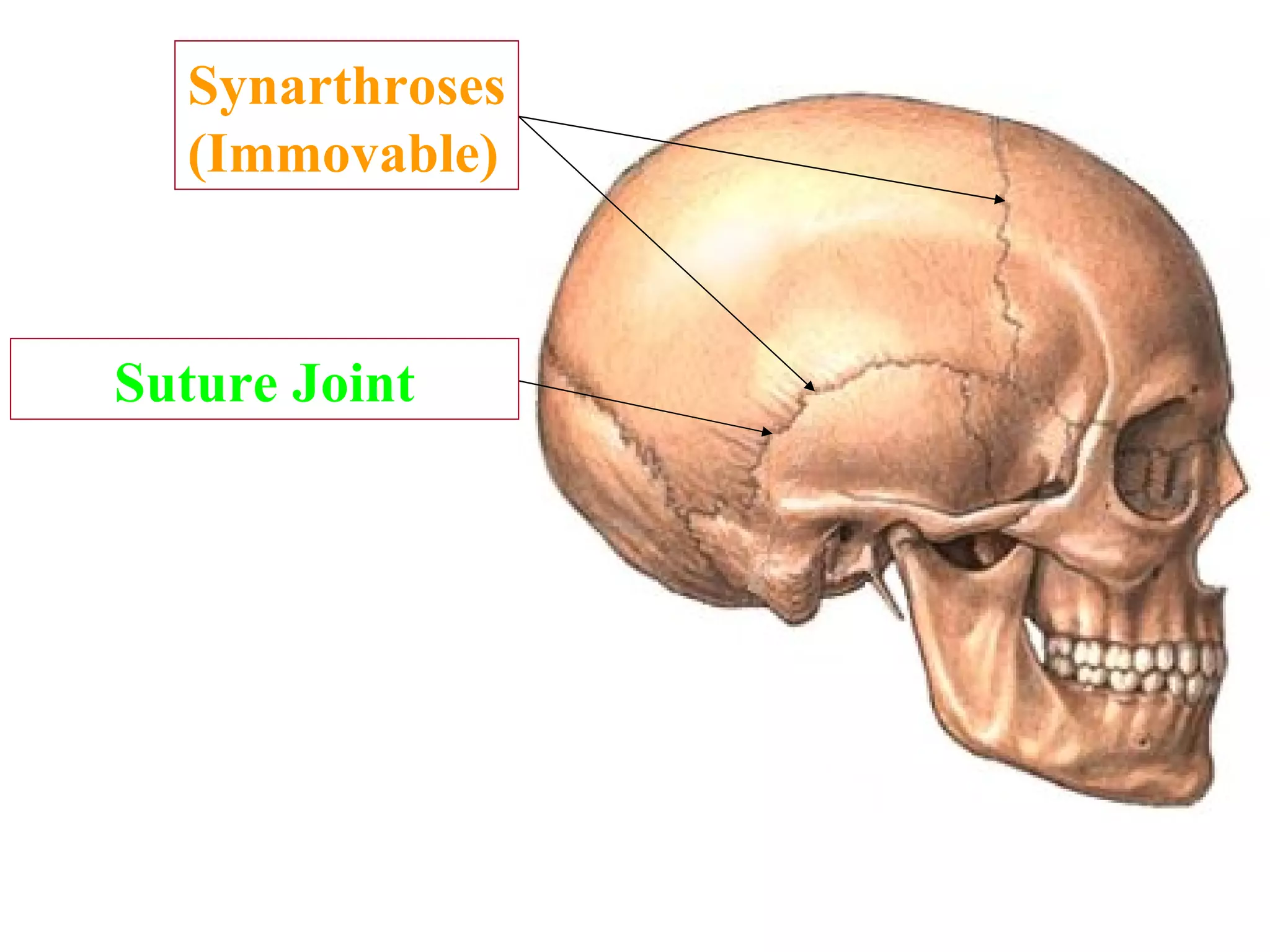
Suture Joint With respect to movement, what type of joints are these? Synarthroses (Immovable) Specific type of joint?
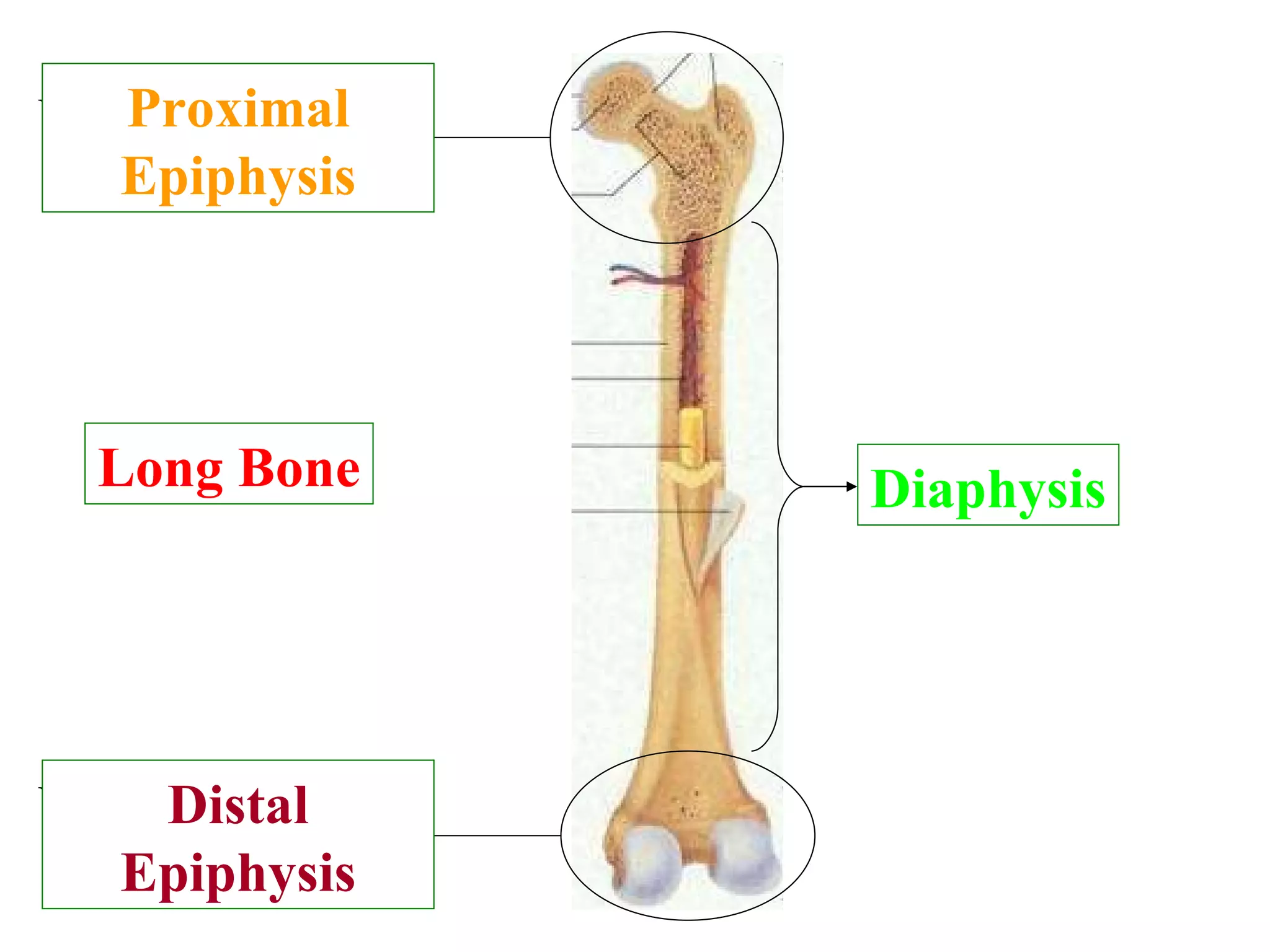
Proximal Epiphysis Distal Epiphysis Type of bone with respect to shape? What part of the bone is this? What part of the bone is this? What part of the bone is this? Diaphysis Long Bone
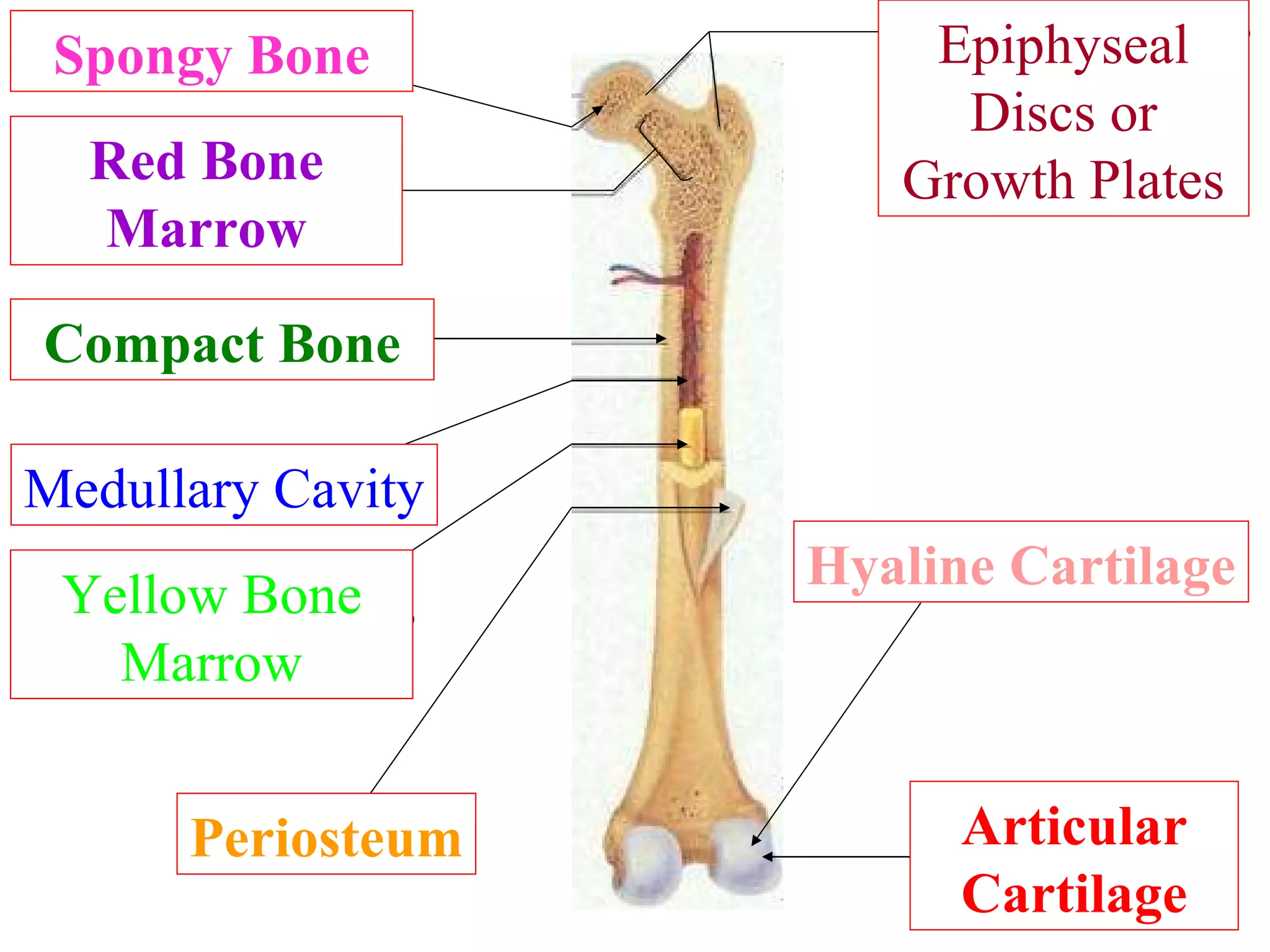
Spongy Bone Red Bone Marrow Compact Bone Medullary Cavity Yellow Bone Marrow Periosteum Epiphyseal Discs or Growth Plates Hyaline Cartilage Articular Cartilage Contained within spaces? Bone tissue type? Bone tissue type? Cavity called? Substance called? What is this? What are these? White “stuff” called what? Tissue type?
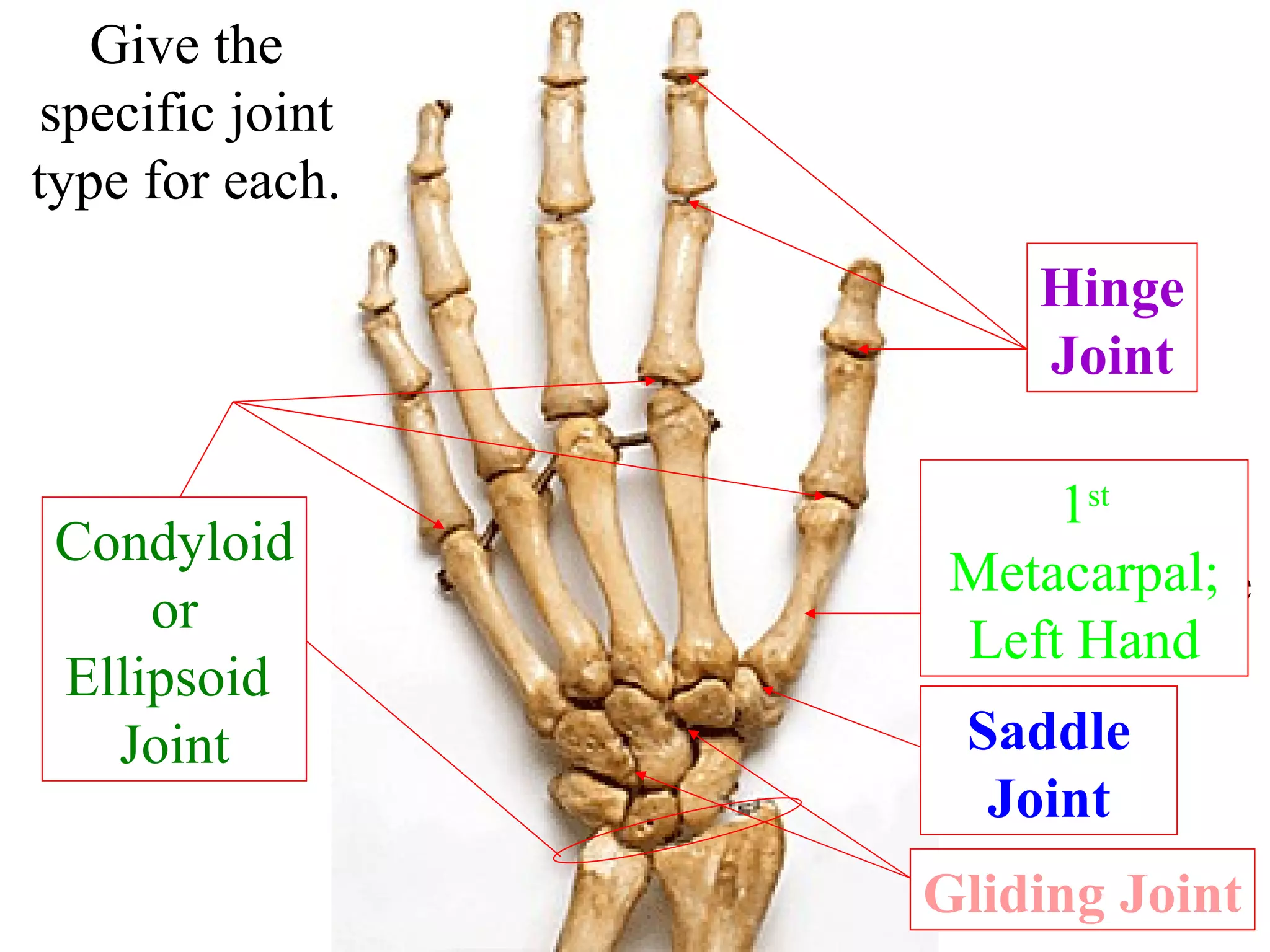
1 st Metacarpal; Left Hand Give the specific joint type for each. Hinge Joint Condyloid or Ellipsoid  Joint Saddle Joint Gliding Joint Specific Bone Name 1? 3? 2? 4?
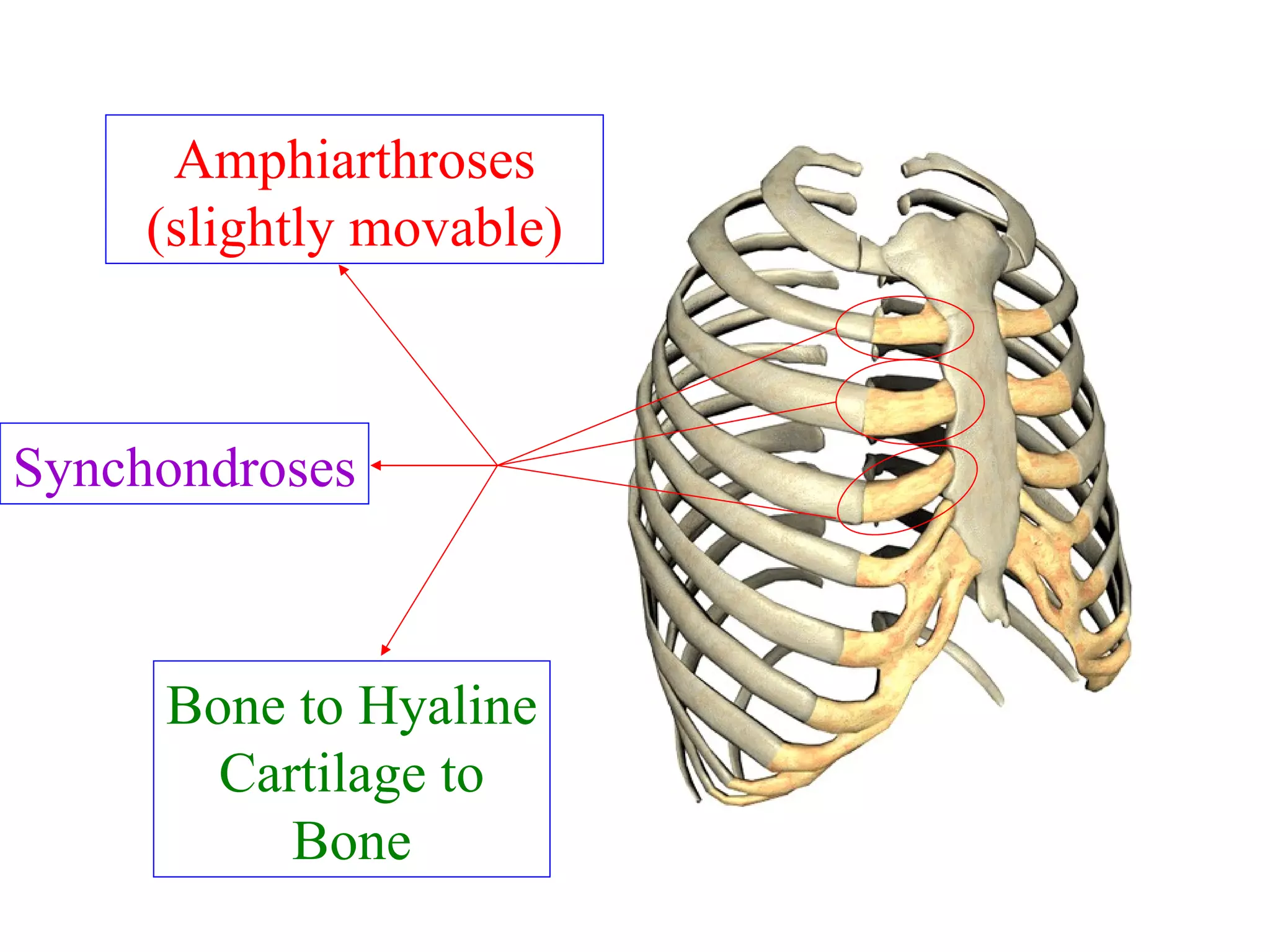
Type of joint with respect to movement Amphiarthroses (slightly movable) Bone to Hyaline Cartilage to Bone Subcategory of joint including these?  Describe this specific joint type Synchondroses
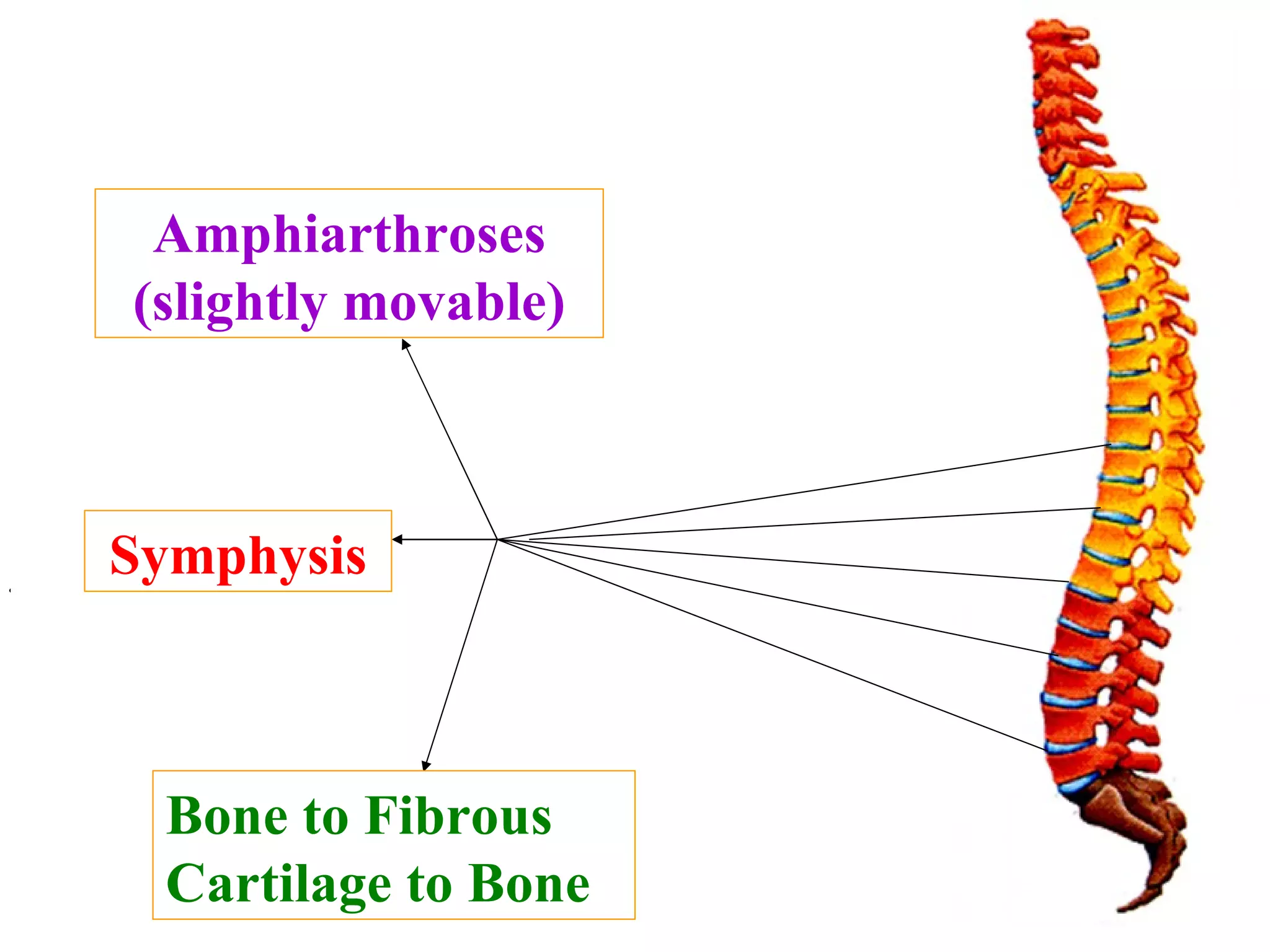
Amphiarthroses (slightly movable) Bone to Fibrous Cartilage to Bone Type of joint with respect to movement Subcategory of joints including these Describe this specific joint type Symphysis

Skeleton system review

  • 1.
    The Axial Skeleton:The human skeleton is divided into two major subdivisions. The first of these is: Skull Thoracic Cage Vertebral Column ? Which part is this? Which part is this? Which part is this?
  • 2.
    The axialskeleton is composed of the skull , vertebral column , and thoracic cage . The main function of the axial skeleton is to PROTECT the most crucial ORGANS of the human body. Each of these is essentially a “shaped box” which house such vital and vulnerable organs as the brain (skull) , spinal cord (vertebral column) , and the heart, lungs, and kidneys (thoracic cage) . The Axial Skeleton (Notes reminder)
  • 3.
    The Skull – The skull consists of 29 bones and can be subdivided into four areas, two of which are easily identified: The Cranium The Face ? ?
  • 4.
    1. 2. 5.4. 3. 6. 8. 7. 9. 10. 11. Name these bones Answers on next page
  • 5.
    1. Frontal2. Parietal 3. Temporal 4. Occipital 5. Sphenoid 6. Ethmoid 7. Lacrimal 8. Nasal 11. Mandible 9. Zygomatic 10. Maxilla 1. 2. 5. 4. 3. 6. 8. 7. 9. 10. 11.
  • 6.
    The Vertebral Column - The vertebral column, which is sometimes called “the backbone” or “spinal column” consists of 26 bones in an adult, but has 33 bones in an infant. The vertebral column can be completely subdivided into five areas (four curvatures with the last divided into two parts): 1 2 3 4 5
  • 7.
    1 2 35 4 What are the names of these regions of the vertebral column?
  • 8.
    Cervical Vertebrae ThoracicVertebrae Lumbar Vertebrae Coccyx Sacrum
  • 9.
  • 10.
  • 11.
    What tissue arethese made from?
  • 12.
  • 13.
    Name two majorfunctions these perform.
  • 14.
    Shock absorption Addflexibility to the vertebral column
  • 15.
    Thoracic Cage – sometimes misnamed the “ribcage” has the main function of protecting vital organs such as the heart, lungs, and kidneys, and to a lesser degree the liver, and stomach. The bones of the thoracic cage are as follows:
  • 16.
    True Ribs FalseRibs Floating Ribs Name? Name? Special name?
  • 17.
    Costal CartilageHyaline Cartilage Sternum Name? Tissue Type? Name? What important characteristic does this tissue add to the Thoracic Cage? Flexibility for breathing
  • 18.
    The Manubrium The Body The Xiphoid Process Hyaline Cartilage Which part is this? Which part is this? Which part is this? What tissue type is this?
  • 19.
    What type ofbone is this, with respect to shape? What type of bone is this, with respect to shape? What type of bone is this, with respect to shape? Flat Bone Flat Bone Irregular Bone
  • 20.
    The Appendicular Skeleton:The second major subdivision of the skeleton is the: Lower Extremities (NOT “legs”) Pelvic Girdle (NOT “pelvis”) Upper Extremities (NOT “arms”) Pectoral (Shoulder) Girdle Which part is this? Which parts are these? Which part is this? Which parts are these?
  • 21.
    Lower Extremity or Lower Appendage Patella Fibula Femur Tibia Name of entire structure? 2? 3? 4? 1?
  • 22.
    What type ofbone is this, with respect to shape? What type of bone is this, with respect to shape? Long Bone Irregular Bone
  • 23.
    3? 4? 5?6? 7? 2? 1? Phalanges Metatarsals Cuneiforms Navicular Talus Calcaneus Cuboid
  • 24.
    Lateral Cuneiform MedialCuneiform Intermediate Cuneiform Distal Phalanx; 2 nd Digit; Right foot Proximal Phalanx; 3 rd digit; Right foot What is the more specific names given to each of these.
  • 25.
    Upper Extremity orUpper Appendage Name this entire structure
  • 26.
    Pectoral or “ Shoulder” Girdle This represents “half” of what skeletal subdivision?
  • 27.
    Name each ofthese bones 1? Clavicle 2? Humerus 3? 6? 5? 4? 7? Radius Scapula Ulna Metacarpals Phalanges
  • 28.
    Middle Phalanx; 5th Digit; Left Hand Distal Phalanx; 1 st Digit; Left Hand 3 rd Metacarpal; Left Hand Carpals Specific Name? Specific Name? Specific Name? Group of Bones Called? What type of bones are these, with respect to shape? Short Bones What type of bone is this, with respect to shape? Long Bone
  • 29.
    Ball and Socket Joint Diarthroses (Freely movable) Hinge Joint Type of joint with respect to movement? Specific type of joint? Specific type of joint?
  • 30.
    What is thename of this entire structure? What type of bone is this, with respect to shape? What type of bone is this, with respect to shape? Irregular Bone Flat Bone Skull
  • 31.
    Suture Joint Withrespect to movement, what type of joints are these? Synarthroses (Immovable) Specific type of joint?
  • 32.
    Proximal Epiphysis DistalEpiphysis Type of bone with respect to shape? What part of the bone is this? What part of the bone is this? What part of the bone is this? Diaphysis Long Bone
  • 33.
    Spongy Bone RedBone Marrow Compact Bone Medullary Cavity Yellow Bone Marrow Periosteum Epiphyseal Discs or Growth Plates Hyaline Cartilage Articular Cartilage Contained within spaces? Bone tissue type? Bone tissue type? Cavity called? Substance called? What is this? What are these? White “stuff” called what? Tissue type?
  • 34.
    1 st Metacarpal;Left Hand Give the specific joint type for each. Hinge Joint Condyloid or Ellipsoid Joint Saddle Joint Gliding Joint Specific Bone Name 1? 3? 2? 4?
  • 35.
    Type of jointwith respect to movement Amphiarthroses (slightly movable) Bone to Hyaline Cartilage to Bone Subcategory of joint including these? Describe this specific joint type Synchondroses
  • 36.
    Amphiarthroses (slightly movable)Bone to Fibrous Cartilage to Bone Type of joint with respect to movement Subcategory of joints including these Describe this specific joint type Symphysis