Plant Layout
FacilitylayoutPlanning:for the location of all machines, utilities, employee workstations, customer service areas, material storage areas, aisles, restrooms, lunchrooms, internal walls, offices, and computer roomsfor the flow patterns of materials and people around, into, and within buildingsinfrastructure services such as the delivery of line communications, energy, and water and the removal of waste water all make up basic utilities
Characteristics of the Facility Layout DecisionInfrequentExpensive to implementStudied and evaluated extensivelyLong-term commitments
Objectives of the Layout StrategyDevelop an economical layout which will meet the requirements of:product design and volume (product strategy)Process equipment and capacity (process strategy)quality of work life (human resource strategy)building and site constraints (location strategy)
Importance of LayoutFacilitates: Manufacturing process. Facilitates quick movements by reduction of transportation & waiting timeMinimises material movement & handling. Efficient utilisation of resources: Men, Materials, Machines. Achieves efficiency by effective planning. Improves quality of operations by proper selection of plant, machinery, operations & sequencing.
Factors Affecting thePlant Layout DecisionTypes of ProductionScale of ProductionType of machinesType of Building FacilitiesAvailability of Total Floor AreaPossibility of Future ExpansionArrangement of Material Handling Equipment
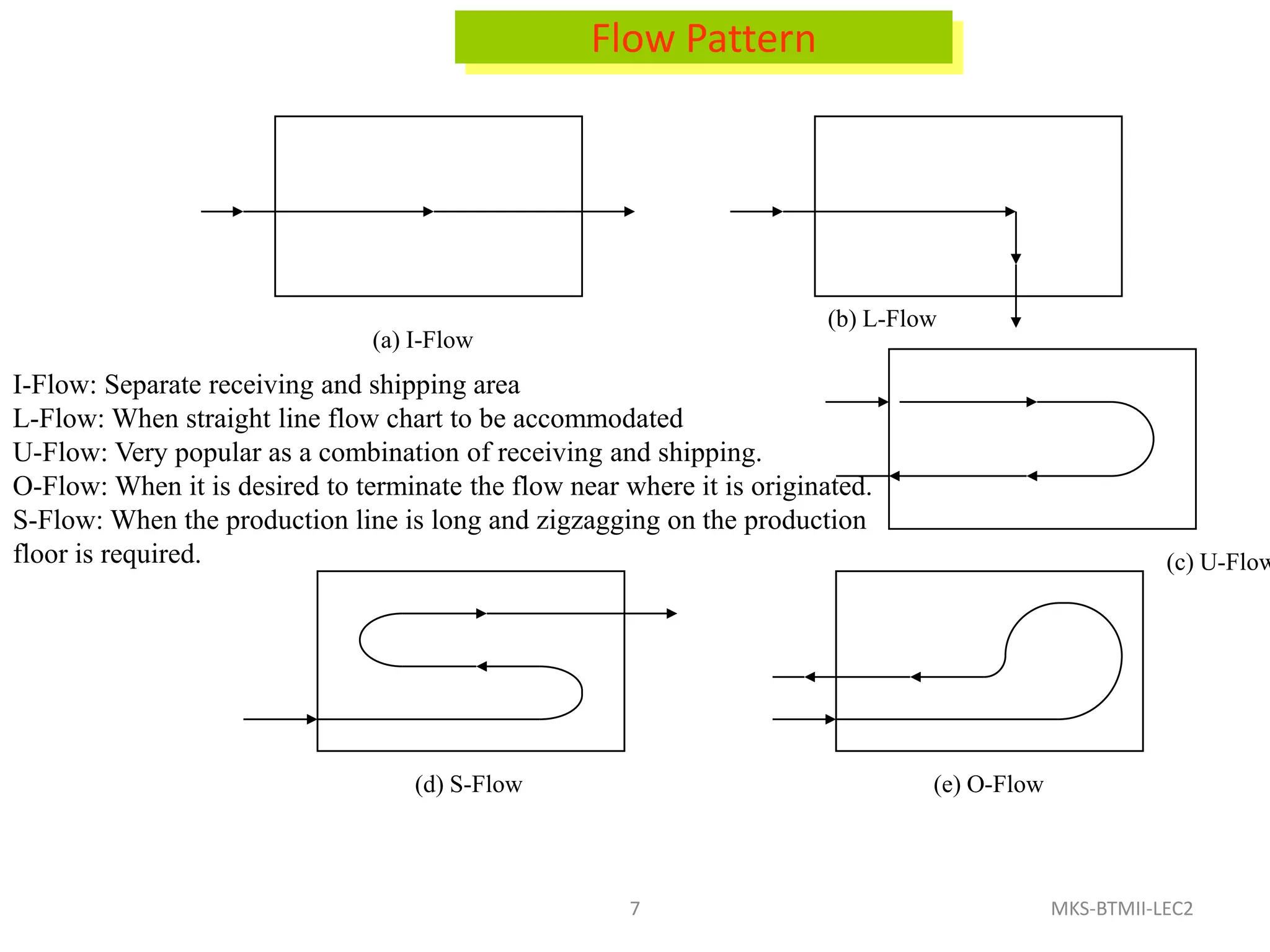
7MKS-BTMII-LEC2Flow Pattern(b) L-Flow(a) I-FlowI-Flow: Separate receiving and shipping areaL-Flow: When straight line flow chart to be accommodatedU-Flow: Very popular as a combination of receiving and shipping.O-Flow: When it is desired to terminate the flow near where it is originated.S-Flow: When the production line is long and zigzagging on the production floor is required.(c) U-Flow(e) O-Flow(d) S-Flow
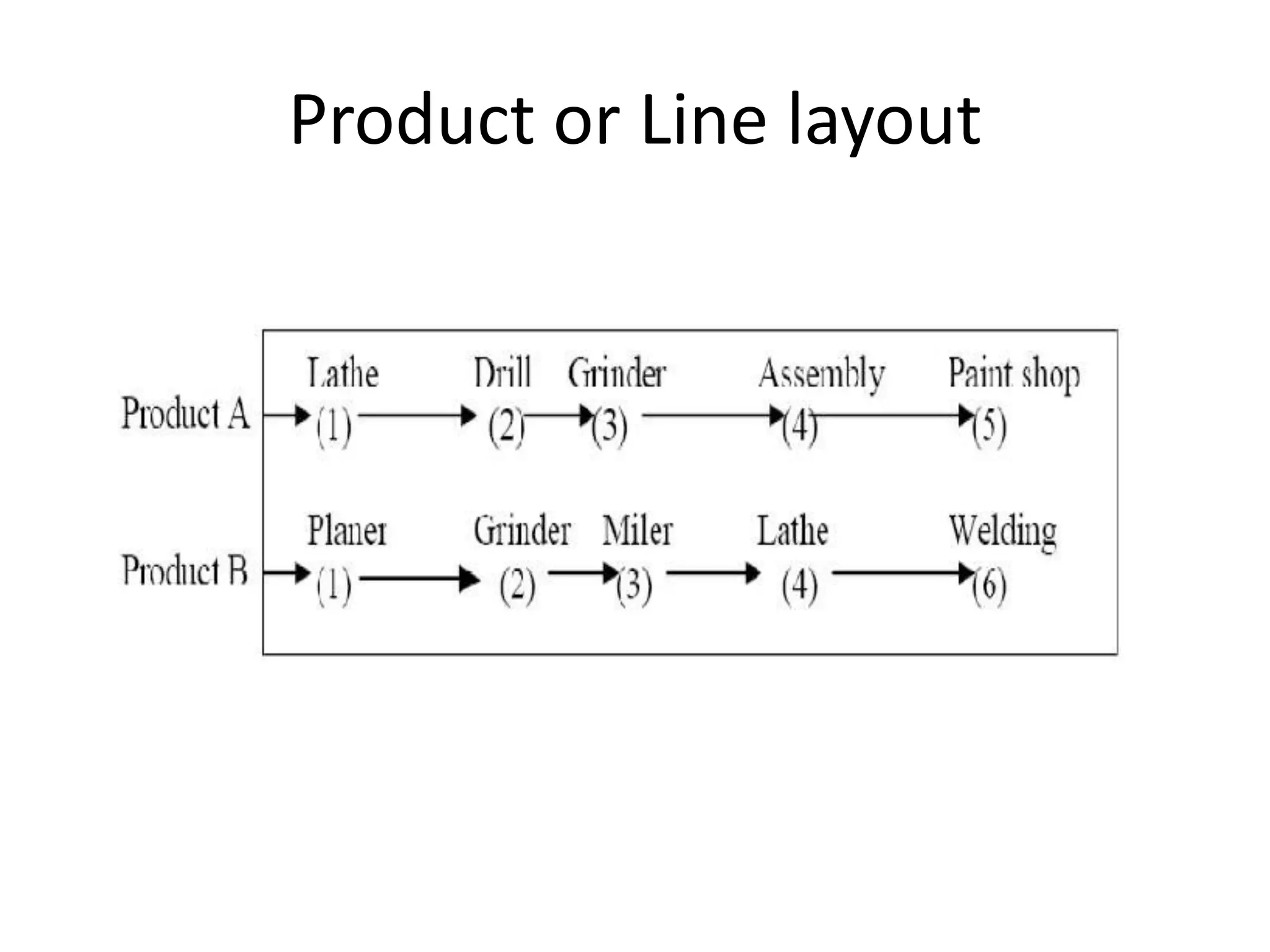
TYPES OF PLANT LAYOUTS1. Product or Line layout2. Process or Functional layout3. Fixed Position or Project layout4. Combination layout (Mixed layout)
Product or Line layout
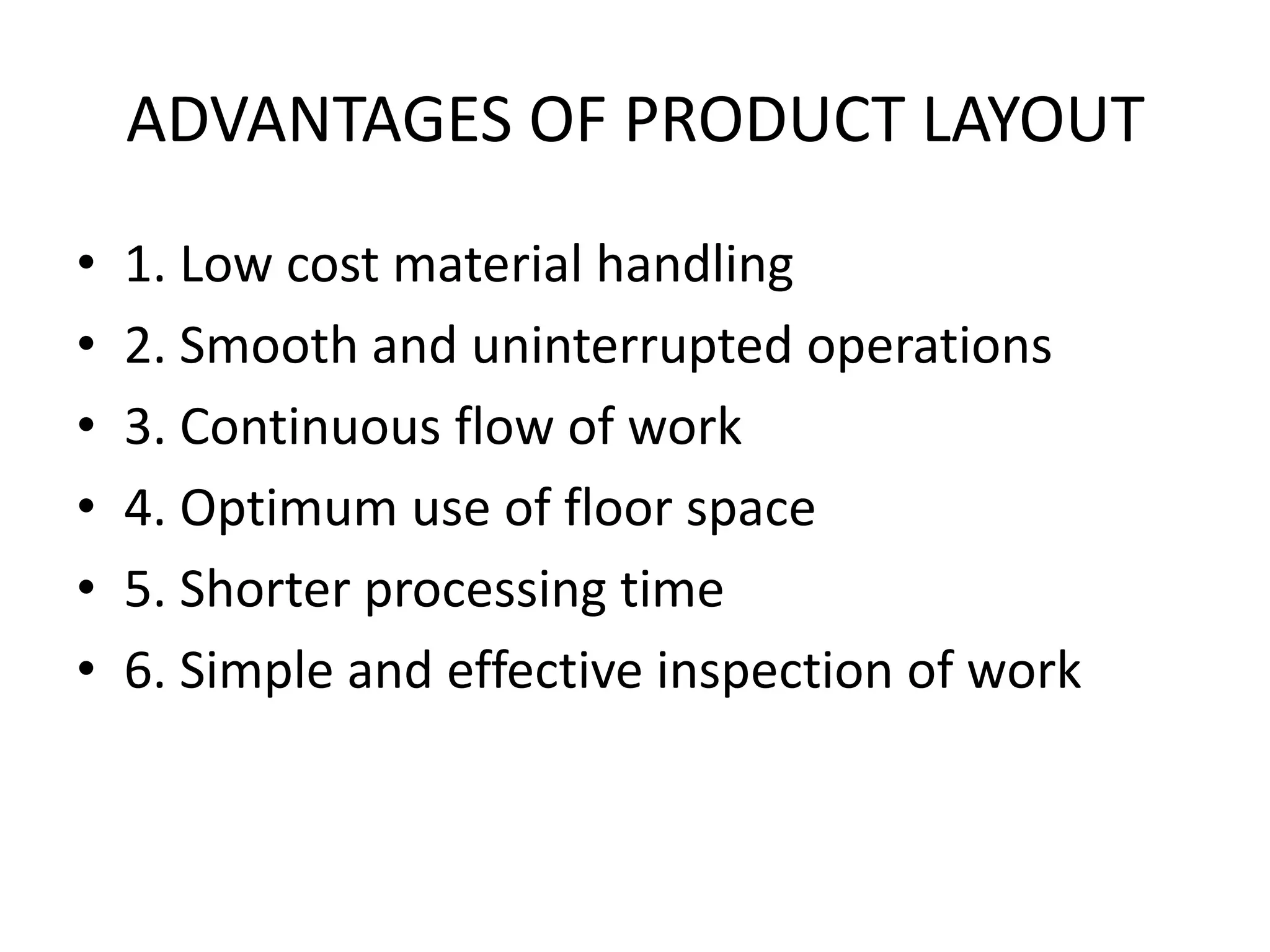
ADVANTAGES OF PRODUCT LAYOUT1. Low cost material handling2. Smooth and uninterrupted operations3. Continuous flow of work4. Optimum use of floor space5. Shorter processing time6. Simple and effective inspection of work
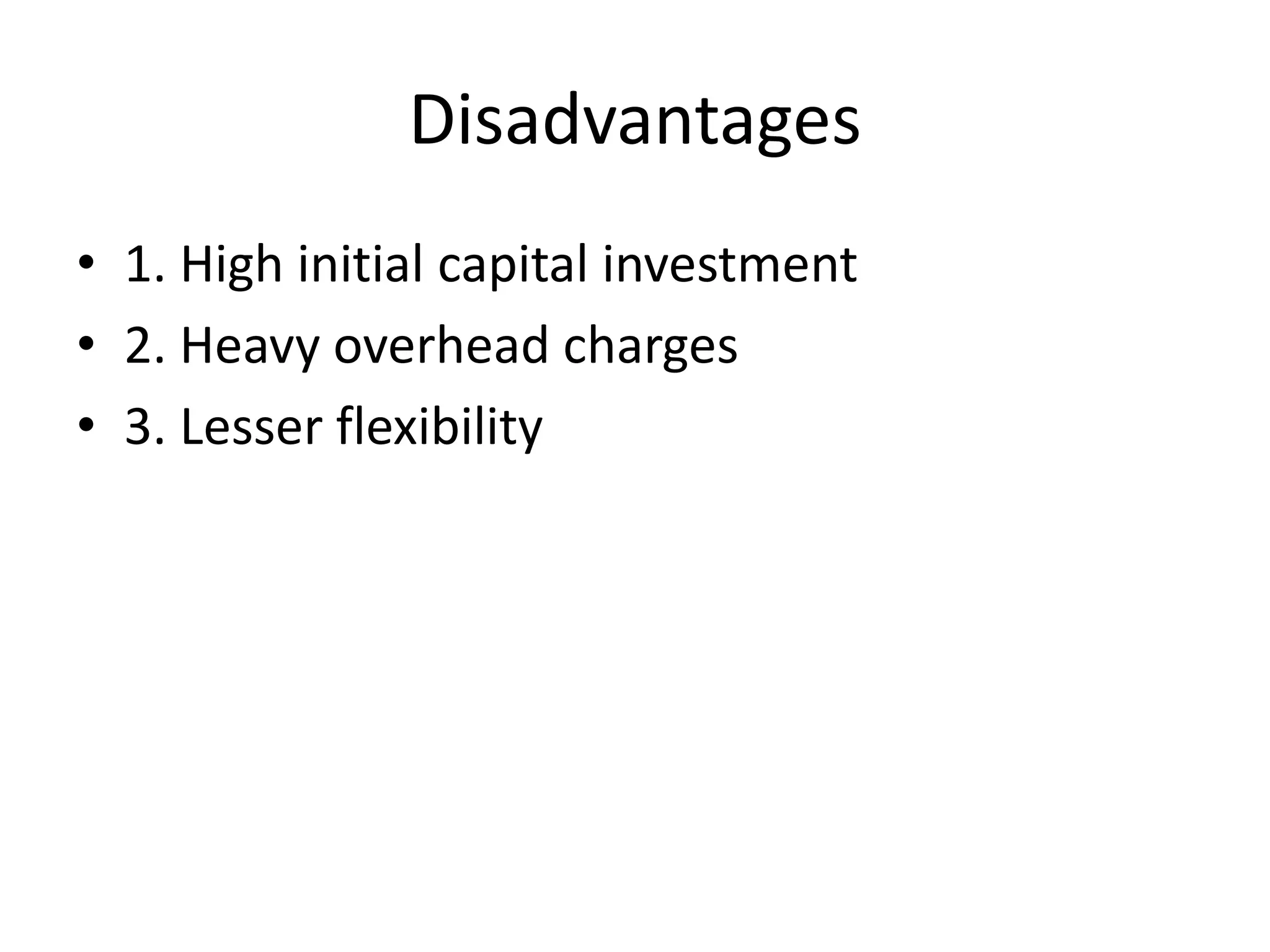
Disadvantages1. High initial capital investment2. Heavy overhead charges3. Lesser flexibility
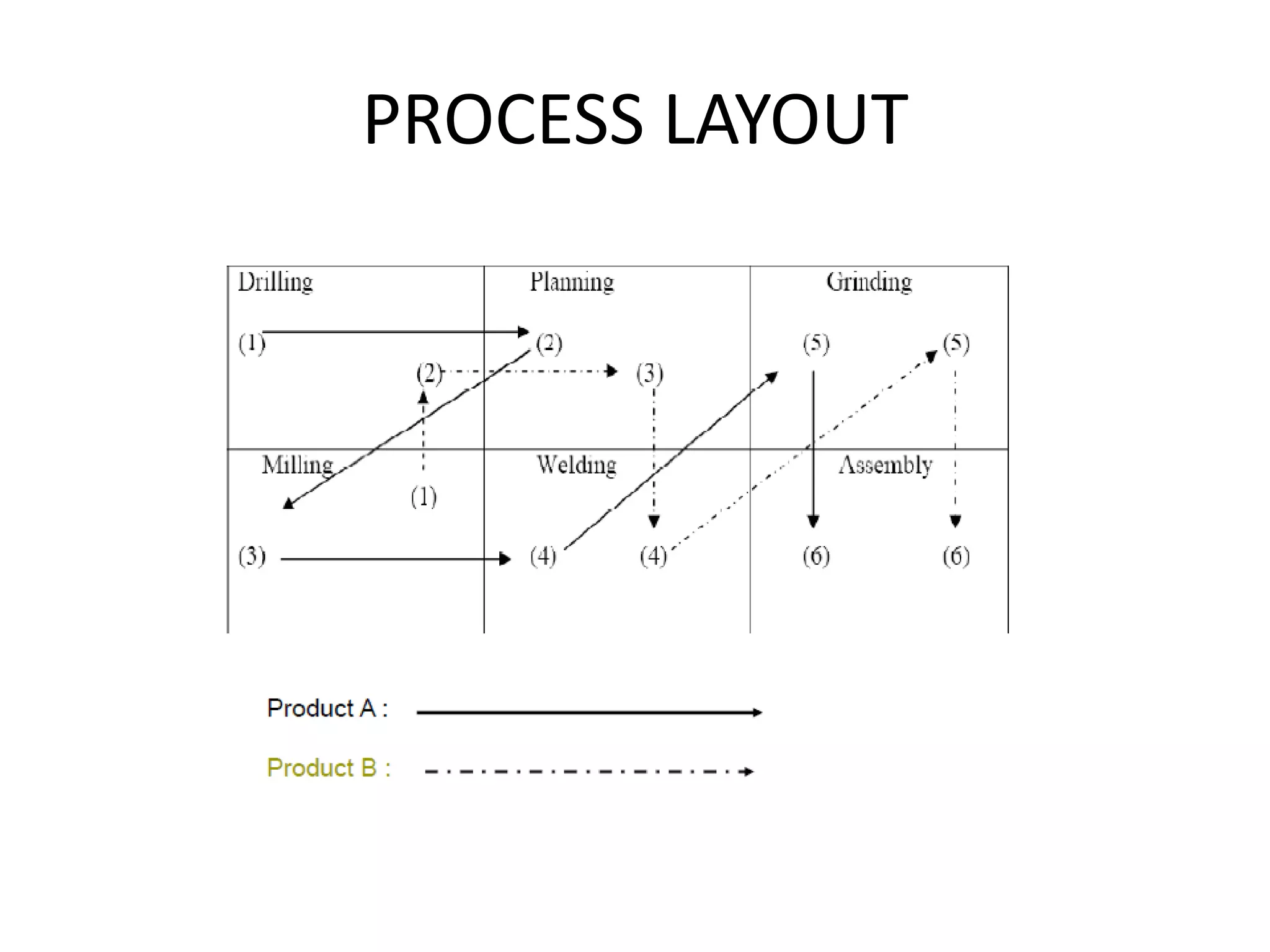
PROCESS LAYOUT
ADVANTAGES OF PROCESSLAYOUT1. Lower initial capital investment2. The overhead cost are relatively low3. Supervision can be more effective and specialised4. Greater flexibility
DISADVANTAGES OF PROCESSLAYOUT1. Material handling costs are high due to backtracking2. More skilled labour is required3. More frequent inspection is needed
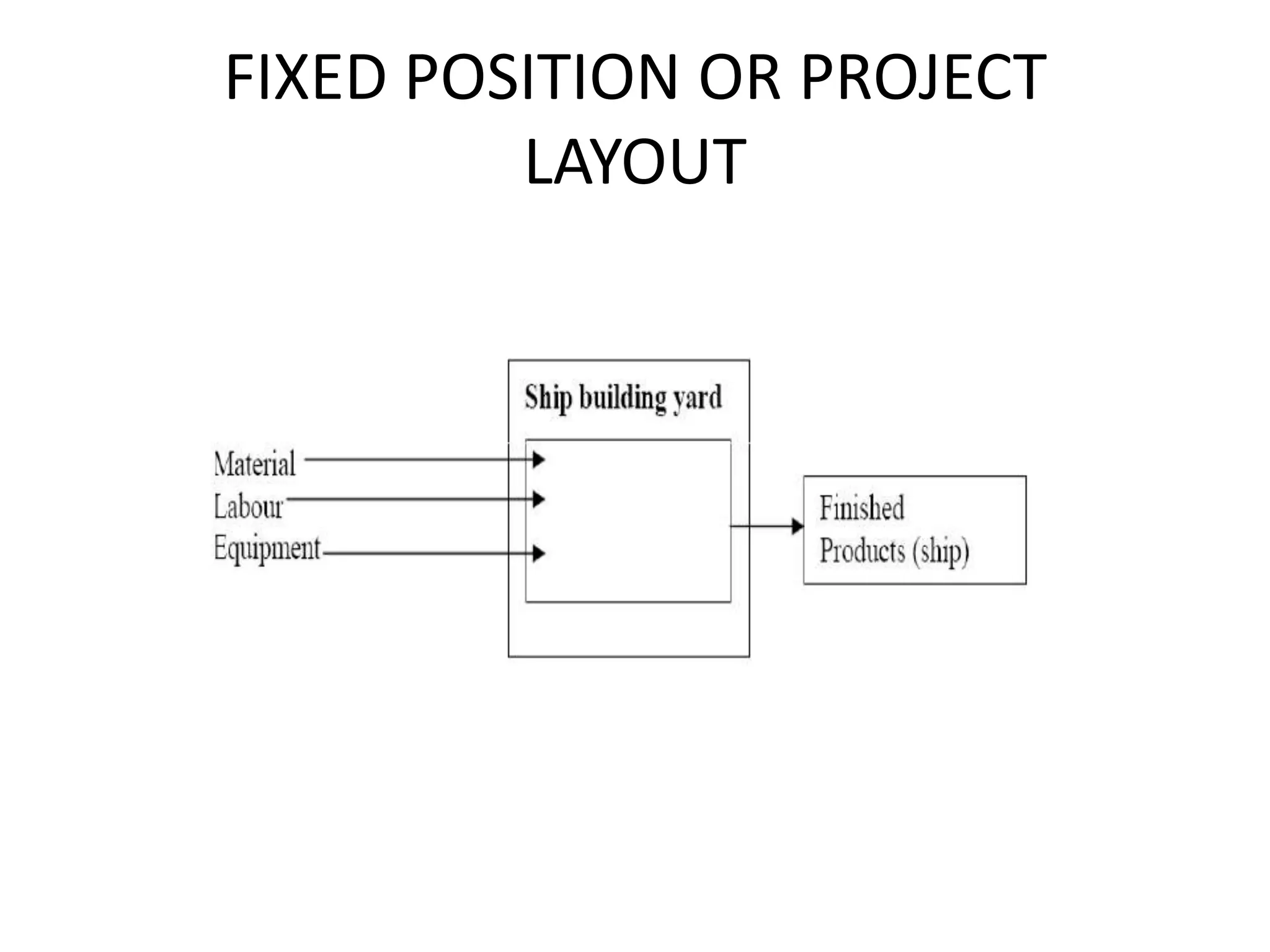
FIXED POSITION OR PROJECTLAYOUT
ADVANTAGES OF FIXEDPOSITION LAYOUT1. It saves time and cost involved on the movement ofwork from one work station to another2. The layout is flexible as change in job design andoperation sequence can be easily incorporated3. It is more economical when several orders indifferent stages of progress are being executedsimultaneously
DISADVANTAGES OF FIXEDPOSITION LAYOUT1. Production period being very long, capital investment is very heavy2. Very large space is required for storage of material and equipment near the product
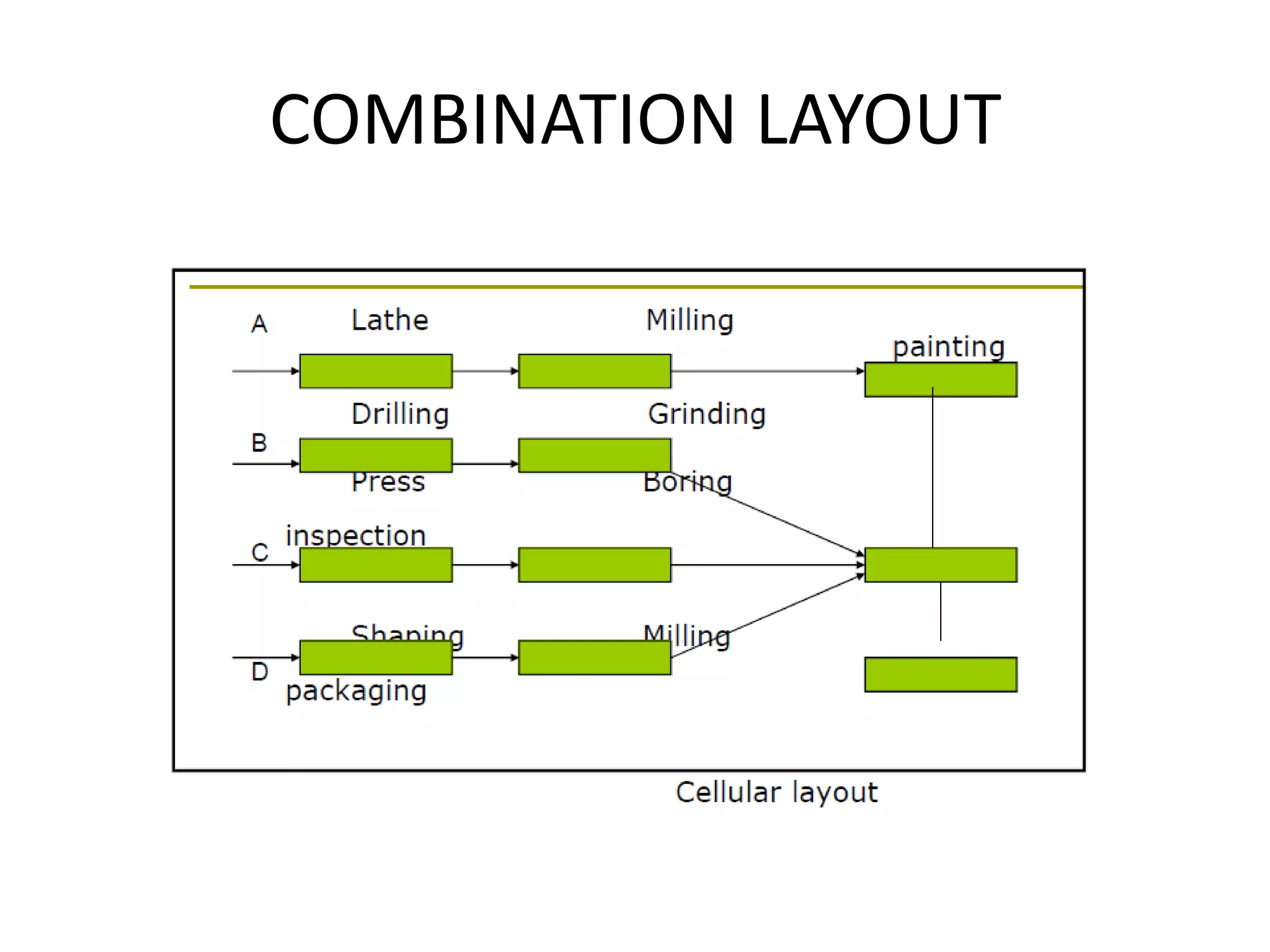
COMBINATION LAYOUT

P L A Nt Layout1

  • 1.
  • 2.
    FacilitylayoutPlanning:for the locationof all machines, utilities, employee workstations, customer service areas, material storage areas, aisles, restrooms, lunchrooms, internal walls, offices, and computer roomsfor the flow patterns of materials and people around, into, and within buildingsinfrastructure services such as the delivery of line communications, energy, and water and the removal of waste water all make up basic utilities
  • 3.
    Characteristics of theFacility Layout DecisionInfrequentExpensive to implementStudied and evaluated extensivelyLong-term commitments
  • 4.
    Objectives of theLayout StrategyDevelop an economical layout which will meet the requirements of:product design and volume (product strategy)Process equipment and capacity (process strategy)quality of work life (human resource strategy)building and site constraints (location strategy)
  • 5.
    Importance of LayoutFacilitates:Manufacturing process. Facilitates quick movements by reduction of transportation & waiting timeMinimises material movement & handling. Efficient utilisation of resources: Men, Materials, Machines. Achieves efficiency by effective planning. Improves quality of operations by proper selection of plant, machinery, operations & sequencing.
  • 6.
    Factors Affecting thePlantLayout DecisionTypes of ProductionScale of ProductionType of machinesType of Building FacilitiesAvailability of Total Floor AreaPossibility of Future ExpansionArrangement of Material Handling Equipment
  • 7.
    7MKS-BTMII-LEC2Flow Pattern(b) L-Flow(a)I-FlowI-Flow: Separate receiving and shipping areaL-Flow: When straight line flow chart to be accommodatedU-Flow: Very popular as a combination of receiving and shipping.O-Flow: When it is desired to terminate the flow near where it is originated.S-Flow: When the production line is long and zigzagging on the production floor is required.(c) U-Flow(e) O-Flow(d) S-Flow
  • 8.
    TYPES OF PLANTLAYOUTS1. Product or Line layout2. Process or Functional layout3. Fixed Position or Project layout4. Combination layout (Mixed layout)
  • 9.
  • 10.
    ADVANTAGES OF PRODUCTLAYOUT1. Low cost material handling2. Smooth and uninterrupted operations3. Continuous flow of work4. Optimum use of floor space5. Shorter processing time6. Simple and effective inspection of work
  • 11.
    Disadvantages1. High initialcapital investment2. Heavy overhead charges3. Lesser flexibility
  • 12.
  • 13.
    ADVANTAGES OF PROCESSLAYOUT1.Lower initial capital investment2. The overhead cost are relatively low3. Supervision can be more effective and specialised4. Greater flexibility
  • 14.
    DISADVANTAGES OF PROCESSLAYOUT1.Material handling costs are high due to backtracking2. More skilled labour is required3. More frequent inspection is needed
  • 15.
    FIXED POSITION ORPROJECTLAYOUT
  • 16.
    ADVANTAGES OF FIXEDPOSITIONLAYOUT1. It saves time and cost involved on the movement ofwork from one work station to another2. The layout is flexible as change in job design andoperation sequence can be easily incorporated3. It is more economical when several orders indifferent stages of progress are being executedsimultaneously
  • 17.
    DISADVANTAGES OF FIXEDPOSITIONLAYOUT1. Production period being very long, capital investment is very heavy2. Very large space is required for storage of material and equipment near the product
  • 18.