Industrial Accidents
Agenda 
 Industrial Accidents 
 Causes 
 Preventions 
 Statutory provisions 
 INDUSTRIAL HEALTH 
 Importance. 
 Methods to improve. 
 Responsibilities 
 Statutory provisions
 An accident is a unplanned and un-controlled 
event happened results in injury. 
 “IA- is an occurrence in an industrial premises 
causing physical injury to an employee which 
make him unfit to resume his duties in the next 48 
hours” 
• - FACTORIES ACT-1948
Causes of Accidents 
 Accidents are usually the result of combination 
of factors which differs from different situations. 
 There is no single cause for an happening of 
accidents 
 They can also determined by an tool called Fish- 
Bone Analysis.
Causes 
 Unsafe Condition 
 Unsafe Acts 
 Other Cause
Unsafe Conditions 
 They are work related causes. 
 They are associated with defective plants, equipments, 
tools, buildings (Technical Factors) 
 They are also associated with work-related factors: 
Nature of jobs, Nature of machinery and 
Equipments, Poor physical conditions, Psychological 
climate,Work schedules.
Unsafe Acts 
 Results in lack of knowledge or skills on the part of 
employees: 
 Operating without Authority 
 Failing to secure the equipment 
 Carelessness 
 Sped processing 
 Unsafe procedures 
 Unsafe equipments 
 Improper lifting
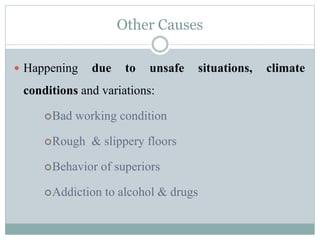
Other Causes 
 Happening due to unsafe situations, climate 
conditions and variations: 
Bad working condition 
Rough & slippery floors 
Behavior of superiors 
Addiction to alcohol & drugs
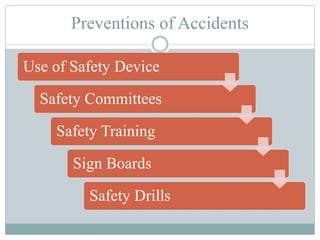
Preventions of Accidents 
Use of Safety Device 
Safety Committees 
Safety Training 
Sign Boards 
Safety Drills
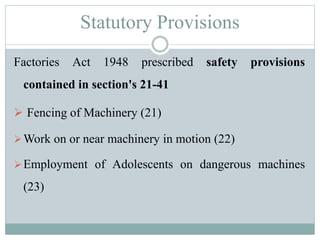
Statutory Provisions 
Factories Act 1948 prescribed safety provisions 
contained in section's 21-41 
 Fencing of Machinery (21) 
Work on or near machinery in motion (22) 
Employment of Adolescents on dangerous machines 
(23)
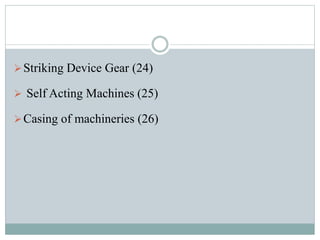
Striking Device Gear (24) 
 Self Acting Machines (25) 
Casing of machineries (26)
 Prohibition of women's or children's near machines (27) 
 Hoists & Lifts (28) 
 Lifting Machines, chains (28) 
Revolving Machinery (30) 
 Pressure Plants (31) 
 Floors stairs, other means of access (32)
 Pits and openings in floors (33) 
Excessive weights (34) 
Protection of eyes (35) 
Precaution against dangerous fumes (36) 
Precaution against electric lights (36 A) 
Explosive or inflammable gas or dust (37)
Precautions in case of fire (38) 
Safety of Building and Machinery (40) 
Power to make Rules (41)
Industrial Health
 Health is a positive and dynamic concept implies more 
than an absence of illness. 
 “State of complete physical, mental, and social well 
being and not merely the absence of disease” 
 Objective of Industrial Health is the Prevention of 
injury and diseases rather than cure the disease.
 “The aim of Industrial Hygiene is the promotion and 
maintenance of the highest degree of the physical, social 
and mental well being of the workers, the prevention of 
the factors which are responsible for illness” 
VEIL
Importance 
 Reduces the absenteeism & labour turnover rate. 
 Improves the efficiency 
 Reduces the indiscipline 
 Lessen the industrial discontent 
 Improve motivation and morale 
 Reduce the industrial unrest
Responsibilities 
 HR Department 
o Co-ordinates health and safety 
programs 
o Develops the safety reporting 
system 
o Provides technical expertise 
o Trains the managers to recognize 
and handle the situations 
 Managers 
o Monitor daily 
o Coach employees 
o Investigate accidents 
o Monitor the workplace 
o Identify the difficulties.
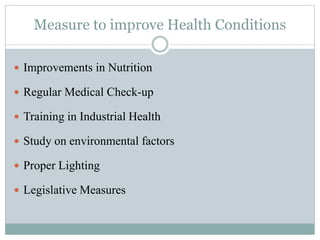
Measure to improve Health Conditions 
 Improvements in Nutrition 
 Regular Medical Check-up 
 Training in Industrial Health 
 Study on environmental factors 
 Proper Lighting 
 Legislative Measures
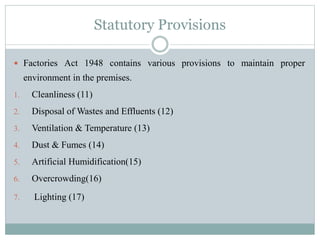
Statutory Provisions 
 Factories Act 1948 contains various provisions to maintain proper 
environment in the premises. 
1. Cleanliness (11) 
2. Disposal ofWastes and Effluents (12) 
3. Ventilation & Temperature (13) 
4. Dust & Fumes (14) 
5. Artificial Humidification(15) 
6. Overcrowding(16) 
7. Lighting (17)
SRINATH RAMAKRISHNAN

Industrial accidents

  • 1.
  • 2.
    Agenda  IndustrialAccidents  Causes  Preventions  Statutory provisions  INDUSTRIAL HEALTH  Importance.  Methods to improve.  Responsibilities  Statutory provisions
  • 3.
     An accidentis a unplanned and un-controlled event happened results in injury.  “IA- is an occurrence in an industrial premises causing physical injury to an employee which make him unfit to resume his duties in the next 48 hours” • - FACTORIES ACT-1948
  • 4.
    Causes of Accidents  Accidents are usually the result of combination of factors which differs from different situations.  There is no single cause for an happening of accidents  They can also determined by an tool called Fish- Bone Analysis.
  • 5.
    Causes  UnsafeCondition  Unsafe Acts  Other Cause
  • 6.
    Unsafe Conditions They are work related causes.  They are associated with defective plants, equipments, tools, buildings (Technical Factors)  They are also associated with work-related factors: Nature of jobs, Nature of machinery and Equipments, Poor physical conditions, Psychological climate,Work schedules.
  • 7.
    Unsafe Acts Results in lack of knowledge or skills on the part of employees:  Operating without Authority  Failing to secure the equipment  Carelessness  Sped processing  Unsafe procedures  Unsafe equipments  Improper lifting
  • 8.
    Other Causes Happening due to unsafe situations, climate conditions and variations: Bad working condition Rough & slippery floors Behavior of superiors Addiction to alcohol & drugs
  • 9.
    Preventions of Accidents Use of Safety Device Safety Committees Safety Training Sign Boards Safety Drills
  • 10.
    Statutory Provisions FactoriesAct 1948 prescribed safety provisions contained in section's 21-41  Fencing of Machinery (21) Work on or near machinery in motion (22) Employment of Adolescents on dangerous machines (23)
  • 11.
    Striking Device Gear(24)  Self Acting Machines (25) Casing of machineries (26)
  • 12.
     Prohibition ofwomen's or children's near machines (27)  Hoists & Lifts (28)  Lifting Machines, chains (28) Revolving Machinery (30)  Pressure Plants (31)  Floors stairs, other means of access (32)
  • 13.
     Pits andopenings in floors (33) Excessive weights (34) Protection of eyes (35) Precaution against dangerous fumes (36) Precaution against electric lights (36 A) Explosive or inflammable gas or dust (37)
  • 14.
    Precautions in caseof fire (38) Safety of Building and Machinery (40) Power to make Rules (41)
  • 15.
  • 16.
     Health isa positive and dynamic concept implies more than an absence of illness.  “State of complete physical, mental, and social well being and not merely the absence of disease”  Objective of Industrial Health is the Prevention of injury and diseases rather than cure the disease.
  • 17.
     “The aimof Industrial Hygiene is the promotion and maintenance of the highest degree of the physical, social and mental well being of the workers, the prevention of the factors which are responsible for illness” VEIL
  • 18.
    Importance  Reducesthe absenteeism & labour turnover rate.  Improves the efficiency  Reduces the indiscipline  Lessen the industrial discontent  Improve motivation and morale  Reduce the industrial unrest
  • 19.
    Responsibilities  HRDepartment o Co-ordinates health and safety programs o Develops the safety reporting system o Provides technical expertise o Trains the managers to recognize and handle the situations  Managers o Monitor daily o Coach employees o Investigate accidents o Monitor the workplace o Identify the difficulties.
  • 20.
    Measure to improveHealth Conditions  Improvements in Nutrition  Regular Medical Check-up  Training in Industrial Health  Study on environmental factors  Proper Lighting  Legislative Measures
  • 21.
    Statutory Provisions Factories Act 1948 contains various provisions to maintain proper environment in the premises. 1. Cleanliness (11) 2. Disposal ofWastes and Effluents (12) 3. Ventilation & Temperature (13) 4. Dust & Fumes (14) 5. Artificial Humidification(15) 6. Overcrowding(16) 7. Lighting (17)
  • 22.