Quality Circle is a small group of employees 
who work-in same work area meet at 
periodic intervals to discuss work-related 
issues and to offer suggestions & ideas for 
improvements in production methods and 
quality control .
Basic Principle 
“ Employee participation in decision making and 
problem - solving improves the quality of work ” 
Quality Circle is 
 Group of employees 
 Work on similar area 
 Solve problems related to work 
 Improve production techniques 
 Improve quality
Started in 1962 in Japan 
Kaoru Ishikawa is the creator of Quality Circles 
Movement in Japan is coordinated by Japanese 
Union of Scientists and Engineers (JUSE) 
In India Quality Circles is promoted by QCFI 
(Quality Circle Forum of India)
Operation of quality circle 
• Problem selection 
• Problem analysis 
• Generate alternative solutions 
• Select the most appropriate solution 
• Problem identification 
• Prepare plan of action 
• Present solution to management for 
approval 
•Implementation of solution
Objectives Of Q C 
 Create problem solving capability 
 Build an attitude of problem prevention. 
 Reduce errors and enhance quality and 
productivity 
 Improve communication in the organization 
 Inspire more effective team work. 
 Increase employees motivation. 
 Develop harmonious manager workers 
relationship 
 Promote cost reduction 
 Promote personnel and leadership development
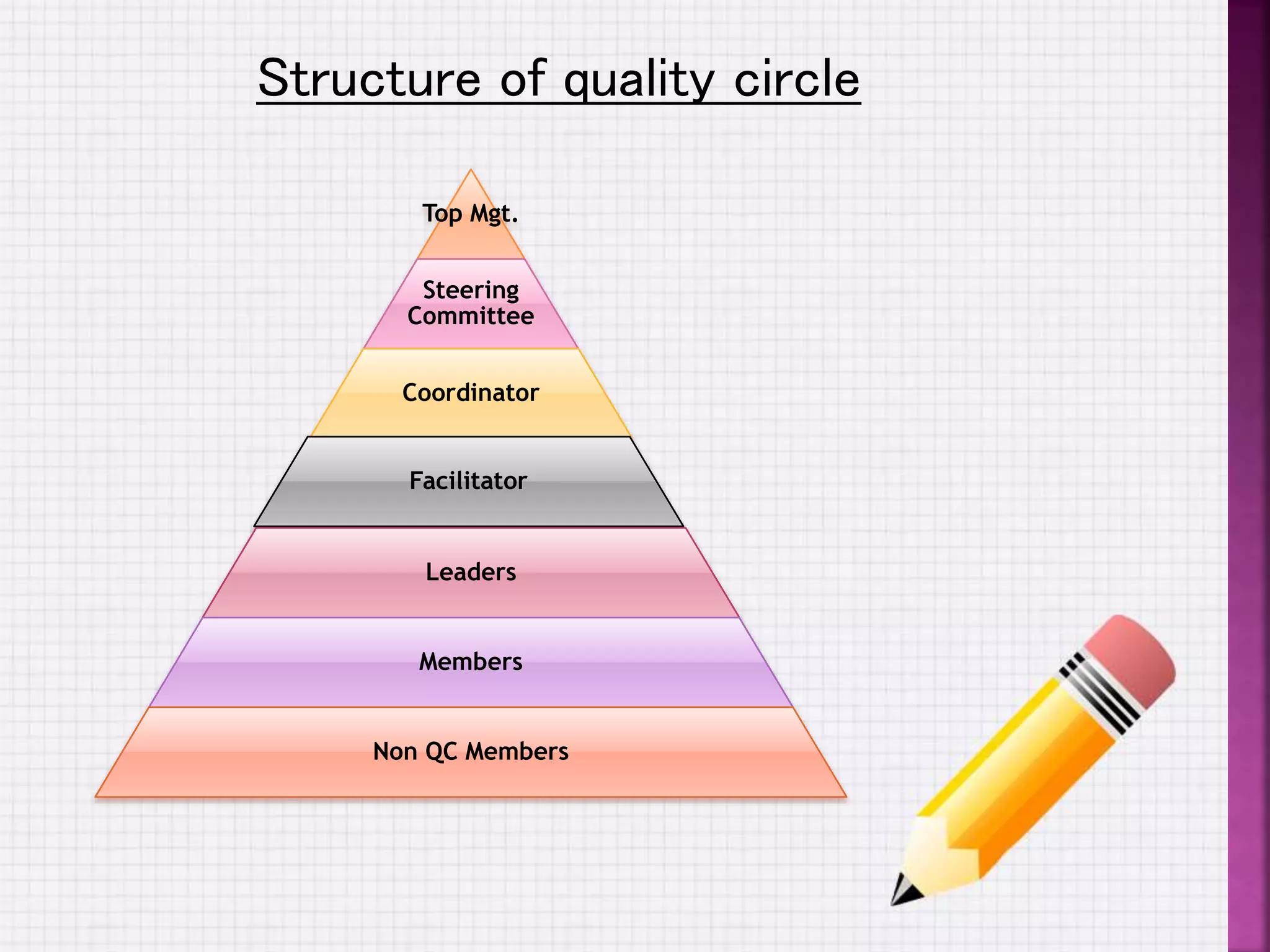
Structure of quality circle 
Top Mgt. 
Steering 
Committee 
Coordinator 
Facilitator 
Leaders 
Members 
Non QC Members
Structure of quality circle 
• A steering committee: This is at the top of the 
structure. It is headed by a senior executive 
and includes representatives from the top 
management personnel and human resources 
development people. It establishes policy, plans 
and directs the program and meets usually once 
in a month. 
• Co-ordinator: He may be a Personnel or 
Administrative officer who co-ordinates and 
supervises the work of the facilitators
• Facilitator: He may be a senior supervisory 
officer. He co-ordiates the works of several 
quality circles through the Circle leaders. 
• Circle leader: Leaders may be from lowest level 
workers or Supervisors. A Circle leader 
organizes and conducts Circle activities. 
• Circle members : They may be staff workers. 
Without circle members the programme cannot 
exist. They are the lifeblood of quality circles.
Benefits of QC’s 
Increased productivity 
 Improved quality of work 
life 
 Boost employee morale 
 Enhances creativity 
 Improved teamwork 
 Employee involvement
Quality circle

Quality circle

  • 2.
    Quality Circle isa small group of employees who work-in same work area meet at periodic intervals to discuss work-related issues and to offer suggestions & ideas for improvements in production methods and quality control .
  • 3.
    Basic Principle “Employee participation in decision making and problem - solving improves the quality of work ” Quality Circle is  Group of employees  Work on similar area  Solve problems related to work  Improve production techniques  Improve quality
  • 5.
    Started in 1962in Japan Kaoru Ishikawa is the creator of Quality Circles Movement in Japan is coordinated by Japanese Union of Scientists and Engineers (JUSE) In India Quality Circles is promoted by QCFI (Quality Circle Forum of India)
  • 6.
    Operation of qualitycircle • Problem selection • Problem analysis • Generate alternative solutions • Select the most appropriate solution • Problem identification • Prepare plan of action • Present solution to management for approval •Implementation of solution
  • 7.
    Objectives Of QC  Create problem solving capability  Build an attitude of problem prevention.  Reduce errors and enhance quality and productivity  Improve communication in the organization  Inspire more effective team work.  Increase employees motivation.  Develop harmonious manager workers relationship  Promote cost reduction  Promote personnel and leadership development
  • 8.
    Structure of qualitycircle Top Mgt. Steering Committee Coordinator Facilitator Leaders Members Non QC Members
  • 9.
    Structure of qualitycircle • A steering committee: This is at the top of the structure. It is headed by a senior executive and includes representatives from the top management personnel and human resources development people. It establishes policy, plans and directs the program and meets usually once in a month. • Co-ordinator: He may be a Personnel or Administrative officer who co-ordinates and supervises the work of the facilitators
  • 10.
    • Facilitator: Hemay be a senior supervisory officer. He co-ordiates the works of several quality circles through the Circle leaders. • Circle leader: Leaders may be from lowest level workers or Supervisors. A Circle leader organizes and conducts Circle activities. • Circle members : They may be staff workers. Without circle members the programme cannot exist. They are the lifeblood of quality circles.
  • 11.
    Benefits of QC’s Increased productivity  Improved quality of work life  Boost employee morale  Enhances creativity  Improved teamwork  Employee involvement