This presentation introduces quality circles (QCs) as an important aspect of production
management.
Quality Circles in Production Management
Presented by-
Bhumika Shetty (08)
Debangshu Das (14)
Neha Naidu (40)
Nissi Shelke (58)
Parin Saraswat (45)
Govind Varma (65)
Photo by Pixabay
General Introduction of Quality
Circles
- Quality Circles are a group of employees who voluntarily
come together in regular meetings to identify, analyze, and
solve work-related problems.
- They were first introduced in Japan in the 1960s and have
now become a popular practice across the world.
- QCs are a participatory management technique that
involves employees in problem-solving and decision-
making processes.
Photo by Pixabay
Definition of Quality Circles
- Quality Circles are a small group of employees who meet
regularly to identify, analyze, and solve work-related
problems.
- The group is usually made up of 6-12 members who share
a common work area or process.
- The meetings are chaired by a group leader who is usually
elected by the members.
Photo by Pixabay
Features of Quality Circles
- Employees voluntarily participate in the group.
- The group is small and consists of members who
share a common work area or process.
- Meetings are held regularly, usually once a week or
once a month.
- The group leader is elected by the members and is
responsible for chairing the meetings.
Photo by Pixab
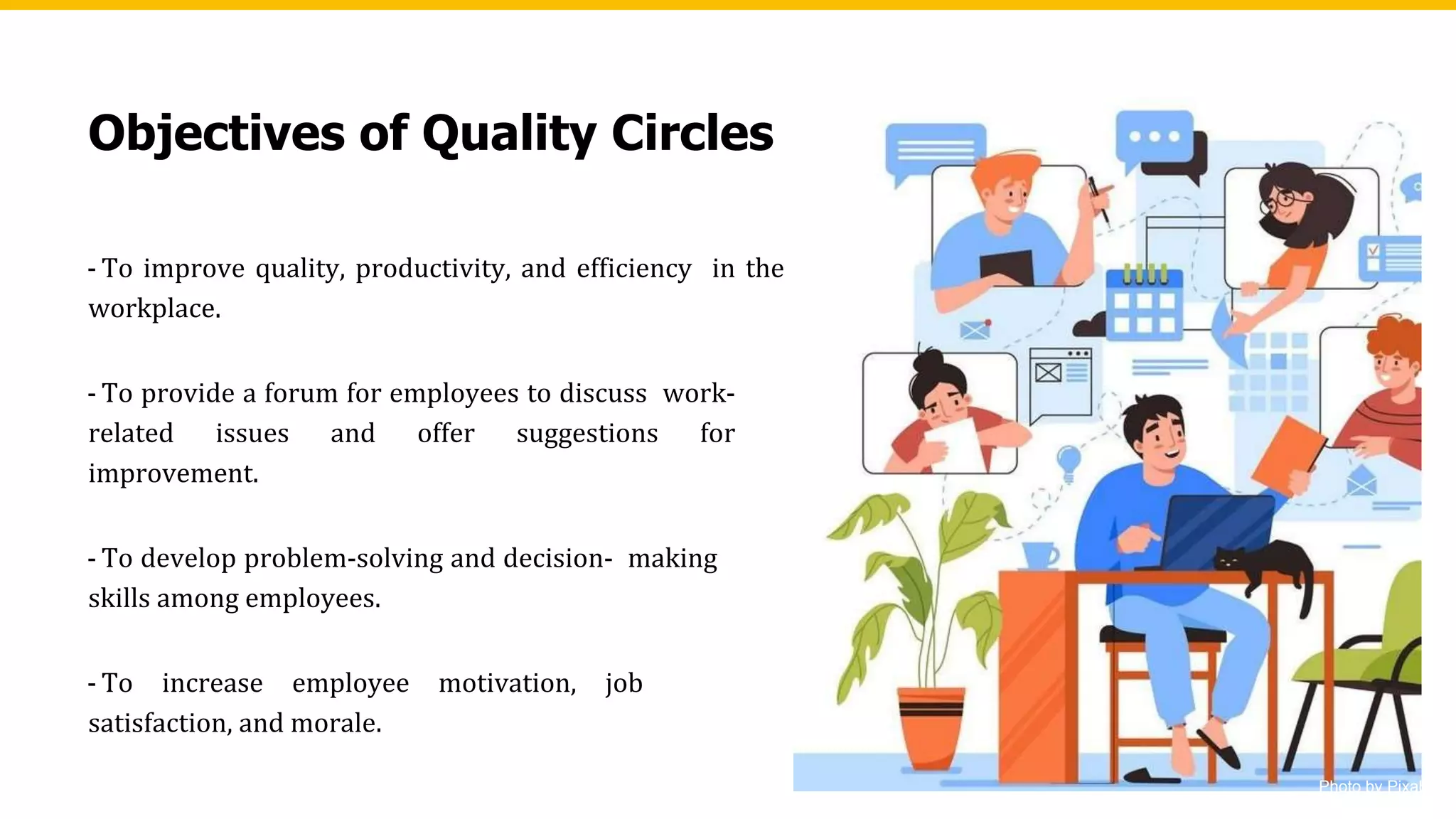
Objectives of Quality Circles
- To improve quality, productivity, and efficiency in the
workplace.
- To provide a forum for employees to discuss work-
related issues and offer suggestions for
improvement.
- To develop problem-solving and decision- making
skills among employees.
- To increase employee motivation, job
satisfaction, and morale.
Photo by Pixabay
Organization for Quality Circles
- The management creates a supportive environment for
the formation and operation of Quality Circles.
- A steering committee is set up to oversee the formation
and operation of Quality Circles within the organization.
- The steering committee develops guidelines, selects
group leaders, and monitors the progress of Quality
Circles.
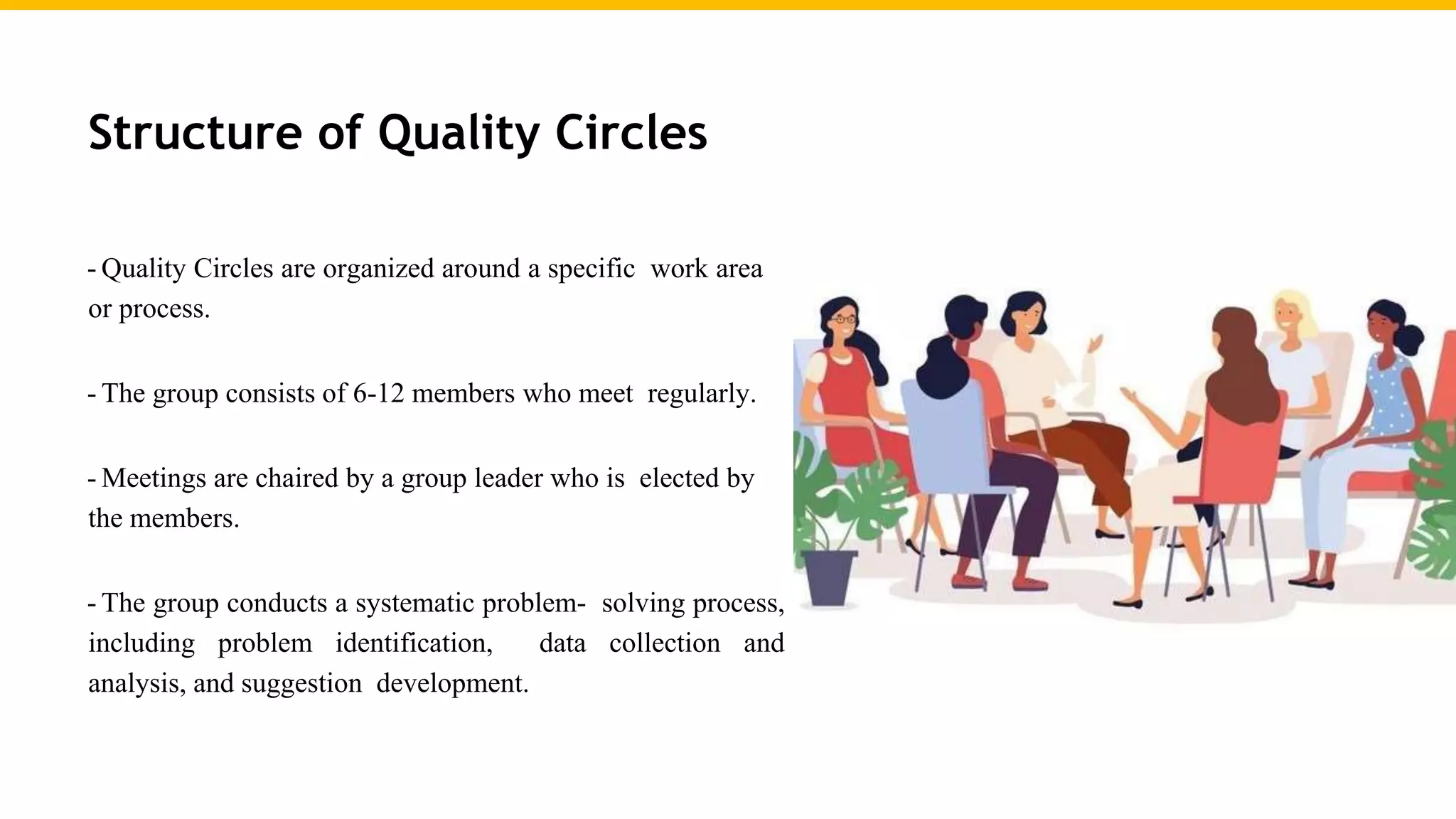
Structure of Quality Circles
- Quality Circles are organized around a specific work area
or process.
- The group consists of 6-12 members who meet regularly.
- Meetings are chaired by a group leader who is elected by
the members.
- The group conducts a systematic problem- solving process,
including problem identification, data collection and
analysis, and suggestion development.
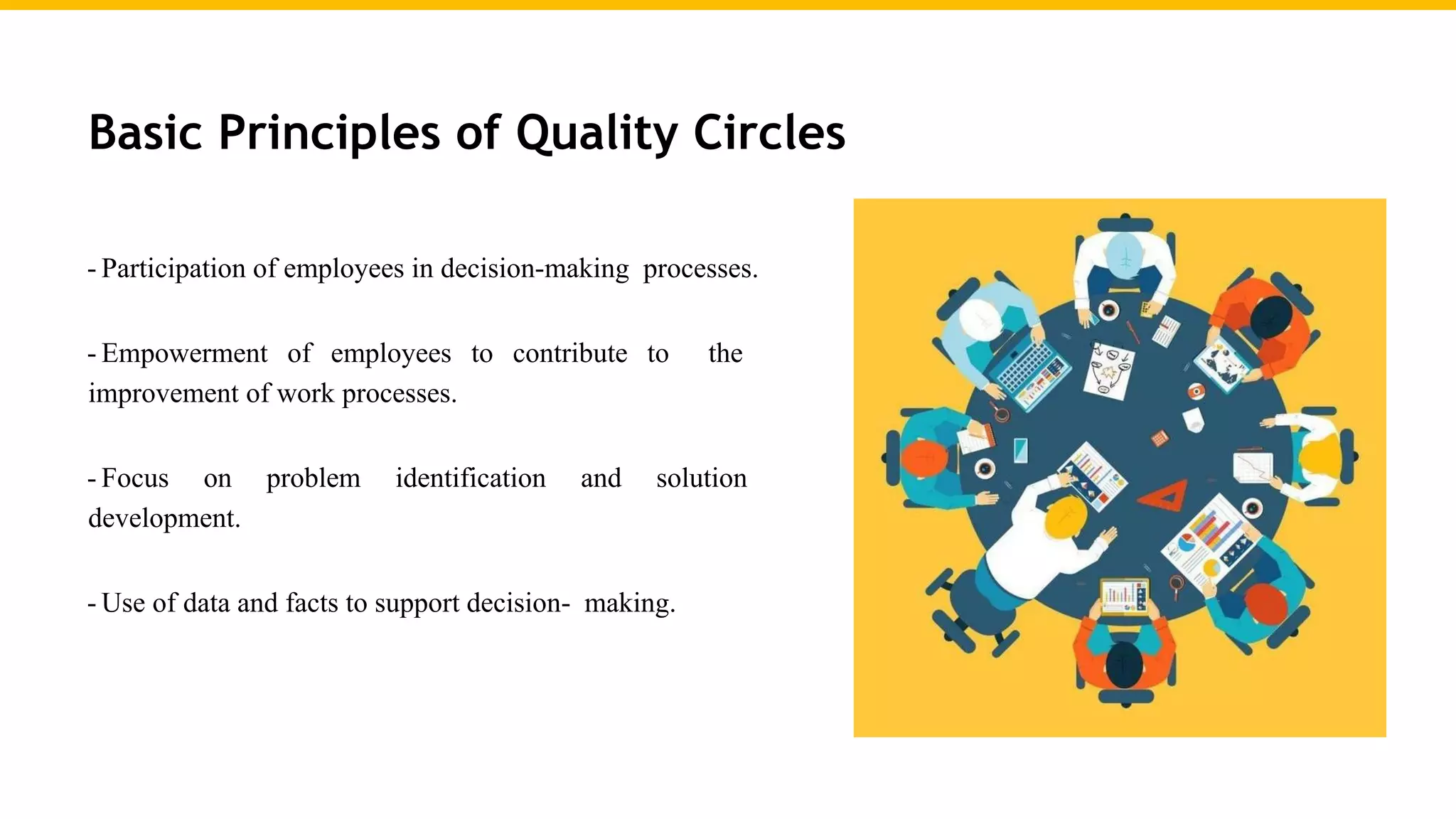
Basic Principles of Quality Circles
- Participation of employees in decision-making processes.
- Empowerment of employees to contribute to the
improvement of work processes.
- Focus on problem identification and solution
development.
- Use of data and facts to support decision- making.
Advantages of Quality Circles
- Improved quality, productivity, and efficiency in the
workplace.
- Increased employee motivation, job
satisfaction, and morale.
- Development of problem-solving and decision- making
skills among employees.
- Improved communication and teamwork within the
organization.
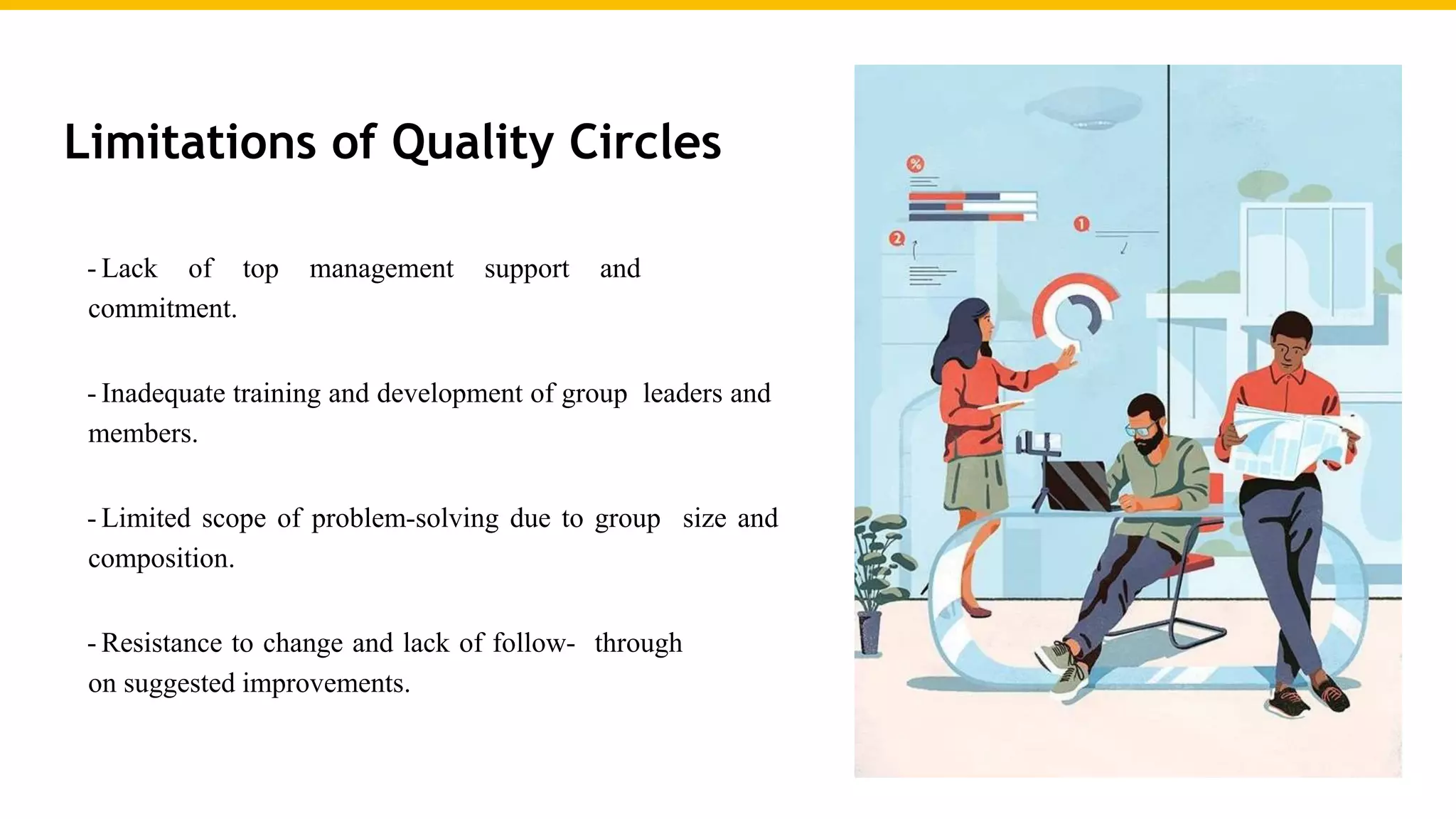
Limitations of Quality Circles
- Lack of top management support and
commitment.
- Inadequate training and development of group leaders and
members.
- Limited scope of problem-solving due to group size and
composition.
- Resistance to change and lack of follow- through
on suggested improvements.
Distinction between Quality
Control and Quality Circles
- Quality control involves the use of statistical techniques to
monitor and control the quality of a product or service.
- Quality Circle, on the other hand, involves the direct
involvement of employees in problem- solving and
decision-making processes to improve work processes.
- Quality control is a top-down approach, while Quality
Circles are a bottom-up approach.
Conclusion
QC has quality of product life as its primary objectives.
QC deals with only product quality. It also aim at
individual and group development. Quality Circles are not
limited to manufacturing firms only.
They are applicable for variety of organizations where there
is scope for group based solution of work related problems.
Quality Circles are relevant for factories, firms, schools,
hospitals, universities, research institutes, banks,
government offices etc.
Quality Circles are not limited to manufacturing firms only.
The P.W.D. of Maharashtra has set an example for
the Government organisations marching on the path of
Quality Improvement.

Quality Circle.pptx

  • 1.
    This presentation introducesquality circles (QCs) as an important aspect of production management. Quality Circles in Production Management Presented by- Bhumika Shetty (08) Debangshu Das (14) Neha Naidu (40) Nissi Shelke (58) Parin Saraswat (45) Govind Varma (65)
  • 2.
    Photo by Pixabay GeneralIntroduction of Quality Circles - Quality Circles are a group of employees who voluntarily come together in regular meetings to identify, analyze, and solve work-related problems. - They were first introduced in Japan in the 1960s and have now become a popular practice across the world. - QCs are a participatory management technique that involves employees in problem-solving and decision- making processes.
  • 3.
    Photo by Pixabay Definitionof Quality Circles - Quality Circles are a small group of employees who meet regularly to identify, analyze, and solve work-related problems. - The group is usually made up of 6-12 members who share a common work area or process. - The meetings are chaired by a group leader who is usually elected by the members.
  • 4.
    Photo by Pixabay Featuresof Quality Circles - Employees voluntarily participate in the group. - The group is small and consists of members who share a common work area or process. - Meetings are held regularly, usually once a week or once a month. - The group leader is elected by the members and is responsible for chairing the meetings.
  • 5.
    Photo by Pixab Objectivesof Quality Circles - To improve quality, productivity, and efficiency in the workplace. - To provide a forum for employees to discuss work- related issues and offer suggestions for improvement. - To develop problem-solving and decision- making skills among employees. - To increase employee motivation, job satisfaction, and morale.
  • 6.
    Photo by Pixabay Organizationfor Quality Circles - The management creates a supportive environment for the formation and operation of Quality Circles. - A steering committee is set up to oversee the formation and operation of Quality Circles within the organization. - The steering committee develops guidelines, selects group leaders, and monitors the progress of Quality Circles.
  • 7.
    Structure of QualityCircles - Quality Circles are organized around a specific work area or process. - The group consists of 6-12 members who meet regularly. - Meetings are chaired by a group leader who is elected by the members. - The group conducts a systematic problem- solving process, including problem identification, data collection and analysis, and suggestion development.
  • 8.
    Basic Principles ofQuality Circles - Participation of employees in decision-making processes. - Empowerment of employees to contribute to the improvement of work processes. - Focus on problem identification and solution development. - Use of data and facts to support decision- making.
  • 9.
    Advantages of QualityCircles - Improved quality, productivity, and efficiency in the workplace. - Increased employee motivation, job satisfaction, and morale. - Development of problem-solving and decision- making skills among employees. - Improved communication and teamwork within the organization.
  • 10.
    Limitations of QualityCircles - Lack of top management support and commitment. - Inadequate training and development of group leaders and members. - Limited scope of problem-solving due to group size and composition. - Resistance to change and lack of follow- through on suggested improvements.
  • 11.
    Distinction between Quality Controland Quality Circles - Quality control involves the use of statistical techniques to monitor and control the quality of a product or service. - Quality Circle, on the other hand, involves the direct involvement of employees in problem- solving and decision-making processes to improve work processes. - Quality control is a top-down approach, while Quality Circles are a bottom-up approach.
  • 12.
    Conclusion QC has qualityof product life as its primary objectives. QC deals with only product quality. It also aim at individual and group development. Quality Circles are not limited to manufacturing firms only. They are applicable for variety of organizations where there is scope for group based solution of work related problems. Quality Circles are relevant for factories, firms, schools, hospitals, universities, research institutes, banks, government offices etc. Quality Circles are not limited to manufacturing firms only. The P.W.D. of Maharashtra has set an example for the Government organisations marching on the path of Quality Improvement.