ZINC
TOXICITY
WHAT IS ZINC?
environmentally ubiquitous
 Zinc(Zn) is a metallic chemical element and
and essential for life.
 Zinc is the 25th most abundant element, accounting for approximately
0.02% by weight of the earth’s crust
 Crystalline Zn is a bluish white metal, atomic weight, 65.38; atomic
number, 30; density, 7.13 g/cm3; melting point, 419.5°C; boiling
point,908°C;, Zn occurs only in the divalent state and does not occur as a
metal in nature
 It’s essential requirement for a body health, total body content of zinc is
about 2 gm, ,about 60% of zinc is present in muscles and 30% in bones
,it is also present in the brain,liver and skin
 zinc play a vital role in bringing a vitamin A from liver to the retina and
play important role in various signaling pathways ,cell prolifertion
,differentiation and apoptosis ..It’s essential for normal function of the
pancreas
SOURCES OF ZINC :
 Atmospheric; mostly in aerosols in the oxidized form.
 Water; present as simple hydrated metal ion, simple organic and
inorganic complexes , stable organic complexes, adsorbed on
organic and inorganic colloids.
 soils
 Foods:
1.Animal sources are Flesh Foods(meat), liver, milk(Cow milk) and
dairy products
2.Vegetables sources are legumes, pulses, nuts, beans, spinach and
cereal
 The colostrum is an especially rich source.
FUNCTION OF ZINC
 Zinc is a cofactor of enzymes (LDH , Alkaline phosphatase , Carbonic anhydrase ,
SOD , Carboxy peptidase )
 RNA polymerase requires Zn for protein biosynthesis ..
 Zn –functions as an antioxidant.
 synthesis of retinol binding protein require Zinc
 Zinc required for immunological functions.
 Zinc supplementation useful for treating acute diarrhea.
 Zinc supplementation improves birth weight of babies.
 Zn necessary to maintain normal levels of vitamin A. •
 Storage & secretion of insulin from β
-cells of pancreas requires Zn
 Gustin –Saliva taste sensation
 Zinc as an anti -cancer agent
 Zn stabilizes membrane structure.
 Zn is essential for proper reproduction.
USES OF ZINC :
Zinc can be found in many things, including:
 Compounds used to make paint, rubber, dyes, wood,
preservatives, and ointments
 Rust prevention coatings
 Vitamin and mineral supplements in treatment of acute
diarrhea in children, common cold and Wilson disease
 Heated or burned galvanized metal (releases zinc fumes)
 zinc compound is used as a common rodenticide such as
Zinc phosphide
 Organo-Zn compounds are used as fungicides, topical
antibiotics, and lubricants Metal alloy manufacturing,
petroleum refineries, nufacturing, cosmetics, woodworking,
embalming,dentistry, military smoke bomb manufacturing,
topical ointments in medicine
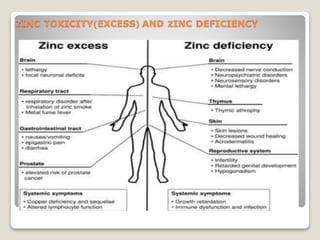
DEFICIENCY OF ZINC
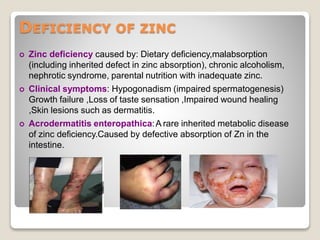
 Zinc deficiency caused by: Dietary deficiency,malabsorption
(including inherited defect in zinc absorption), chronic alcoholism,
nephrotic syndrome, parental nutrition with inadequate zinc.
 Clinical symptoms: Hypogonadism (impaired spermatogenesis)
Growth failure ,Loss of taste sensation ,Impaired wound healing
,Skin lesions such as dermatitis.
 Acrodermatitis enteropathica:A rare inherited metabolic disease
of zinc deficiency.Caused by defective absorption of Zn in the
intestine.
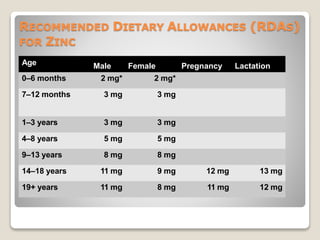
RECOMMENDED DIETARY ALLOWANCES (RDAS)
FOR ZINC
Age Male Female Pregnancy Lactation
0–6 months 2 mg* 2 mg*
7–12 months 3 mg 3 mg
1–3 years 3 mg 3 mg
4–8 years 5 mg 5 mg
9–13 years 8 mg 8 mg
14–18 years 11 mg 9 mg 12 mg 13 mg
19+ years 11 mg 8 mg 11 mg 12 mg
TOXIC SALTS OF ZINC
 Zinc is normally present in our body. Poisonous salts are compounds of
chloride, phosphide, sulfate (white vitriol), oxide and stearate.
 Zinc stearate is used as a cosmetic (baby powder).Inhalation it may
cause pneumonitis.
 Zinc chloride is used to clean metals before soldering. it is strong
corrosive action ,destroy mucous membrane of mouth , esophagus
and stomach .
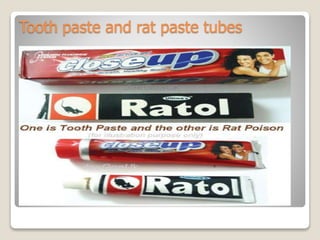
 Zinc phosphide is used as rodenticide. it steel grey crystlline powder
,garlic odor,react with gastric acid librete phosphin gas,cause dyspnea,
pulmonary odema ,bradycardia, circulatory collapse, neurological
symptoms, coma and death.
 Zinc gluconate using as intranasal gel or spray but it used should be
avoided due to it cause loss of the sense of smell (irreversible
anosmia).
 Zinc sulfate is used to treat and prevent zinc deficiency and in te
treatment of acute diarrhea in children
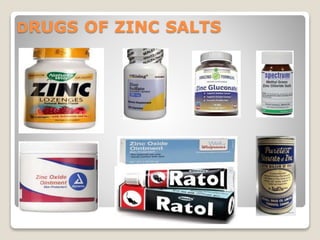
DRUGS OF ZINC SALTS
Tooth paste and rat paste tubes
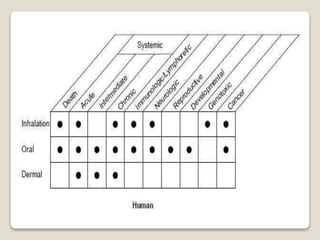
ROUTE OF EXPOSURE
 Inhalation :
inhalation of Zn oxide fume generated by welding and certain other
industrial processes causes metal fume fever, a self-limited flu like illness
is an acute, manifested by fever, chills, myalgia, nausea, fatigue, and
infrequently shortness of breath that occurs after inhalation of Zn oxide
inhalation of Zn chloride, from smoke bombs, causes severe pulmonary
injury severe chemical pneumonia. and may be fatal.
 Ingestion
Food or drink contaminated by exposure to galvanized surfaces can cause
nausea, vomiting, cramps, and diarrhea that is seldom fatal.
 Dermal
mucous membrane exposure comes from aerosolized zinc compounds or
topical ointments containing zinc. Dermal symptoms toxicity generally
produces local irritation, dermatitis,erythema, and ulcerations
 supplements rich in Zn
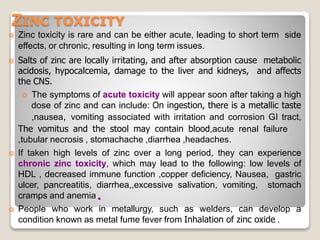
ZINC TOXICITY
 Zinc toxicity is rare and can be either acute, leading to short term side
effects, or chronic, resulting in long term issues.
 Salts of zinc are locally irritating, and after absorption cause metabolic
acidosis, hypocalcemia, damage to the liver and kidneys, and affects
the CNS.
 The symptoms of acute toxicity will appear soon after taking a high
dose of zinc and can include: On ingestion, there is a metallic taste
,nausea, vomiting associated with irritation and corrosion GI tract,
The vomitus and the stool may contain blood,acute renal failure
,tubular necrosis , stomachache ,diarrhea ,headaches.
 If taken high levels of zinc over a long period, they can experience
chronic zinc toxicity, which may lead to the following: low levels of
HDL , decreased immune function ,copper deficiency, Nausea, gastric
ulcer, pancreatitis, diarrhea,,excessive salivation, vomiting, stomach
cramps and anemia .
 People who work in metallurgy, such as welders, can develop a
condition known as metal fume fever from Inhalation of zinc oxide .
FATAL DOSE
 Zinc chloride: 40–70 mg/kg
 Zinc phosphide: 20–40 mg/kg.
 Zinc sulfate: 15 g (10–30 g).
 Zinc oxide fumes: 500 mg/m³
 Fatal period: 3–5 h to few days
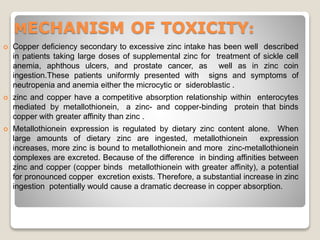
MECHANISM OF TOXICITY:
 Its mechanism is still unknown ,micromolar amounts of the free zinc ion
kills some organisms. The free zinc ion is a powerful Lewis acid up to
the point of being corrosive. When ingested, metallic zinc readily
dissolves in the hydrochloric acid of the stomach, and displaces the
chloride to give the corrosive zinc chloride.) can cause damage to the
stomach lining due to the high solubility of the zinc ion in the acidic
stomach.
 Zinc toxicity has also been linked to alterations of blood lipoprotein
levels, with increased levels of LDL and decreased levels of HDL seen.
 Zinc toxicity may take months to resolve.
 Zinc toxicosis, however, can cause severe disease, and commonly
results in anaemia.. One hypothesis is that erythrocyte antioxidant
pathways are inhibited leading to erythrocyte membrane oxidative
damage These include direct damage of red blood cells
MECHANISM OF TOXICITY:
 Copper deficiency secondary to excessive zinc intake has been well described
in patients taking large doses of supplemental zinc for treatment of sickle cell
anemia, aphthous ulcers, and prostate cancer, as well as in zinc coin
ingestion.These patients uniformly presented with signs and symptoms of
neutropenia and anemia either the microcytic or sideroblastic .
 zinc and copper have a competitive absorption relationship within enterocytes
mediated by metallothionein, a zinc- and copper-binding protein that binds
copper with greater affinity than zinc .
 Metallothionein expression is regulated by dietary zinc content alone. When
large amounts of dietary zinc are ingested, metallothionein expression
increases, more zinc is bound to metallothionein and more zinc-metallothionein
complexes are excreted. Because of the difference in binding affinities between
zinc and copper (copper binds metallothionein with greater affinity), a potential
for pronounced copper excretion exists. Therefore, a substantial increase in zinc
ingestion potentially would cause a dramatic decrease in copper absorption.
ZINC TOXICITY(EXCESS) AND ZINC DEFICIENCY
TREATMENT AND MANAGEMENT
 1. Metal fume fever is self-limiting.
 2. Pulmonary symptoms may be treated with oxygen and beta 2-adrenergic
agonist therapy.
 3. Aggressive fluid resuscitation may be needed following oral exposure, as
GI losses may be significant.
 removal of the zinc source and supportive therapies, including blood
transfusion, intravenous fluid therapy, gastroprotectants , anti-nausea
medications, antioxidants, antibiotics, and sometimes chelation
 When a metallic zinc object is ingested, increasing gastric pH with antacids
and gastroprotectants helps to reduce the rate of zinc dissolution until the
object can be removed. Chelation with d-penicillamine or calcium disodium
EDTAmay be considered if zinc concentrations do not improve after removal
of the zinc source.
 Calcium disodium ethylenediaminetetraacetate (CaNa2EDTA) is the chelator of
choice based on case reports that demonstrate normalization of zinc
concentrations, but there are few clinical data to confirm the efficacy of this
agent.

METAL FUME FEVER
 is A flu-like, febrile syndrome including fever, chills,
headaches, cough, dyspnea, fatigue, and myalgias that
typically resolve within 36 hrs. Symptoms usually occur within
6 hrs of exposure. that may occur after inhaling fumes from
heated metals.
 This typically occurs during welding. Zinc oxide
 There is no antidote. After removal from the source, the
symptoms are selflimiting.
 Treatment is supportive and aimed at symptomatic relief
CASE STUDY
A 35 yr old woman had received treatment involving daily oral
doses of 440-660 mg zinc sulfate over a period of 10 months, plus a
daily vitamin preparation amounting to an additional 80 mg of zinc
sulfate per day. The patient subsequently developed a severe
copper deficiency, involving hypochromic-microcytic anemia,
leukopenia and neutropenia. This status could not be corrected by a
2-month oral dosing period, but symptoms declined after a 5-day iv
administration at a total dose of 10 mg copper. It was concluded that
the elimination of excess zinc is slow and will block the intestinal
absorption of copper .
RFERENCES :
 Review ofForensic Medicine and Toxicology 3rd Edition
 Modern medical Toxicology 4th edition
 Handbook on the Toxicology of metals 3rd edition
 Toxicology Recall 1ST edition
 www.medicalnewstoday. Com /articles
 www.mayoclinicproceedings.org/article/S0025-6196(11)62239-8/fulltext

Zinc poisoning.pptx

  • 1.
  • 2.
    WHAT IS ZINC? environmentallyubiquitous  Zinc(Zn) is a metallic chemical element and and essential for life.  Zinc is the 25th most abundant element, accounting for approximately 0.02% by weight of the earth’s crust  Crystalline Zn is a bluish white metal, atomic weight, 65.38; atomic number, 30; density, 7.13 g/cm3; melting point, 419.5°C; boiling point,908°C;, Zn occurs only in the divalent state and does not occur as a metal in nature  It’s essential requirement for a body health, total body content of zinc is about 2 gm, ,about 60% of zinc is present in muscles and 30% in bones ,it is also present in the brain,liver and skin  zinc play a vital role in bringing a vitamin A from liver to the retina and play important role in various signaling pathways ,cell prolifertion ,differentiation and apoptosis ..It’s essential for normal function of the pancreas
  • 3.
    SOURCES OF ZINC:  Atmospheric; mostly in aerosols in the oxidized form.  Water; present as simple hydrated metal ion, simple organic and inorganic complexes , stable organic complexes, adsorbed on organic and inorganic colloids.  soils  Foods: 1.Animal sources are Flesh Foods(meat), liver, milk(Cow milk) and dairy products 2.Vegetables sources are legumes, pulses, nuts, beans, spinach and cereal  The colostrum is an especially rich source.
  • 4.
    FUNCTION OF ZINC Zinc is a cofactor of enzymes (LDH , Alkaline phosphatase , Carbonic anhydrase , SOD , Carboxy peptidase )  RNA polymerase requires Zn for protein biosynthesis ..  Zn –functions as an antioxidant.  synthesis of retinol binding protein require Zinc  Zinc required for immunological functions.  Zinc supplementation useful for treating acute diarrhea.  Zinc supplementation improves birth weight of babies.  Zn necessary to maintain normal levels of vitamin A. •  Storage & secretion of insulin from β -cells of pancreas requires Zn  Gustin –Saliva taste sensation  Zinc as an anti -cancer agent  Zn stabilizes membrane structure.  Zn is essential for proper reproduction.
  • 5.
    USES OF ZINC: Zinc can be found in many things, including:  Compounds used to make paint, rubber, dyes, wood, preservatives, and ointments  Rust prevention coatings  Vitamin and mineral supplements in treatment of acute diarrhea in children, common cold and Wilson disease  Heated or burned galvanized metal (releases zinc fumes)  zinc compound is used as a common rodenticide such as Zinc phosphide  Organo-Zn compounds are used as fungicides, topical antibiotics, and lubricants Metal alloy manufacturing, petroleum refineries, nufacturing, cosmetics, woodworking, embalming,dentistry, military smoke bomb manufacturing, topical ointments in medicine
  • 6.
    DEFICIENCY OF ZINC Zinc deficiency caused by: Dietary deficiency,malabsorption (including inherited defect in zinc absorption), chronic alcoholism, nephrotic syndrome, parental nutrition with inadequate zinc.  Clinical symptoms: Hypogonadism (impaired spermatogenesis) Growth failure ,Loss of taste sensation ,Impaired wound healing ,Skin lesions such as dermatitis.  Acrodermatitis enteropathica:A rare inherited metabolic disease of zinc deficiency.Caused by defective absorption of Zn in the intestine.
  • 7.
    RECOMMENDED DIETARY ALLOWANCES(RDAS) FOR ZINC Age Male Female Pregnancy Lactation 0–6 months 2 mg* 2 mg* 7–12 months 3 mg 3 mg 1–3 years 3 mg 3 mg 4–8 years 5 mg 5 mg 9–13 years 8 mg 8 mg 14–18 years 11 mg 9 mg 12 mg 13 mg 19+ years 11 mg 8 mg 11 mg 12 mg
  • 8.
    TOXIC SALTS OFZINC  Zinc is normally present in our body. Poisonous salts are compounds of chloride, phosphide, sulfate (white vitriol), oxide and stearate.  Zinc stearate is used as a cosmetic (baby powder).Inhalation it may cause pneumonitis.  Zinc chloride is used to clean metals before soldering. it is strong corrosive action ,destroy mucous membrane of mouth , esophagus and stomach .  Zinc phosphide is used as rodenticide. it steel grey crystlline powder ,garlic odor,react with gastric acid librete phosphin gas,cause dyspnea, pulmonary odema ,bradycardia, circulatory collapse, neurological symptoms, coma and death.  Zinc gluconate using as intranasal gel or spray but it used should be avoided due to it cause loss of the sense of smell (irreversible anosmia).  Zinc sulfate is used to treat and prevent zinc deficiency and in te treatment of acute diarrhea in children
  • 9.
  • 10.
    Tooth paste andrat paste tubes
  • 11.
    ROUTE OF EXPOSURE Inhalation : inhalation of Zn oxide fume generated by welding and certain other industrial processes causes metal fume fever, a self-limited flu like illness is an acute, manifested by fever, chills, myalgia, nausea, fatigue, and infrequently shortness of breath that occurs after inhalation of Zn oxide inhalation of Zn chloride, from smoke bombs, causes severe pulmonary injury severe chemical pneumonia. and may be fatal.  Ingestion Food or drink contaminated by exposure to galvanized surfaces can cause nausea, vomiting, cramps, and diarrhea that is seldom fatal.  Dermal mucous membrane exposure comes from aerosolized zinc compounds or topical ointments containing zinc. Dermal symptoms toxicity generally produces local irritation, dermatitis,erythema, and ulcerations  supplements rich in Zn
  • 13.
    ZINC TOXICITY  Zinctoxicity is rare and can be either acute, leading to short term side effects, or chronic, resulting in long term issues.  Salts of zinc are locally irritating, and after absorption cause metabolic acidosis, hypocalcemia, damage to the liver and kidneys, and affects the CNS.  The symptoms of acute toxicity will appear soon after taking a high dose of zinc and can include: On ingestion, there is a metallic taste ,nausea, vomiting associated with irritation and corrosion GI tract, The vomitus and the stool may contain blood,acute renal failure ,tubular necrosis , stomachache ,diarrhea ,headaches.  If taken high levels of zinc over a long period, they can experience chronic zinc toxicity, which may lead to the following: low levels of HDL , decreased immune function ,copper deficiency, Nausea, gastric ulcer, pancreatitis, diarrhea,,excessive salivation, vomiting, stomach cramps and anemia .  People who work in metallurgy, such as welders, can develop a condition known as metal fume fever from Inhalation of zinc oxide .
  • 14.
    FATAL DOSE  Zincchloride: 40–70 mg/kg  Zinc phosphide: 20–40 mg/kg.  Zinc sulfate: 15 g (10–30 g).  Zinc oxide fumes: 500 mg/m³  Fatal period: 3–5 h to few days
  • 15.
    MECHANISM OF TOXICITY: Its mechanism is still unknown ,micromolar amounts of the free zinc ion kills some organisms. The free zinc ion is a powerful Lewis acid up to the point of being corrosive. When ingested, metallic zinc readily dissolves in the hydrochloric acid of the stomach, and displaces the chloride to give the corrosive zinc chloride.) can cause damage to the stomach lining due to the high solubility of the zinc ion in the acidic stomach.  Zinc toxicity has also been linked to alterations of blood lipoprotein levels, with increased levels of LDL and decreased levels of HDL seen.  Zinc toxicity may take months to resolve.  Zinc toxicosis, however, can cause severe disease, and commonly results in anaemia.. One hypothesis is that erythrocyte antioxidant pathways are inhibited leading to erythrocyte membrane oxidative damage These include direct damage of red blood cells
  • 16.
    MECHANISM OF TOXICITY: Copper deficiency secondary to excessive zinc intake has been well described in patients taking large doses of supplemental zinc for treatment of sickle cell anemia, aphthous ulcers, and prostate cancer, as well as in zinc coin ingestion.These patients uniformly presented with signs and symptoms of neutropenia and anemia either the microcytic or sideroblastic .  zinc and copper have a competitive absorption relationship within enterocytes mediated by metallothionein, a zinc- and copper-binding protein that binds copper with greater affinity than zinc .  Metallothionein expression is regulated by dietary zinc content alone. When large amounts of dietary zinc are ingested, metallothionein expression increases, more zinc is bound to metallothionein and more zinc-metallothionein complexes are excreted. Because of the difference in binding affinities between zinc and copper (copper binds metallothionein with greater affinity), a potential for pronounced copper excretion exists. Therefore, a substantial increase in zinc ingestion potentially would cause a dramatic decrease in copper absorption.
  • 17.
  • 18.
    TREATMENT AND MANAGEMENT 1. Metal fume fever is self-limiting.  2. Pulmonary symptoms may be treated with oxygen and beta 2-adrenergic agonist therapy.  3. Aggressive fluid resuscitation may be needed following oral exposure, as GI losses may be significant.  removal of the zinc source and supportive therapies, including blood transfusion, intravenous fluid therapy, gastroprotectants , anti-nausea medications, antioxidants, antibiotics, and sometimes chelation  When a metallic zinc object is ingested, increasing gastric pH with antacids and gastroprotectants helps to reduce the rate of zinc dissolution until the object can be removed. Chelation with d-penicillamine or calcium disodium EDTAmay be considered if zinc concentrations do not improve after removal of the zinc source.  Calcium disodium ethylenediaminetetraacetate (CaNa2EDTA) is the chelator of choice based on case reports that demonstrate normalization of zinc concentrations, but there are few clinical data to confirm the efficacy of this agent. 
  • 19.
    METAL FUME FEVER is A flu-like, febrile syndrome including fever, chills, headaches, cough, dyspnea, fatigue, and myalgias that typically resolve within 36 hrs. Symptoms usually occur within 6 hrs of exposure. that may occur after inhaling fumes from heated metals.  This typically occurs during welding. Zinc oxide  There is no antidote. After removal from the source, the symptoms are selflimiting.  Treatment is supportive and aimed at symptomatic relief
  • 20.
    CASE STUDY A 35yr old woman had received treatment involving daily oral doses of 440-660 mg zinc sulfate over a period of 10 months, plus a daily vitamin preparation amounting to an additional 80 mg of zinc sulfate per day. The patient subsequently developed a severe copper deficiency, involving hypochromic-microcytic anemia, leukopenia and neutropenia. This status could not be corrected by a 2-month oral dosing period, but symptoms declined after a 5-day iv administration at a total dose of 10 mg copper. It was concluded that the elimination of excess zinc is slow and will block the intestinal absorption of copper .
  • 21.
    RFERENCES :  ReviewofForensic Medicine and Toxicology 3rd Edition  Modern medical Toxicology 4th edition  Handbook on the Toxicology of metals 3rd edition  Toxicology Recall 1ST edition  www.medicalnewstoday. Com /articles  www.mayoclinicproceedings.org/article/S0025-6196(11)62239-8/fulltext