



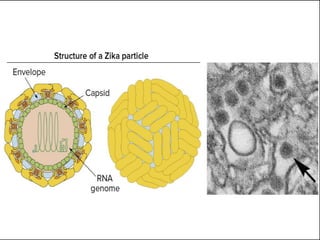

ZIKA VIRUS
AHMED NASSER
Introduction
What is Zika Virus?
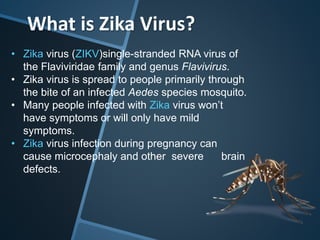
• Zika virus (ZIKV)single-stranded RNA virus of
the Flaviviridae family and genus Flavivirus.
• Zika virus is spread to people primarily through
the bite of an infected Aedes species mosquito.
• Many people infected with Zika virus won’t
have symptoms or will only have mild
symptoms.
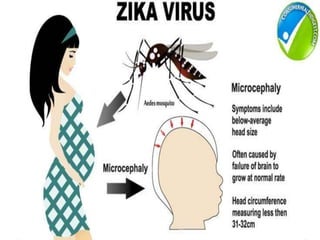
• Zika virus infection during pregnancy can
cause microcephaly and other severe brain
defects.
• The first isolate of the virus was found in
rhesus monkeys in the Zika Forrest, hence
the nomenclature.
• Before 2015, Zika outbreaks occurred in
Africa, Southeast Asia, and the Pacific
Islands.
• sporadic outbreaks occurred Malaysia 1969.
Where has Zika been found?
How is Zika spread?
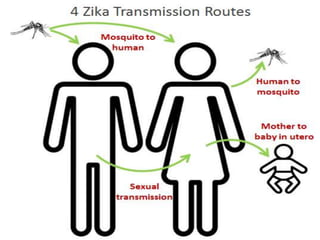
• Zika can be spread through
• Mosquito bites
• From a pregnant woman to her fetus
• Sex with an infected person
• Laboratory exposure
• Zika may be spread through blood transfusion.
• No reports of infants getting Zika through
breastfeeding.
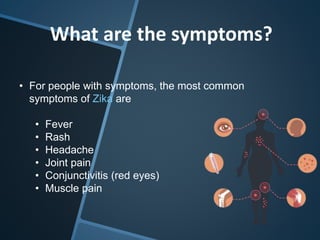
What are the symptoms?
• For people with symptoms, the most common
symptoms of Zika are
• Fever
• Rash
• Headache
• Joint pain
• Conjunctivitis (red eyes)
• Muscle pain
How does Zika affect people?
• Zika virus usually remains in the blood of an infected person
for about a week
• Many people with Zika will not have symptoms or will only
have mild symptoms.
• People usually don’t get sick enough to go to the hospital.
• People very rarely die of Zika.
LABORATORY TESTING
• Diagnosis is based on symptoms and recent travel to
regions of the world known to have active ZIKV
transmission. Confirmation of diagnosis requires
laboratory testing of blood or other body fluids (e.g., urine
or semen) for ZIKV RNA
• There are a number of diagnostic tests ( molecular and
serologic )
molecular diagnostic
• molecular diagnostic techniques for detecting ZIKV
include reverse-transcription polymerase chain
reaction (RT-PCR) testing
• RT-PCR has high sensitivity and specificity for
detecting ZIKV in serum particularly during the first
7 days of illness
Serologic testing
• Serologic testing involves the detection of ZIKV
immunoglobulin M (IgM) using an enzyme-linked
immunosorbent assay (ELISA)
• Based on prior experience with other flaviviruses (e.g.,
dengue viruses), antibodies can be detected as early as 4
days following the onset of symptoms and up to 3 months
with persistent indicators of illness
• Treat the symptoms.
• Get plenty of rest.
• Drink fluids to prevent dehydration.
• Take medicine such as acetaminophen to reduce fever
and pain.
• Do not take aspirin and other non-steroidal anti-
inflammatory drugs.
• If you are taking medicine for another medical condition,
talk to your doctor before taking additional medication.
There is no specific medicine or
vaccine for Zika virus.
How can Zika affect pregnancies?
• Infection during pregnancy can cause damage to the brain,
microcephaly, and congenital Zika syndrome
• Linked to other problems, such as miscarriage, stillbirth, and
birth defects
• No evidence that past infection will affect future pregnancies
once the virus has cleared the body
ZIKV can cause congenital malformations
in the fetus such as
• microcephaly
• Guillain-Barré syndrome
• meningo-encephalitis
• Myelitis
• ophthalmologic abnormalities in infected
adultes
Microcephaly is a neurodevelopmental disorder,
which is characterized by a marked reduction in brain
size and intellectual disability caused by impaired cell
proliferation and the death of cortical progenitor cells
and their neuronal progeny
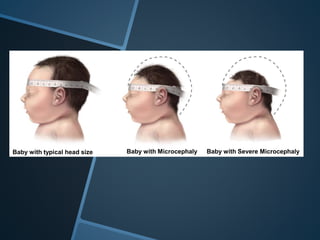
Microcephaly
Baby with typical head size Baby with Microcephaly Baby with Severe Microcephaly
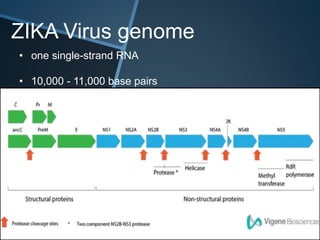
ZIKA Virus genome
• one single-strand RNA
• 10,000 - 11,000 base pairs
Why did ZIKV only recently start to cause
microcephaly
even though it has been around for >50 years?
• Three mutation in NS1 ( K940E,T1027A and
M1143V) which is implicated in immune evasion.
• One mutation in NS4B ( T2509I) which is involved
in the inhibition of type I interferon signaling.
• One mutation in NS5 (M2634V) which is known to
mask the viral RNAs from host recognition.
Thanks for listening

Zika virus

  • 1.
  • 2.
  • 3.
    What is ZikaVirus? • Zika virus (ZIKV)single-stranded RNA virus of the Flaviviridae family and genus Flavivirus. • Zika virus is spread to people primarily through the bite of an infected Aedes species mosquito. • Many people infected with Zika virus won’t have symptoms or will only have mild symptoms. • Zika virus infection during pregnancy can cause microcephaly and other severe brain defects.
  • 4.
    • The firstisolate of the virus was found in rhesus monkeys in the Zika Forrest, hence the nomenclature. • Before 2015, Zika outbreaks occurred in Africa, Southeast Asia, and the Pacific Islands. • sporadic outbreaks occurred Malaysia 1969. Where has Zika been found?
  • 7.
    How is Zikaspread? • Zika can be spread through • Mosquito bites • From a pregnant woman to her fetus • Sex with an infected person • Laboratory exposure • Zika may be spread through blood transfusion. • No reports of infants getting Zika through breastfeeding.
  • 9.
    What are thesymptoms? • For people with symptoms, the most common symptoms of Zika are • Fever • Rash • Headache • Joint pain • Conjunctivitis (red eyes) • Muscle pain
  • 10.
    How does Zikaaffect people? • Zika virus usually remains in the blood of an infected person for about a week • Many people with Zika will not have symptoms or will only have mild symptoms. • People usually don’t get sick enough to go to the hospital. • People very rarely die of Zika.
  • 11.
    LABORATORY TESTING • Diagnosisis based on symptoms and recent travel to regions of the world known to have active ZIKV transmission. Confirmation of diagnosis requires laboratory testing of blood or other body fluids (e.g., urine or semen) for ZIKV RNA • There are a number of diagnostic tests ( molecular and serologic )
  • 12.
    molecular diagnostic • moleculardiagnostic techniques for detecting ZIKV include reverse-transcription polymerase chain reaction (RT-PCR) testing • RT-PCR has high sensitivity and specificity for detecting ZIKV in serum particularly during the first 7 days of illness
  • 13.
    Serologic testing • Serologictesting involves the detection of ZIKV immunoglobulin M (IgM) using an enzyme-linked immunosorbent assay (ELISA) • Based on prior experience with other flaviviruses (e.g., dengue viruses), antibodies can be detected as early as 4 days following the onset of symptoms and up to 3 months with persistent indicators of illness
  • 14.
    • Treat thesymptoms. • Get plenty of rest. • Drink fluids to prevent dehydration. • Take medicine such as acetaminophen to reduce fever and pain. • Do not take aspirin and other non-steroidal anti- inflammatory drugs. • If you are taking medicine for another medical condition, talk to your doctor before taking additional medication. There is no specific medicine or vaccine for Zika virus.
  • 15.
    How can Zikaaffect pregnancies? • Infection during pregnancy can cause damage to the brain, microcephaly, and congenital Zika syndrome • Linked to other problems, such as miscarriage, stillbirth, and birth defects • No evidence that past infection will affect future pregnancies once the virus has cleared the body
  • 16.
    ZIKV can causecongenital malformations in the fetus such as • microcephaly • Guillain-Barré syndrome • meningo-encephalitis • Myelitis • ophthalmologic abnormalities in infected adultes
  • 17.
    Microcephaly is aneurodevelopmental disorder, which is characterized by a marked reduction in brain size and intellectual disability caused by impaired cell proliferation and the death of cortical progenitor cells and their neuronal progeny Microcephaly
  • 18.
    Baby with typicalhead size Baby with Microcephaly Baby with Severe Microcephaly
  • 20.
    ZIKA Virus genome •one single-strand RNA • 10,000 - 11,000 base pairs
  • 22.
    Why did ZIKVonly recently start to cause microcephaly even though it has been around for >50 years? • Three mutation in NS1 ( K940E,T1027A and M1143V) which is implicated in immune evasion. • One mutation in NS4B ( T2509I) which is involved in the inhibition of type I interferon signaling. • One mutation in NS5 (M2634V) which is known to mask the viral RNAs from host recognition.
  • 23.