By : Balbeer SinghSZABIST, Karachi
Background
• Ebola virus disease (EVD)
first appeared in 1976 in
2 simultaneous
outbreaks.
 one in Nzara, Sudan and
 the other in Yambuku,
Democratic Republic of
Congo.
 The current outbreak in
west Africa, (first cases
notified in March 2014),
is the largest and most
complex Ebola outbreak
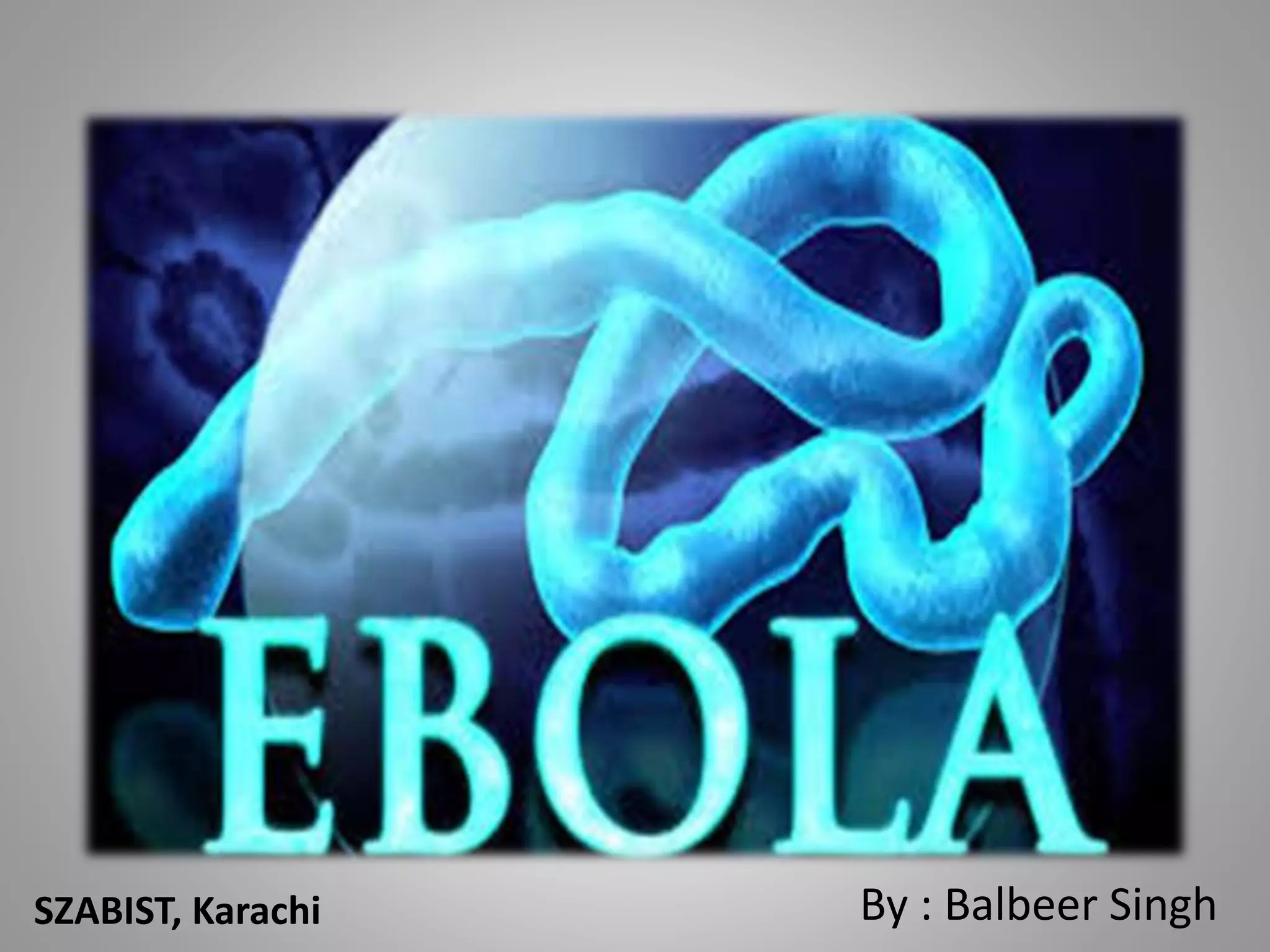
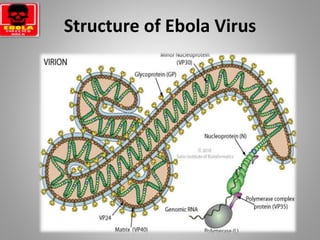
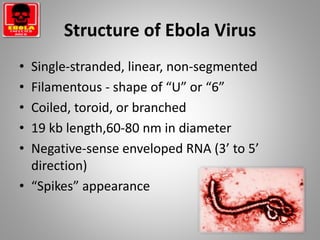
Structure of Ebola Virus
• Single-stranded, linear, non-segmented
• Filamentous - shape of “U” or “6”
• Coiled, toroid, or branched
• 19 kb length,60-80 nm in diameter
• Negative-sense enveloped RNA (3’ to 5’
direction)
• “Spikes” appearance
• Ebola viruses are mainly
found in primates in Africa
and possibly the Philippines
• Ebola is a rare but deadly
virus that causes bleeding
inside and outside the body.
• As the virus spreads through
the body it damages the
immune system and organs
• Ultimately, it causes
levels of blood-clotting
cells to drop.
• This leads to severe,
uncontrollable bleeding.
• Ebola virus, kills up to
90% of people who are
infected.
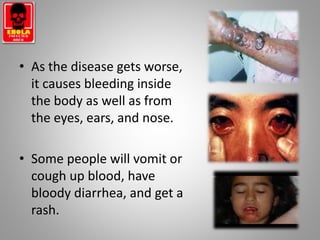
• As the disease gets worse,
it causes bleeding inside
the body as well as from
the eyes, ears, and nose.
• Some people will vomit or
cough up blood, have
bloody diarrhea, and get a
rash.
Transmission
• It spreads to people by contact with the skin or
bodily fluids of an infected animal
• like a monkey Or fruit bat
• Then it moves from person to person the same
way.
• Those who care for a sick person
• or bury someone who has died from the disease
often get it.
• Other ways to get Ebola include touching
contaminated needles or surfaces.
Transmission
Who is at Most Risk
of Getting Ebola
• Health care providers caring for Ebola patients
and the family and friends in close contact
with Ebola patients are at the highest risk of
getting sick.
• Because they may come in contact with the
blood or body fluids of sick patients.
• People also can become sick with Ebola after
coming in contact with infected wildlife.
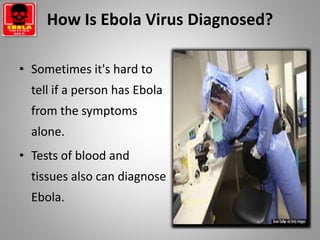
• Sometimes it's hard to
tell if a person has Ebola
from the symptoms
alone.
• Tests of blood and
tissues also can diagnose
Ebola.
How Is Ebola Virus Diagnosed?
Treatment
• No specific treatment available but
experimental ones are
• Frequent dehydration and oral rehydration
with solutions containing electrolytes or
intravenous fluids.
• Maintaining oxygen status and blood pressure
• Replacing lost blood
• Treating other infections if they occur
Vaccine for Ebola
• No licensed vaccine for EVD is available.
Several vaccines are being tested, but none
are available for clinical use.
Thank
YOu

Ebola hemorrhagic fever

  • 1.
    By : BalbeerSinghSZABIST, Karachi
  • 2.
    Background • Ebola virusdisease (EVD) first appeared in 1976 in 2 simultaneous outbreaks.  one in Nzara, Sudan and  the other in Yambuku, Democratic Republic of Congo.  The current outbreak in west Africa, (first cases notified in March 2014), is the largest and most complex Ebola outbreak
  • 4.
  • 5.
    Structure of EbolaVirus • Single-stranded, linear, non-segmented • Filamentous - shape of “U” or “6” • Coiled, toroid, or branched • 19 kb length,60-80 nm in diameter • Negative-sense enveloped RNA (3’ to 5’ direction) • “Spikes” appearance
  • 6.
    • Ebola virusesare mainly found in primates in Africa and possibly the Philippines • Ebola is a rare but deadly virus that causes bleeding inside and outside the body. • As the virus spreads through the body it damages the immune system and organs
  • 7.
    • Ultimately, itcauses levels of blood-clotting cells to drop. • This leads to severe, uncontrollable bleeding. • Ebola virus, kills up to 90% of people who are infected.
  • 8.
    • As thedisease gets worse, it causes bleeding inside the body as well as from the eyes, ears, and nose. • Some people will vomit or cough up blood, have bloody diarrhea, and get a rash.
  • 12.
    Transmission • It spreadsto people by contact with the skin or bodily fluids of an infected animal • like a monkey Or fruit bat • Then it moves from person to person the same way. • Those who care for a sick person • or bury someone who has died from the disease often get it. • Other ways to get Ebola include touching contaminated needles or surfaces.
  • 13.
  • 15.
    Who is atMost Risk of Getting Ebola • Health care providers caring for Ebola patients and the family and friends in close contact with Ebola patients are at the highest risk of getting sick. • Because they may come in contact with the blood or body fluids of sick patients. • People also can become sick with Ebola after coming in contact with infected wildlife.
  • 16.
    • Sometimes it'shard to tell if a person has Ebola from the symptoms alone. • Tests of blood and tissues also can diagnose Ebola. How Is Ebola Virus Diagnosed?
  • 17.
    Treatment • No specifictreatment available but experimental ones are • Frequent dehydration and oral rehydration with solutions containing electrolytes or intravenous fluids. • Maintaining oxygen status and blood pressure • Replacing lost blood • Treating other infections if they occur
  • 18.
    Vaccine for Ebola •No licensed vaccine for EVD is available. Several vaccines are being tested, but none are available for clinical use.
  • 21.