RE-EMERGING ZIKA
AN ALARMING OUTBREAK
DR. SAKTHIVEL, JR-3
DEPT. OF COMMUNITY MEDICINE
JNMCH, AMU.
What is zika virus?
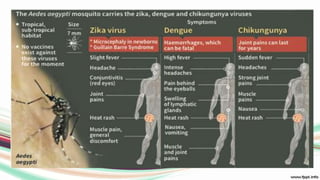
• Zika virus is an emerging mosquito-borne virus
• Member of the virus family Flaviviridae and the genus Flavivirus
• Vector: Aedes mosquitoes (which usually bite during the morning and late
afternoon/evening hours). This is the same mosquito that transmits dengue,
chikungunya and yellow fever.
• Reservoir: Unknown
• Incubation period – 3-12 days
How is it transmitted?
• Through bite of an infected mosquito from the Aedes genus
• Mother to fetus during pregnancy
• Through blood transfusion and sexual contact have been reported
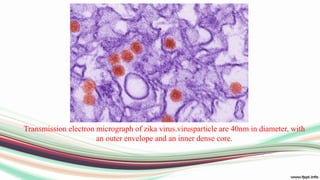
Transmission electron micrograph of zika virus.virusparticle are 40nm in diameter, with
an outer envelope and an inner dense core.
There are two lineages of Zika virus, the African lineage and the Asian
lineage. Complete genome sequences of Zika viruses have been
published.
Recent preliminary findings from sequences in the public domain
uncovered a possible change in non-structural protein 1 codon usage that
may increase the viral replication rate in humans
Vectors
• A. aegypti,
• A. africanus
• A. apicoargenteus
• A. furcifer
• A. hensilli
• A. luteocephalus and A. vitattus
History of zika
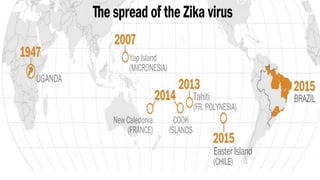
1947- First evidence of zika virus
 April 1947 - The virus was first isolated from a rhesus macaque monkey placed in a
cage in the Zika Forest of Uganda, near Lake Victoria
 Jan 1948 - Second isolation from the mosquito A. africanus at the same site
 1952 - Virus isolated from the serum of the monkey with fever and it was first
described as ZIKA VIRUS
1952- First evidence of human infection
 Serosurvey carried out in 84 people of all ages showed antibodies, all above 40
years of age were immune
 Following an outbreak investigation of jaundice suspected to be yellow fever in the
blood of a 10 year old Nigerian female, Zika virus was successfully isolated using
laboratory mice.
 Infection was proven by a rise in Zika virus specific serum antibodies
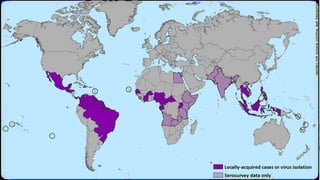
1951-1981 - Spread from equatorial Africa to Asia
 Evidence of human infection with Zika virus was reported from other African
countries
* Central African Republic *Egypt
*Gabon *Sierra Leone
*Tanzania, and Uganda.
 Also reported in parts of Asia including India, Indonesia, Malaysia, the Philippines,
Thailand, and Vietnam
April 2007- First outbreak outside of Africa and Asia
 Occurred on the island of Yap in the Federated States of Micronesia
 characterized by rash, conjunctivitis, and arthralgia, which was initially thought to be
dengue, chikungunya or Ross River disease
 Serum samples from patients in the acute phase of illness contained RNA of Zika
virus
 There were 49 confirmed cases, 59 unconfirmed cases, no hospitalizations, and no
deaths.
 More recently, epidemics have occurred in Polynesia, Easter Island, the Cook Islands
and New Caledonia
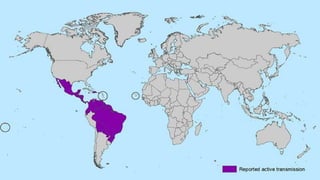
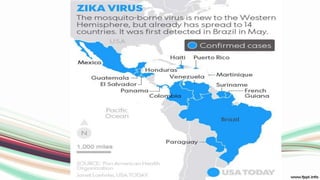
May 2015- Present - Outbreak in the Americas
 Began in May 2015 in Brazil. In May 2015, Zika virus was first confirmed as the
cause of an outbreak of a dengue-like disease in northern and eastern Brazil, reported
by Pan American Health Organization (PAHO).
 Brazilian researchers have suggested that the Zika virus arrived in the country from
French Polynesia during the 2014 FIFA World Cup tournament
 Subsequently spread to other countries in South America, Central America, Mexico
and the Caribbean.
 Cases have also been reported that were imported from South America into Europe
and the United States.
 January 2016, the U.S. CDC issued a travel alert for people traveling to regions and
certain countries where Zika virus transmission is ongoing.
 No locally transmitted Zika cases have been reported in the continental United States,
but cases have been reported in returning travelers.
 February 2016- WHO declared that microcephaly and Guillain-Barré syndrome,
believed to be associated with the virus outbreak.
 Between October 2015 and January 2016 – 3500 microcephaly cases (Brazilian
health authority)
 In the worst affected region of Brazil, approximately 1 percent of newborns are
suspected of being microcephalic.
Reasons for outbreak
• First - Zika didn't seem to pose much risk to humans, this virus wasn't exactly on the
world's watch list. It wasn't even a reportable disease in the US
• Second - Zika had never been recorded in the Western Hemisphere until it hit Easter
Island off Chile in 2014. That means people living in the Americas are susceptible to
the virus, since nobody has built up the antibodies from previous infections to fight it
off.
• Third - Aedes mosquitoes live all over Latin America. Couple that with the fact that
many people live in communities that are perfectly hospitable to these insects:
There's little air conditioning and window screens (to keep mosquitoes out) as well as
poor sanitation and a lack of access to clean water (so people store water around their
homes)
Source: http://www.vox.com/2016/2/2/10893526/zika-virus-disease-spread-history-cases
Why is this Outbreak Alarming?
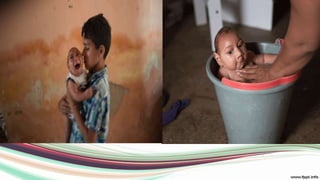
 Zika virus is catching global attention due to its alarming connection with
microcephaly, a neurological disorder in babies being born with abnormally small
heads.
 Zika virus was first linked with newborn microcephaly during the Brazil Zika virus
outbreak.
 In 2015, there were 2,782 cases of microcephaly compared with 147 in 2014 and 167
in 2013.
 The Lancet medical journal reported in January 2016 that the Brazilian Ministry of
Health had confirmed 134 cases of microcephaly "believed to be associated with
Zika virus infection" with an additional 2,165 cases in 549 counties in 20 states
remaining under investigation
 In January 2016, a baby in Oahu, Hawaii, was born with microcephaly, the first case
in the United States of brain damage linked to the virus.
 A high incidence of the autoimmune disease Guillain–Barré syndrome (GBS), noted
in French Polynesia, has also been found in the outbreak that began in Brazil, but no
laboratory confirmations of Zika virus infection in patients with GBS.
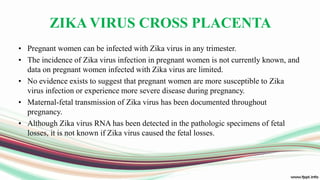
ZIKA VIRUS CROSS PLACENTA
• Pregnant women can be infected with Zika virus in any trimester.
• The incidence of Zika virus infection in pregnant women is not currently known, and
data on pregnant women infected with Zika virus are limited.
• No evidence exists to suggest that pregnant women are more susceptible to Zika
virus infection or experience more severe disease during pregnancy.
• Maternal-fetal transmission of Zika virus has been documented throughout
pregnancy.
• Although Zika virus RNA has been detected in the pathologic specimens of fetal
losses, it is not known if Zika virus caused the fetal losses.
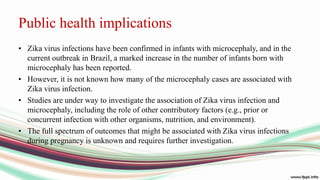
Public health implications
• Zika virus infections have been confirmed in infants with microcephaly, and in the
current outbreak in Brazil, a marked increase in the number of infants born with
microcephaly has been reported.
• However, it is not known how many of the microcephaly cases are associated with
Zika virus infection.
• Studies are under way to investigate the association of Zika virus infection and
microcephaly, including the role of other contributory factors (e.g., prior or
concurrent infection with other organisms, nutrition, and environment).
• The full spectrum of outcomes that might be associated with Zika virus infections
during pregnancy is unknown and requires further investigation.
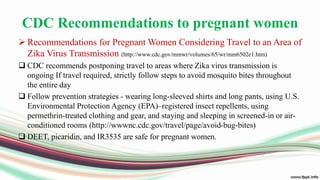
CDC Recommendations to pregnant women
 Recommendations for Pregnant Women Considering Travel to an Area of
Zika Virus Transmission (http://www.cdc.gov/mmwr/volumes/65/wr/mm6502e1.htm)
 CDC recommends postponing travel to areas where Zika virus transmission is
ongoing If travel required, strictly follow steps to avoid mosquito bites throughout
the entire day
 Follow prevention strategies - wearing long-sleeved shirts and long pants, using U.S.
Environmental Protection Agency (EPA)–registered insect repellents, using
permethrin-treated clothing and gear, and staying and sleeping in screened-in or air-
conditioned rooms (http://wwwnc.cdc.gov/travel/page/avoid-bug-bites)
 DEET, picaridin, and IR3535 are safe for pregnant women.
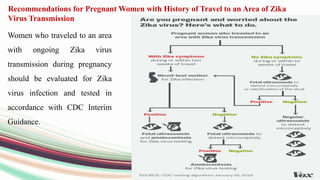
Women who traveled to an area
with ongoing Zika virus
transmission during pregnancy
should be evaluated for Zika
virus infection and tested in
accordance with CDC Interim
Guidance.
Recommendations for Pregnant Women with History of Travel to an Area of Zika
Virus Transmission
How to Treat Pregnant Women with Diagnoses of
Zika Virus Disease
 No specific antiviral treatment is available for Zika virus disease.
 Treatment is generally supportive and can include rest, fluids, and use of analgesics
and antipyretics.
 In a pregnant woman with laboratory evidence of Zika virus in serum or amniotic
fluid, serial ultrasounds should be considered to monitor fetal anatomy and growth
every 3–4 weeks.
 Referral to a maternal-fetal medicine or infectious disease specialist with expertise in
pregnancy management is recommended.
Sexual transmission of zika virus
 There have been three cases in the medical literature that suggest Zika can be
sexually transmitted.
 In one case, a man who traveled to Senegal in 2008 and contracted Zika transmitted
to his wife through intercourse after he returned home to Colorado.
 In another, Zika was isolated from semen.
 The first case of sexual transmission during the current outbreak was documented in
Dallas in February: A traveler returned from Venezuela, where the virus was
circulating, and infected his or her partner. (unpublished data, 2016, Dallas County
Health and Human Services).
 In all three cases, the men developed symptomatic illness.
 Sexual transmission of Zika virus from infected women to their sex partners has not
been reported.
Interim Guidelines for Prevention of Sexual Transmission
of Zika Virus — United States, 2016
Recommendations for men and their partners
(http://www.cdc.gov/mmwr/volumes/65/wr/mm6505e1er.htm?s_cid=mm6505e1er_w.htm)
 After infection, Zika virus might persist in semen when it is no longer detectable in
blood.
 Abstain from sexual activity
 Consistently and correctly use condoms during sex, for the duration of the pregnancy
 Pregnant women should discuss their male partner’s potential exposures to
mosquitoes and history of Zika-like illness with their health care provider
Testing for zika
• There are no commercially available diagnostic tests for Zika virus disease.
• Zika virus testing is performed at the CDC Arbovirus Diagnostic Laboratory and a
few state or local health departments.
• Zika virus disease can often be diagnosed by performing reverse transcriptase-
polymerase chain reaction (RT-PCR) on serum.
• Immunoglobulin (Ig) M ELISA and
• Plaque-reduction neutralization testing can be performed to measure virus-specific
neutralizing antibodies and discriminate between cross-reacting antibodies in primary
flavivirus infections.
• Test results are normally available 4 to 14 days after specimen receipt.
Prevention
 Control Mosquitoes that Spread Dengue, Chikungunya, and Zika Viruses
(http://www.cdc.gov/zika/pdfs/control_mosquitoes_chikv_denv_zika.pdf)
 Mosquito bite prevention for travellers
(http://www.cdc.gov/chikungunya/pdfs/fs_mosquito_bite_prevention_travelers.pdf)
• Prevention and control relies on reducing mosquitoes through source reduction
(removal and modification of breeding sites) - empty, clean or cover containers that
can hold water such as buckets, flower pots or tyres
• Reducing contact between mosquitoes and people.
• Using insect repellent; wearing clothes (preferably light-coloured) that cover as much
of the body as possible; using physical barriers such as screens, closed doors and
windows; and sleeping under mosquito nets.
Treatment
 Zika virus disease is usually relatively mild and requires no specific treatment.
 People sick with Zika virus should get plenty of rest, drink enough fluids, and treat
pain and fever with common medicines.
 If symptoms worsen, they should seek medical care and advice.
 There is currently no vaccine available.
 Treatment of congenital Zika virus infection is supportive and should address
specific medical and neurodevelopmental issues for the infant’s particular needs
Breastfeeding?
• There is no evidence that zika virus sheds in breastmilk.
• Mothers are encouraged to breastfeed infants even in areas where Zika
virus is found, as available evidence indicates the benefits of
breastfeeding outweigh any theoretical risks associated with Zika virus
infection transmission through breast milk
WHO Responses
 WHO is supporting countries to control Zika virus disease through:
 Define and prioritize research into Zika virus disease by convening experts and
partners.
 Enhance surveillance of Zika virus and potential complications.
 Strengthen capacity in risk communication to help countries meet their commitments
under the International Health Regulations.
 Provide training on clinical management, diagnosis and vector control including
through a number of WHO Collaborating Centres.
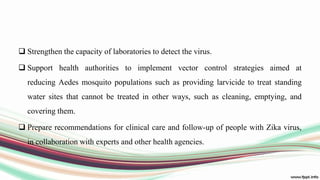
 Strengthen the capacity of laboratories to detect the virus.
 Support health authorities to implement vector control strategies aimed at
reducing Aedes mosquito populations such as providing larvicide to treat standing
water sites that cannot be treated in other ways, such as cleaning, emptying, and
covering them.
 Prepare recommendations for clinical care and follow-up of people with Zika virus,
in collaboration with experts and other health agencies.
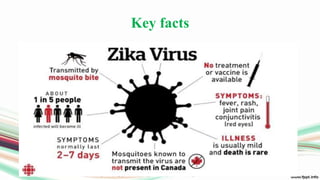
Key facts
So far….
• 12/31/2015: First case of Zika virus reported in Puerto Rico
• 1/15/2016: CDC issues interim travel guidance related to Zika virus for 14
Countries and Territories in Central and South America and the Caribbean
• 1/22/2016: CDC adds countries to interim travel guidance related to Zika virus
• 1/26/2016: CDC adds 2 destinations to interim travel guidance related to Zika
virus
• 2/1/2016: CDC adds 4 destinations to interim travel guidance related to Zika
virus
• 2/5/2016: CDC issues Interim Guidelines for Preventing Sexual Transmission of
Zika Virus and Updated Interim Guidelines for Health Care Providers Caring
for Pregnant Women and Women of Reproductive Age with Possible Zika Virus
Exposure
• More than 3,100 pregnant women in Colombia infected with Zika virus as on
Feb 7th, 2016- foxnews

Reemerging Zikka virus- an alarming outbreak

  • 1.
    RE-EMERGING ZIKA AN ALARMINGOUTBREAK DR. SAKTHIVEL, JR-3 DEPT. OF COMMUNITY MEDICINE JNMCH, AMU.
  • 2.
    What is zikavirus? • Zika virus is an emerging mosquito-borne virus • Member of the virus family Flaviviridae and the genus Flavivirus • Vector: Aedes mosquitoes (which usually bite during the morning and late afternoon/evening hours). This is the same mosquito that transmits dengue, chikungunya and yellow fever. • Reservoir: Unknown • Incubation period – 3-12 days
  • 3.
    How is ittransmitted? • Through bite of an infected mosquito from the Aedes genus • Mother to fetus during pregnancy • Through blood transfusion and sexual contact have been reported
  • 4.
    Transmission electron micrographof zika virus.virusparticle are 40nm in diameter, with an outer envelope and an inner dense core.
  • 5.
    There are twolineages of Zika virus, the African lineage and the Asian lineage. Complete genome sequences of Zika viruses have been published. Recent preliminary findings from sequences in the public domain uncovered a possible change in non-structural protein 1 codon usage that may increase the viral replication rate in humans
  • 6.
    Vectors • A. aegypti, •A. africanus • A. apicoargenteus • A. furcifer • A. hensilli • A. luteocephalus and A. vitattus
  • 7.
    History of zika 1947-First evidence of zika virus  April 1947 - The virus was first isolated from a rhesus macaque monkey placed in a cage in the Zika Forest of Uganda, near Lake Victoria  Jan 1948 - Second isolation from the mosquito A. africanus at the same site  1952 - Virus isolated from the serum of the monkey with fever and it was first described as ZIKA VIRUS
  • 8.
    1952- First evidenceof human infection  Serosurvey carried out in 84 people of all ages showed antibodies, all above 40 years of age were immune  Following an outbreak investigation of jaundice suspected to be yellow fever in the blood of a 10 year old Nigerian female, Zika virus was successfully isolated using laboratory mice.  Infection was proven by a rise in Zika virus specific serum antibodies
  • 9.
    1951-1981 - Spreadfrom equatorial Africa to Asia  Evidence of human infection with Zika virus was reported from other African countries * Central African Republic *Egypt *Gabon *Sierra Leone *Tanzania, and Uganda.  Also reported in parts of Asia including India, Indonesia, Malaysia, the Philippines, Thailand, and Vietnam
  • 10.
    April 2007- Firstoutbreak outside of Africa and Asia  Occurred on the island of Yap in the Federated States of Micronesia  characterized by rash, conjunctivitis, and arthralgia, which was initially thought to be dengue, chikungunya or Ross River disease  Serum samples from patients in the acute phase of illness contained RNA of Zika virus  There were 49 confirmed cases, 59 unconfirmed cases, no hospitalizations, and no deaths.  More recently, epidemics have occurred in Polynesia, Easter Island, the Cook Islands and New Caledonia
  • 11.
    May 2015- Present- Outbreak in the Americas  Began in May 2015 in Brazil. In May 2015, Zika virus was first confirmed as the cause of an outbreak of a dengue-like disease in northern and eastern Brazil, reported by Pan American Health Organization (PAHO).  Brazilian researchers have suggested that the Zika virus arrived in the country from French Polynesia during the 2014 FIFA World Cup tournament  Subsequently spread to other countries in South America, Central America, Mexico and the Caribbean.  Cases have also been reported that were imported from South America into Europe and the United States.
  • 12.
     January 2016,the U.S. CDC issued a travel alert for people traveling to regions and certain countries where Zika virus transmission is ongoing.  No locally transmitted Zika cases have been reported in the continental United States, but cases have been reported in returning travelers.  February 2016- WHO declared that microcephaly and Guillain-Barré syndrome, believed to be associated with the virus outbreak.  Between October 2015 and January 2016 – 3500 microcephaly cases (Brazilian health authority)  In the worst affected region of Brazil, approximately 1 percent of newborns are suspected of being microcephalic.
  • 17.
    Reasons for outbreak •First - Zika didn't seem to pose much risk to humans, this virus wasn't exactly on the world's watch list. It wasn't even a reportable disease in the US • Second - Zika had never been recorded in the Western Hemisphere until it hit Easter Island off Chile in 2014. That means people living in the Americas are susceptible to the virus, since nobody has built up the antibodies from previous infections to fight it off. • Third - Aedes mosquitoes live all over Latin America. Couple that with the fact that many people live in communities that are perfectly hospitable to these insects: There's little air conditioning and window screens (to keep mosquitoes out) as well as poor sanitation and a lack of access to clean water (so people store water around their homes) Source: http://www.vox.com/2016/2/2/10893526/zika-virus-disease-spread-history-cases
  • 19.
    Why is thisOutbreak Alarming?  Zika virus is catching global attention due to its alarming connection with microcephaly, a neurological disorder in babies being born with abnormally small heads.  Zika virus was first linked with newborn microcephaly during the Brazil Zika virus outbreak.  In 2015, there were 2,782 cases of microcephaly compared with 147 in 2014 and 167 in 2013.  The Lancet medical journal reported in January 2016 that the Brazilian Ministry of Health had confirmed 134 cases of microcephaly "believed to be associated with Zika virus infection" with an additional 2,165 cases in 549 counties in 20 states remaining under investigation
  • 20.
     In January2016, a baby in Oahu, Hawaii, was born with microcephaly, the first case in the United States of brain damage linked to the virus.  A high incidence of the autoimmune disease Guillain–Barré syndrome (GBS), noted in French Polynesia, has also been found in the outbreak that began in Brazil, but no laboratory confirmations of Zika virus infection in patients with GBS.
  • 22.
    ZIKA VIRUS CROSSPLACENTA • Pregnant women can be infected with Zika virus in any trimester. • The incidence of Zika virus infection in pregnant women is not currently known, and data on pregnant women infected with Zika virus are limited. • No evidence exists to suggest that pregnant women are more susceptible to Zika virus infection or experience more severe disease during pregnancy. • Maternal-fetal transmission of Zika virus has been documented throughout pregnancy. • Although Zika virus RNA has been detected in the pathologic specimens of fetal losses, it is not known if Zika virus caused the fetal losses.
  • 23.
    Public health implications •Zika virus infections have been confirmed in infants with microcephaly, and in the current outbreak in Brazil, a marked increase in the number of infants born with microcephaly has been reported. • However, it is not known how many of the microcephaly cases are associated with Zika virus infection. • Studies are under way to investigate the association of Zika virus infection and microcephaly, including the role of other contributory factors (e.g., prior or concurrent infection with other organisms, nutrition, and environment). • The full spectrum of outcomes that might be associated with Zika virus infections during pregnancy is unknown and requires further investigation.
  • 24.
    CDC Recommendations topregnant women  Recommendations for Pregnant Women Considering Travel to an Area of Zika Virus Transmission (http://www.cdc.gov/mmwr/volumes/65/wr/mm6502e1.htm)  CDC recommends postponing travel to areas where Zika virus transmission is ongoing If travel required, strictly follow steps to avoid mosquito bites throughout the entire day  Follow prevention strategies - wearing long-sleeved shirts and long pants, using U.S. Environmental Protection Agency (EPA)–registered insect repellents, using permethrin-treated clothing and gear, and staying and sleeping in screened-in or air- conditioned rooms (http://wwwnc.cdc.gov/travel/page/avoid-bug-bites)  DEET, picaridin, and IR3535 are safe for pregnant women.
  • 25.
    Women who traveledto an area with ongoing Zika virus transmission during pregnancy should be evaluated for Zika virus infection and tested in accordance with CDC Interim Guidance. Recommendations for Pregnant Women with History of Travel to an Area of Zika Virus Transmission
  • 26.
    How to TreatPregnant Women with Diagnoses of Zika Virus Disease  No specific antiviral treatment is available for Zika virus disease.  Treatment is generally supportive and can include rest, fluids, and use of analgesics and antipyretics.  In a pregnant woman with laboratory evidence of Zika virus in serum or amniotic fluid, serial ultrasounds should be considered to monitor fetal anatomy and growth every 3–4 weeks.  Referral to a maternal-fetal medicine or infectious disease specialist with expertise in pregnancy management is recommended.
  • 27.
    Sexual transmission ofzika virus  There have been three cases in the medical literature that suggest Zika can be sexually transmitted.  In one case, a man who traveled to Senegal in 2008 and contracted Zika transmitted to his wife through intercourse after he returned home to Colorado.  In another, Zika was isolated from semen.  The first case of sexual transmission during the current outbreak was documented in Dallas in February: A traveler returned from Venezuela, where the virus was circulating, and infected his or her partner. (unpublished data, 2016, Dallas County Health and Human Services).  In all three cases, the men developed symptomatic illness.  Sexual transmission of Zika virus from infected women to their sex partners has not been reported.
  • 28.
    Interim Guidelines forPrevention of Sexual Transmission of Zika Virus — United States, 2016 Recommendations for men and their partners (http://www.cdc.gov/mmwr/volumes/65/wr/mm6505e1er.htm?s_cid=mm6505e1er_w.htm)  After infection, Zika virus might persist in semen when it is no longer detectable in blood.  Abstain from sexual activity  Consistently and correctly use condoms during sex, for the duration of the pregnancy  Pregnant women should discuss their male partner’s potential exposures to mosquitoes and history of Zika-like illness with their health care provider
  • 29.
    Testing for zika •There are no commercially available diagnostic tests for Zika virus disease. • Zika virus testing is performed at the CDC Arbovirus Diagnostic Laboratory and a few state or local health departments. • Zika virus disease can often be diagnosed by performing reverse transcriptase- polymerase chain reaction (RT-PCR) on serum. • Immunoglobulin (Ig) M ELISA and • Plaque-reduction neutralization testing can be performed to measure virus-specific neutralizing antibodies and discriminate between cross-reacting antibodies in primary flavivirus infections. • Test results are normally available 4 to 14 days after specimen receipt.
  • 30.
    Prevention  Control Mosquitoesthat Spread Dengue, Chikungunya, and Zika Viruses (http://www.cdc.gov/zika/pdfs/control_mosquitoes_chikv_denv_zika.pdf)  Mosquito bite prevention for travellers (http://www.cdc.gov/chikungunya/pdfs/fs_mosquito_bite_prevention_travelers.pdf) • Prevention and control relies on reducing mosquitoes through source reduction (removal and modification of breeding sites) - empty, clean or cover containers that can hold water such as buckets, flower pots or tyres • Reducing contact between mosquitoes and people. • Using insect repellent; wearing clothes (preferably light-coloured) that cover as much of the body as possible; using physical barriers such as screens, closed doors and windows; and sleeping under mosquito nets.
  • 31.
    Treatment  Zika virusdisease is usually relatively mild and requires no specific treatment.  People sick with Zika virus should get plenty of rest, drink enough fluids, and treat pain and fever with common medicines.  If symptoms worsen, they should seek medical care and advice.  There is currently no vaccine available.  Treatment of congenital Zika virus infection is supportive and should address specific medical and neurodevelopmental issues for the infant’s particular needs
  • 32.
    Breastfeeding? • There isno evidence that zika virus sheds in breastmilk. • Mothers are encouraged to breastfeed infants even in areas where Zika virus is found, as available evidence indicates the benefits of breastfeeding outweigh any theoretical risks associated with Zika virus infection transmission through breast milk
  • 33.
    WHO Responses  WHOis supporting countries to control Zika virus disease through:  Define and prioritize research into Zika virus disease by convening experts and partners.  Enhance surveillance of Zika virus and potential complications.  Strengthen capacity in risk communication to help countries meet their commitments under the International Health Regulations.  Provide training on clinical management, diagnosis and vector control including through a number of WHO Collaborating Centres.
  • 34.
     Strengthen thecapacity of laboratories to detect the virus.  Support health authorities to implement vector control strategies aimed at reducing Aedes mosquito populations such as providing larvicide to treat standing water sites that cannot be treated in other ways, such as cleaning, emptying, and covering them.  Prepare recommendations for clinical care and follow-up of people with Zika virus, in collaboration with experts and other health agencies.
  • 35.
  • 36.
    So far…. • 12/31/2015:First case of Zika virus reported in Puerto Rico • 1/15/2016: CDC issues interim travel guidance related to Zika virus for 14 Countries and Territories in Central and South America and the Caribbean • 1/22/2016: CDC adds countries to interim travel guidance related to Zika virus • 1/26/2016: CDC adds 2 destinations to interim travel guidance related to Zika virus • 2/1/2016: CDC adds 4 destinations to interim travel guidance related to Zika virus • 2/5/2016: CDC issues Interim Guidelines for Preventing Sexual Transmission of Zika Virus and Updated Interim Guidelines for Health Care Providers Caring for Pregnant Women and Women of Reproductive Age with Possible Zika Virus Exposure • More than 3,100 pregnant women in Colombia infected with Zika virus as on Feb 7th, 2016- foxnews

Editor's Notes

  • #9 Zika virus had been known to infect humans from the results of serological surveys in Uganda and Nigeria In contrast no virus was isolated from the blood of two infected adults with fever, jaundice, cough, diffuse joint pains in one and fever, headache, pain behind the eyes and in the joints. Infection was proven by a rise in Zika virus specific serum antibodies.
  • #10 From its discovery until 2007, confirmed cases of Zika virus infection from Africa and Southeast Asia were rare
  • #12 The full spectrum of outcomes that might be associated with infection during pregnancy and the factors that might increase risk to the fetus are not yet fully understood.