
Your Thing is pwnd 
Security Challenges for the 
Internet of Things 
Paul Fremantle 
CTO, WSO2 (paul@wso2.com) 
PhD researcher, Portsmouth 
University 
(paul.fremantle@port.ac.uk) 
@pzfreo 
#wso2 
#iotconf 
@iotconf
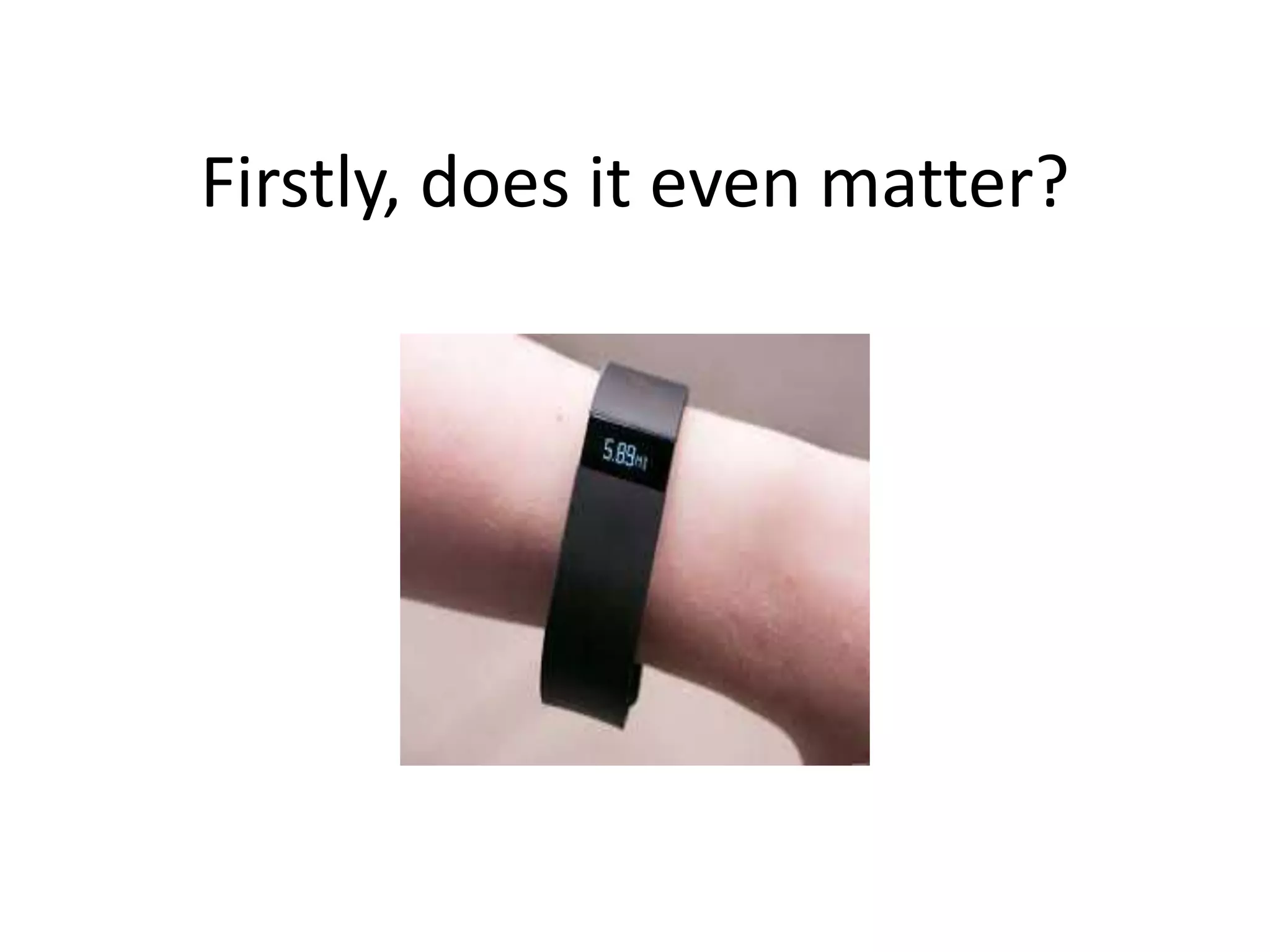
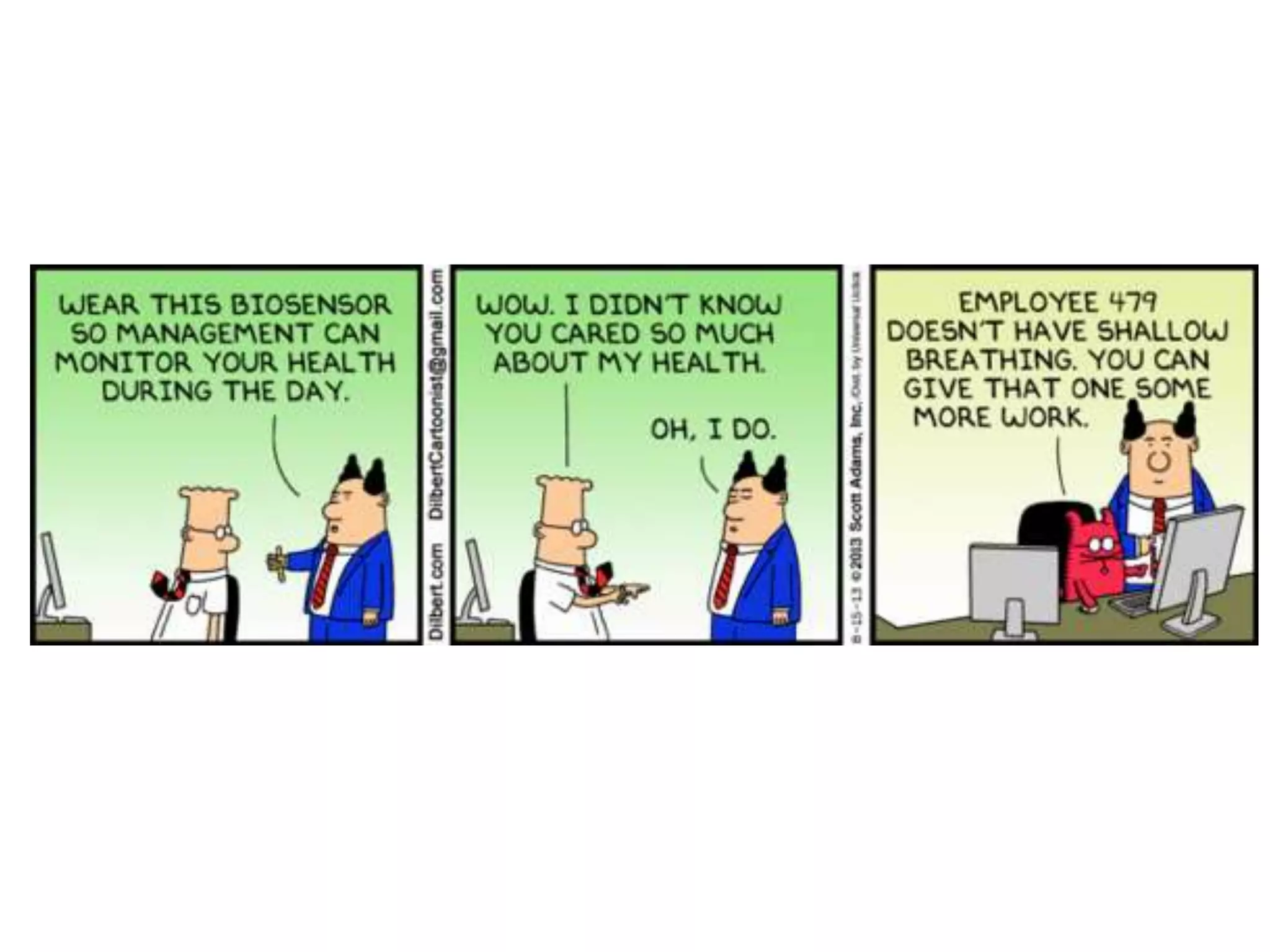
Firstly, does it even matter?
My three rules for IoT security 
• 1. Don’t be stupid 
• 2. Be smart 
• 3. Think about what’s different
My three rules for IoT security 
• 1. Don’t be stupid 
– The basics of Internet security haven’t gone away 
• 2. Be smart 
– Use the best practice from the Internet 
• 3. Think about what’s different 
– What are the unique challenges of your device?
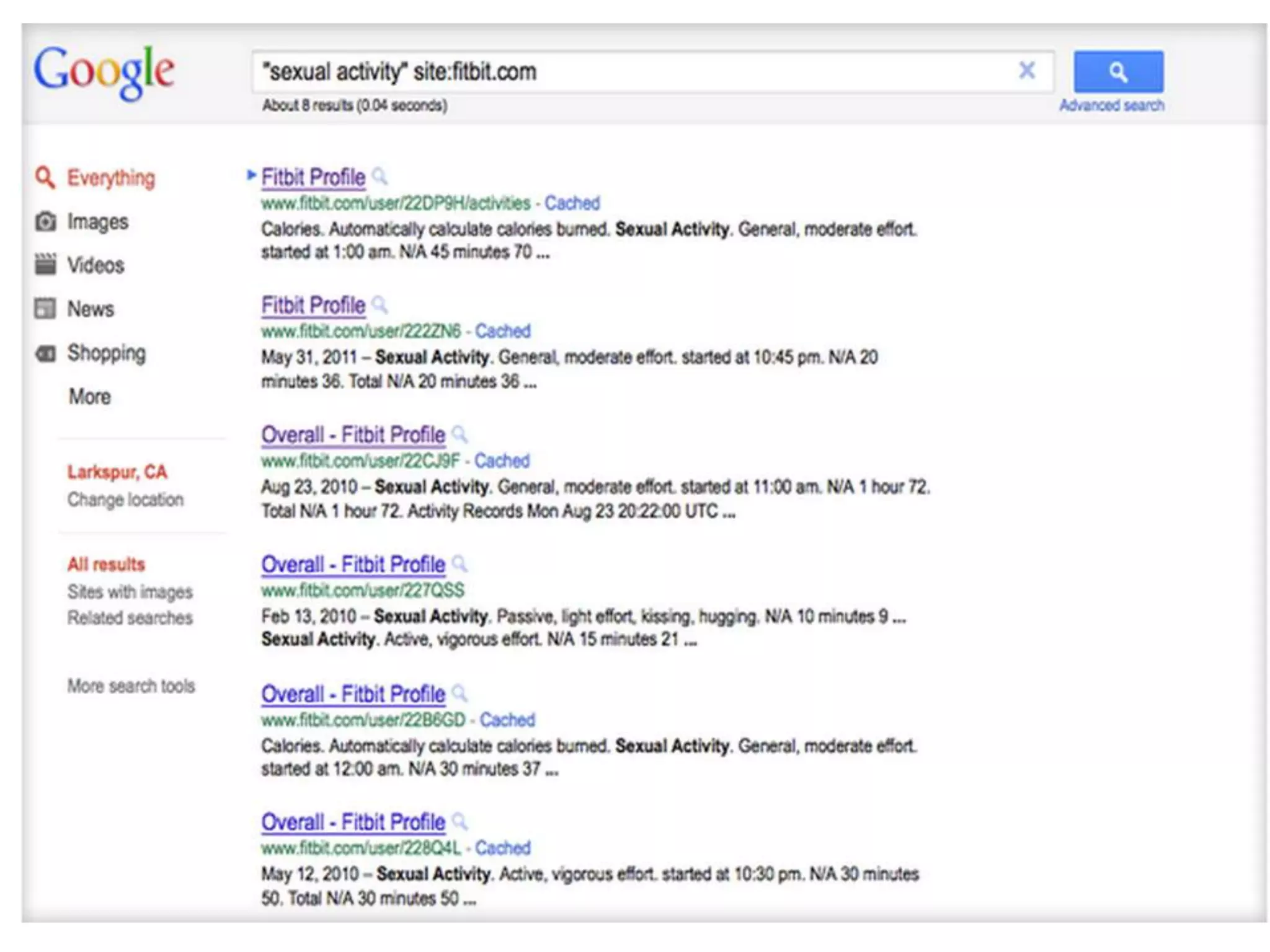
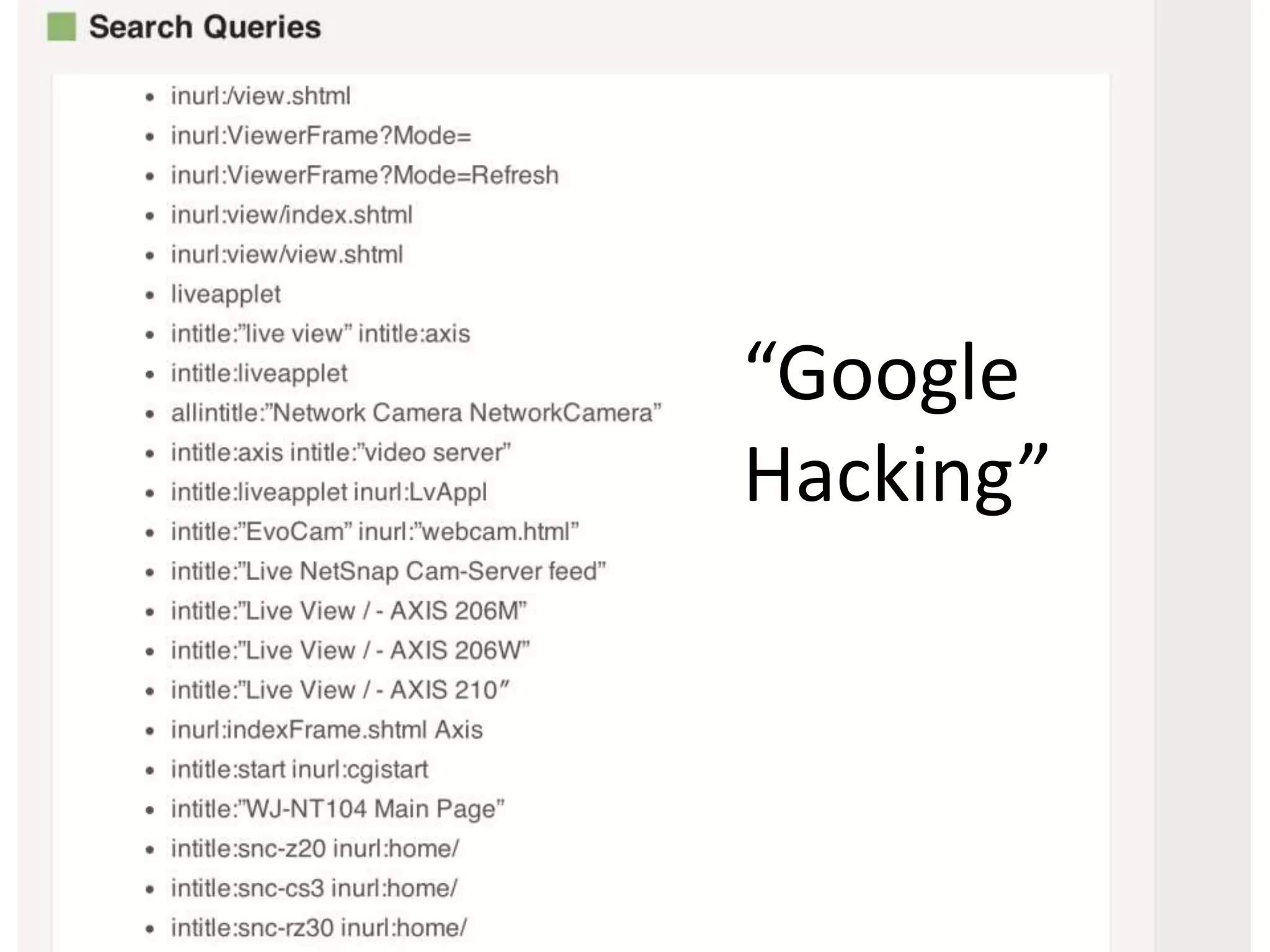
“Google 
Hacking”
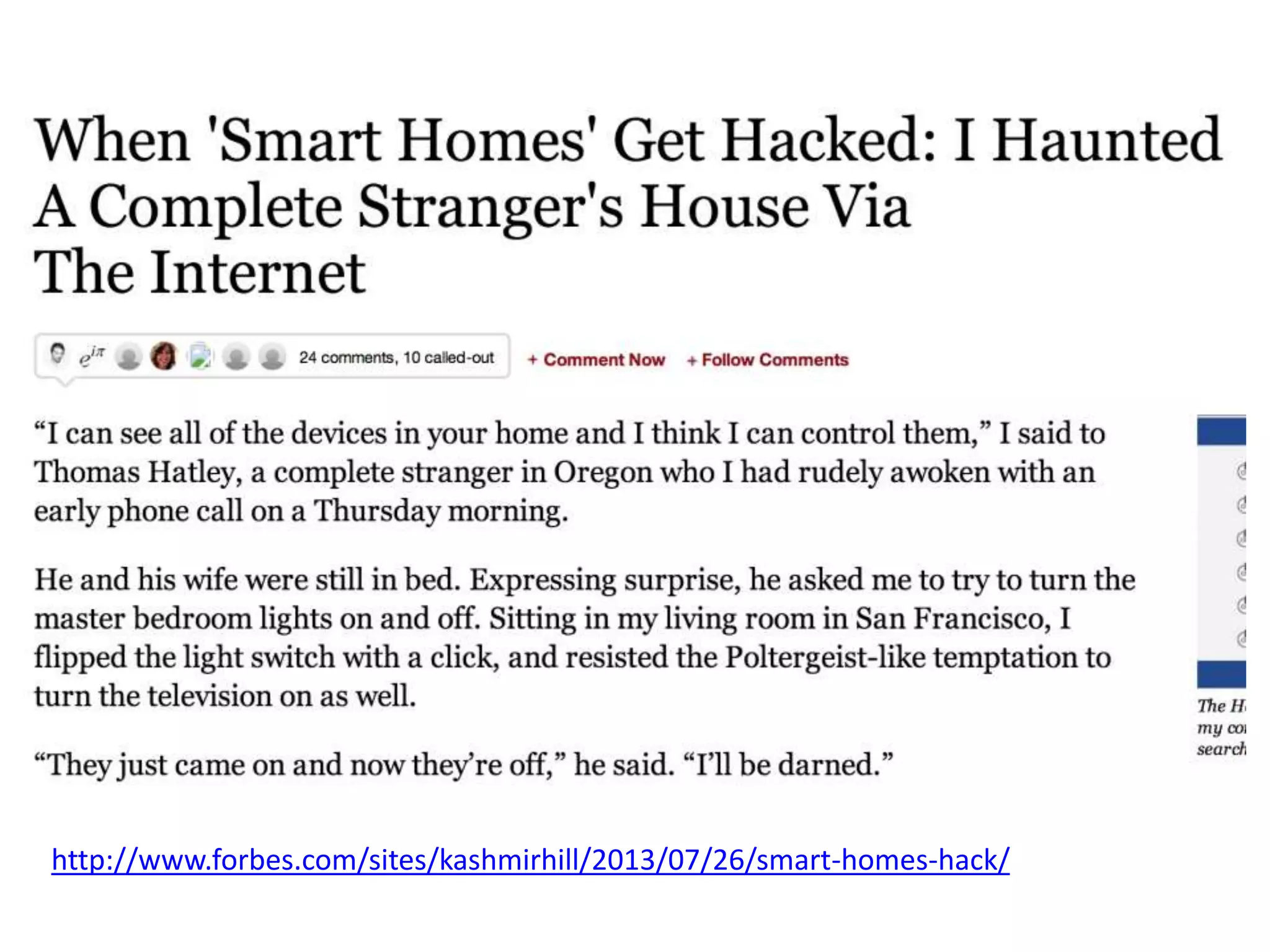
http://www.forbes.com/sites/kashmirhill/2013/07/26/smart-homes-hack/
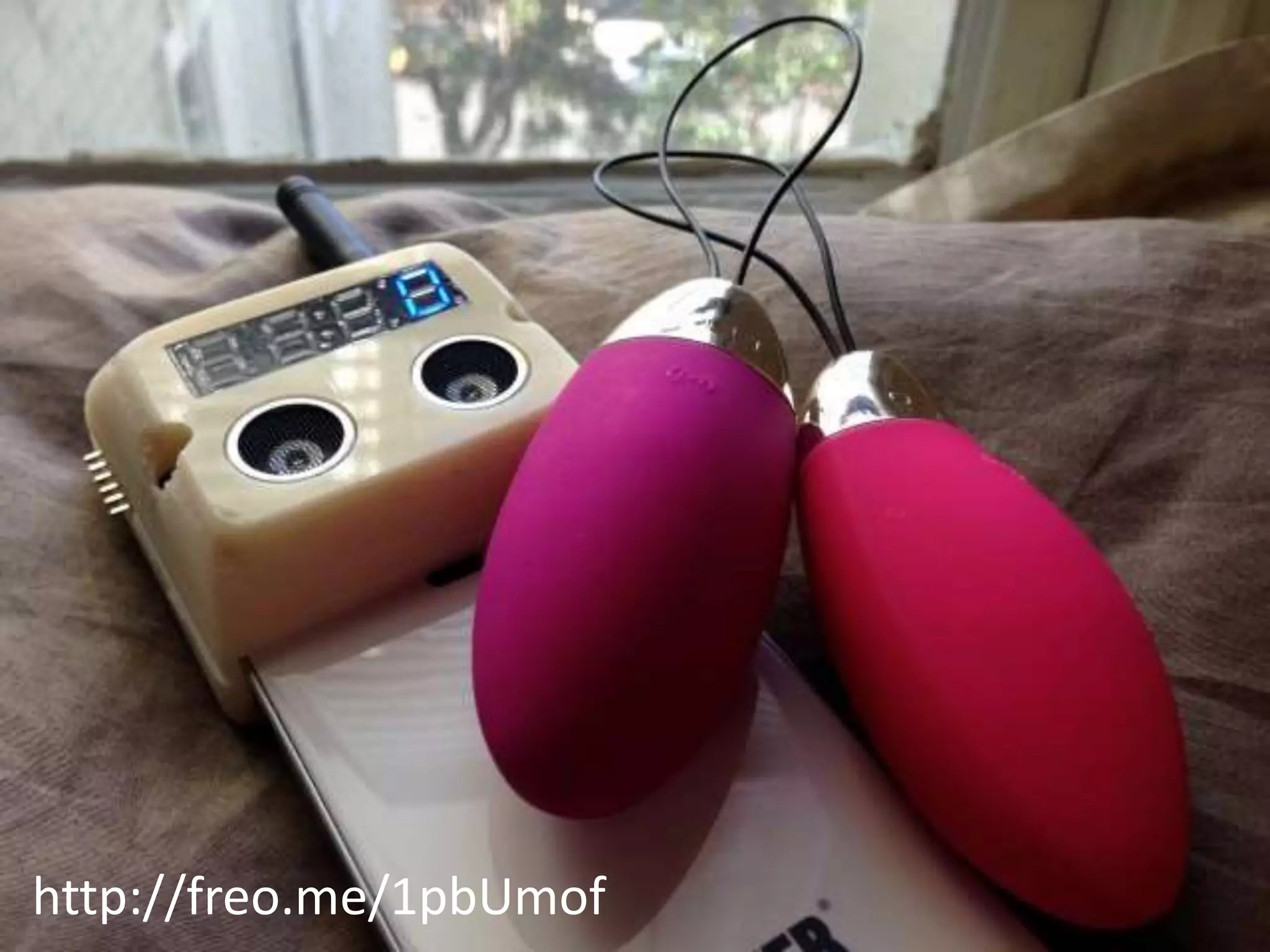
http://freo.me/1pbUmof
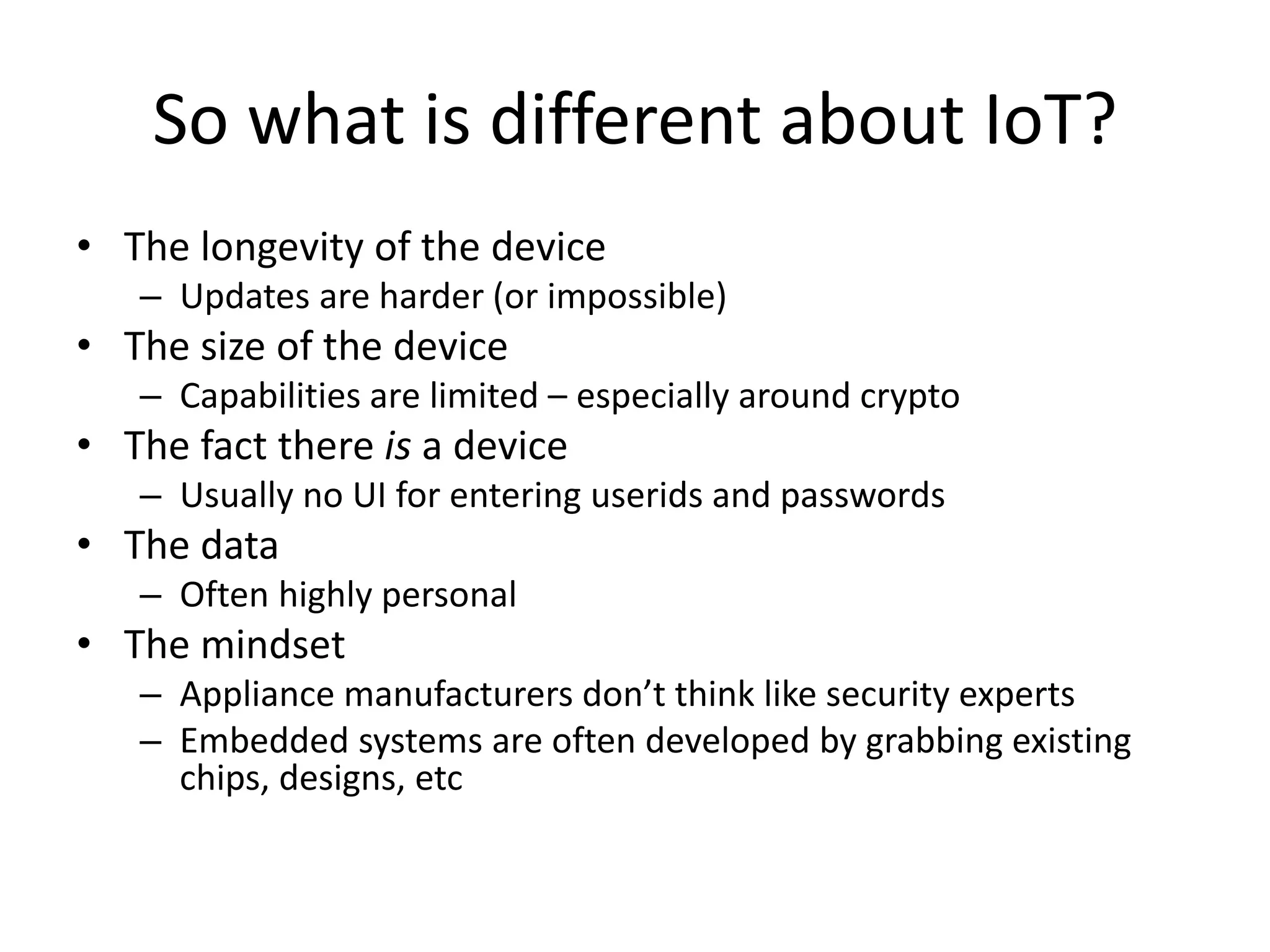
So what is different about IoT? 
• The longevity of the device 
– Updates are harder (or impossible) 
• The size of the device 
– Capabilities are limited – especially around crypto 
• The fact there is a device 
– Usually no UI for entering userids and passwords 
• The data 
– Often highly personal 
• The mindset 
– Appliance manufacturers don’t think like security experts 
– Embedded systems are often developed by grabbing existing 
chips, designs, etc
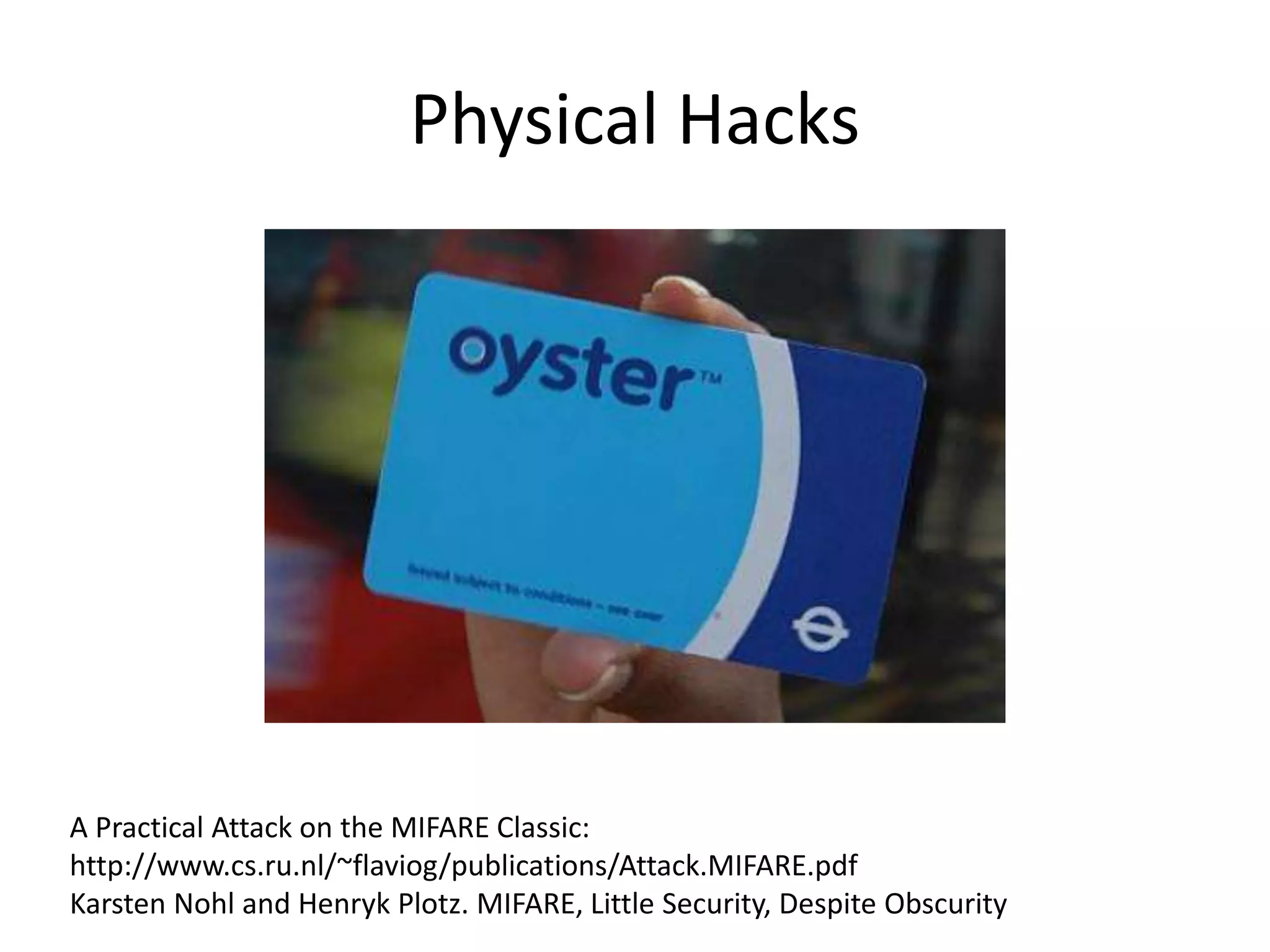
Physical Hacks 
A Practical Attack on the MIFARE Classic: 
http://www.cs.ru.nl/~flaviog/publications/Attack.MIFARE.pdf 
Karsten Nohl and Henryk Plotz. MIFARE, Little Security, Despite Obscurity
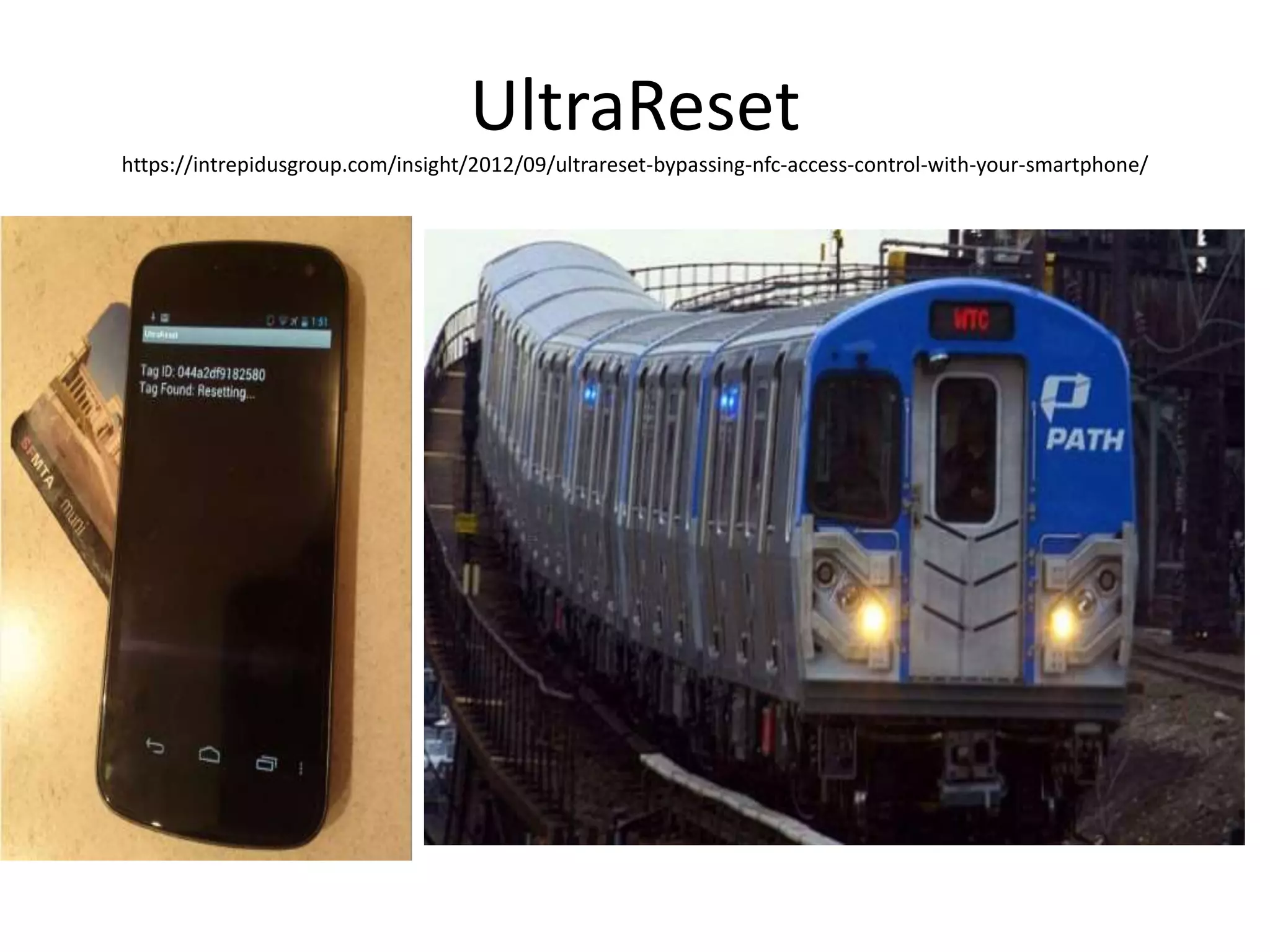
UltraReset 
https://intrepidusgroup.com/insight/2012/09/ultrareset-bypassing-nfc-access-control-with-your-smartphone/
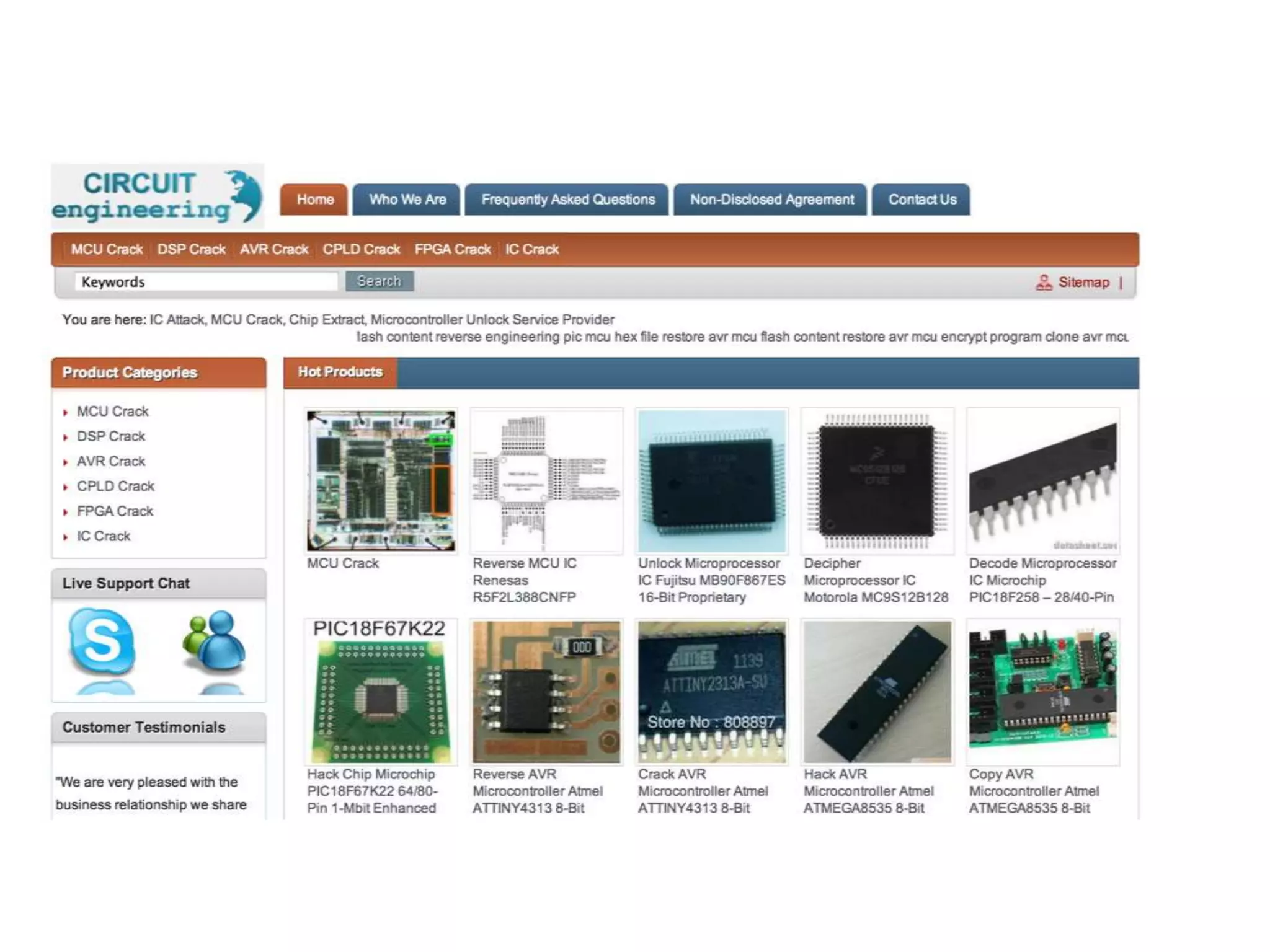
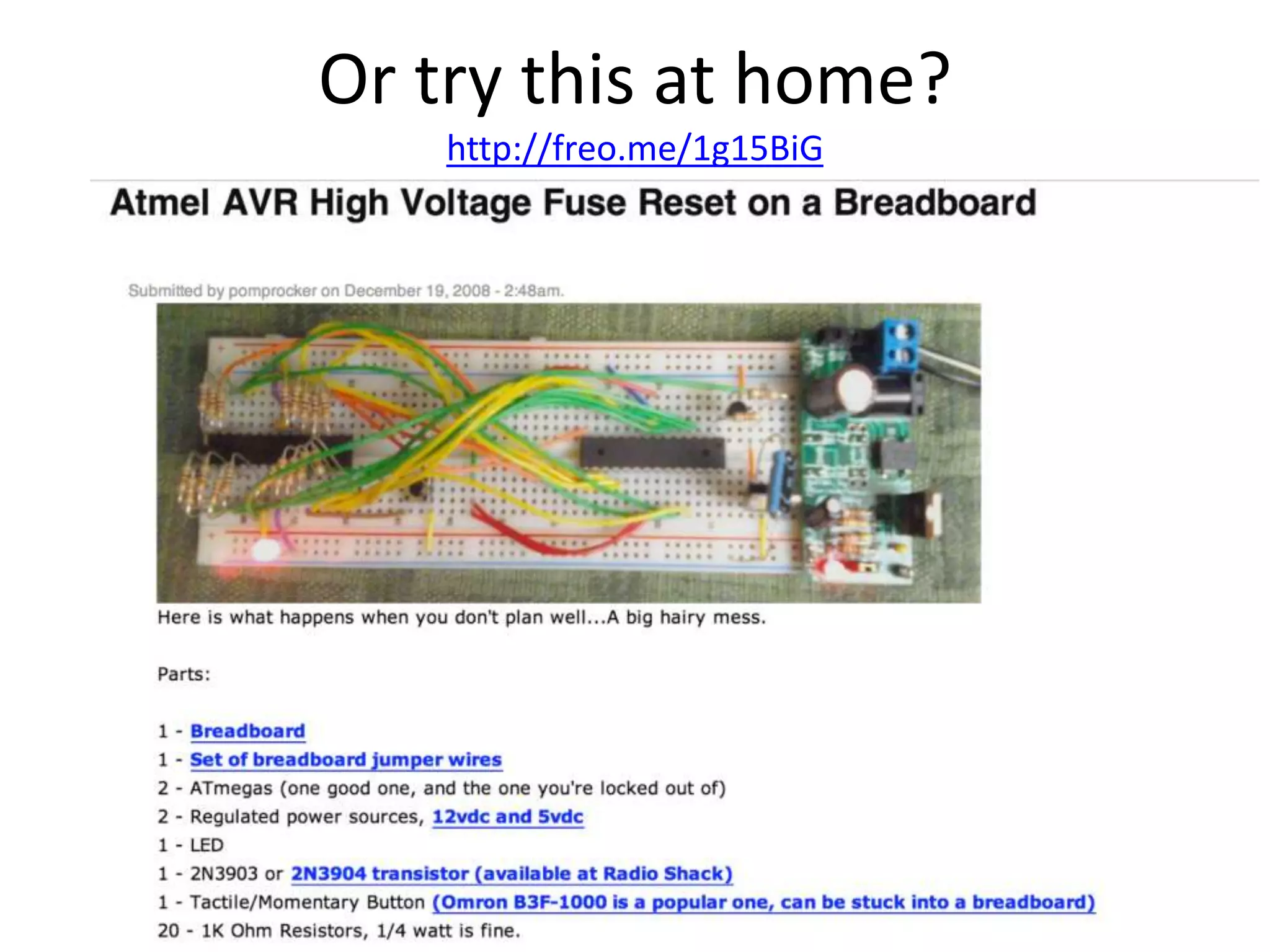
Or try this at home? 
http://freo.me/1g15BiG
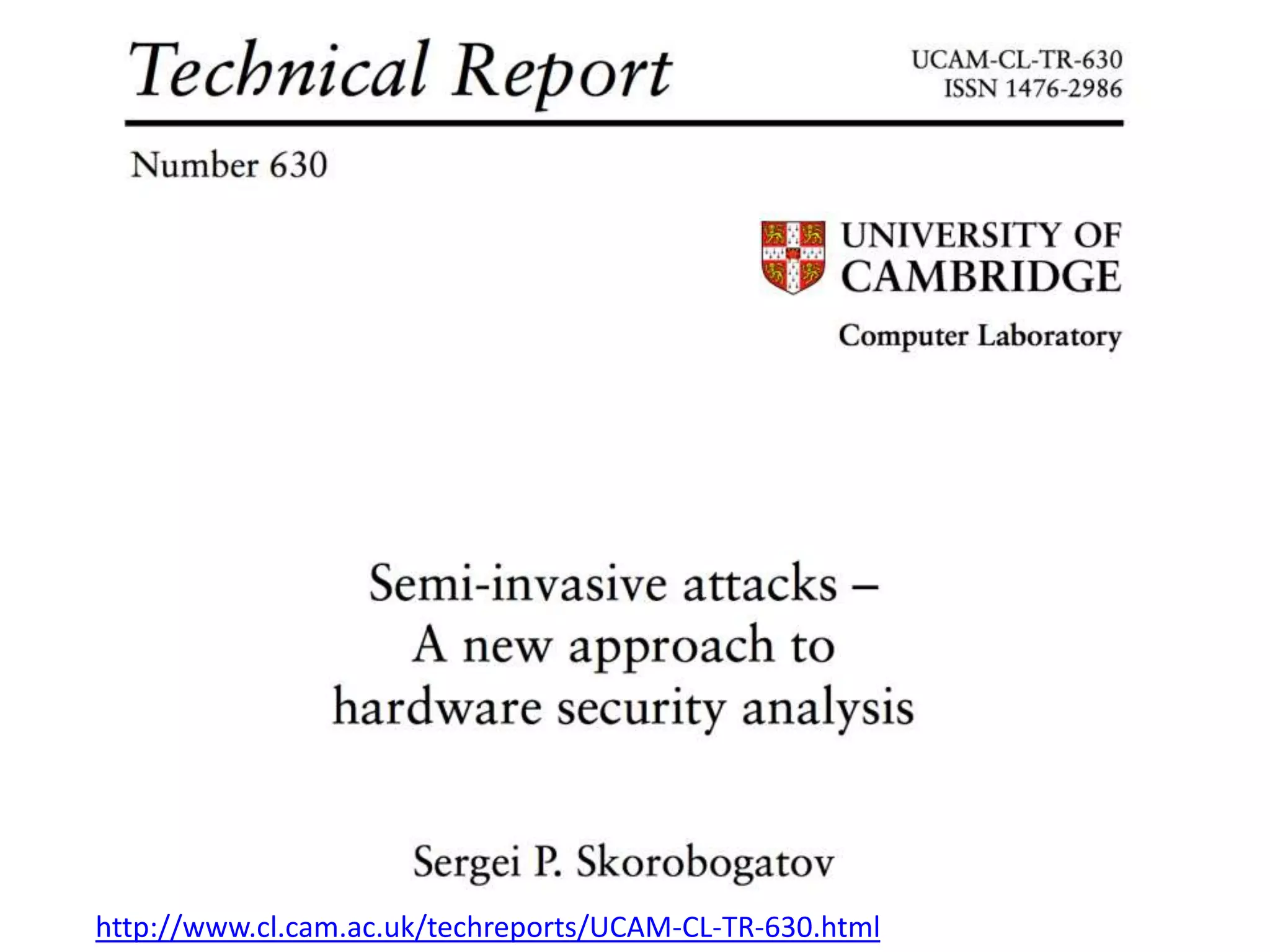
http://www.cl.cam.ac.uk/techreports/UCAM-CL-TR-630.html
Hardware recommendations 
• Don’t rely on obscurity
Hardware recommendations 
• Don’t rely on obscurity 
• Don’t rely on obscurity
Hardware Recommendation #2 
• Unlocking a single device should risk only that 
device’s data
The Network
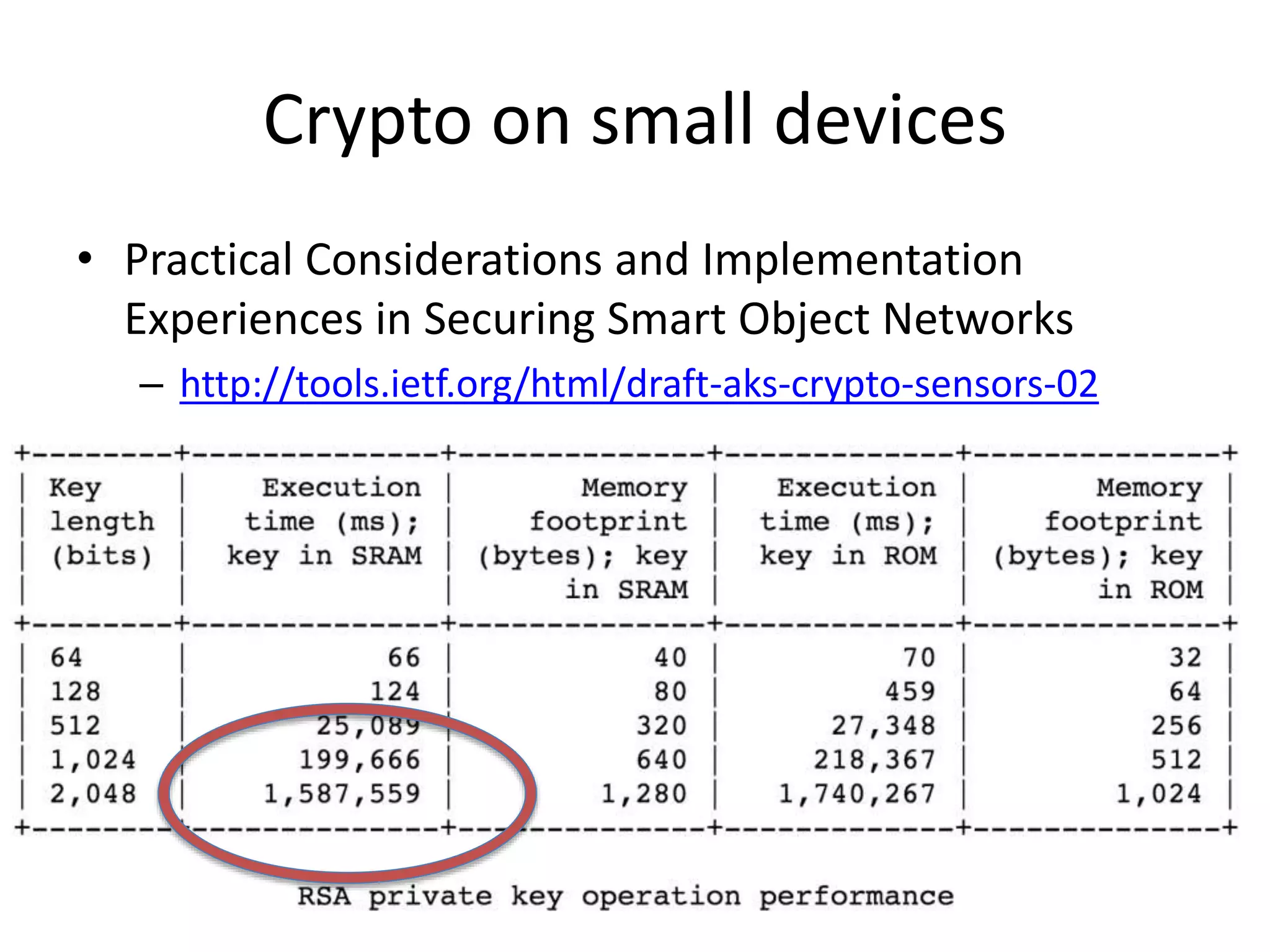
Crypto on small devices 
• Practical Considerations and Implementation 
Experiences in Securing Smart Object Networks 
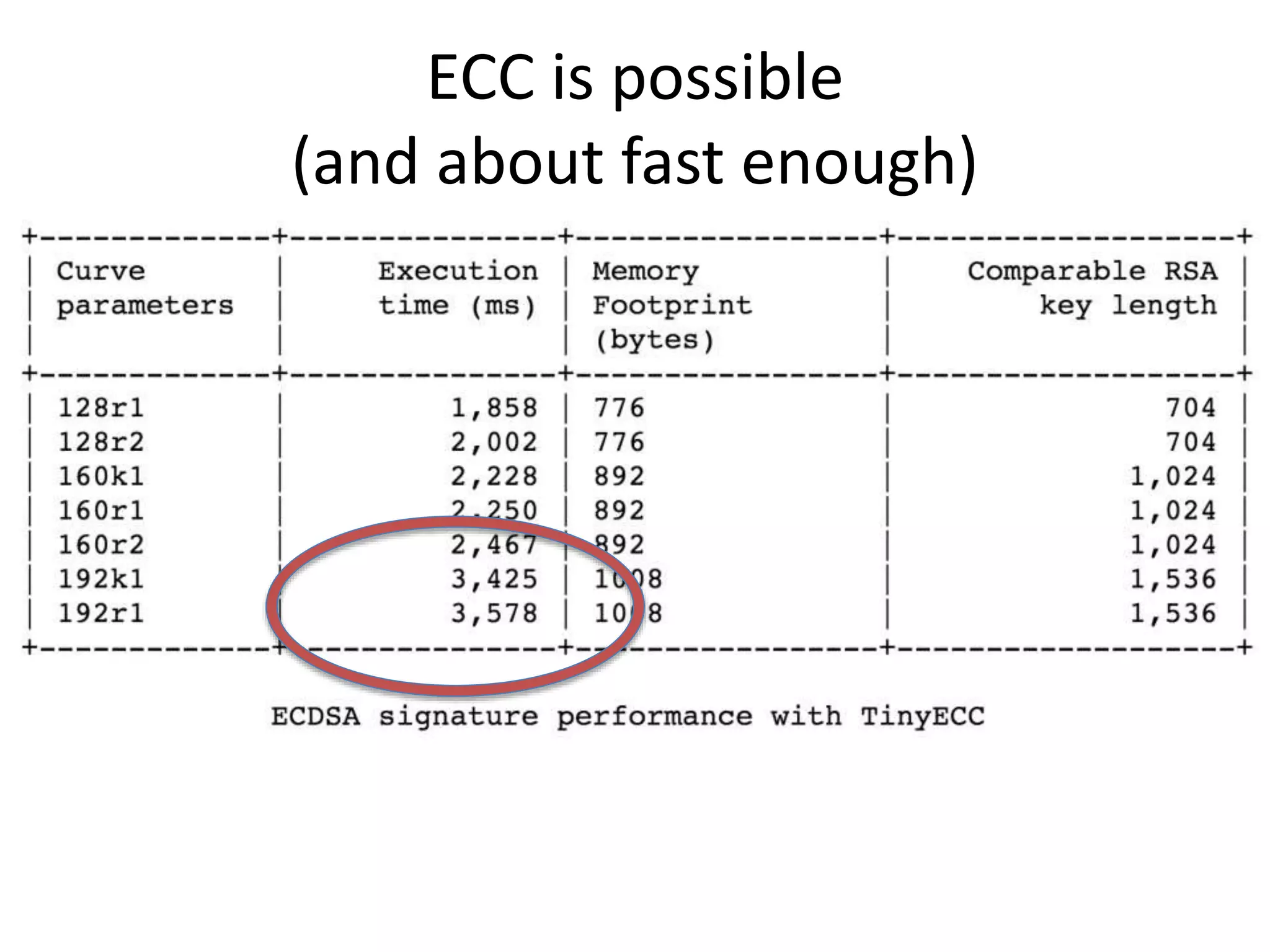
– http://tools.ietf.org/html/draft-aks-crypto-sensors-02
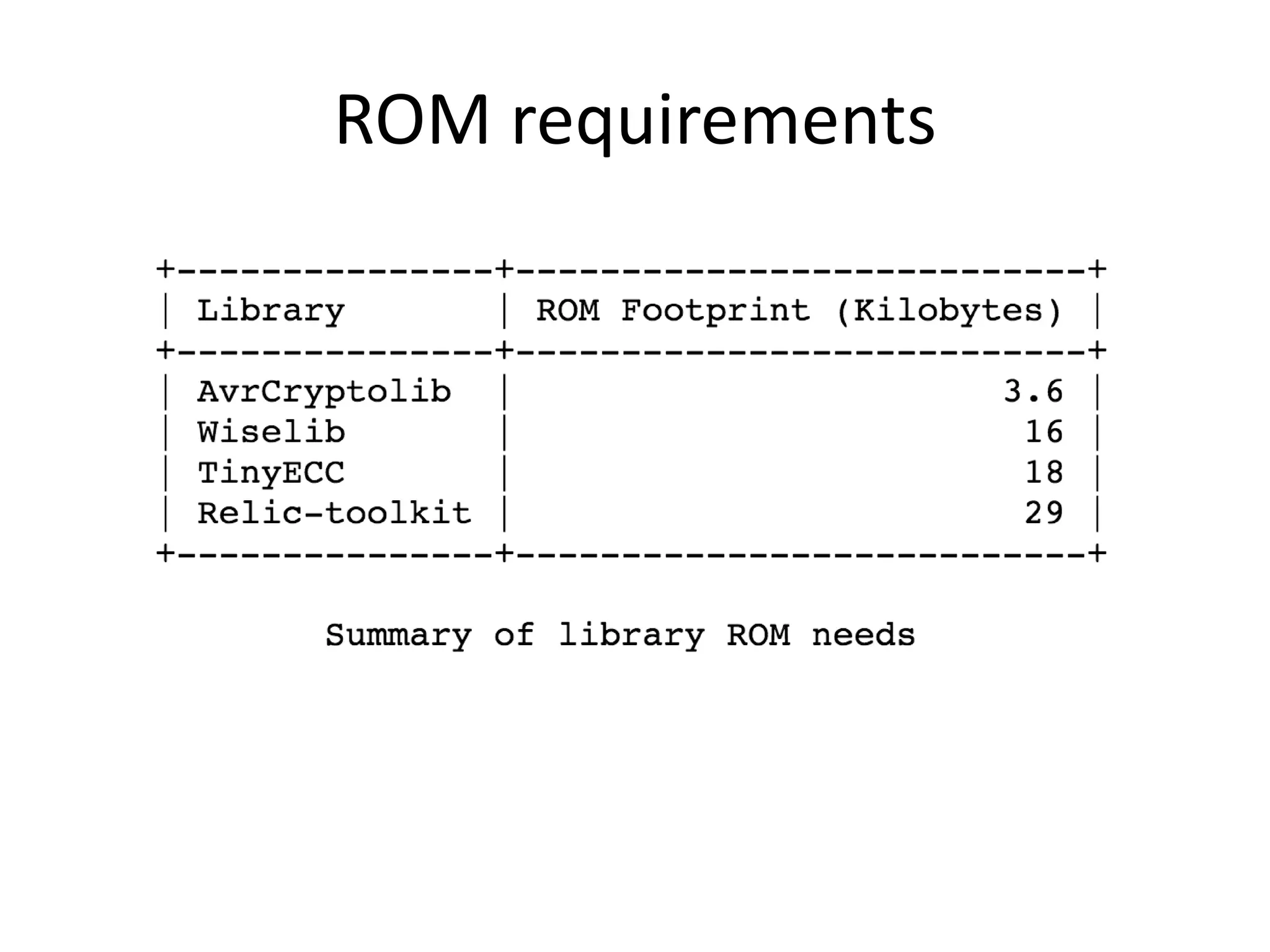
ROM requirements
ECC is possible 
(and about fast enough)
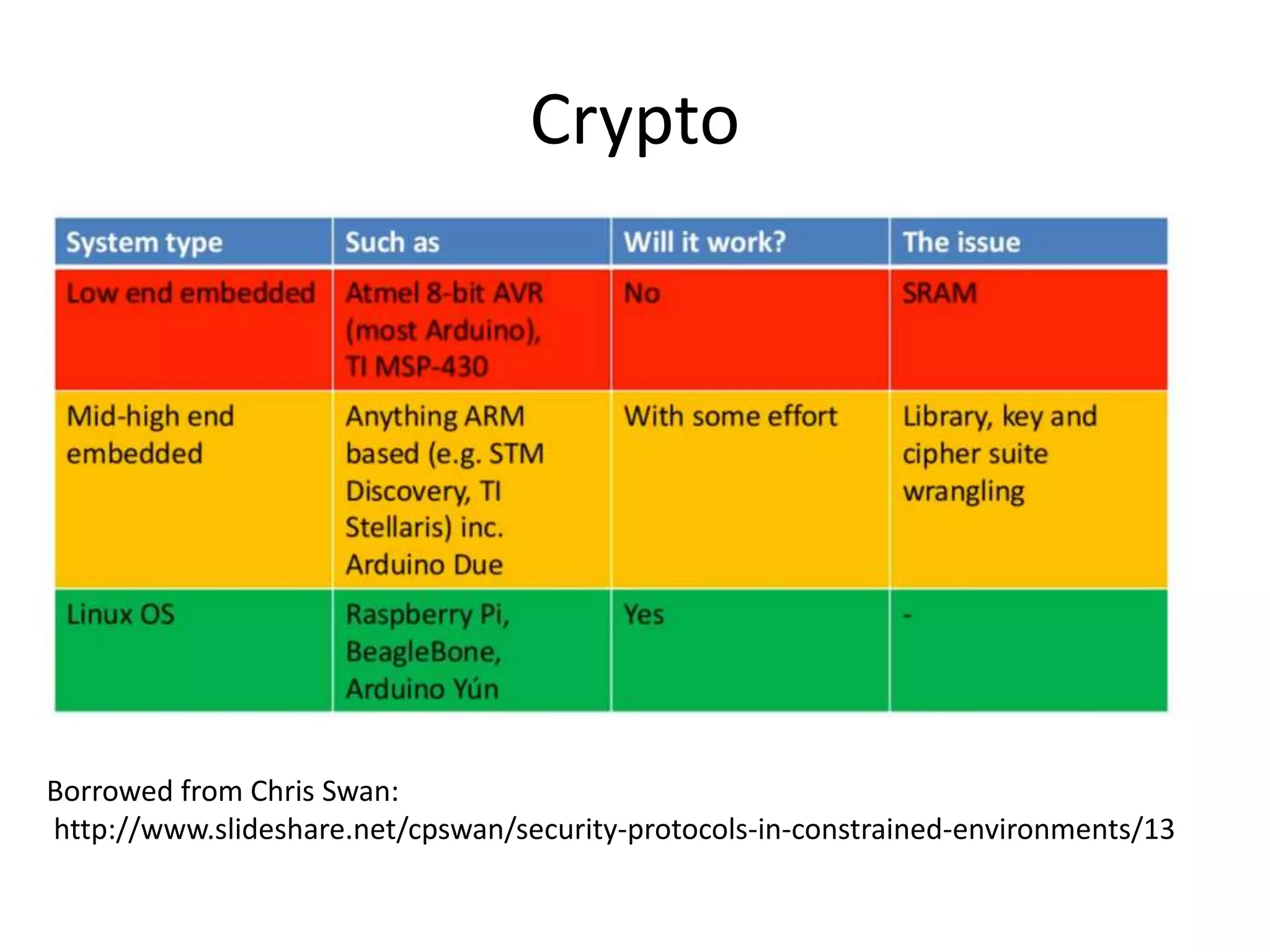
Crypto 
Borrowed from Chris Swan: 
http://www.slideshare.net/cpswan/security-protocols-in-constrained-environments/13
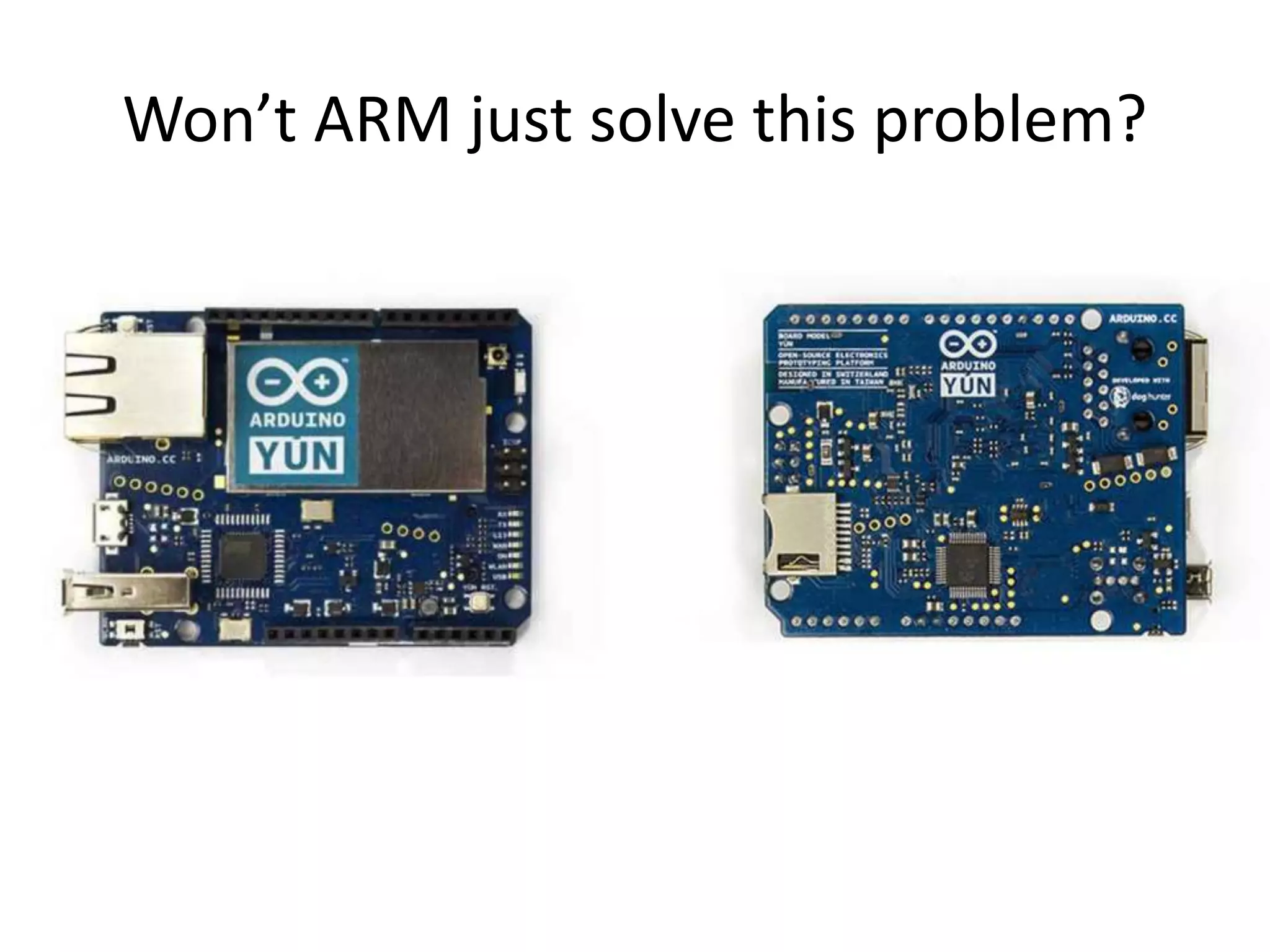
Won’t ARM just solve this problem?
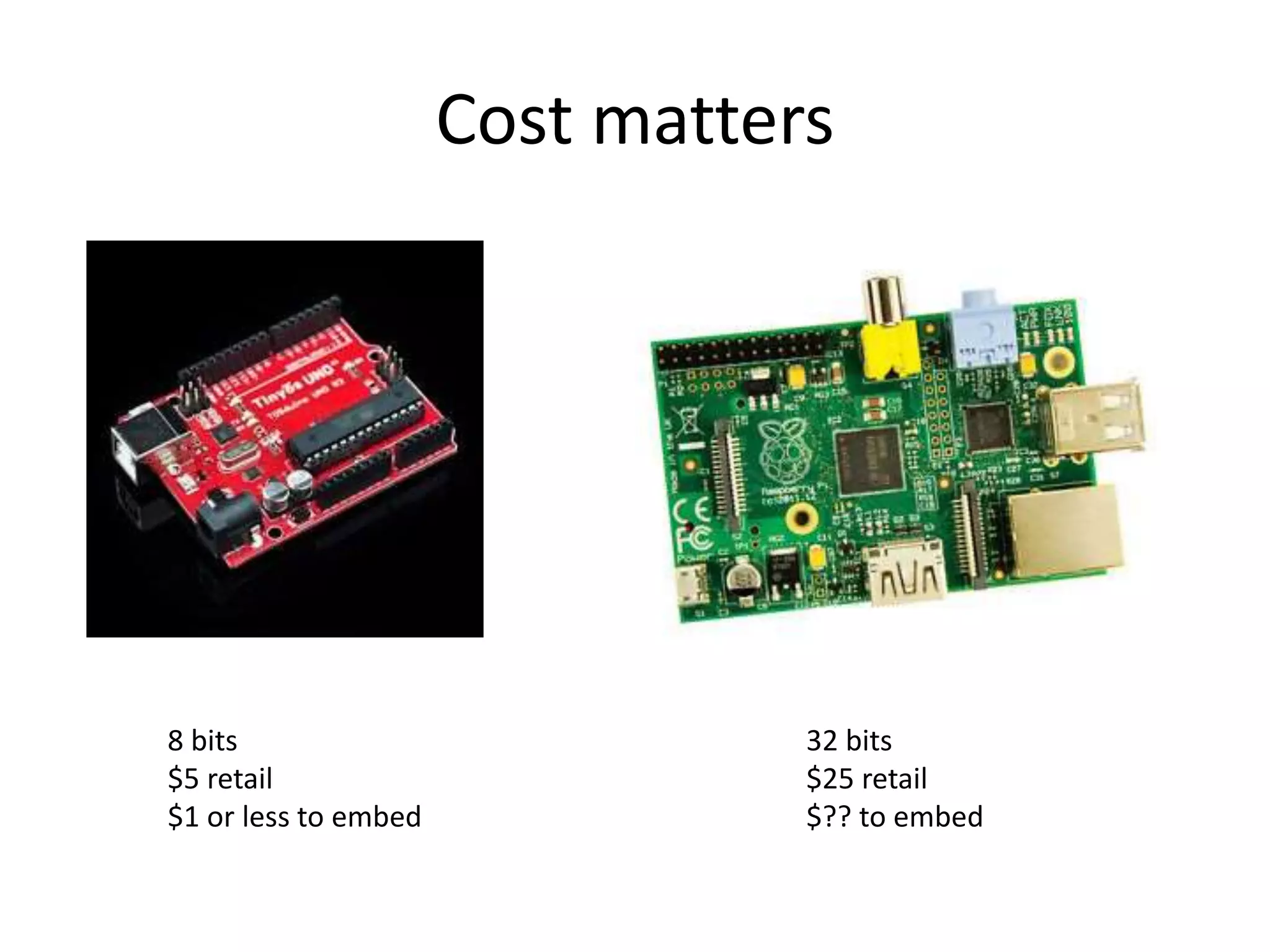
Cost matters 
8 bits 
$5 retail 
$1 or less to embed 
32 bits 
$25 retail 
$?? to embed
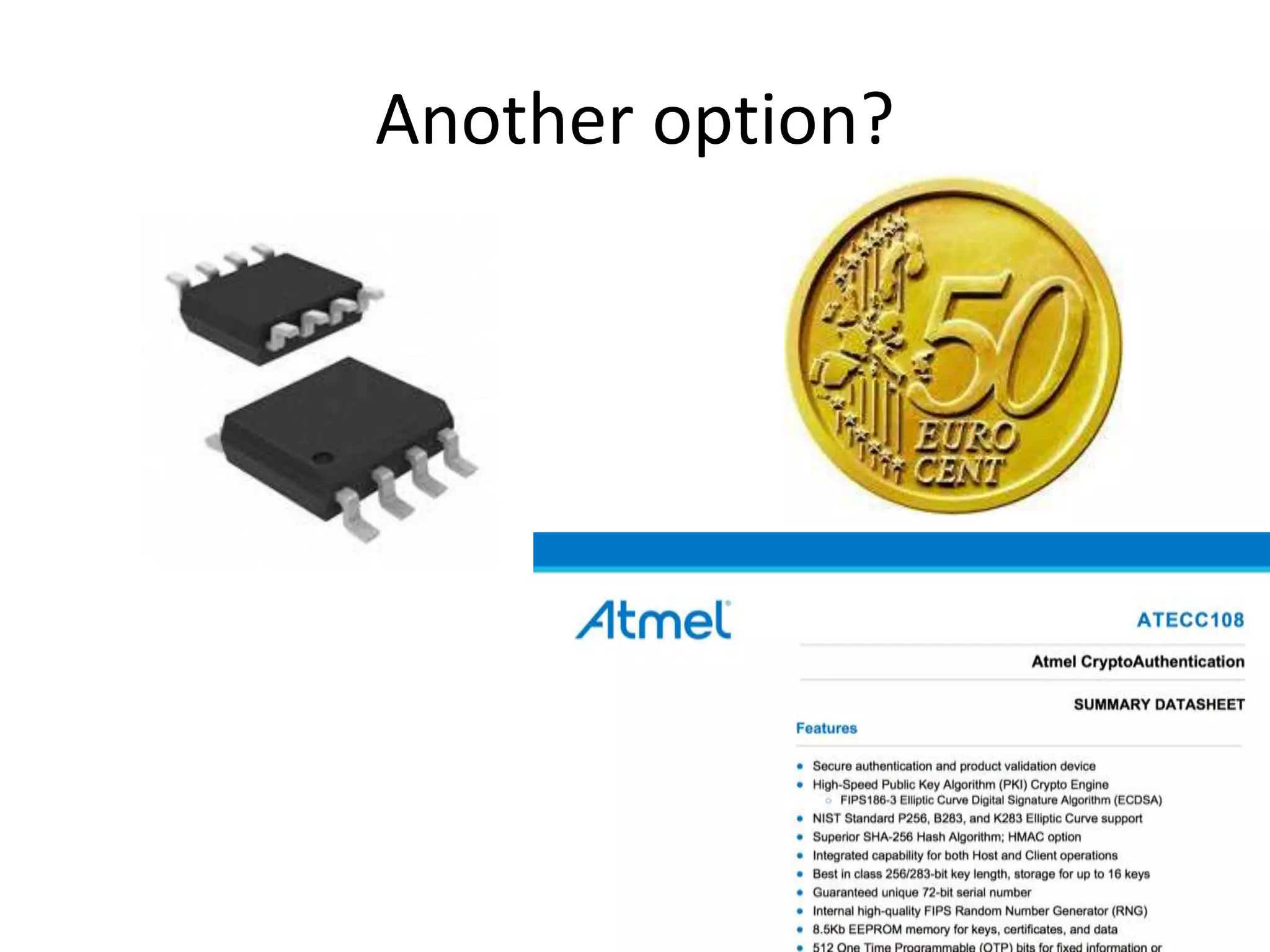
Another option?
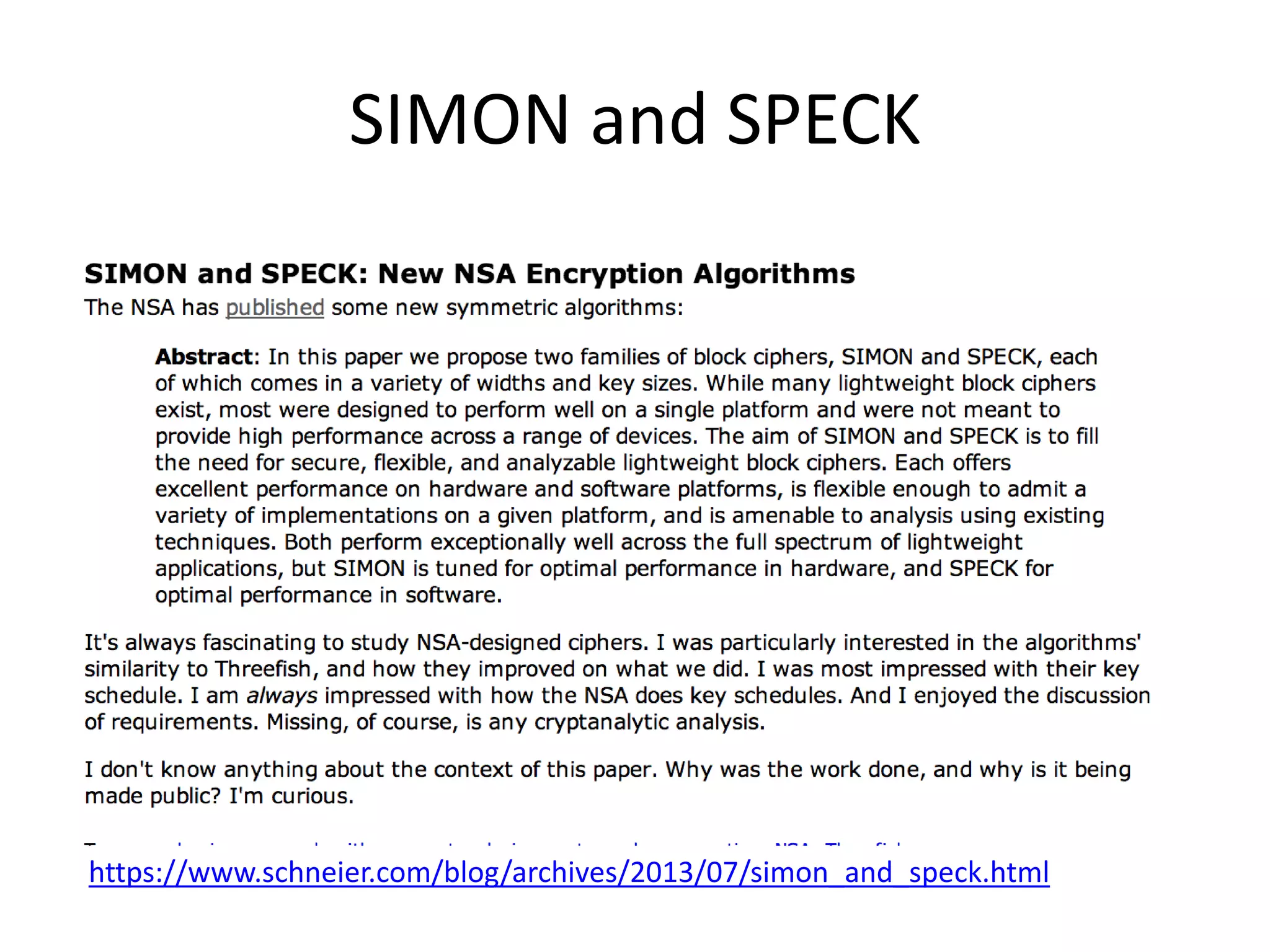
SIMON and SPECK 
https://www.schneier.com/blog/archives/2013/07/simon_and_speck.html
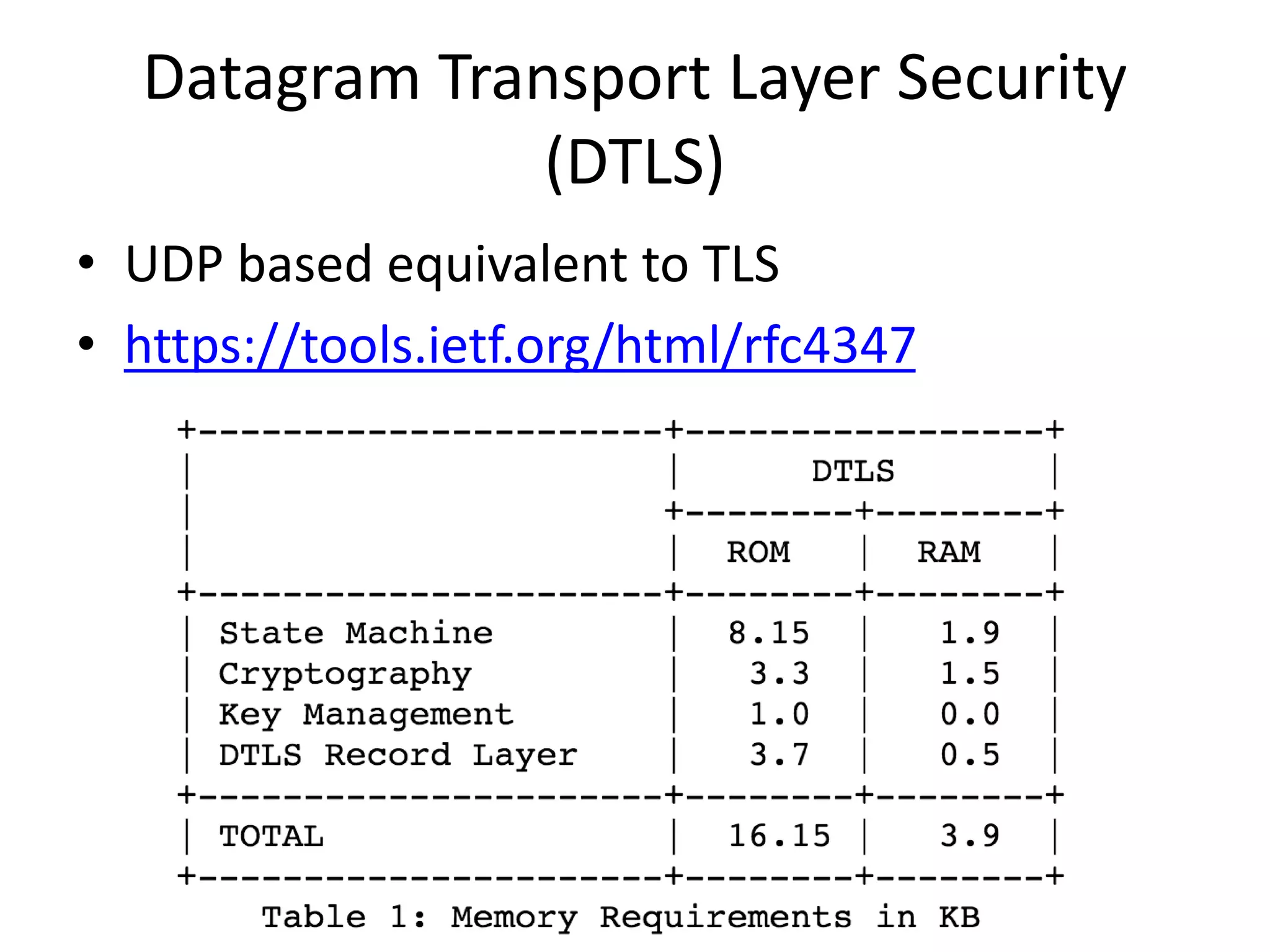
Datagram Transport Layer Security 
(DTLS) 
• UDP based equivalent to TLS 
• https://tools.ietf.org/html/rfc4347
Key distribution
How do you distribute keys to devices? 
• Usually at manufacture time 
• Complex to update 
• What about expiration?
Passwords 
• Passwords suck for humans 
• They suck even more for devices
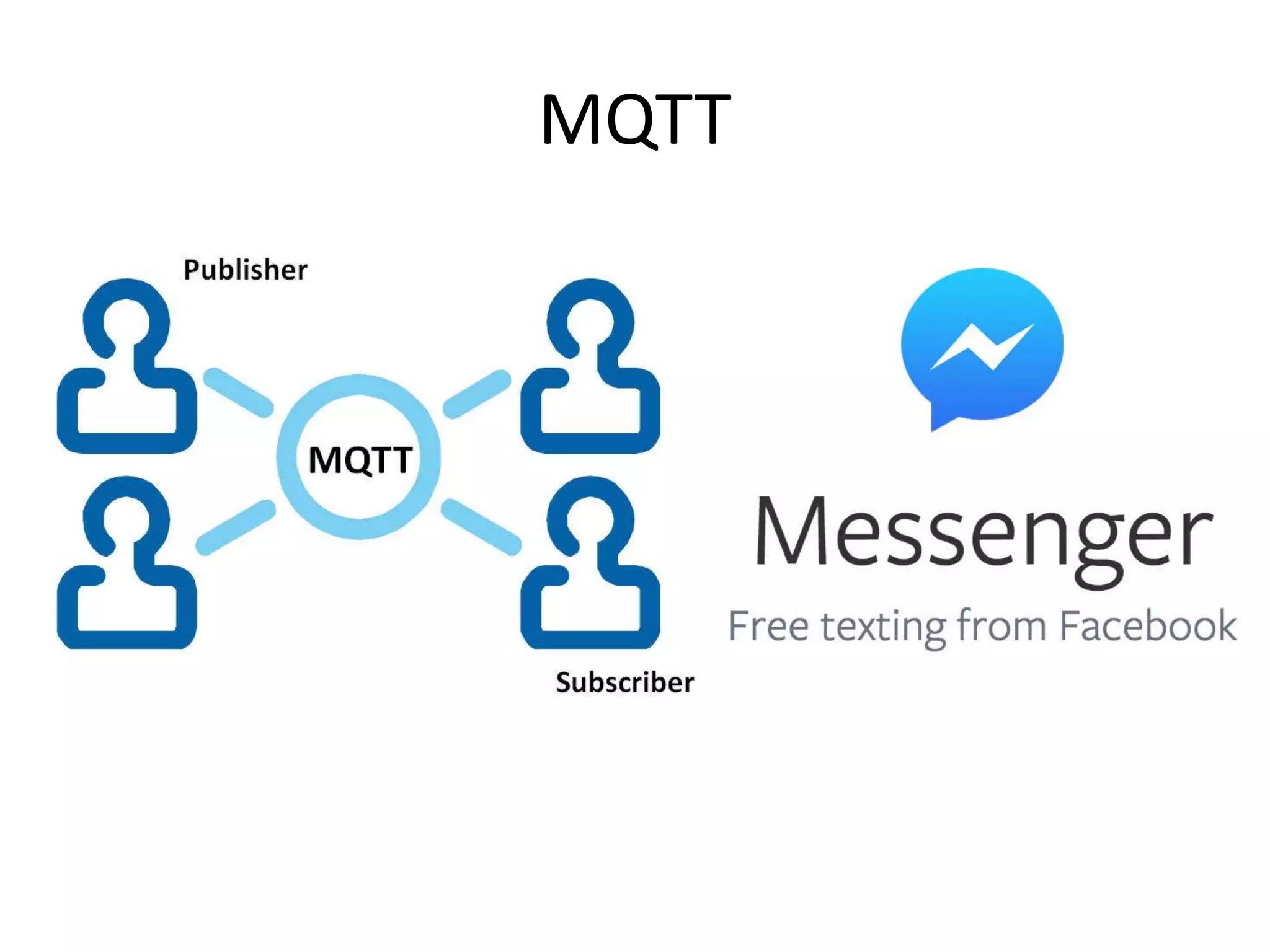
MQTT
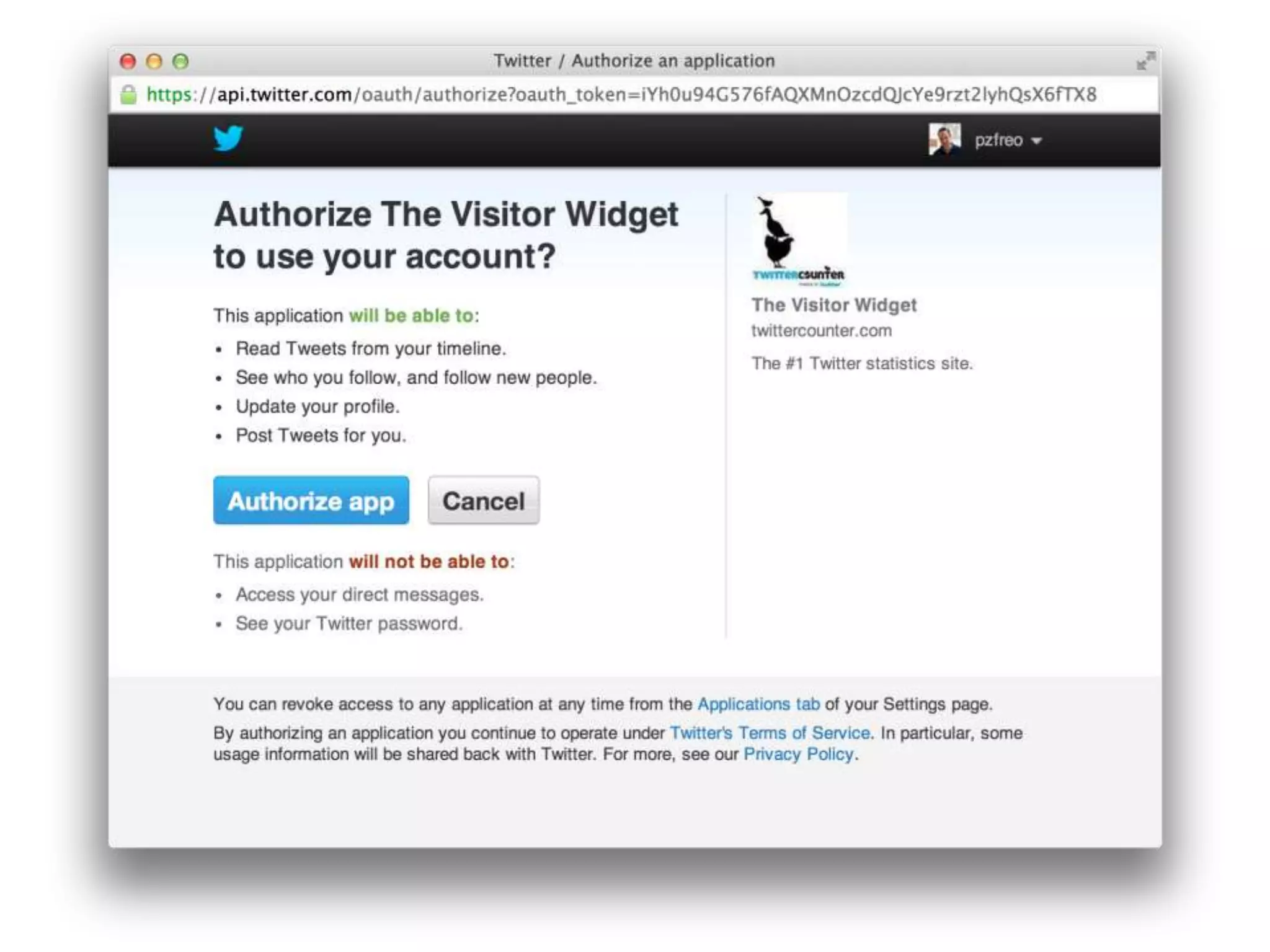
Why Federated Identity for IoT? 
• Can enable a meaningful consent mechanism 
for sharing of device data 
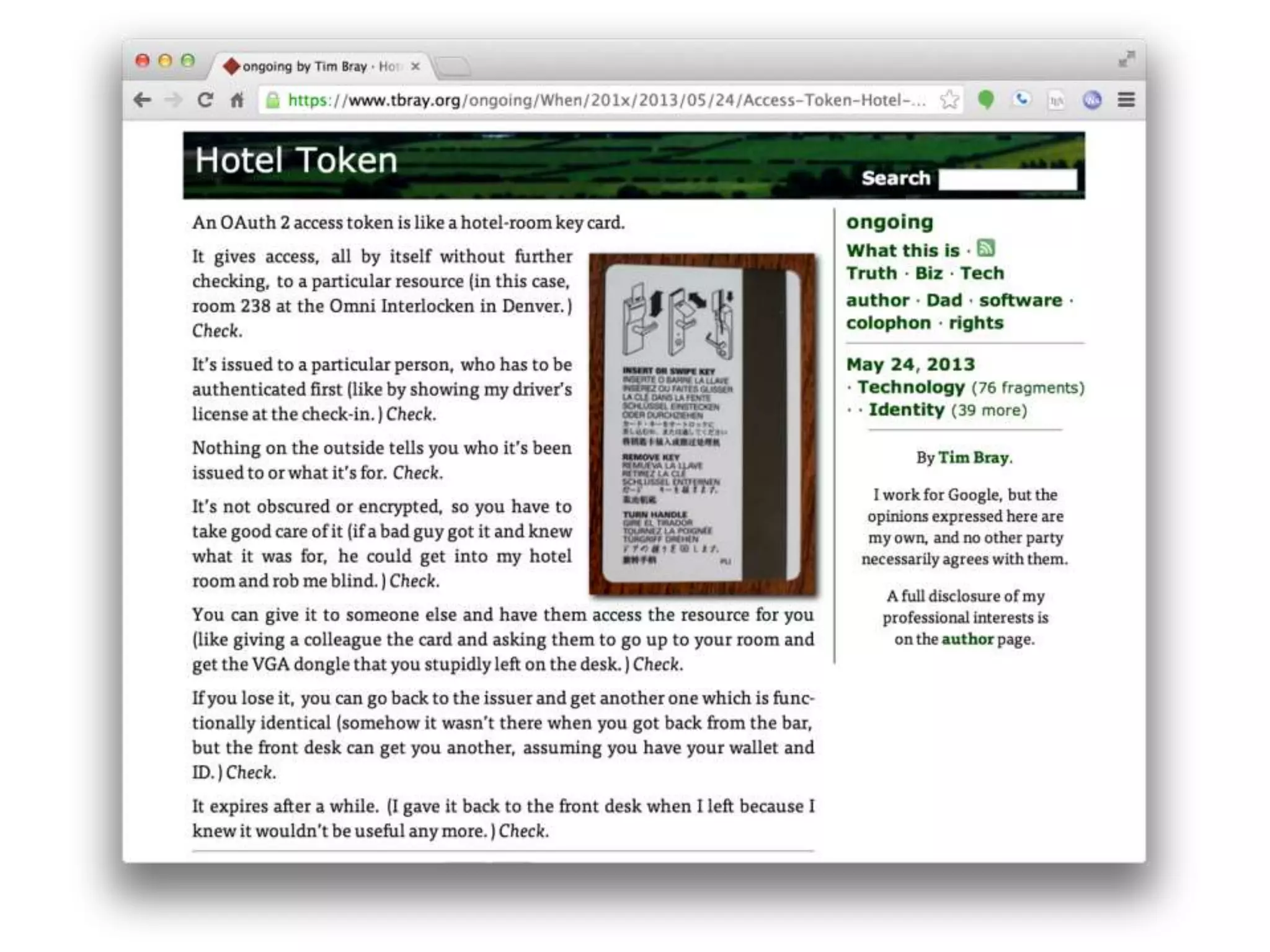
• Giving a device a token to use on API calls 
better than giving it a password 
– Revokable 
– Granular 
• May be relevant for both 
– Device to cloud 
– Cloud to app
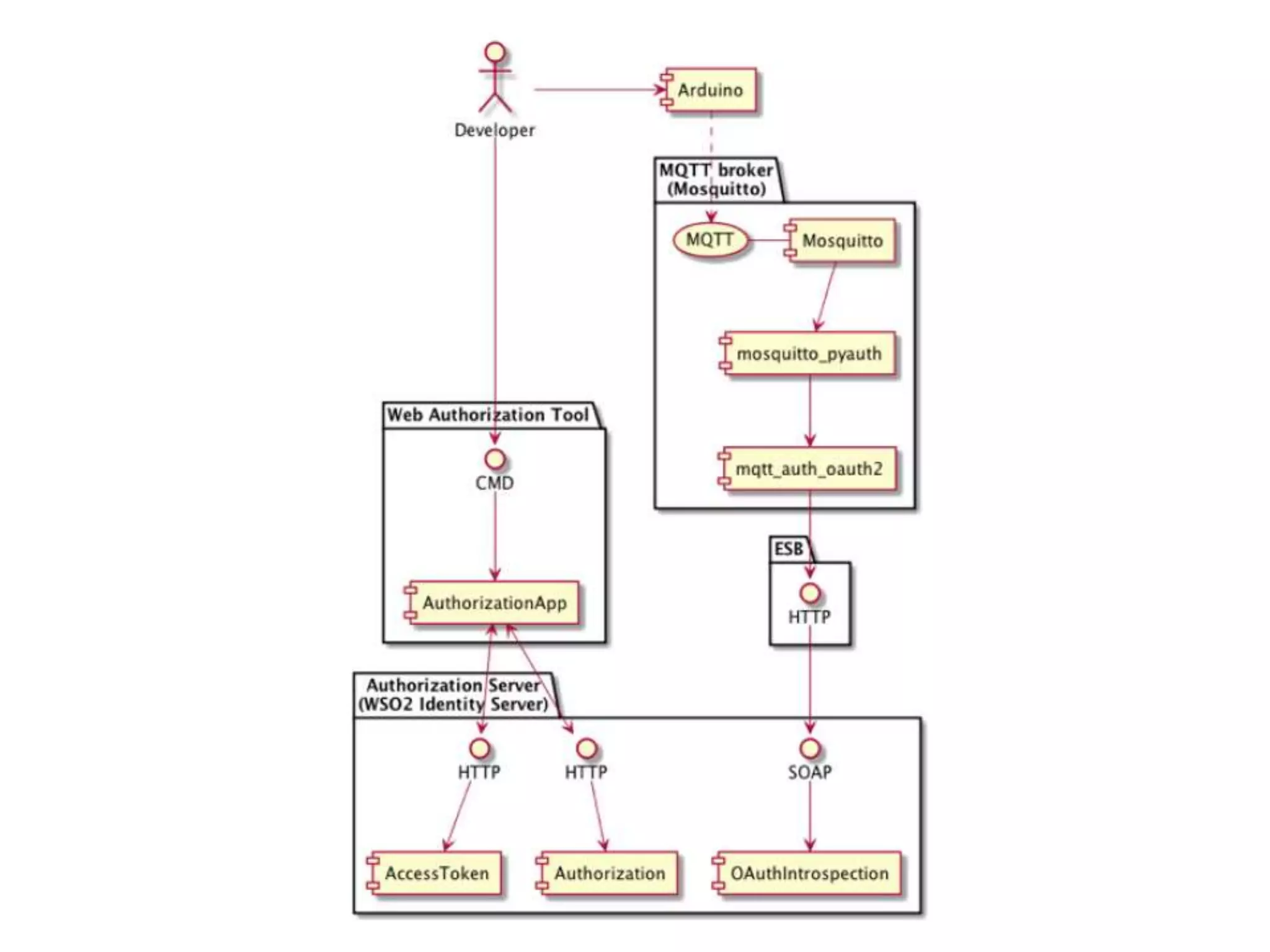
Device to Cloud 
• Put an OAuth2 token on the device 
• Set the “scope” to be limited 
– This device can publish to this topic 
• Support refresh model
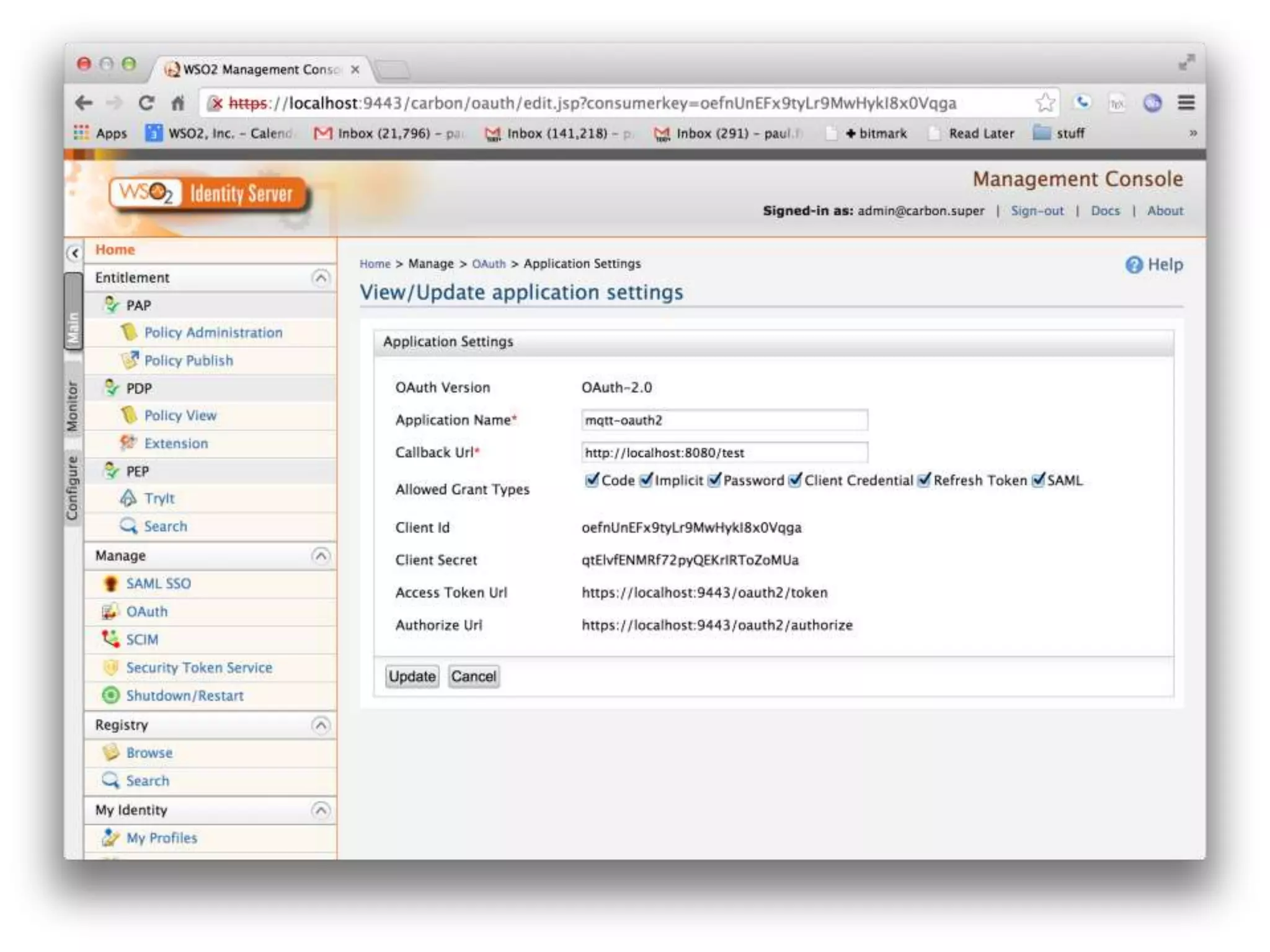
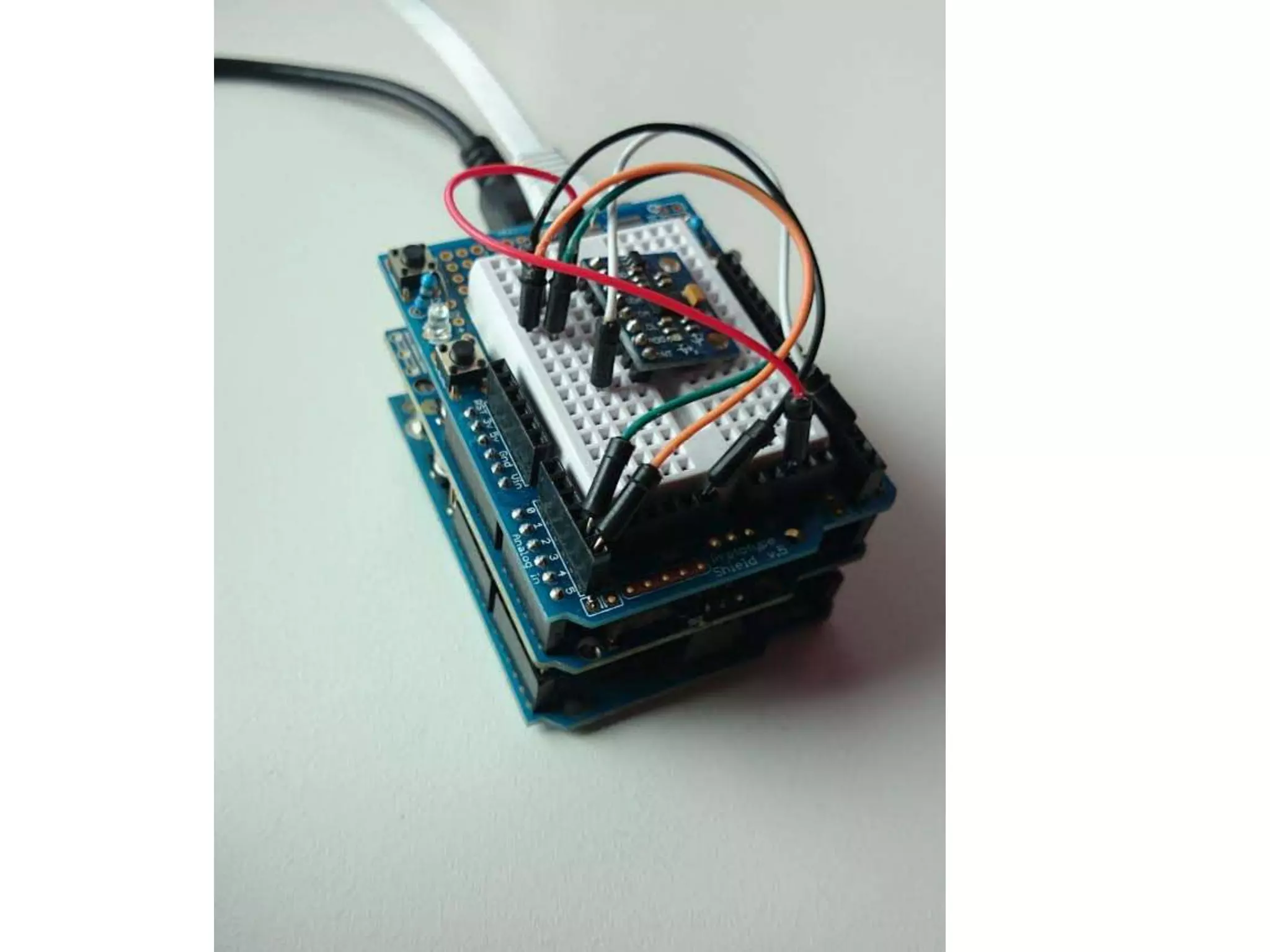
Quick Demo 
• Apologies…. This is not a “slick” demo!
Cloud to App 
• The same technology can be used to enable 
some app to subscribe to a specific topic 
• Much easier than with Arduino!
Lessons learnt 
• OAuth2 Token lengths are usually ok (no promise though) 
– OpenId Connect much larger 
• Registration is hard 
• MQTT and MPU / I2C code is 97% of Duemilanove 
– Adding the final logic to do OAuth2 flow pushed it to 99% 
– No TLS in this demo is a big issue 
• Different OAuth2 implementations behave differently 
– Need to disable updating the refresh token with every refresh 
• Need to be able to update the scope of token if this will work 
for long term embedded devices 
• MQTT needs some better designed patterns for RPC 
– Standardised
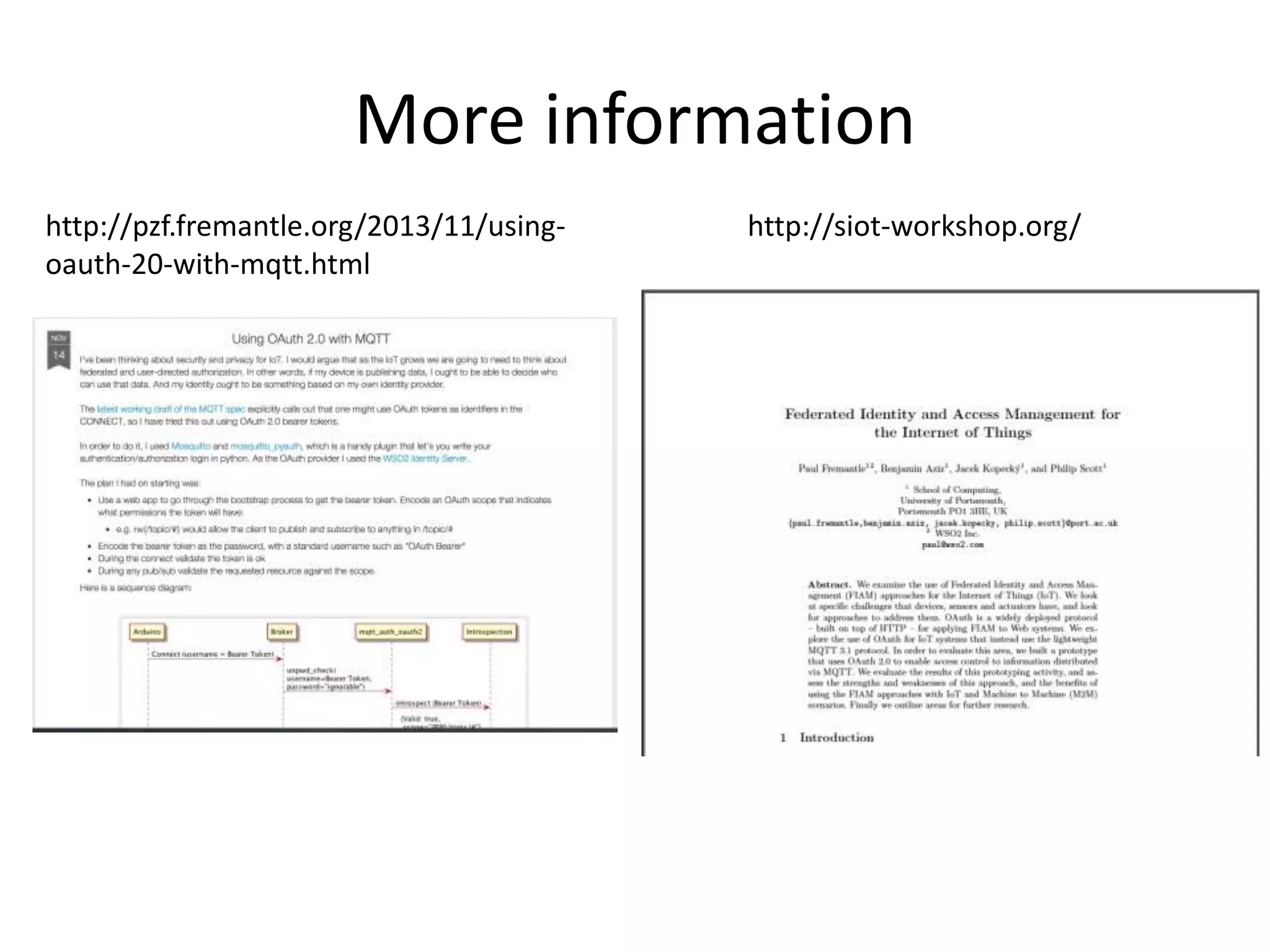
More information 
http://pzf.fremantle.org/2013/11/using-oauth- 
20-with-mqtt.html 
http://siot-workshop.org/
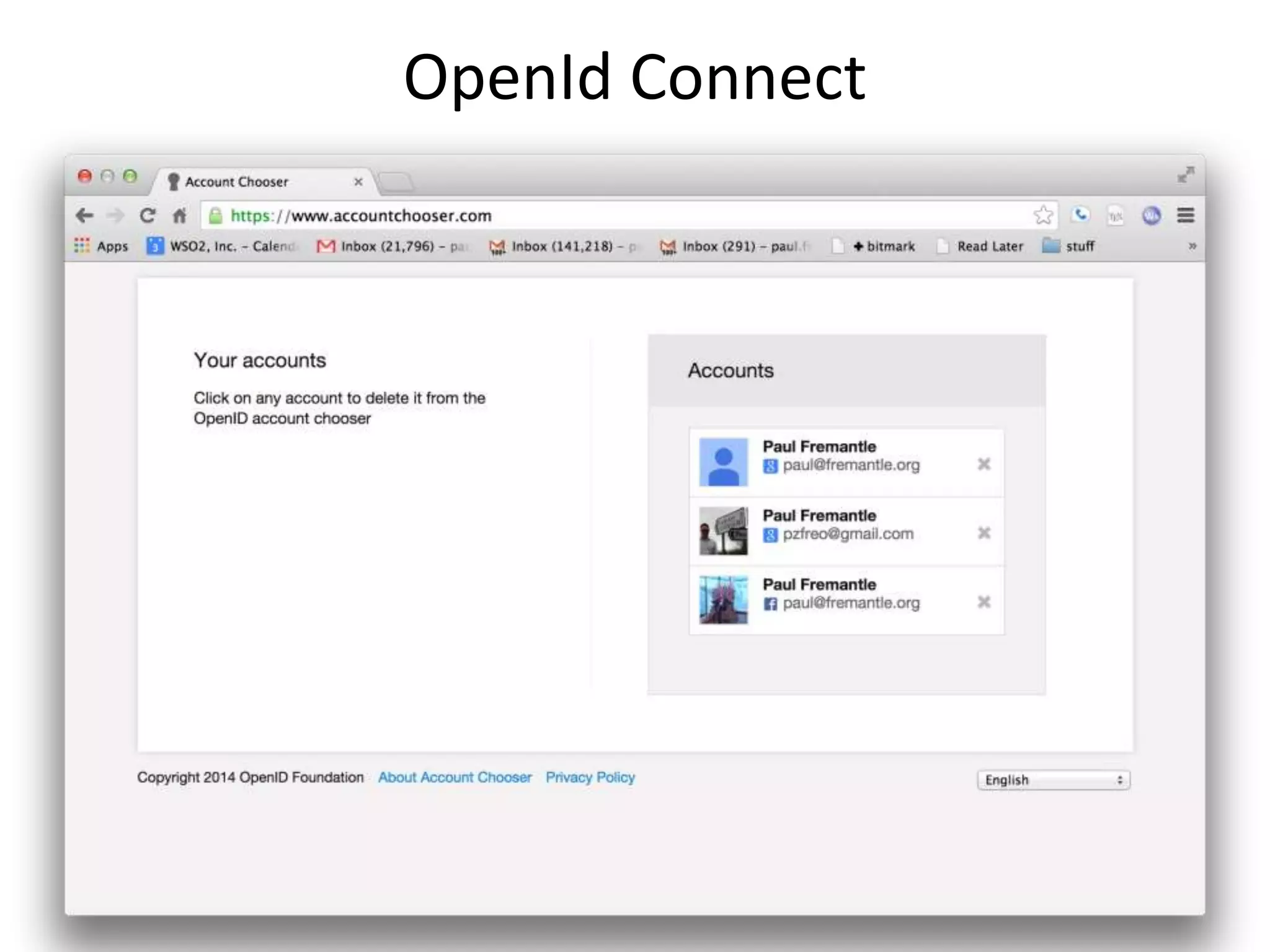
OpenId Connect
Are you creating the next 
privacy breach?
Summary 
• Think about security with your next device 
• We as a community need to make sure that 
the next generation of IoT devices are secure 
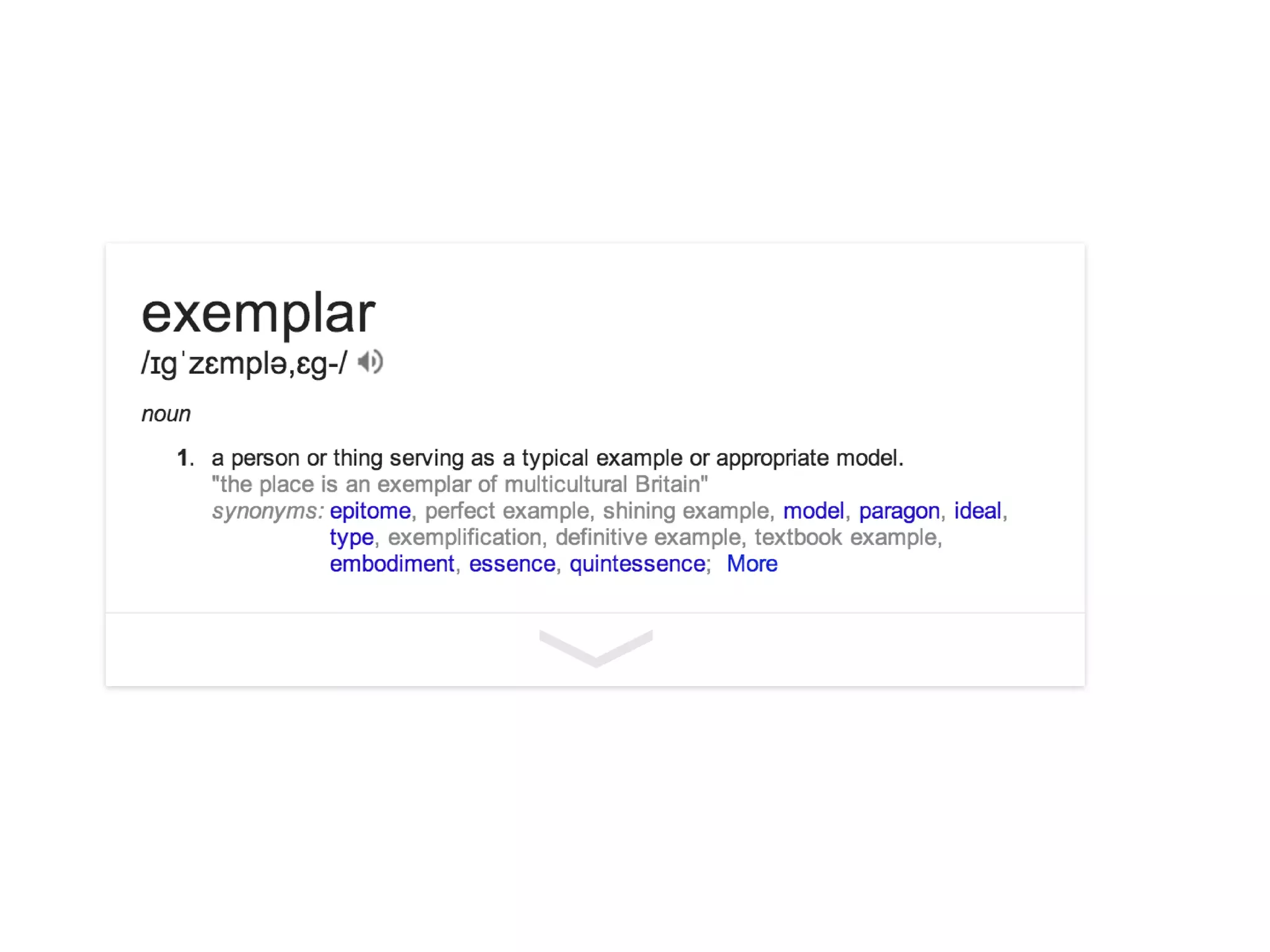
• We need to create exemplars 
– Shields 
– Libraries 
– Server software 
– Standards
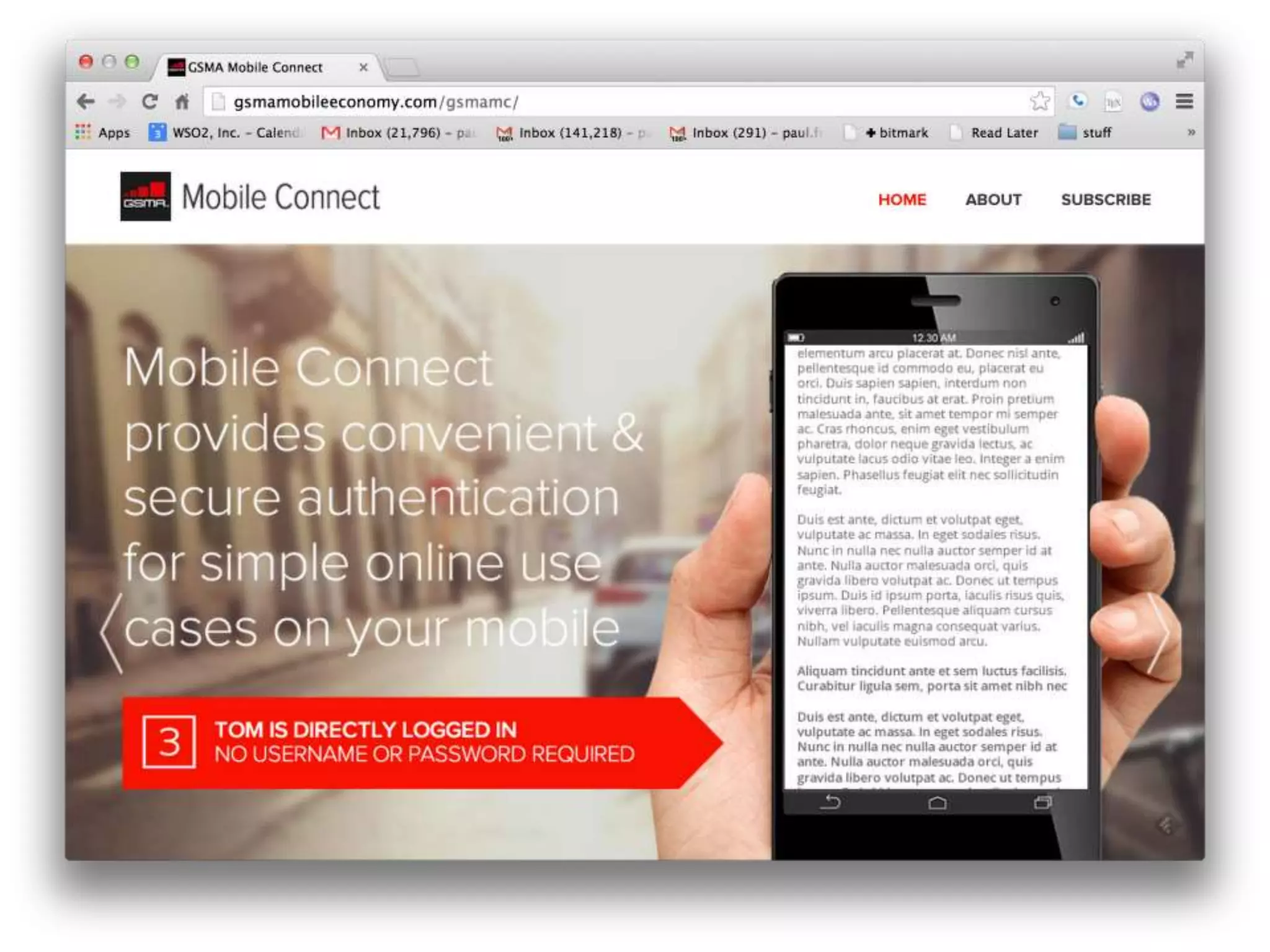
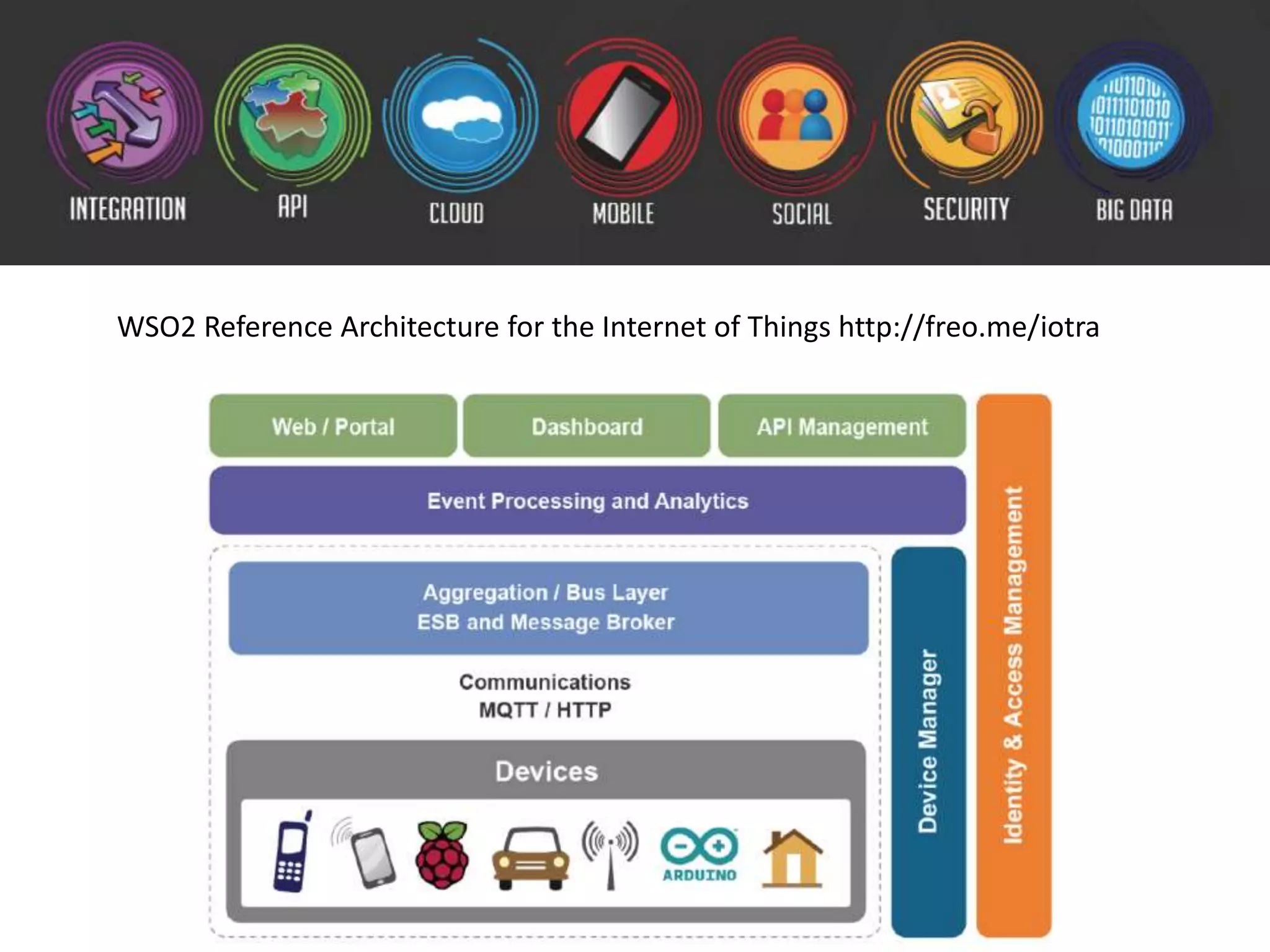
WSO2 Reference Architecture for the Internet of Things http://freo.me/iotra

Your Thing is Pwned - Security Challenges for the IoT

  • 1.
    Your Thing ispwnd Security Challenges for the Internet of Things Paul Fremantle CTO, WSO2 (paul@wso2.com) PhD researcher, Portsmouth University (paul.fremantle@port.ac.uk) @pzfreo #wso2 #iotconf @iotconf
  • 2.
    Firstly, does iteven matter?
  • 5.
    My three rulesfor IoT security • 1. Don’t be stupid • 2. Be smart • 3. Think about what’s different
  • 6.
    My three rulesfor IoT security • 1. Don’t be stupid – The basics of Internet security haven’t gone away • 2. Be smart – Use the best practice from the Internet • 3. Think about what’s different – What are the unique challenges of your device?
  • 8.
  • 9.
  • 11.
  • 12.
    So what isdifferent about IoT? • The longevity of the device – Updates are harder (or impossible) • The size of the device – Capabilities are limited – especially around crypto • The fact there is a device – Usually no UI for entering userids and passwords • The data – Often highly personal • The mindset – Appliance manufacturers don’t think like security experts – Embedded systems are often developed by grabbing existing chips, designs, etc
  • 13.
    Physical Hacks APractical Attack on the MIFARE Classic: http://www.cs.ru.nl/~flaviog/publications/Attack.MIFARE.pdf Karsten Nohl and Henryk Plotz. MIFARE, Little Security, Despite Obscurity
  • 14.
  • 17.
    Or try thisat home? http://freo.me/1g15BiG
  • 18.
  • 19.
    Hardware recommendations •Don’t rely on obscurity
  • 20.
    Hardware recommendations •Don’t rely on obscurity • Don’t rely on obscurity • Don’t rely on obscurity • Don’t rely on obscurity • Don’t rely on obscurity • Don’t rely on obscurity • Don’t rely on obscurity
  • 21.
    Hardware Recommendation #2 • Unlocking a single device should risk only that device’s data
  • 22.
  • 23.
    Crypto on smalldevices • Practical Considerations and Implementation Experiences in Securing Smart Object Networks – http://tools.ietf.org/html/draft-aks-crypto-sensors-02
  • 24.
  • 25.
    ECC is possible (and about fast enough)
  • 26.
    Crypto Borrowed fromChris Swan: http://www.slideshare.net/cpswan/security-protocols-in-constrained-environments/13
  • 27.
    Won’t ARM justsolve this problem?
  • 28.
    Cost matters 8bits $5 retail $1 or less to embed 32 bits $25 retail $?? to embed
  • 29.
  • 30.
    SIMON and SPECK https://www.schneier.com/blog/archives/2013/07/simon_and_speck.html
  • 31.
    Datagram Transport LayerSecurity (DTLS) • UDP based equivalent to TLS • https://tools.ietf.org/html/rfc4347
  • 32.
  • 33.
    How do youdistribute keys to devices? • Usually at manufacture time • Complex to update • What about expiration?
  • 35.
    Passwords • Passwordssuck for humans • They suck even more for devices
  • 38.
  • 40.
    Why Federated Identityfor IoT? • Can enable a meaningful consent mechanism for sharing of device data • Giving a device a token to use on API calls better than giving it a password – Revokable – Granular • May be relevant for both – Device to cloud – Cloud to app
  • 42.
    Device to Cloud • Put an OAuth2 token on the device • Set the “scope” to be limited – This device can publish to this topic • Support refresh model
  • 44.
    Quick Demo •Apologies…. This is not a “slick” demo!
  • 46.
    Cloud to App • The same technology can be used to enable some app to subscribe to a specific topic • Much easier than with Arduino!
  • 47.
    Lessons learnt •OAuth2 Token lengths are usually ok (no promise though) – OpenId Connect much larger • Registration is hard • MQTT and MPU / I2C code is 97% of Duemilanove – Adding the final logic to do OAuth2 flow pushed it to 99% – No TLS in this demo is a big issue • Different OAuth2 implementations behave differently – Need to disable updating the refresh token with every refresh • Need to be able to update the scope of token if this will work for long term embedded devices • MQTT needs some better designed patterns for RPC – Standardised
  • 48.
    More information http://pzf.fremantle.org/2013/11/using-oauth- 20-with-mqtt.html http://siot-workshop.org/
  • 49.
  • 51.
    Are you creatingthe next privacy breach?
  • 53.
    Summary • Thinkabout security with your next device • We as a community need to make sure that the next generation of IoT devices are secure • We need to create exemplars – Shields – Libraries – Server software – Standards
  • 54.
    WSO2 Reference Architecturefor the Internet of Things http://freo.me/iotra

Editor's Notes

  • #12 “Lots of people are emailing me and joking about what they’d do if they hacked the device,” said Way. “We believe this device is not hackable. But even if somebody managed to get in, the worst consequence would be lots of women having orgasms in unusual places.”