Downloaded 15 times

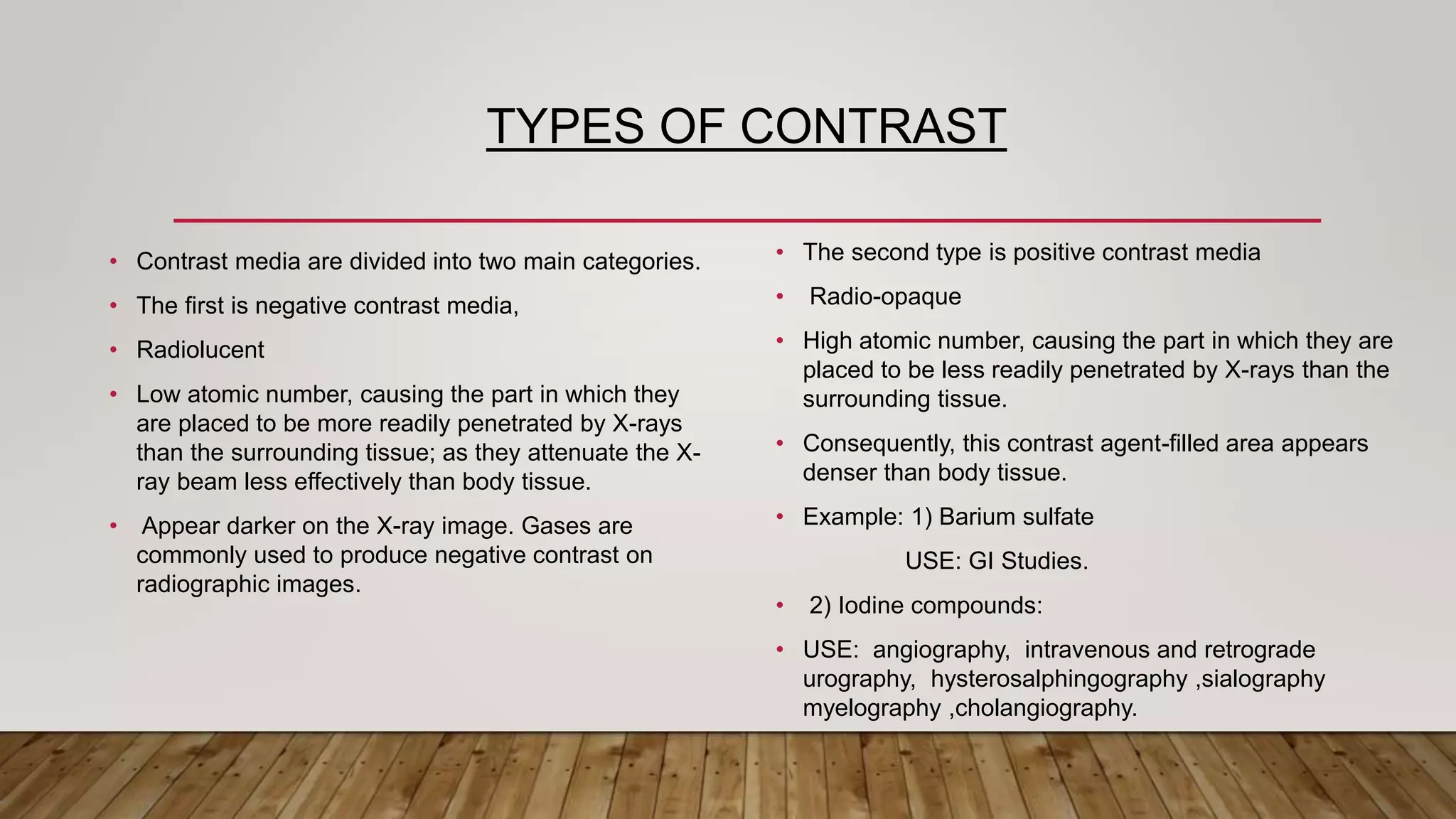
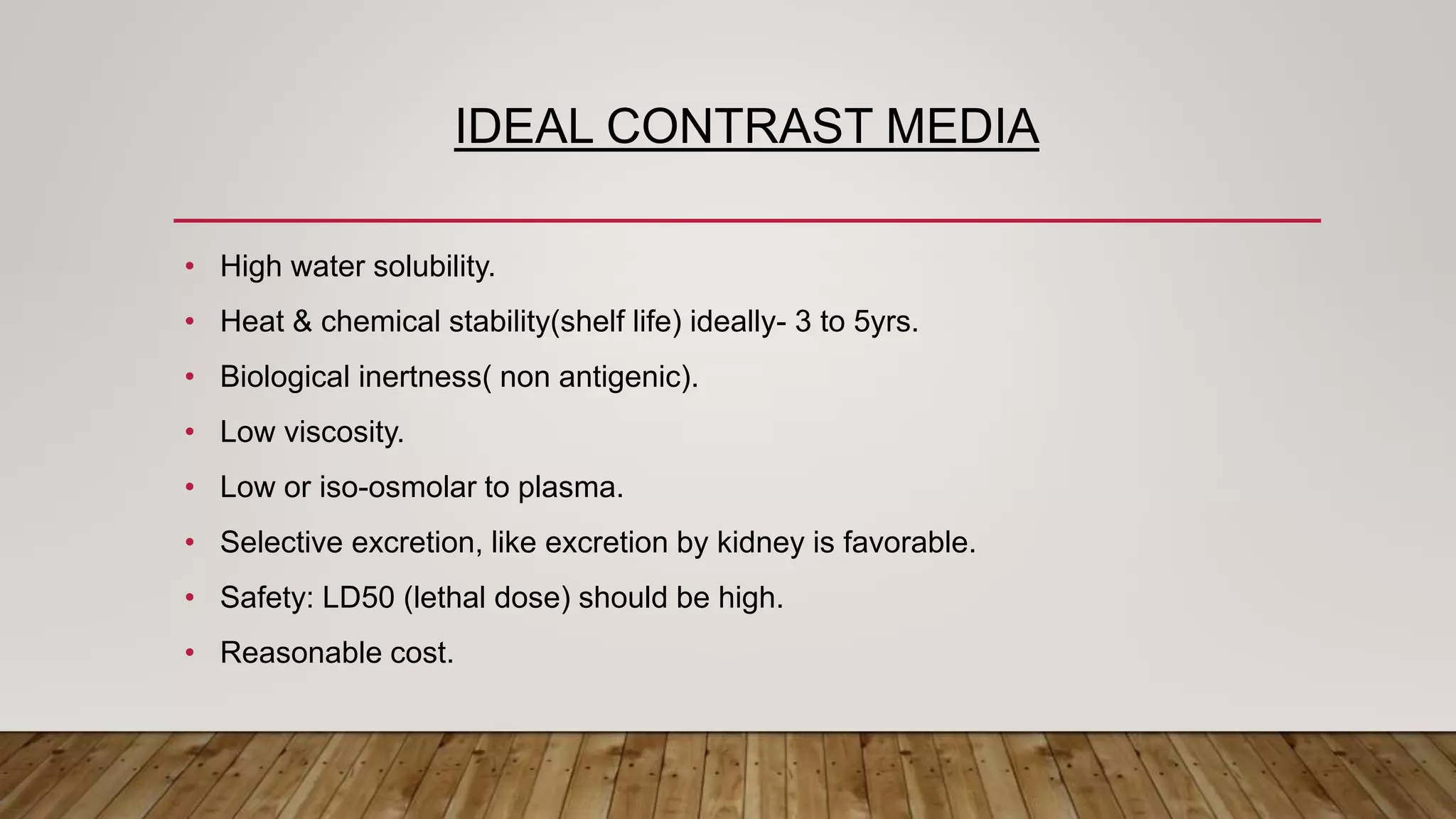


Contrast agents are used to highlight areas of the body during imaging procedures. They work by enhancing the density of tissues so they appear differently than surrounding areas. There are two main types - negative contrast agents which appear darker, and positive contrast agents which appear brighter. Barium sulfate is commonly used orally or rectally for GI studies, while iodine compounds are used for angiography and urography. Ideal contrast agents are water soluble, chemically stable, non-toxic, and selectively excreted by the kidneys. High osmolar ionic dimeric and monomeric agents can cause more adverse effects than low osmolar non-ionic variants. Newer non-ionic dimeric and monom


![INTRAVASCULAR CONTRAST MEDIA [Autosaved].pptx](https://cdn.slidesharecdn.com/ss_thumbnails/intravascularcontrastmediaautosaved-230130143127-58fd8526-thumbnail.jpg?width=640&height=640&fit=bounds)


