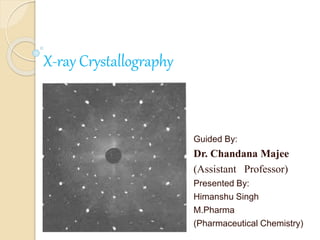
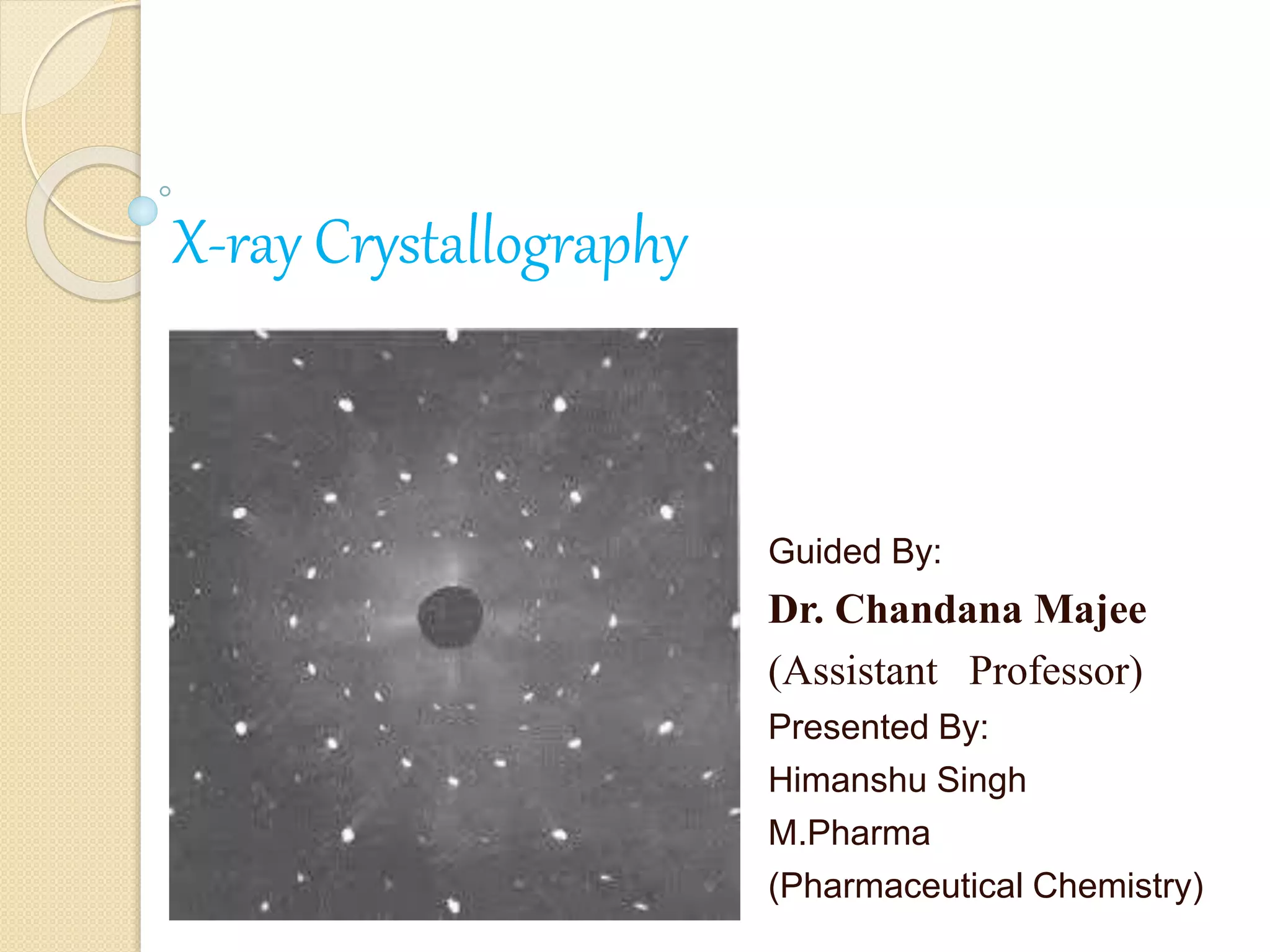
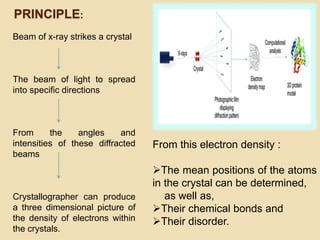
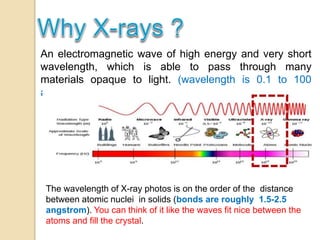
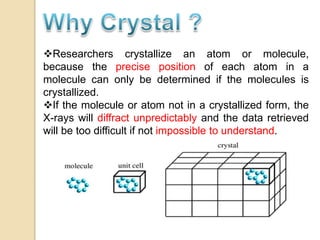
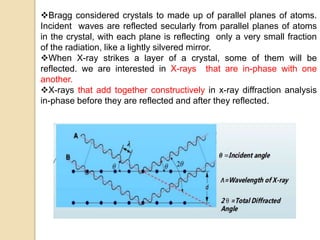
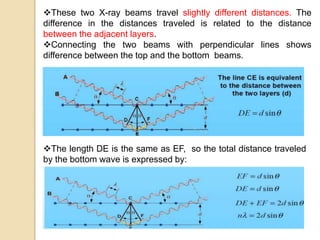
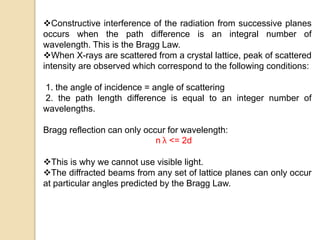
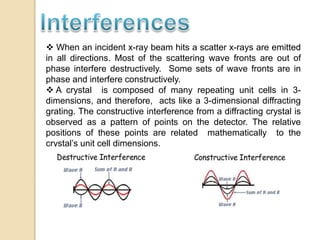
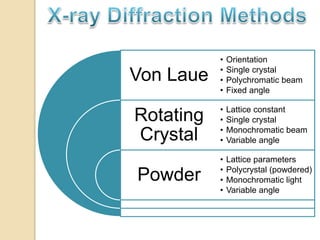
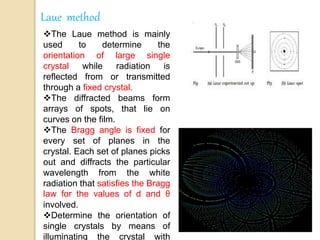
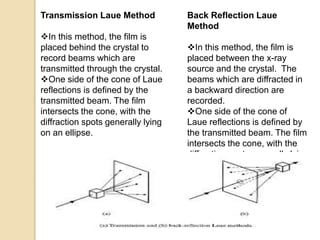
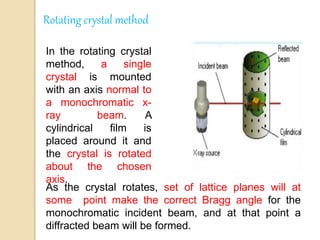
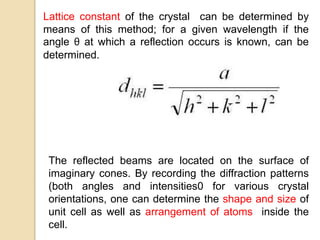
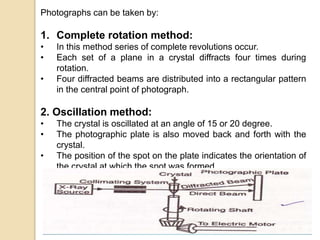
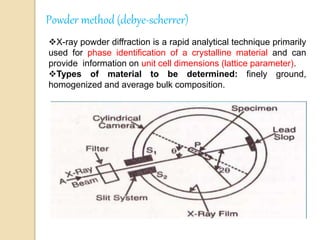
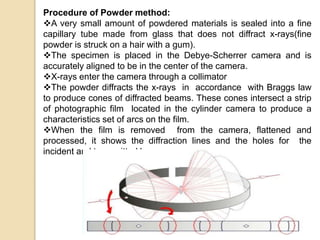
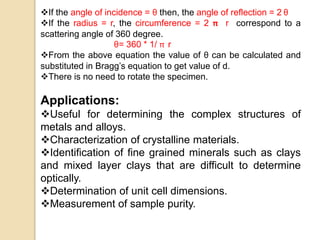
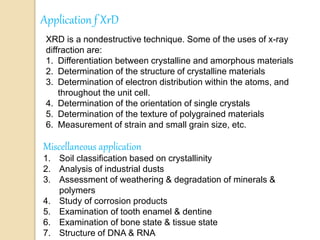
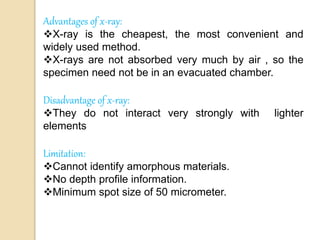
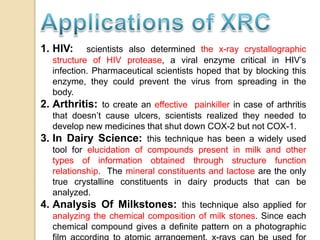
X-ray crystallography is a technique used to determine atomic and molecular structures by analyzing the diffraction patterns of X-rays scattered by a crystallized sample. The principle relies on Bragg's law, which defines the conditions for constructive interference of X-rays reflected from the periodic atomic planes in a crystal. Applications include structural analysis of materials, identification of phases in crystalline materials, and studying biological structures such as proteins and nucleic acids.









![Xrd presentation [autosaved] [autosaved] copy (2)](https://cdn.slidesharecdn.com/ss_thumbnails/xrdpresentationautosavedautosaved-copy2-190813130515-thumbnail.jpg?width=640&height=640&fit=bounds)


