Lenny Martini - 29006014

Part III The Social Person Era- Ch. 17

Hawthorne studies were an important step in
advancing the idea of improving human relations in
all types of organizations
Human relations was intended as a tool for
understanding organizational behavior rather than as
an end in itself

Summary

trust was crucial in building the interpersonal relationship
financial incentives had to be included in seeking productivity gains
Mayoists' view on society as one charaterized by
anomie, social disorganization, and conflict
their acceptance of management's views of the
worker&management;s willingness to manipulate
workers for management's ends

Landsberger's classification of critics to Hawthorne

their failure to recognize other alternatives for
accommodating industrial conflict, such as collective
bargaining

examines and reviews the impact of human relations
thinking on academia, industry, and organized labor
Introduction

their failure to take unions into account as a method of
building social solidarity

a critical review of the assumptions, methods, and
results of the Hawthorne experiments and other research

industrial civilization had created a cultural lag by
diminishing the importance of collaborative social skills

Social gospel

Mayoist view of social system

Robert Owen

cow sociology
when employees exposed their innermost doubts and
fears, they were susceptible to managerial
manipulation
the human relations style of supervision was to replace
thinking about improving work itself

Taylor

empirical investigation of human behavior

Bell

ambulatory confessors

Hugo Munsterberg

industrial psychology

Whitting Williams

naive view of societal conflict
society was much more complex and some conflict were
inevitable and even necessary

human as vital machines

individual development

improving human relations within the organization
Chicago Groups

Mayoist assumed that a commonality of interests could
be found between labor and management

the goal should not be to eliminate conflict and tension
but to provide healthy outlet for resolution
conflict-free state of equilibrium was a worthy goal but to idealistic

Lewin

human relations is not an end, it should be a means for
achieving the organization's primary service objectives

sociotechnical system research

group dynamics
survey research

Extending&Applying Human Relation

The Scanlon Plan

Fox

human relations could not be substituted for
well-defined goals, policies, high standards of
performance, and other managerial functions

focused on field research methods

Tavistock Institute

teamwork&participation
case study

Harvard & Elton Mayo

the executive needed more than listening and human
relations skills to be effective in accomplishing
organizational goals

The Premises of an Industrial Civilization

contribution to Hawthorne

legitimacy of Harvard Business School

Mcnair

Human Relation in Concept & Practice
Robert Valentine & Morris Cooke

post-Mayo revisionist put unions into human relations picture
Knowles

industrial sociologists devoted more space to organized labor

The Impact of Human Relations on Teaching&Practice

advanced technology & specialization of labor
destroyed social cohesiveness and yielded a loss of
pride in work for humankind
increased interpersonal competition and concern for
material things destroyed primary group, caused status
anxiety, and created obsessive-compulsive reactions

industry as an institution of groups of social classes,
workers, supervisors, managers who operated in a
larger societal complex

Hawthorne Revisited

basic assumption that prevail in approach to industrial human relations

Durkheim & Mayo

employee representation plans
1920s

trend was reversed
1930s

caused by union organizing attempts increased
Wagner Act in 1935

legislative basis for union
53% stoppages due to union organizing efforts

human relations believed that money did not motivated

answer to industrial conflict usually meaning the organized worker
Sykes

Industrial Harmony

Hawthorne evidence led to opposite conclusion
erroneous to decide wages not a variable
Hawthorne consistent with the view of economic incentives and
the use of a firm hand in discipline in order to get higher output

from professional industrial-relations specialists

1940s & early 1950s human relations texts

3 variables explained most the variance in the quantity of output
Franke & Kaul

time set aside for rest

passage of time alone was sufficient to explain the
increased productivity
confirmed Schlaifer findings
split the group and used a stepwise regression model to
proof the passage of time

no final answers, no fixed solutions to human problems
heuristic rather than specific or systematic

the worker as the center of attention for management's understanding &
application of human relations skills
Schlaifer

The Research Methods and Result

Toelle

doubt that the human relationists neglected the
economic incentives
the social person supplemented, but did not supplant
the economic person
the passage of time interpretation suggest that trust is
an important factor in building human relationships

human relations was based on intangibles not on hard,
scientific investigation
emphasized feelings, sentiments, and collaboration

not supervisory style, nor financial incentives, but the 3 variables
that led to increased productivity
Franke & Kaul had used the wrong statistical methods

collective bargaining

feeling of people were more important than the logics
of organizational charts, rules and directives

Carey

managerial discipline

Mayo's view that socially skilled managers, counseling,
and appropriate leader behavior would overcome the
human problems of industry

union-management cooperation
steady decline in work stoppages

evidences, work stoppages
The challenges to the basic premise of the Mayoist

confused means and ends in assuming that the goal of
contentment and happiness would lead to harmonious
equilibrium and organizational success

economic adversity of the depression

natural conflict between labor and management
dividing the surplus

Organized Labor & Human Relations

accepted a premise that the worker could be
manipulated to fit into the industrial equation
assumed that cooperation and collaboration were
natural and desirable and thus overlooked more
complex issues in societal conflict

rapprochement between scientific
management&organized labor
industrial human relations

too much emphasis on human relations
a better mix of managerial skills that would avoid the
evangelism & mysticism

institutional academic prestige

Mayoist made no reference to the role of organized labor

dangers of compartmentalizing knowledge when it
should be an integral part of all managerial
development

the last analysis of Hawthorne ?

science vs advocacy

17- Human Relation in Concepts&Practice - Lenny 29006014.mmap - 13/11/2006 -

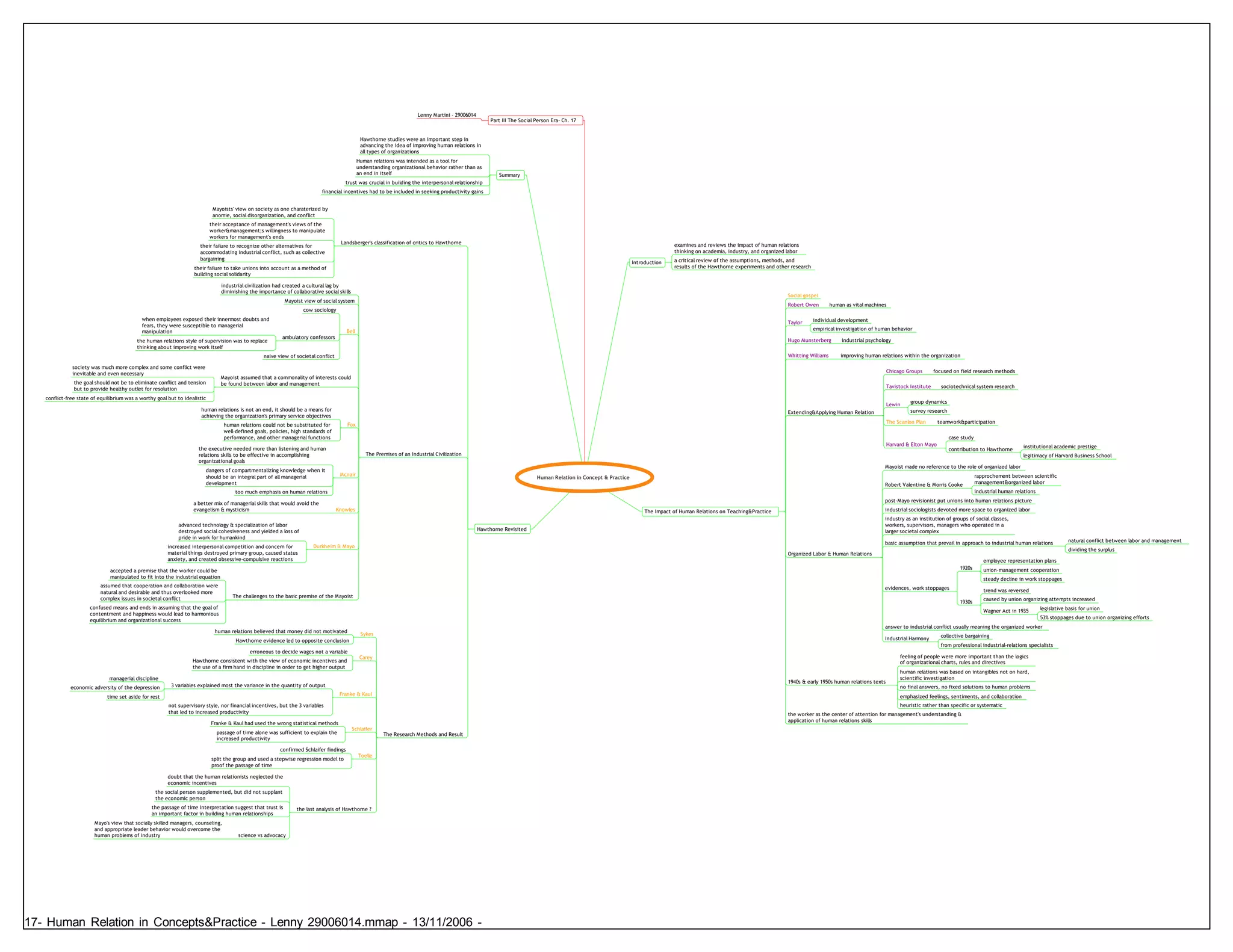
Human Relation in Concept and Practice

  • 1.
    Lenny Martini -29006014 Part III The Social Person Era- Ch. 17 Hawthorne studies were an important step in advancing the idea of improving human relations in all types of organizations Human relations was intended as a tool for understanding organizational behavior rather than as an end in itself Summary trust was crucial in building the interpersonal relationship financial incentives had to be included in seeking productivity gains Mayoists' view on society as one charaterized by anomie, social disorganization, and conflict their acceptance of management's views of the worker&management;s willingness to manipulate workers for management's ends Landsberger's classification of critics to Hawthorne their failure to recognize other alternatives for accommodating industrial conflict, such as collective bargaining examines and reviews the impact of human relations thinking on academia, industry, and organized labor Introduction their failure to take unions into account as a method of building social solidarity a critical review of the assumptions, methods, and results of the Hawthorne experiments and other research industrial civilization had created a cultural lag by diminishing the importance of collaborative social skills Social gospel Mayoist view of social system Robert Owen cow sociology when employees exposed their innermost doubts and fears, they were susceptible to managerial manipulation the human relations style of supervision was to replace thinking about improving work itself Taylor empirical investigation of human behavior Bell ambulatory confessors Hugo Munsterberg industrial psychology Whitting Williams naive view of societal conflict society was much more complex and some conflict were inevitable and even necessary human as vital machines individual development improving human relations within the organization Chicago Groups Mayoist assumed that a commonality of interests could be found between labor and management the goal should not be to eliminate conflict and tension but to provide healthy outlet for resolution conflict-free state of equilibrium was a worthy goal but to idealistic Lewin human relations is not an end, it should be a means for achieving the organization's primary service objectives sociotechnical system research group dynamics survey research Extending&Applying Human Relation The Scanlon Plan Fox human relations could not be substituted for well-defined goals, policies, high standards of performance, and other managerial functions focused on field research methods Tavistock Institute teamwork&participation case study Harvard & Elton Mayo the executive needed more than listening and human relations skills to be effective in accomplishing organizational goals The Premises of an Industrial Civilization contribution to Hawthorne legitimacy of Harvard Business School Mcnair Human Relation in Concept & Practice Robert Valentine & Morris Cooke post-Mayo revisionist put unions into human relations picture Knowles industrial sociologists devoted more space to organized labor The Impact of Human Relations on Teaching&Practice advanced technology & specialization of labor destroyed social cohesiveness and yielded a loss of pride in work for humankind increased interpersonal competition and concern for material things destroyed primary group, caused status anxiety, and created obsessive-compulsive reactions industry as an institution of groups of social classes, workers, supervisors, managers who operated in a larger societal complex Hawthorne Revisited basic assumption that prevail in approach to industrial human relations Durkheim & Mayo employee representation plans 1920s trend was reversed 1930s caused by union organizing attempts increased Wagner Act in 1935 legislative basis for union 53% stoppages due to union organizing efforts human relations believed that money did not motivated answer to industrial conflict usually meaning the organized worker Sykes Industrial Harmony Hawthorne evidence led to opposite conclusion erroneous to decide wages not a variable Hawthorne consistent with the view of economic incentives and the use of a firm hand in discipline in order to get higher output from professional industrial-relations specialists 1940s & early 1950s human relations texts 3 variables explained most the variance in the quantity of output Franke & Kaul time set aside for rest passage of time alone was sufficient to explain the increased productivity confirmed Schlaifer findings split the group and used a stepwise regression model to proof the passage of time no final answers, no fixed solutions to human problems heuristic rather than specific or systematic the worker as the center of attention for management's understanding & application of human relations skills Schlaifer The Research Methods and Result Toelle doubt that the human relationists neglected the economic incentives the social person supplemented, but did not supplant the economic person the passage of time interpretation suggest that trust is an important factor in building human relationships human relations was based on intangibles not on hard, scientific investigation emphasized feelings, sentiments, and collaboration not supervisory style, nor financial incentives, but the 3 variables that led to increased productivity Franke & Kaul had used the wrong statistical methods collective bargaining feeling of people were more important than the logics of organizational charts, rules and directives Carey managerial discipline Mayo's view that socially skilled managers, counseling, and appropriate leader behavior would overcome the human problems of industry union-management cooperation steady decline in work stoppages evidences, work stoppages The challenges to the basic premise of the Mayoist confused means and ends in assuming that the goal of contentment and happiness would lead to harmonious equilibrium and organizational success economic adversity of the depression natural conflict between labor and management dividing the surplus Organized Labor & Human Relations accepted a premise that the worker could be manipulated to fit into the industrial equation assumed that cooperation and collaboration were natural and desirable and thus overlooked more complex issues in societal conflict rapprochement between scientific management&organized labor industrial human relations too much emphasis on human relations a better mix of managerial skills that would avoid the evangelism & mysticism institutional academic prestige Mayoist made no reference to the role of organized labor dangers of compartmentalizing knowledge when it should be an integral part of all managerial development the last analysis of Hawthorne ? science vs advocacy 17- Human Relation in Concepts&Practice - Lenny 29006014.mmap - 13/11/2006 -