The transformation from an agrarian to an industrial nation placed US as number one in
output of products and services, in wages, and in the standard of living of its citizens.
The accumulation of resources was culminating in a new phase.
phase I (the resource accumulation phase of industrial growth) was
complete in the US by the beginning of WW I
phase II, the rationalization of resource utilization in industry
Lenny Martini - 29006014

the need to reduce unit costs by improving production
techniques and processes

2 problems of enterprise

Part II The Scientific Management Era- Ch. 12

need to facilitate planning, coordination, and appraisal of performance
set standards

Frederick W. Taylor the focal point for
scientific management

reduce
fatigue

Time and motion study

philosophy of managing human and physical resources in a technologically advanced
world where people had gained greater control over their environment than ever
before

eliminate wasted motions

joining industrial harmony, individual
betterment, and greater productivity
Taylor's followers provided industrial education, academic awareness of
management, and improved productivity and service to society by industry
reflected the imprint of Taylor's search for rationality in a world
of large enterprise

scientific selection of personnel

Piece-rate incentives

reduce per-unit labor costs

answered by scientific management ( FW. Taylor )

Fayol and Weber

paying higher wages
functional foremen

the products of an era that in economic terms sought a rationalization of resource utilization
Scientific management was the child of its culture and in turn made its culture an adult of
industrial, social, and political vigor

(1) the need to establish equity and order to protect one person from another

specialized, expert advice and leadership

separation of planning and doing

exception principle

focus managerial attention on critical
performance problems

philosophy of a mental revolution

Machiavelli and Hobbes

The ballot box is the medium for making
pluralism a reality
attempted to provide a broader base for
democracy in order to mitigate the perils
of the collision effect

how-to-do-it procedures manuals

The Economic Environment :
From the Farm to the Factory

visual aids for scheduling, routing,
dispatching, and controlling work

Carl Barth, Morris Cooke

central problem

Harrington Emerson

Populism waned because it was based on support from the
declining segment of the population in the rural areas

efficiency in production
efficiency through organization

scientific management was a product of its environment
grew out of the pressing needs of industry for efficiency

Progressivism succeeded because it was concerned with labor, small
business, and the urban population

scientific management and the progressives

Political Environment : From one Roosevelt to another

heterogeneous immigrant

condition of workers

limited English, limited skills, little education

Scientific management caught the Progressives' eye at the
Eastern rate hearings

recruiting
selecting

challenge in personnel management

efficiency through science and leadership by professional
experts would bring social order and harmony

training
monitoring performance

The high wages and low costs promised by efficiency systems would
check the greed of the employer and the laziness of the employee

developing systems and procedures

scientific management showed that the interests of the employer and the employee were identical and the
wastes of class conflict were therefore unnecessary

answered with

standardizing tools and work methods
reliance on personnel departments as
staff to assist managers

At first, the new president gave business leaders and the financial
interests no cause for alarm
President Theodore Roosevelt

contrary with economic theory

business and the progressives

largely immigrant influx of labor did not
drive down wages
increase life expectancy

decline of laissez-faire economics
management and the worker

the political environment of the early scientific management era sought to bring a
new balance between the power of business vis-A-vis the public

increased longevity
opportunity to improve their skill levels

The hero of Alger's books was a personification of McClelland's
"high achiever" and Riesman's "inner-directed" individual
A Message to Garcia

Sc ientific Management in
Retrospec t

Horatio Alger, Jr

growth of a managerial hierarchy
management

Elbert Hubbard

a self-starting, self-directed, highly motivated individual
individual effort and initiative

to plan, organize, lead, coordinate, and
control the organizations'
input-throughput-output system
economic efficiency

scientific management was more likely to be used in labor- rather than
capital-intensive industries

business ideal

minimum of guidance

the methods of mass production

social values of reward for individual effort

increase in productivity
scientific management theory

Taylorism
better and cheaper sources of power

The mental revolution between labor and management was the
recognition of mutual self-interest

Bessemer process in steel

the ideals of scientific management were compatible with the prevailing views of
people's needs and aspirations

"cracking" in petroleum

enabled richer fuels for automobiles and aircraft

internal combustion engine

New industries came from new technology

the exhaustion of the supply of free land
and the closing of the West
the concentration of wealth and power in
the hands of a few fundamental
industries

higher real wages

growth of staff specialists

wrote books about success stories

classical virtues of the rational person directed by self-interest

a mental revolution, a mutuality of interests between labor and management

scientific management era improved the
condition of workers

the decline of the progressivism of Roosevelt and Wilson and welcomed the return to
normalcy of Warren Harding

The West in the United States typified the
ideals of individualism, economic
equality, freedom to rise on one's own
initiative, and democracy

to U.S. economic thought

economy of motion and waste reduction

The Gilbreths

Gantt

placed government in a new role as a
regulator of business activity

Adam Smith

free development of a capitalistic society led to reconciliation
and a harmony of interests

Rousseau and Locke

Pluralism

removing the interventions of government

Everyone would benefit from lower costs
and higher wages if industrial leaders
would accept Taylor's precepts

brought the optimism of

Henry C. Carey (1793-1879)

Political theorists

Populist-Progressive movement

to restore equality of opportunity

synthetic materials, such as rayon
electric self-starter for automobiles

four forces that were reshaping U.S.
economic, social, and political ideals

vacuum tube
Frederick Jackson Turner

wireless telephony, such as the radio
improvements came by creating paths
between the seas

the political expansion by the United States
into territories beyond its own borders

Suez Canal (1869)
Panama Canal (1914)

the rise of populism
Coal
the collision effect

culmination of these cultural forces the "period of collision"

Energy developments

collision effect would have led eventually to social and psychological degeneration

cooperation, not individualism

new discoveries of petroleum
Electrical energy

decline of the " individualistic ethic " of the period of expansion was
slowly being replaced by a " social ethic
harmony, not discord

reduce friction
mutuality of interests

system of balances through which individuals could check
the excess of governmental power
Constitutional or representative government

improve the planning of work

the rationalization of resource utilization

task of government and political
institutions balancing two basic themes

(2) the need to limit governmental power to protect a person from the state
central role for the state over the individual

better match between people's abilities
and job requirements

boost production

Scientific Management in Summary

brought substantial economic and social change

William G. Scott built on Turner's thesis
automobile

substituted human collaboration for human competition
"with a prayer that a social philosophy would lead to
industrial harmony

The Social Environment : From
Achievement to Affiliation

Nicholas August Otto (1877)
new mobility, a freedom of movement
led to decentralization of the cities into suburban living

mental revolution

moving assembly line for mass production

stressing the mutuality of interests and collaboration at work (the social ethic)
coupled with individually based economic incentives and the selection and development of each
per son to the highest extent possible (the individualistic ethic)

Taylor's philosophy bridged the gap
between the two ethics

increased productivity and reduces cost
new system at Ford Motor
counterpoint to social Darwinism

difference with scientific management :
matching machine to human

unions were instruments of social and economic reform
rapprochement between scientific management and organized labor based on efficiency and consent

the social gospel

Ford's premises

Technology : Opening New Horizons

Worker participation plans
The industrial betterment/welfare movement was an uneven mixture of philanthropy, humanitarianism, and business acumen

hard work led to morality and well-being
for the industrial betterment advocates, morality and
well-being yielded hard work

the best workers could be attracted and retained
workers needed the wherewithal to buy
industry's output

a revolution in the ways organizations
gathered, recorded, and maintained
information about business activities

human happiness was a business asset

Christopher Latham Sholes ' typewriter
scientific management era

Carbon paper was developed for copies
Vertical file cabinets

social forces were generating and sanctioning an efficiency

mimeograph

Conservationists also found comfort in the gospel of efficiency
efficiency that would release women from the drudgery of housework and free them to
assume an equal role in society

print many copies from a typed stencil

"shorthand" notes
Feminists' view
Information technology
Pneumatic tubes

The gospel of production efficiency was dying as factories poured
forth an abundance of goods
emphasis on the individual and stress the
importance of the group

second industrial revolution

Jobs were ' timed to match the speed of the conveyor

send money, receipts, and other papers
from floor to floor and between
departments
Gantt's chart

graphical means of displaying data

Whiting Williams, Elton Mayo, and Mary Parker Follett
shift to affiliation
security in conformity

people were becoming more conscious of social relations and less aspiring
in maximizing individual gain

Du Pont chart system
Brinton's statistical graphic

The need for affiliation was rising
unintended effect

clerical work from males to females
office work as an alternative to the
factory for females
increasing number of skilled and
semi-skilled workers
creating alternative career paths for females

advancing technology was reshaping the nature of work

substituting machinery and capital
intensity for labor intensity
providing improved means for material handling

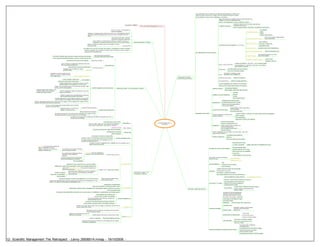
12- Scientific Management The Retrospect - Lenny 29006014.mmap - 18/10/2006 -

Scientific Management The Retrospect

  • 1.
    The transformation froman agrarian to an industrial nation placed US as number one in output of products and services, in wages, and in the standard of living of its citizens. The accumulation of resources was culminating in a new phase. phase I (the resource accumulation phase of industrial growth) was complete in the US by the beginning of WW I phase II, the rationalization of resource utilization in industry Lenny Martini - 29006014 the need to reduce unit costs by improving production techniques and processes 2 problems of enterprise Part II The Scientific Management Era- Ch. 12 need to facilitate planning, coordination, and appraisal of performance set standards Frederick W. Taylor the focal point for scientific management reduce fatigue Time and motion study philosophy of managing human and physical resources in a technologically advanced world where people had gained greater control over their environment than ever before eliminate wasted motions joining industrial harmony, individual betterment, and greater productivity Taylor's followers provided industrial education, academic awareness of management, and improved productivity and service to society by industry reflected the imprint of Taylor's search for rationality in a world of large enterprise scientific selection of personnel Piece-rate incentives reduce per-unit labor costs answered by scientific management ( FW. Taylor ) Fayol and Weber paying higher wages functional foremen the products of an era that in economic terms sought a rationalization of resource utilization Scientific management was the child of its culture and in turn made its culture an adult of industrial, social, and political vigor (1) the need to establish equity and order to protect one person from another specialized, expert advice and leadership separation of planning and doing exception principle focus managerial attention on critical performance problems philosophy of a mental revolution Machiavelli and Hobbes The ballot box is the medium for making pluralism a reality attempted to provide a broader base for democracy in order to mitigate the perils of the collision effect how-to-do-it procedures manuals The Economic Environment : From the Farm to the Factory visual aids for scheduling, routing, dispatching, and controlling work Carl Barth, Morris Cooke central problem Harrington Emerson Populism waned because it was based on support from the declining segment of the population in the rural areas efficiency in production efficiency through organization scientific management was a product of its environment grew out of the pressing needs of industry for efficiency Progressivism succeeded because it was concerned with labor, small business, and the urban population scientific management and the progressives Political Environment : From one Roosevelt to another heterogeneous immigrant condition of workers limited English, limited skills, little education Scientific management caught the Progressives' eye at the Eastern rate hearings recruiting selecting challenge in personnel management efficiency through science and leadership by professional experts would bring social order and harmony training monitoring performance The high wages and low costs promised by efficiency systems would check the greed of the employer and the laziness of the employee developing systems and procedures scientific management showed that the interests of the employer and the employee were identical and the wastes of class conflict were therefore unnecessary answered with standardizing tools and work methods reliance on personnel departments as staff to assist managers At first, the new president gave business leaders and the financial interests no cause for alarm President Theodore Roosevelt contrary with economic theory business and the progressives largely immigrant influx of labor did not drive down wages increase life expectancy decline of laissez-faire economics management and the worker the political environment of the early scientific management era sought to bring a new balance between the power of business vis-A-vis the public increased longevity opportunity to improve their skill levels The hero of Alger's books was a personification of McClelland's "high achiever" and Riesman's "inner-directed" individual A Message to Garcia Sc ientific Management in Retrospec t Horatio Alger, Jr growth of a managerial hierarchy management Elbert Hubbard a self-starting, self-directed, highly motivated individual individual effort and initiative to plan, organize, lead, coordinate, and control the organizations' input-throughput-output system economic efficiency scientific management was more likely to be used in labor- rather than capital-intensive industries business ideal minimum of guidance the methods of mass production social values of reward for individual effort increase in productivity scientific management theory Taylorism better and cheaper sources of power The mental revolution between labor and management was the recognition of mutual self-interest Bessemer process in steel the ideals of scientific management were compatible with the prevailing views of people's needs and aspirations "cracking" in petroleum enabled richer fuels for automobiles and aircraft internal combustion engine New industries came from new technology the exhaustion of the supply of free land and the closing of the West the concentration of wealth and power in the hands of a few fundamental industries higher real wages growth of staff specialists wrote books about success stories classical virtues of the rational person directed by self-interest a mental revolution, a mutuality of interests between labor and management scientific management era improved the condition of workers the decline of the progressivism of Roosevelt and Wilson and welcomed the return to normalcy of Warren Harding The West in the United States typified the ideals of individualism, economic equality, freedom to rise on one's own initiative, and democracy to U.S. economic thought economy of motion and waste reduction The Gilbreths Gantt placed government in a new role as a regulator of business activity Adam Smith free development of a capitalistic society led to reconciliation and a harmony of interests Rousseau and Locke Pluralism removing the interventions of government Everyone would benefit from lower costs and higher wages if industrial leaders would accept Taylor's precepts brought the optimism of Henry C. Carey (1793-1879) Political theorists Populist-Progressive movement to restore equality of opportunity synthetic materials, such as rayon electric self-starter for automobiles four forces that were reshaping U.S. economic, social, and political ideals vacuum tube Frederick Jackson Turner wireless telephony, such as the radio improvements came by creating paths between the seas the political expansion by the United States into territories beyond its own borders Suez Canal (1869) Panama Canal (1914) the rise of populism Coal the collision effect culmination of these cultural forces the "period of collision" Energy developments collision effect would have led eventually to social and psychological degeneration cooperation, not individualism new discoveries of petroleum Electrical energy decline of the " individualistic ethic " of the period of expansion was slowly being replaced by a " social ethic harmony, not discord reduce friction mutuality of interests system of balances through which individuals could check the excess of governmental power Constitutional or representative government improve the planning of work the rationalization of resource utilization task of government and political institutions balancing two basic themes (2) the need to limit governmental power to protect a person from the state central role for the state over the individual better match between people's abilities and job requirements boost production Scientific Management in Summary brought substantial economic and social change William G. Scott built on Turner's thesis automobile substituted human collaboration for human competition "with a prayer that a social philosophy would lead to industrial harmony The Social Environment : From Achievement to Affiliation Nicholas August Otto (1877) new mobility, a freedom of movement led to decentralization of the cities into suburban living mental revolution moving assembly line for mass production stressing the mutuality of interests and collaboration at work (the social ethic) coupled with individually based economic incentives and the selection and development of each per son to the highest extent possible (the individualistic ethic) Taylor's philosophy bridged the gap between the two ethics increased productivity and reduces cost new system at Ford Motor counterpoint to social Darwinism difference with scientific management : matching machine to human unions were instruments of social and economic reform rapprochement between scientific management and organized labor based on efficiency and consent the social gospel Ford's premises Technology : Opening New Horizons Worker participation plans The industrial betterment/welfare movement was an uneven mixture of philanthropy, humanitarianism, and business acumen hard work led to morality and well-being for the industrial betterment advocates, morality and well-being yielded hard work the best workers could be attracted and retained workers needed the wherewithal to buy industry's output a revolution in the ways organizations gathered, recorded, and maintained information about business activities human happiness was a business asset Christopher Latham Sholes ' typewriter scientific management era Carbon paper was developed for copies Vertical file cabinets social forces were generating and sanctioning an efficiency mimeograph Conservationists also found comfort in the gospel of efficiency efficiency that would release women from the drudgery of housework and free them to assume an equal role in society print many copies from a typed stencil "shorthand" notes Feminists' view Information technology Pneumatic tubes The gospel of production efficiency was dying as factories poured forth an abundance of goods emphasis on the individual and stress the importance of the group second industrial revolution Jobs were ' timed to match the speed of the conveyor send money, receipts, and other papers from floor to floor and between departments Gantt's chart graphical means of displaying data Whiting Williams, Elton Mayo, and Mary Parker Follett shift to affiliation security in conformity people were becoming more conscious of social relations and less aspiring in maximizing individual gain Du Pont chart system Brinton's statistical graphic The need for affiliation was rising unintended effect clerical work from males to females office work as an alternative to the factory for females increasing number of skilled and semi-skilled workers creating alternative career paths for females advancing technology was reshaping the nature of work substituting machinery and capital intensity for labor intensity providing improved means for material handling 12- Scientific Management The Retrospect - Lenny 29006014.mmap - 18/10/2006 -