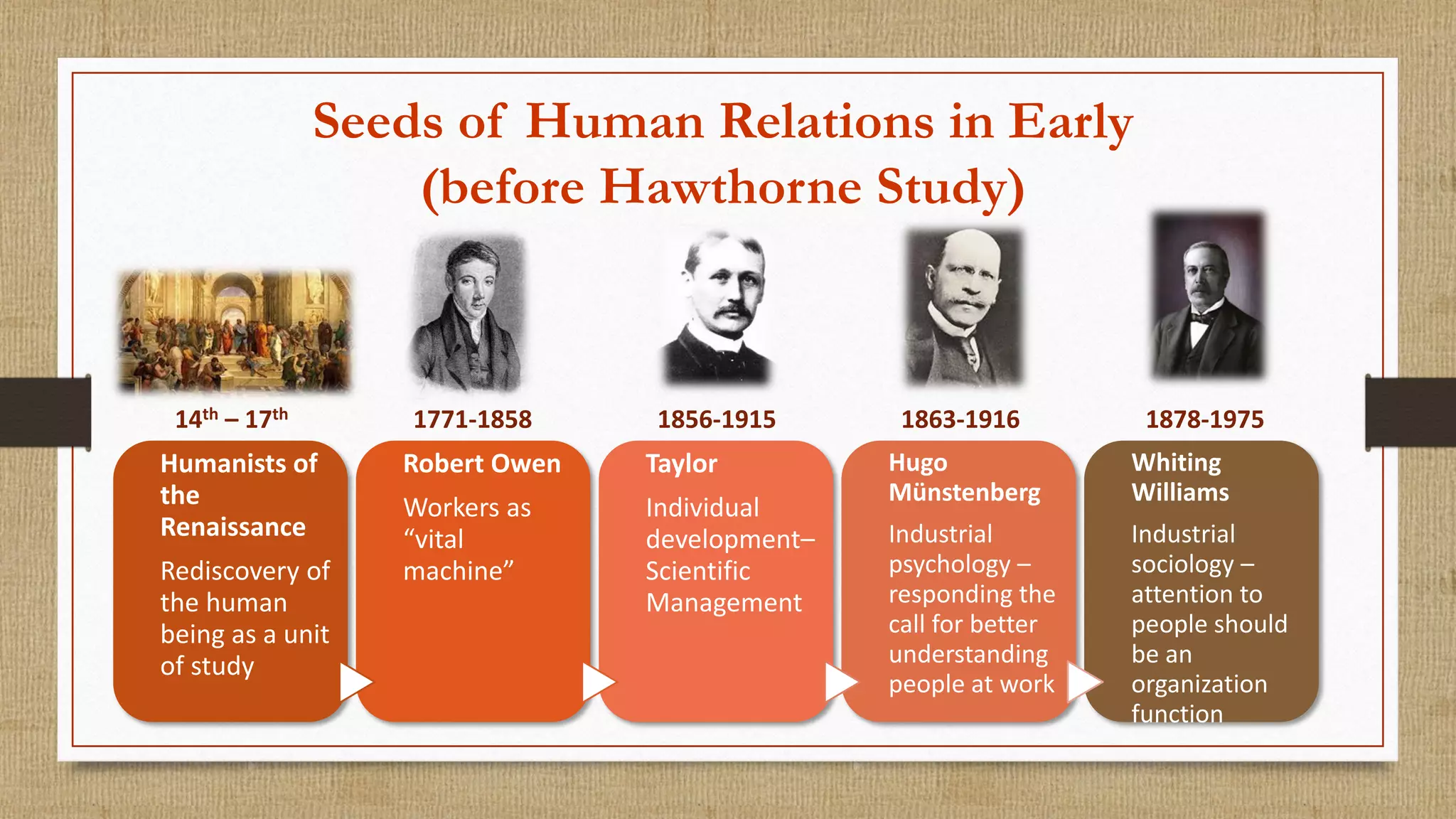
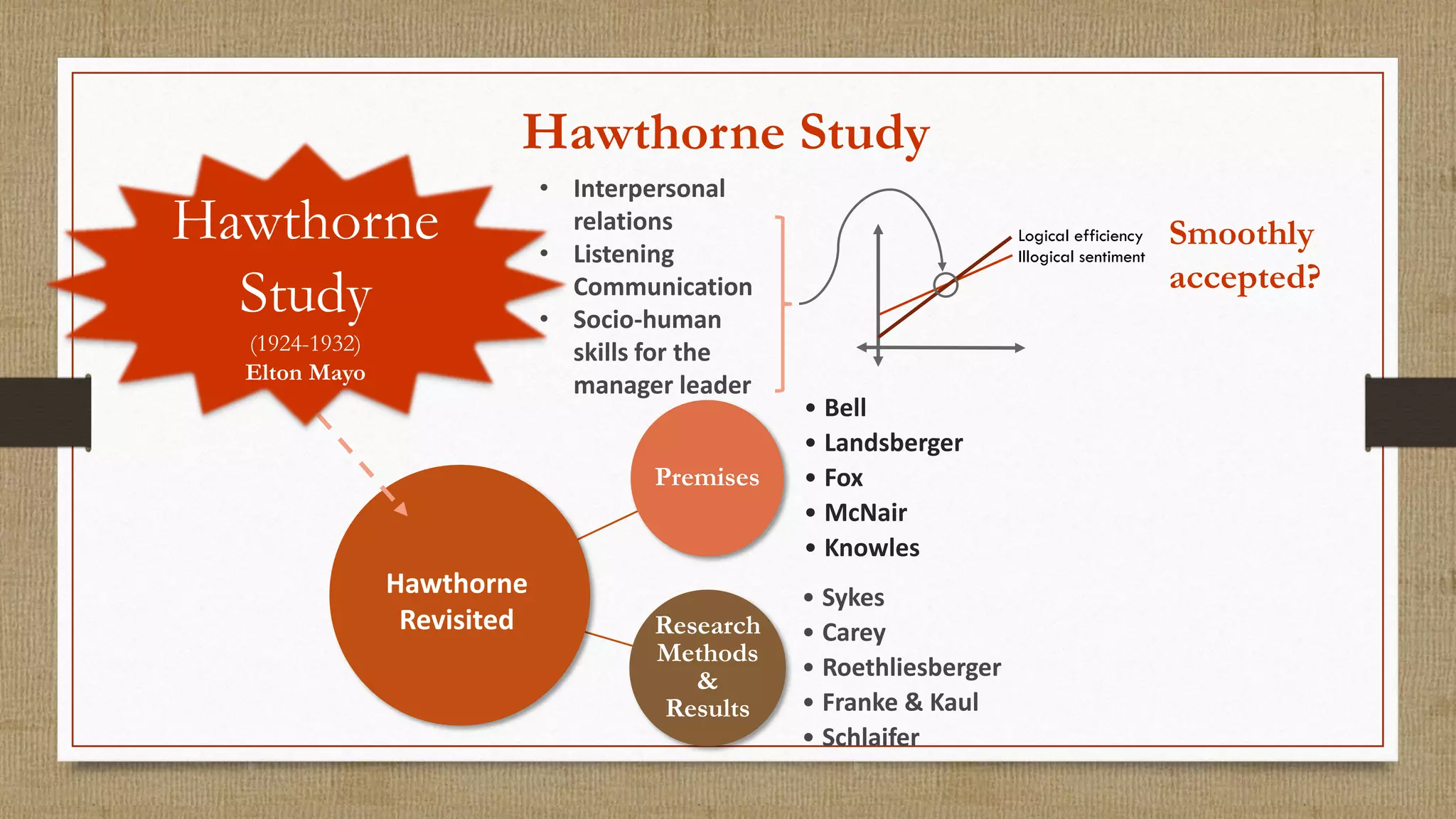
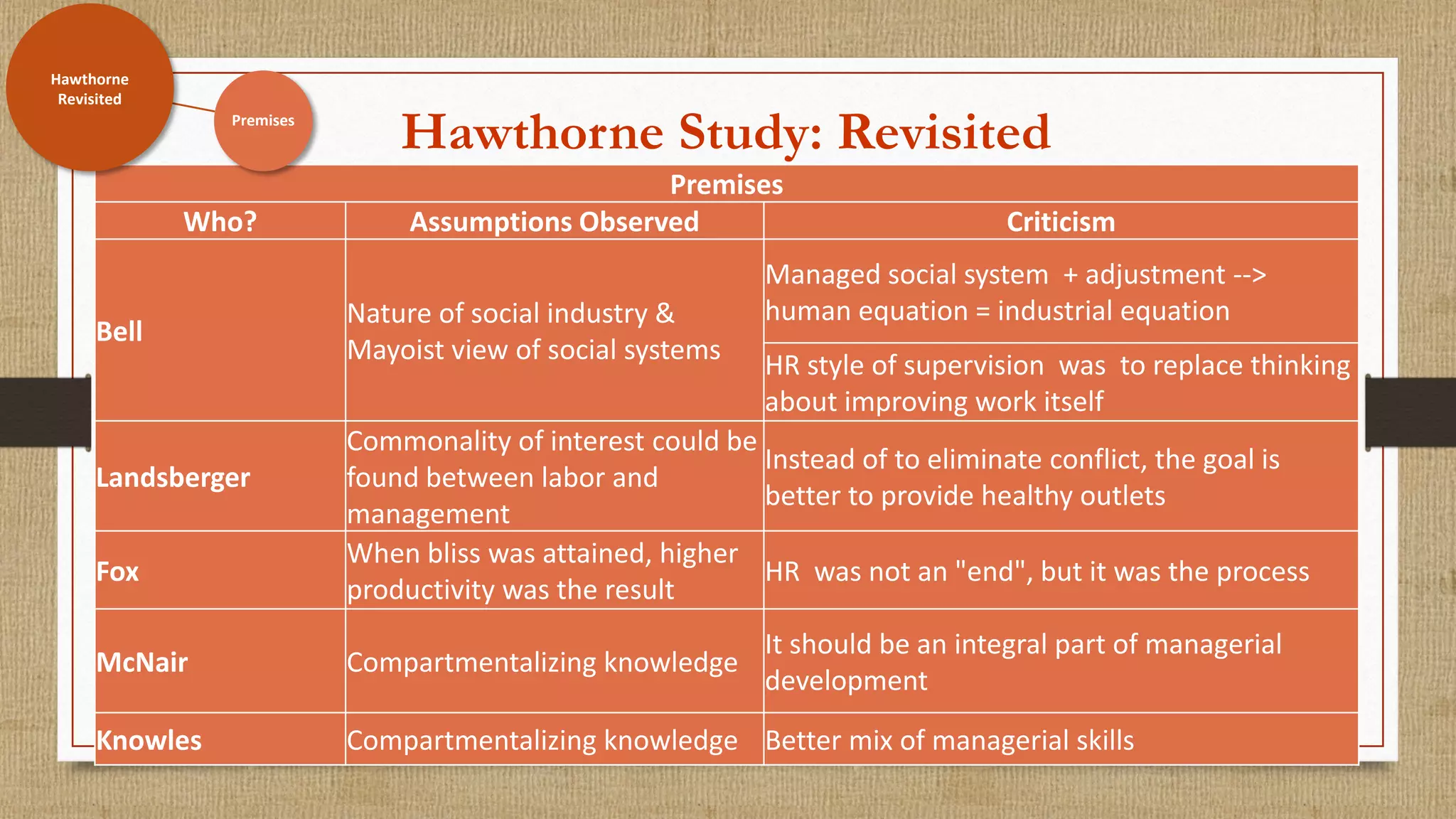
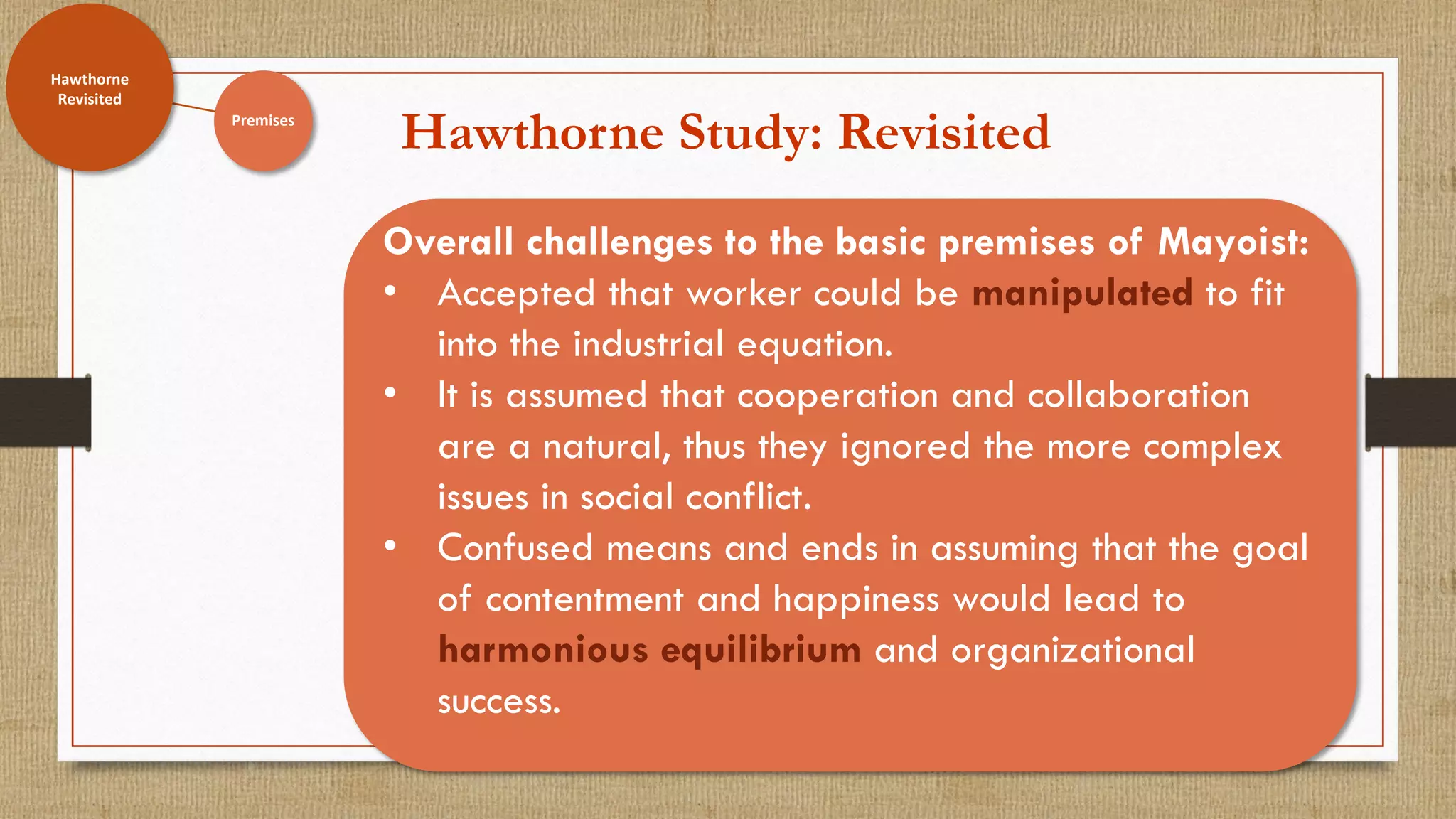
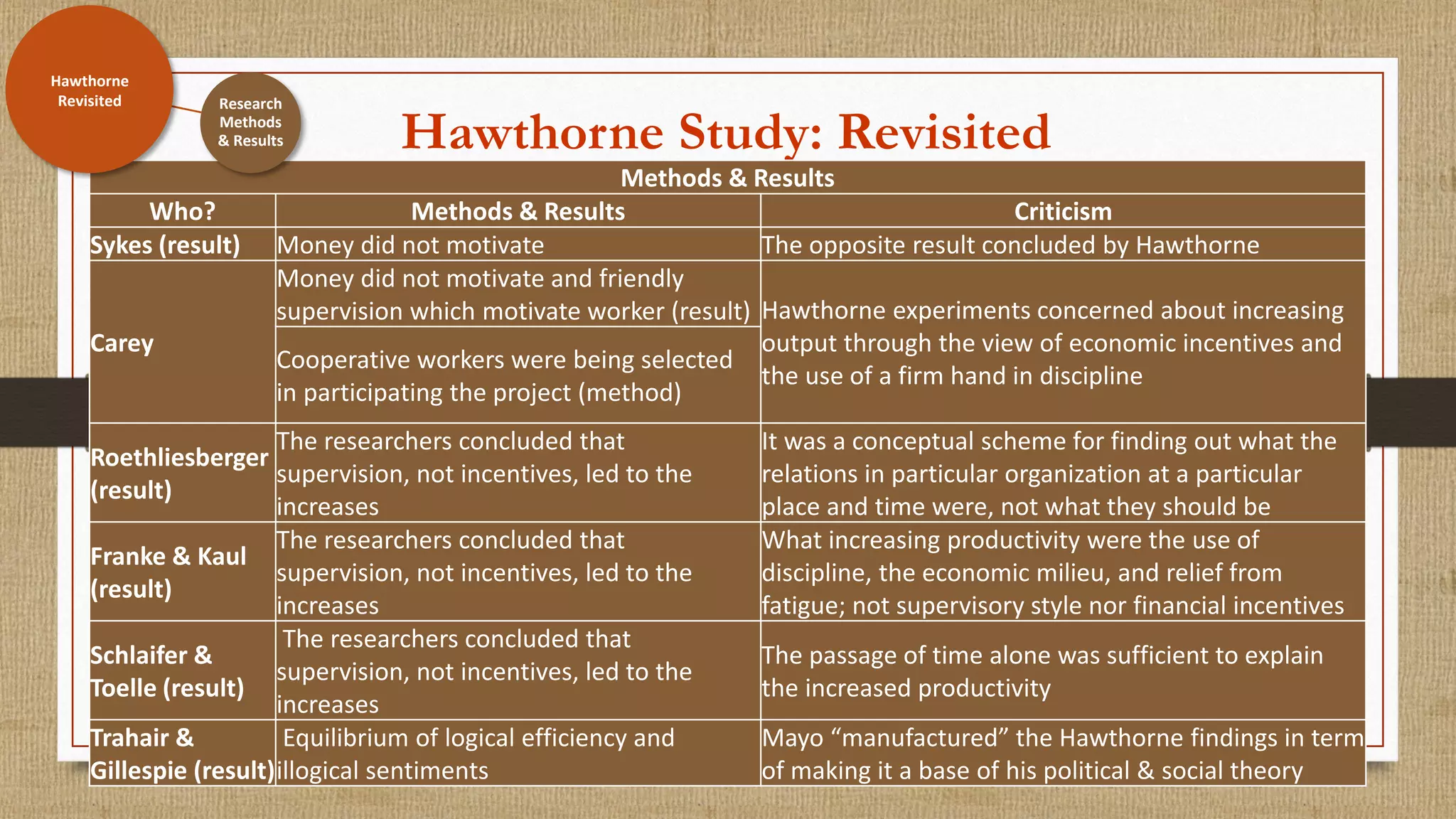
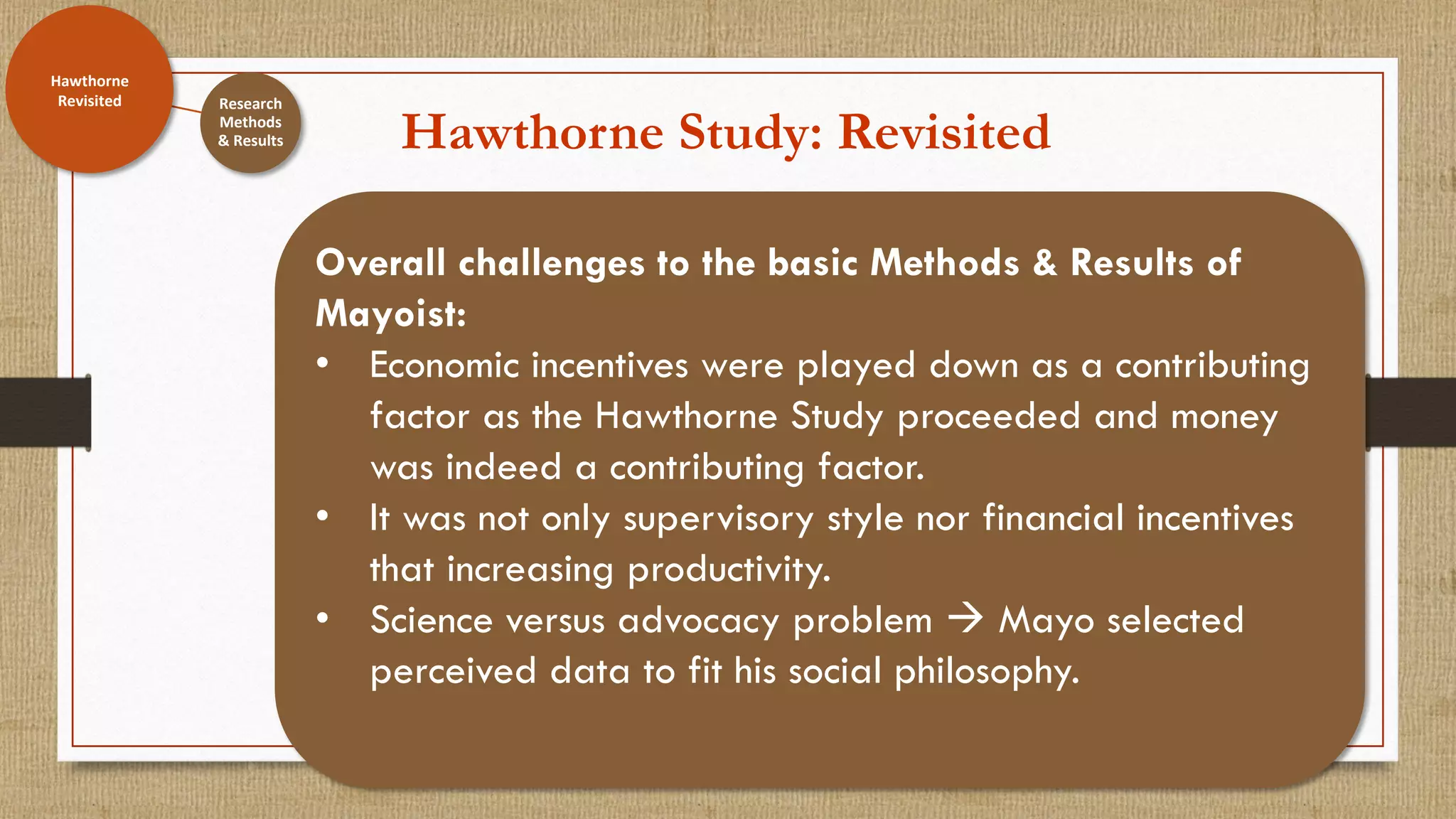
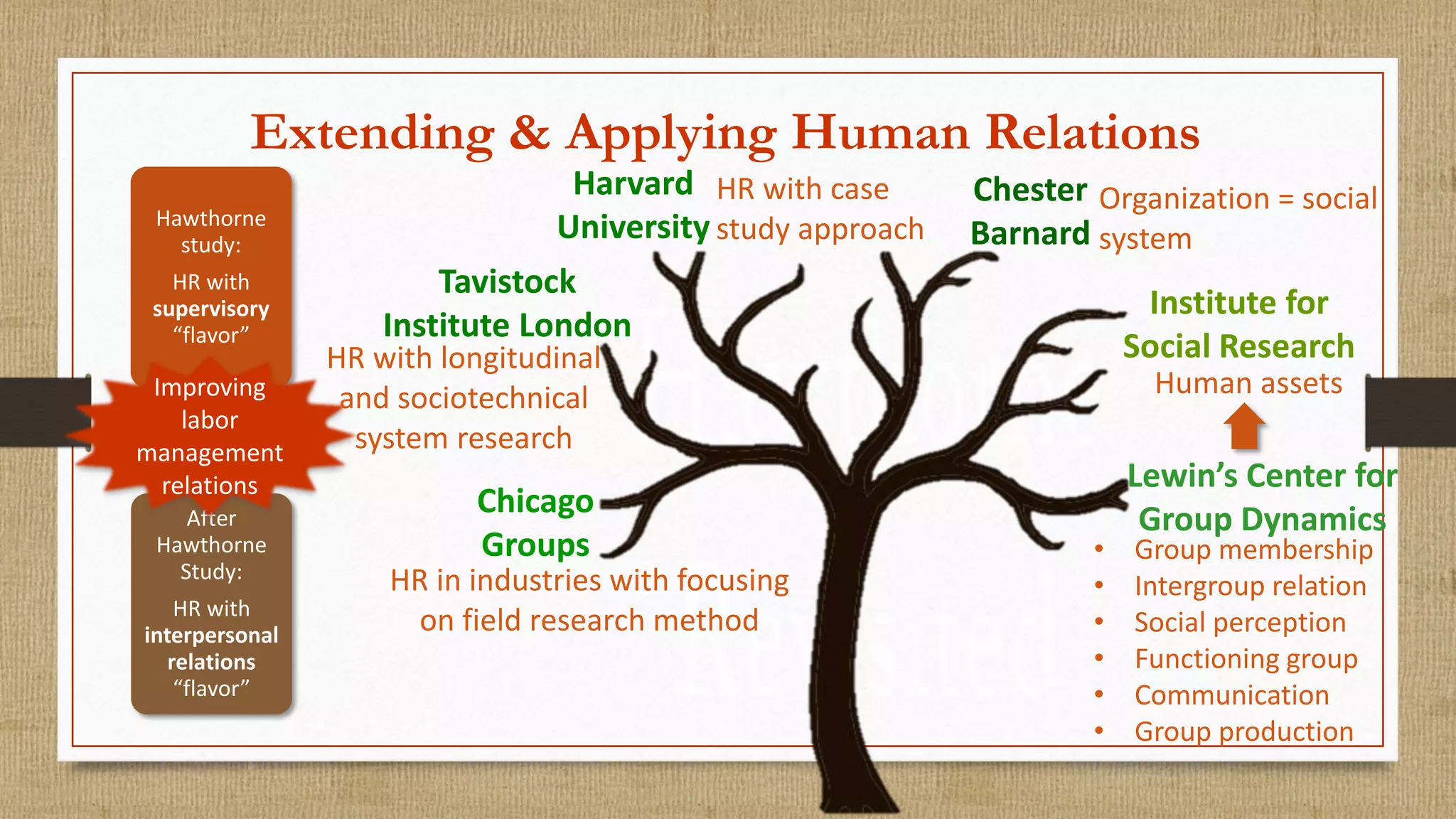
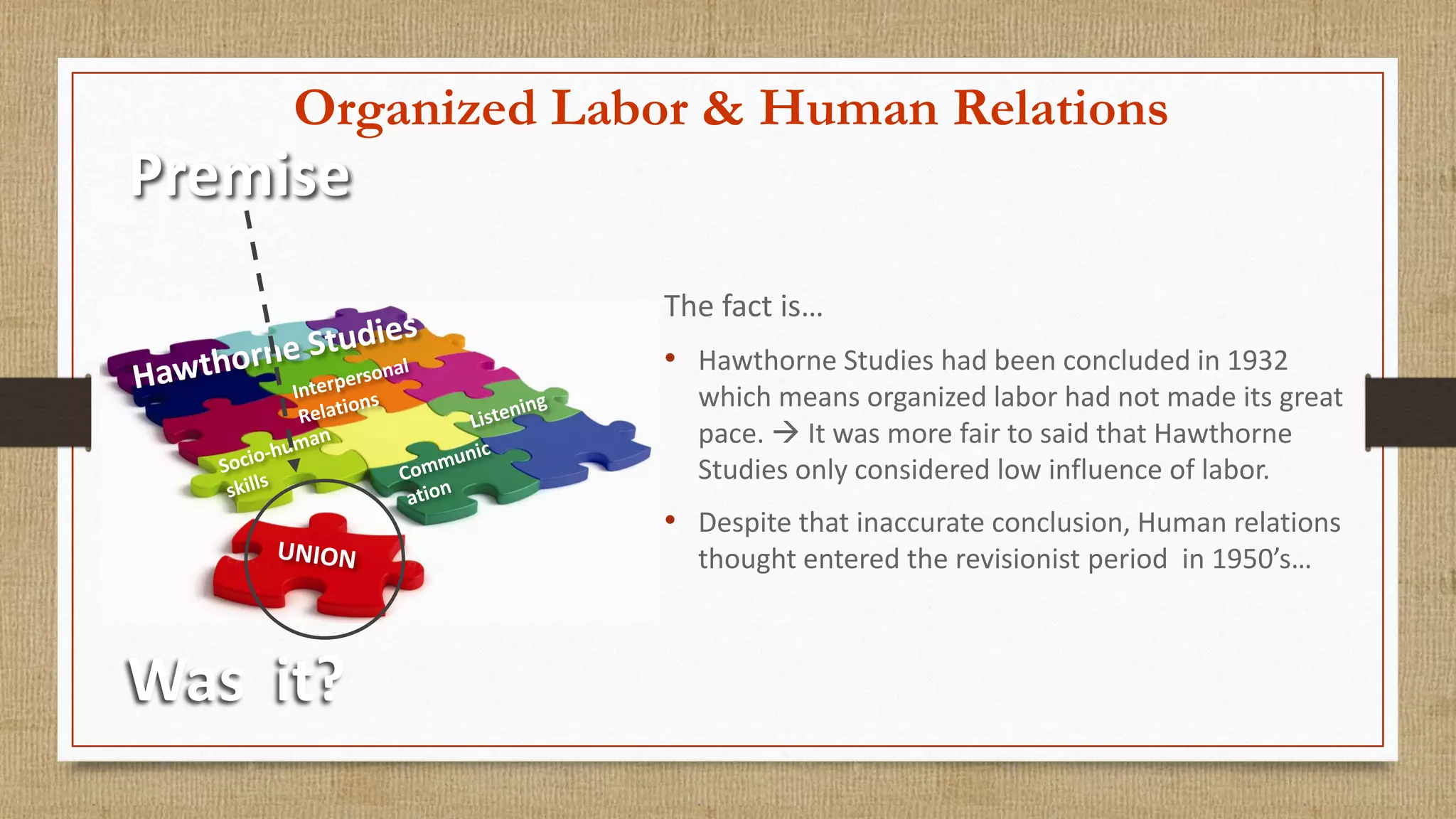
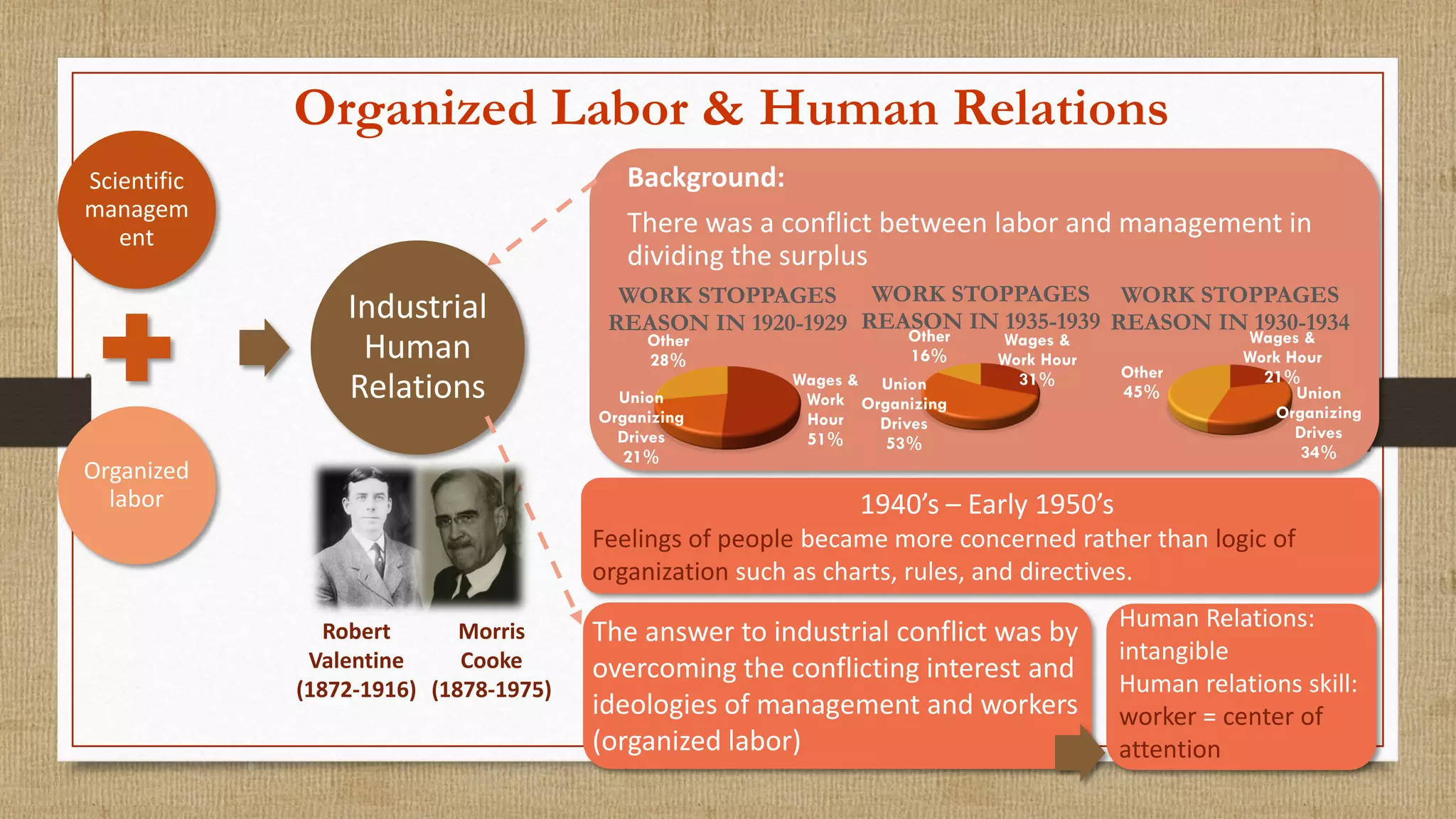
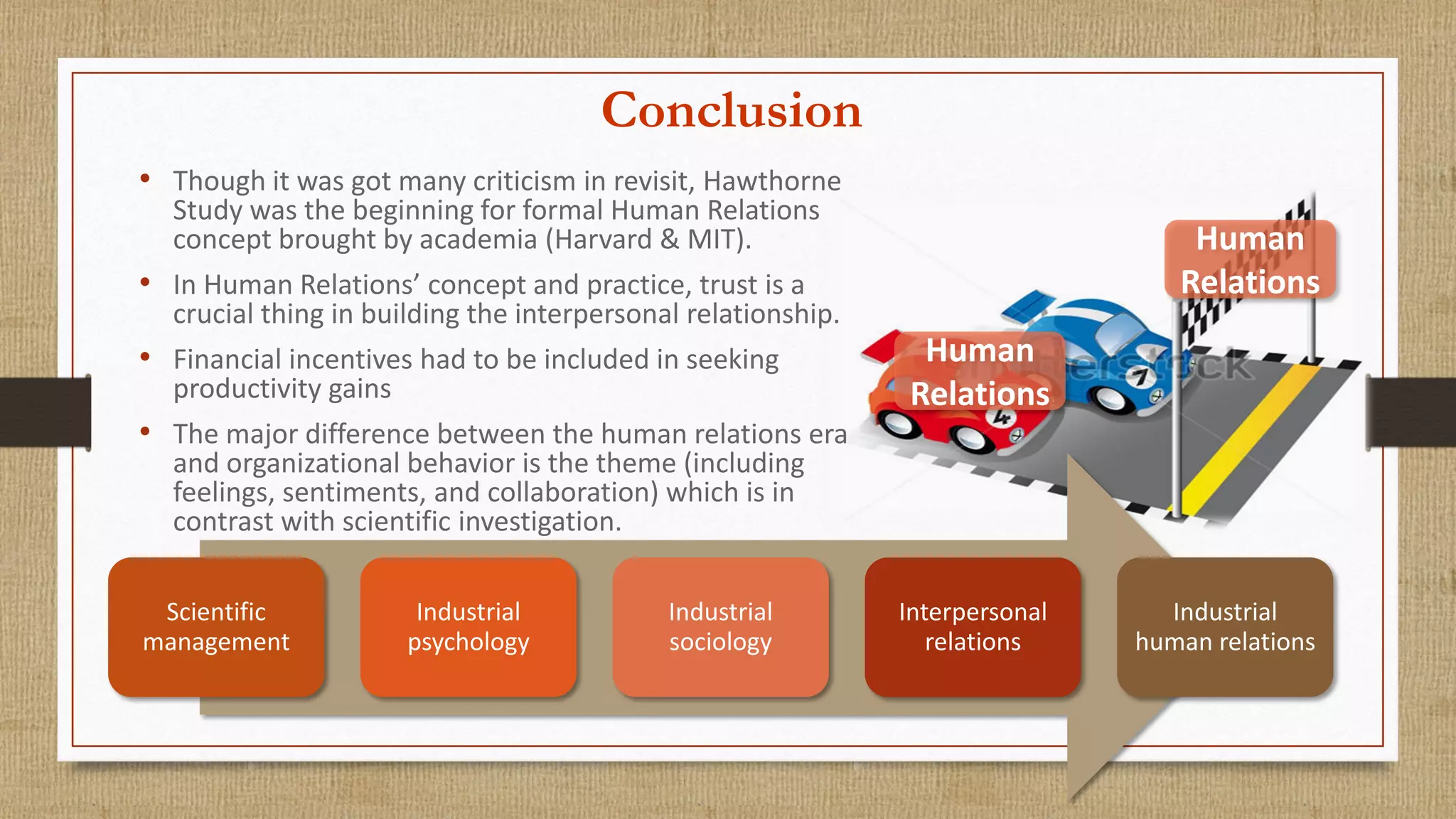
Human Relations in Concept and Practice discusses the evolution of human relations from early studies to its practices. It starts with studies from the Renaissance to the 1920s exploring human behavior at work. The Hawthorne Studies from 1924-1932 investigated the impact of variables like supervision and incentives, influencing later human relations approaches. While criticized for its methods and conclusions, Hawthorne Studies marked the beginning of formal human relations concepts introduced by academia. Later, centers applied human relations focusing on groups, relations, and sociotechnical systems. Ultimately, human relations emphasized intangible factors like feelings, collaboration and workers' central role, shifting the theme from scientific management's efficiency focus.