World War II
 By Molly Siebert
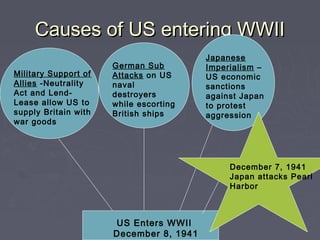
Causes of US entering WWII
                                         Japanese
                      German Sub         Imperialism –
Military Support of   Attacks on US      US economic
Allies -Neutrality    naval              sanctions
Act and Lend-         destroyers         against Japan
Lease allow US to     while escorting    to protest
supply Britain with   British ships      aggression
war goods


                                              December 7, 1941
                                              Japan attacks Pearl
                                              Harbor


                      US Enters WWII
                      December 8, 1941
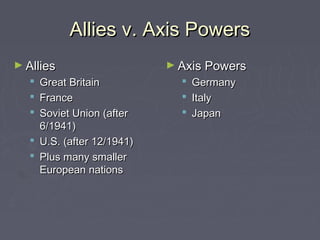
Allies v. Axis Powers
► Allies                    ► Axis Powers
    Great Britain               Germany
    France                      Italy
    Soviet Union (after         Japan
     6/1941)
    U.S. (after 12/1941)
    Plus many smaller
     European nations
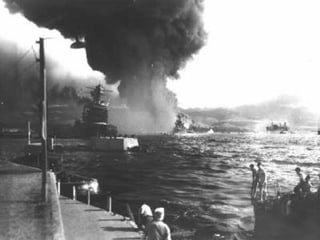
Pearl Harbor
      
►    Japan was working on expanding empire
   throughout the Pacific
► The U.S. had    a trade embargo on Japan to
    try and deter Japan from invading countries
 
► U.S. was   able to intercept and break Japan's
    secret codes
 
► Intercepted   the code about Pearl Harbor -
    sent the message on a slower telegram (by
    accident) to warn U.S. Navy about attack
Pearl Harbor Continued
It was a Sunday morning - U.S. military was taken off
   guard
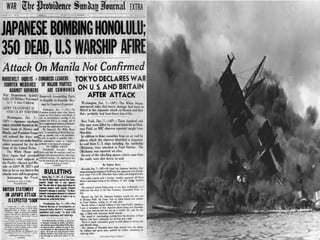
2 full blown attacks on Pearl Harbor December 7,
   1941
    Impact/Damage on U.S.
►   o     2,400 U.S. military and civilians lost their lives
►   o     1,178 U.S. military and civilians wounded
►   o     18 ships and 350 planes sunk or damaged
Pearl Harbor Continued
► Japan   viewed as a stunning victory

► December    8, 1941, U.S. declares war on
 Japan

► December 11, 1941, Germany and Italy
 declare war on U.S.
Battle of the Atlantic
►   1939 – 1945 (Jan. 1942 – July 1943 were decisive)

►   German U-Boats were sinking unprotected U.S. and other Allies'
    merchant ships

►   Allies began using convoys to protect ships

►   The Allies also used a sonar system to detect German U-Boats

►   The Germans were very successful in the beginning, but by mid -
    1943, the Allies had the upper hand
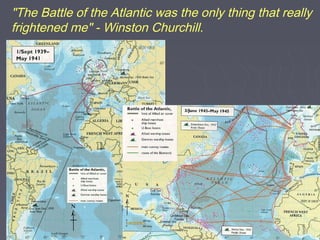
"The Battle of the Atlantic was the only thing that really
frightened me" - Winston Churchill.
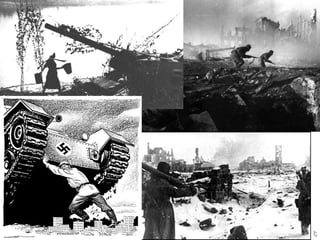
Battle of Stalingrad
          (June 1941 – January 31, 1943)
► Germans violated nonaggression pact with
  Soviet Union and attacked

► Hitler hoped to captured Soviet oil fields


► Germans nearly won (controlled 9/10 of the
  city)

► Winter of 1943 hit
Battle of Stalingrad cont…
► Hitler forced Germans to stay put


► Soviets used to their advantage   and won


► Soviets lost 1,100,000 people in this battle


► Turning point in WWII


► From that point on, Soviet army began to move
  westward towards Germany
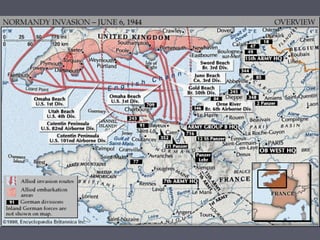
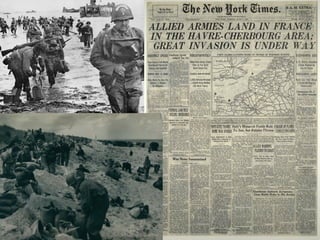
Normandy Invasion (D-Day)
► June 6, 1944


► During this time, Soviet Union was pushing into Poland
  and Allies were pushing North in Italy

► Generals Dwight D. Eisenhower and George Patton
  influential in leading attack

► 3 million ally troops to attack
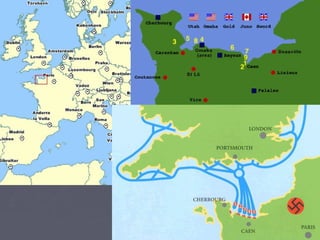
Normandy Invasion cont.
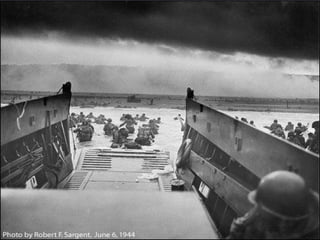
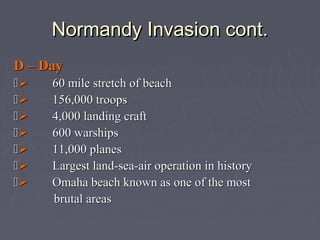
D – Day
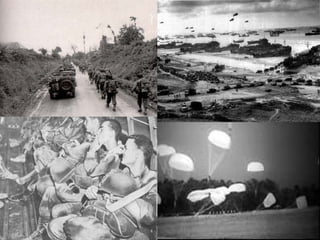
       60 mile stretch of beach
       156,000 troops
       4,000 landing craft
       600 warships
       11,000 planes
       Largest land-sea-air operation in history
       Omaha beach known as one of the most
         brutal areas
►   The D-Day Museum in Portsmouth, England claims a total of
    2,500 Allied troops died, while German forces suffered between
    4,000 and 9,000 total casualties on D-Day.

►   The Heritage Foundation in the U.S. claims 4,900 U.S. dead on
    D-Day

►   The U.S. Army Center of Military History cites a total casualty
    figure for U.S. forces at 6,036. This number combines dead and
    wounded in the D-Day battles

►   John Keegan, American Historian and Author believes that
    2,500 Americans died along with 3,000 British and Canadian
    troops on D-Day

►   By the end of the of the entire Normandy Campaign, nearly
    425,000 Allied and German troops were killed, wounded, or
    missing.
Normandy Invasion cont.

The battle continues

►  W/in 1 month, a million more troops


►  September 1944, France was freed from
   Nazi control
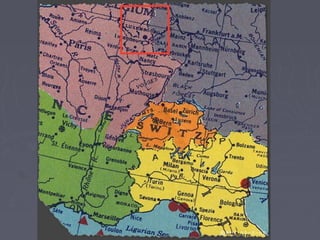
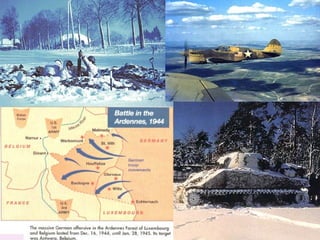
Battle of the Bulge
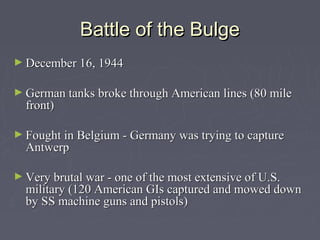
► December 16, 1944


► German tanks broke through American lines (80 mile
  front)

► Fought in Belgium - Germany was trying to capture
  Antwerp

► Very brutal war - one of the most extensive of U.S.
  military (120 American GIs captured and mowed down
  by SS machine guns and pistols)
Battle of the Bulge Cont.
► Germans were winning in the beginning


► 120,000 Germans died (also lost 600 tanks and
  guns and 1,600 planes – leading to defeat))

► 80,000 Americans died


► Americans won, but were close to losing
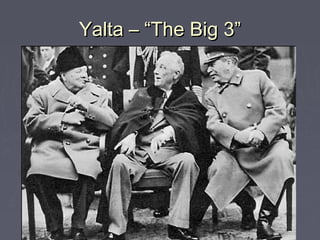
Yalta Conference
► Took place February 1945 before WWII was
 over

► Roosevelt, Stalin and Churchill met in Yalta
 in the Soviet Union to discuss post WWII

► Set up United Nations
Yalta – “The Big 3”
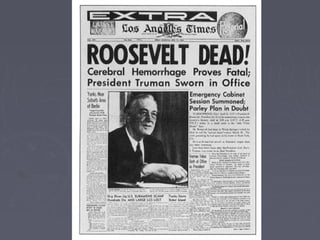
April 12, 1945
► At the beginning of his 4 th
                           Term, President
  Franklin D. Roosevelt passes away

► The U.S. went through a major grieving
  period

► Harry S. Truman, as Vice-President, takes
  the role as President
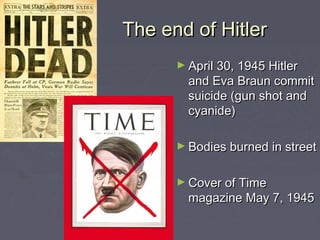
The end of Hitler
      ► April 30, 1945 Hitler
        and Eva Braun commit
        suicide (gun shot and
        cyanide)

      ► Bodies burned in street


      ► Cover of Time
        magazine May 7, 1945
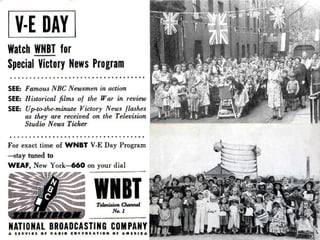
V-E Day
► May 8, 1945


► General Eisenhower accepted a surrender by the Third
  Reich

► V-E day = Victory in Europe day


► 1st part of War was over
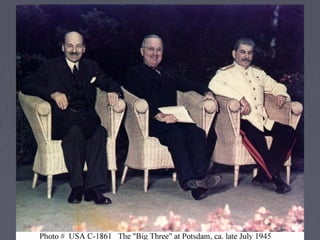
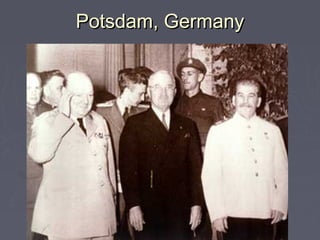
Potsdam
► July – August 1945


► Truman, (Churchill and then Clement Atlee)
 and Stalin met in Potsdam, Germany

► Drew up a blueprint to disarm Germany and
 eliminate the Nazi regime
Potsdam Continued
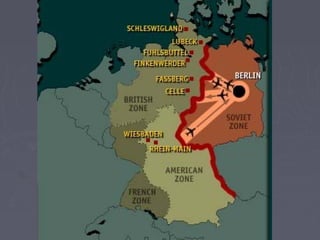
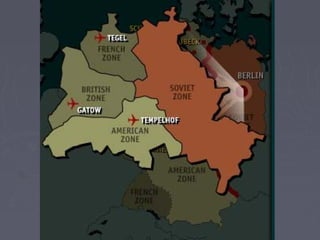
► Divided Germany into 4 sections (occupied by
  France, Britain, U.S. and Soviet Union)

► Berlin to be divided up in East (or Soviet Germany)


► Set up the Nuremberg Trials to persecute Nazi
  leaders

► Japan must “unconditionally surrender”
Potsdam, Germany
Nuremberg Trials
► International tribunal court tried Nazi officials
► Over 23 nations tried Nazi war criminals in
  Nuremberg, Germany
► 12 of the 22 defendants were sentenced to
  death
► 200 other officials were found guilty, but
  give lesser sentences
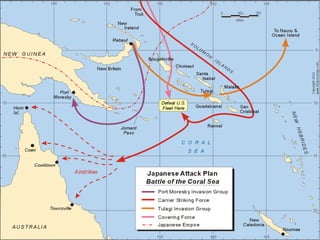
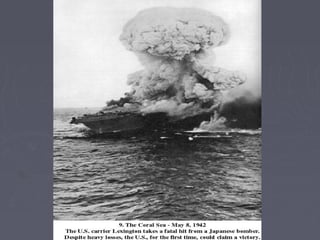
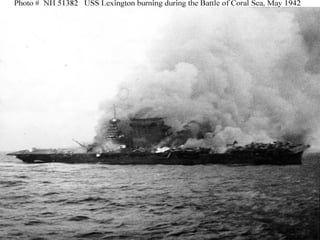
Battle of the Coral Sea
► Prior to this battle, the Japanese were winning every
  battle and taking over the Pacific

► May 1942 - U.S. and Australia stopped Japan from
  invading

► Japan won the actual battle, but the allies were able to
  stop Japan invasion for the first time

► U.S. was beginning to use the Island Hopping technique
  to weaken Japan’s forces
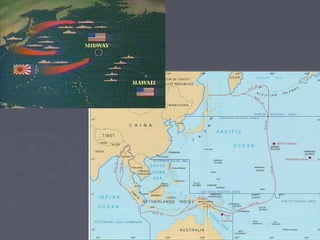
Battle of Midway
► June 1942


► Admiral Chester Nimitz intercepted Japanese code


► U.S. launched surprise attack on Japan at Pacific
  island called Midway

► U.S. was successful in the Battle of Midway
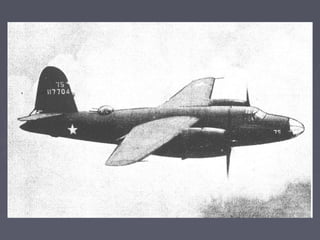
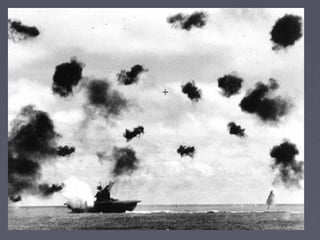
Battle of Midway
► The Japanese lost 4 carriers, a heavy
 cruiser, 3 destroyers, some 275 planes, at
 least 4,800 men, and suffered heavy
 damage among the remaining vessels of
 their fleet.

► American losses included 1 carrier, the
 Yorktown, a destroyer, about 150 planes,
 and 307 men
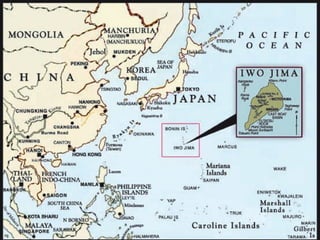
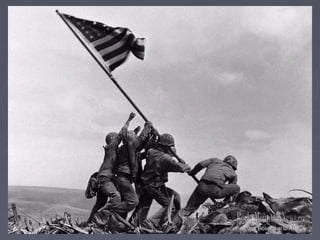
Iwo Jima
► Island in the Pacific that was critical for
  U.S. win
► March 1945
► 27,000 Japanese held Iwo Jima
► U.S. won
   26,800 Japanese troops died
   6,000 U.S. Marines died
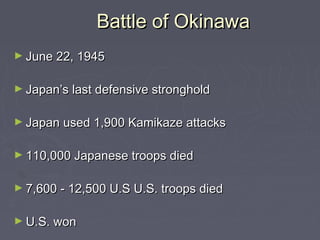
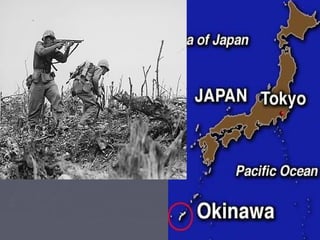
Battle of Okinawa
► June 22, 1945


► Japan’s last defensive stronghold


► Japan used 1,900 Kamikaze attacks


► 110,000 Japanese troops died


► 7,600 - 12,500 U.S U.S. troops died


► U.S. won
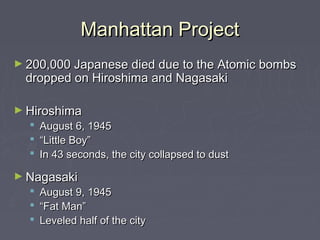
Manhattan Project
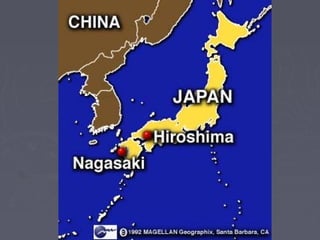
► 200,000 Japanese died due to the Atomic bombs
 dropped on Hiroshima and Nagasaki

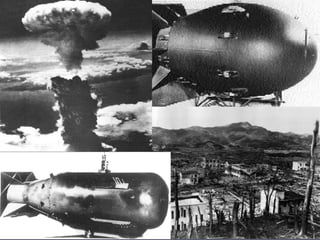
► Hiroshima
     August 6, 1945
     “Little Boy”
     In 43 seconds, the city collapsed to dust

► Nagasaki
   August 9, 1945
   “Fat Man”
   Leveled half of the city
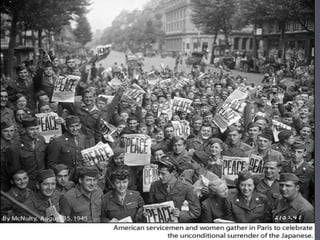
V-J Day
► August 15, 1945: Japan offers unconditional
 surrender

► September 2, 1945: V-J Day = Victory in
 Japan Day (Formal surrender)
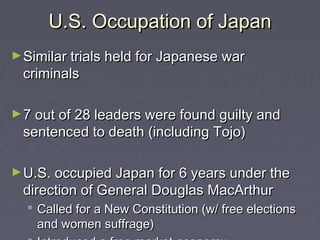
U.S. Occupation of Japan
► Similar trials held for Japanese war
 criminals

► 7 out of 28 leaders were found guilty and
 sentenced to death (including Tojo)

► U.S. occupied Japan for 6 years under the
 direction of General Douglas MacArthur
   Called for a New Constitution (w/ free elections
    and women suffrage)

World War II

  • 1.
    World War II By Molly Siebert
  • 2.
    Causes of USentering WWII Japanese German Sub Imperialism – Military Support of Attacks on US US economic Allies -Neutrality naval sanctions Act and Lend- destroyers against Japan Lease allow US to while escorting to protest supply Britain with British ships aggression war goods December 7, 1941 Japan attacks Pearl Harbor US Enters WWII December 8, 1941
  • 3.
    Allies v. AxisPowers ► Allies ► Axis Powers  Great Britain  Germany  France  Italy  Soviet Union (after  Japan 6/1941)  U.S. (after 12/1941)  Plus many smaller European nations
  • 4.
    Pearl Harbor        ►   Japan was working on expanding empire throughout the Pacific ► The U.S. had a trade embargo on Japan to try and deter Japan from invading countries   ► U.S. was able to intercept and break Japan's secret codes   ► Intercepted the code about Pearl Harbor - sent the message on a slower telegram (by accident) to warn U.S. Navy about attack
  • 5.
    Pearl Harbor Continued Itwas a Sunday morning - U.S. military was taken off guard 2 full blown attacks on Pearl Harbor December 7, 1941 Impact/Damage on U.S. ► o     2,400 U.S. military and civilians lost their lives ► o     1,178 U.S. military and civilians wounded ► o     18 ships and 350 planes sunk or damaged
  • 6.
    Pearl Harbor Continued ►Japan viewed as a stunning victory ► December 8, 1941, U.S. declares war on Japan ► December 11, 1941, Germany and Italy declare war on U.S.
  • 9.
    Battle of theAtlantic ► 1939 – 1945 (Jan. 1942 – July 1943 were decisive) ► German U-Boats were sinking unprotected U.S. and other Allies' merchant ships ► Allies began using convoys to protect ships ► The Allies also used a sonar system to detect German U-Boats ► The Germans were very successful in the beginning, but by mid - 1943, the Allies had the upper hand
  • 10.
    "The Battle ofthe Atlantic was the only thing that really frightened me" - Winston Churchill.
  • 11.
    Battle of Stalingrad (June 1941 – January 31, 1943) ► Germans violated nonaggression pact with Soviet Union and attacked ► Hitler hoped to captured Soviet oil fields ► Germans nearly won (controlled 9/10 of the city) ► Winter of 1943 hit
  • 12.
    Battle of Stalingradcont… ► Hitler forced Germans to stay put ► Soviets used to their advantage and won ► Soviets lost 1,100,000 people in this battle ► Turning point in WWII ► From that point on, Soviet army began to move westward towards Germany
  • 14.
    Normandy Invasion (D-Day) ►June 6, 1944 ► During this time, Soviet Union was pushing into Poland and Allies were pushing North in Italy ► Generals Dwight D. Eisenhower and George Patton influential in leading attack ► 3 million ally troops to attack
  • 19.
    Normandy Invasion cont. D– Day        60 mile stretch of beach        156,000 troops        4,000 landing craft        600 warships        11,000 planes        Largest land-sea-air operation in history        Omaha beach known as one of the most brutal areas
  • 20.
    The D-Day Museum in Portsmouth, England claims a total of 2,500 Allied troops died, while German forces suffered between 4,000 and 9,000 total casualties on D-Day. ► The Heritage Foundation in the U.S. claims 4,900 U.S. dead on D-Day ► The U.S. Army Center of Military History cites a total casualty figure for U.S. forces at 6,036. This number combines dead and wounded in the D-Day battles ► John Keegan, American Historian and Author believes that 2,500 Americans died along with 3,000 British and Canadian troops on D-Day ► By the end of the of the entire Normandy Campaign, nearly 425,000 Allied and German troops were killed, wounded, or missing.
  • 22.
    Normandy Invasion cont. Thebattle continues ►  W/in 1 month, a million more troops ►  September 1944, France was freed from Nazi control
  • 23.
    Battle of theBulge ► December 16, 1944 ► German tanks broke through American lines (80 mile front) ► Fought in Belgium - Germany was trying to capture Antwerp ► Very brutal war - one of the most extensive of U.S. military (120 American GIs captured and mowed down by SS machine guns and pistols)
  • 25.
    Battle of theBulge Cont. ► Germans were winning in the beginning ► 120,000 Germans died (also lost 600 tanks and guns and 1,600 planes – leading to defeat)) ► 80,000 Americans died ► Americans won, but were close to losing
  • 27.
    Yalta Conference ► Tookplace February 1945 before WWII was over ► Roosevelt, Stalin and Churchill met in Yalta in the Soviet Union to discuss post WWII ► Set up United Nations
  • 28.
  • 29.
    April 12, 1945 ►At the beginning of his 4 th Term, President Franklin D. Roosevelt passes away ► The U.S. went through a major grieving period ► Harry S. Truman, as Vice-President, takes the role as President
  • 31.
    The end ofHitler ► April 30, 1945 Hitler and Eva Braun commit suicide (gun shot and cyanide) ► Bodies burned in street ► Cover of Time magazine May 7, 1945
  • 32.
    V-E Day ► May8, 1945 ► General Eisenhower accepted a surrender by the Third Reich ► V-E day = Victory in Europe day ► 1st part of War was over
  • 34.
    Potsdam ► July –August 1945 ► Truman, (Churchill and then Clement Atlee) and Stalin met in Potsdam, Germany ► Drew up a blueprint to disarm Germany and eliminate the Nazi regime
  • 35.
    Potsdam Continued ► DividedGermany into 4 sections (occupied by France, Britain, U.S. and Soviet Union) ► Berlin to be divided up in East (or Soviet Germany) ► Set up the Nuremberg Trials to persecute Nazi leaders ► Japan must “unconditionally surrender”
  • 38.
  • 40.
    Nuremberg Trials ► Internationaltribunal court tried Nazi officials ► Over 23 nations tried Nazi war criminals in Nuremberg, Germany ► 12 of the 22 defendants were sentenced to death ► 200 other officials were found guilty, but give lesser sentences
  • 41.
    Battle of theCoral Sea ► Prior to this battle, the Japanese were winning every battle and taking over the Pacific ► May 1942 - U.S. and Australia stopped Japan from invading ► Japan won the actual battle, but the allies were able to stop Japan invasion for the first time ► U.S. was beginning to use the Island Hopping technique to weaken Japan’s forces
  • 45.
    Battle of Midway ►June 1942 ► Admiral Chester Nimitz intercepted Japanese code ► U.S. launched surprise attack on Japan at Pacific island called Midway ► U.S. was successful in the Battle of Midway
  • 46.
    Battle of Midway ►The Japanese lost 4 carriers, a heavy cruiser, 3 destroyers, some 275 planes, at least 4,800 men, and suffered heavy damage among the remaining vessels of their fleet. ► American losses included 1 carrier, the Yorktown, a destroyer, about 150 planes, and 307 men
  • 50.
    Iwo Jima ► Islandin the Pacific that was critical for U.S. win ► March 1945 ► 27,000 Japanese held Iwo Jima ► U.S. won  26,800 Japanese troops died  6,000 U.S. Marines died
  • 53.
    Battle of Okinawa ►June 22, 1945 ► Japan’s last defensive stronghold ► Japan used 1,900 Kamikaze attacks ► 110,000 Japanese troops died ► 7,600 - 12,500 U.S U.S. troops died ► U.S. won
  • 55.
    Manhattan Project ► 200,000Japanese died due to the Atomic bombs dropped on Hiroshima and Nagasaki ► Hiroshima  August 6, 1945  “Little Boy”  In 43 seconds, the city collapsed to dust ► Nagasaki  August 9, 1945  “Fat Man”  Leveled half of the city
  • 58.
    V-J Day ► August15, 1945: Japan offers unconditional surrender ► September 2, 1945: V-J Day = Victory in Japan Day (Formal surrender)
  • 60.
    U.S. Occupation ofJapan ► Similar trials held for Japanese war criminals ► 7 out of 28 leaders were found guilty and sentenced to death (including Tojo) ► U.S. occupied Japan for 6 years under the direction of General Douglas MacArthur  Called for a New Constitution (w/ free elections and women suffrage)